15 Trendy Green Bathroom Tile Ideas That Feel Expensive
- Bathroom Tile
 Alina
Alina- 0
- 42 minutes read

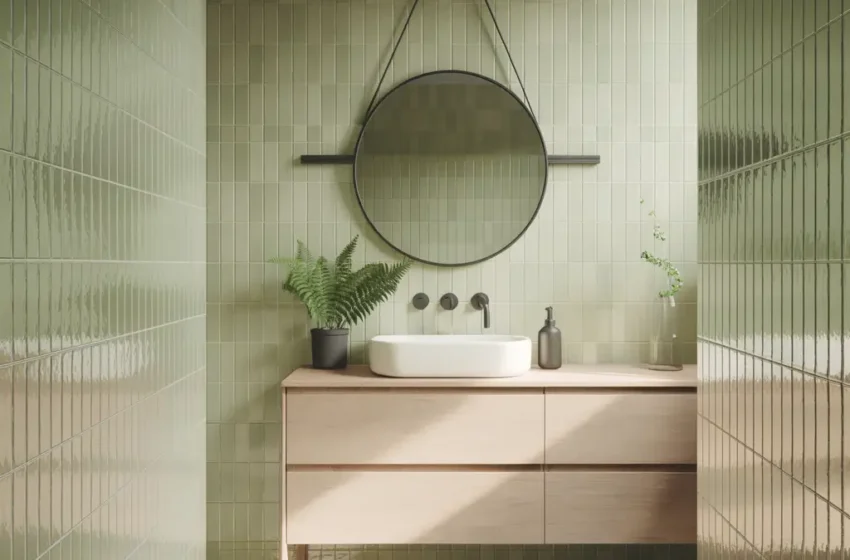
Listen, I’ll be straight with you—green bathroom tiles aren’t just having a moment. They’re having the ENTIRE moment. I’ve been obsessed with green tiles ever since I saw this ridiculously gorgeous sage-tiled bathroom at a boutique hotel last summer, and honestly? I haven’t looked back.
Here’s the thing about green: it screams luxury without trying too hard. Whether you’re working with a shoebox-sized powder room or a master bath that could fit a small family, green tiles bring this organic, sophisticated vibe that makes people think you hired an interior designer (even if your budget says otherwise).
I’m breaking down 15 green tile ideas that’ll transform your bathroom from “meh” to “wait, can I move in here?” Each one brings its own personality, and I’ll tell you exactly how to nail the look without breaking the bank. Ready to get your hands dirty? Let’s go.
Sage Green Spa Bathroom Retreat
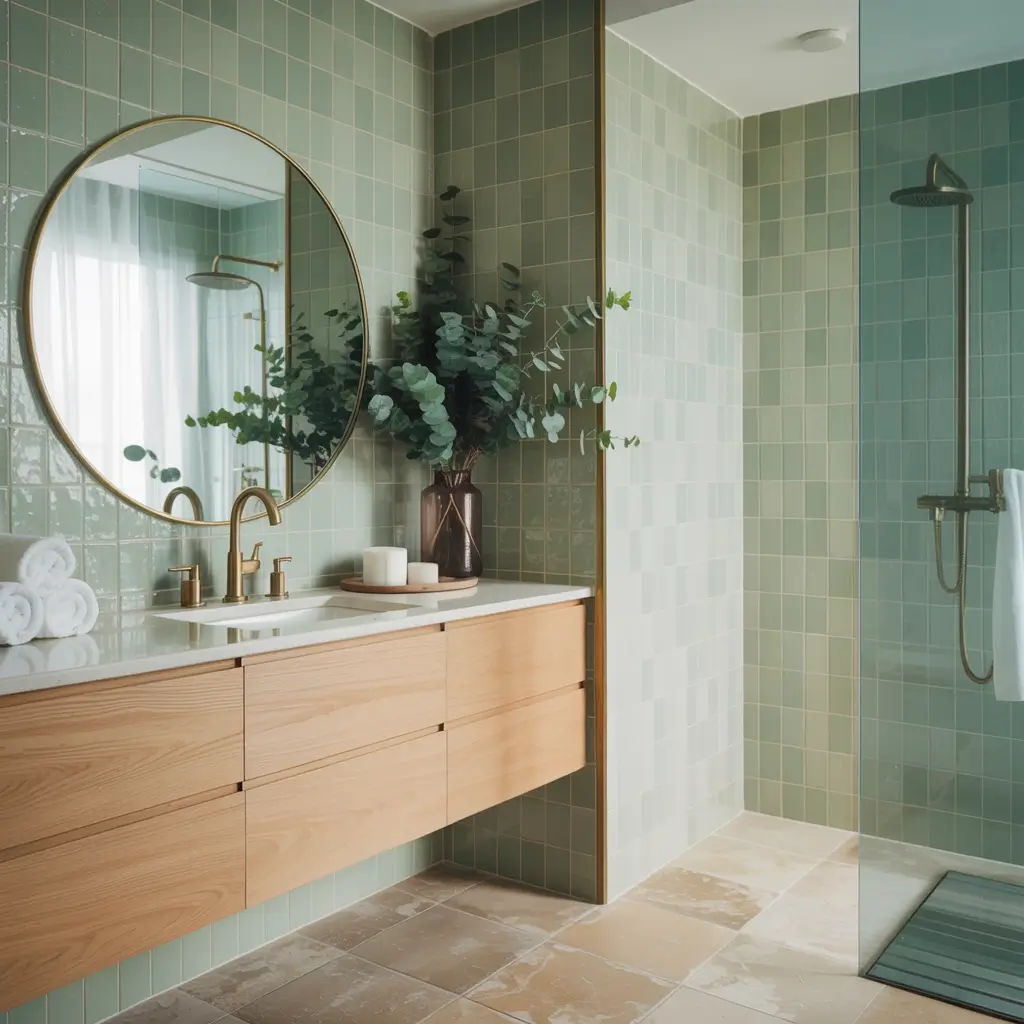
Okay, sage green is basically the introvert of the green family—calm, collected, and absolutely perfect for creating that spa-like atmosphere everyone’s chasing. I redid my bathroom with large-format sage tiles last year, and people literally ask if I installed a meditation room.
The beauty of sage green lies in its versatility. You can cover entire walls floor-to-ceiling, or just accent one wall behind your bathtub for maximum impact. I went with 12×24 inch tiles in a matte finish, and the subtle variation in the glaze makes each tile look handcrafted (even though they definitely weren’t).
Here’s what makes this look feel expensive:
- Large tiles mean fewer grout lines – this creates a seamless, high-end appearance
- The matte finish catches light differently throughout the day, adding depth
- Sage pairs beautifully with natural materials like wood, stone, and brass
- It photographs like a dream (your Instagram will thank you)
Want to elevate it even more? Add white or cream fixtures, some fluffy white towels, and maybe a few eucalyptus branches. Trust me, you’ll never want to leave your bathroom again. The color creates this cocoon-like feeling that makes your morning shower feel like a luxury spa treatment—even when you’re running late for work. 🙂
Emerald Green Luxury Shower Wall
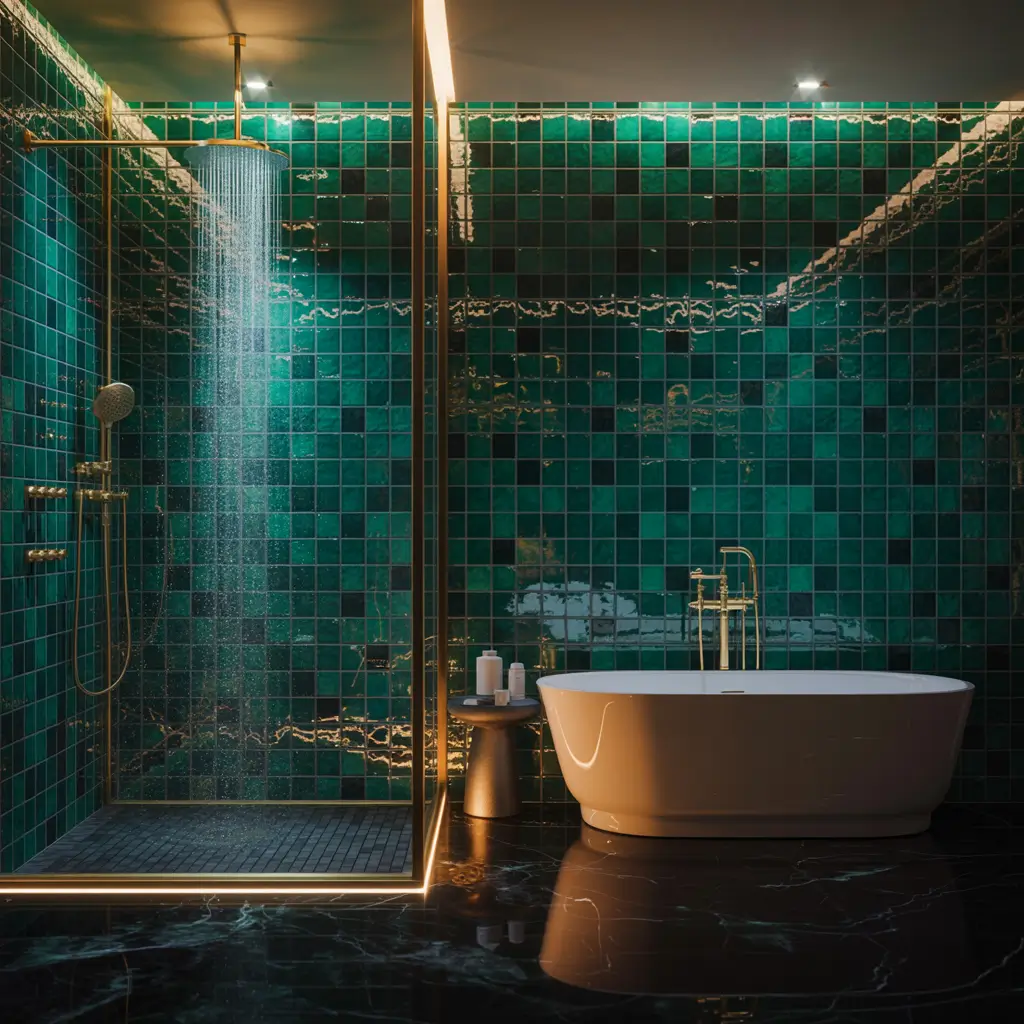
Ever walked into a bathroom and thought, “Wow, someone’s got money”? That’s emerald green for you. This jewel tone doesn’t whisper—it announces. I’ve always been a sucker for bold choices, and emerald green tiles in a shower enclosure might be the boldest (and best) decision you’ll make.
The trick here is treating emerald like the statement piece it is. You don’t need to tile your entire bathroom in this rich color. Focus on the shower wall or create a floor-to-ceiling accent behind your vanity. I’ve seen people use glossy subway tiles in emerald, and the reflective quality makes small bathrooms feel more spacious while looking ridiculously luxe.
Consider these application ideas:
- Vertical stacking pattern instead of traditional subway layout for a contemporary twist
- Mix glossy and matte finishes in the same shade for textural interest
- Use emerald exclusively in the wet area to create visual separation
- Pair with chrome or polished nickel fixtures for that jewelry-box effect
The best part? Emerald hides water spots and soap scum way better than lighter colors (practical AND pretty—my favorite combination). Keep the rest of your bathroom neutral with white walls and maybe some gold accents, and you’ve got yourself a bathroom that looks like it belongs in a five-star hotel.
Olive Green Modern Minimalist Bathroom
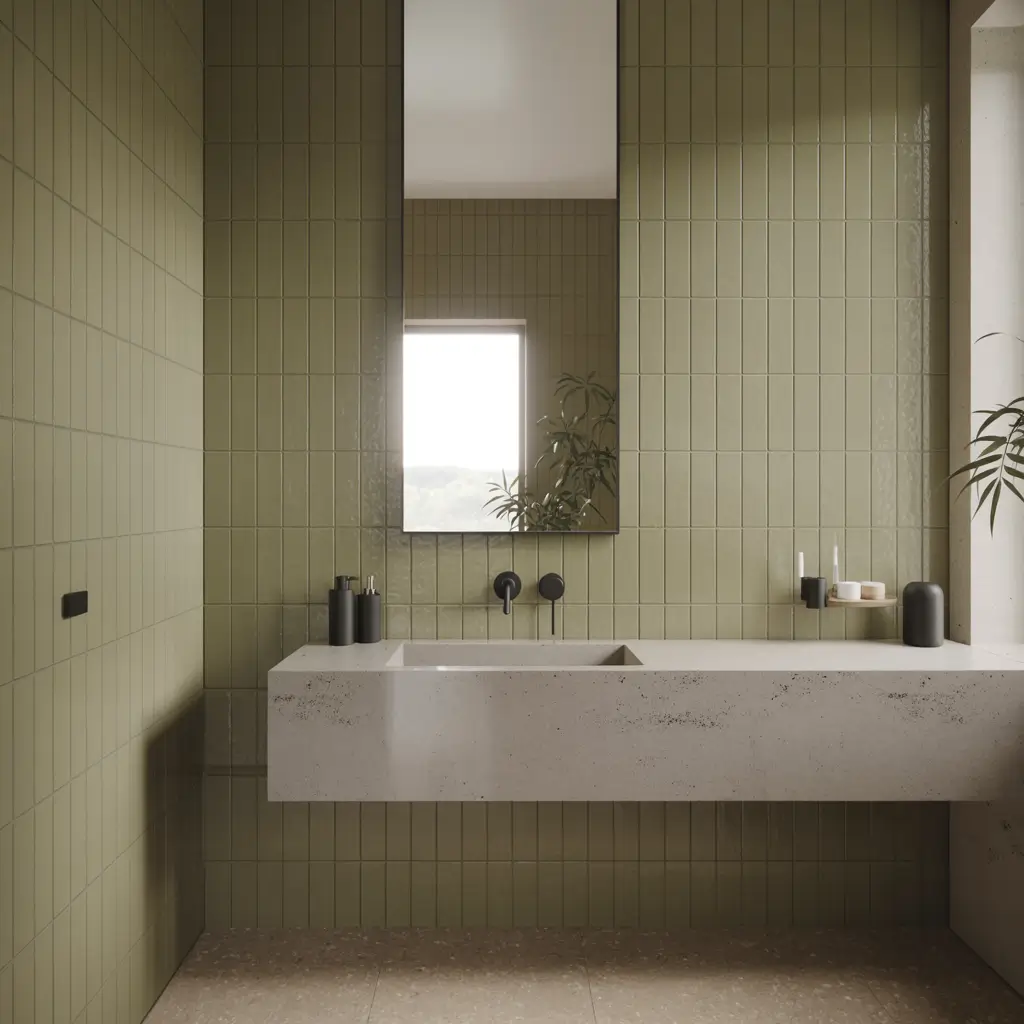
Olive green is having this massive resurgence, and honestly? It’s about time. This earthy, sophisticated shade works incredibly well in minimalist bathroom designs where every element needs to pull its weight aesthetically.
I love olive green because it straddles that perfect line between warm and cool. Unlike sage (which leans cooler) or forest green (which can feel heavy), olive brings warmth without feeling busy. When you use it in a minimalist space with clean lines and simple fixtures, the color becomes the quiet hero of the room.
Here’s how I’d approach an olive green minimalist bathroom:
- Choose large, rectangular tiles with minimal texture for that sleek look
- Stick to a monochromatic palette—different shades of olive and neutral tones
- Install floating vanities to maintain that airy, uncluttered feel
- Skip the pattern; let the color do the talking
The whole point of minimalism is intentionality, right? Every tile, every fixture, every towel hook serves a purpose. Olive green tiles ground the space and add visual interest without needing busy patterns or multiple colors. Plus, it pairs beautifully with concrete, terrazzo, and natural wood—all minimalist favorites.
Also Read: 15 Gorgeous Peel and Stick Floor Tile Bathroom Designs
Mint Green Small Bathroom Refresh
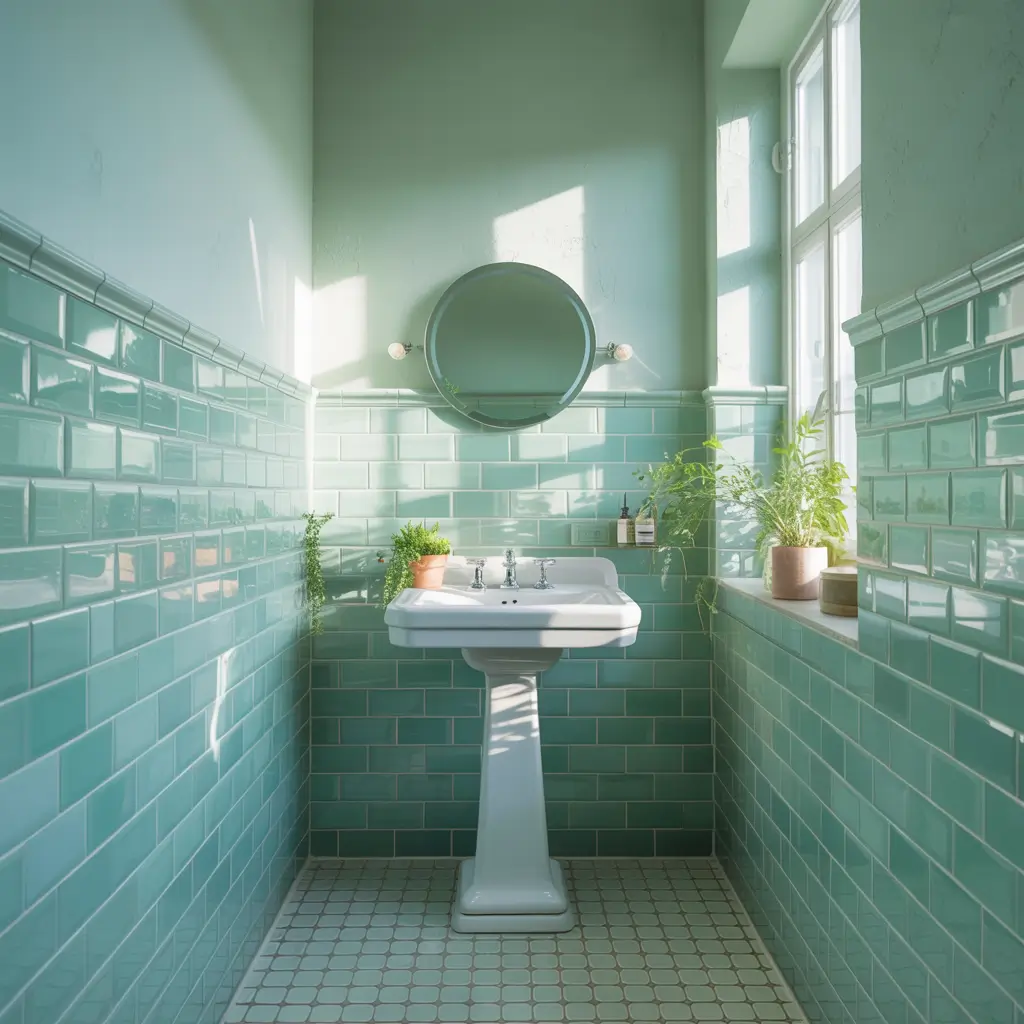
Look, small bathrooms are tricky. You want personality, but you don’t want the space to feel like a cramped closet. Mint green tiles are your secret weapon here. This fresh, light shade opens up tight spaces while adding character (because white gets boring, let’s be real).
I helped my sister tile her tiny rental bathroom with mint green 4×4 inch tiles, and the transformation was insane. The light green reflects natural light beautifully, making the 5×7 foot space feel significantly larger. We did a classic grid pattern on the walls up to chair rail height, then painted the upper walls white.
Small bathroom mint green strategies:
- Stick to lighter mint shades (the darker you go, the smaller it’ll feel)
- Use the same tile on walls and floors to eliminate visual breaks
- Glossy finish over matte to maximize light reflection
- Keep grout lines thin and use white or light gray grout
FYI, mint green has this retro charm that works equally well in vintage-inspired or contemporary bathrooms. Add some black fixtures for a modern edge, or go with brass for something more traditional. Either way, you’re looking at a bathroom refresh that feels intentional and expensive without requiring a massive tile budget.
Forest Green Statement Vanity Wall
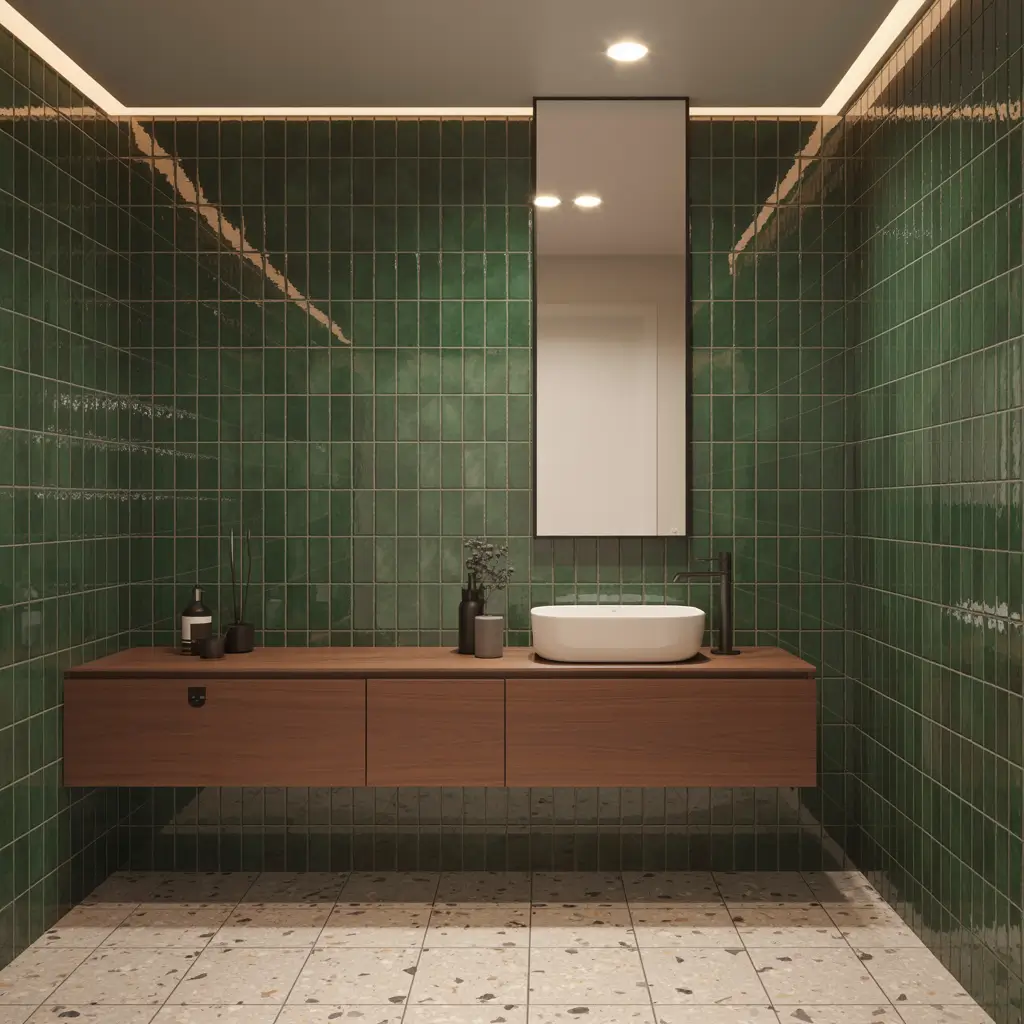
Want to know the fastest way to make your bathroom feel expensive? Create a statement wall in forest green behind your vanity. This deep, moody shade adds drama and sophistication that lighter greens just can’t match.
Forest green is basically the mysterious, brooding cousin in the green family. It demands attention but in this elegant, understated way. I’ve used forest green tiles behind floating vanities, and the depth of color makes the white or wood vanity pop like crazy. It’s all about contrast here.
Application tips for maximum impact:
- Floor-to-ceiling coverage behind the vanity for a cohesive look
- Mix tile sizes (think large format with smaller accent tiles) for visual interest
- Use in bathrooms with good lighting—forest green drinks up light
- Balance the darkness with light countertops and bright fixtures
The thing about forest green is that it photographs darker than it looks in person, so if you’re shopping online, order samples first. I learned this the hard way when my “forest green” tiles arrived looking almost black. Not ideal. But when you nail the right shade? Chef’s kiss. Your bathroom will look like something out of a design magazine.
Dark Green Tile With Gold Accents
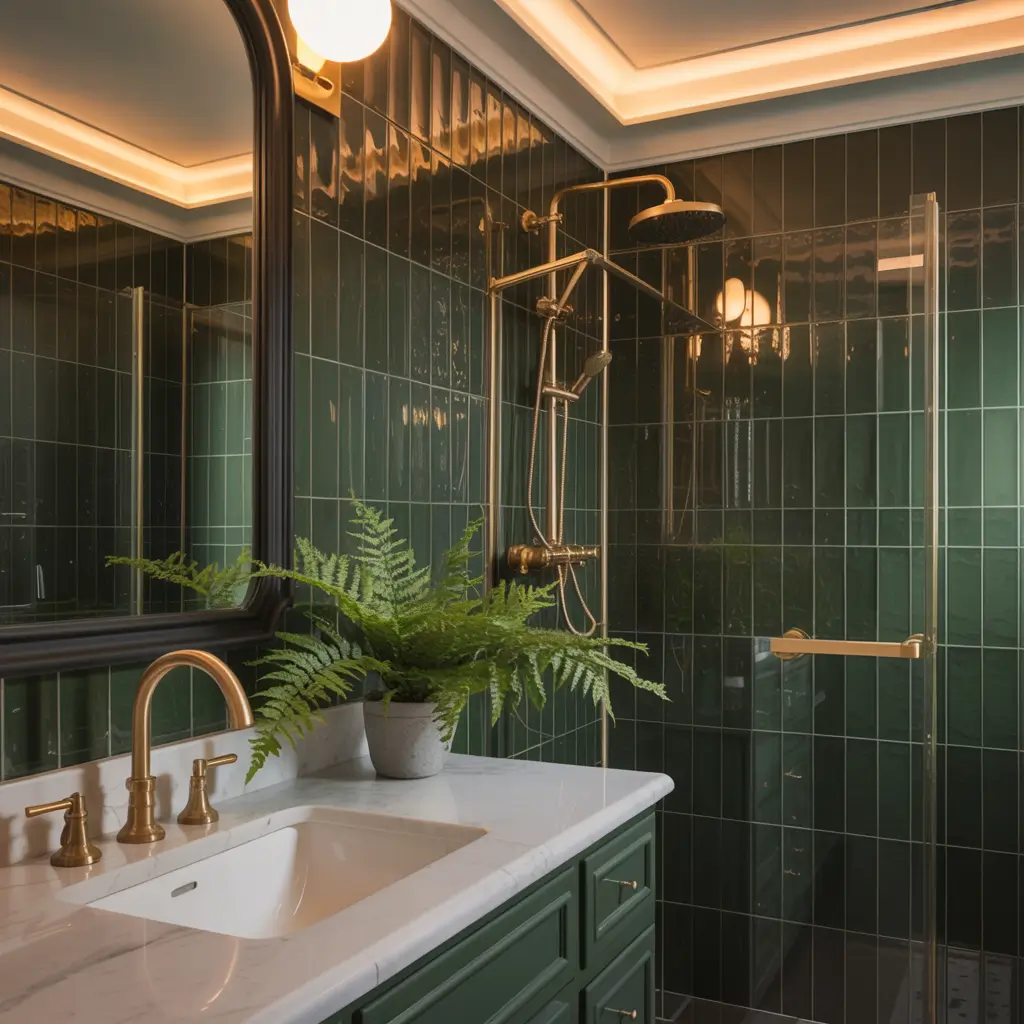
Okay, can we talk about the dark green and gold combo for a second? Because this is the definition of expensive-looking. There’s something about pairing deep green tiles with warm gold accents that screams “I have excellent taste and possibly a trust fund.”
I’m not even exaggerating when I say this combination elevates any bathroom instantly. The richness of dark green—whether that’s hunter green, deep emerald, or almost-black forest green—creates this luxurious backdrop that makes gold hardware shine like jewelry.
Here’s how to nail this look:
- Choose brushed gold or brass fixtures (not shiny gold—that can look cheap)
- Dark green subway tiles in a herringbone or vertical pattern add interest
- Add gold-framed mirrors, towel bars, and even a gold-edged shower door
- Keep other elements neutral (white, cream, or light gray)
The contrast between the cool-toned green and warm gold creates visual tension in the best way possible. I’ve seen people add gold grout lines (yes, that’s a thing), and while it’s bold, it can look incredible if you commit to it. Just maybe don’t try this in a rental. :/
One word of caution: this look works best in bathrooms with decent natural light. Dark tiles in a windowless bathroom can feel cave-like, so make sure you’ve got good artificial lighting to compensate.
Green Subway Tile Farmhouse Bathroom
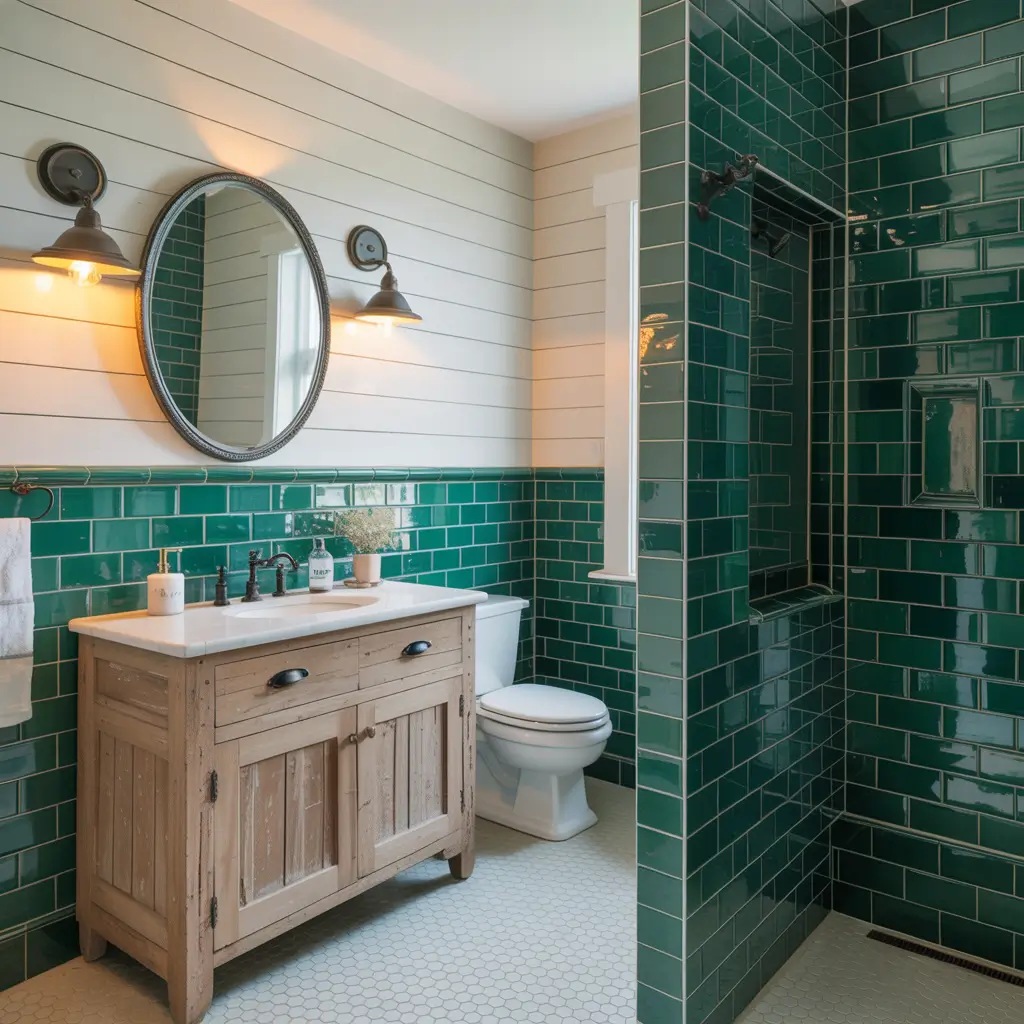
Listen, I know subway tile is everywhere, but hear me out—green subway tiles in a farmhouse bathroom hit different. Instead of the predictable white subway situation, green brings warmth and personality while maintaining that classic, timeless vibe farmhouse style needs.
I’ve always loved the simplicity of subway tiles. They’re affordable, easy to install (even for DIYers), and they work in virtually any style bathroom. Swap out white for a soft green—maybe a sage or a muted olive—and suddenly you’ve got something special without abandoning the farmhouse aesthetic.
Farmhouse-friendly green subway tile tips:
- Classic brick pattern or herringbone both work beautifully
- Stick to softer green shades (mint, sage, pale olive) for that cottage feel
- Pair with white shiplap, wood accents, and vintage-style fixtures
- Use white grout to keep things bright and traditional
IMO, the most expensive-looking farmhouse bathrooms balance old and new. Green subway tiles give you that balance—they’re rooted in tradition (subway tiles have been around forever) but feel fresh and current. Add some open shelving with woven baskets, a farmhouse sink, and maybe an antique mirror, and you’re golden.
The best part about subway tiles? They’re budget-friendly, so you can splurge on other elements like a clawfoot tub or fancy faucets. Smart trade-offs make all the difference.
Teal Green Coastal Bathroom Design
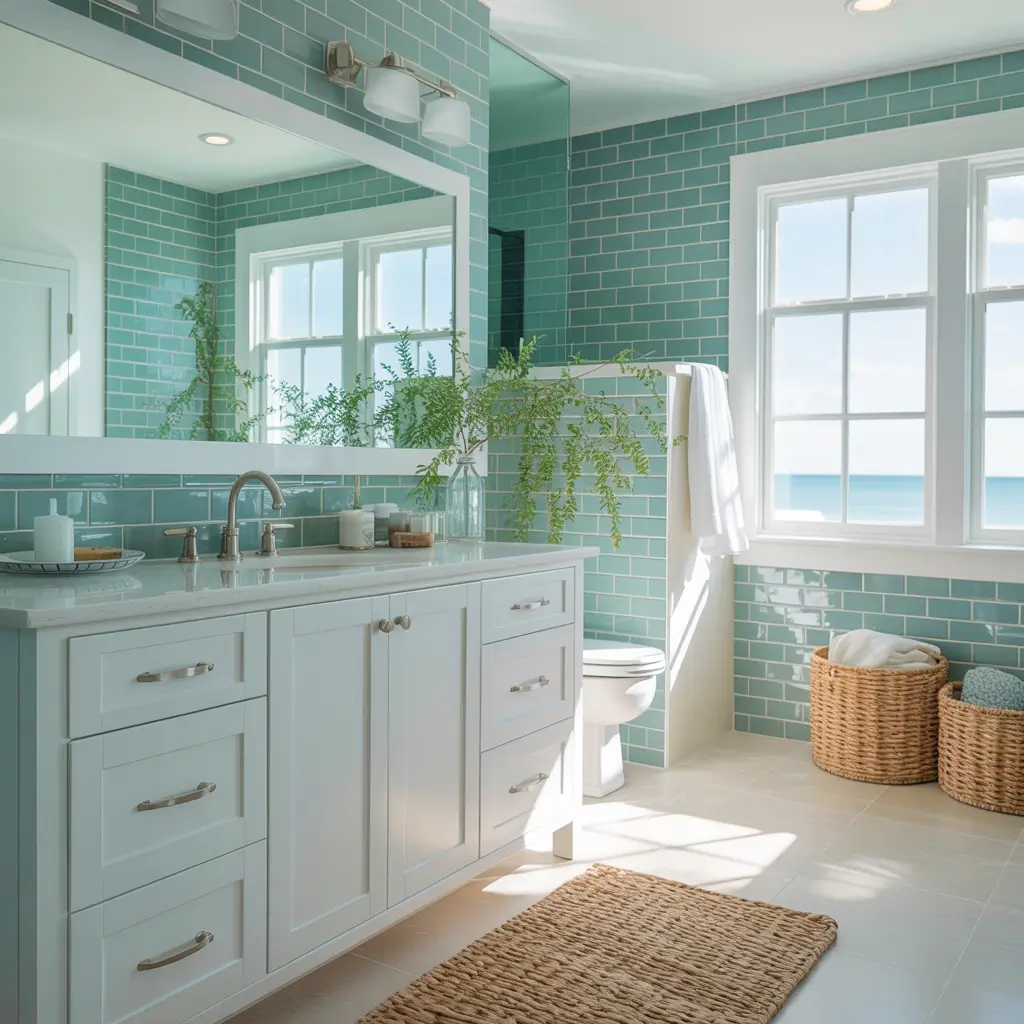
Teal green tiles transport you straight to the coast—no plane ticket required. This blue-green hybrid captures that ocean-meets-land vibe that makes coastal bathrooms feel like permanent vacation homes. I’m obsessed with how teal brings energy without feeling overwhelming.
The trick with teal is choosing the right shade. Too blue, and you lose the green earthiness. Too green, and the coastal vibe disappears. You want that perfect balance—think shallow tropical waters or sea glass washed up on the beach.
Coastal teal tile ideas:
- Glass tiles in teal catch light like actual water (gorgeous in showers)
- Mix different teal shades in a mosaic pattern for depth
- Combine with white, sandy beige, and driftwood-gray tones
- Add natural textures like rope, rattan, and linen
I’ve seen teal tiles used as a backsplash behind a vanity with the rest of the walls in crisp white, and it’s stunning. The pop of color brings the whole space to life. Or go bold and cover an entire shower wall—watching water run over teal tiles is strangely mesmerizing (trust me on this).
For fixtures, think polished chrome or brushed nickel to keep that clean, coastal feel. And if you really want to commit? Add some nautical-inspired decor, but don’t go overboard (pun intended). A couple of tasteful elements beat a bunch of anchor-themed knickknacks every time.
Green Herringbone Tile Accent Wall
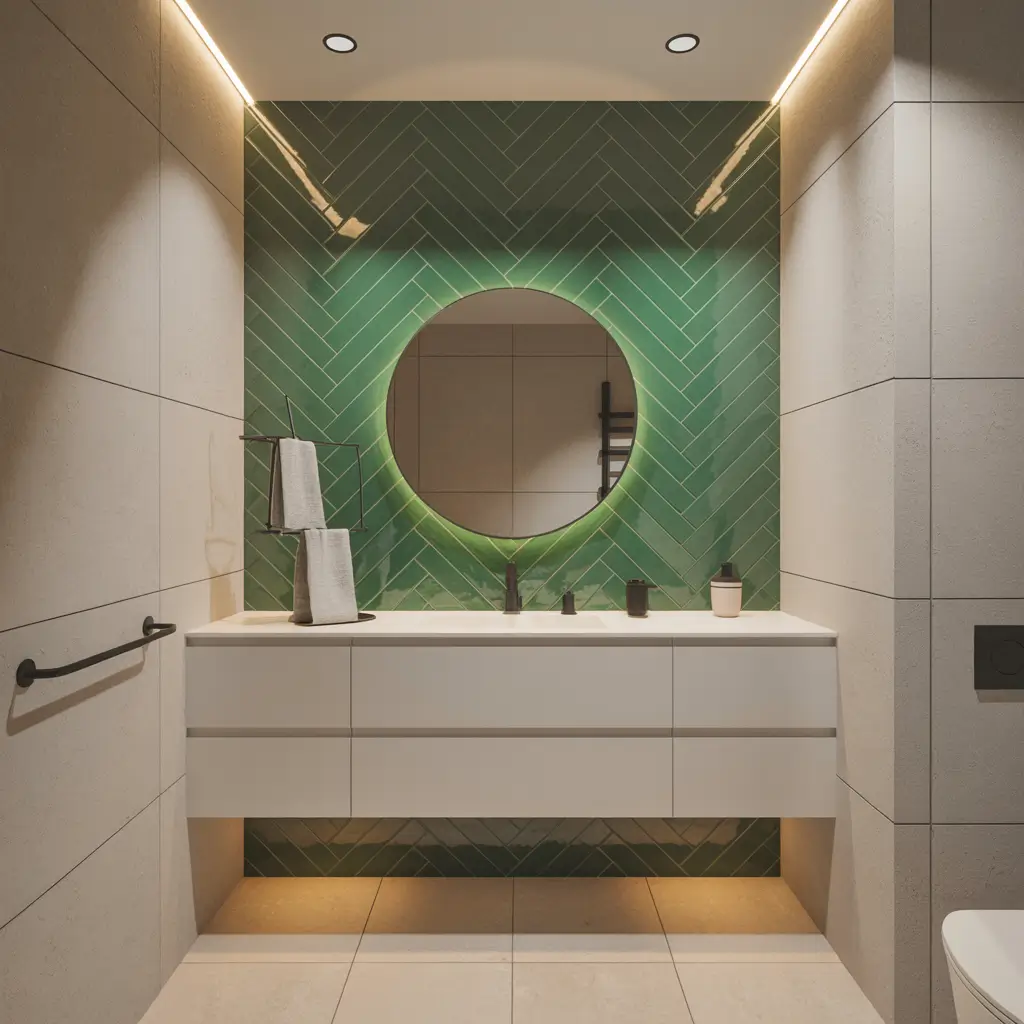
Herringbone pattern is fancy. There’s no way around it. When you combine the sophisticated herringbone layout with green tiles, you’re basically announcing to the world that you care about design details. And people notice.
I’ll be honest—herringbone installation costs more than standard layouts because of the extra labor and precision required. But if you’re going for that expensive look? This is where you invest. The zigzag pattern adds movement and visual interest that straight layouts just can’t compete with.
Why herringbone works so well:
- The angled pattern creates the illusion of more space
- It adds texture and dimension without changing tile materials
- Works beautifully as an accent wall rather than full bathroom coverage
- Pairs well with both traditional and contemporary styles
Choose one accent wall—maybe behind your bathtub or vanity—and go all in with green herringbone tiles. Keep the other walls simple (white or a complementary neutral) so the herringbone stays the star. I’ve used smaller tiles (like 3×6 inch) for herringbone patterns, and the extra grout lines actually enhance the pattern’s impact.
Color-wise, this pattern works with any green shade, but I’ve noticed mid-tone greens like sage or olive show off the herringbone design most effectively. Too dark, and the pattern gets lost. Too light, and you lose some of that luxe contrast.
Soft Pistachio Tile Scandinavian Bathroom
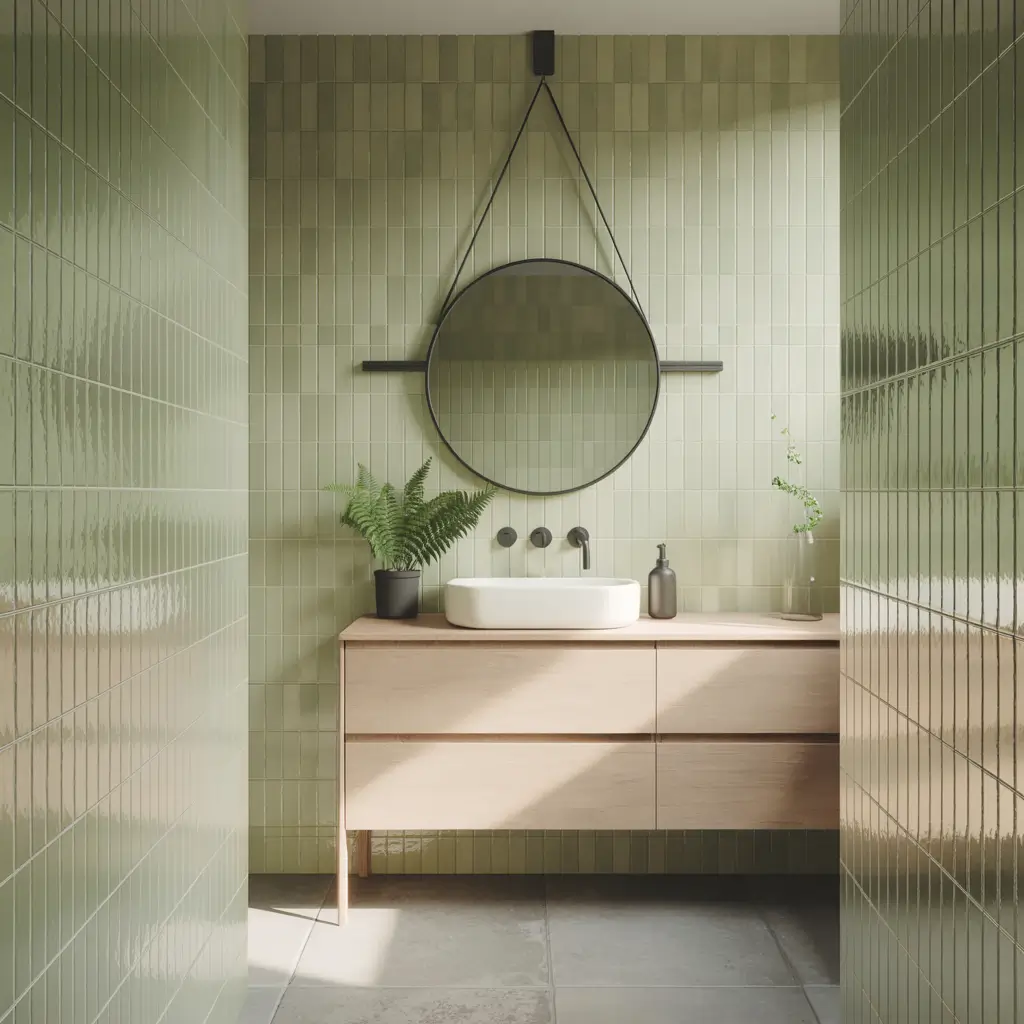
Scandinavian design loves its neutrals, but soft pistachio green tiles fit perfectly into that aesthetic while adding gentle color. This pale, creamy green brings warmth to the typically cool Scandi palette without disrupting the minimalist vibe.
The Scandinavian approach focuses on functionality, simplicity, and connection to nature. Pistachio green nods to the natural world while maintaining the clean, uncluttered feel Scandi design demands. I’ve incorporated this in a bathroom remodel where we wanted cozy minimalism (is that even a thing? Well, it is now).
Scandi-style pistachio bathroom elements:
- Large format tiles with minimal grout lines for that seamless look
- Matte finish over glossy to maintain the understated aesthetic
- Pair with natural wood, white fixtures, and black accents
- Incorporate plants (real ones—Scandi design loves greenery)
Keep everything else simple and functional. A floating wood vanity, round mirror, simple sconces, and maybe some woven baskets for storage. The pistachio tiles add personality without clutter, which is exactly what Scandinavian bathrooms aim for.
This shade also works beautifully with natural light, which Scandi design prioritizes. If you’ve got a window in your bathroom, pistachio tiles will shift throughout the day—sometimes more green, sometimes more cream—creating this living, breathing quality that feels expensive and intentional.
Moody Green Tile Powder Room
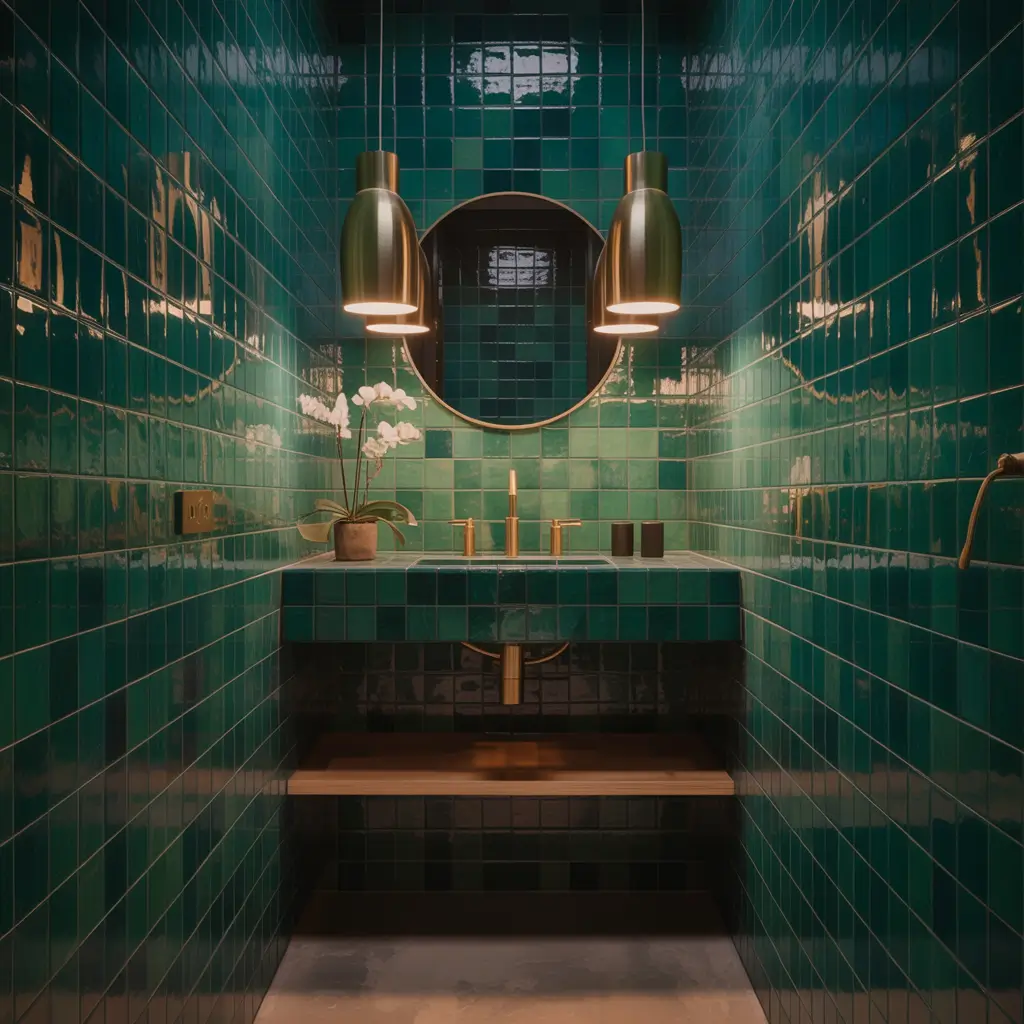
Powder rooms are the perfect place to take risks. Why? Because they’re small spaces that guests use briefly—you can go bold without living with it 24/7. Dark, moody green tiles in a powder room create instant drama and sophistication.
I’m talking deep hunter green, almost-black forest green, or rich emerald. These intense shades transform a tiny powder room into a jewel box. When you commit to dark tiles in a small space, it feels intentional and luxurious rather than cramped (counterintuitive, right?).
Creating a moody green powder room:
- Cover walls floor-to-ceiling in dark green tiles for maximum impact
- Add dramatic lighting—wall sconces or a statement fixture
- Choose bold fixtures in brass, black, or even copper
- Include one unexpected element (patterned floor tile, unique mirror, etc.)
The thing about moody powder rooms is that they feel special. Your guests walk in and immediately know you’ve put thought into the design. I’ve seen powder rooms with dark green zellige tiles paired with a brass faucet and vintage mirror that stopped people in their tracks.
Don’t be afraid of the darkness. Embrace it. Add good task lighting around the mirror so it’s functional, then layer in ambient lighting for atmosphere. When you nail a moody powder room, it becomes a conversation piece. And isn’t that what we all want? 🙂
Also Read: 15 Trendy Wood Tile Bathroom Looks with Modern Charm
Green Zellige Tile Boho Bathroom
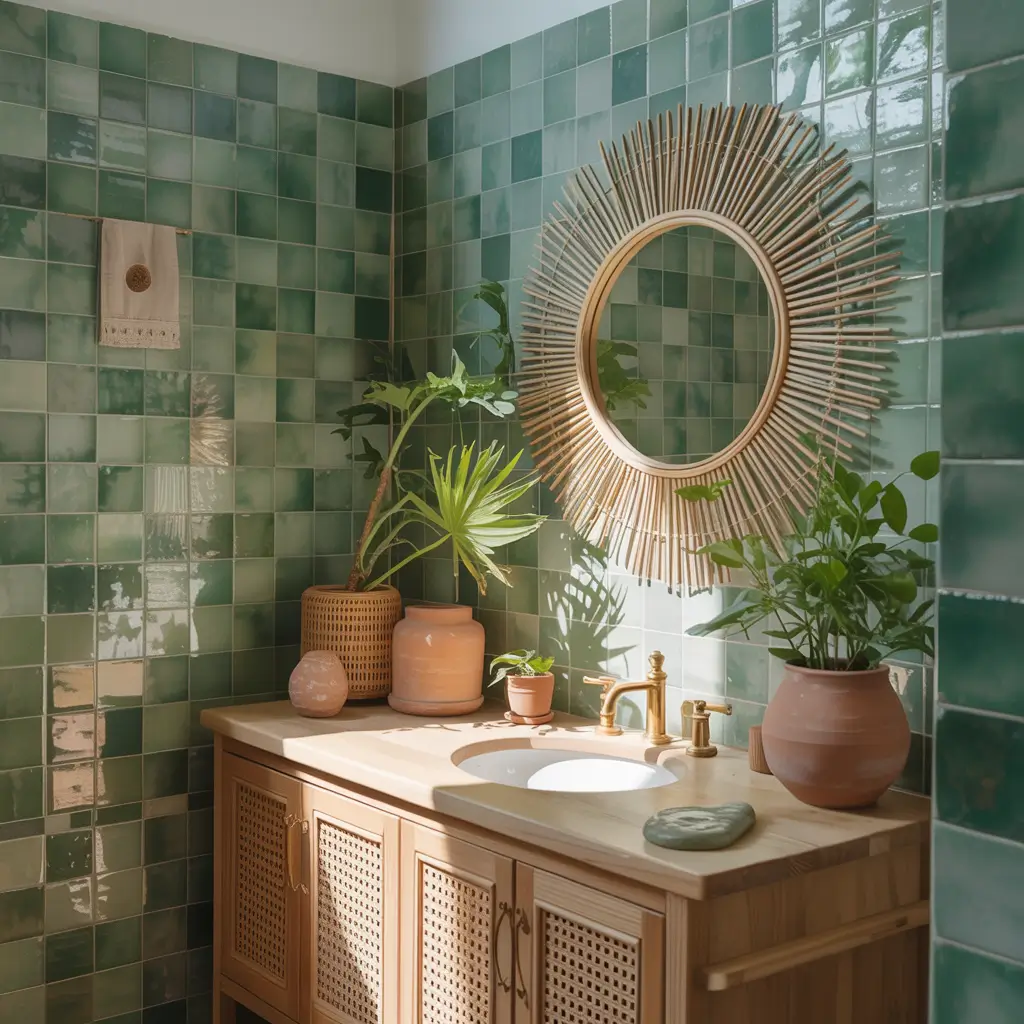
Zellige tiles are having a major moment, and pairing these handmade Moroccan beauties with green creates the ultimate boho bathroom. The irregular, slightly imperfect glazing of zellige tiles screams artisan craftsmanship—which translates directly to “expensive.”
Real zellige tiles are handmade and hand-glazed, so each one varies slightly in color and texture. This organic variation is what makes them so special (and yes, pricey). But the effect? Absolutely worth it. I’ve used zellige-style tiles (the more affordable machine-made versions) in several projects, and even those create incredible visual interest.
Boho green zellige bathroom ideas:
- Mix multiple green shades in the same space for that collected-over-time feel
- Combine with natural materials—rattan, jute, macramé, plants galore
- Layer patterns and textures (zellige already brings texture, so lean in)
- Add vintage or vintage-inspired elements for authenticity
The beauty of zellige is how it catches light. The slightly uneven surface creates this shimmer and depth that flat tiles can’t match. Use it on a feature wall behind your vanity, in the shower, or even as a backsplash. Pair with warm metals like brass or copper and plenty of greenery.
One heads up: zellige tiles require more maintenance than standard tiles because the glaze is more delicate. But if you’re going for that boho, lived-in luxury look? The trade-off is worth it. Just seal them properly and avoid harsh cleaners.
Two-Tone Green Tile Bathroom Design
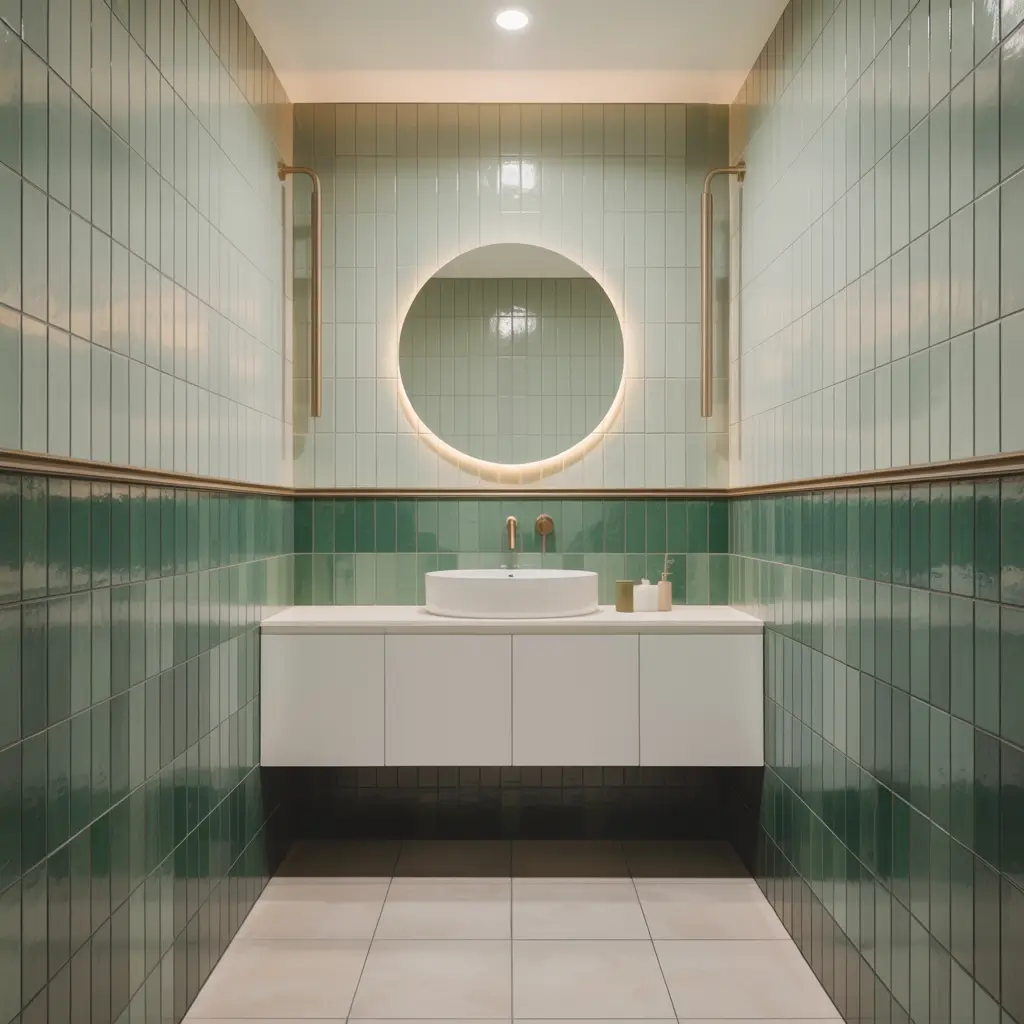
Why choose one green when you can have two? Two-tone green tile bathrooms create visual interest and depth while staying within a cohesive color family. This approach feels curated and intentional—hallmarks of expensive design.
The key to nailing two-tone green is choosing shades that complement rather than compete. Think light sage on upper walls with darker forest green on lower walls or in the shower. Or combine mint green floor tiles with olive green wall tiles. The contrast defines zones in your bathroom while maintaining color harmony.
Two-tone strategies that work:
- Light on top, dark on bottom to ground the space visually
- Use the darker shade in wet areas (shower, around tub)
- Create a chair rail or border where the two shades meet
- Choose shades from the same undertone family (both warm or both cool)
I’ve seen people use geometric patterns to separate the two greens, and when done right, it’s stunning. Maybe hexagon tiles in sage with rectangular tiles in olive. Or a horizontal band of dark green subway tiles interrupting a field of lighter green.
The two-tone approach also helps you manage tile costs. Use the more expensive tile (maybe that gorgeous zellige or hand-painted option) in a limited area, then fill the rest with a coordinating but more affordable green. Smart budgeting that looks anything but budget.
Green Tile With Wood Vanity Combo
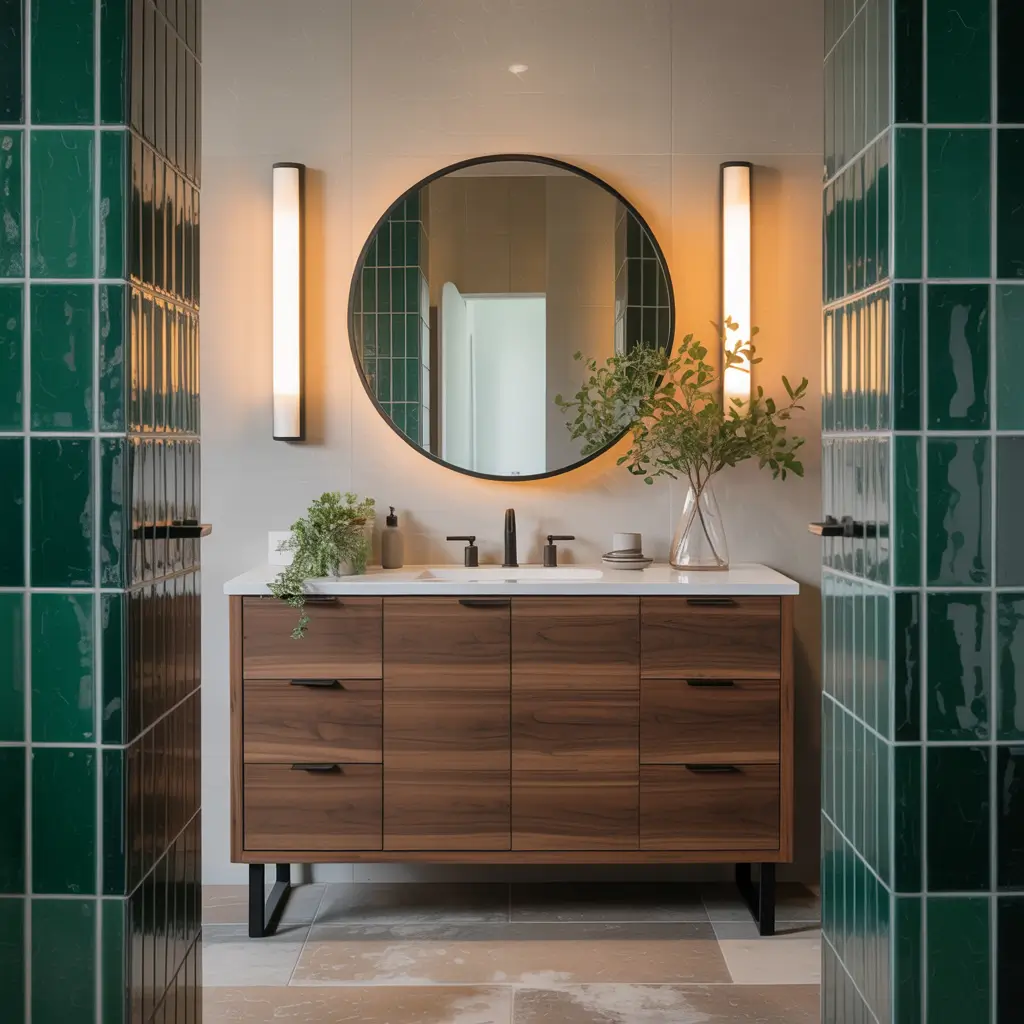
Nothing says “expensive natural aesthetic” quite like green tiles paired with a wood vanity. This combination brings the outdoors in while creating this organic, grounded vibe that feels both luxurious and livable.
The beauty of this pairing is how the materials complement each other. Green references nature’s foliage, while wood brings warmth and texture. Together, they create a bathroom that feels like a retreat rather than just a functional space. I’ve done this in my own home, and I swear it makes getting ready in the morning more enjoyable.
Making green and wood work beautifully:
- Match your green’s undertone to your wood (warm green with warm wood, cool with cool)
- Consider the wood tone—light woods need darker greens for contrast
- Let the wood grain shine by keeping tile patterns simple
- Add plants to reinforce the natural connection
Walnut or teak vanities look incredible against sage or olive green tiles. Lighter woods like oak or maple pair beautifully with deeper greens like emerald or forest. The contrast between the organic wood grain and uniform tile creates visual interest without feeling busy.
This combo works in virtually any style—modern, traditional, transitional, farmhouse. The natural materials transcend trends, which means your bathroom won’t feel dated in five years. That’s the kind of expensive-looking decision that actually saves money long-term.
Matte Green Tile Contemporary Bathroom
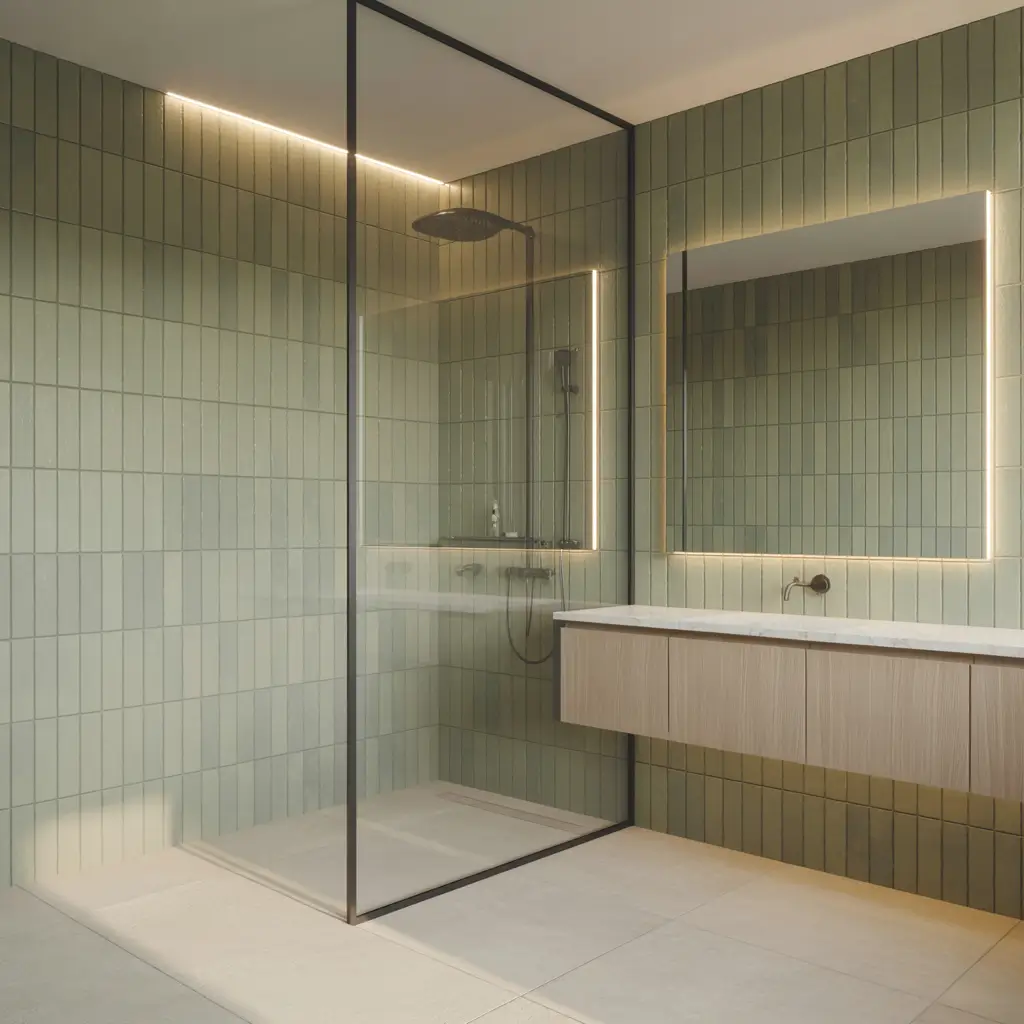
Contemporary design loves clean lines, minimal ornamentation, and interesting materials. Matte green tiles check all those boxes while adding that expensive, sophisticated edge contemporary bathrooms need to avoid feeling cold or sterile.
Matte finishes are having their moment right now, and honestly, they deserve it. Unlike glossy tiles that can feel dated or show every water spot, matte tiles look intentional and high-end. They’re tactile, subtle, and photograph beautifully (which matters more than we’d like to admit).
Contemporary matte green bathroom elements:
- Large format tiles (think 24×48 inch or even bigger)
- Minimal grout lines in matching or tonal colors
- Geometric tile shapes (hexagons, elongated rectangles, or even triangles)
- Pair with matte black or brushed nickel fixtures for cohesion
The contemporary approach favors quality over quantity. Instead of covering every surface in tile, choose strategic applications. Maybe matte green tiles cover the shower wall floor-to-ceiling while other walls stay white. Or create a half-wall backsplash in matte green behind a floating vanity.
I love how matte tiles feel under your hand—there’s this soft, almost velvety quality that glossy tiles lack. It’s a small detail, but these small details add up to create that expensive, well-considered feeling. Contemporary design is all about those thoughtful choices that elevate everyday experiences.
Bringing It All Together
So there you have it—fifteen ways to transform your bathroom with green tiles that punch way above their price point. Whether you’re team sage, emerald, or somewhere in the middle of the green spectrum, there’s an option here that’ll work for your space, style, and budget.
The secret to making any of these looks feel expensive? Commitment and consistency. Choose your green, choose your style, and stick with it. Don’t second-guess yourself halfway through or try to incorporate every trend you see on Instagram. The most expensive-looking bathrooms are the ones with a clear vision executed well.
And look, I get it—tiling a bathroom feels like a huge decision. You’re looking at this space every single day, so the pressure to get it right is real. But here’s the thing: green is incredibly forgiving. It pairs with so many materials, works in various styles, and brings that natural element that makes spaces feel welcoming rather than sterile.
Start small if you’re nervous. Maybe just an accent wall or a shower alcove. Test the waters (bathroom pun absolutely intended) before committing to a full green tile bathroom. Order samples, look at them in your space at different times of day, and trust your gut.
Your bathroom should make you happy. If green tiles do that—whether it’s moody forest green or fresh mint—then that’s the right choice. Expensive-looking bathrooms aren’t about following every trend or buying the priciest materials.


