15 Modern Pantry Laundry Room Combo Organization Ideas
- Laundry Room Ideas
 Alina
Alina- 0
- 44 minutes read

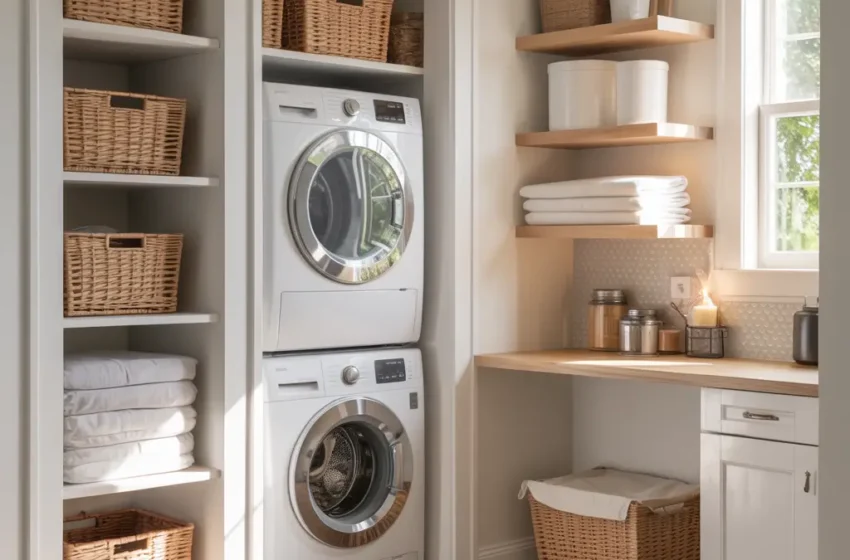
Look, I get it. Your laundry room doubles as your pantry, and you’re standing there surrounded by cereal boxes next to your detergent bottles wondering how your life came to this. But here’s the thing—pantry laundry room combos aren’t just a space-saving compromise anymore. They’ve become legit design opportunities that can actually make your life easier (and look pretty amazing while doing it).
I’ve spent way too many hours obsessing over how to make these dual-purpose spaces work, and honestly? Once you nail the organization, you’ll wonder why everyone doesn’t do this. Let me walk you through 15 killer ideas that’ll transform your cramped combo space into something you’ll actually want to show off.
Small Space Pantry Laundry Room Combo Layout
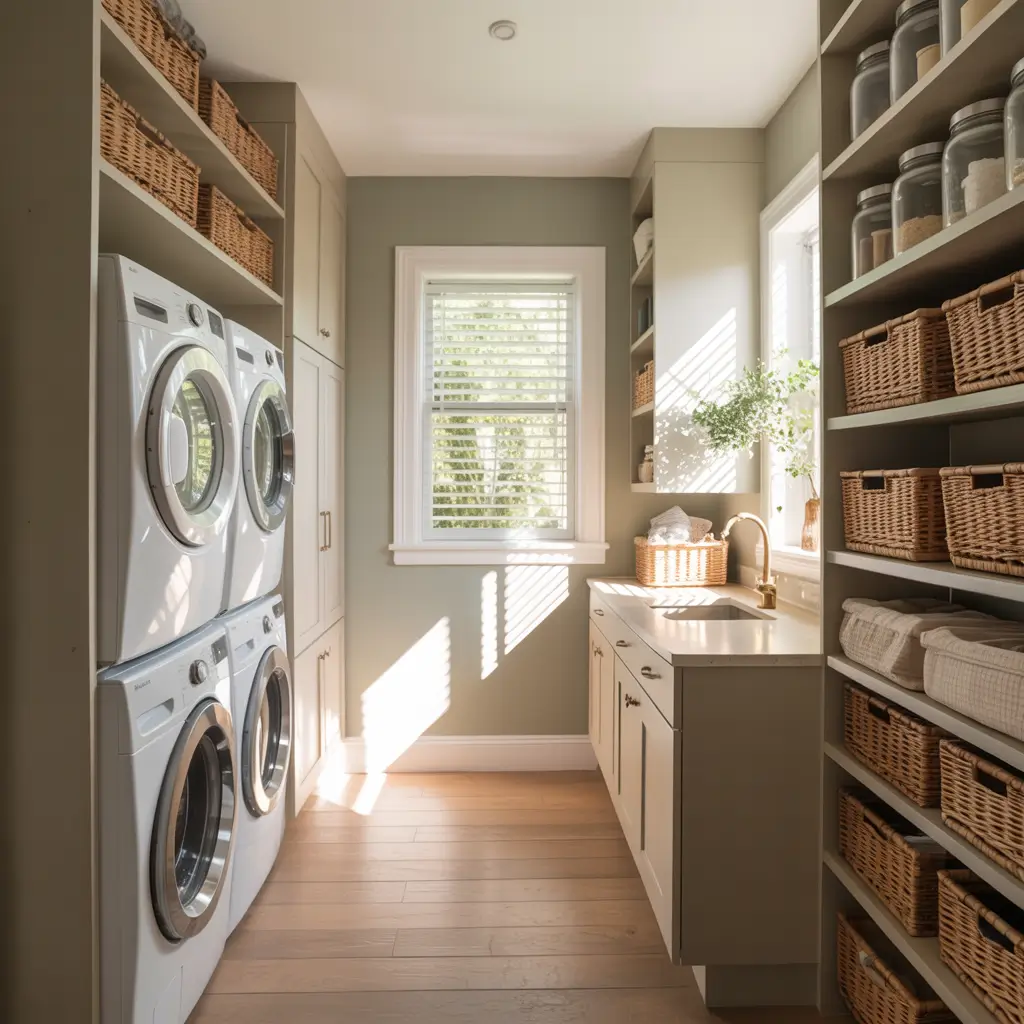
When you’re working with the square footage of a glorified closet, every single inch counts. I learned this the hard way after trying to cram a full-size washer into a space that clearly wanted me to fail.
The secret here? Think vertical and multi-functional. Mount your washer and dryer side-by-side if you can swing it, but don’t stop there. The wall space above your machines becomes prime real estate for narrow shelving units that can hold your dry goods.
Here’s what actually works in small spaces:
- Install floating shelves 18-24 inches above your washer/dryer
- Use the space between machines (if side-by-side) for a pull-out rolling cart
- Mount a fold-down ironing board on the door or wall
- Add a tension rod under your upper shelves for hanging clothes
I added a slim rolling cart (like 6 inches wide) between my washer and the wall, and it holds all my laundry supplies. When I need it, I pull it out. When I don’t, it disappears. Magic? No. Just smart use of dead space.
The pantry portion needs containers—and I mean the clear, stackable kind. You can’t afford visual clutter in a small space, so uniform storage containers become your best friends. Label everything. Future you will thank present you when you’re not rummaging through ten identical containers looking for pasta at 6 PM.
Modern Built-In Pantry Laundry Room Design
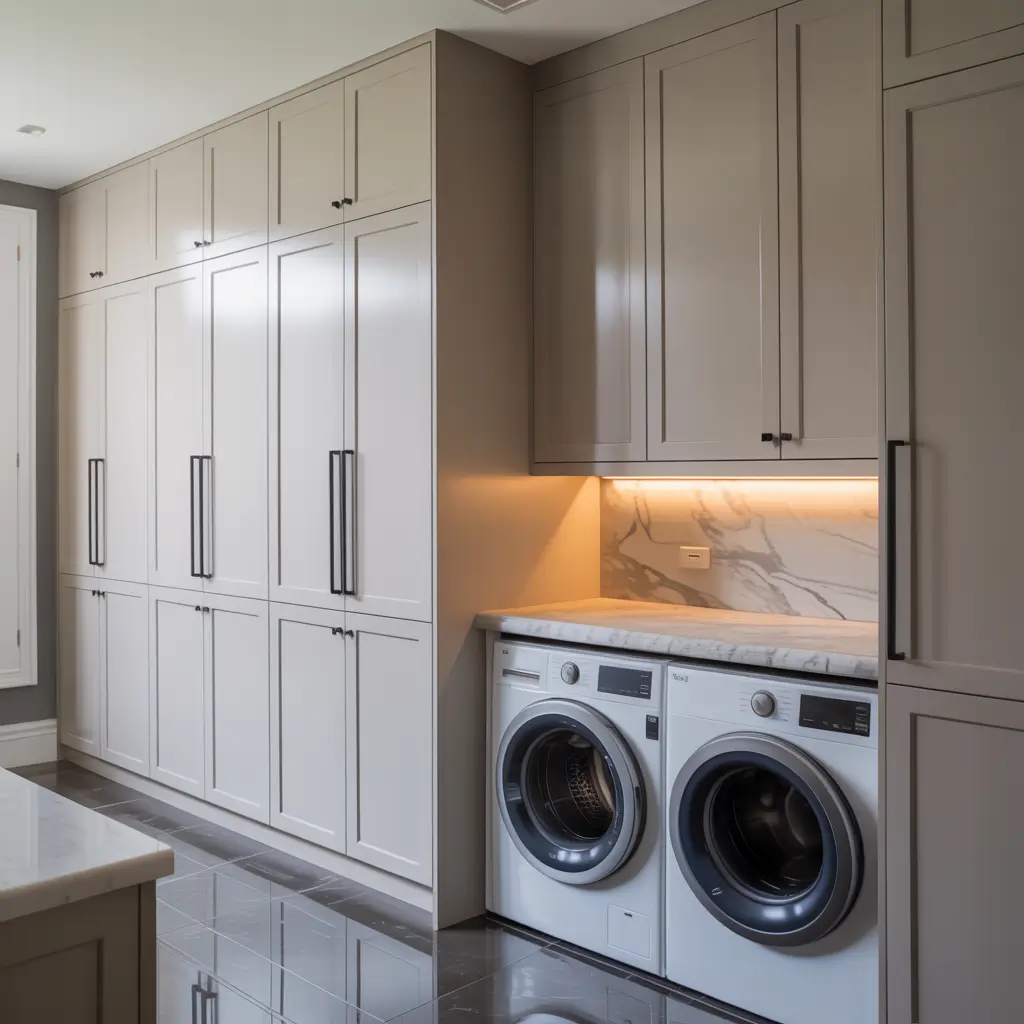
Want to know what separates a “meh” combo space from one that looks like it belongs in a design magazine? Built-ins. Custom cabinetry transforms the entire vibe from “we shoved everything in here” to “we totally planned this.”
Modern built-in designs embrace clean lines and hidden storage. You integrate your appliances into the cabinetry design so everything flows together seamlessly. I’m talking about cabinet doors that close over your washer and dryer, pull-out hampers that hide inside lower cabinets, and pantry storage that looks intentional, not improvised.
Consider these built-in elements:
- Floor-to-ceiling cabinetry in matte finishes (white, gray, or navy look incredible)
- Appliance garage for your cleaning supplies
- Built-in countertop workspace above front-loading machines
- Integrated pull-out pantry shelves with soft-close mechanisms
The countertop situation deserves special attention. If you install front-loading machines, you create this amazing workspace above them. I use mine for folding laundry, but it also serves as extra prep space when I’m cooking. Dual-purpose surfaces maximize functionality without eating up more room.
FYI, if you’re going the built-in route, work with a designer or contractor who actually gets the workflow. You need access to machine hookups, proper ventilation, and pantry items you actually use regularly. Pretty cabinets mean nothing if you can’t reach your coffee 🙂
Farmhouse Style Pantry Laundry Combo
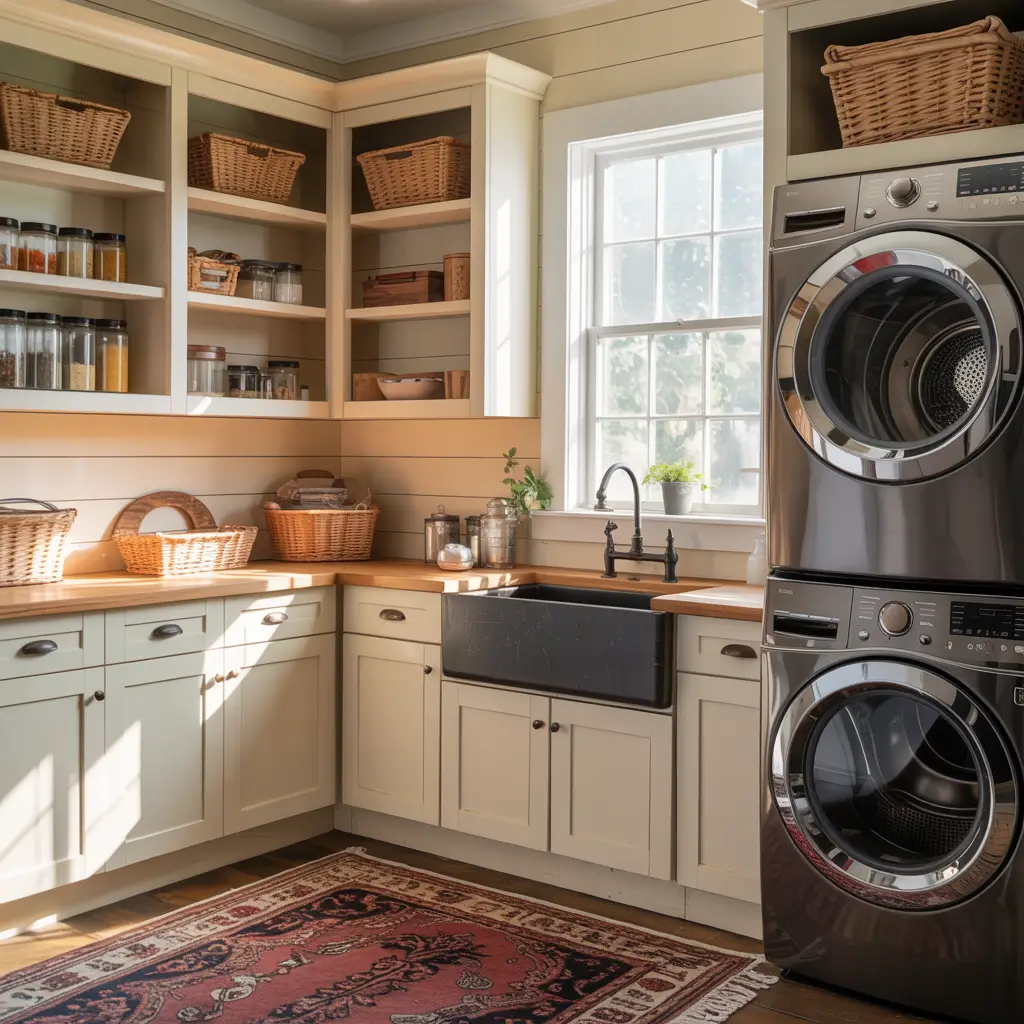
Okay, I know farmhouse style has been everywhere, but there’s a reason it works so well in pantry laundry combos. The aesthetic literally celebrates functional, hardworking spaces—which is exactly what you’re dealing with.
Farmhouse design brings warmth through natural materials and vintage-inspired elements. We’re talking shiplap walls (or just one accent wall if you’re not ready to commit), open wooden shelving, apron-front sinks, and those gorgeous matte black fixtures that somehow make everything look more expensive.
Key farmhouse elements that actually serve a purpose:
- Wooden floating shelves for pantry items (they’re sturdy and look amazing)
- Galvanized metal bins for bulk storage
- A farmhouse sink for pre-treating stains and washing produce
- Woven baskets for corralling smaller items
- Vintage-style hooks for hanging brooms, bags, and aprons
I installed simple pine boards as shelving in my space, and honestly? They hold my canned goods like champions while looking infinitely better than wire shelving. I sealed them properly so they can handle humidity from the dryer without warping.
The color palette typically sticks to whites, creams, soft grays, and natural wood tones. This keeps the space feeling bright and clean—critical when you’re combining food storage with laundry tasks. Nobody wants their pantry feeling dingy.
Add some personality with vintage finds from thrift stores. An old metal sign, a repurposed ladder for hanging linens, or mason jars for bulk items all reinforce that farmhouse vibe without costing a fortune.
Stackable Washer Dryer With Pantry Storage
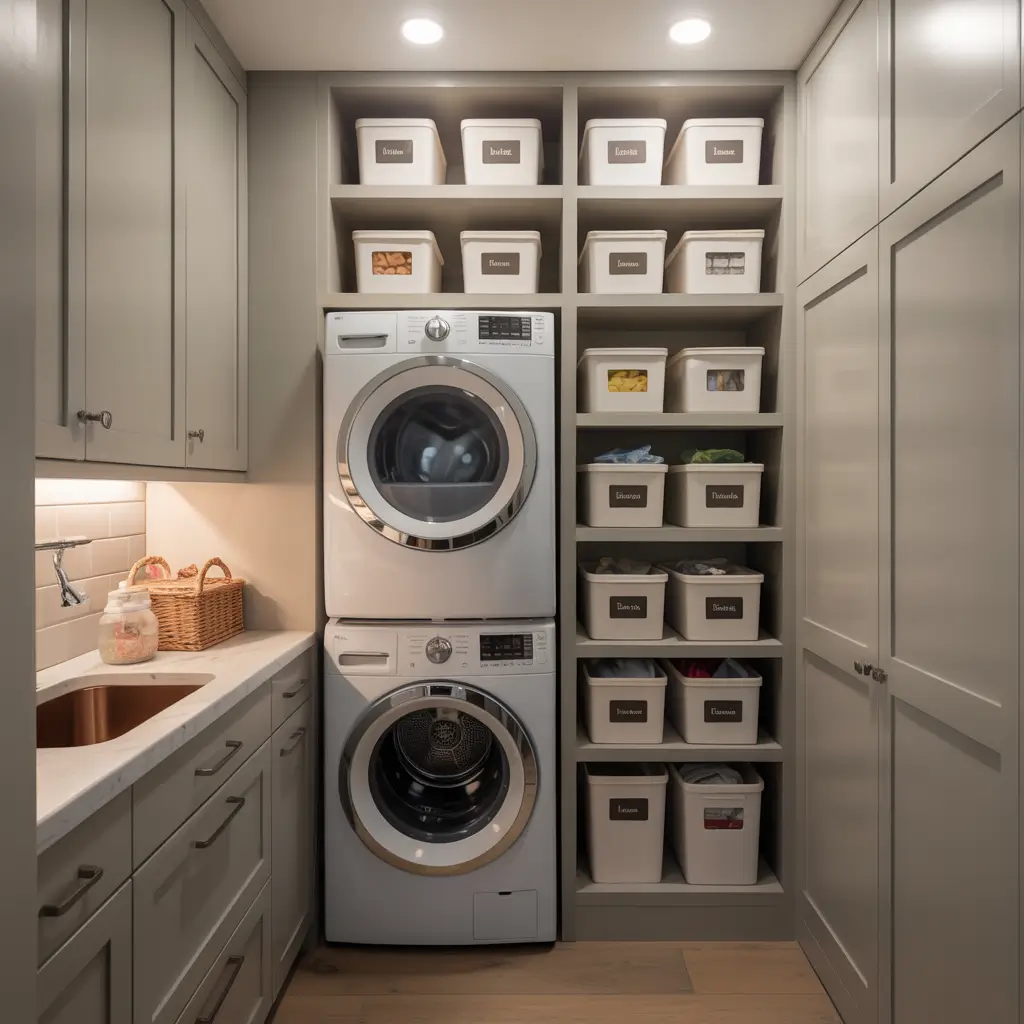
Here’s where we get smart about vertical space. Stackable units free up roughly half your floor space, and that’s game-changing in a combo room.
The beauty of going vertical with your machines? You create this entire floor-to-ceiling column of functionality. Your stacked washer-dryer becomes the anchor, and you build your pantry storage around it.
Smart configuration ideas:
- Install floor-to-ceiling pantry cabinets on both sides of stacked machines
- Add a pull-out drawer unit in the dead space beside the machines
- Mount upper cabinets above the dryer (make sure you can still access it)
- Create a broom closet beside the stack (seriously, where else do those go?)
I went with a stackable setup in my last place, and the amount of floor space I reclaimed shocked me. I added a narrow cabinet beside the stack that became my baking supply zone—flour, sugar, mixing bowls, all of it. The cabinet was only 12 inches wide, but it held SO much.
Pro tip: Make sure your stacked dryer has a front-loading door, not a top-loading one. I learned this the hard way when I had to basically climb onto my washer to access the dryer lint trap. Not my finest moment.
The key measurement to remember? Most stackable units need about 75-80 inches of vertical clearance. Measure your ceiling height before you fall in love with a particular model.
Also Read: 15 Elegant Black Tile Bathroom Dramatic Design Ideas
Hidden Pantry Cabinets in Laundry Room
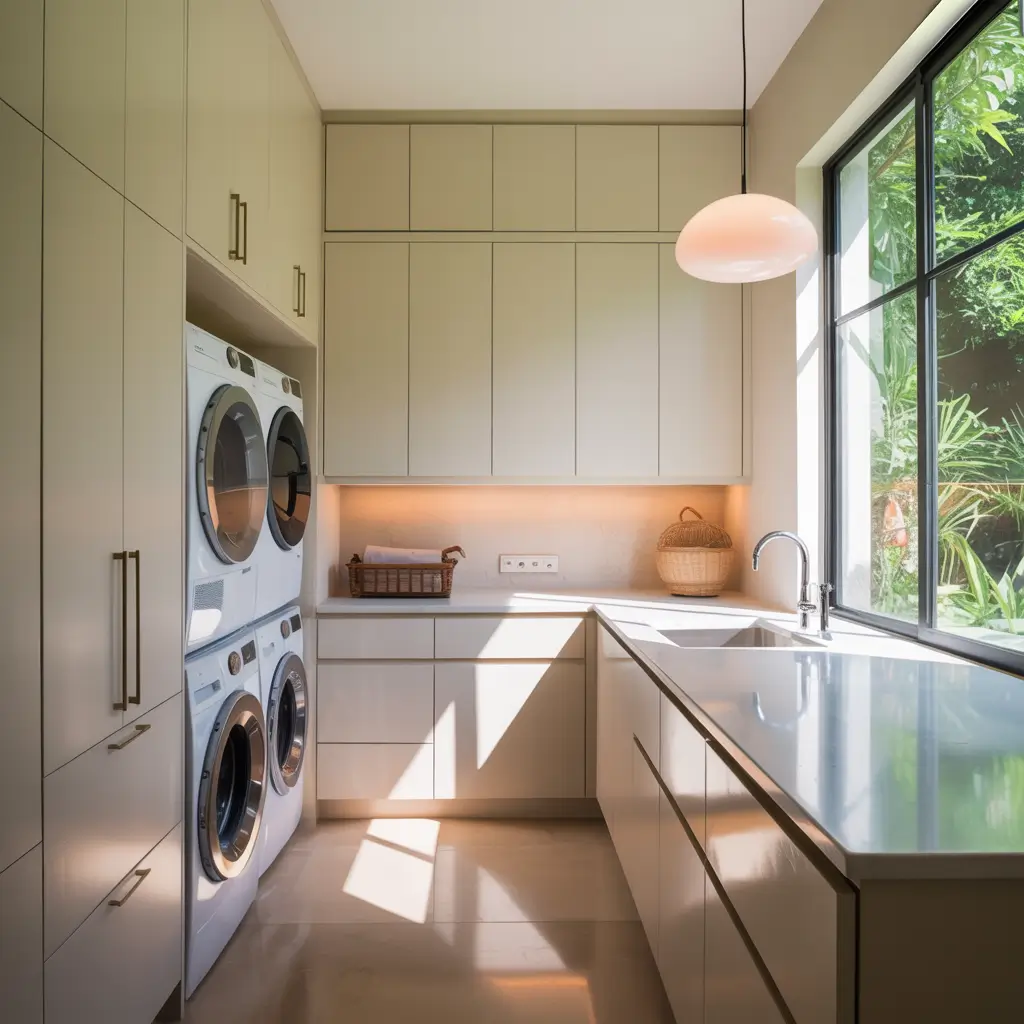
Sometimes you don’t want people to know your laundry room doubles as food storage. I totally get that. Hidden pantry cabinets let you disguise your dry goods behind doors that match your laundry cabinetry.
The concept revolves around seamless integration. All your cabinet fronts look identical, so guests can’t tell which doors hide detergent and which ones hide pasta. It’s like a magic trick, but for home organization.
Options for hiding your pantry storage:
- Full-height cabinet doors that conceal pull-out pantry shelves
- Toe-kick drawers for flat items like baking sheets or cutting boards
- False drawer fronts that actually open as small cabinets
- Corner lazy susans hidden behind standard cabinet doors
I’m particularly obsessed with pull-out pantry systems. You know the ones—tall, narrow cabinets with shelves on both sides that glide out smoothly? They hold an absurd amount of food while taking up minimal floor space. Plus, you can actually see everything you own instead of losing cans in the back.
Hidden storage also solves the visual chaos problem. Even if your pantry organization inside isn’t Pinterest-perfect, closed doors create a clean appearance. Some days, that’s all you need.
L-Shaped Pantry Laundry Room Setup
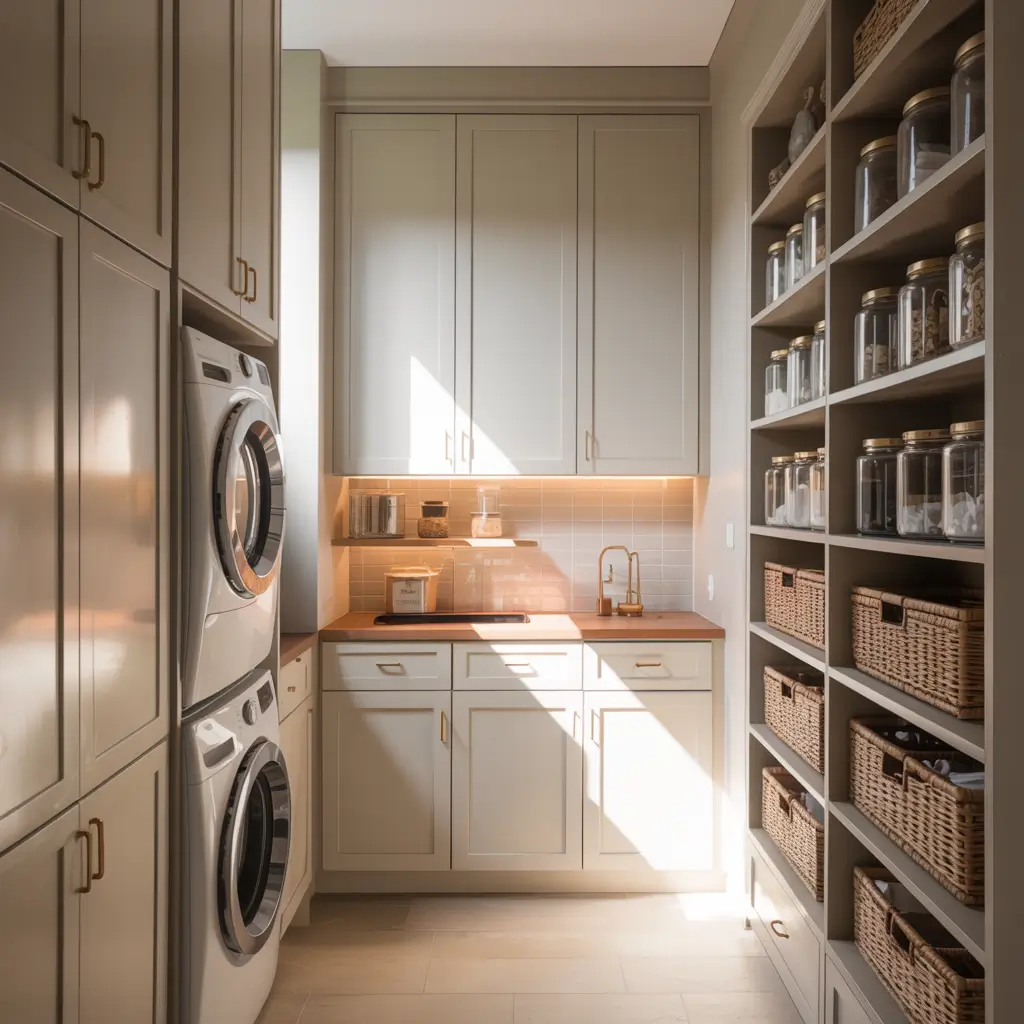
Got a corner to work with? The L-shaped configuration might be your answer. You dedicate one wall to laundry tasks and the other to pantry storage, creating two distinct but connected zones.
This layout works beautifully because it provides natural separation between your food and your cleaning supplies. Ever accidentally grabbed fabric softener instead of cooking oil? Yeah, proper zoning prevents that nightmare.
How to maximize an L-shaped layout:
- Place machines on the shorter wall to anchor the space
- Use the longer wall for floor-to-ceiling pantry shelving
- Install a countertop that wraps around the corner
- Add a corner cabinet or lazy susan where the two zones meet
- Position a utility sink at the junction point (serves both purposes)
The corner itself deserves special attention. Corners eat up space and often become dead zones where things go to die. Combat this with a corner carousel, lazy susan, or specially designed corner pull-out drawer. I use mine for awkward items like cereal boxes and chip bags—things that don’t stack nicely on regular shelves.
The L-shape also creates a natural workflow. You move from washing clothes, to folding (on your countertop), to putting away (in nearby cabinets), all while having easy access to your pantry items. It’s efficiency wrapped in smart design.
Narrow Pantry Laundry Closet Combo
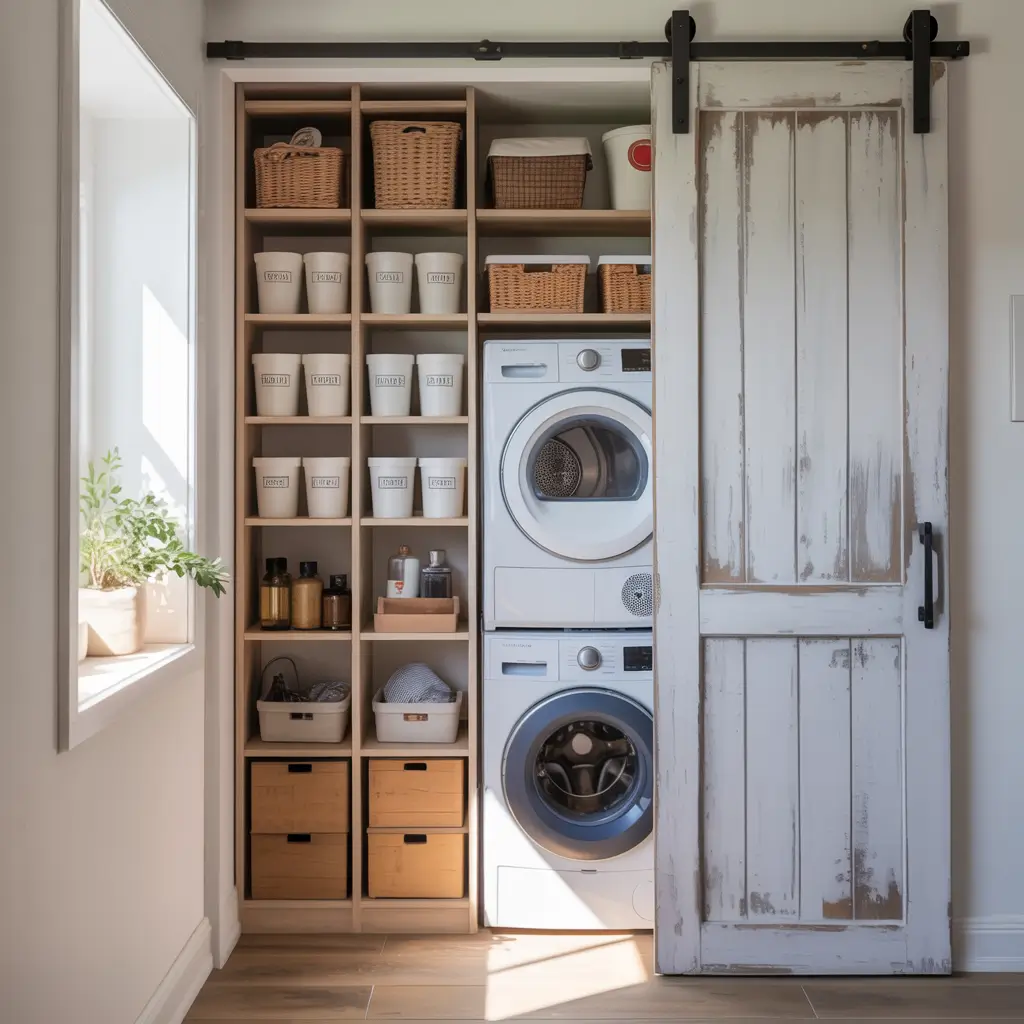
Sometimes you’re not working with a room at all—you’ve got a closet, maybe 3-4 feet wide, and you need it to do EVERYTHING. Welcome to my first apartment situation.
Narrow spaces demand creative solutions. You can’t waste a single inch, and you need to embrace vertical storage like your life depends on it (because your organizational sanity kind of does).
Essential elements for narrow combos:
- Stackable machines (non-negotiable in this width)
- Over-the-door organizers for cleaning supplies or snacks
- Magnetic strips on the inside of doors for spice jars
- Hanging shoe organizers repurposed for pantry items
- Wall-mounted fold-out drying rack
I mounted a narrow shelf about 6 feet high that runs the entire width above my stacked machines. It holds my bulk pantry items—paper towels, extra toilet paper, backup cleaning supplies. Is it the easiest to access? No. But for items I don’t need daily, it works perfectly.
The door becomes crucial real estate. I installed an over-the-door rack with multiple baskets that holds snack bars, packets of seasoning, and small laundry items like dryer sheets. Every surface needs a job in a narrow space.
Lighting matters more in closet combos too. Add battery-operated LED strips under shelves or motion-activated lights. You can’t organize what you can’t see, and closets rarely have great built-in lighting.
Budget-Friendly DIY Pantry Laundry Combo
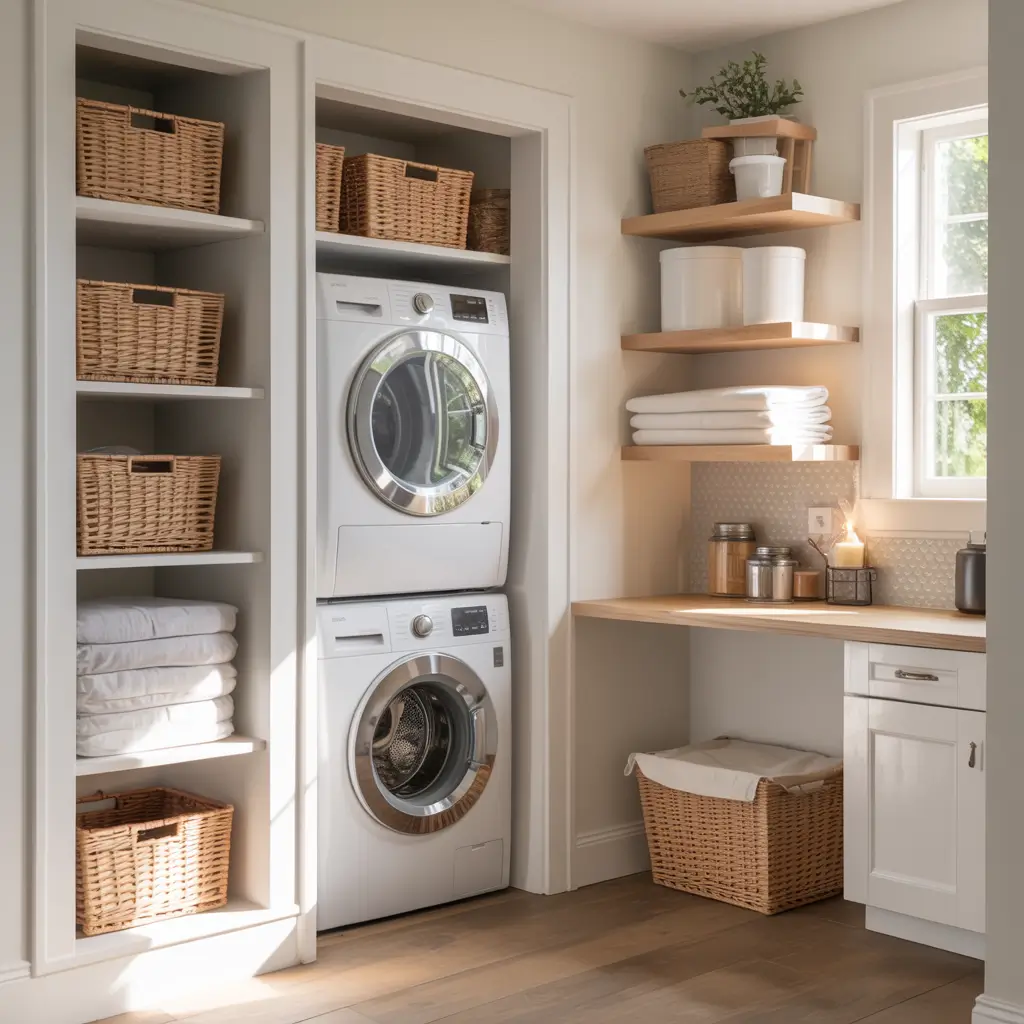
Not everyone can drop thousands on custom cabinetry, and honestly? You don’t need to. Some of the best organizational solutions come from DIY projects and budget-friendly hacks.
I’ve organized combo spaces on shoestring budgets, and the results looked just as functional (and nearly as good) as expensive renovations. The trick lies in smart shopping and willingness to put in a little sweat equity.
Budget-friendly solutions that actually work:
- Wire shelving units from big box stores (install them yourself)
- Repurposed bookcases for pantry storage
- Tension rods for creating hanging storage
- Dollar store bins and baskets (label them so they look cohesive)
- Peel-and-stick tile for a backsplash upgrade
- Paint—seriously, a fresh coat transforms everything
I completely redid a combo space for under $300 once. I bought wire shelving units during a sale, painted the walls a crisp white, added some discount store baskets, and installed a tension rod for hanging clothes. Did it look like a design magazine spread? No. Did it function beautifully and look a thousand times better than before? Absolutely.
Labels are your secret weapon on a budget. Print them for free, use a label maker, or hand-write them on nice cardstock. Uniform labels make mismatched storage containers look intentional and organized.
Don’t underestimate the power of a good cleaning and decluttering either. Sometimes the best organization “hack” is getting rid of stuff you don’t need. Shocking concept, I know.
Minimalist White Pantry Laundry Room
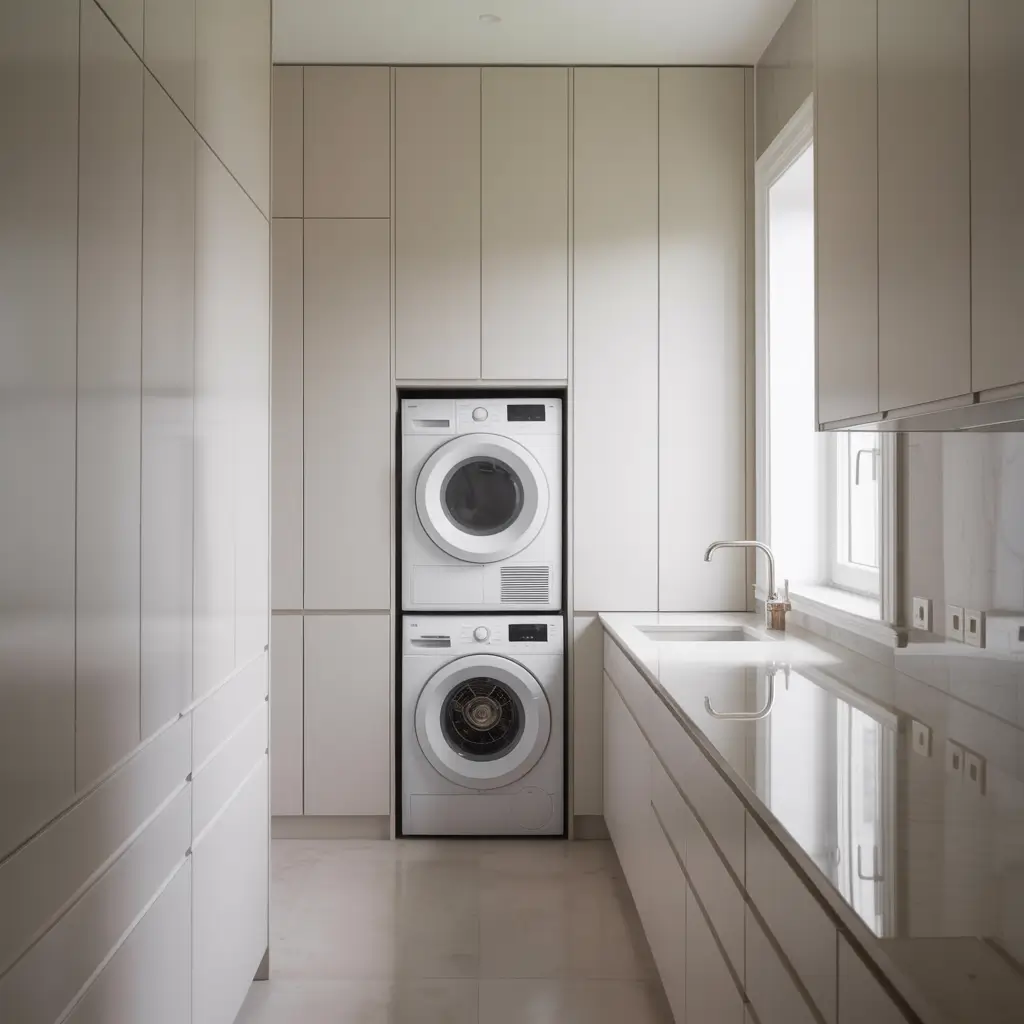
IMO, minimalist design makes the most sense for combo spaces. You reduce visual noise, create a calming environment, and make the dual-purpose nature of the room feel intentional rather than chaotic.
The minimalist white approach embraces simplicity. White cabinets, white walls, white machines if you can swing it. You introduce texture through materials rather than color—matte finishes, wood accents, maybe some concrete elements.
Minimalist must-haves:
- All-white or light neutral color scheme
- Handleless cabinet doors (push-to-open mechanisms)
- Concealed storage (everything behind closed doors)
- Uniform containers for all pantry items
- Single statement light fixture
- One type of basket or bin throughout
I’ll be honest—maintaining a white minimalist space requires commitment. But the visual serenity you get in return? Totally worth it when you’re dealing with the inherently messy tasks of laundry and cooking.
The key to avoiding that sterile, cold feeling? Layer in different shades of white and cream, add natural wood elements, and include some matte black hardware or fixtures for contrast. A white room with these subtle variations feels warm and inviting, not like a hospital.
Minimalism also forces you to be honest about what you actually need. You can’t hide clutter behind “more stuff,” so you keep only what serves a purpose. Ever wondered why minimalist spaces feel so peaceful? It’s because visual clutter literally stresses your brain out.
Mudroom Pantry Laundry Combo Design
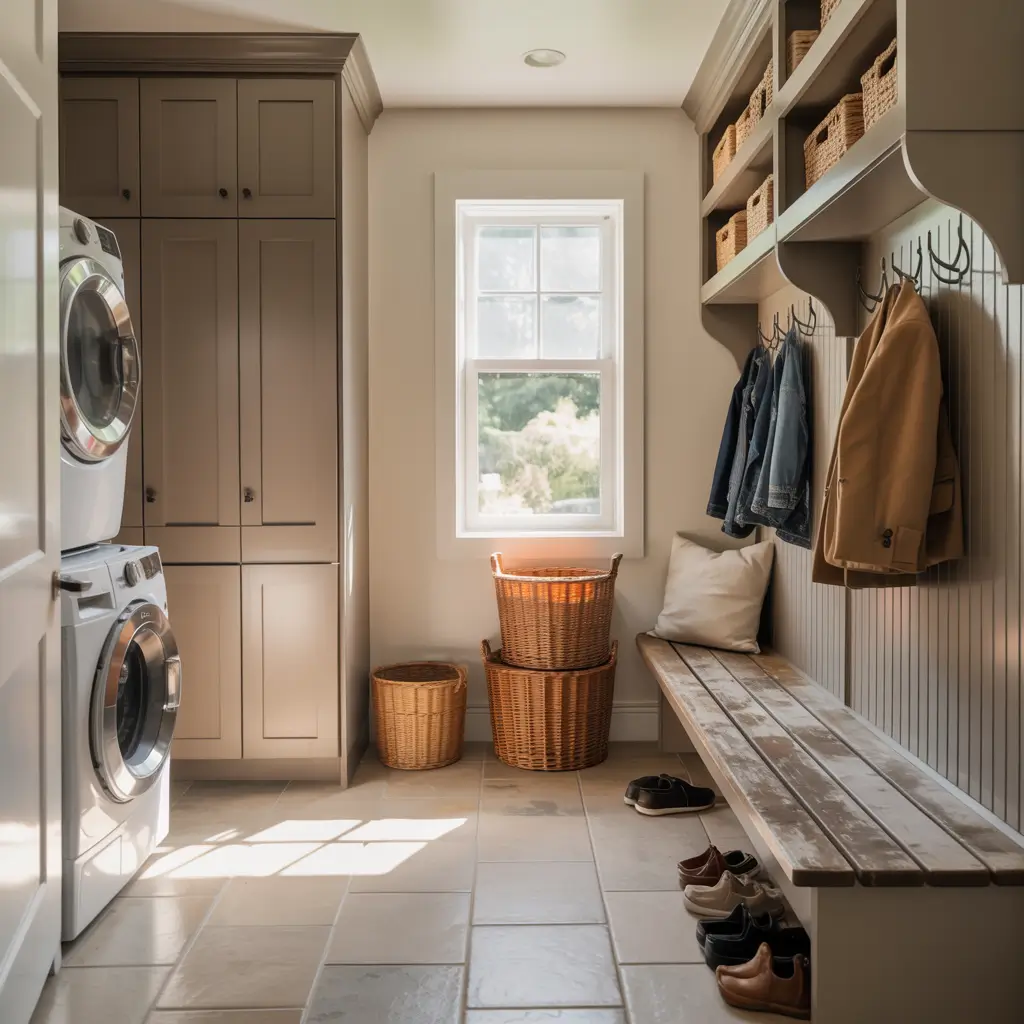
Now we’re talking about the ultimate multi-tasker—the triple threat of home organization. A mudroom-pantry-laundry combo handles three of your home’s messiest functions in one space.
This setup works particularly well if you have an entry point from your garage or backyard. You walk in, drop your muddy shoes, toss clothes in the washer, and grab a snack from the pantry. The workflow makes perfect sense.
Essential zones for a triple combo:
- Entry zone: Hooks, bench, shoe storage, key tray
- Laundry zone: Machines, folding space, hanging rod
- Pantry zone: Shelving, bulk storage, countertop for bags
- Cleaning zone: Supplies for all three areas
The trick here is creating clear zones without walls. You use design elements to delineate areas—different flooring, a change in cabinet style, or strategic placement of furniture. I’ve seen people use different paint colors on walls to signal zone changes, which works surprisingly well.
Storage needs to work overtime in this configuration. Cubbies for each family member handle the mudroom function. The pantry section needs easy-access shelving for frequently used items. Laundry requires both hanging and folding space.
A utility sink becomes almost essential in a triple combo. You use it for washing muddy hands, pre-treating stains, rinsing produce, and filling buckets. One sink, multiple purposes.
Vertical Storage Pantry Laundry Solution
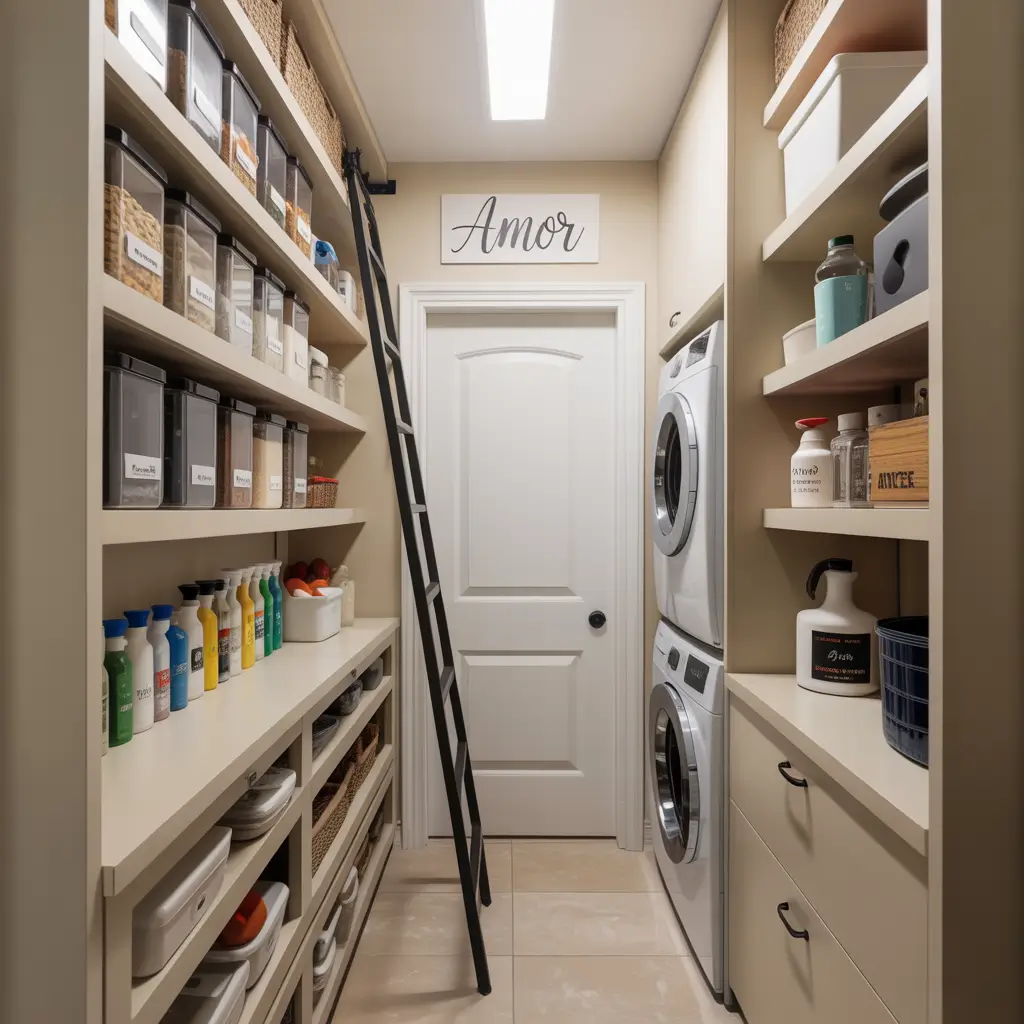
When you can’t build out, build up. Vertical storage solutions maximize every inch of wall space from floor to ceiling, transforming even the smallest combo into a storage powerhouse.
The human brain processes vertical lines as efficient and organized, so stacked storage automatically makes your space feel more put-together. Plus, you’re using space that would otherwise just be… wall.
Vertical storage strategies:
- Floor-to-ceiling shelving units (aim for 8+ feet tall)
- Stacked storage baskets or bins
- Wall-mounted rails with S-hooks for hanging items
- Pegboard walls for customizable storage
- Vertical pull-out pantries (tall and narrow)
- Ladder-style shelving units
I installed a pegboard wall in my combo space, and I’m borderline obsessed with it. I hang everything—small baskets for snacks, hooks for cleaning tools, clips for storing bags of chips. I can rearrange it whenever I want, which satisfies my need to change things up without buying new furniture.
The top shelves (above 6.5 feet) should hold items you don’t access frequently. I keep backup supplies up there—extra paper towels, bulk rice, seasonal items. You’ll need a step stool, but that’s fine for things you grab monthly rather than daily.
Important: Secure tall shelving units to wall studs. The last thing you need is a pantry shelf avalanche when you’re trying to grab a can of soup.
Also Read: 15 Trendy Green Bathroom Tile Ideas That Feel Expensive
Open Shelving Pantry Laundry Room Idea
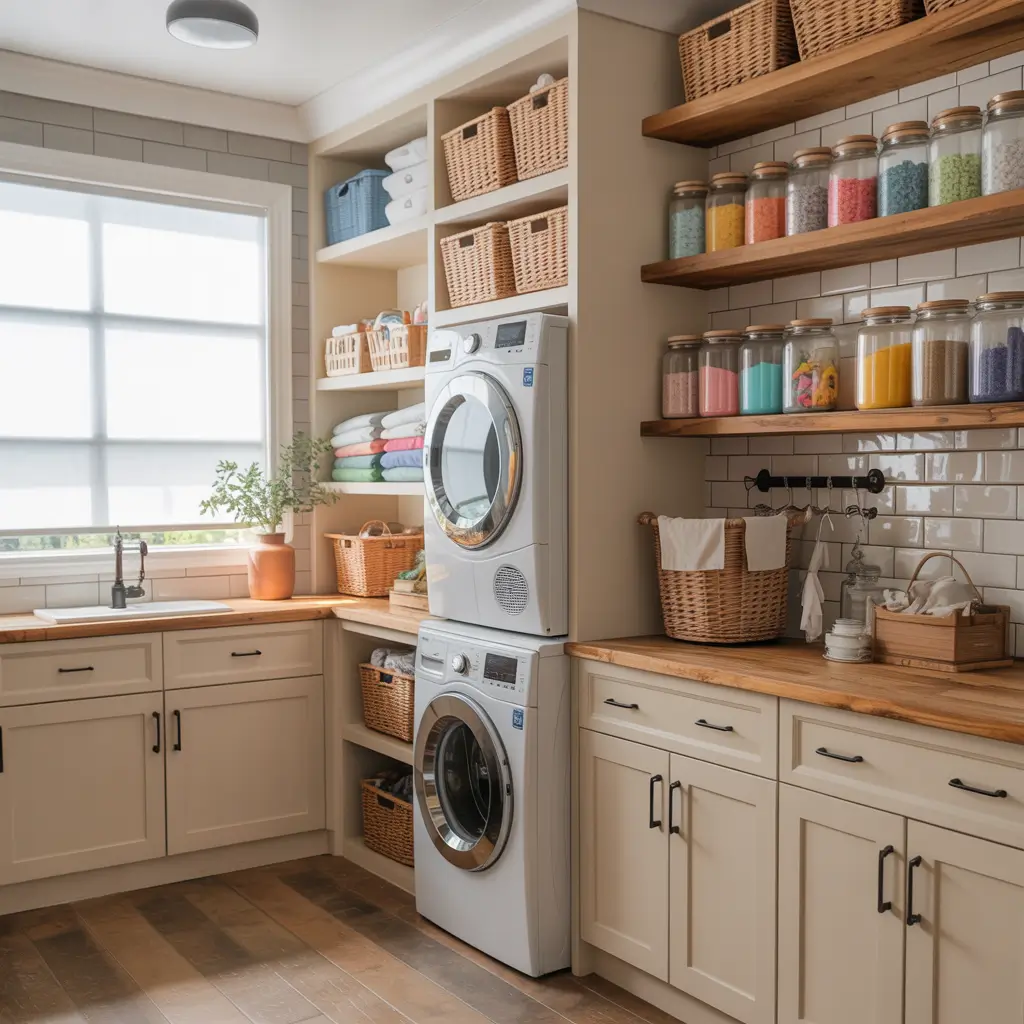
Open shelving polarizes people. Some folks love the accessibility and aesthetic. Others hate the dust and visual exposure. I fall somewhere in the middle, but I can’t deny that open shelving works beautifully in combo spaces when done right.
The appeal? You see everything you own at a glance. No rummaging through cabinets, no forgetting about the weird ingredient you bought six months ago. Plus, open shelving costs way less than cabinetry.
Making open shelving work:
- Use uniform containers (this is non-negotiable for a cohesive look)
- Style your shelves—pretty items in front, boring stuff in back
- Add labels to everything
- Install shelves at varying heights based on item size
- Keep frequently used items at eye level (roughly 4-5 feet high)
I have open shelving above my washer-dryer for pantry items, and I keep everything in matching glass jars and white bins. It looks intentional and honestly kind of pretty. But I’ll level with you—I dust those shelves way more often than I would dust closed cabinets.
Color coordination matters with open shelving. I group my pantry items by color (all pasta boxes together, all canned tomatoes together) which creates visual calm even though everything’s exposed.
The psychological benefit of open shelving? You actually use what you have. When you can see your inventory, you don’t accidentally buy duplicates, and you remember to actually eat that quinoa instead of letting it expire in a dark cabinet.
Luxury Pantry Laundry Room With Custom Cabinets
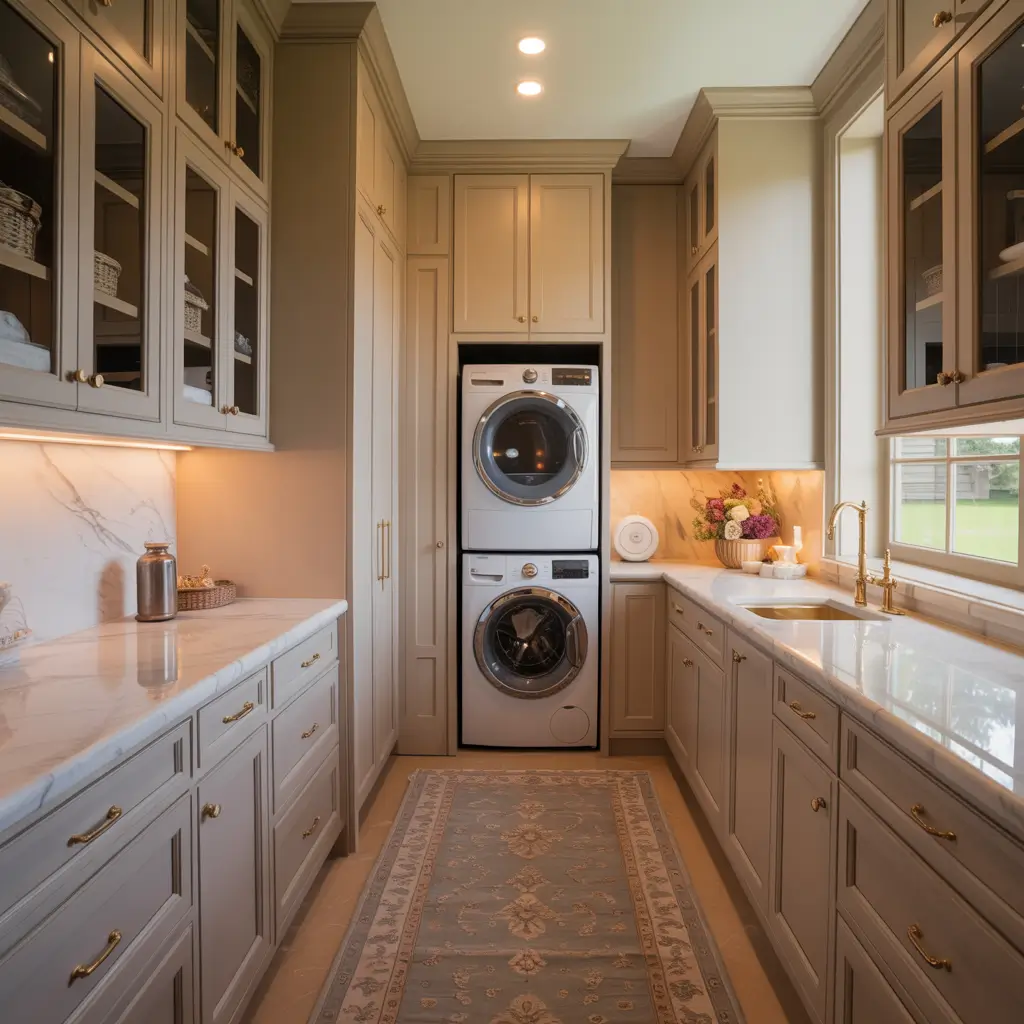
Let’s talk about the high-end approach. When budget isn’t a constraint, you can create a combo space that feels more like a luxury amenity than a utilitarian room.
Custom cabinetry means every single inch gets designed specifically for your needs. You choose the exact depth, height, and configuration of every shelf. Your pantry accommodates your actual groceries, not some designer’s guess at what people buy.
Luxury features worth considering:
- Soft-close drawers and cabinet doors (silent, smooth operation)
- Pull-out shelving throughout (nothing pushed to the back)
- Built-in hamper systems with separate bins for sorting
- Integrated lighting inside cabinets and drawers
- Stone or quartz countertops
- High-end appliances (steam washers, heat pump dryers)
- Built-in steamer or ironing system
- Climate control for temperature-sensitive pantry items
I worked on a luxury combo once that included a wine fridge, a second dishwasher for cleaning small items, and a granite countertop that extended the entire length of the room. Excessive? Maybe. Gorgeous and functional? Absolutely.
The material quality in custom luxury spaces makes everything feel different. Solid wood cabinets instead of particleboard. Dovetail drawer construction. Undermount drawer slides. These details might not seem important, but they transform how the space functions and how long it lasts.
Custom cabinetry also solves the awkward corner problem perfectly. Your designer creates specialized corner solutions—magic corners, LeMans systems, or custom lazy susans—that make every cubic inch usable.
Compact Apartment Pantry Laundry Combo
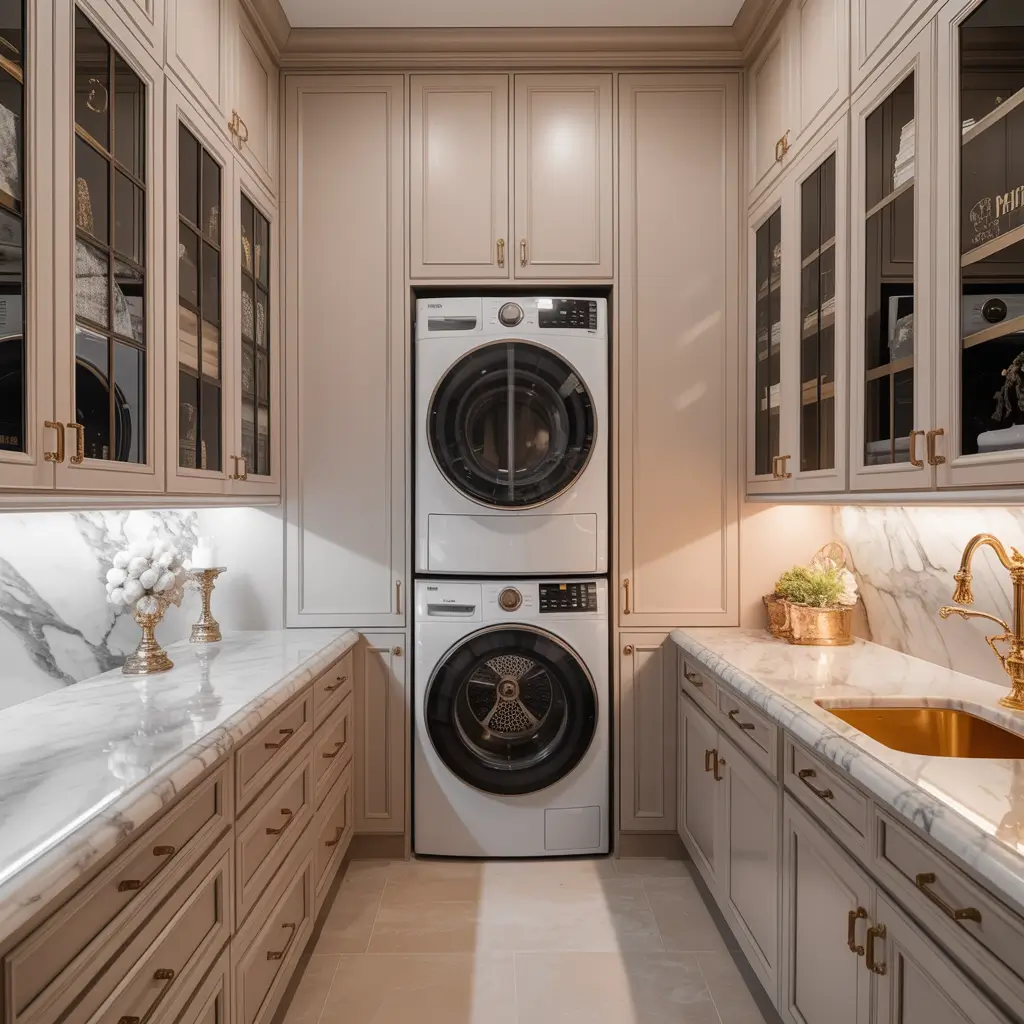
Apartment living presents unique challenges. You’re probably renting, which limits major renovations. You might have weird dimensions or poor placement. You definitely need solutions that work now but can move with you later.
The apartment approach focuses on removable, portable, and affordable solutions. You improve the space without losing your security deposit or investing in features you’ll leave behind.
Renter-friendly combo solutions:
- Freestanding shelving units (no wall mounting required)
- Over-the-toilet style etageres (designed for tight spaces)
- Adhesive hooks and organizers (remove without damage)
- Curtain tension rods for hanging storage
- Rolling carts that tuck beside appliances
- Furniture pieces repurposed for pantry storage
I lived in an apartment where my “laundry room” was literally a closet with a stacked washer-dryer and about 18 inches of space beside it. I bought a narrow bookshelf that fit in that gap, and it became my entire pantry. When I moved, the bookshelf came with me.
Landlord-approved improvements include contact paper for shelf liners (adds color, protects surfaces), battery-operated lighting, and paint if your lease allows it. These small changes upgrade the feel without crossing rental agreement boundaries.
The mental shift for apartment combos? Embrace furniture-style storage instead of built-ins. A beautiful cabinet that holds your pantry goods can look intentional and stylish, not like a compromise.
Walk-In Pantry Laundry Room Combination
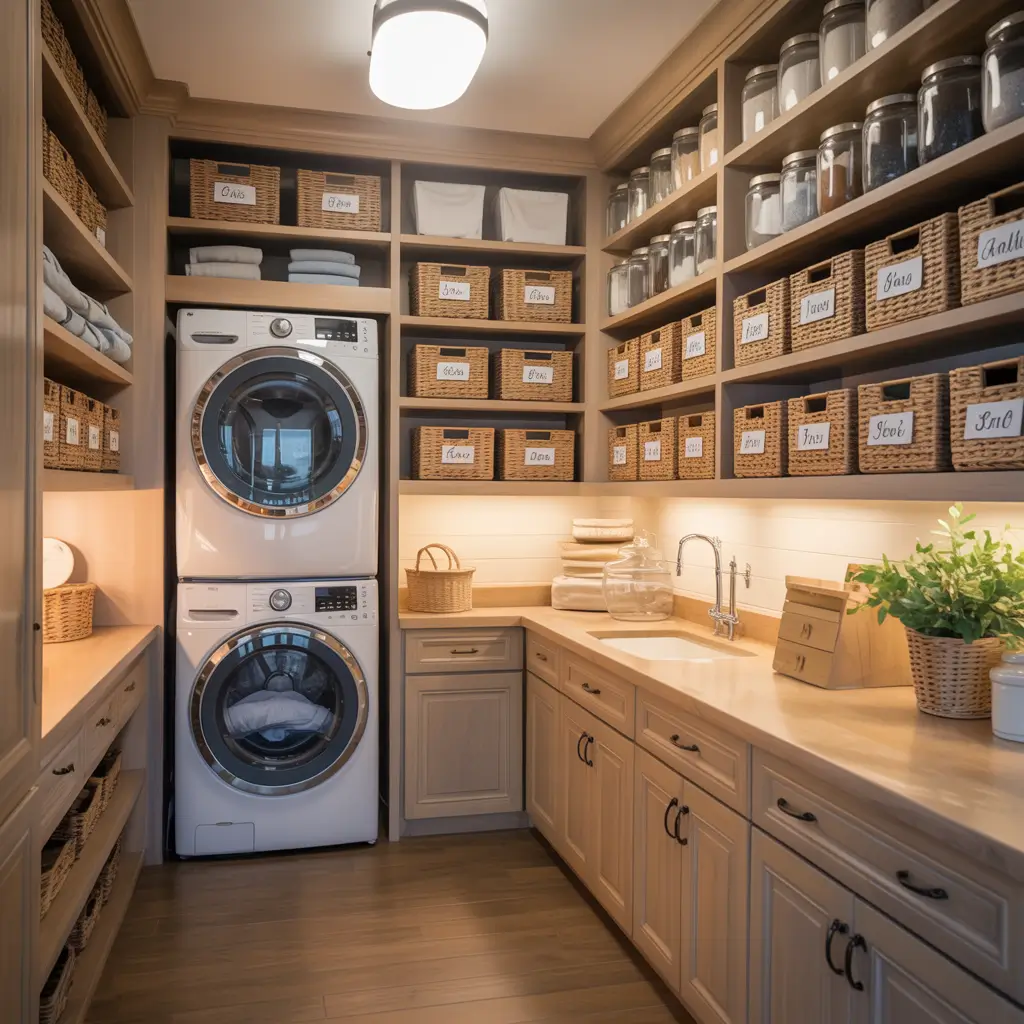
Okay, this is the dream scenario. A walk-in space where you can spread out, create distinct zones, and actually have room to move around while folding laundry. If you have this setup, you’ve won the combo room lottery.
Walk-in combos allow for U-shaped or L-shaped configurations where machines and pantry storage face each other. You create a central workspace in the middle—a folding table, island, or counter that serves as a hub for both functions.
Maximizing walk-in combo spaces:
- Create a folding/prep island in the center (add storage underneath)
- Install countertop-height work surfaces along multiple walls
- Design a coffee or beverage station within the pantry area
- Add a sink accessible from both laundry and pantry zones
- Include a hanging rod or pull-down drying rack
- Install under-cabinet lighting for task work
- Consider a small desk area for meal planning or stain treatment research
I helped design a walk-in combo that included a small window seat at one end. It sounds frivolous, but that little bench became the perfect spot for setting down folded laundry or waiting for a quick wash cycle. Sometimes the “extras” make the biggest difference in how you actually use a space.
Walk-in spaces also let you add personality without the room feeling cluttered. You can include decorative elements—artwork, plants, a pretty rug—because you have visual breathing room. Your combo becomes a room you enjoy spending time in, not just a functional space you tolerate.
The countertop situation in a walk-in deserves special planning. You want surfaces at different heights for different tasks—standard counter height (36 inches) for food prep and folding, and possibly bar height (42 inches) for a coffee station or quick standing workspace.
Conclusion
Look, pantry laundry combos aren’t going anywhere. As homes get smaller and we demand more from every square foot, these multi-purpose spaces will only become more common. The good news? You’re not settling when you combine these functions—you’re optimizing.
The secret to a successful combo lies in honest assessment of your actual needs. How much pantry storage do you really need? How often do you do laundry? What tasks frustrate you most in your current setup? Answer these questions truthfully, and you’ll design a space that genuinely improves your daily life.
Whether you’re working with a closet or a walk-in, on a budget or going custom, the principles remain the same: maximize vertical space, create clear zones, choose storage solutions that fit your lifestyle, and don’t apologize for the dual purpose. Own it, organize it well, and maybe—just maybe—you’ll find yourself actually enjoying laundry day.


