15 Clever Narrow Laundry Room Storage Hacks
- Laundry Room Ideas
 Alina
Alina- 0
- 42 minutes read

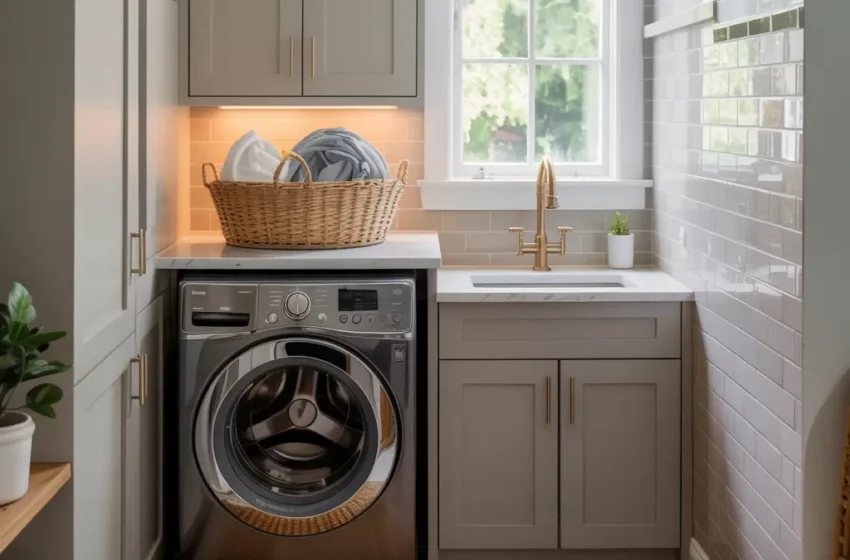
You know that narrow sliver of space you call a laundry room? Yeah, the one where you practically have to turn sideways to squeeze past the dryer? I’ve been there, friend. My first apartment had a laundry “room” that was basically a hallway with a washer-dryer combo shoved in it. I thought I was doomed to a life of detergent bottles cluttering the floor and nowhere to fold anything. But here’s the thing—narrow doesn’t have to mean dysfunctional.
I’ve spent way too many hours (and probably too much money) figuring out how to make tight laundry spaces work like absolute champions. And guess what? I’m about to share every trick I’ve learned. These 15 storage hacks will transform your cramped laundry situation from “I hate doing laundry” to “okay, this is actually kind of nice.” Ready to reclaim those precious square inches?
Slim Built-In Cabinet Narrow Laundry Room
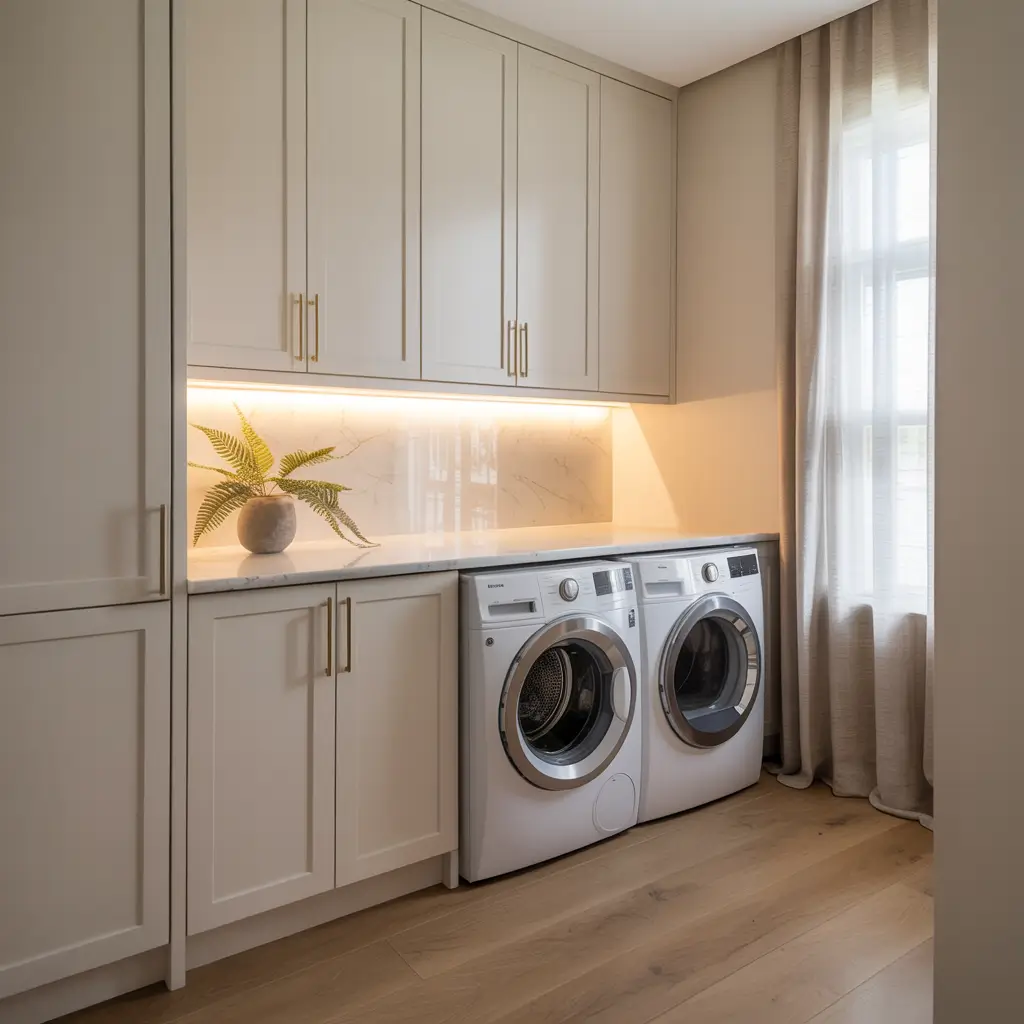
Let me tell you about the game-changer that is slim built-in cabinetry. When you’re working with a narrow laundry room, every single inch counts. I’m talking about those sleek, floor-to-ceiling cabinets that measure just 12-18 inches deep but pack serious storage punch.
Here’s why I’m obsessed with this setup: you can customize the interior to fit exactly what you need. Pull-out shelves for detergent? Check. Vertical dividers for brooms and mops? Absolutely. A dedicated spot for that iron you use twice a year? You got it.
The secret is using the full height of your room. Most people waste the top 2-3 feet of wall space, but that’s prime real estate for storing seasonal items or bulk supplies. I installed slim cabinets on both sides of my washer-dryer, and suddenly I had room for cleaning supplies, extra towels, and all those random things that used to live on top of the dryer.
Pro tip: Go for cabinets with doors. Open shelving looks pretty in magazines, but in a narrow space, it makes everything feel cluttered and chaotic. Closed cabinets create clean lines and make your narrow room feel more spacious.
Stacked Washer Dryer Vertical Storage Layout
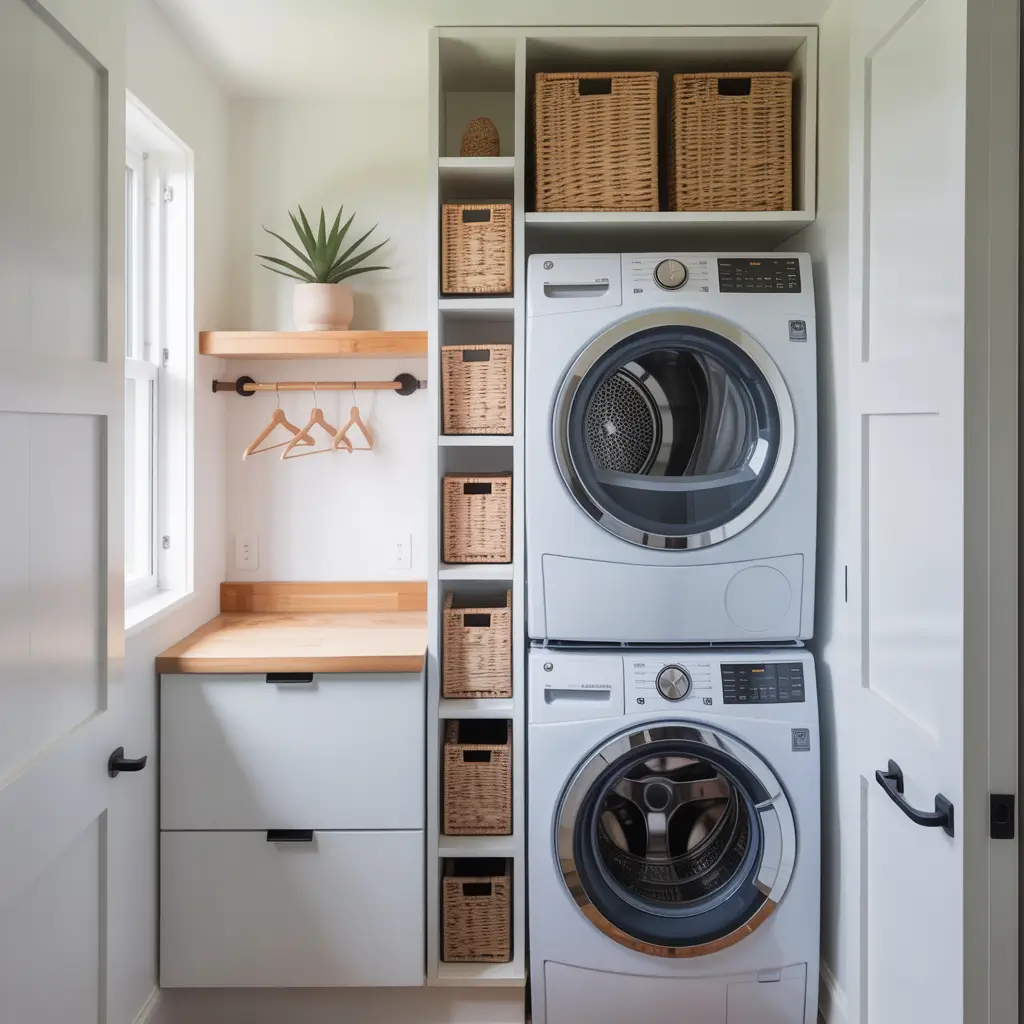
Can we talk about how stacking your washer and dryer is basically the no-brainer solution for narrow laundry rooms? I resisted this for way too long because I had this weird idea that front-loading stackable units were “fancy” and unnecessary.
Wrong. So wrong.
Going vertical freed up at least 2 feet of floor space for me, which doesn’t sound like much until you realize that’s enough room for a rolling cart, a hamper, or even a small countertop for folding. Plus, most stackable units come with a shelf or storage area between the washer and dryer that’s perfect for dryer sheets and stain removers.
Here’s what you need to consider:
- Stacking kits are essential—don’t just balance your dryer on top like some kind of appliance Jenga game
- Leave enough clearance above for ventilation (check your manual, but usually 4-6 inches)
- Make sure your dryer door swings the right way for your space
- Consider a front-load washer for easier access when stacked
The vertical layout also lets you install shelving or cabinets on either side of the stack, creating a built-in look without actual construction work. I used two narrow bookcases from that Swedish furniture store (you know the one), and it completely transformed the space.
Floating Shelves Over Washer Solution
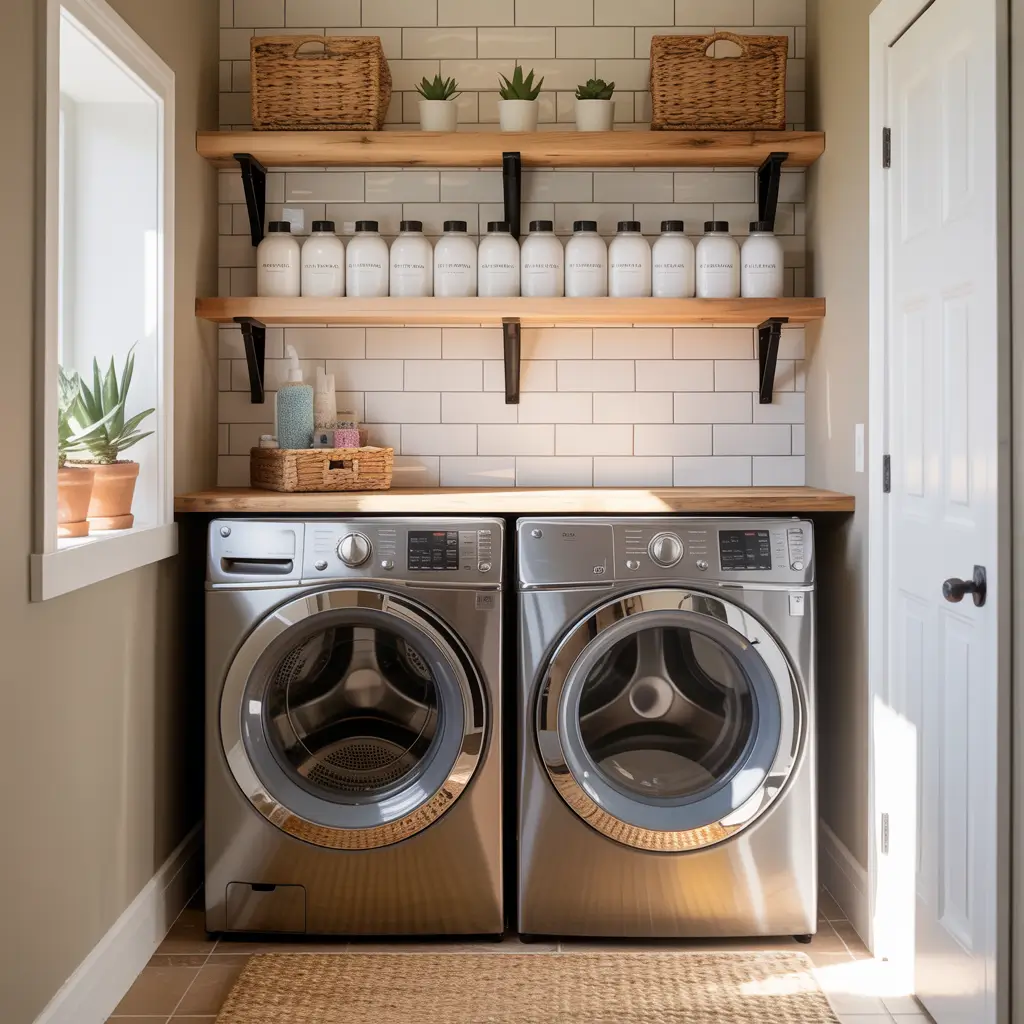
Okay, floating shelves are everywhere right now, but there’s a reason they’re so popular—they work. Especially over your washer and dryer, where you’ve got this awkward space that’s too high to reach comfortably but too useful to waste.
I installed three floating shelves above my machines, and let me tell you about the hierarchy I created. Bottom shelf: everyday essentials like detergent, fabric softener, and stain spray. Middle shelf: less frequently used items like wool wash and color-safe bleach. Top shelf: backup supplies and things I buy in bulk.
The beauty of floating shelves is they don’t take up any floor space. Zero. Zilch. In a narrow room, that’s everything. Plus, they’re relatively easy to install yourself if you’re even slightly handy with a drill.
Important things to remember:
- Use proper anchors—those shelves will hold heavy detergent bottles
- Space them 12-15 inches apart for optimal storage
- Don’t go wider than your machines unless you want a visual disaster
- Consider wood shelves for warmth or white for a clean look
I added small baskets on my shelves to corral smaller items like dryer balls and lint rollers. This keeps everything from looking like a messy detergent commercial exploded on your wall.
Galley Style Narrow Laundry Room Design
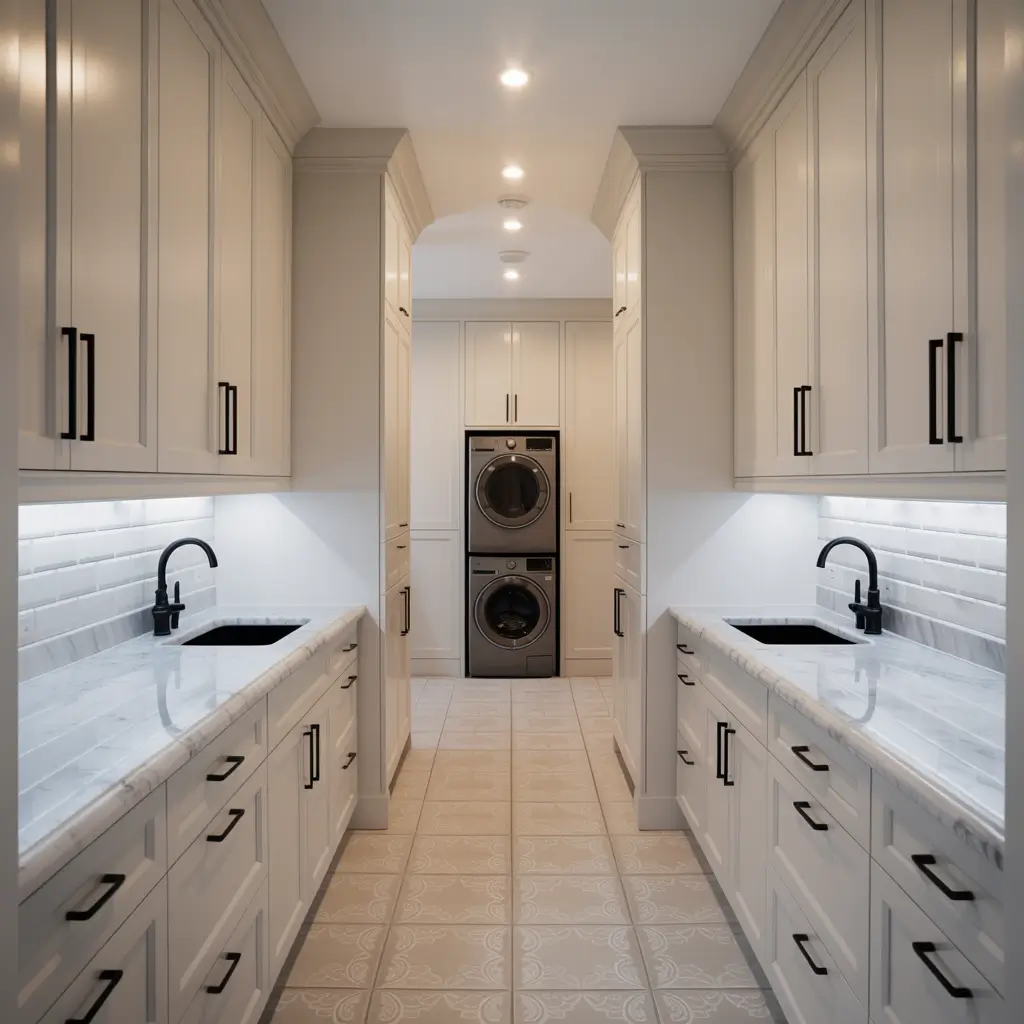
Ever been on a boat? Galley kitchens are masters of efficiency in tight spaces, and you can steal that same concept for your narrow laundry room. The galley-style layout puts everything within arm’s reach on parallel walls.
Here’s how I set mine up: washer and dryer on one wall, countertop and storage on the other. The walkway between them is narrow—maybe 3 feet—but that’s actually perfect. I can literally pivot between folding clothes and tossing them in the washer without taking a single step.
The key to making galley style work is strategic placement. Put your most-used items at waist height on both sides. This creates a workflow that feels natural instead of frustrating. I keep my folding supplies (hangers, clips, fabric spray) right across from the dryer, so I can grab what I need without playing hallway hopscotch.
Galley layout essentials:
- Maximum efficiency in 3-4 foot widths
- Everything accessible without excessive reaching
- Mirror functionality on both sides when possible
- Good lighting is crucial—you’re working in a corridor
One thing that surprised me? This layout actually makes the room feel less claustrophobic because you’re using both walls equally. It creates balance instead of having one overcrowded wall and one empty one.
Sliding Barn Door Space-Saving Setup
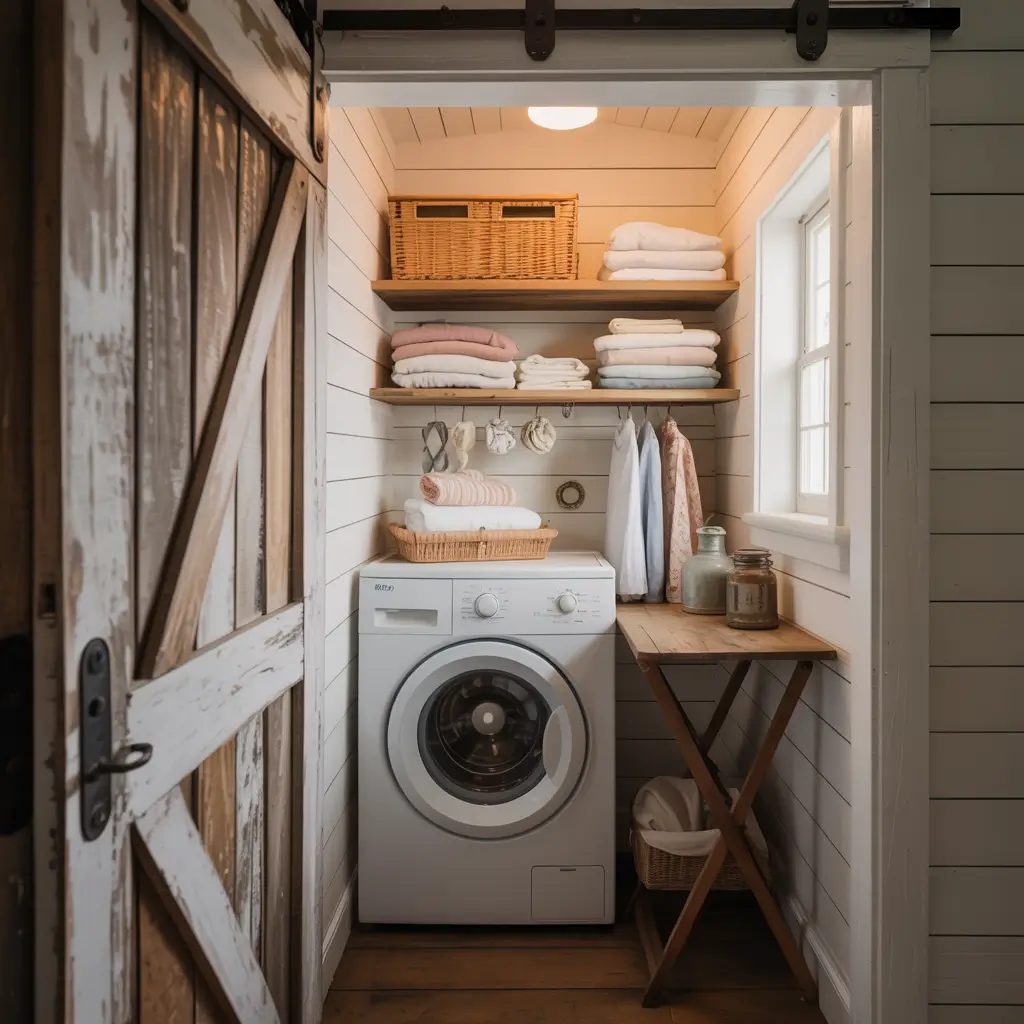
Traditional doors are space thieves. There, I said it. A standard door needs at least 2 feet of clearance to swing open, which is absurd in a narrow laundry room where you’re fighting for every inch.
Sliding barn doors changed my entire relationship with my laundry room. 🙂 Seriously, this was one of those “why didn’t I do this sooner” moments. The door slides along the wall instead of swinging into the room or hallway, which means I gained back valuable real estate.
Plus—and this is purely aesthetic—barn doors look amazing. They add character and style to what’s typically the most boring room in the house. I went with a simple white shiplap design, but you could do frosted glass, reclaimed wood, or even a chalkboard door for notes.
Here’s what you should know before installing:
- You need wall space on one side for the door to slide open
- The track mounts above the door frame, so measure your ceiling height
- Hardware quality matters—cheap tracks will drive you crazy with squeaking
- Consider a soft-close mechanism if you close doors aggressively (no judgment)
FYI, you can also use barn doors inside your laundry room to hide storage areas or create a concealed hamper space. I’ve seen people use them to hide stacked washer-dryers when not in use, which is genius for multi-purpose rooms.
Also Read: 15 Fresh Laundry Room Wallpaper Ideas for Modern Homes
Tall Pantry Cabinet Laundry Storage Wall
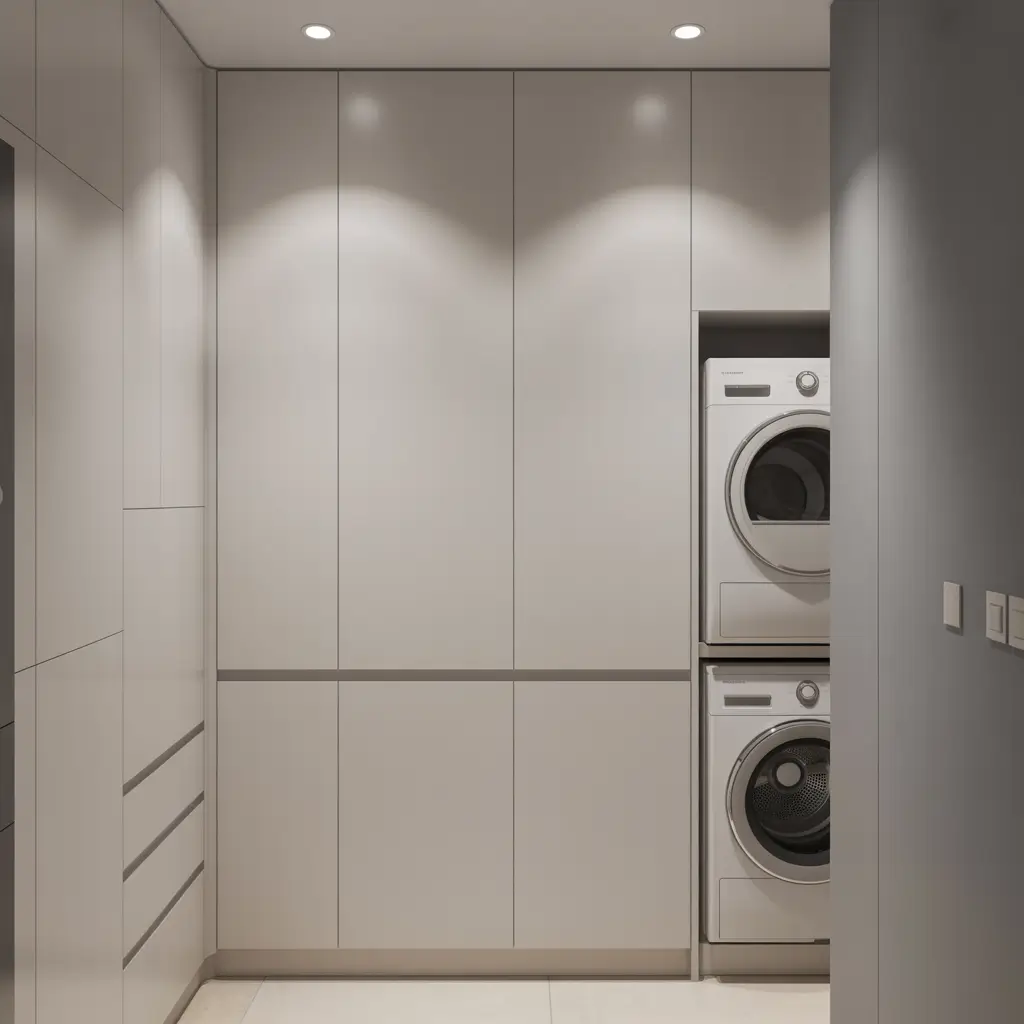
Remember when I said using vertical space is crucial? The tall pantry cabinet is the ultimate expression of that principle. I’m talking floor-to-ceiling, narrow-profile cabinets that maximize every vertical inch.
I installed a 24-inch wide pantry cabinet in my narrow laundry room, and it holds more than I thought possible. The secret is the pull-out shelving and adjustable interior. I can store everything from cleaning supplies to extra toilet paper (because where else are you supposed to keep bulk TP in a small house?).
What makes pantry cabinets perfect for narrow spaces is their depth—usually 12-24 inches—which is enough for storage without making you feel like the walls are closing in. I positioned mine at the end of my laundry room, creating a sort of storage wall that grounds the whole space.
Storage ideas for your pantry cabinet:
- Top shelves: Light items, seasonal stuff, paper products
- Middle shelves: Cleaning supplies, detergents, fabric care
- Lower shelves: Heavy items like bulk detergent, tools, iron
- Floor level: Vacuum, mop, broom storage with hooks
The visual impact is impressive too. Instead of a cluttered mess of products everywhere, you’ve got one sleek cabinet that handles everything. It makes the room feel organized even when your laundry routine is anything but.
Narrow Laundry Room With Fold-Down Counter
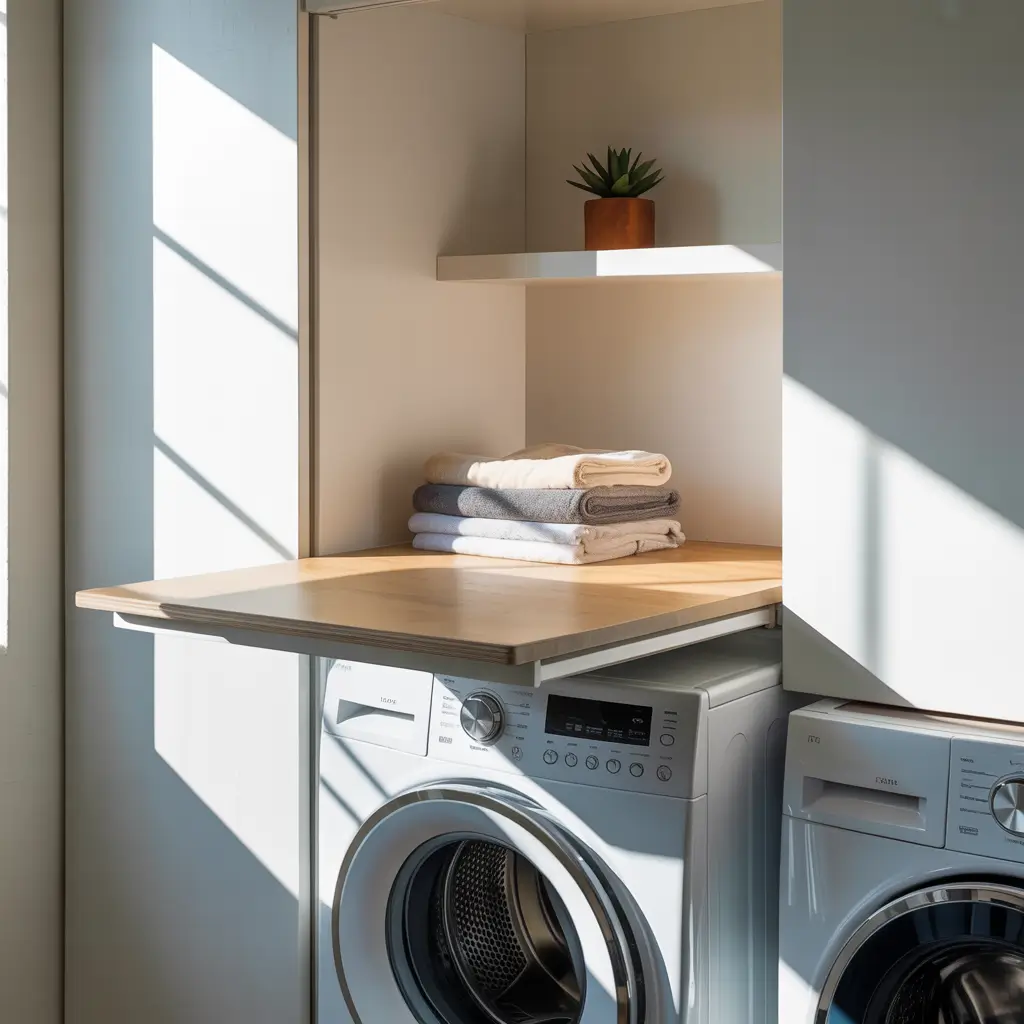
Can I be honest? For years, I folded laundry on my bed, which meant I either had to fold everything immediately or sleep on a pile of clean clothes. Not ideal. The fold-down counter solved this problem and became my favorite laundry room hack.
This brilliant piece of hardware mounts to your wall and folds up when you’re not using it. When you need it, you flip it down, and suddenly you’ve got a sturdy folding surface that doesn’t permanently eat up floor space. In a narrow room, this is pure gold.
I installed mine right next to the dryer at waist height. When I’m done using it, it folds flat against the wall and basically disappears. The whole thing takes up maybe 2 inches when folded, but gives me a 2-foot by 3-foot workspace when extended.
Installation tips:
- Mount it to studs—this needs to support weight
- Position it at a comfortable height (usually 36 inches)
- Choose a depth that works folded and unfolded
- Consider adding hooks underneath for hanging clothes
Some people add a cushion on top and use it as a fold-down ironing board, which is clever but seems like too much multitasking for me. I like having one dedicated folding space that’s always ready when I need it.
Minimalist White Narrow Laundry Room Look
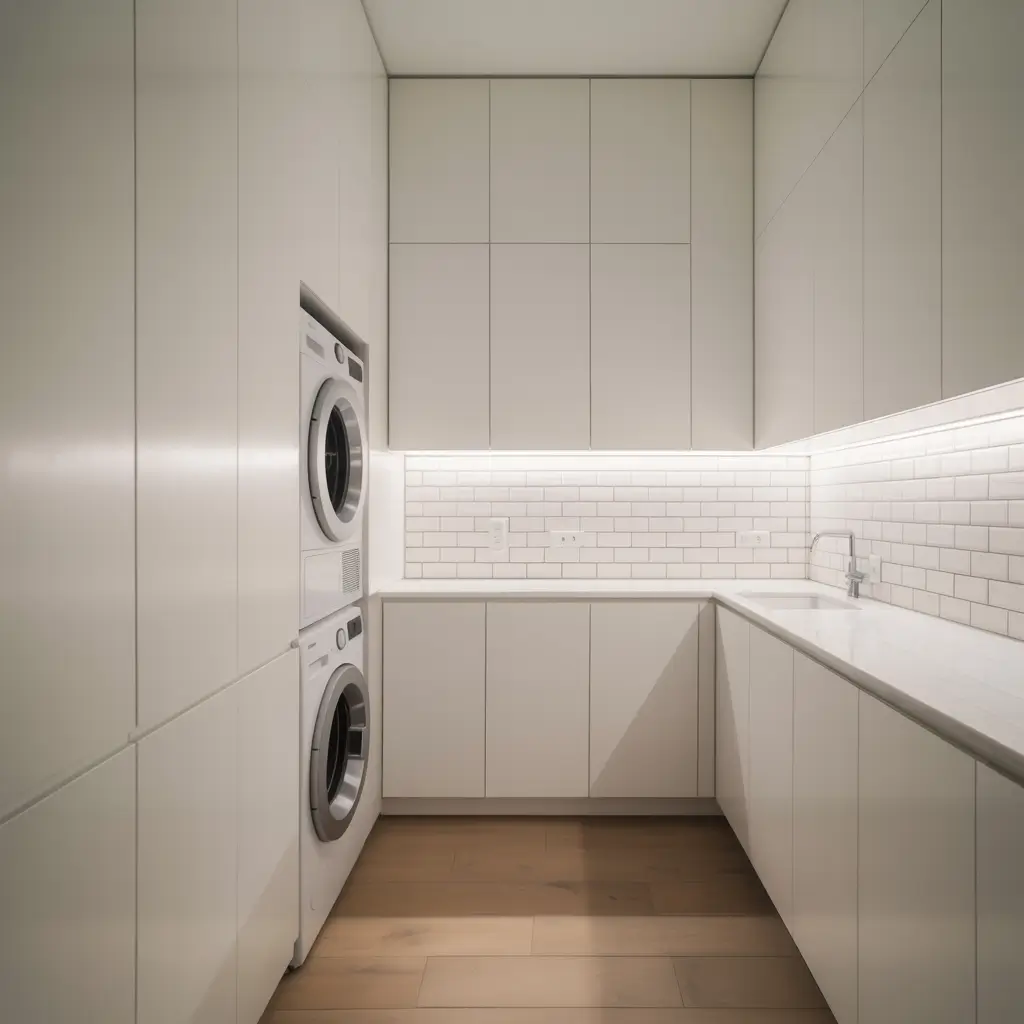
There’s something about an all-white color scheme that makes small spaces feel less claustrophobic. I know, I know—white in a laundry room sounds like asking for stains and dirt. But hear me out.
When I painted my narrow laundry room completely white (walls, ceiling, even the shelves), the space visually doubled in size. White reflects light, which is crucial in narrow rooms that often lack windows. The brightness makes the space feel open instead of cave-like.
The minimalist approach means being ruthless about what you keep visible. I use white containers for detergent, white baskets for supplies, and white shelving. Everything has a designated spot, and nothing sits out unless it’s actively being used.
Key elements of minimalist white:
- Matte white walls to reduce glare
- White or light wood floating shelves
- White storage containers for uniformity
- One or two green plants for a pop of life
- Chrome or brushed nickel hardware for contrast
The trick is keeping it from looking sterile. I added warmth with wood accents (a small wooden ladder for hanging clothes) and texture through woven baskets. The result feels clean and spacious without being cold or clinical.
Moody Dark Narrow Laundry Room Makeover
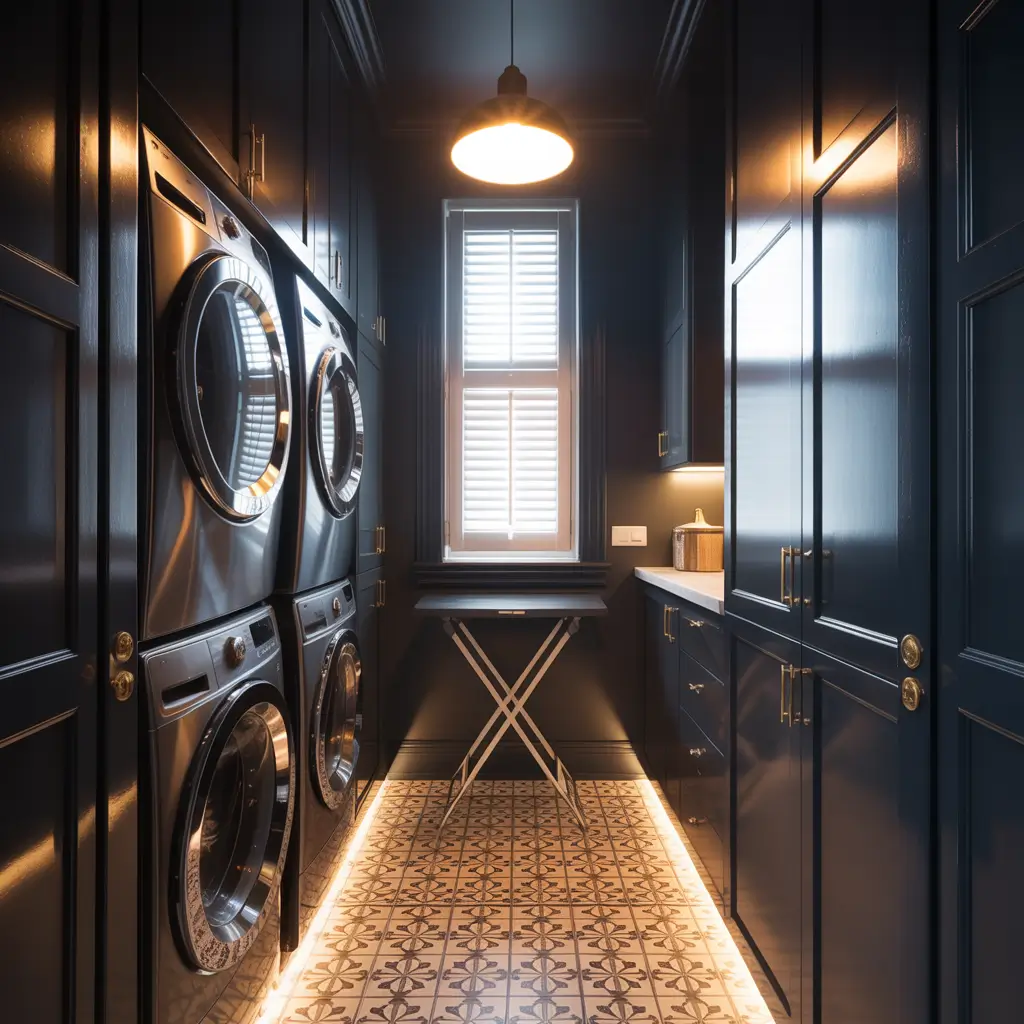
Okay, this one’s controversial, but stick with me. While everyone’s painting their laundry rooms white, I went the opposite direction in my current house and created a moody, dark laundry room. And you know what? It’s amazing.
Dark colors—I used a deep charcoal gray—can actually make narrow spaces feel more intimate and intentional instead of awkwardly skinny. The key is layering in enough light and using reflective surfaces to prevent the cave effect.
I installed bright LED strip lighting under the cabinets and over the machines. I added a large mirror on one wall, which reflects light and creates the illusion of width. The dark walls provide a sophisticated backdrop that makes the white machines pop.
This approach isn’t for everyone, but if you’re tired of treating your laundry room like an afterthought, going dark makes a statement. It says, “Yes, this is a tiny narrow room, and I’m making it look intentional.”
Dark laundry room must-haves:
- Excellent lighting (3x what you’d normally install)
- Light-colored or metallic accents
- Glossy tile or backsplash for reflection
- White or light-colored machines for contrast
IMO, the moody look works best if your laundry room is enclosed. If it’s visible from other parts of your house, make sure the color transition makes sense with your overall design.
Narrow Laundry Closet With Hidden Storage
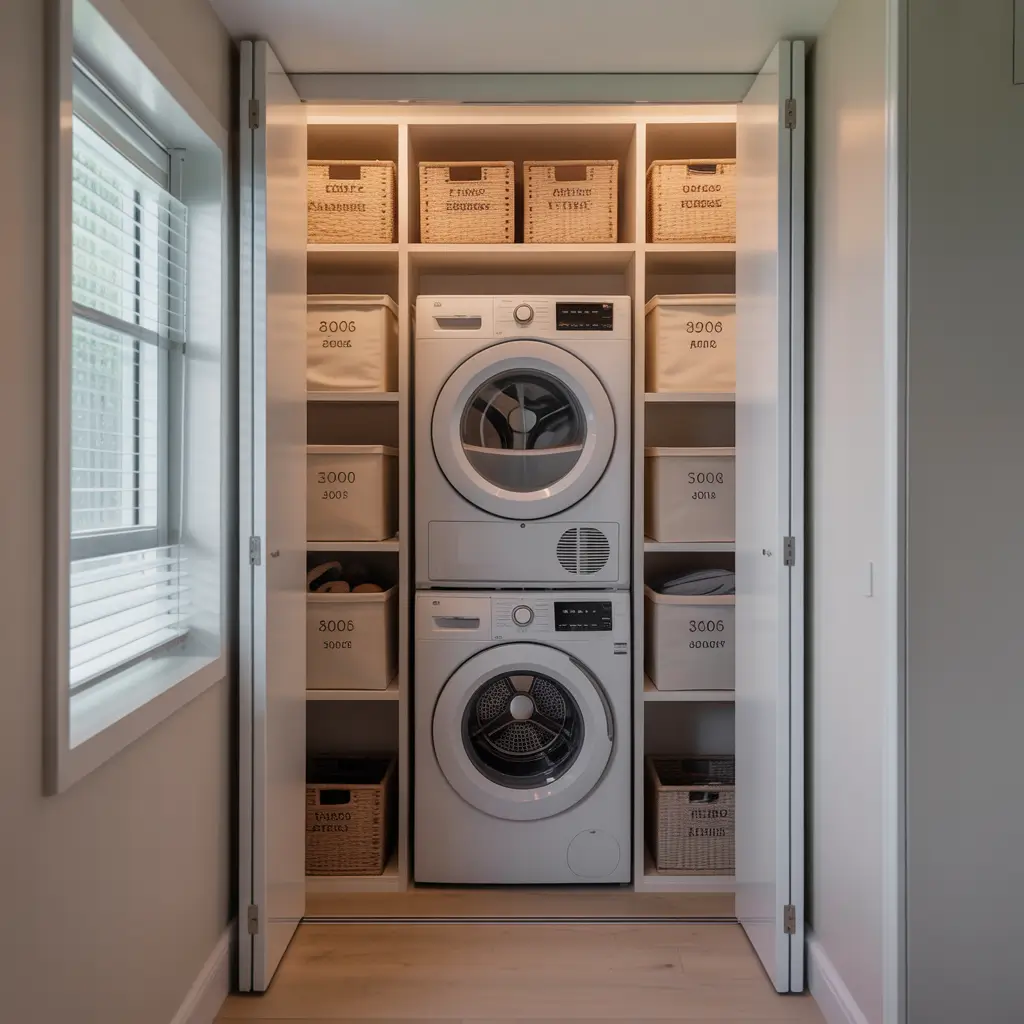
Some of us don’t even have laundry rooms—we have laundry closets. I lived with this setup for three years, and I learned every trick in the book for hidden storage in closet laundries.
The beauty of a closet configuration is that you can close the doors and hide everything. But that only works if you maximize the interior storage so thoroughly that everything actually fits inside. I’m talking about using every surface: the backs of doors, the sides of machines, the space above, below, and between.
I installed an over-the-door organizer on the inside of each closet door for cleaning supplies, dryer sheets, and clothespins. On the wall beside the stacked washer-dryer, I mounted a narrow wire shelving unit that’s only 6 inches deep—perfect for storing items vertically.
Hidden storage spots you’re missing:
- Behind the closet doors (organizers, hooks, shallow baskets)
- Sides of machines (magnetic organizers stick right to them)
- Under the washer if it’s raised (rolling drawer on casters)
- Above the door frame inside the closet (shallow shelf)
The goal is to create zones within your closet. Washing zone, drying zone, storage zone, and folding zone (even if it’s just a tiny pull-out board). When everything has a specific home, the closet stays functional even when you’re in the middle of laundry chaos.
Open Shelving Modern Narrow Laundry Space
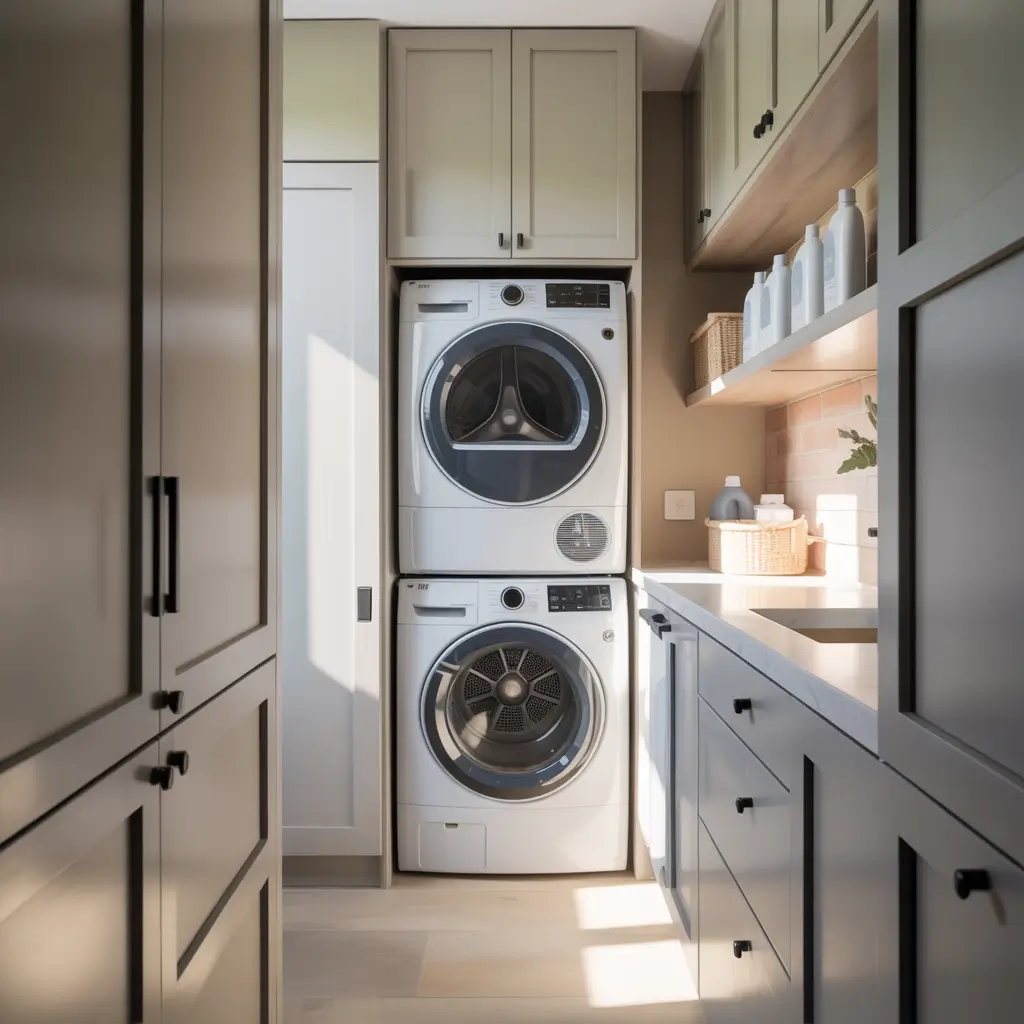
I mentioned earlier that I prefer closed cabinets, but I’m going to contradict myself now because open shelving can absolutely work in narrow laundry rooms—if you do it right.
The modern approach to open shelving is all about intentional display. You’re not just shoving stuff on shelves; you’re curating what’s visible. I use open shelving for items that are both functional and attractive: matching glass jars of detergent, woven baskets, neatly folded towels in coordinating colors.
The advantage in narrow spaces is that open shelving feels less heavy than closed cabinets. It creates airiness and makes the room feel less cramped. The disadvantage? You have to keep it neat, or it looks like a disaster.
I strike a balance by using a mix of open and closed storage. Lower shelves (eye level and below) are open, displaying my prettier supplies. Upper shelves have baskets or bins that hide the random, mismatched stuff I don’t want to look at.
Open shelving success formula:
- Uniform containers (same color or style)
- Limit what’s displayed to avoid clutter
- Use baskets to hide ugly necessities
- Keep daily-use items on open shelves for easy access
- Style it like you would kitchen shelves
The trick is editing ruthlessly. If it doesn’t look good or get used regularly, it doesn’t go on the open shelves. Everything else goes in closed storage.
Compact Laundry Room With Utility Sink
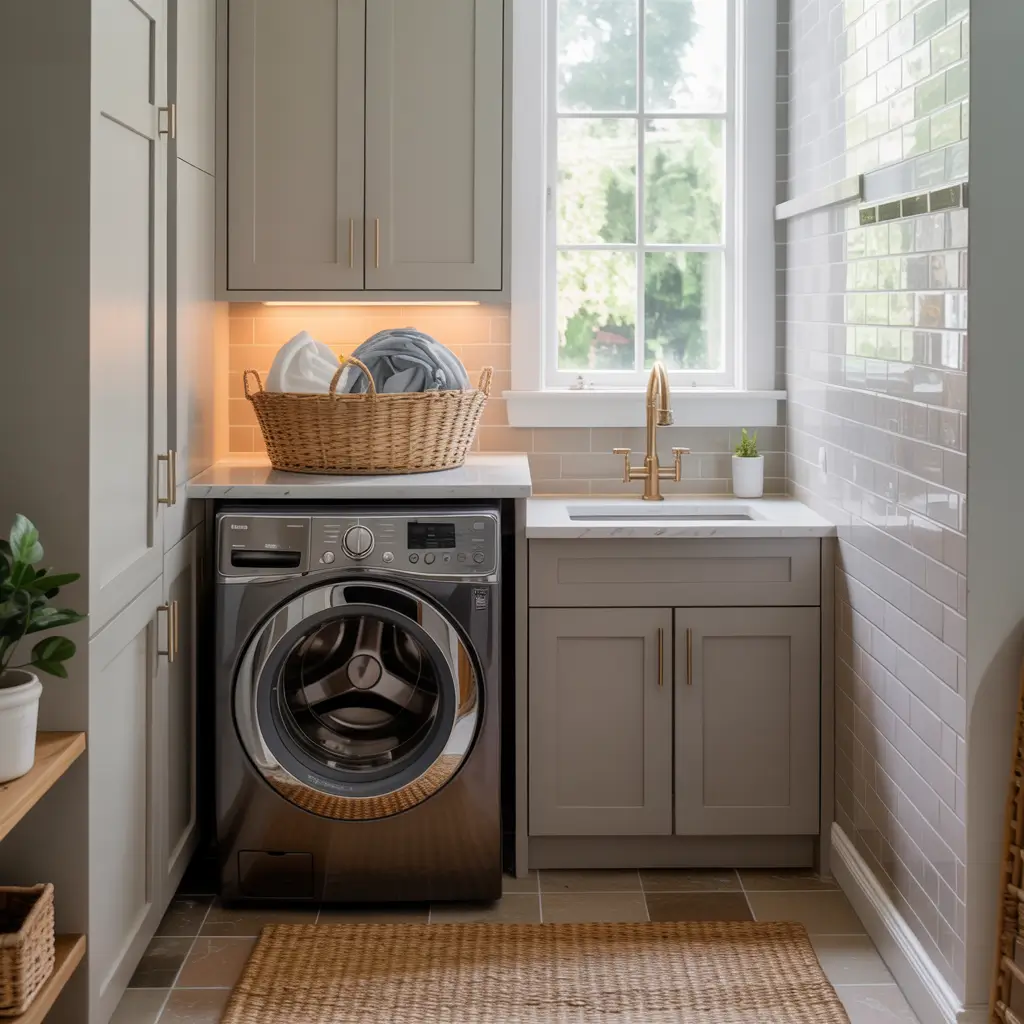
Adding a utility sink to a narrow laundry room sounds impossible, right? Where would it even go? But I managed to squeeze a small utility sink into my 3-foot-wide laundry room, and it’s been worth every inch it occupies.
The key word here is “compact.” I’m not talking about a huge farmhouse sink. I installed a 16-inch square stainless steel utility sink that fits in the corner beyond my washer-dryer. It’s just big enough for hand-washing delicates, rinsing stained items, or filling a bucket for mopping.
The utility sink added functionality that transformed how I use the space. I can pre-treat stains right there instead of carrying items to the bathroom or kitchen. I can rinse muddy shoes without feeling guilty about using the kitchen sink. It’s become the workhorse of my cleaning routine.
Making room for a utility sink:
- Choose the smallest functional size (12-20 inches)
- Corner placement maximizes space efficiency
- Wall-mounted or pedestal style saves floor space
- Add storage underneath with a small cabinet or curtain
I installed a wall-mounted faucet to save counter space, and I keep a small dish rack that fits inside the sink for drip-drying delicates. The whole setup takes up about 2 feet of wall space but adds massive functionality.
Also Read: 15 Stunning Laundry Room Storage Ideas for Organized Homes
Narrow Laundry Room With Overhead Cabinets
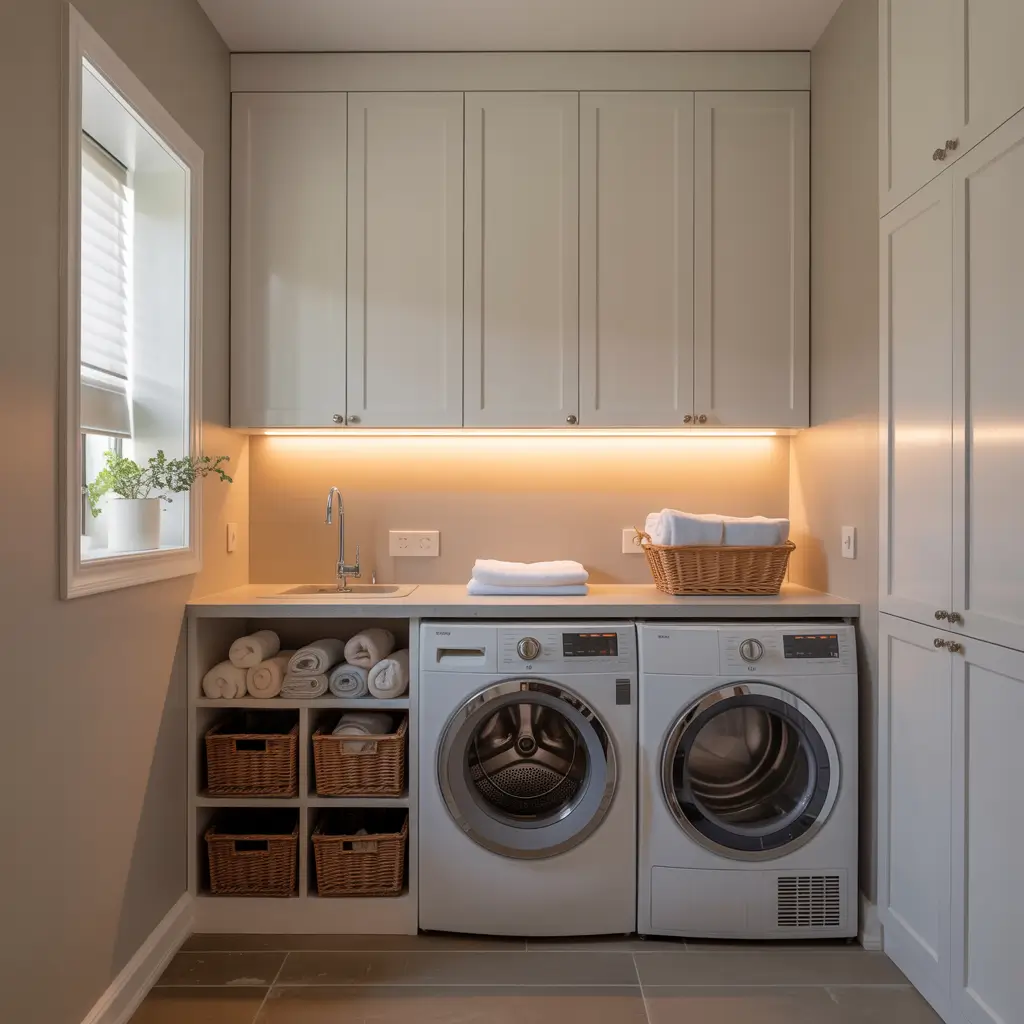
Never, ever waste the space above your washer and dryer. Those overhead cabinets are prime storage real estate that too many people ignore. I installed cabinets that span the entire width of my machines and extend about 18 inches deep.
These cabinets hold everything I don’t need daily access to: extra light bulbs, seasonal items, backup cleaning supplies, extension cords, and all those random things that need a home. The beauty is that they’re out of sight but still accessible with a step stool.
I chose cabinets with lift-up doors instead of traditional swing-down doors because nobody wants to duck under an open cabinet door in a narrow space. The lift-up doors have gas pistons that hold them open, and they stay out of the way completely.
Overhead cabinet considerations:
- Leave at least 12 inches between machines and cabinets for workspace
- Choose lighter colors to prevent a top-heavy feeling
- Add interior lighting for better visibility
- Use labels if you store infrequently used items
The psychological benefit is huge too. When you look at your laundry room, you see clean lines and organized cabinets instead of a cluttered mess. It makes the whole room feel more intentional and less like a forgotten afterthought.
Bright Scandinavian Narrow Laundry Design
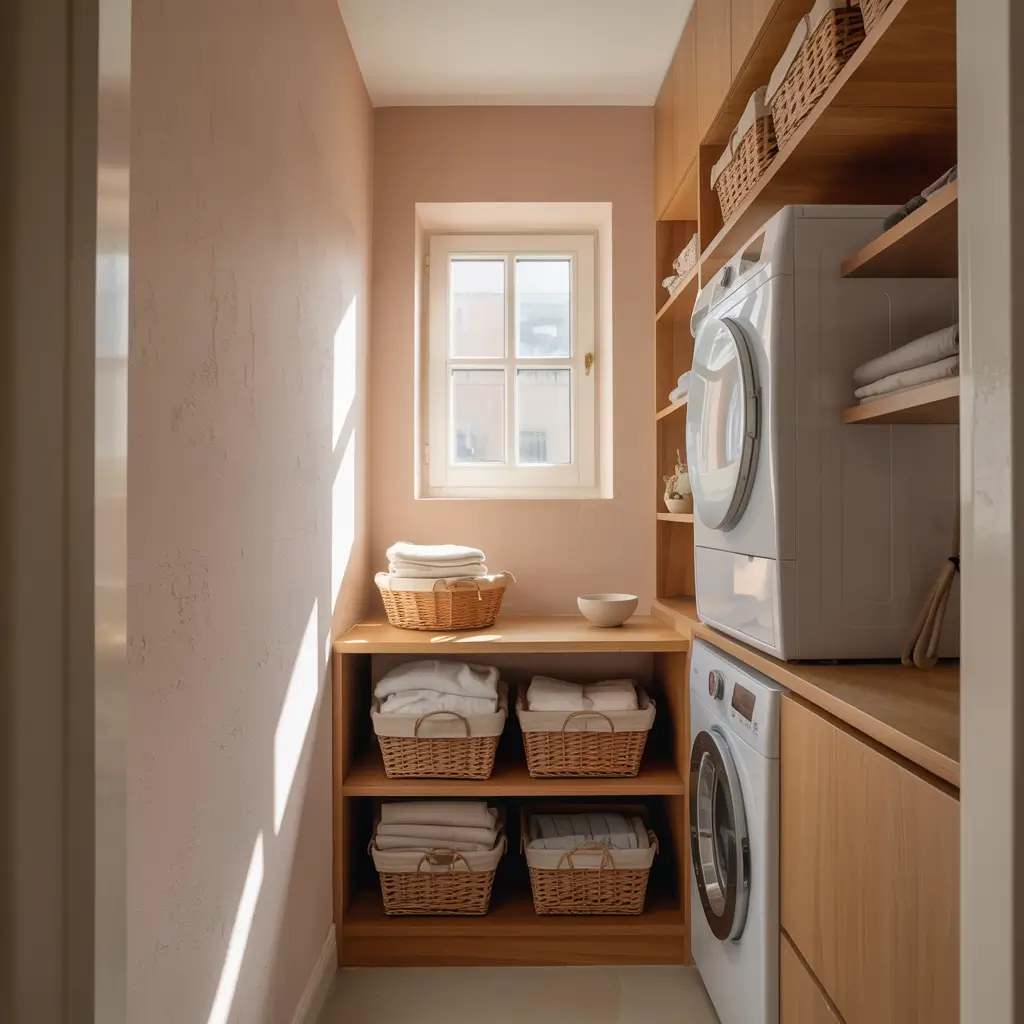
The Scandinavian design approach—light colors, natural materials, and functional simplicity—is basically made for narrow laundry rooms. I borrowed heavily from this aesthetic when I redesigned my laundry space, and the principles work brilliantly.
Start with a white or very light gray base. Add light wood tones through floating shelves, countertops, or a wooden drying rack. Keep the accessories minimal and functional. The result is a space that feels calm, clean, and surprisingly spacious despite its narrow footprint.
I added Scandinavian touches like a woven pendant light, simple wood peg rails for hanging items, and a few green plants on the shelves. Nothing fussy, nothing complicated—just clean lines and natural materials that make the space feel welcoming.
Scandinavian laundry essentials:
- White walls and light wood accents
- Natural fiber baskets (cotton, jute, wicker)
- Plants for life and color
- Simple black or wood hardware
- Maximum natural light or warm artificial lighting
The philosophy here is “lagom”—not too much, not too little, just right. Every item in the room has a purpose and a place. There’s no excess, no clutter, just functional beauty. In a narrow space where clutter can quickly overwhelm, this approach keeps everything manageable. :/
Space-Saving Pull-Out Storage Laundry Room
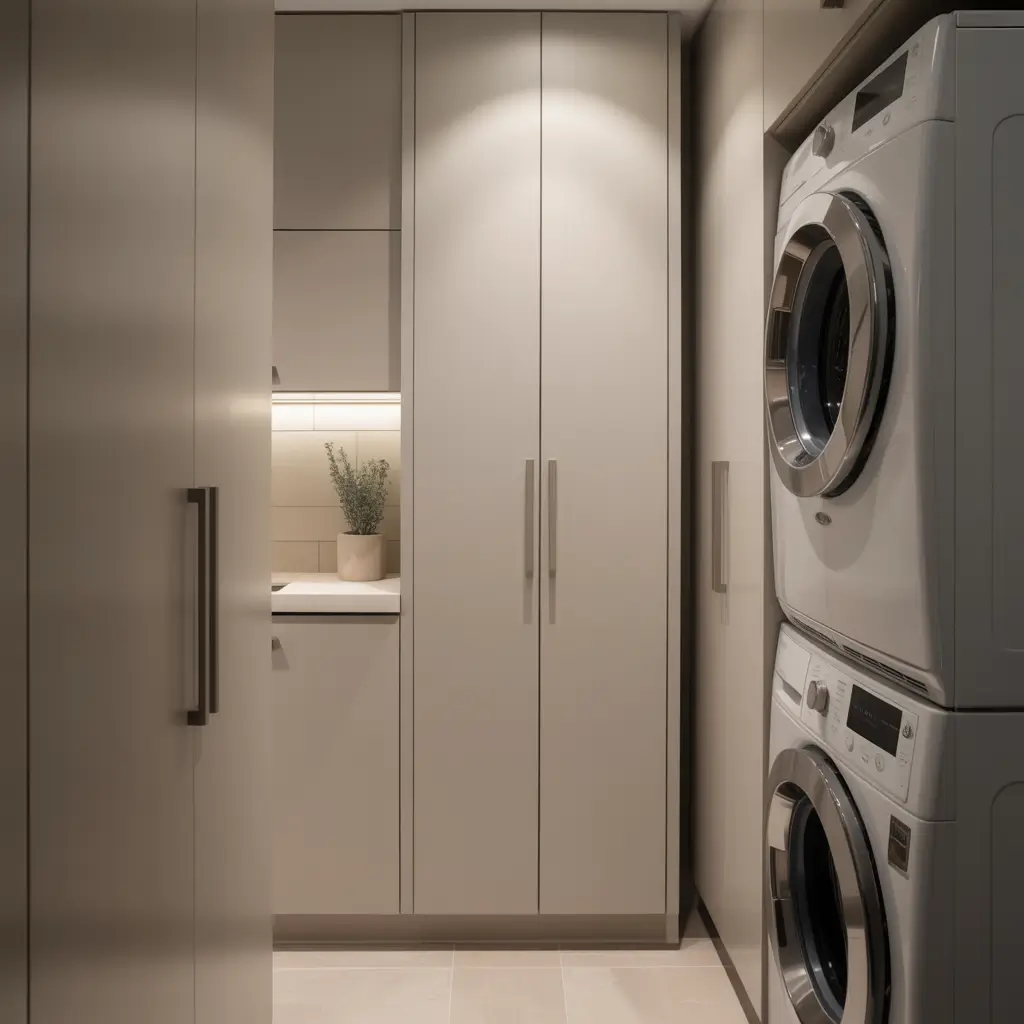
Let’s end with my absolute favorite hack: pull-out storage. This is the secret weapon of narrow laundry rooms because it makes deep spaces accessible without requiring you to perform gymnastics to reach the back.
I installed pull-out drawers in the base of my laundry cabinet, and they’ve been game-changing. Each drawer is only 12 inches wide but 24 inches deep, and they glide out smoothly to reveal all my cleaning supplies. No more losing bottles in the dark depths of a cabinet.
I also added a pull-out drying rack that tucks between my washer and the wall. When I need it, I pull it out and hang delicates. When I don’t, it completely disappears. Same concept with a pull-out ironing board—it’s hidden in a narrow cabinet but ready when needed.
Pull-out storage ideas:
- Pull-out hampers (dirty clothes hidden away)
- Pull-out drawers for cleaning supplies
- Pull-out wire baskets for organizing smaller items
- Pull-out drying racks for delicates
- Pull-out step stool for reaching high shelves
The mechanism matters here. Invest in quality drawer slides—the soft-close, full-extension kind. Cheap hardware will frustrate you daily, while good slides make accessing your storage smooth and satisfying.
Final Thoughts
Look, narrow laundry rooms are challenging. I’m not going to pretend otherwise. But they’re also an opportunity to get creative and thoughtful about storage in ways that people with giant laundry rooms never have to consider.
The tricks I’ve shared aren’t theoretical Pinterest fantasies—they’re solutions I’ve actually implemented in real narrow laundry spaces. Some worked better than others (the dark moody room definitely isn’t for everyone), but each one taught me something about maximizing tight spaces.
The biggest lesson? Vertical space is your best friend. Whether it’s stacked machines, tall cabinets, floating shelves, or overhead storage, thinking upward instead of outward transforms narrow rooms from cramped to functional.
Start with one or two hacks that speak to your specific situation. You don’t need to implement all 15 (though honestly, some of them work great together). Maybe you start with stacking your washer and dryer to free up floor space, then add floating shelves above. Or you install a fold-down counter and add some pull-out storage underneath.
The point is to stop fighting against your narrow space and start working with it. Embrace the constraints and get clever with solutions. Your laundry room might never be spacious, but it can absolutely be functional, organized, and—dare I say it—actually pleasant to use.


