15 Amazing Mudroom Laundry Room Setup Ideas
- Laundry Room Ideas
 Alina
Alina- 0
- 53 minutes read

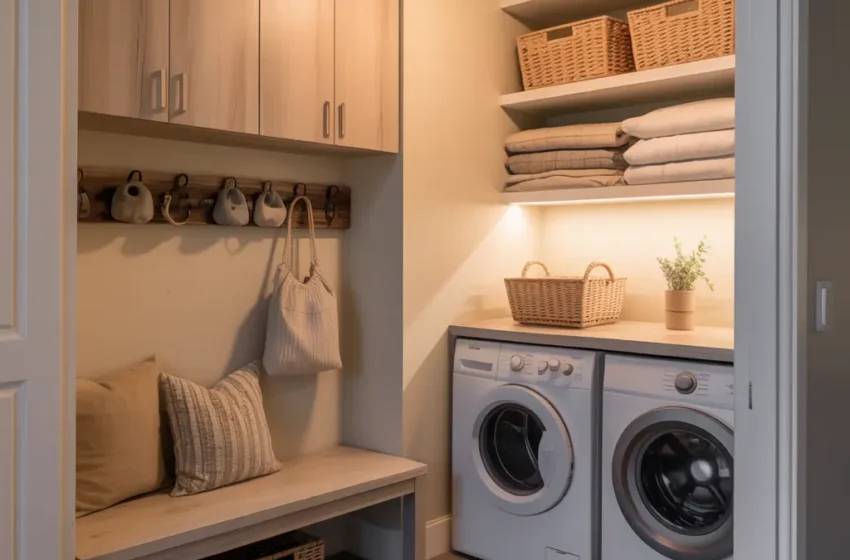
Look, I get it. You walk into your house after a long day, muddy shoes in hand, dirty laundry piling up, and you think, “There’s got to be a better way to handle this chaos.” Spoiler alert: there absolutely is, and it involves combining your mudroom with your laundry room. Genius, right?
I’ve spent way too much time obsessing over home organization (my friends think I’m weird), and I can tell you that a well-designed mudroom laundry combo is basically the superhero of home spaces. It catches all the mess before it invades your home, handles your dirty clothes, and keeps everything organized. What’s not to love?
So let me walk you through 15 mudroom laundry setups that’ll make you wonder why you didn’t think of this sooner. Whether you’re working with a shoebox-sized space or you’ve got room to spare, I’ve got ideas that’ll work for you.
1. Small Space Mudroom Laundry Room Combo
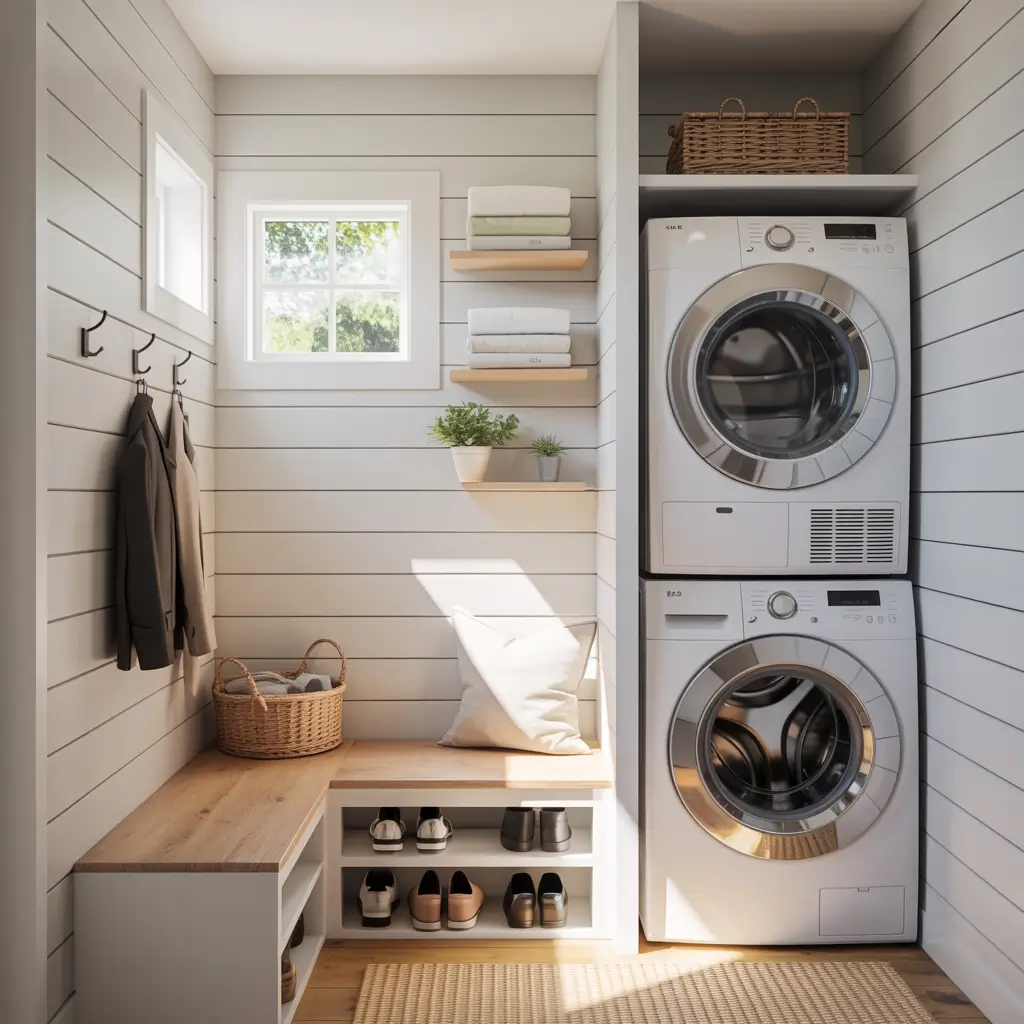
Ever tried fitting your entire life into a closet-sized space? Yeah, me too. The small space mudroom laundry combo is all about working smarter, not harder.
I learned this the hard way in my first apartment. You need vertical storage like your life depends on it. Stack those hooks up the wall, install floating shelves above your washer and dryer, and use every single inch of wall space. Seriously, if there’s a blank wall, you’re doing it wrong.
Here’s what makes this setup work:
- Wall-mounted drying racks that fold up when you don’t need them
- Slim rolling carts that fit between your washer and the wall
- Over-the-door organizers for cleaning supplies
- Magnetic strips on the side of your washer for holding small items
The trick is choosing compact appliances. Those full-sized monsters? They’re not your friends in a small space. Look for 24-inch wide washers and dryers instead of the standard 27-inch models. Trust me, those three inches make a massive difference.
You can also install a fold-down countertop above your machines. When you need to fold laundry, boom—instant workspace. When you don’t, it tucks away and gives you walking room. Mind = blown.
2. Modern Minimalist Mudroom Laundry Room
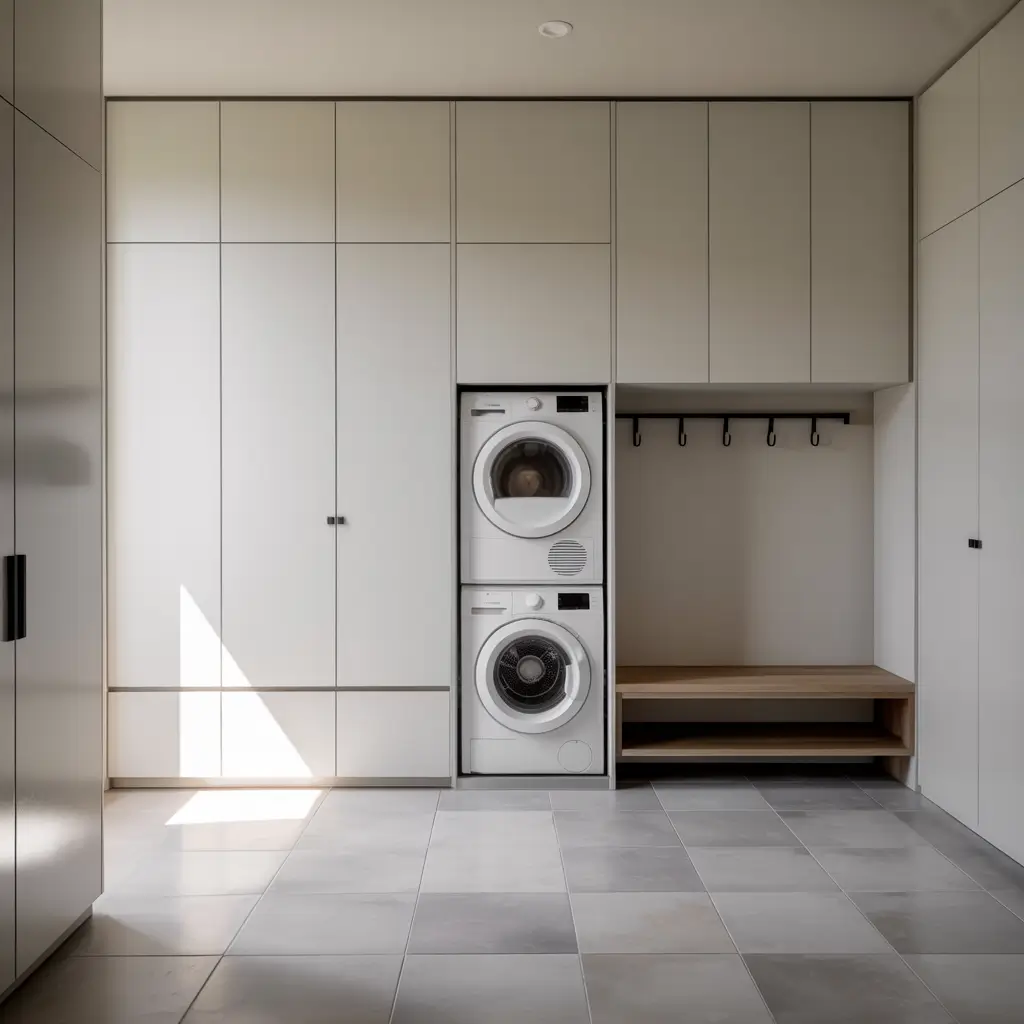
Clean lines, neutral colors, and absolutely zero clutter. That’s the modern minimalist mudroom laundry room in a nutshell, and honestly? It’s my favorite aesthetic (though I’m terrible at maintaining it, if I’m being real with you).
This setup screams sophistication. You want handleless cabinets in matte white or sleek gray. Everything hides behind closed doors because the whole point is that “nothing to see here” vibe. Your washer and dryer? Concealed behind matching cabinet fronts.
Key elements include:
- Integrated appliances that blend seamlessly with cabinetry
- Hidden storage with push-to-open mechanisms
- Monochromatic color schemes (white, gray, black, or taupe)
- Minimal hardware or completely handleless designs
- LED strip lighting under cabinets for that modern glow
I visited my friend Sarah’s place last month, and she has this setup. Not a single thing sits out on the counters. Everything has a designated hidden spot. Her secret? She installed pull-out hampers inside the cabinets and drawer organizers for every tiny item. It looks amazing, but FYI, it requires serious discipline to maintain 🙂
The flooring matters too. Go for large-format tiles or polished concrete for that ultra-modern feel. Skip the busy patterns—you want smooth, uninterrupted surfaces.
3. Farmhouse Style Mudroom Laundry Room
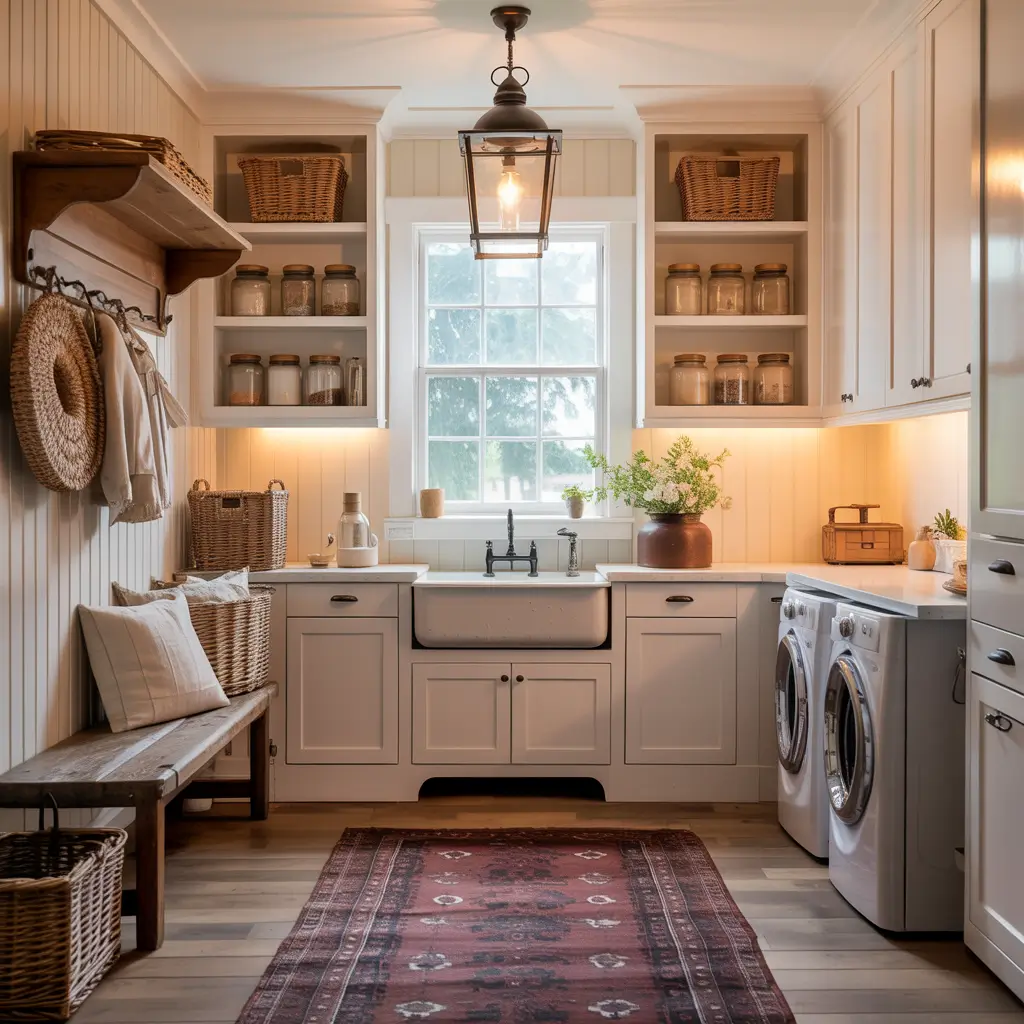
Shiplap. Barn doors. Rustic wood. Welcome to the farmhouse mudroom laundry room, where everything looks like it belongs on a countryside estate (even if you live in suburbia).
This style wins people over because it feels warm and inviting. You walk in and immediately feel cozy, which is kind of the opposite of what you’d expect from a laundry room, right?
I actually helped my sister create this look on a budget. We used reclaimed wood for open shelving, installed some wrought iron hooks for coats, and added a farmhouse sink for that authentic touch. The whole space transformed from boring to Instagram-worthy.
Must-have features:
- Shiplap or beadboard walls (or the peel-and-stick version if you’re renting)
- Barn door to save space and add character
- Open wooden shelving with wicker baskets
- Vintage-style light fixtures (think Edison bulbs)
- Apron-front utility sink
- Neutral colors with pops of navy or sage green
The beauty of farmhouse style? Imperfections actually add character. That scratched-up wooden bench? Perfect. Those mismatched baskets? Charming. You don’t need everything to match perfectly, which takes the pressure off.
Pro tip: Add some metal wire baskets on the shelves for storing detergent and dryer sheets. They’re practical and they nail that rustic-industrial vibe.
4. Stackable Washer Mudroom Layout
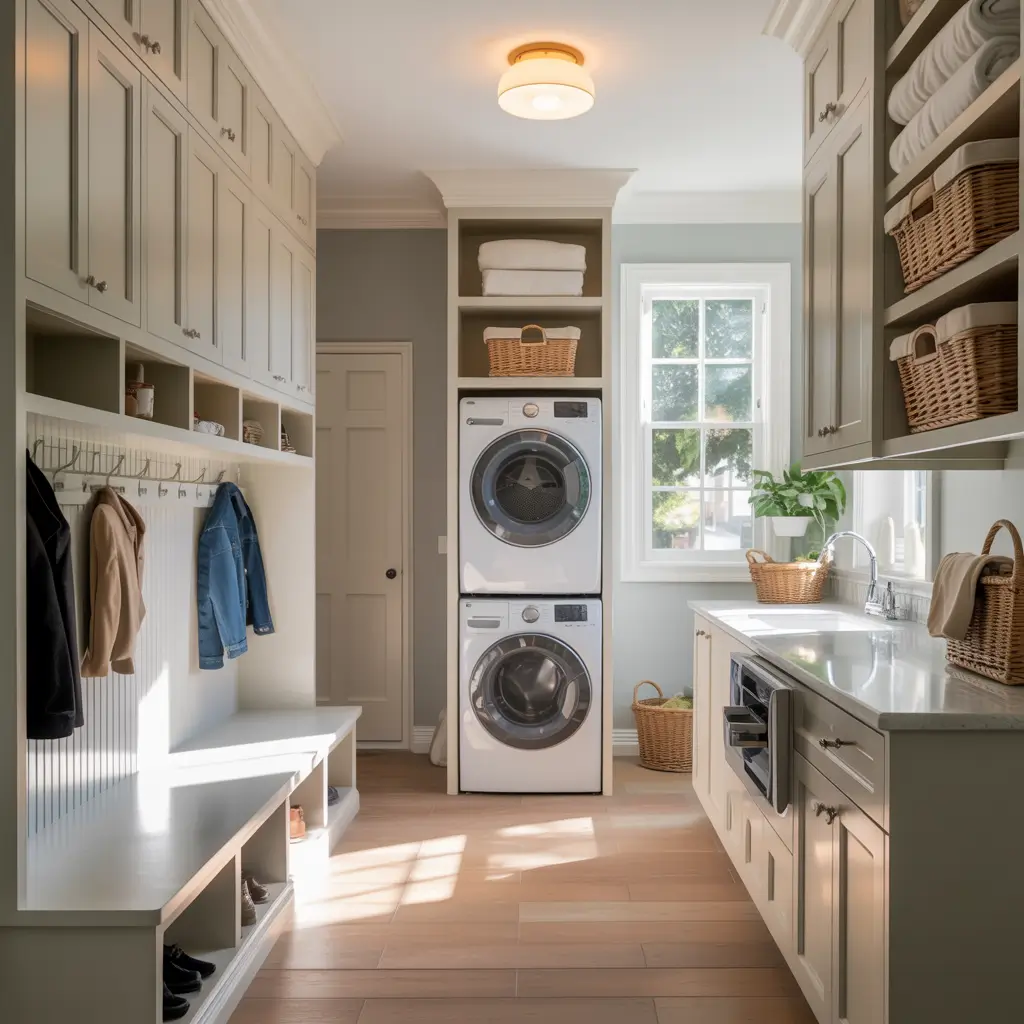
When floor space is basically nonexistent, you go vertical. The stackable washer mudroom layout is your best friend when you’re dealing with tight quarters.
I converted a coat closet into a mudroom laundry using this exact setup. My washer sits on top of my dryer (well, technically the dryer is on bottom, but you get it), and suddenly I have actual floor space for other things. Revolutionary, right?
Here’s how to maximize this layout:
- Stacking kit to safely secure your appliances (don’t skip this—safety first)
- Pull-out step stool stored in a slim cabinet beside the units
- Shelving or cabinets on either side of the stacked units
- Hooks and rods on adjacent walls for coats and bags
- Slim storage tower with drawers for supplies
The challenge with stacked units? Reaching the top washer controls. This is where those pull-out step stools earn their keep. I keep mine tucked in a 6-inch-wide cabinet that I had custom-made to fit the gap next to my units.
You can build a closet-style enclosure around the stacked units with bifold doors or a curtain. When guests come over, you close it up and nobody knows you’ve got laundry happening right there in your entryway. Sneaky and practical—my favorite combo.
5. Mudroom Laundry Room with Built-In Cubbies
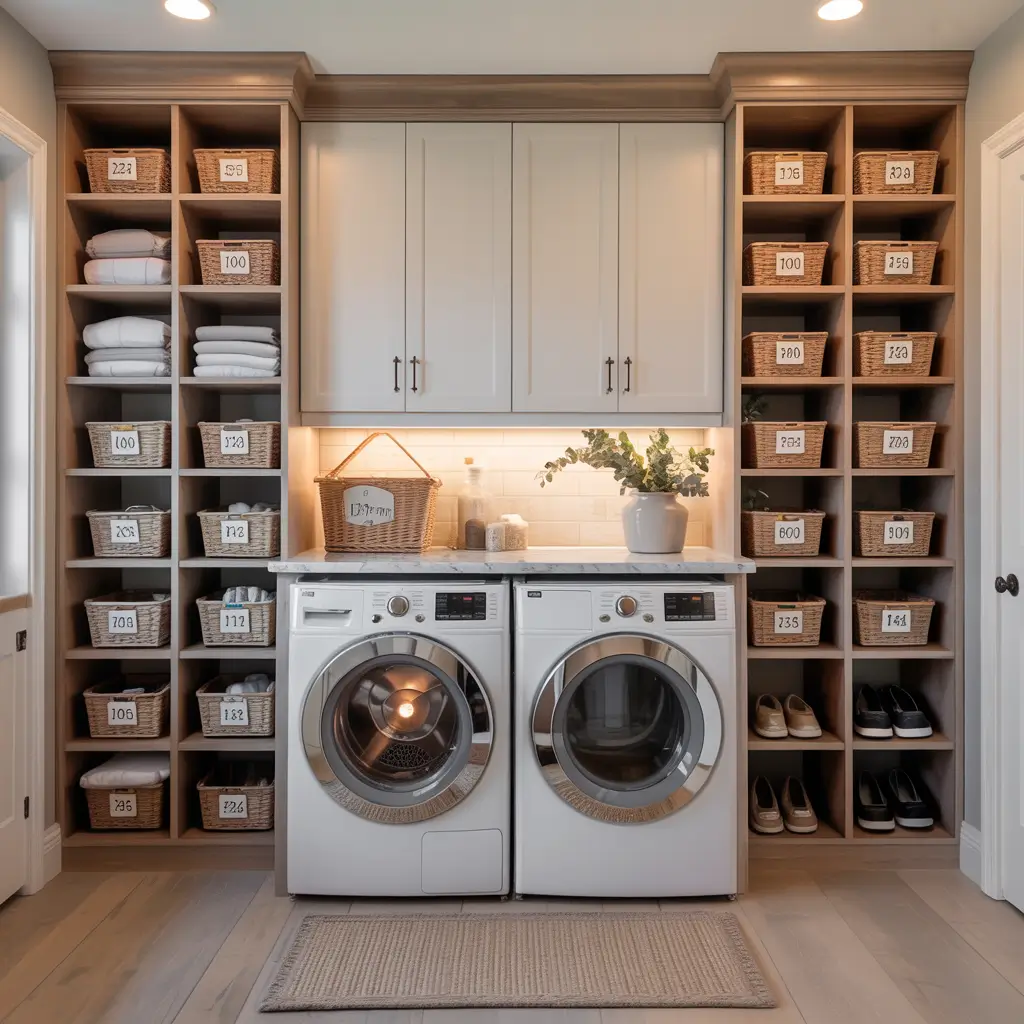
Built-in cubbies are the organizational dream, people. Each family member gets their own cubby for shoes, backpacks, jackets, and whatever random stuff they drag into the house.
I grew up in a house with a cubby system, and it was the only thing that kept our family of five from complete chaos. Everyone knew exactly where their stuff went, which meant less “Mom, where are my shoes?!” every single morning.
What makes this setup work:
- Individual cubbies (one per person, labeled if you have kids)
- Hooks inside each cubby for backpacks and jackets
- Shoe storage at the bottom of each section
- Upper cabinets for seasonal items and extra linens
- Central washer and dryer placement with cubbies flanking both sides
- Bench seating integrated into the cubby design
The dimensions matter here. You want each cubby to be at least 12-15 inches wide for adult-sized items. For kids, you can go a bit narrower. The depth should be around 15-18 inches to actually fit a backpack without everything spilling out.
I recommend installing adjustable shelves inside the cubbies. As your kids grow (or your storage needs change), you can reconfigure the space without rebuilding everything.
Paint the cubbies in different colors if you want to make them even more personalized. My nephew’s cubby is bright blue, my niece’s is purple, and honestly, it eliminates all arguments about whose stuff is whose.
Also Read: 15 Dreamy Laundry Room Mud Room Combo Makeover Ideas
6. Narrow Entryway Mudroom Laundry Design
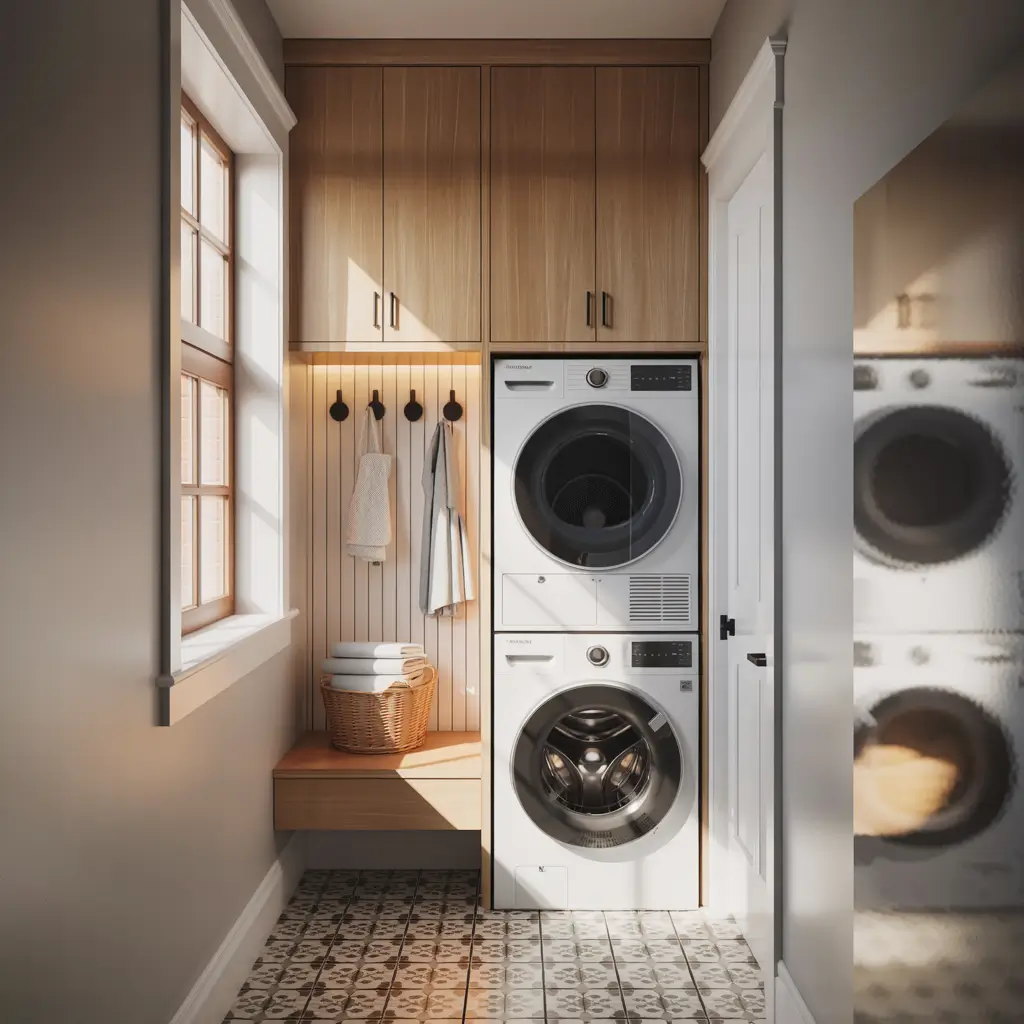
Got a hallway that’s basically a glorified corridor? You can still make a narrow entryway mudroom laundry work, and I’ve seen some pretty clever setups that prove it.
The secret is thinking long and lean. You’re working with a runway, not a square room, so you need to design accordingly.
Smart strategies for narrow spaces:
- Single-file appliance placement (washer, then dryer, lined up along one wall)
- Shallow cabinets (6-8 inches deep) on the opposite wall
- Wall-mounted everything to keep the floor clear
- Mirrors to make the space feel wider (and for last-minute checks before heading out)
- Light colors on walls and cabinets to prevent claustrophobia
I worked with a narrow 3-foot-wide entryway once, and we made it function beautifully. The key was installing slim European-style washers and dryers that were only 22 inches deep instead of the standard 27-28 inches. Those extra inches created just enough walking space to not feel like you’re squeezing through constantly.
You can also install a continuous floating bench along one wall with storage underneath. It runs the length of the space and provides seating plus hidden storage for shoes. Above the bench, you add hooks in a straight line for coats and bags.
Skip the bulky furniture. Everything should be wall-mounted or built-in to preserve every precious inch of floor space.
7. Mudroom Laundry Room with Bench Storage
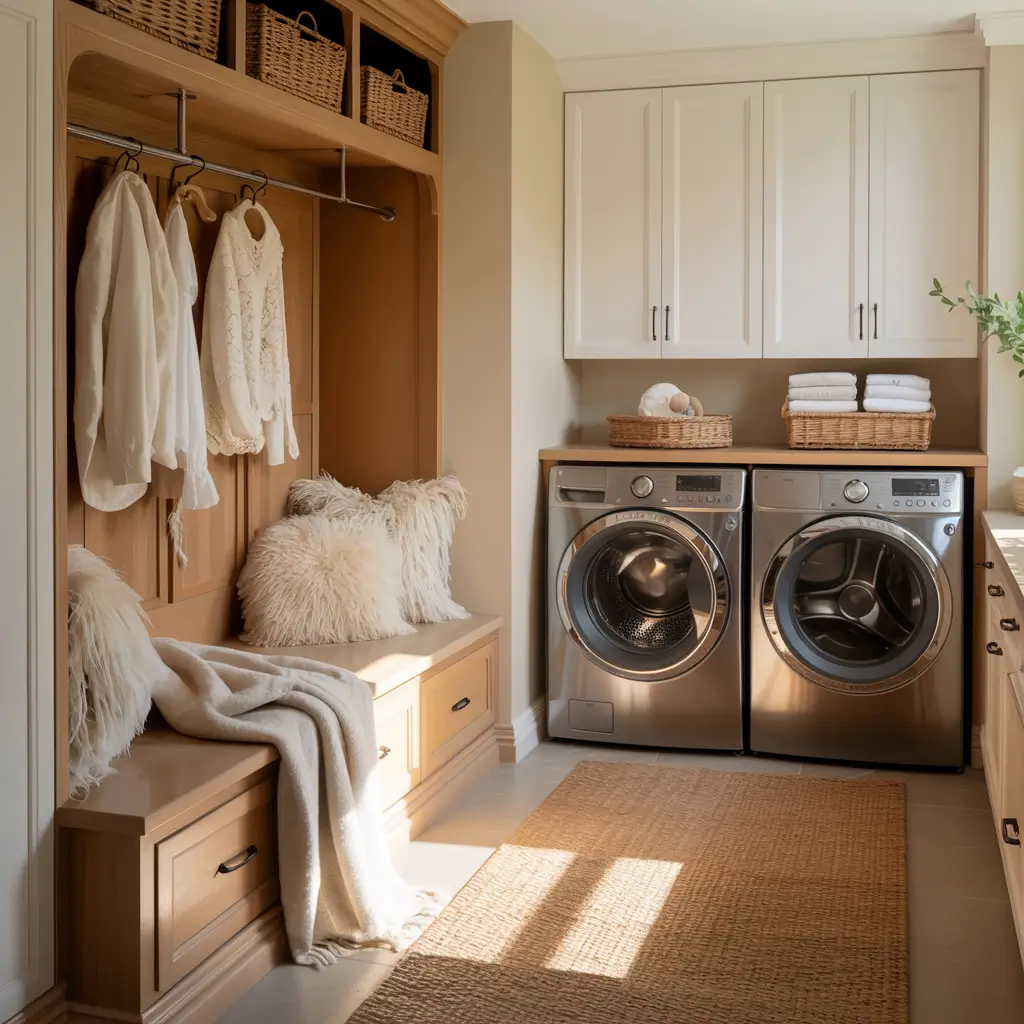
Let’s talk about bench storage because this is genuinely one of the most practical features you can add. You get seating (for putting on shoes) and storage (for hiding all the stuff you don’t want to see) in one piece.
I installed a bench with storage in my own mudroom last year, and I genuinely don’t know how I lived without it before. The top lifts up to reveal a massive compartment where I stuff winter boots, umbrellas, reusable shopping bags, and all that random junk that accumulates near the door.
Bench storage essentials:
- Lift-top hinges with soft-close mechanisms (your fingers will thank you)
- Cushioned top for comfort (nobody wants to sit on hard wood while tying shoes)
- Ventilation holes if you’re storing shoes inside (trust me on this one)
- Dividers inside to keep items separated
- Sturdy construction that can handle people actually sitting on it
The ideal bench height is 18-20 inches. That’s comfortable for most adults to sit on while being tall enough to hide a decent amount of stuff inside. The depth should be around 15-18 inches so you can actually sit comfortably without your knees hitting the wall.
I’ve seen people install pull-out drawers under the bench instead of lift-top storage, and honestly? That works great too, especially if you have kids who might struggle with a heavy lift-top lid.
Position your bench so it doesn’t block your washer and dryer access. You need to be able to open those doors fully, so plan your layout accordingly. IMO, putting the bench on the opposite wall from your appliances is usually the smartest move.
8. Budget-Friendly DIY Mudroom Laundry Setup
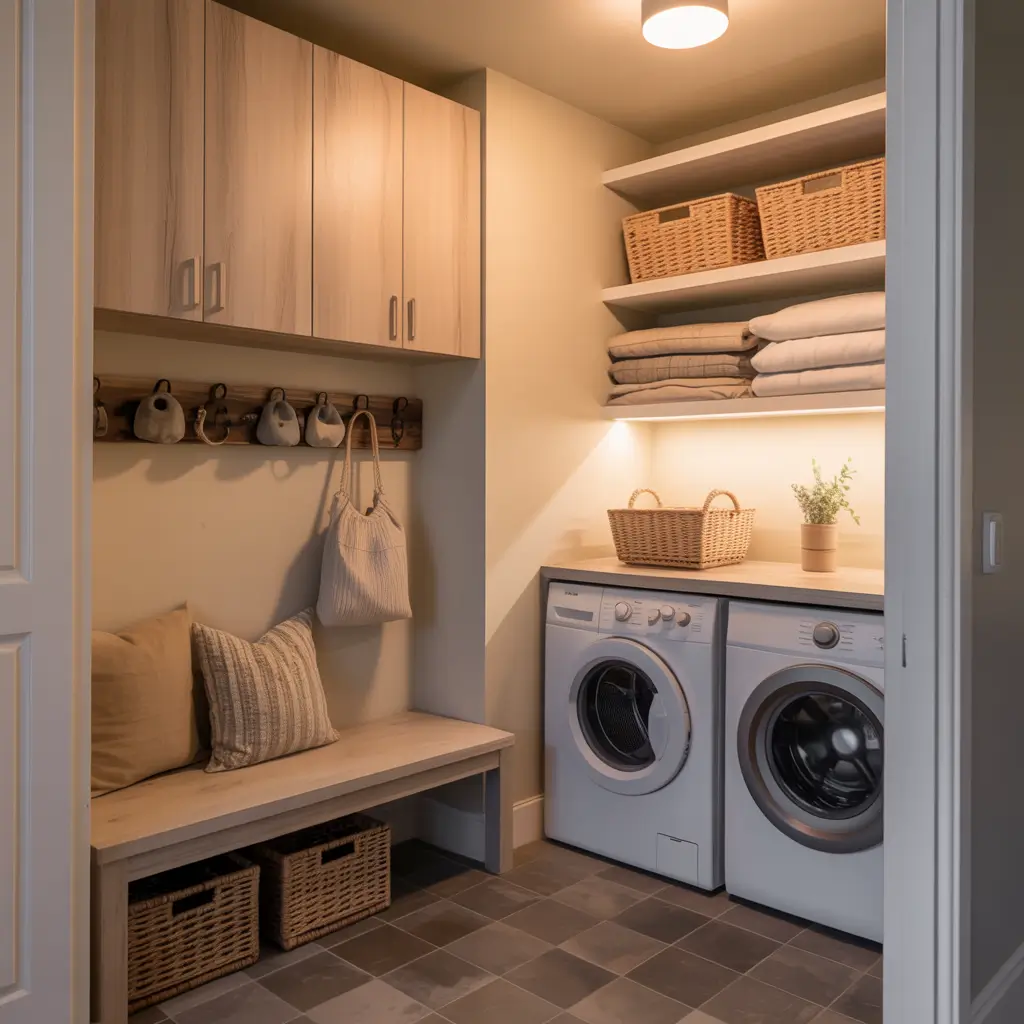
Not everyone has thousands to drop on a custom mudroom laundry room, and that’s totally okay. You can create an awesome functional space with some creativity and elbow grease.
I’ve done the DIY route, and while it takes more time and effort, the money you save is absolutely worth it. Plus, there’s something satisfying about building something yourself (even if your first attempt looks a bit… rustic).
Budget-friendly ideas that actually work:
- IKEA PAX system repurposed as mudroom storage (seriously, these are budget heroes)
- Wood crates mounted to the wall for cubbies (stain them for a polished look)
- Pegboard for customizable hanging storage
- Tension rods under shelves to hang spray bottles
- Thrifted cabinets painted and refreshed
- DIY concrete countertop (mix it yourself for about $30)
- Peel-and-stick tile for easy flooring upgrades
I built my own mudroom cubbies using 2x4s and plywood, and the total cost was under $200. Did it take me three weekends? Yes. Did I hit my thumb with a hammer twice? Also yes. But I saved over $1,500 compared to buying pre-made units, so I call that a win.
You can find free pallets and turn them into coat racks or shoe organizers. Sand them down, add some stain or paint, and suddenly you have trendy industrial storage that cost you exactly zero dollars (okay, maybe $15 for the stain).
For the love of all that’s holy, use a level when installing anything on walls. I learned this the hard way when I eyeballed a shelf installation and ended up with hooks that looked drunk. Measure twice, install once :/
9. Luxury Mudroom Laundry Room with Cabinets
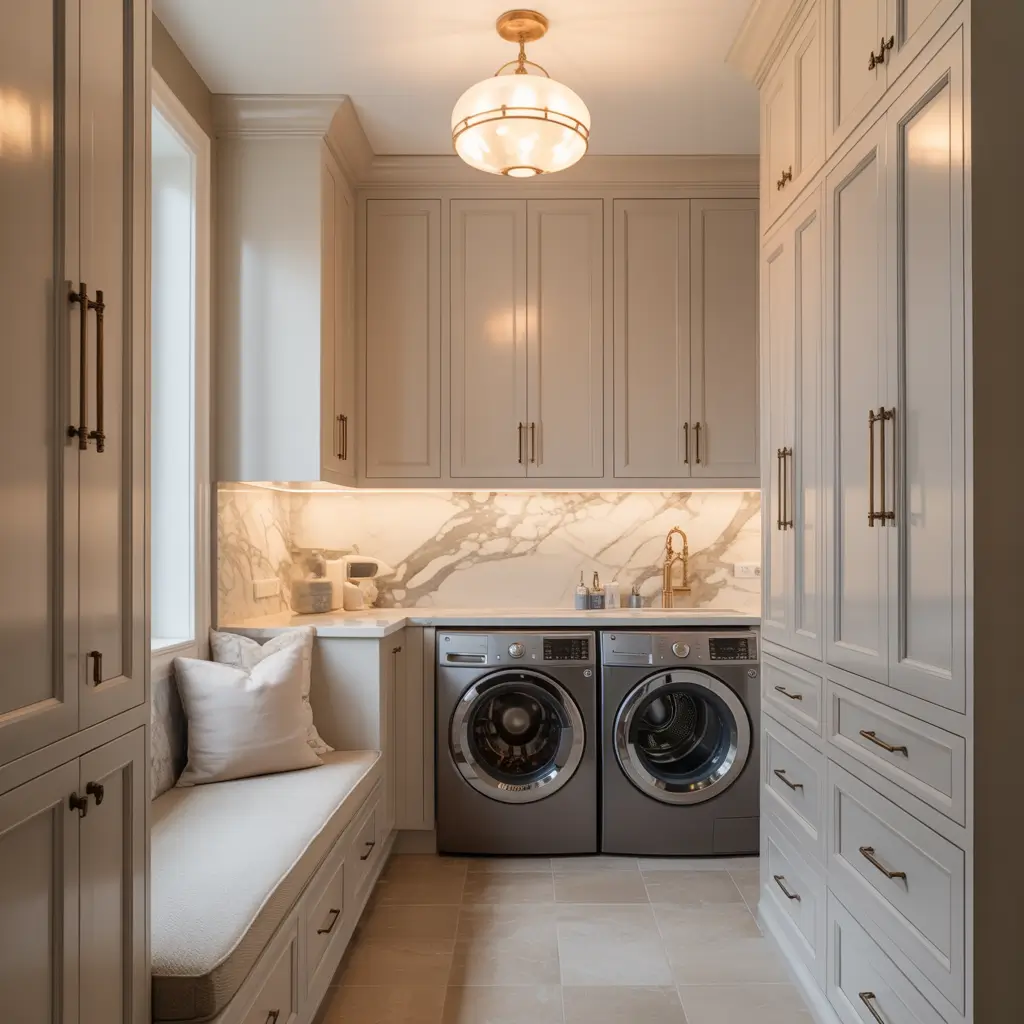
Now we’re talking about the setup where you pull out all the stops. The luxury mudroom laundry room with cabinets is what happens when budget isn’t the main concern and you want a space that’s both gorgeous and incredibly functional.
I visited a model home with this setup, and I’m not gonna lie—I was jealous. Everything was custom, perfectly coordinated, and so well-thought-out that I wanted to move in immediately.
Luxury features that make a difference:
- Custom cabinetry in high-quality materials (maple, cherry, or walnut)
- Quartz or granite countertops for durability and elegance
- Soft-close drawers and doors (because slamming is so pedestrian)
- Built-in ironing board that pulls out from a cabinet
- Integrated lighting inside cabinets and drawers
- Climate-controlled drying cabinet for delicate items
- Designer tile flooring (heated, naturally)
- High-end appliances with smart technology
The cabinet configuration in luxury mudrooms is typically floor-to-ceiling to maximize storage and create that high-end fitted look. You can include glass-front upper cabinets to display nice baskets or decorative items (because yes, even laundry rooms can be beautiful).
I’m talking about pull-out hampers that are divided into darks, lights, and colors. Drawer organizers for every single small item. Dedicated cabinets for cleaning supplies, wrapping paper, and pet supplies. Everything has a specific, thought-out home.
The color palettes in luxury spaces tend toward sophisticated neutrals—soft grays, warm whites, navy blues, or even charcoal with brass or gold hardware. You’re creating a space that feels like an extension of your main living areas, not an afterthought.
10. Mudroom Laundry Room with Utility Sink
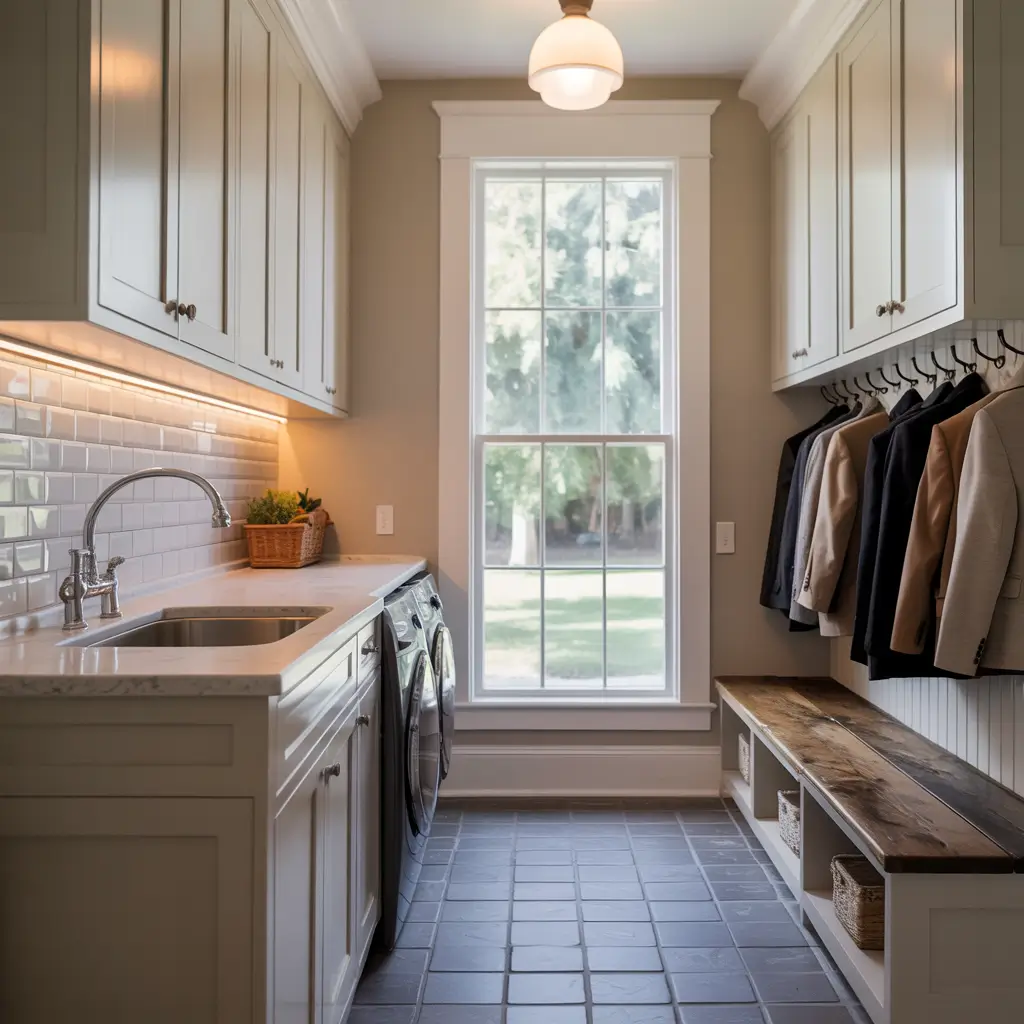
Here’s something I didn’t appreciate until I had one: a utility sink in your mudroom laundry room is an absolute game-changer. Seriously, how did I ever live without this?
You can rinse muddy boots, wash the dog, hand-wash delicates, fill mop buckets, clean paintbrushes—the list goes on. A utility sink earns its keep in this space.
What you need to know:
- Deep basin sinks (at least 9-10 inches deep) handle big tasks better
- Apron-front or drop-in styles both work well
- Pull-down faucet with a spray function is incredibly useful
- Durable materials like stainless steel, cast iron, or acrylic
- Adjacent counter space for setting items down
I installed a stainless steel utility sink last year, and I use it constantly. The deep basin means I can actually submerge things completely, which is perfect for soaking stained clothes before tossing them in the washer.
Position your sink so you have counter space on at least one side. I made the mistake of putting mine in a corner with no counter, and I constantly wish I had somewhere to set my cleaning supplies or a bucket while I work.
The plumbing is the tricky part if you’re adding a sink to an existing space. You’ll need to run water supply lines and a drain, which might mean cutting into walls and floors. This is where hiring a plumber is worth the money, unless you really know what you’re doing.
Consider adding a pull-out spray hose stored under the sink. It extends your reach and makes washing larger items way easier. My sister has one, and I’m basically obsessed with it every time I visit.
Also Read: 15 Clever Narrow Laundry Room Storage Hacks
11. L-Shaped Mudroom Laundry Room Layout
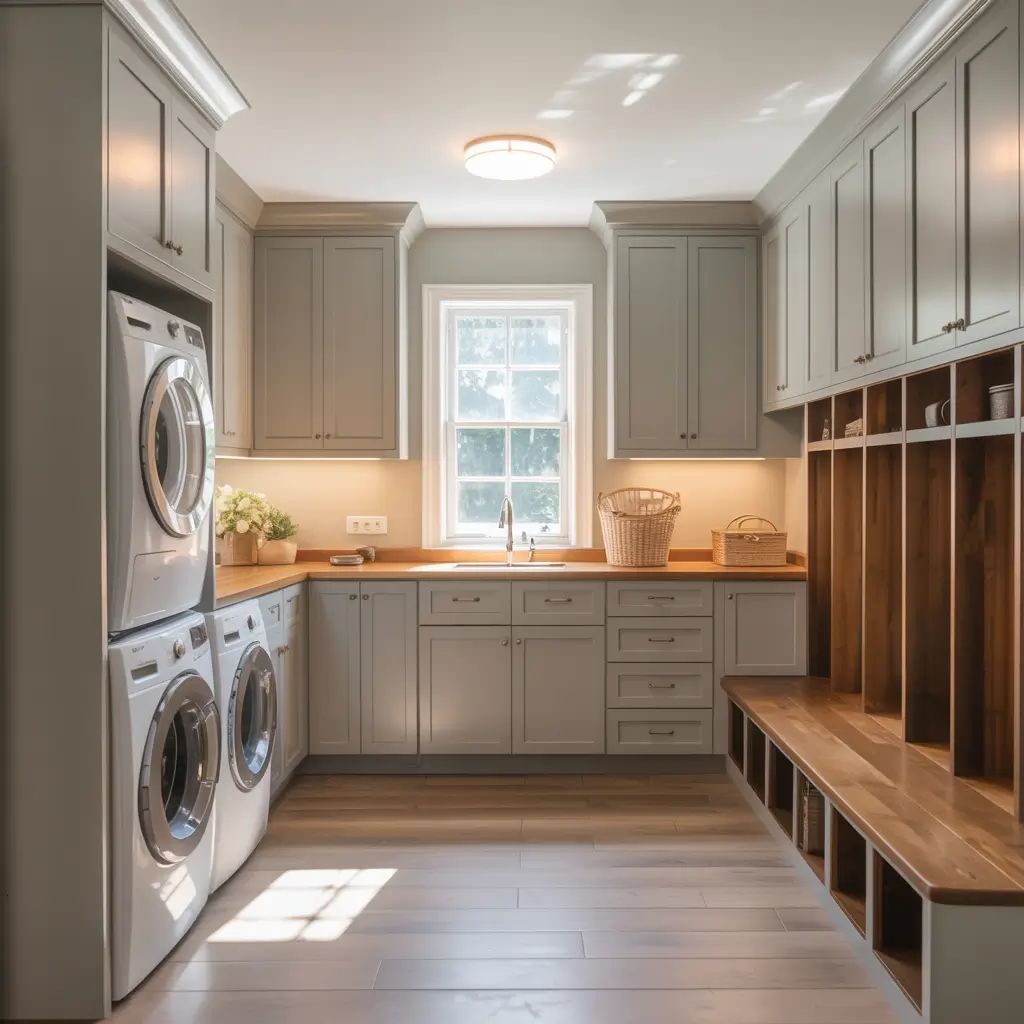
The L-shaped layout is perfect when you have a corner to work with. You can separate the mudroom functions from the laundry functions while keeping everything connected and accessible.
I love this layout because it creates distinct zones without walls. Your washing and drying happens along one wall, while your coat storage, shoe organization, and seating occupy the perpendicular wall.
L-shaped layout advantages:
- Natural workflow from dirty clothes to clean storage
- Corner space utilization (corners are tricky, but L-shapes solve that)
- Separate zones that don’t compete for the same space
- More wall space for cabinets and hooks
- Room for additional features like islands or carts
I helped design an L-shaped mudroom where we put the washer and dryer along the shorter wall (about 6 feet long) and created a mudroom bench with cubbies along the longer wall (about 10 feet). The corner became the perfect spot for a tall storage cabinet that housed everything from cleaning supplies to extra paper towels.
The corner itself deserves special attention. You can install lazy susan shelves (like you’d have in a kitchen corner cabinet) to make that typically dead space actually useful. Or you can put a tall cabinet there that’s accessible from both sides.
Think about your traffic flow too. People should be able to walk in, drop their stuff in the mudroom zone, and access the laundry zone without doing some weird shuffle dance around appliances.
12. Hidden Mudroom Laundry Behind Sliding Doors
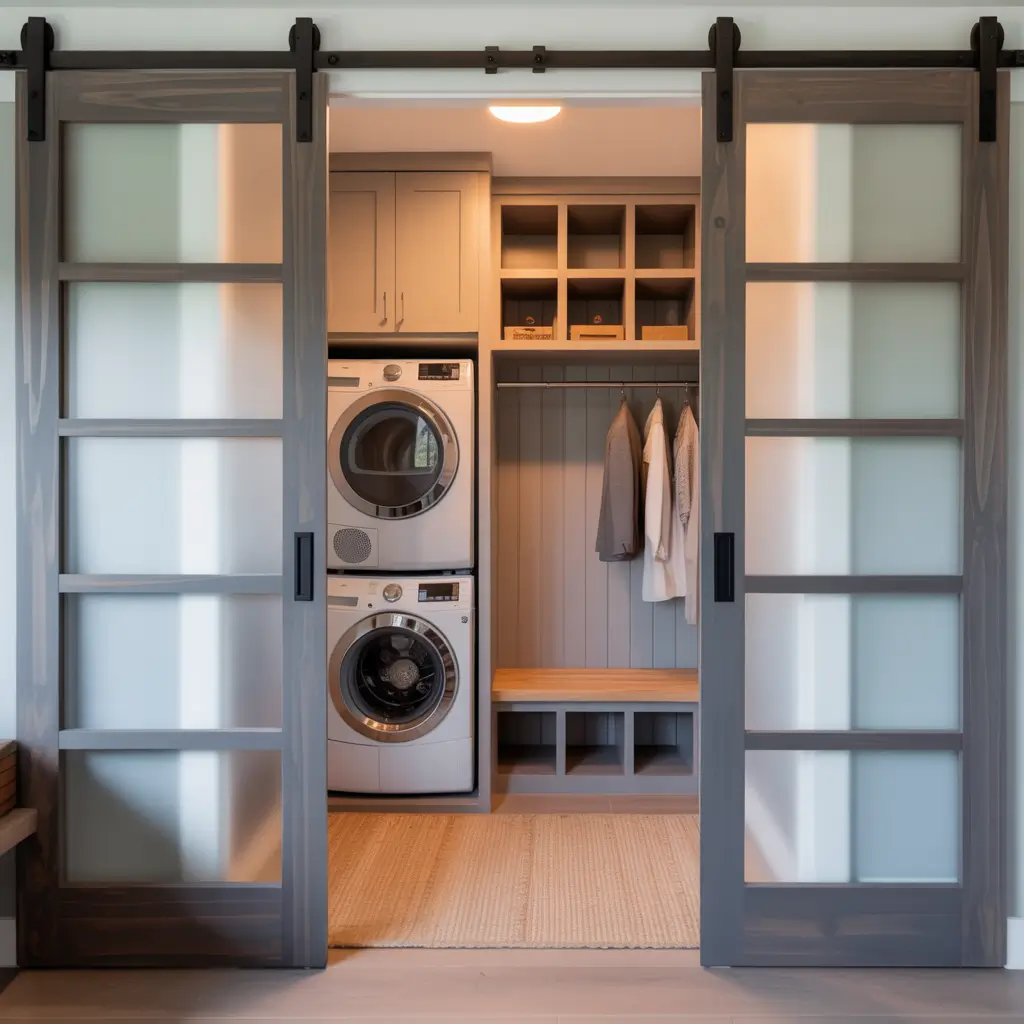
Want your mudroom laundry room to disappear when you’re not using it? Sliding doors create that magic reveal-and-conceal effect that I absolutely love.
This setup is perfect for open-concept homes or when your mudroom laundry is visible from main living areas. You slide the doors closed, and suddenly it’s just a nice wall feature instead of a visible work zone.
Why sliding doors rock:
- Space-saving (no door swing to account for)
- Visual separation from other areas
- Multiple style options (barn doors, modern panels, frosted glass)
- Easy access (just slide instead of opening and closing traditional doors)
- Customizable to match your home’s aesthetic
I went with barn-style sliding doors in a weathered gray finish, and they’re honestly one of my favorite features in my house. When company comes over, I close them and my messy laundry situation is hidden. When I’m working in there, I slide them open for full access.
You can do double barn doors that meet in the middle, single large door that slides to one side, or even pocket doors that slide into the wall (though those require more complex installation).
The hardware matters. You need a sturdy track system that can handle the weight of your doors and constant opening and closing. Don’t cheap out on this—wobbly doors that fall off the track are incredibly annoying. Ask me how I know (okay fine, I cheaped out the first time and regretted it immediately).
If you want some visibility while still concealing clutter, consider frosted glass panels or doors with window cutouts. They let light through while obscuring the view of your laundry pile.
13. Pet-Friendly Mudroom Laundry Room
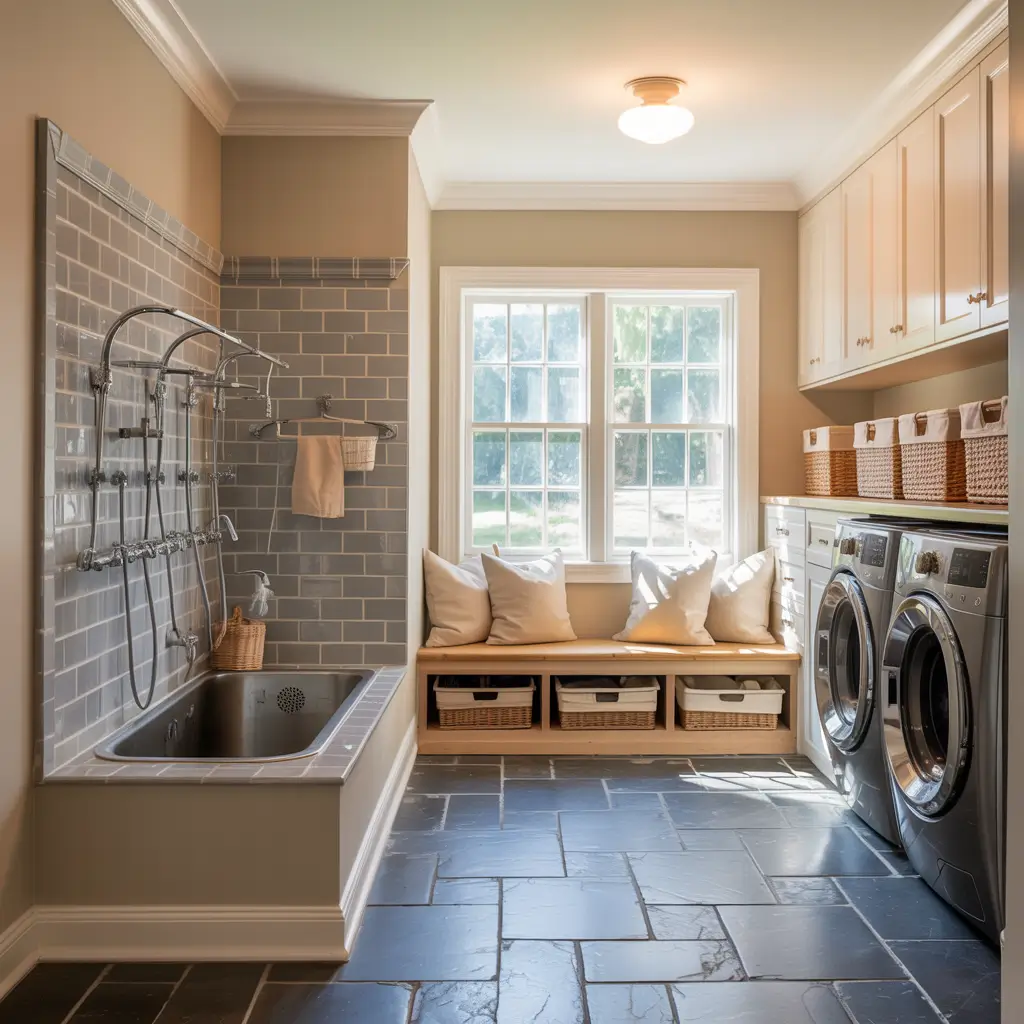
Pet owners, this one’s for you. A pet-friendly mudroom laundry room handles both your family’s mess AND your furry friend’s needs in one well-designed space.
I have a dog who thinks every walk should include rolling in something questionable, so my mudroom laundry has become pet central. It’s where we clean muddy paws, store food and supplies, and keep all the dog-related chaos contained.
Pet-friendly features you’ll actually use:
- Built-in pet washing station (raised platform with a spray hose)
- Pull-out food and water bowls that tuck away when not in use
- Storage for pet food, treats, and toys (preferably in airtight containers)
- Leash hooks and collar storage right by the door
- Towel storage specifically for pet cleanup
- Durable, waterproof flooring (tile or luxury vinyl)
- Lower cabinets with pet bed storage
The pet washing station is pure genius. You can build a raised platform (saves your back) with a removable drain grate and install a hand-held shower head on a flexible hose. Add some non-slip rubber matting, and you’ve got a legitimate dog wash area.
I installed hooks at different heights—high ones for coats, lower ones for leashes and harnesses. My dog somehow knows that when we enter the mudroom, it’s leash-on time, and she goes straight to that hook.
Storage for pet food should be pest-proof and airtight. I use large sealed containers that keep food fresh and keep out any unwanted critters. The containers fit perfectly in a lower cabinet that’s easy to access.
Pro tip: Choose scratch-resistant flooring and washable wall paint. Pets are messy, and you want materials that can handle the abuse and clean up easily.
14. Open Concept Mudroom Laundry Space
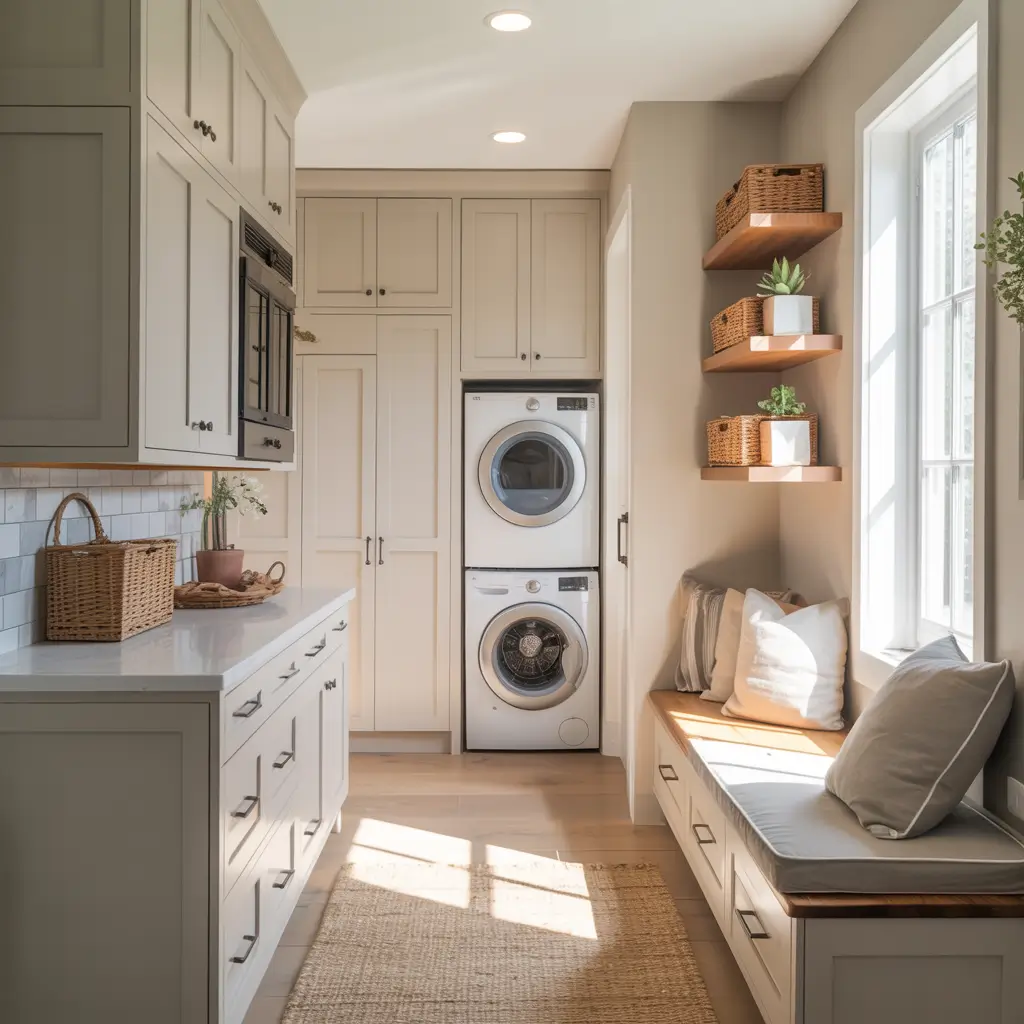
The open concept mudroom laundry space is all about flow and multi-functional design. You remove walls and barriers, creating a space that serves multiple purposes while remaining visually connected to other areas.
I’ll be honest—this one requires more discipline to keep tidy because everything is visible. But when you nail the organization, it looks amazing and functions beautifully.
Open concept essentials:
- Cohesive design that matches adjacent rooms
- Strategic storage that looks good even when visible
- Consistent flooring that flows from one area to another
- Decorative elements mixed with functional pieces
- Good lighting to make the space feel intentional, not like an afterthought
The trick with open concept is making your storage look intentional and attractive. Those wire shelves you’d hide in a closet? Not gonna cut it here. You need nice baskets, coordinating containers, and cabinetry that looks like furniture, not storage.
I’ve seen beautiful open mudroom laundries where the washer and dryer sit in furniture-style casings that match the home’s kitchen cabinets. You add some decorative hardware, maybe a butcher block countertop, and suddenly your laundry area looks like it belongs in a magazine.
Visual continuity matters here. If your adjacent room has white shaker cabinets, your mudroom storage should echo that style. If you’ve got modern flat-panel doors elsewhere, keep that going.
You can use area rugs to define the mudroom zone within the larger open space. A durable, washable rug creates a visual boundary without building walls.
15. Garage Entry Mudroom Laundry Room Design
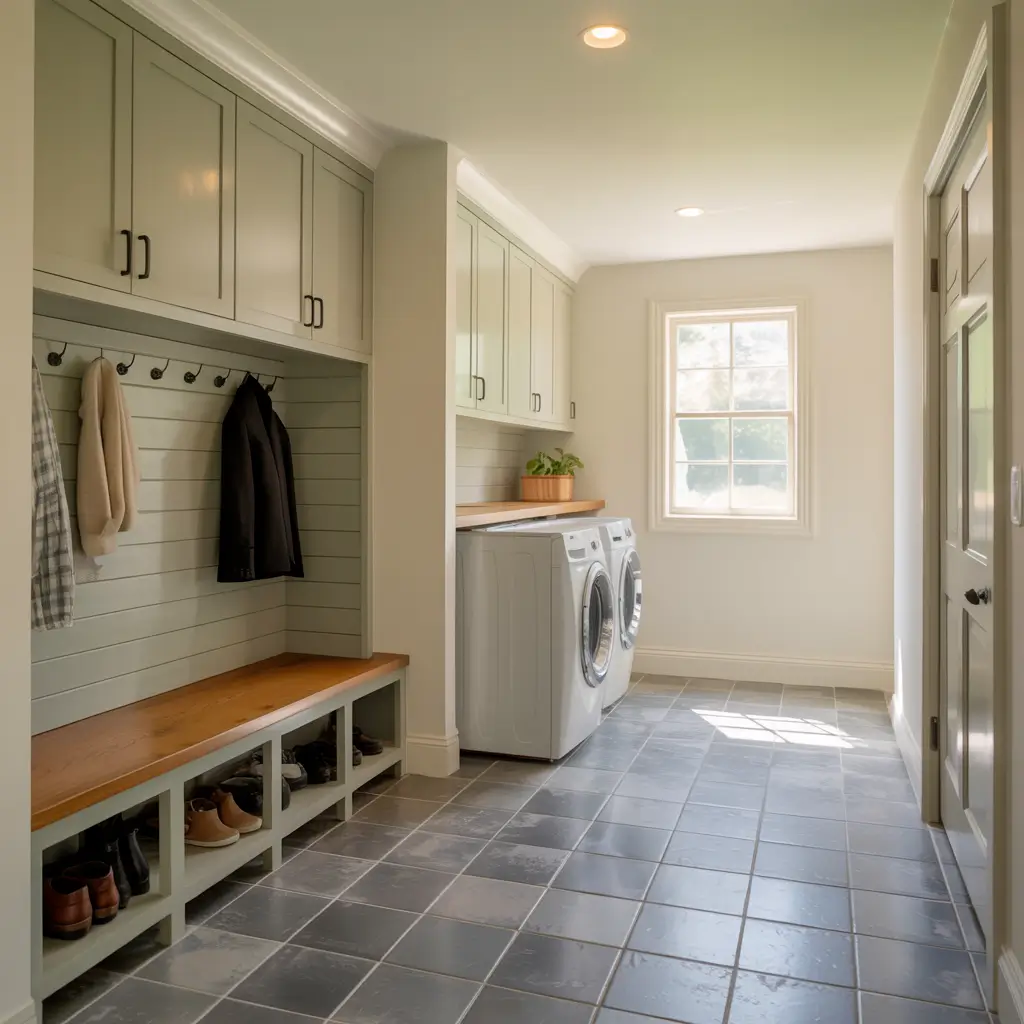
Last but definitely not least, the garage entry mudroom laundry room is perfect for families who primarily enter through the garage (which, let’s be real, is most of us).
This is the true “drop zone” of your home. You come in from the garage, dump your stuff, maybe kick off your shoes, and transition into your living space. Adding laundry functions here just makes sense.
Why the garage entry location wins:
- Natural traffic flow (you’re already stopping there anyway)
- Contains mess before it enters main living areas
- Often has existing plumbing from garage utility hookups
- Usually has more space than a typical interior mudroom
- Easy outdoor access for dealing with super dirty items
I’ve got this setup in my current house, and the convenience is unmatched. I can unload groceries, toss dirty sports uniforms straight into the washer, and hang up coats all in one stop before entering the main house.
The design should include:
- Durable, garage-quality flooring that extends from the garage (tile, concrete, or luxury vinyl)
- Plenty of hooks at adult and child heights
- Bench with storage for removing shoes
- Cabinets that can handle dirty/grimy items
- Countertop between garage and house door for setting down items
- Good ventilation (garage air quality isn’t always great)
I recommend installing a half-door or gate between the garage and mudroom if you have pets or small kids. It contains them while you’re unloading the car and prevents escape attempts when the garage door opens.
Lighting is crucial in garage entries because garages are notoriously dim. Add overhead lighting and task lighting near the washer and dryer. You want this space to feel like part of your home, not like you’re still in the garage.
You can install additional shelving for storing things like sports equipment, gardening supplies, or bulk pantry items. Since you’re already in a garage-adjacent space, it makes sense to keep some of that utilitarian storage there.
Making Your Mudroom Laundry Dream a Reality
Listen, I could keep going about mudroom laundry setups all day (my friends have banned the topic at brunch), but you’ve got the essential ideas now. The real question is: which setup matches your space, budget, and lifestyle?
Here’s my honest advice: Start by measuring your space obsessively. I mean get down there with your tape measure and note every dimension, including ceiling height, door swings, and any awkward corners or obstacles. You can have the best design ideas in the world, but if they don’t fit your actual space, you’re sunk.
Think about how you actually use your space. Are you constantly dealing with muddy kids and dogs? You need durability and easy cleaning. Do you prefer everything hidden and minimalist? Focus on concealed storage. Be brutally honest about your lifestyle.
Budget matters, but it shouldn’t stop you. I’ve seen stunning mudroom laundries created for under $500 with DIY effort, and I’ve seen mediocre ones that cost thousands. Your creativity and planning matter more than your budget (though obviously more money gives you more options).
Consider the long-term value too. A well-designed mudroom laundry room makes your daily life easier, keeps your home cleaner, and honestly adds value to your property. Future buyers eat this stuff up.
One final thought: Don’t let perfect be the enemy of good. You might not be able to do everything at once, and that’s okay. Start with the essentials—maybe just the appliances and some basic storage—and add features over time. My mudroom has evolved over three years, and it keeps getting better.


