15 Amazing Small Dining Room Decor Ideas for Compact Living
- Dining Room Decor
 Alina
Alina- 0
- 41 minutes read

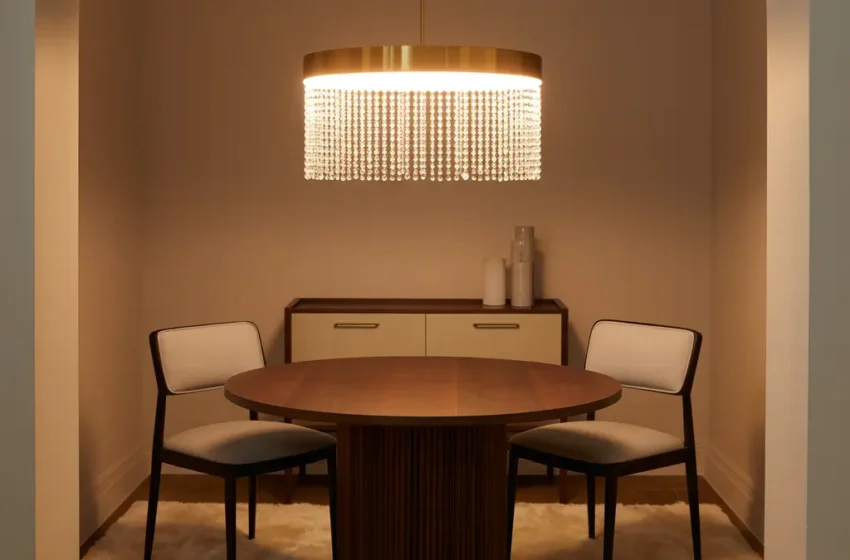
Listen, I get it. You’re staring at your tiny dining area wondering how the heck you’re supposed to fit actual humans around a table without everyone sitting knee-to-knee like you’re on a budget airline. Been there, done that, got the bruised shins to prove it. But here’s the thing—small dining rooms aren’t a curse; they’re just a puzzle that needs the right pieces. And honestly? Some of the most charming, cozy dining spaces I’ve ever seen were the size of a postage stamp. So grab your measuring tape and let’s turn that cramped corner into something actually amazing.
1. Round Table Small Dining Room Setup
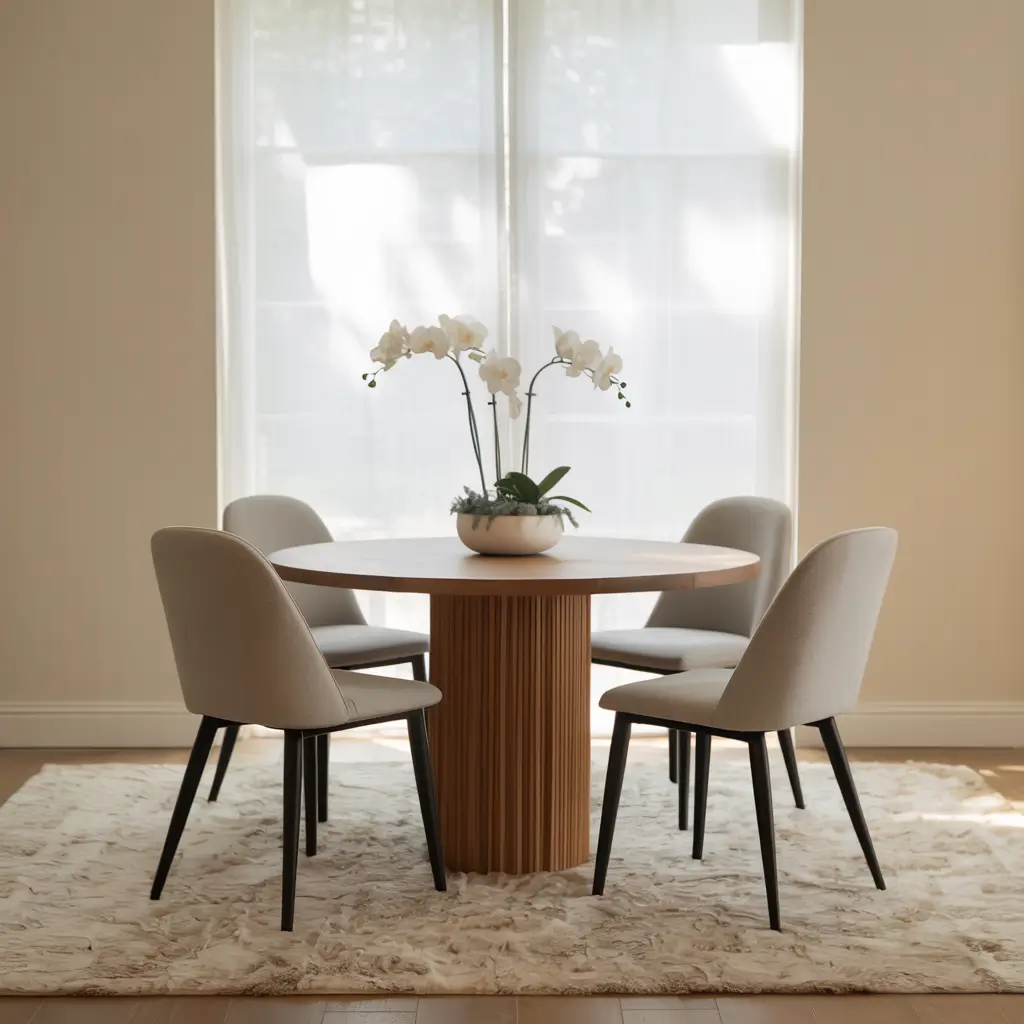
Ever notice how square tables in small spaces make you feel like you’re navigating an obstacle course? Yeah, corners are the enemy when you’re already short on square footage.
Round tables are absolute lifesavers for compact dining rooms. They eliminate those sharp corners that bruise your hips and create a more fluid traffic flow. I switched to a round table in my first apartment, and suddenly I could actually walk around the room without doing some weird sideways shuffle. Plus, you can squeeze in an extra chair when unexpected guests show up (looking at you, cousin who “just happened to be in the neighborhood”).
The beauty of round tables is they create better conversation flow too. Everyone faces each other naturally, which makes dinner feel more intimate and less like a corporate boardroom meeting. Look for pedestal-style bases rather than four legs—they give you more flexibility with chair placement and won’t clash with everyone’s knees underneath.
For super tight spaces, consider a 36-inch diameter table. It seats four comfortably and won’t dominate the room. If you’ve got slightly more space, a 42-inch round is the sweet spot for regular dinner parties.
2. Minimalist Small Dining Room Decor
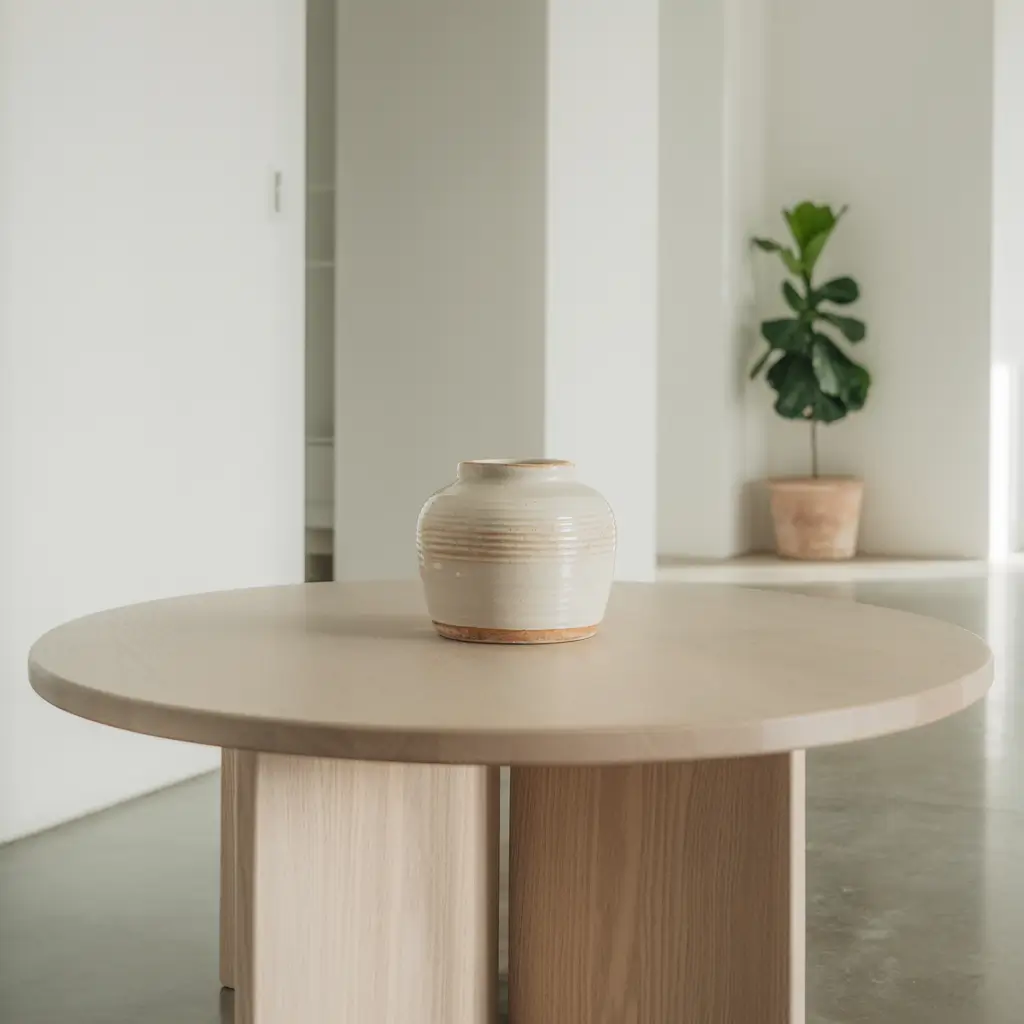
Real talk: clutter is a small space’s worst nightmare. When you’re working with limited square footage, every knickknack and unnecessary decoration makes the room feel like it’s closing in on you.
Minimalism isn’t about being boring—it’s about being intentional. I learned this the hard way after trying to cram my grandmother’s entire china collection into a dining room that could barely fit the table itself. The result? Visual chaos and a space that felt even smaller than it actually was.
Stick to a simple color palette (we’ll get more into this later), choose furniture with clean lines, and resist the urge to fill every surface. One beautiful centerpiece beats five mediocre decorations every single time. Think of it like editing a photo—sometimes what you remove matters more than what you add.
Your minimalist dining room should have:
- One statement piece (a great light fixture, artwork, or centerpiece)
- Neutral or monochromatic color scheme
- Furniture with simple, streamlined silhouettes
- Hidden storage to keep surfaces clear
- Quality over quantity in every choice
3. Mirror Accent Small Dining Space Design
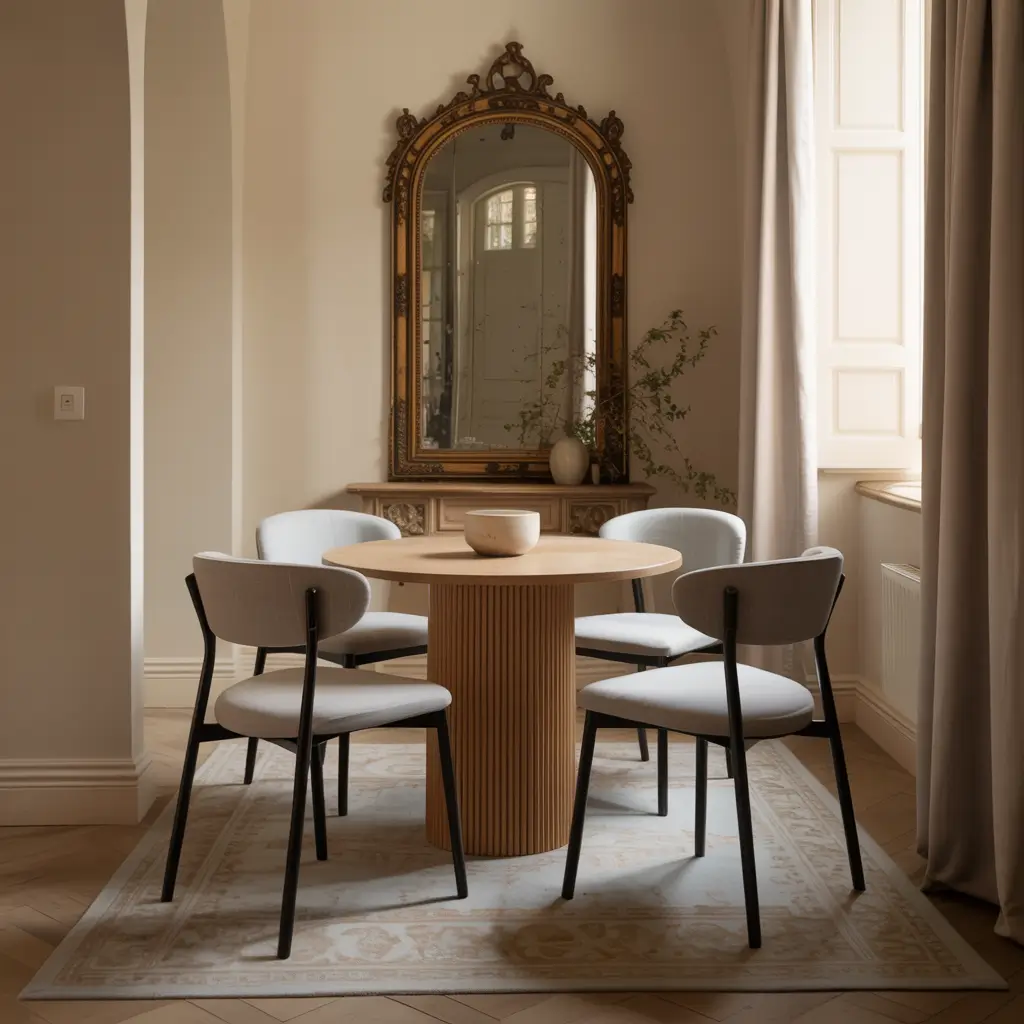
Want to know the oldest trick in the interior design book? Mirrors. They’re like magic for small spaces, and I’m not even exaggerating.
Mirrors literally double your visual space by reflecting light and creating depth. I hung a large mirror on one wall of my dining area, and guests constantly asked if I’d knocked down a wall or something. Nope, just strategically placed glass doing its thing.
Position your mirror to reflect natural light from windows or bounce light from your statement fixture around the room. The effect is seriously dramatic. You can go with one large statement mirror or create a gallery wall of smaller mirrors in different shapes—both work beautifully.
Pro tip: Place your mirror across from your prettiest view or most attractive feature (like that gallery wall or your amazing light fixture). Don’t position it where it’ll reflect clutter or boring walls. Strategic placement is everything here.
Just don’t go overboard and turn your dining room into a funhouse. One well-placed mirror or a thoughtfully arranged group creates elegance; too many creates confusion and can actually make the space feel chaotic.
4. Wall-Mounted Dining Table Ideas
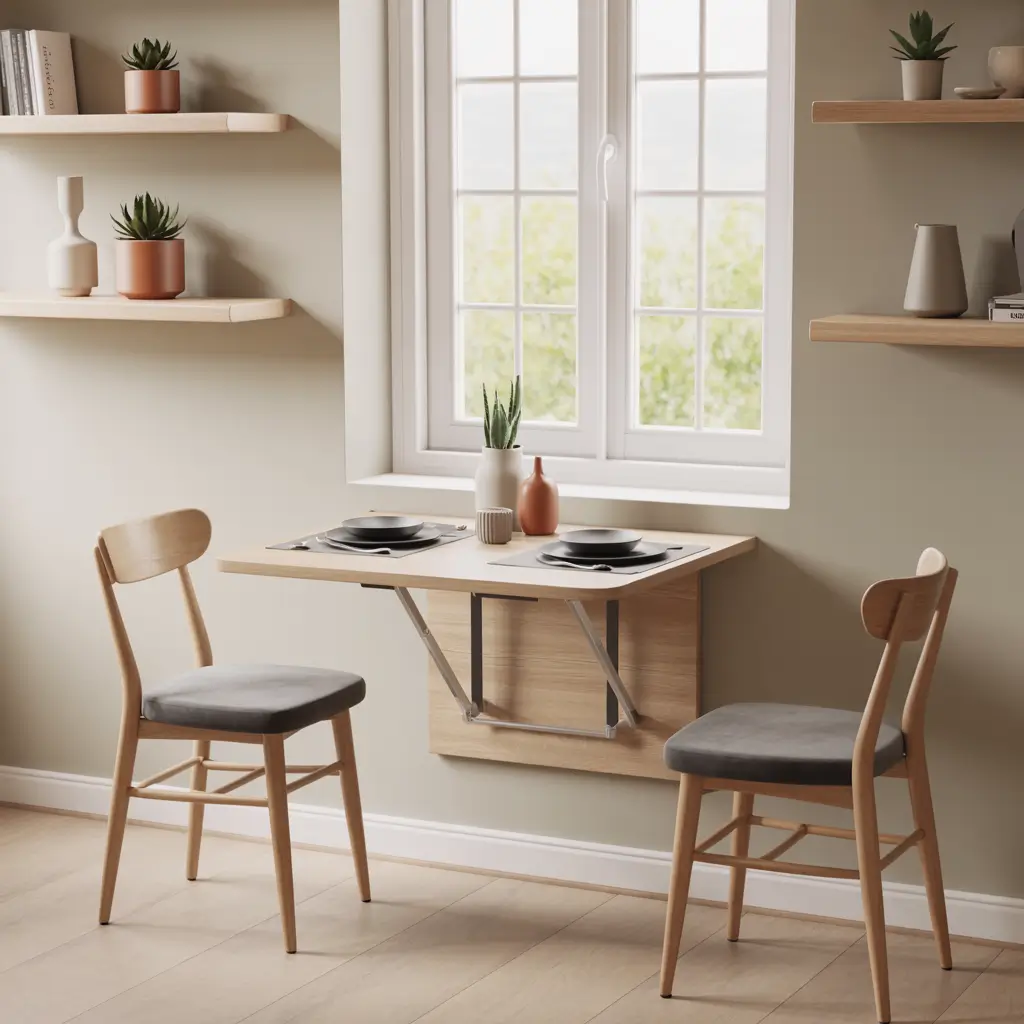
Okay, this one’s for the seriously space-challenged among us. Wall-mounted tables are the ultimate space-saving hack, and they’re way more stylish than you might think.
These tables fold down when you need them and disappear when you don’t. It’s like having a dining room with an off switch. When I lived in a studio apartment, my wall-mounted table served as a workspace during the day and dining spot at night. The floor space I saved probably added like 30% more livable area. FYI, that’s not an exaggeration—it’s genuinely transformative.
Modern wall-mounted tables come in gorgeous designs that don’t scream “I’m furniture that’s embarrassed to exist.” Look for ones with:
- Solid construction (nobody wants their dinner ending up on the floor)
- Easy folding mechanisms that don’t require an engineering degree
- Attractive wood finishes that complement your decor
- Optional storage shelves for maximum functionality
You can also pair wall-mounted tables with folding chairs that hang on the wall when not in use. The whole setup takes up maybe six inches of depth when folded—that’s insane when you think about it.
Also Read: 15 Elegant Dining Room Table Decor Styles for Any Occasion
5. Cozy Corner Dining Nook Styling
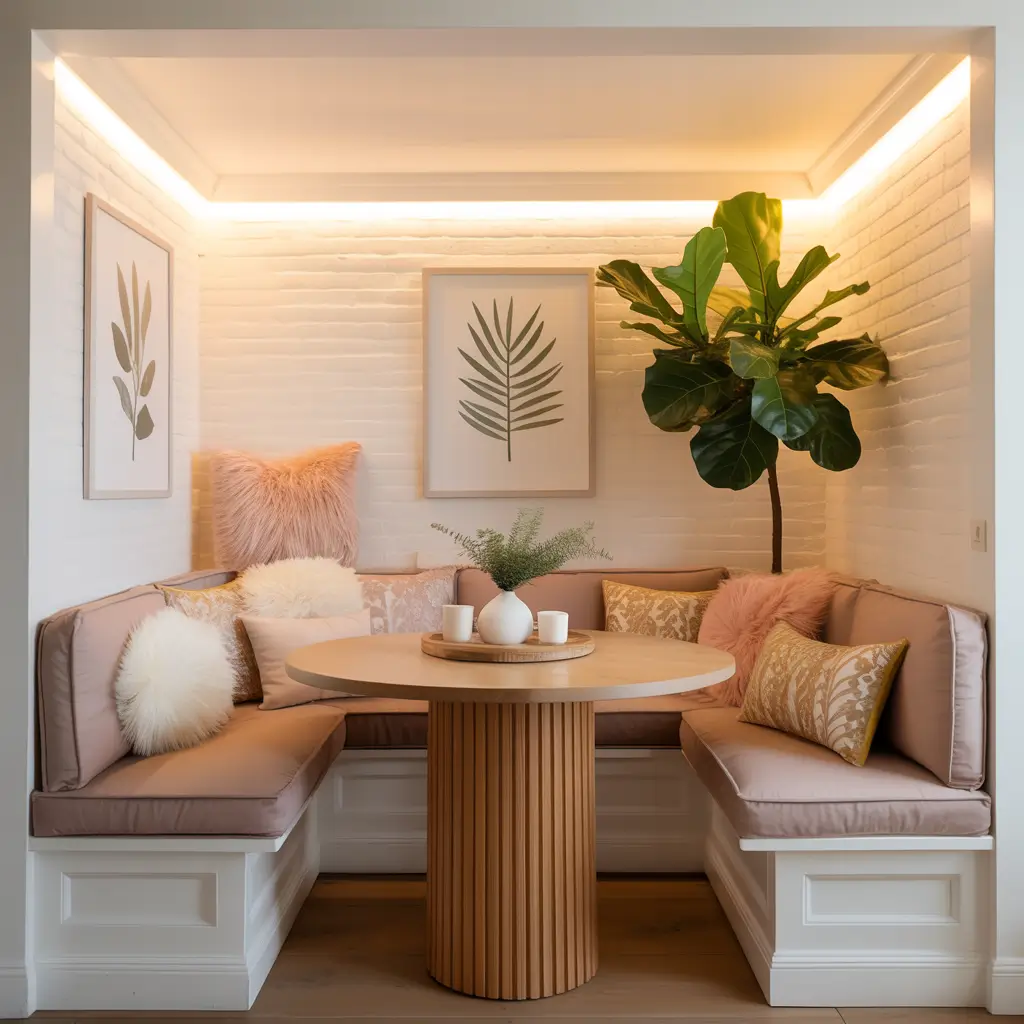
Corner nooks are criminally underrated, IMO. That awkward corner everyone ignores? That’s prime real estate for a dining setup that feels like a hug.
I once turned a completely useless corner in my kitchen into a breakfast nook with an L-shaped bench, and it became everyone’s favorite spot in the entire house. There’s something psychologically comforting about having your back to walls—it feels protective and cozy.
Built-in banquette seating is the gold standard for corner nooks. You get comfortable seating that doesn’t move around, plus you can build storage underneath those benches. That’s hidden space for table linens, seasonal decor, or that bread maker you swore you’d use more often 🙂
Style your corner nook with:
- Plush cushions that invite people to linger
- A small round or square table (round works better for conversation)
- Pendant lighting hung at the right height
- Personal touches like throw pillows or a small plant
The beauty of corner nooks is they define the dining area without requiring walls or dividers. In open-plan spaces, this creates zones naturally while maintaining flow.
6. Light Color Small Dining Room Theme
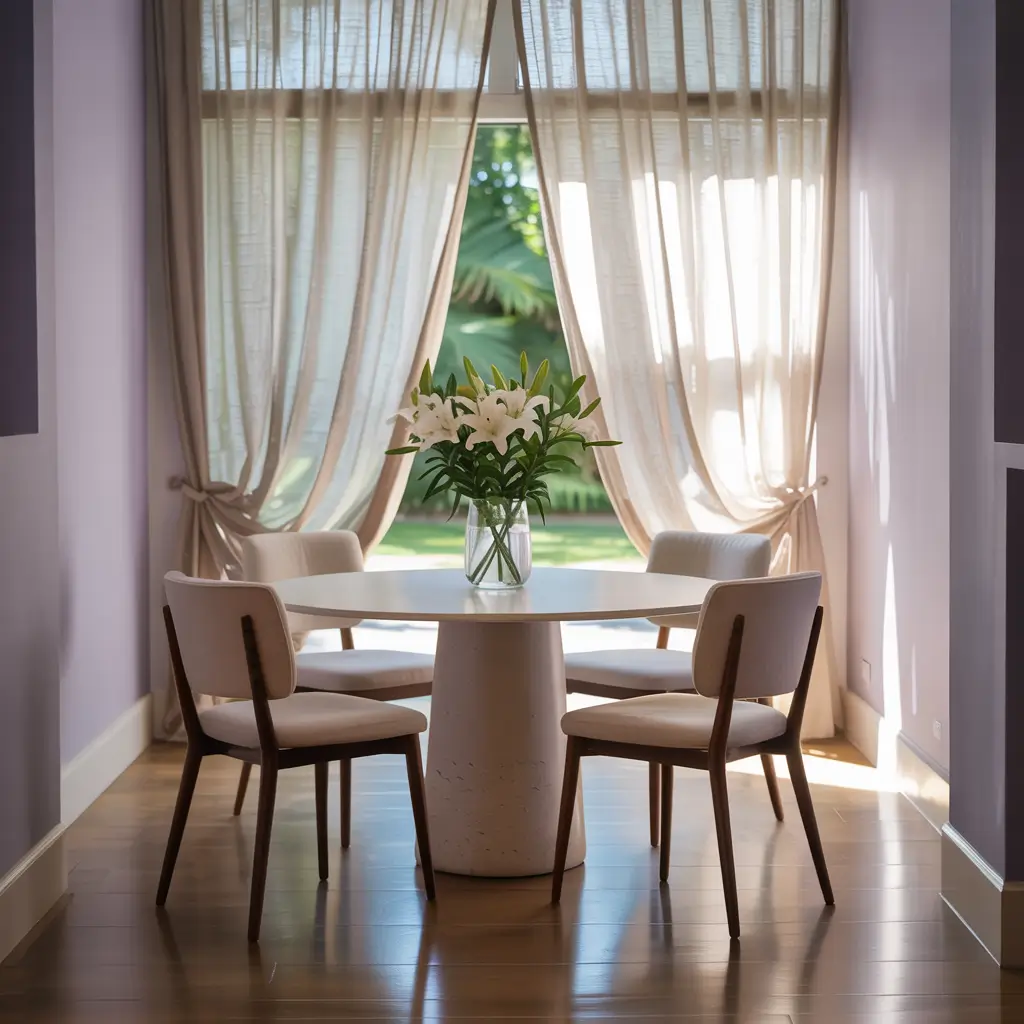
Dark, moody dining rooms are gorgeous… if you’ve got the space to pull it off. In compact rooms? Dark colors make you feel like you’re eating in a cave.
Light colors reflect light and make spaces feel larger—it’s basic physics, people. I painted my cramped dining area a soft white with warm undertones, and the difference was night and day. Suddenly the room felt airy instead of claustrophobic.
The best light colors for small dining rooms include:
- Soft whites and off-whites (avoid stark white—it can feel sterile)
- Light grays with warm undertones
- Pale blues or greens for a subtle pop
- Creamy beiges and taupes
- Blush pinks for a modern, warm feel
You don’t have to paint everything the same color, though. Create depth by using slightly different shades of the same light color family. Paint the trim a shade lighter than the walls, or go with a slightly darker ceiling (yes, really—it can add coziness without closing in the space).
And please, don’t match your furniture to your walls exactly. You want some contrast to define shapes and create visual interest. Light walls with slightly darker furniture (still in light wood tones) creates beautiful dimension.
7. Foldable Furniture Dining Room Decor
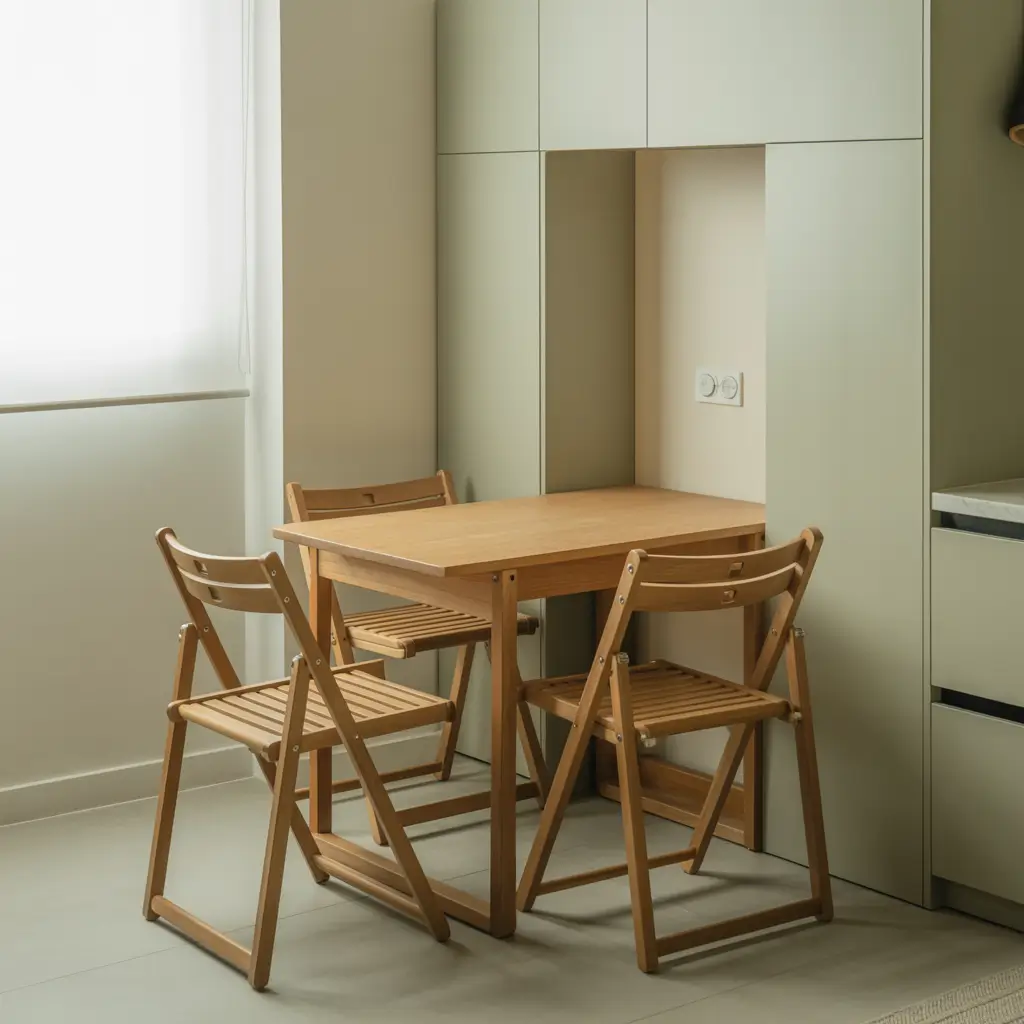
If you’re not using foldable furniture in a small space, you’re basically refusing free square footage. I said what I said.
Foldable furniture multiplies your space’s functionality without requiring actual magic. Drop-leaf tables, folding chairs, and collapsible serving carts give you options. Need to seat six for Thanksgiving? Expand the table. Regular Tuesday night dinner for two? Fold it down and enjoy all that extra floor space.
I’ve used folding furniture for years, and the quality has improved dramatically. We’re not talking about rickety card tables here—modern foldable dining furniture is sturdy, attractive, and designed to look intentional rather than desperate.
Look for:
- Drop-leaf tables that expand from two-seater to six-seater
- Folding chairs that actually look good (stackable wooden or metal designs)
- Nesting tables that pull out when you need serving space
- Collapsible bar carts for drinks and extra storage
The key is choosing pieces that look good in both configurations. Your collapsed table shouldn’t look sad and unfinished—it should look like a deliberate design choice.
Also Read: 15 Elegant Dining Room Wall Decor Inspirations to Try Now
8. Vertical Storage Dining Room Styling
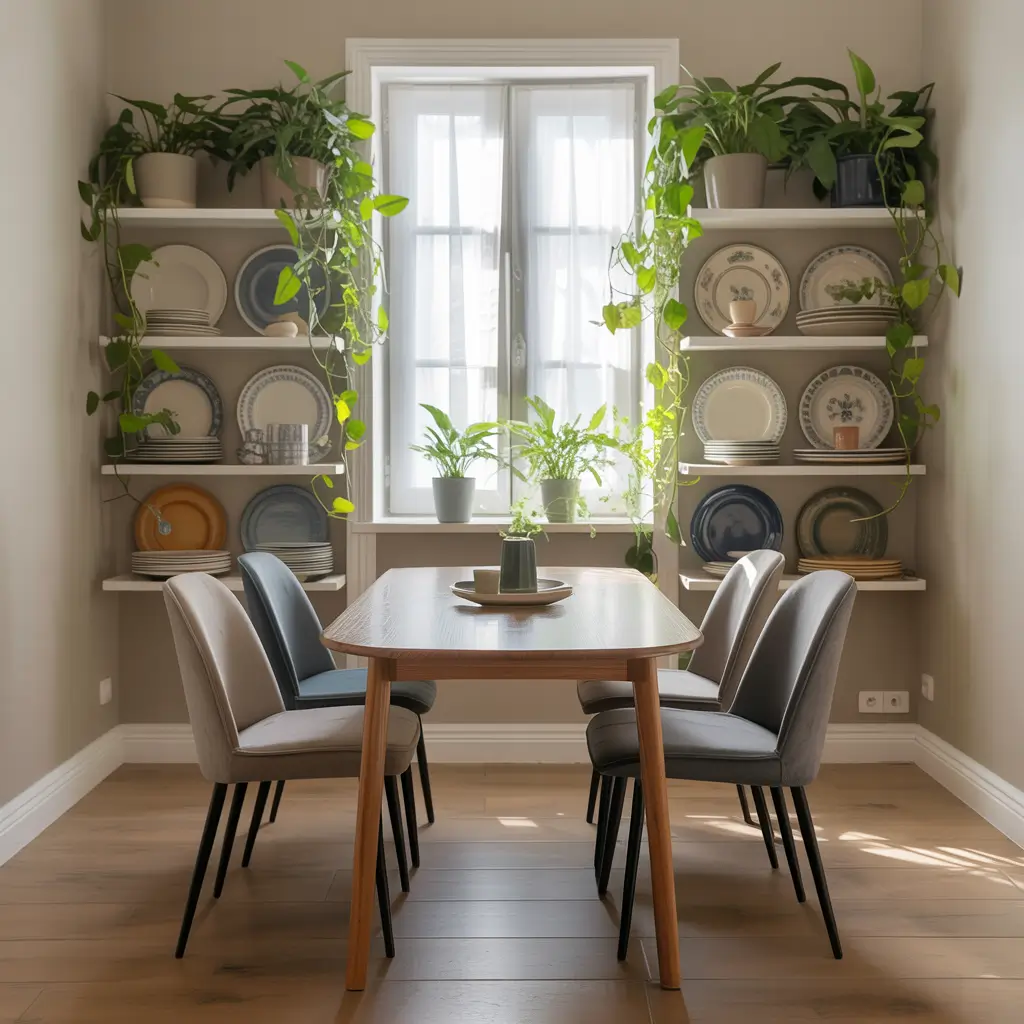
You know what small dining rooms have plenty of? Wall space. Use it.
Going vertical with storage is a game-changer when floor space is at a premium. I installed floating shelves above my dining table and suddenly had space for dishes, glassware, and decor without adding a single piece of furniture to the room.
Vertical storage options include:
- Floating shelves for dishes and decorative items
- Wall-mounted cabinets for hiding less attractive necessities
- Tall, narrow bookcases that draw the eye upward
- Pegboards for a modern, customizable storage solution
- Plate racks that double as wall art
The trick is keeping your vertical storage organized and visually appealing. Messy shelves crammed with random stuff make the room feel chaotic. Color-coordinate your dishes, display items thoughtfully, and use matching containers for a cohesive look.
Vertical storage also draws the eye upward, which makes ceilings feel higher and rooms feel larger overall. It’s another optical illusion that actually works.
9. Modern Compact Dining Room Layout
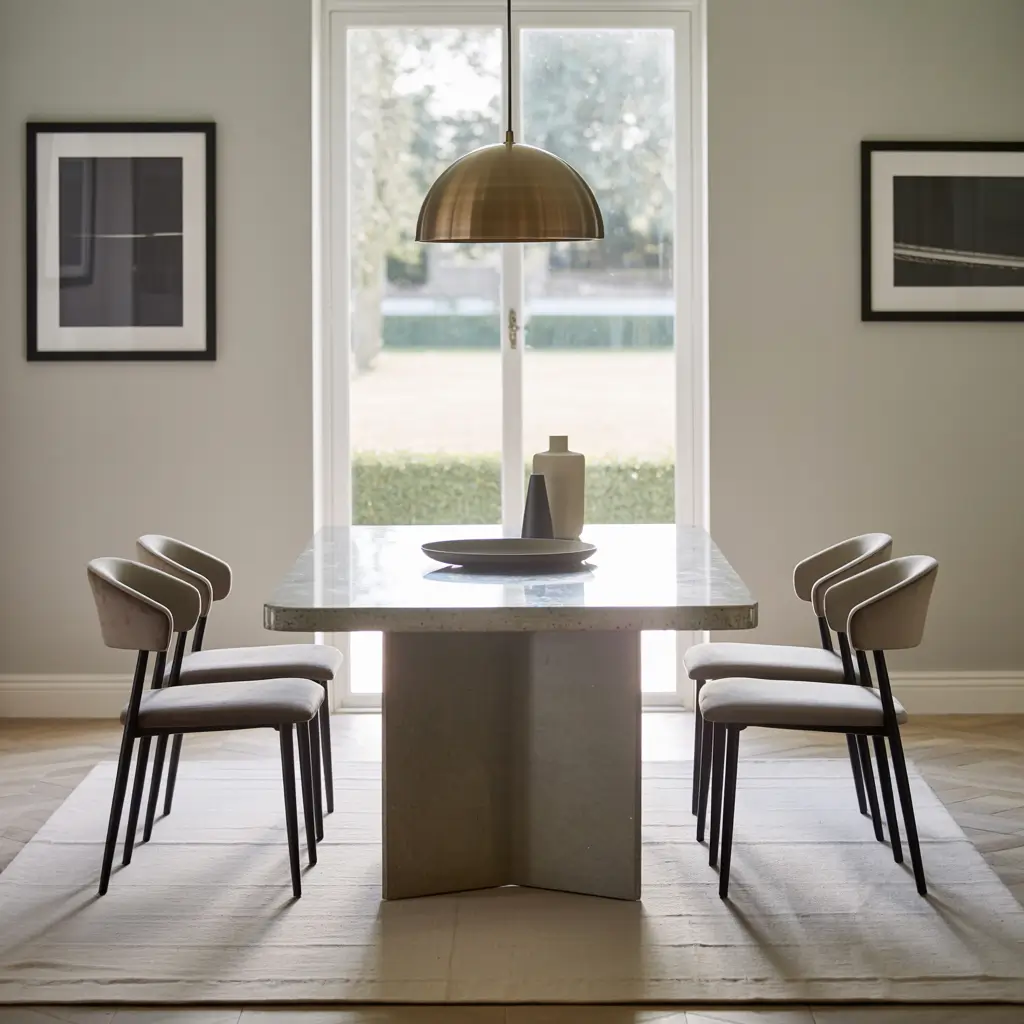
Layout matters more than you think. You can have the perfect furniture and still end up with a room that feels awkward if things aren’t positioned correctly.
The key to modern compact layouts is traffic flow and breathing room. You need at least 36 inches of clearance around the table for chairs to pull out and people to walk comfortably. I know that sounds like a lot when you’re already tight on space, but trust me—anything less and you’ll feel cramped.
Modern layouts prioritize:
- Floating furniture away from walls when possible
- Clear pathways that don’t require navigation skills
- Multi-zone functionality (dining area that transitions smoothly to other spaces)
- Strategic furniture placement that maximizes space and light
- Scale-appropriate pieces (not oversized furniture in tiny rooms)
Sometimes the best layout isn’t the obvious one. Try positioning your table at an angle instead of parallel to the walls, or float it in the center of the space instead of pushing it against a wall. Play around before committing—you might discover an arrangement that feels way more spacious.
10. Scandinavian Small Dining Room Decor
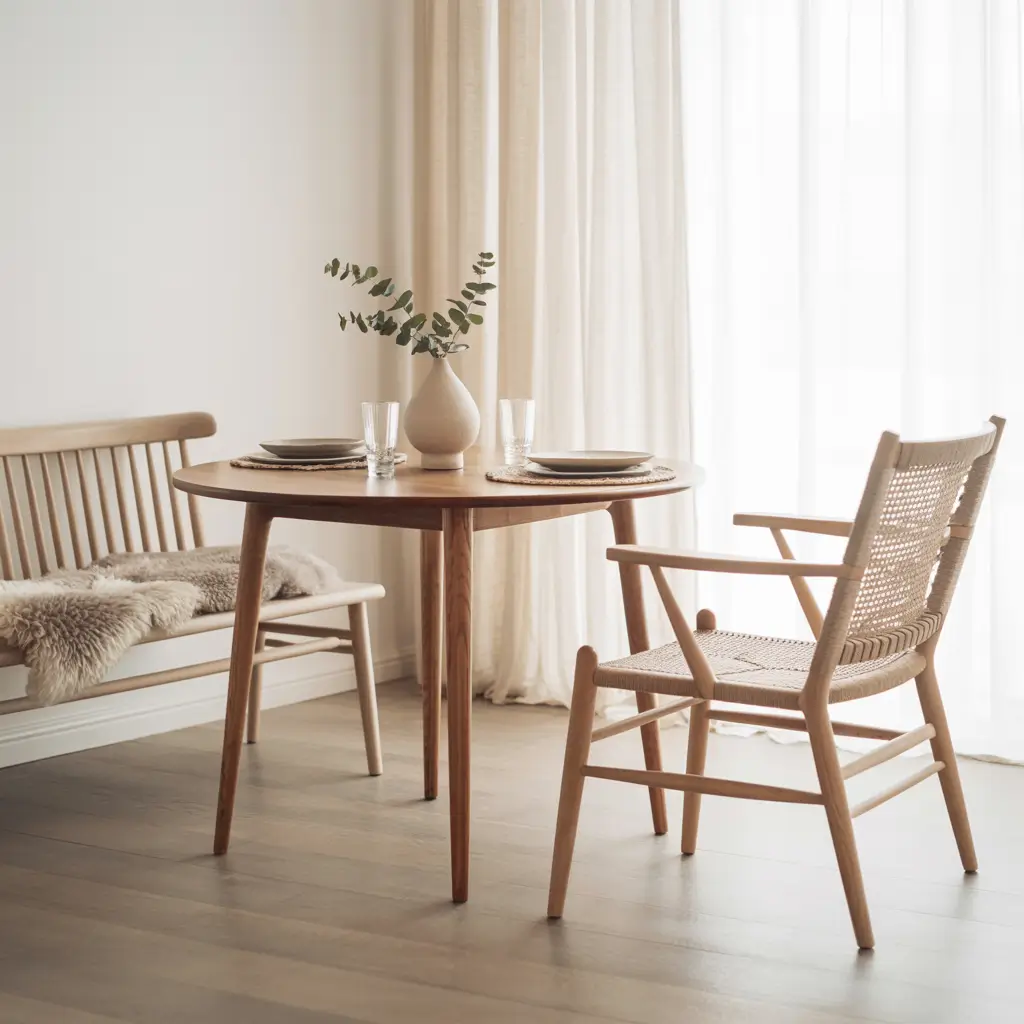
Scandinavian design was basically invented for small spaces. Those Nordic folks know a thing or two about maximizing compact living (long winters indoors will do that).
Scandi style combines minimalism with warmth, which is the perfect balance for small dining rooms. You get the space-expanding benefits of minimal decor without the cold, sterile feeling that can sometimes happen with super minimalist spaces.
Essential Scandinavian elements include:
- Light wood furniture (think birch, ash, or light oak)
- White or light neutral walls as a base
- Natural textures like linen, wool, and leather
- Simple, functional furniture with clean lines
- Pops of black for contrast and definition
- Greenery for life and color
I furnished a tiny dining area with a light wood table, white chairs, and sheepskin seat covers. Added a simple black pendant light and a few plants. The result? A space that felt bigger, brighter, and way more inviting than the cramped room I started with.
The Scandi approach emphasizes quality over quantity, which naturally prevents clutter. Every piece has a purpose and a place. Nothing extra, nothing wasted.
11. Bench Seating Small Dining Space Idea
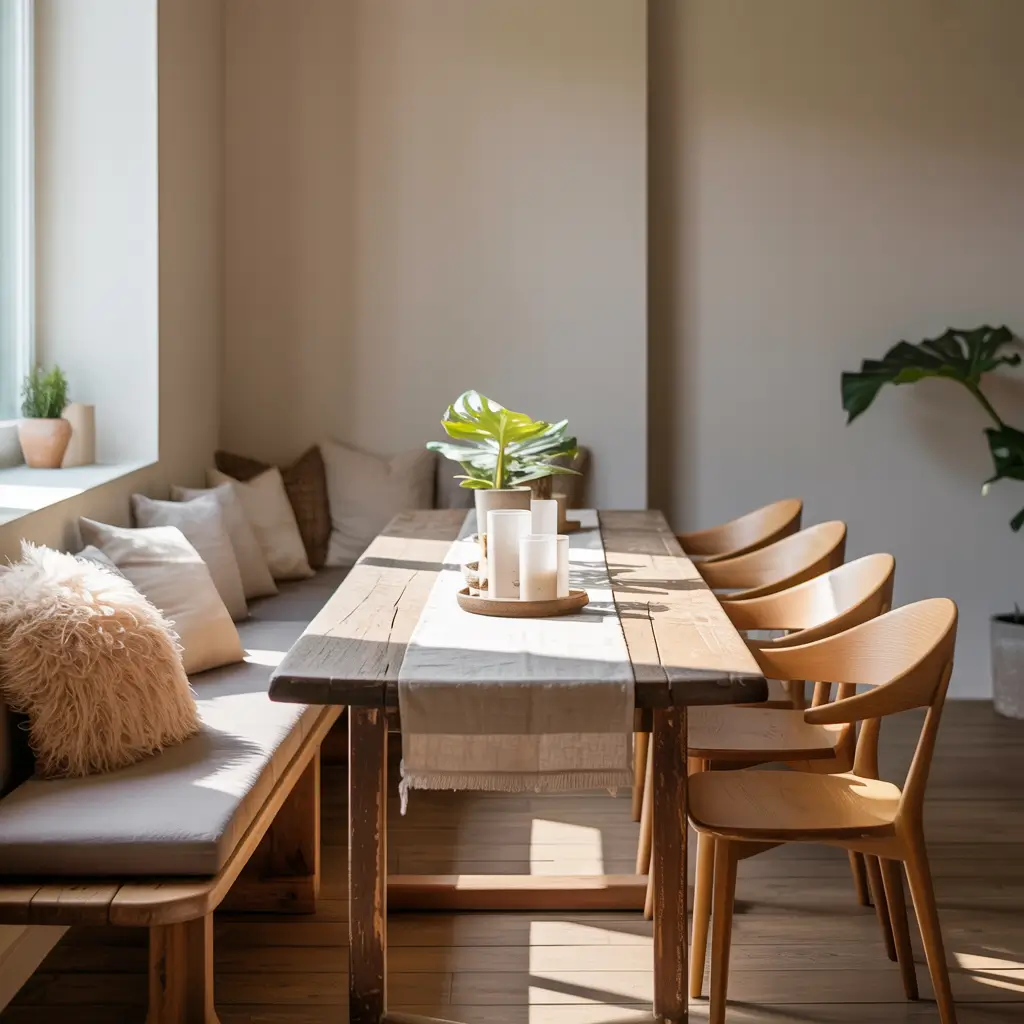
Chairs take up more space than you realize. Pull them out, and they gobble up even more square footage. Benches? Way more efficient.
Benches allow you to seat more people in less space because you’re not accounting for gaps between individual chairs. I replaced two chairs on one side of my table with a bench and immediately gained seating for an extra person without changing the table size.
Benches work especially well:
- Against walls to maximize every inch
- In corner nooks for cozy, efficient seating
- Paired with chairs on the opposite side for variety
- With storage underneath for bonus functionality
The style possibilities are endless too. You can go rustic with a wooden bench, modern with an upholstered design, or industrial with metal and leather. Choose based on your overall aesthetic, but definitely consider the comfort factor—thin wooden benches without backs aren’t ideal for long dinner parties.
One potential downside: benches require people to scoot in and out, which can feel awkward if you’re frequently getting up. Position them strategically where people are less likely to need constant access.
12. Statement Lighting Small Dining Room Design
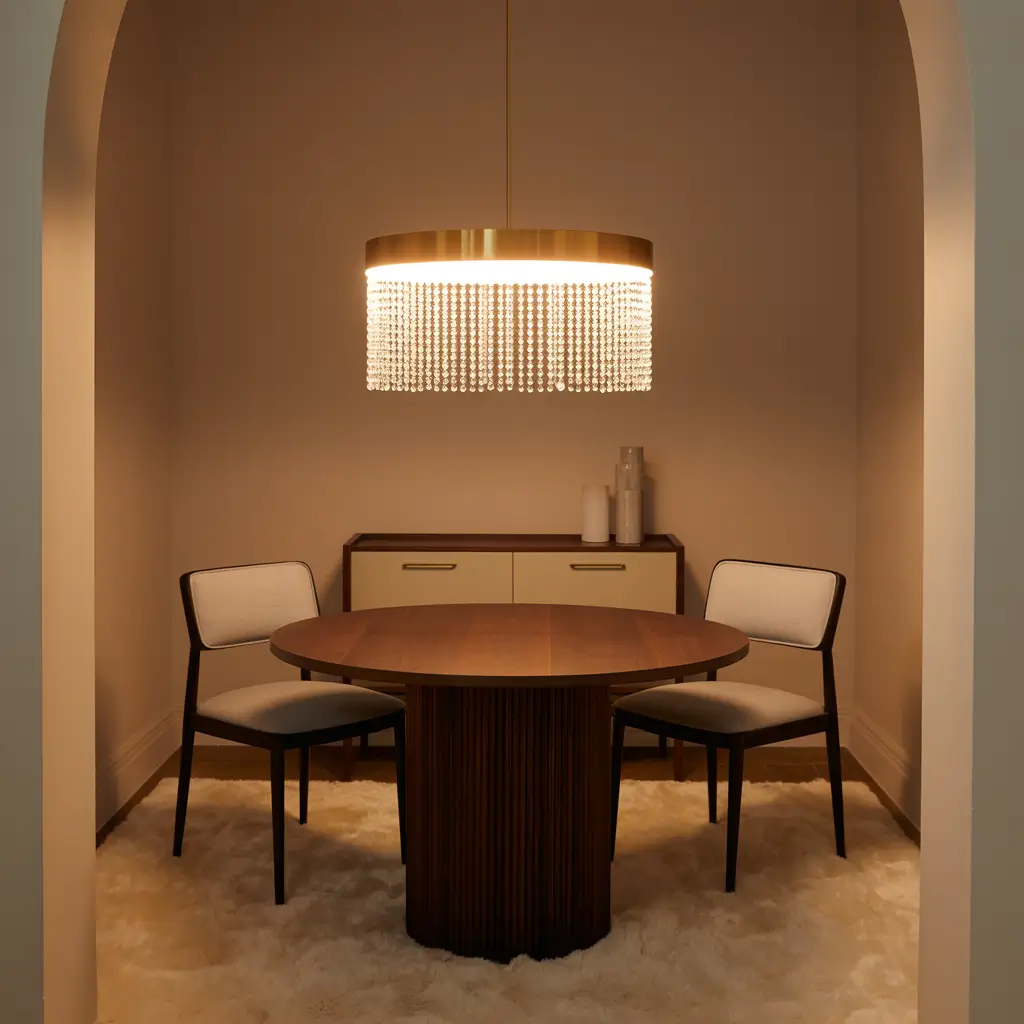
If you’re going to splurge on one thing in a small dining room, make it the light fixture. Seriously.
Statement lighting draws the eye upward and becomes instant personality for your space. I hung an oversized pendant light in my small dining area, and it completely transformed the room’s vibe. Suddenly I had a focal point that distracted from the room’s compact size.
Great lighting options for small dining rooms:
- Pendant lights hung at the right height (30-36 inches above the table)
- Chandeliers scaled appropriately for the space
- Sculptural fixtures that double as art
- Drum shades for modern, diffused light
- Exposed bulb designs for industrial charm
Don’t be afraid to go bigger than you think—a larger fixture creates drama and impact without taking up physical space. Just make sure it’s proportional to your table size (generally, the fixture should be about half to three-quarters the width of your table).
Layer your lighting too. A statement overhead fixture is great, but add wall sconces or a floor lamp nearby for ambient options. Different lighting levels create depth and make the space more versatile.
Also Read: 15 Stunning Dining Room Decor Ideas for a Stylish Home
13. Multifunctional Dining Room Furniture Setup
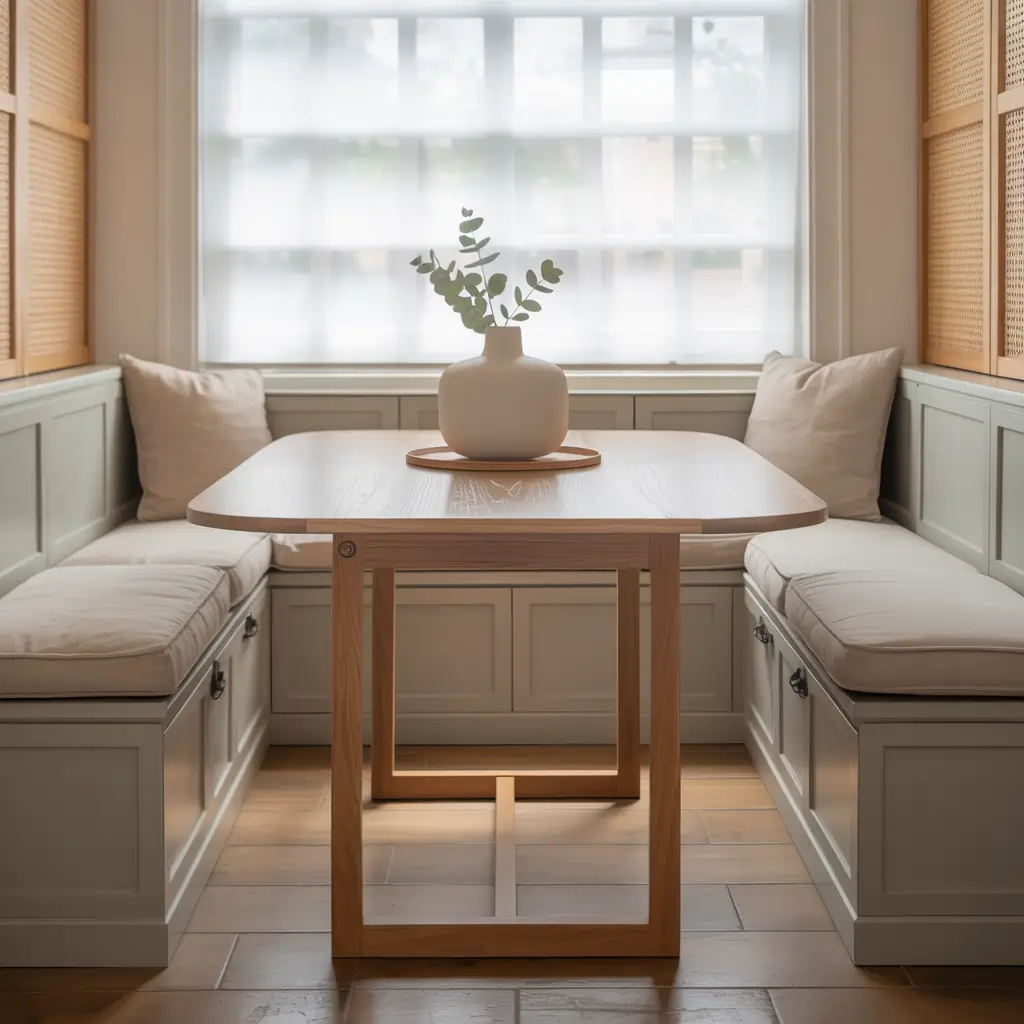
Small space living requires furniture to earn its keep. Single-purpose pieces are a luxury you probably can’t afford—spatially speaking, anyway.
Multifunctional furniture is about working smarter, not harder. Your dining table can be a workspace. Your storage bench can be seating. Your bar cart can be a serving station and a room divider. Everything does double (or triple) duty.
Smart multifunctional pieces include:
- Extendable tables that grow for entertaining
- Storage benches that seat people and hide stuff
- Buffets that store dishes and provide serving space
- Bar carts that move where needed and store drinks/dishes
- Console tables that convert to dining tables
I use my dining table as a desk most days. It’s positioned near a window for good light, and I just clear it off when it’s time to eat. Having dedicated single-use spaces for everything simply isn’t realistic in compact living situations.
The key is choosing pieces that look good in all their functions. Your dining-table-slash-desk shouldn’t look like an office when you’re trying to enjoy dinner. Keep it clean, keep it versatile.
14. Gallery Wall Small Dining Room Decor
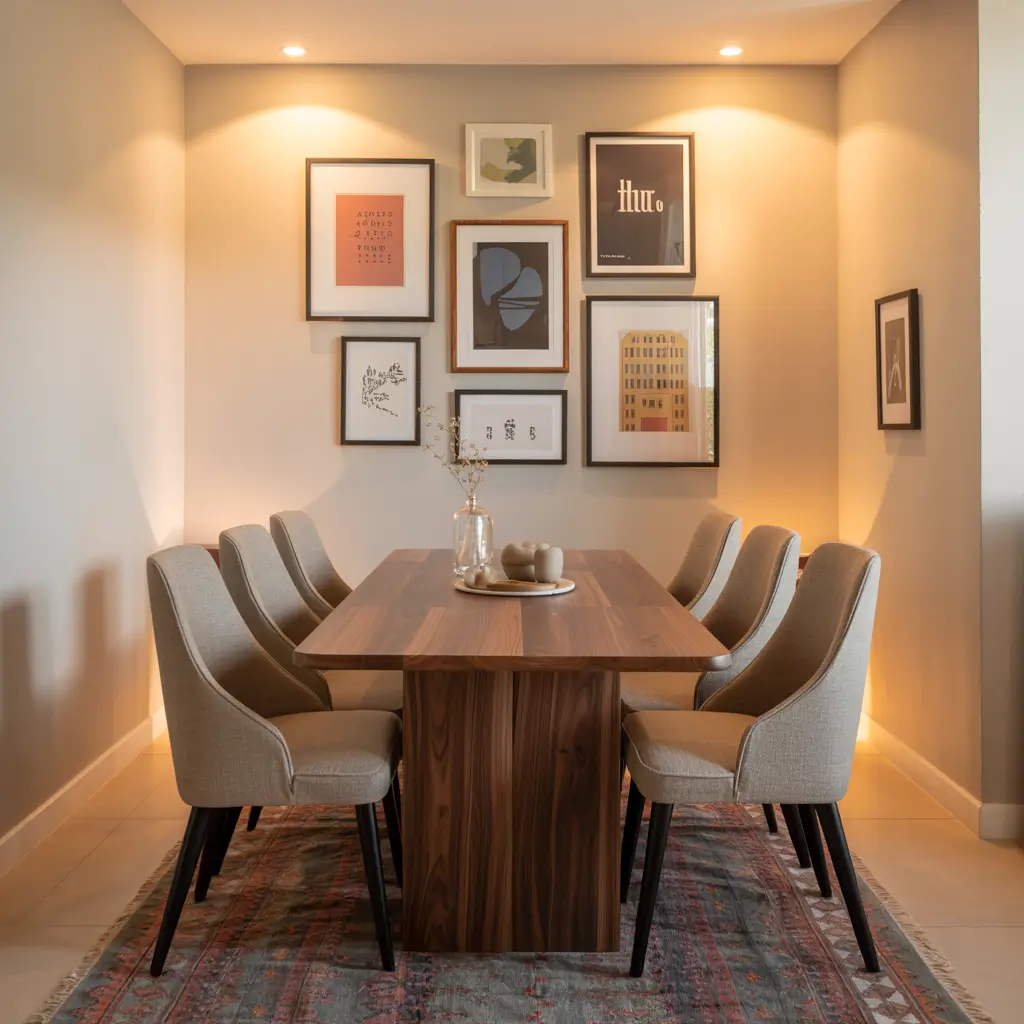
Bare walls in small spaces feel cold and unfinished. But covering them thoughtfully? That adds personality and visual interest without claiming any precious floor space.
Gallery walls create a focal point and showcase your style without adding furniture or clutter. I created a gallery wall in my dining area with a mix of art, photos, and small mirrors. It became an instant conversation starter and made the room feel curated and intentional.
Gallery wall tips for small dining rooms:
- Mix frame sizes and shapes for visual interest
- Stick to a cohesive color palette to avoid chaos
- Include mirrors to bounce light around
- Plan your layout on the floor before hammering nails
- Keep spacing consistent (2-3 inches between frames)
You don’t need expensive art either. Frame interesting prints, photos you’ve taken, pages from old books, or even fabric swatches. What matters is the overall composition, not the price tags.
Position your gallery wall where people naturally look—usually the wall you face from the main seating area. This creates a backdrop for meals and gatherings that feels personal and complete :/
15. Glass Furniture Small Dining Room Styling
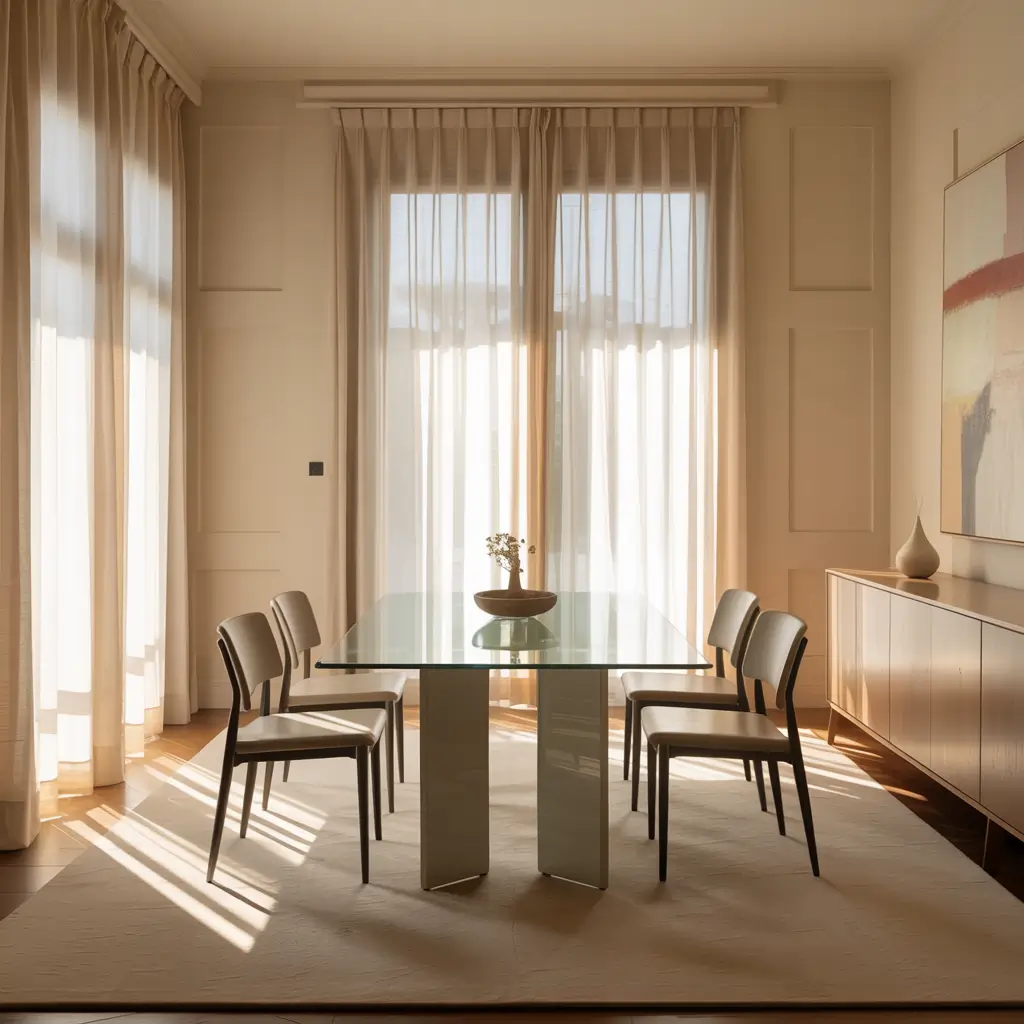
Here’s a weird truth: see-through furniture takes up less visual space than solid pieces. Your brain registers less “stuff” even though the physical footprint is the same.
Glass tables and chairs create an airy, open feeling that works beautifully in cramped quarters. I was skeptical about glass furniture at first (worried about fingerprints and fragility), but modern tempered glass pieces are surprisingly durable and easy to maintain.
Glass furniture advantages:
- Visually lightweight appearance that doesn’t dominate
- Light reflection that brightens the space
- Versatile style that works with most aesthetics
- Easy to clean (despite what you might think)
- Durable when you choose quality tempered glass
Pair a glass-top table with solid chairs if all-glass feels too ethereal, or go full transparency with acrylic/lucite chairs. The effect is modern, sophisticated, and spacious-feeling.
Keep in mind that glass shows every smudge and watermark, so you’ll need to wipe it down regularly. But honestly? That’s a small price to pay for furniture that basically disappears while still being totally functional.
Bringing It All Together
Look, decorating small dining rooms isn’t about following strict rules or copying magazine spreads exactly. It’s about understanding what makes spaces feel larger and then applying those principles in ways that match your style and needs.
The common threads running through all these ideas? Maximize light, minimize clutter, choose multifunctional pieces, and don’t be afraid to think creatively about your layout. Some of the best small space solutions come from trying unconventional arrangements and being willing to experiment.
You’re not trying to trick people into thinking your dining room is massive—you’re creating a space that feels intentional, comfortable, and perfectly suited to its size. Compact doesn’t mean compromised. Some of my favorite meals and conversations have happened in dining rooms that could fit inside other people’s walk-in closets.
Start with one or two ideas from this list that really speak to you. Maybe it’s swapping your square table for a round one, or finally installing that statement light fixture you’ve been eyeing. Small changes create momentum, and before you know it, you’ve transformed a space that felt like an afterthought into one that feels like the heart of your home.
And remember—compact living isn’t a phase you’re suffering through until you can afford more space. It’s an opportunity to get creative, intentional, and honestly pretty clever with your design choices.


