15 Stunning Dining Room Decor Ideas for a Stylish Home
- Dining Room Decor
 Alina
Alina- 0
- 52 minutes read

Look, I get it. Your dining room probably feels like that awkward middle child of your home—not quite living room fancy, not quite kitchen practical. You walk past it daily, maybe use it for actual dining twice a month (if we’re being honest), and the rest of the time it collects mail and random stuff you don’t know where else to put.
But here’s the thing: your dining room has so much potential. I’ve spent way too many weekends experimenting with different styles, moving furniture around at midnight (much to my neighbor’s delight, I’m sure), and I’ve figured out what actually works. Whether you’re working with a massive formal space or a tiny corner that barely fits four chairs, I’ve got you covered with these 15 styling ideas that’ll transform your dining space from “meh” to “wow, when did you become an interior designer?”
Ready to fall back in love with your dining room? Let’s go.
1. Modern Minimalist Dining Room Decor
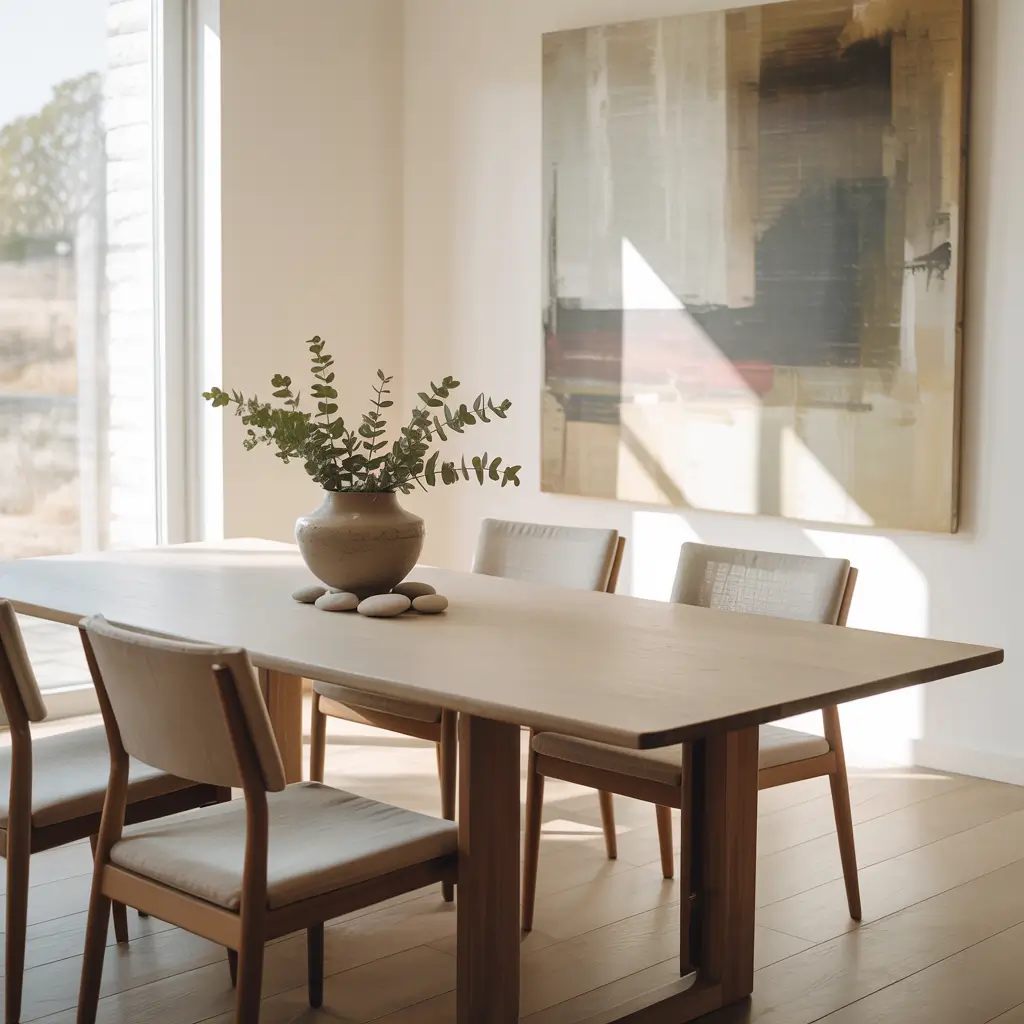
You know what’s funny about minimalism? People think it means boring, but executed well, it’s actually the complete opposite. I tried this style in my own space last year, and honestly, it changed my entire perspective on dining room design.
The foundation of modern minimalist design relies on clean lines, neutral colors, and zero clutter. Think sleek dining tables with simple silhouettes—no ornate carvings or fussy details here. I went with a white marble-top table paired with black metal legs, and the contrast is chef’s kiss.
Here’s what makes this style work:
- Simple color palette: Stick to whites, grays, blacks, and maybe one accent color
- Quality over quantity: One stunning light fixture beats five mediocre ones
- Hidden storage: Keep all the clutter out of sight
- Negative space: Let your room breathe—not every surface needs something on it
The key? Choose pieces with purpose. That ceramic vase sitting on your table? It should be there because you love it, not because you’re filling space. I learned this the hard way after buying way too many “decorative objects” that just made my room feel cluttered.
One trick I absolutely swear by: invest in a statement chandelier or pendant light. When everything else is simple, your lighting becomes the star. I found this geometric brass fixture that literally makes people stop and ask where I got it. Worth every penny.
2. Cozy Farmhouse Dining Room Decor
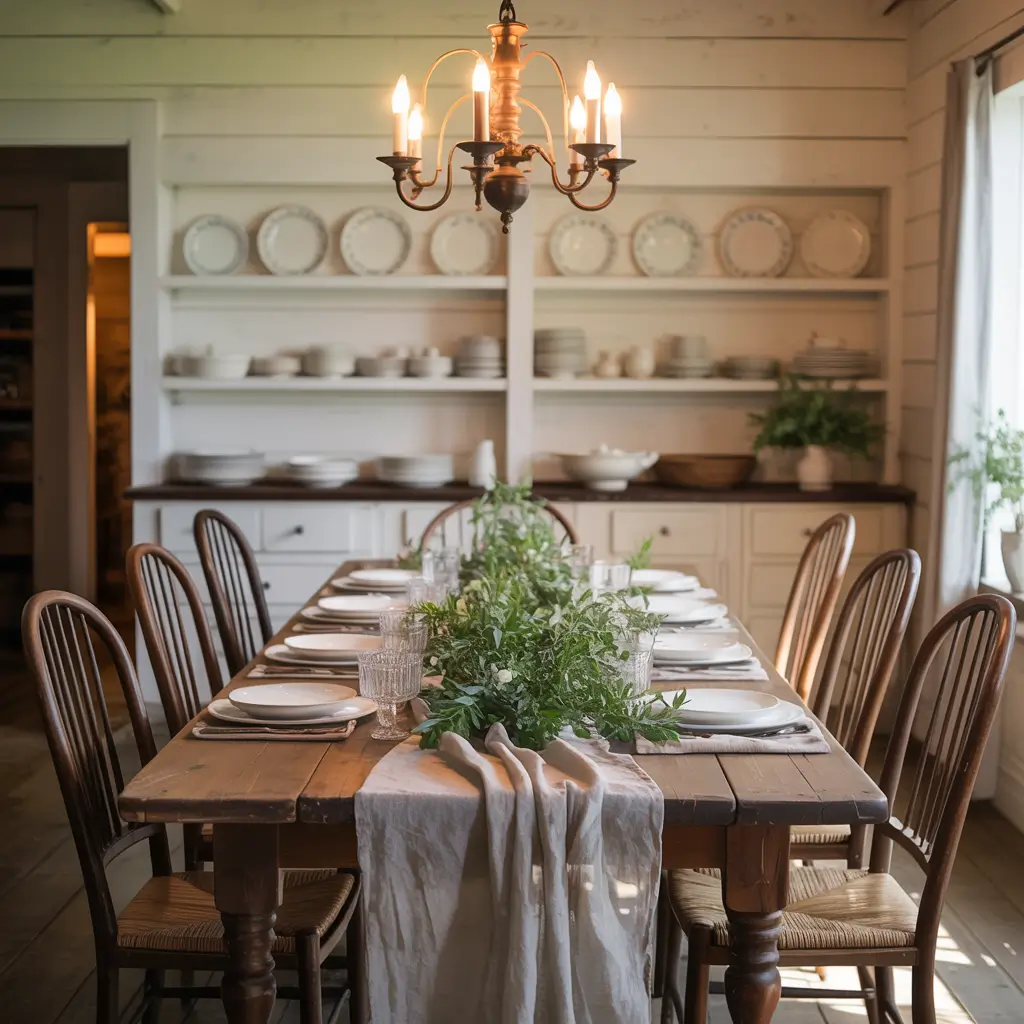
Ah, farmhouse style—the design trend that refuses to quit, and honestly? I’m not mad about it. There’s something incredibly welcoming about a farmhouse dining room that makes you want to sit down and stay awhile.
I visited my friend’s farmhouse-style dining room last month, and I practically wanted to move in. The secret is creating that lived-in, family-gathering vibe without making it look like you raided your grandmother’s attic (unless that’s the look you’re going for, no judgment).
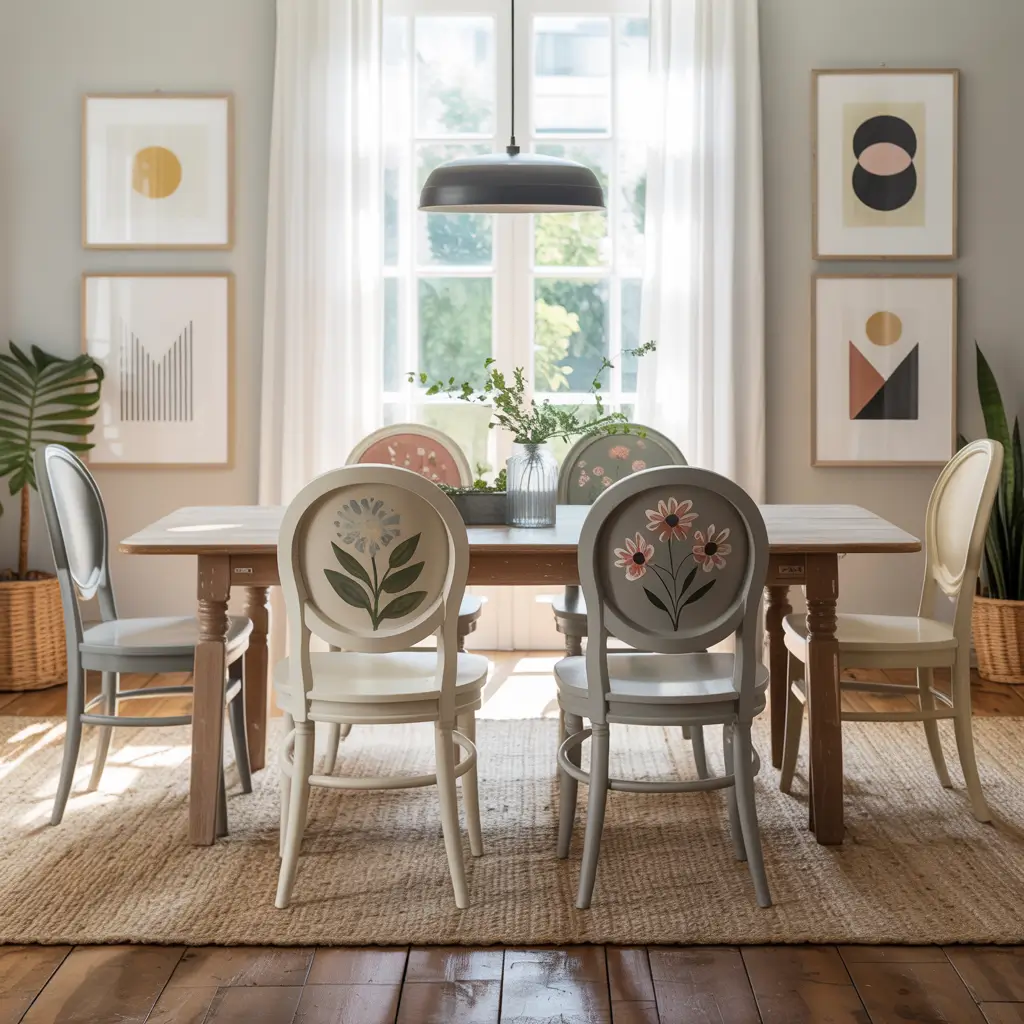
Start with a solid wood table. And I mean solid—the kind that could survive a zombie apocalypse. Reclaimed wood works beautifully here because those imperfections and weathered marks add character. Pair it with mismatched chairs for that “collected over time” feel, or go with a classic bench on one side.
Essential farmhouse elements:
- Shiplap or board-and-batten walls (even one accent wall works)
- Vintage-inspired lighting: Think mason jar fixtures or wrought iron chandeliers
- Open shelving displaying your prettiest dishes
- Natural textures: Linen tablecloths, woven placemats, cotton napkins
- Rustic centerpieces: Fresh flowers in galvanized buckets, wooden dough bowls
The beauty of farmhouse style is its forgiving nature. That slightly worn chair? It fits perfectly. The table with a few dings? Character, my friend. Character.
3. Elegant Luxury Dining Room Decor
Okay, let’s talk about living your best life. Sometimes you want to feel fancy, even if you’re just eating takeout. (Don’t pretend you haven’t eaten pizza off fine china—we’ve all been there.)
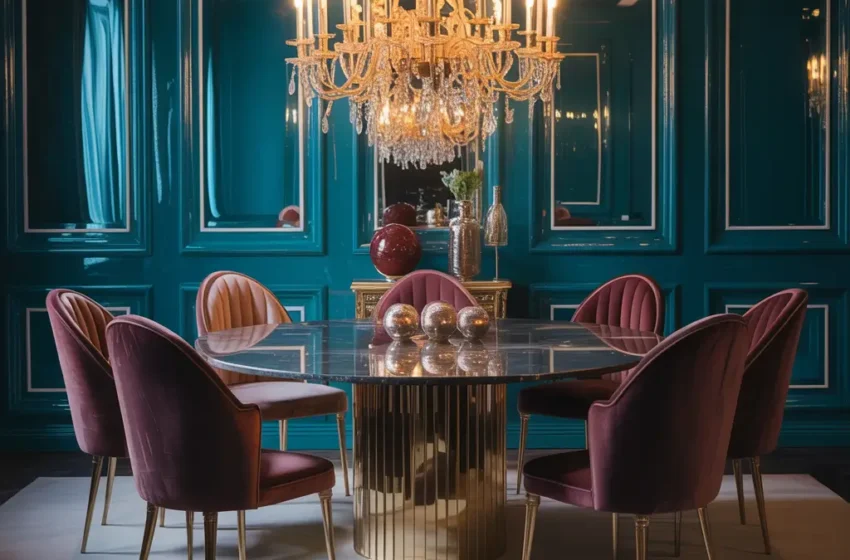
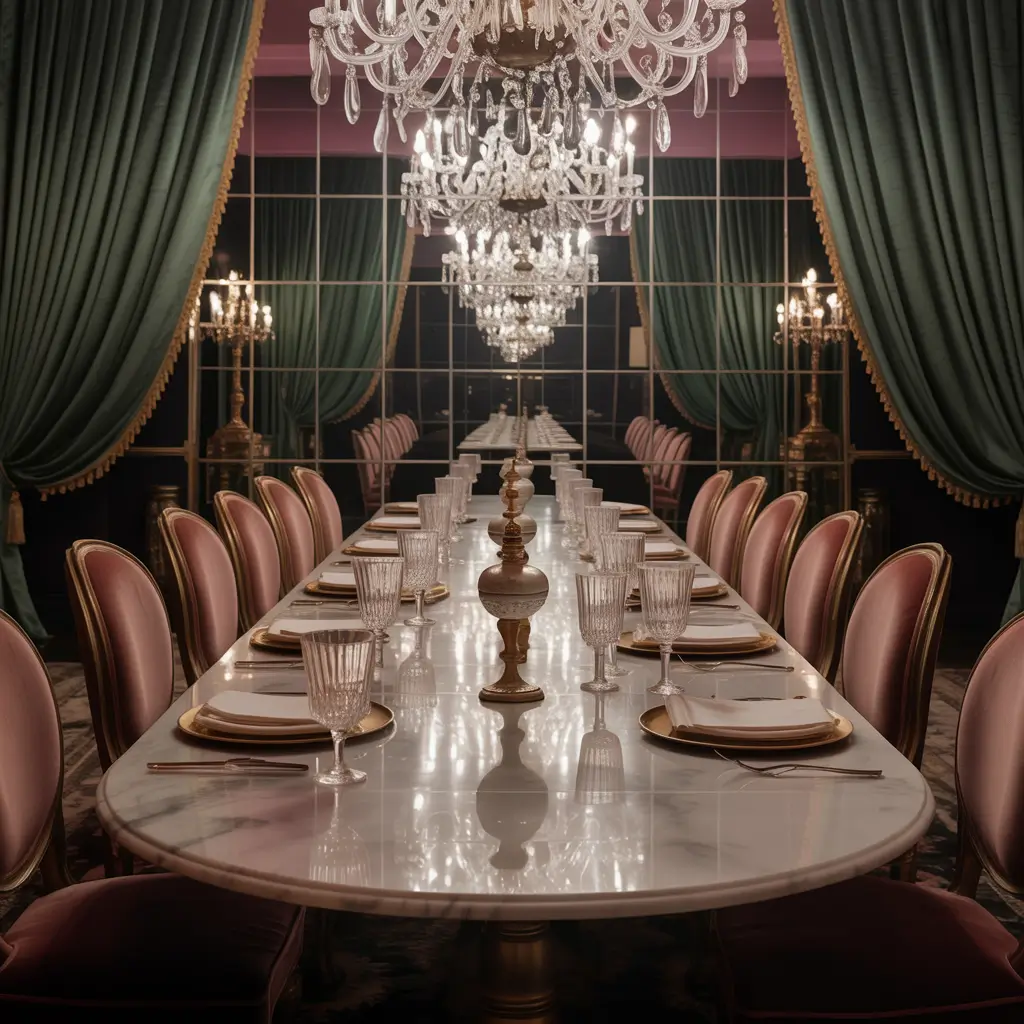
Luxury dining room decor is all about rich materials, sophisticated details, and that “I definitely have my life together” energy. I’m talking velvet dining chairs, crystal chandeliers, and finishes that catch the light just right.
Here’s how I approach luxury without looking like a furniture showroom threw up in my dining room:
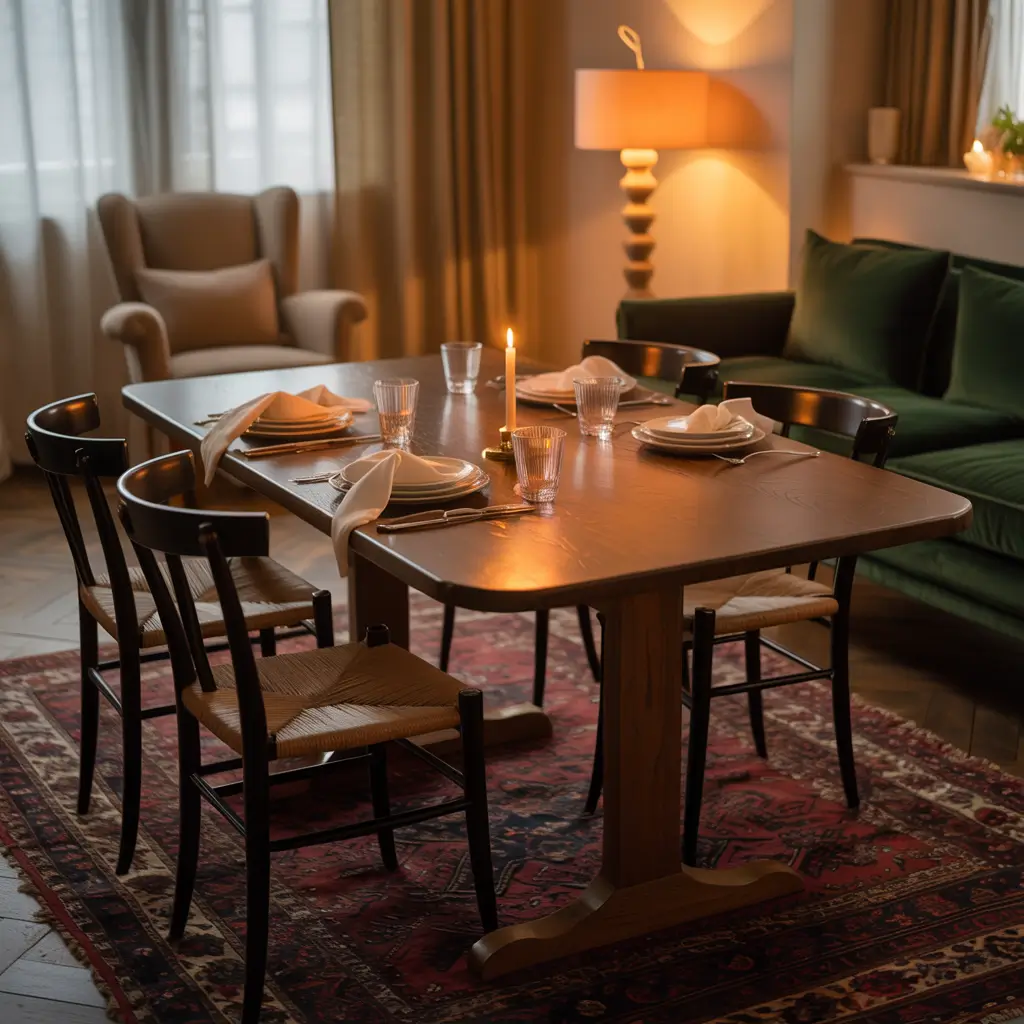
Start with high-quality materials. Velvet upholstery on chairs immediately elevates the space—I chose deep emerald green, and it transforms the entire room. Pair this with metallic accents in gold, brass, or polished chrome.
Your must-haves for luxury vibes:
- An impressive chandelier: Go bigger than you think you need
- Upholstered chairs: Comfort meets elegance
- Glossy or marble table top: Reflects light beautifully
- Mirrored or glass accent pieces: Bar cart, console table, decorative objects
- Silk or heavy drapes: They absorb sound and add drama
- Elegant artwork: One large statement piece or a curated gallery wall
FYI, luxury doesn’t mean everything matches perfectly. I learned this from a designer friend—mixing metals (brass chandelier with chrome chair legs) actually makes the space feel more collected and intentional. Who knew? 🙂
4. Small Space Dining Room Decor
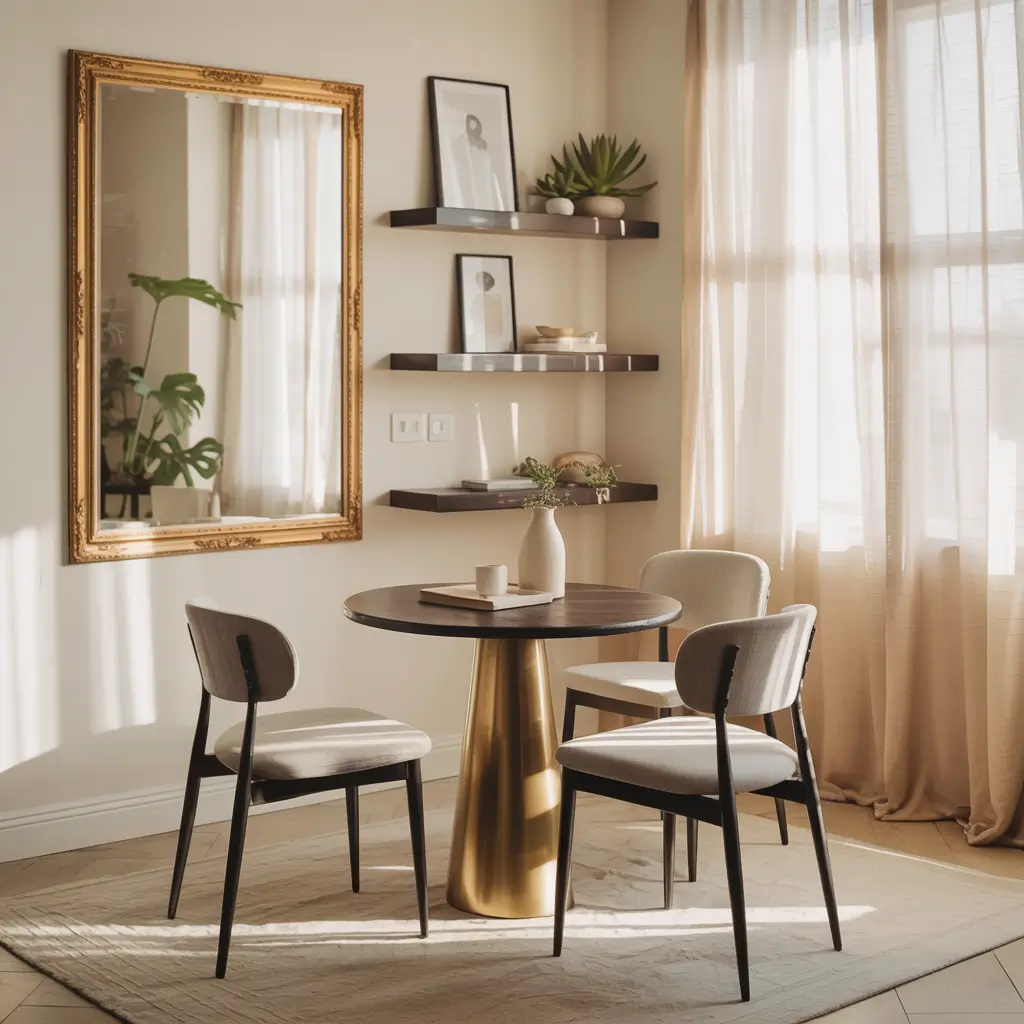
Let me be real with you: I lived in a 600-square-foot apartment for three years, and fitting a proper dining area felt like playing Tetris on expert mode. But small dining spaces can be absolutely adorable when you work with what you’ve got instead of fighting against it.
The biggest mistake people make in small dining rooms is using furniture that’s too big. I know, revolutionary insight, right? But seriously, scale matters more here than anywhere else.
Here’s what actually works in compact spaces:
First, choose a round or oval table instead of rectangular. This was a game-changer for me. Round tables fit more people in less space, and you won’t constantly bruise your hip on sharp corners (just me?).
Small space smart moves:
- Glass or acrylic furniture: Visually takes up less space
- Wall-mounted drop-leaf tables: Fold down when not in use
- Bench seating with storage: Double duty is your best friend
- Mirrors strategically placed: Makes the room feel twice as big
- Light colors: Keeps things feeling open and airy
- Vertical storage: Tall, narrow shelving units instead of wide cabinets
I also recommend multi-functional pieces. That bar cart? It’s also your extra serving space. Those dining chairs? They pull out to the living room when you have extra guests. Think flexible, not fixed.
And please, for the love of all that is holy, don’t push all your furniture against the walls. Sometimes pulling the table slightly away from the wall actually makes the space feel bigger. Weird, but true.
Also Read: 15 Luxury Formal Dining Room Ideas and Glamorous Details
5. Neutral Tone Dining Room Decor
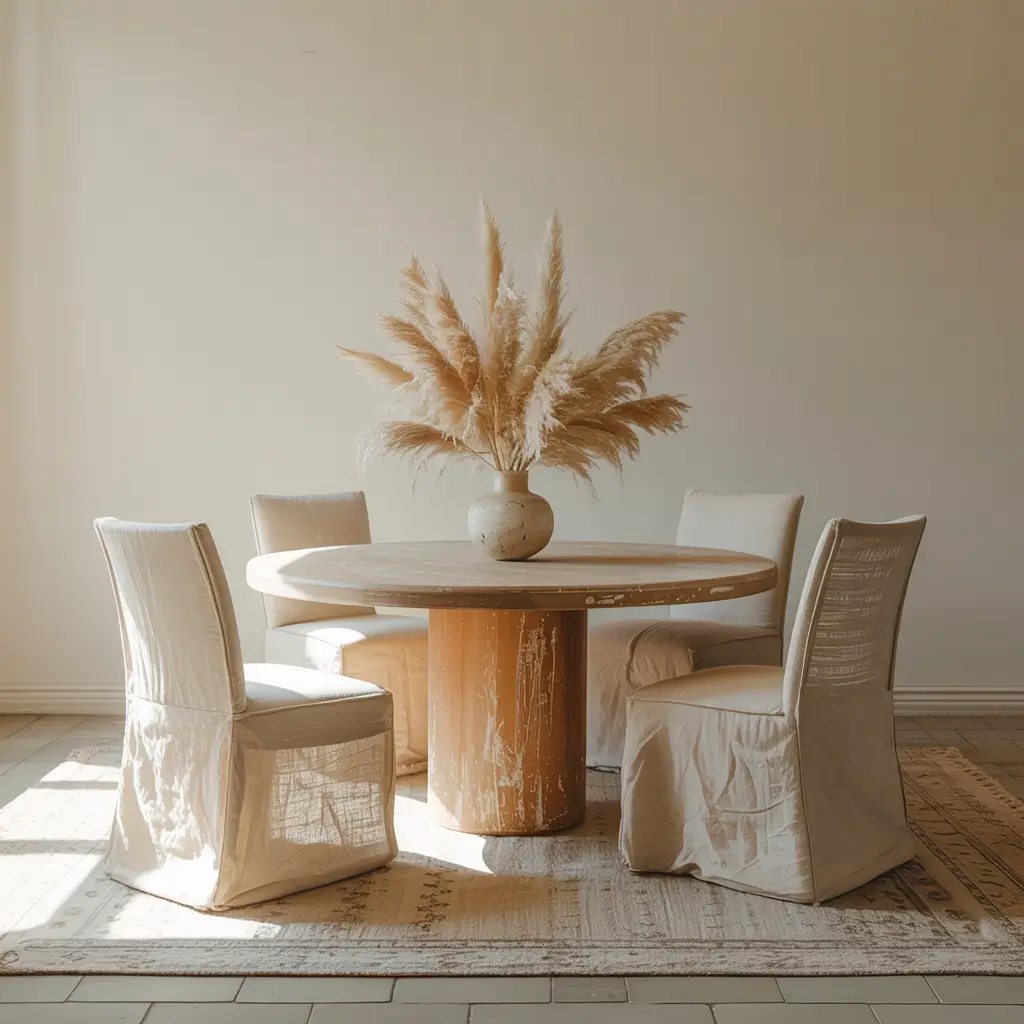
Neutral doesn’t mean boring—it means timeless, sophisticated, and way easier to redecorate when you get tired of looking at the same thing. (I switch out my decor seasonally because I have the attention span of a goldfish, so neutrals are my saving grace.)
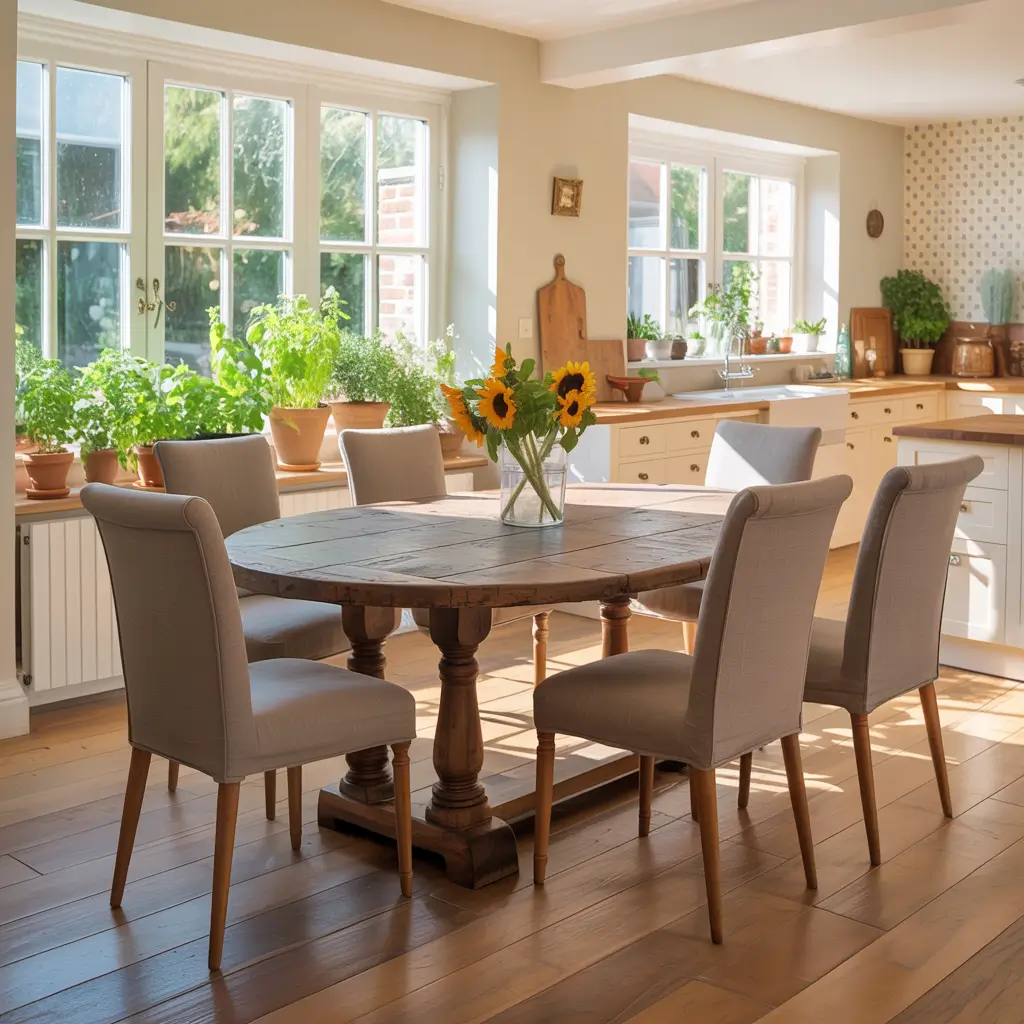
The magic of neutral dining rooms lies in layering different tones and textures. All one shade of beige? Yawn. Multiple shades of cream, taupe, gray, and warm whites with varying textures? Now we’re talking.
I designed my current dining room in neutrals, and here’s what I’ve learned: texture is everything. Without it, neutral rooms fall completely flat.
Layer these elements:
- Natural wood tones: Light oak, walnut, or weathered pine
- Woven textures: Rattan chairs, jute rugs, linen curtains
- Matte and glossy finishes: Mix them for visual interest
- Stone or ceramic: Marble table, terracotta vases, ceramic bowls
- Soft textiles: Cotton napkins, wool throws, velvet cushions
Color-wise, I stick to this palette: warm whites, soft grays, beiges, taupes, and cream. Then I add depth with blacks or deep browns in smaller doses—chair legs, picture frames, or candlesticks.
The best part about neutral rooms? You can completely change the vibe by swapping out a few colorful accessories. Feeling spring-y? Add fresh green plants. Want cozy fall vibes? Introduce rust and terracotta accents. Your neutral base works with everything.
6. Bold Color Dining Room Decor
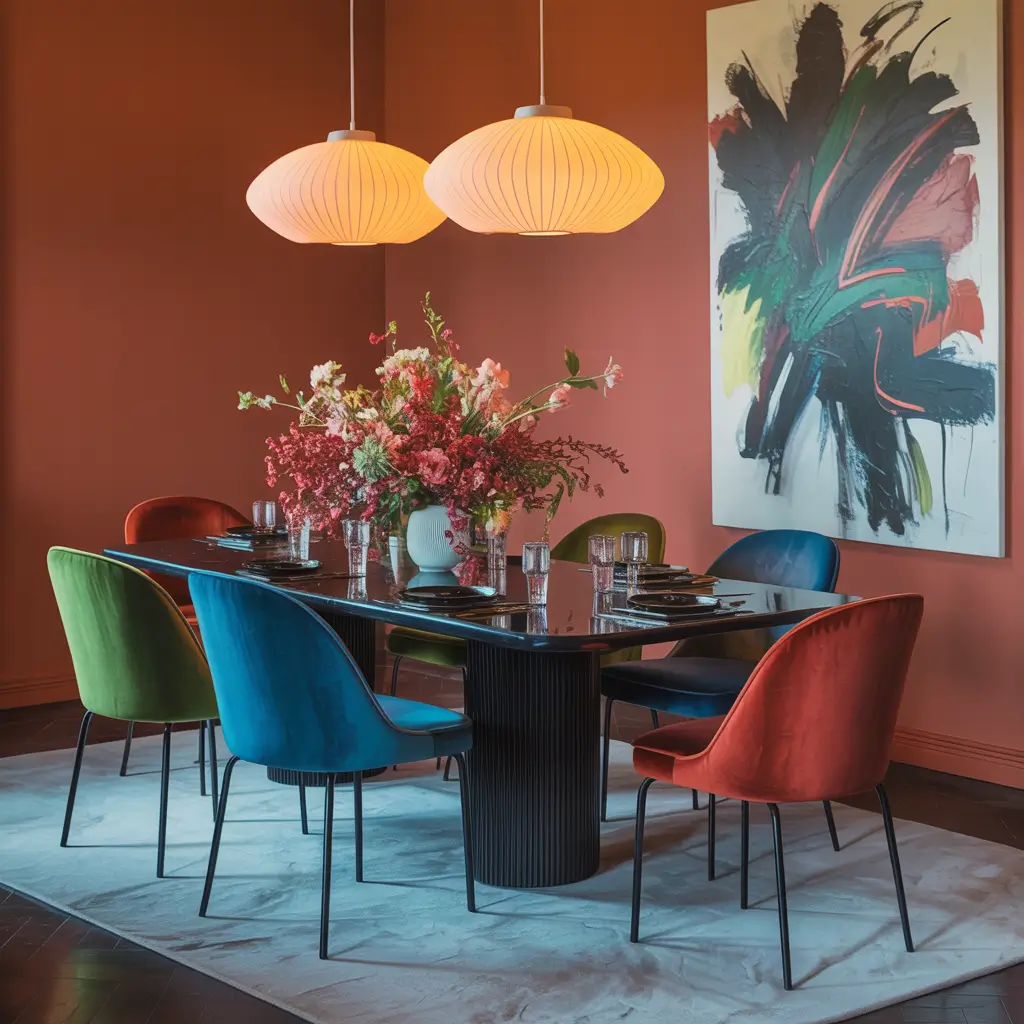
Sometimes you need to make a statement, you know? Not every room needs to whisper—some deserve to shout.
I’ll admit, I was terrified of bold color for years. What if I got tired of it? What if it was too much? Then I realized—it’s paint and fabric, not a face tattoo. You can change it. So I went for it, and honestly, my bold dining room makes me ridiculously happy every single day.
Bold color dining rooms require confidence and commitment. Pick your power color and run with it. I chose a deep navy blue for my walls, and paired it with brass fixtures and cognac leather chairs. The drama! The sophistication! The compliments from literally everyone who sees it!
How to go bold without going overboard:
- Choose one dominant bold color: Navy, emerald, burgundy, deep teal, or even black
- Balance with neutrals: Bold walls + neutral furniture, or neutral walls + bold furniture
- Repeat your accent color: Chairs, artwork, table runner—create cohesion
- Consider the 60-30-10 rule: 60% dominant color, 30% secondary, 10% accent
- Don’t forget about lighting: Bold colors need good lighting to avoid feeling dark
IMO, the easiest way to test bold color is through dining chairs. Way less commitment than painting walls, but still makes a massive impact. I’ve seen stunning dining rooms with bright yellow chairs, coral velvet seats, and even hot pink upholstery. If it makes you happy, do it.
Pro tip: Bold jewel tones (emerald, sapphire, ruby) feel more sophisticated than bright primary colors. Unless you’re specifically going for playful energy—then primary colors are perfect.
7. Boho Chic Dining Room Decor
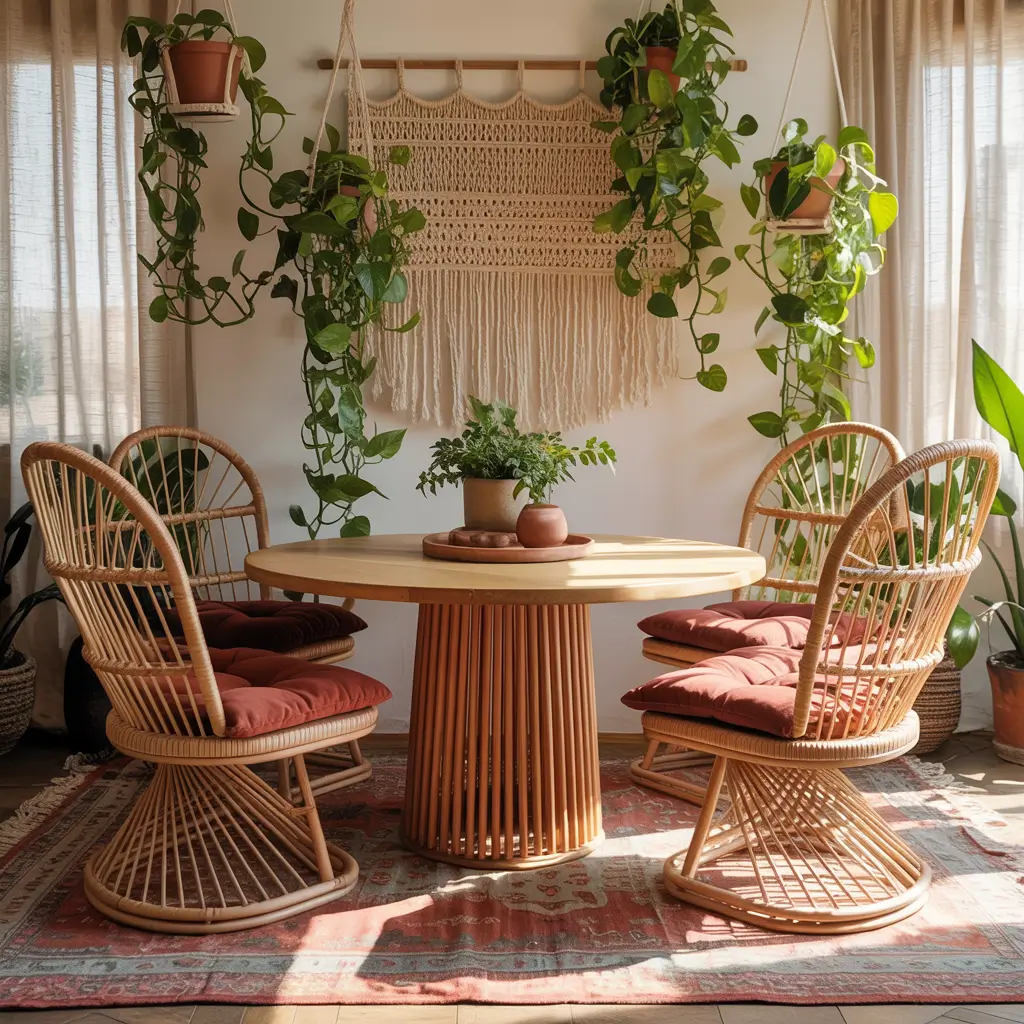
Boho style is basically permission to mix everything you love and call it “eclectic.” Finally, a design style that matches my shopping habits!
Boho dining rooms thrive on personality, texture, and that “I traveled the world collecting these treasures” vibe (even if you actually bought everything from the same home store last weekend—your secret’s safe with me).
I helped my sister create a boho dining room last summer, and the transformation was incredible. The key is layering—lots and lots of layering.
Essential boho elements:
- Mixed wood tones: Don’t match—contrast!
- Macramé everything: Wall hangings, plant hangers, table runners
- Lots of plants: Hanging, potted, real, fake—yes to all of it
- Global-inspired textiles: Moroccan rugs, Indian block-print tablecloths, Turkish throws
- Rattan or wicker furniture: Chairs, pendant lights, storage baskets
- Vintage finds: Thrift store treasures add character
Color palette-wise, you’ve got options. Go earthy with terracotta, olive green, and warm browns. Or embrace jewel tones with deep purple, teal, and burnt orange. I personally love mixing both—rules are more like suggestions in boho design anyway.
Here’s my favorite boho trick: Create a gallery wall with mismatched frames, mirrors, woven wall hangings, and plates. It sounds chaotic, but when you keep a common color thread running through everything, it looks intentional and absolutely gorgeous.
Also, never underestimate the power of a good patterned rug. It anchors the entire space and can pull together colors from all your different elements.
8. Scandinavian Dining Room Decor
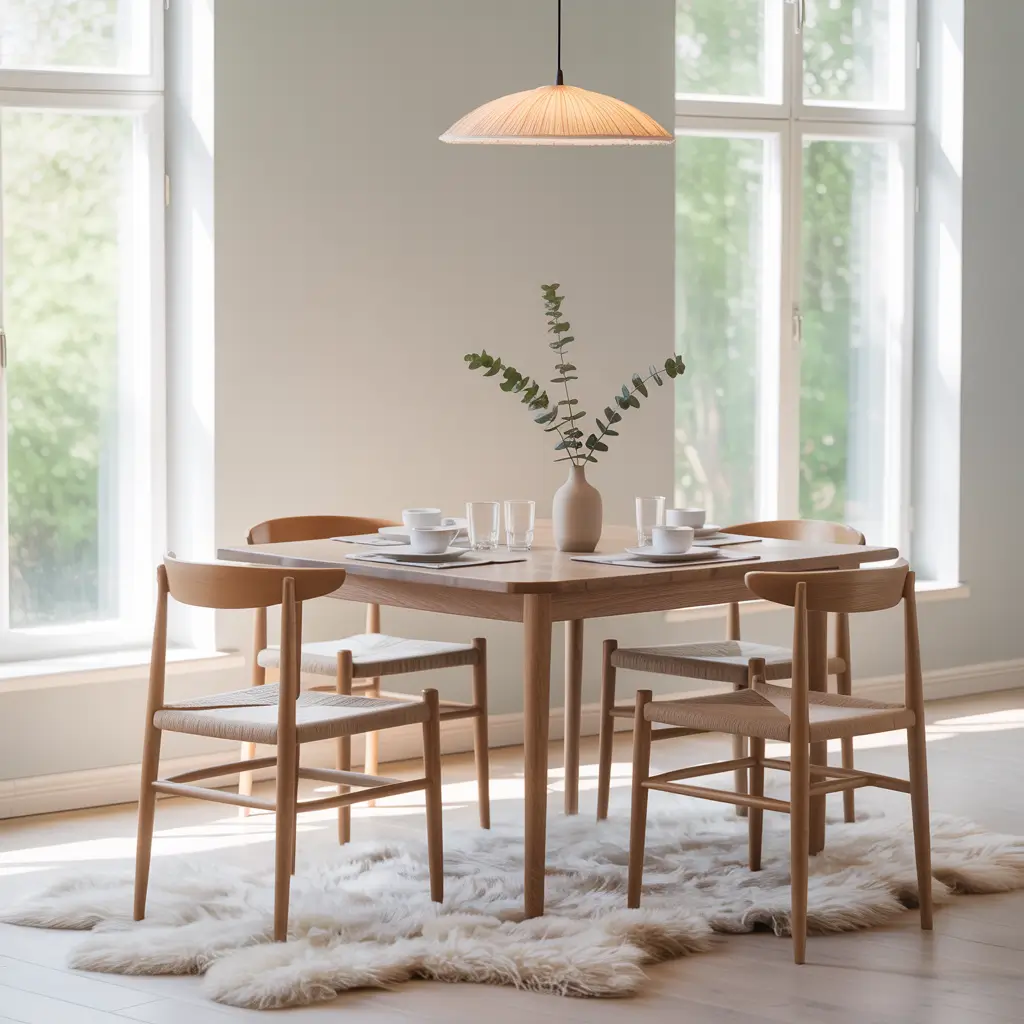
Scandinavian design is what minimalism looks like when it actually wants you to feel cozy and happy. It’s clean, it’s functional, but it’s also warm and inviting. Basically, the hygge of design styles.
The Scandi aesthetic centers on simplicity, functionality, and natural light. Having visited Copenhagen a few years back, I fell head-over-heels for this style. It’s unfussy but never cold.
Here’s your Scandinavian dining room starter pack:
- Light wood furniture: Birch, beech, or light oak tables and chairs
- White or light gray walls: Maximize that precious natural light
- Simple pendant lights: Black metal or natural wood shades
- Minimal accessories: A single vase, a small plant, maybe a candle
- Natural textiles: Linen napkins, wool throws, sheepskin chair covers
- Functional beauty: Everything serves a purpose
What I love most about Scandinavian style is the emphasis on natural materials. Your dining table isn’t just furniture—it’s a celebration of beautiful wood grain. Your chairs aren’t just seats—they’re sculptural pieces designed with both form and function in mind.
Color palette? Keep it light and neutral with mostly whites, grays, and light woods. Then add warmth with black accents and maybe—maybe—one soft color like dusty blue or sage green.
One thing I copied from Scandi design: candles everywhere. On the table, on the windowsill, on floating shelves. They create the coziest atmosphere, especially during dinner. Plus, they make even boring Tuesday dinners feel special.
9. Vintage Inspired Dining Room Decor
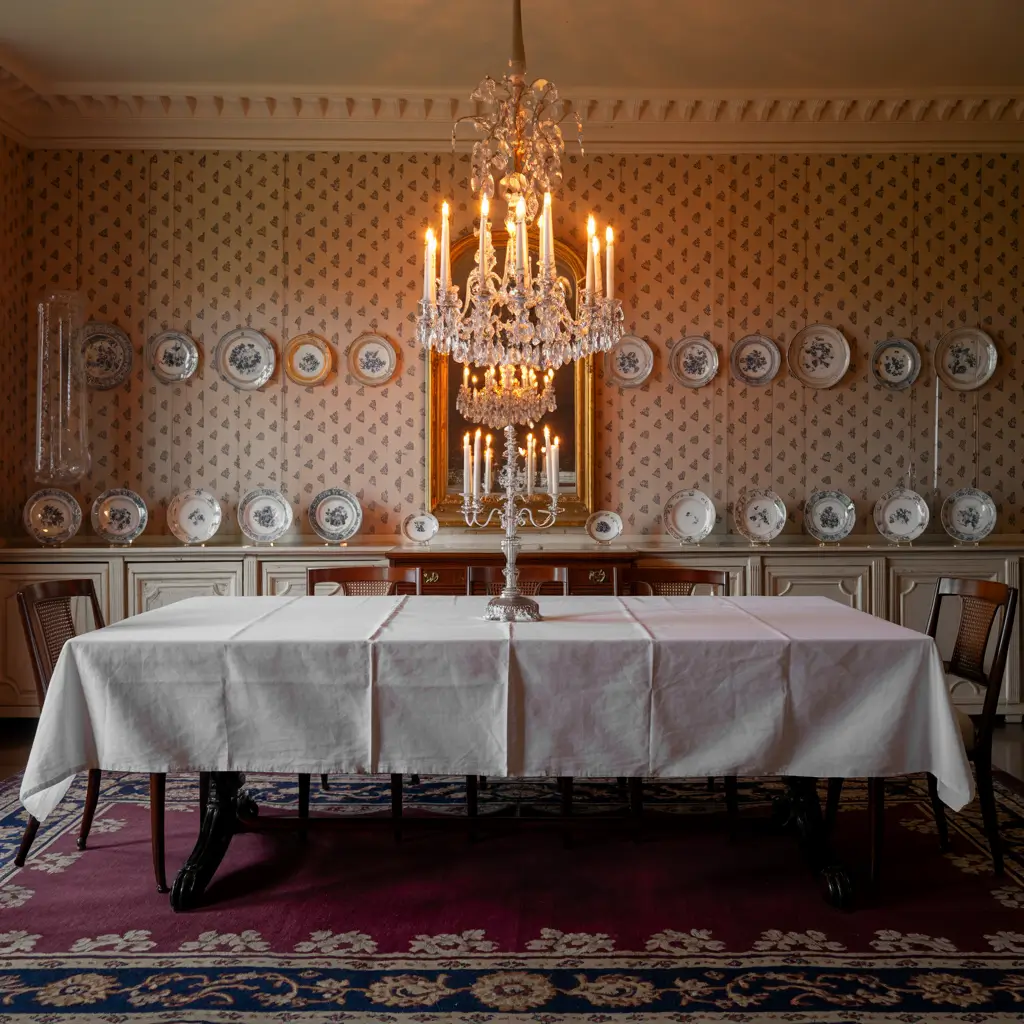
There’s something magical about vintage pieces—they have stories, history, and craftsmanship you just don’t find in modern mass-produced furniture. Plus, shopping for vintage is like a treasure hunt, and who doesn’t love that?
Creating a vintage-inspired dining room means mixing eras and finding pieces with character. I’m not talking about creating a museum or a perfectly preserved 1950s dining room—I mean taking the best elements from different time periods and making them work together.
My vintage dining room journey started at an estate sale where I found this incredible mid-century sideboard for $75. Score! That piece became my jumping-off point for the entire room.
Elements that nail vintage style:
- Antique or vintage dining table: Hit up estate sales, auctions, or refinish a found piece
- Mix-and-match vintage chairs: Different eras, different styles—embrace it
- Retro lighting: Sputnik chandelier, art deco sconces, or vintage glass pendants
- Vintage china cabinet or hutch: Display your grandmother’s dishes or your thrift store finds
- Ornate mirrors: Gilded frames, beveled glass, interesting shapes
- Period-appropriate artwork: Vintage prints, old photographs, botanical drawings
Here’s the thing about vintage: you don’t need everything to be authentic antiques. Mix in reproduction pieces or vintage-inspired new items. I paired my authentic mid-century sideboard with new dining chairs that have vintage-style turned legs. Nobody can tell, and frankly, nobody cares—the room looks cohesive and collected.
My favorite vintage-shopping tip? Look for furniture with “good bones” even if the finish is rough. You can refinish, repaint, or reupholster way easier than you can create quality craftsmanship from scratch.
10. Glam Dining Room Decor
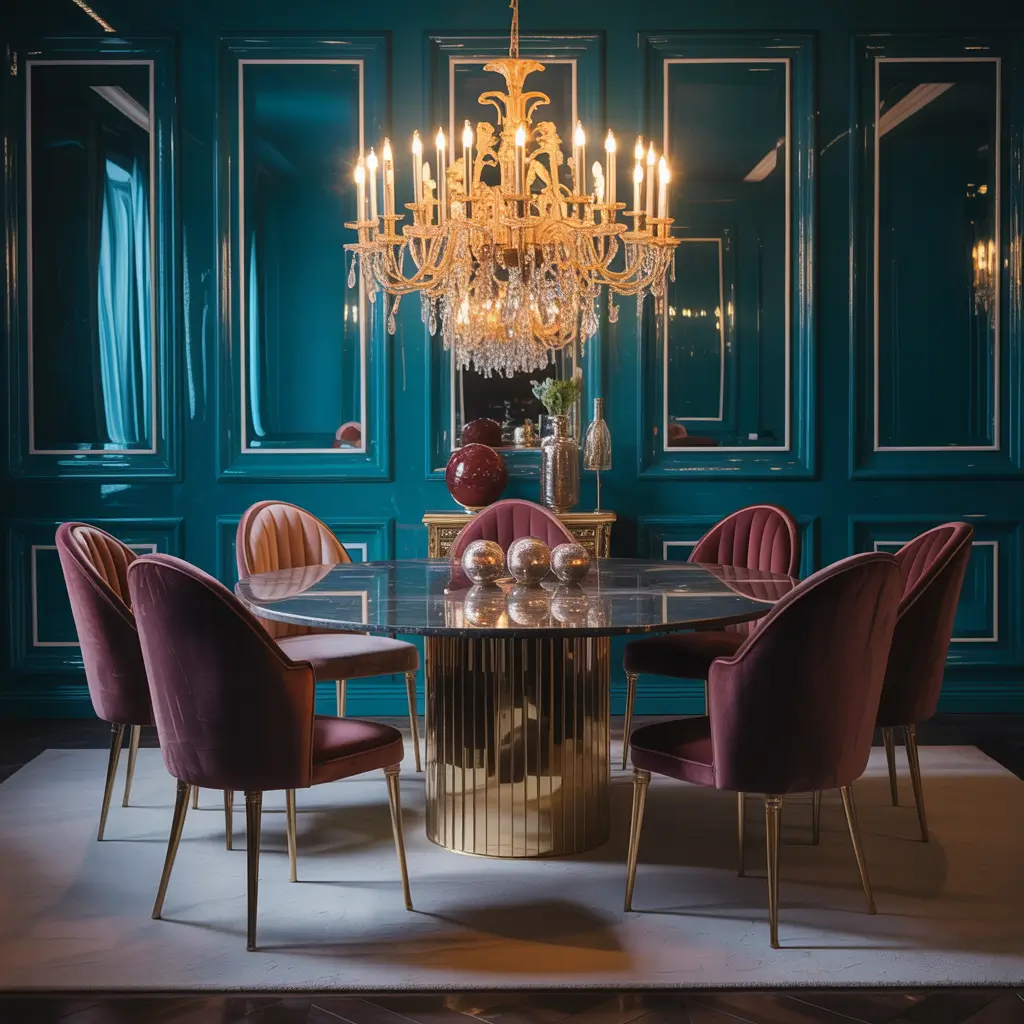
If luxury had a more fun, slightly flashier younger sister, it would be glam style. This is where you get to embrace shine, sparkle, and just a touch of “extra” energy.
Glam dining rooms are all about metallic finishes, plush textures, and pieces that catch light from every angle. I created a glam-inspired corner in my dining room (just a corner—full glam might be too much for my personality), and it makes me feel like I should be drinking champagne instead of my usual coffee.
Here’s how to achieve glam without looking like a disco ball exploded:
Go for these key elements:
- Mirrored furniture: Buffet, console table, or even mirrored table legs
- Crystal chandelier: The more sparkle, the better
- Metallic accents: Gold, silver, rose gold, or chrome
- Velvet upholstery: Chairs or bench seating in jewel tones
- High-gloss finishes: Lacquered table, glossy credenza
- Lucite or acrylic pieces: Ghost chairs are a glam staple
- Faux fur or plush throws: For that luxe, touchable factor
The color scheme typically leans toward rich jewel tones paired with metallic neutrals. Think emerald green velvet chairs around a white marble table with gold legs. Or blush pink upholstery with rose gold light fixtures. Navy and gold. Purple and silver. You get the idea.
What separates glam from gaudy? Restraint (ironically). Yes, add shine and sparkle, but balance it with some matte finishes and neutral elements. All sparkle, all the time becomes overwhelming. Trust me on this one—I went through a phase. :/
11. Rustic Wood Dining Room Decor
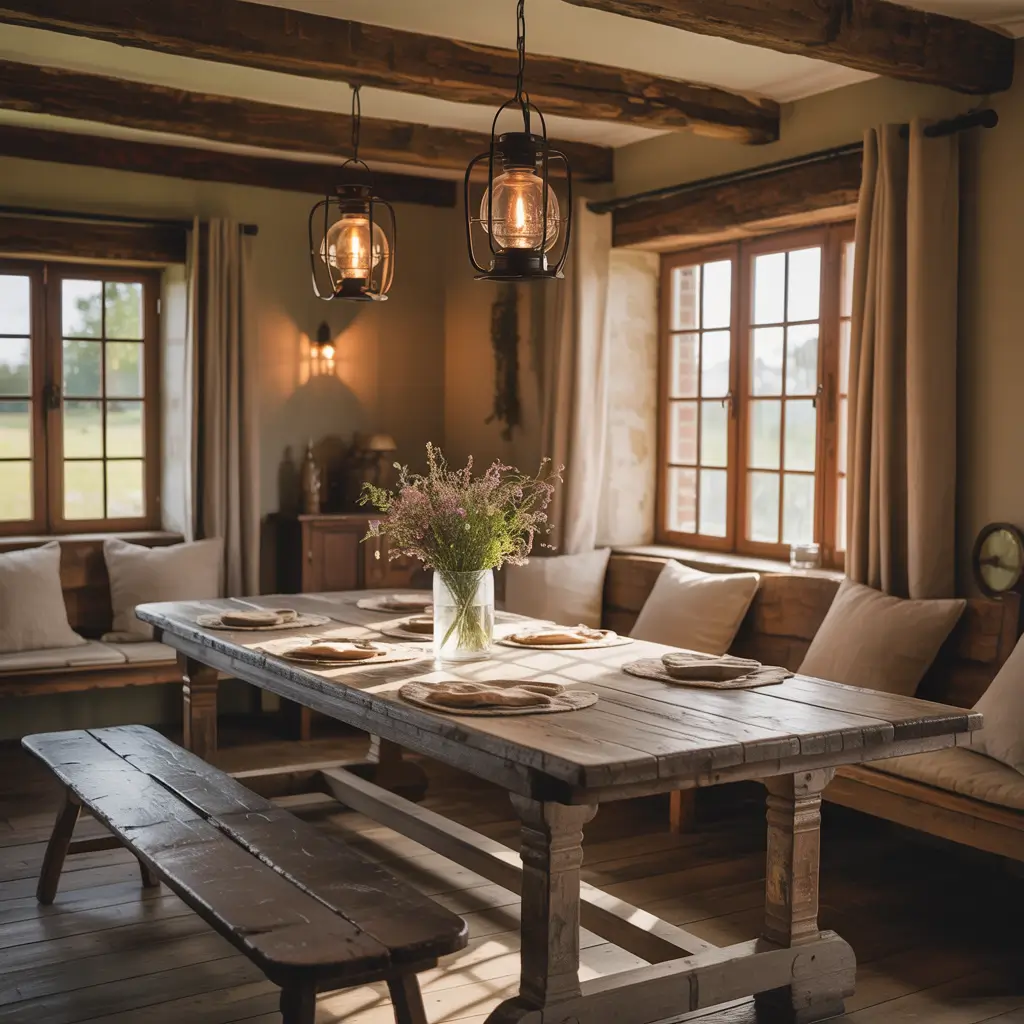
Nothing—and I mean nothing—beats the warmth and character of natural wood in a dining space. Rustic wood dining rooms feel grounded, authentic, and impossibly cozy.
Rustic style celebrates the natural beauty and imperfections of wood. That knot in the table? Feature it. Those saw marks? Character. The slightly uneven finish? Perfection.
I grew up with a massive rustic wood table that seated ten people, and some of my best memories happened around that table. Now I have my own (smaller, sadly) rustic wood dining setup, and I swear food tastes better when you eat it at a solid wood table. (Okay, maybe that’s just nostalgia talking, but still.)
Building your rustic wood dining room:
- Solid wood dining table: Go for reclaimed wood, live edge, or heavily grained wood
- Chunky, sturdy furniture: Nothing delicate or spindly here
- Natural wood chairs: Windsor style, ladder-back, or cross-back designs
- Exposed wood beams (if you’re lucky enough to have them)
- Wrought iron or black metal accents: Lighting fixtures, chair frames, curtain rods
- Natural elements: Stone, leather, linen, wool
The color palette stays natural and earthy: various wood tones, creams, browns, forest greens, and warm grays. I avoid anything too bright or artificial-looking—rustic thrives on organic, muted colors.
One thing I absolutely love doing: mixing wood tones. Your table doesn’t need to match your chairs or your sideboard. Different wood tones add depth and interest. Just make sure they’re either all warm-toned or all cool-toned—mixing warm and cool woods together rarely works well.
And please, don’t stress about protecting your rustic wood table too much. Yes, use coasters and placemats, but also embrace that it will get some wear. Those marks become part of its story.
Also Read: 15 Inspiring Green Dining Room Ideas and Trendy Decor
12. Japandi Dining Room Decor
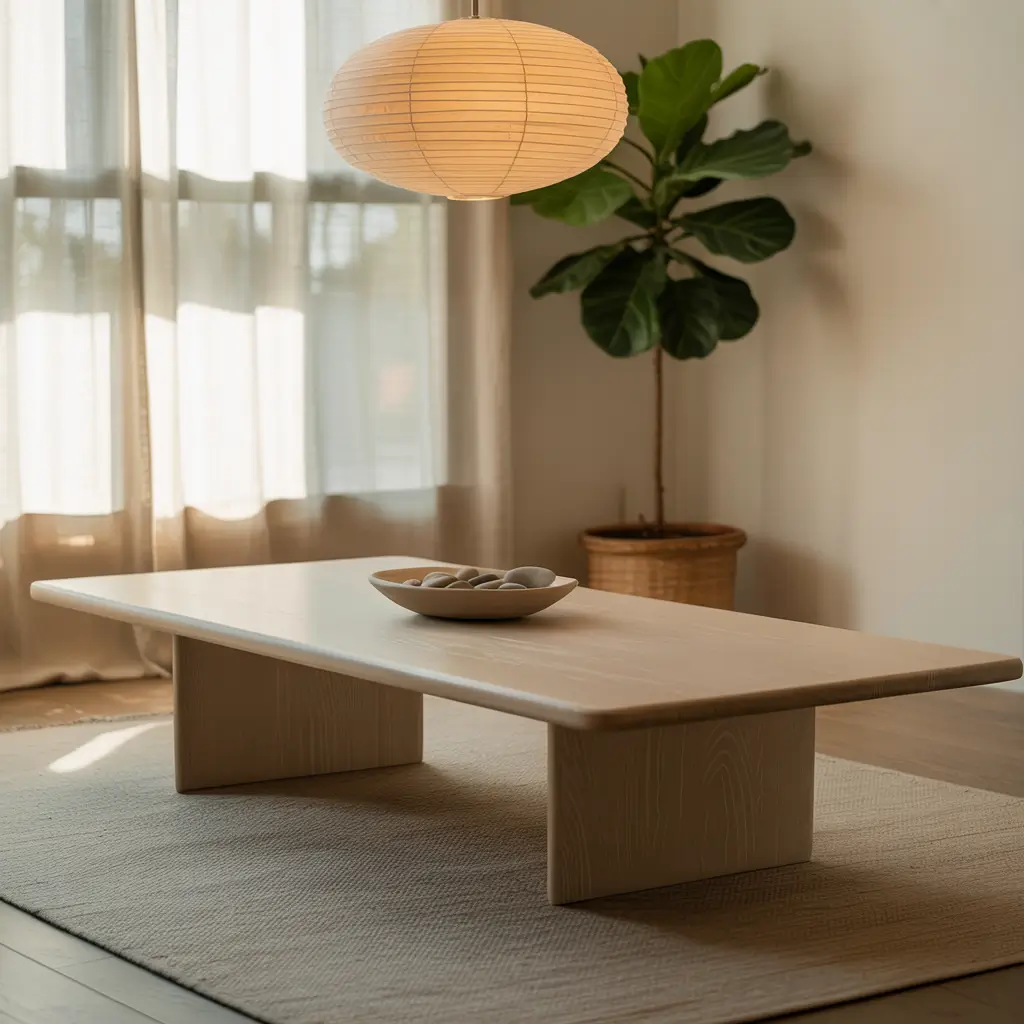
Japandi is the lovechild of Japanese and Scandinavian design, and honestly? It’s so good. I discovered this style about two years ago, and it perfectly captures what I want in a space: calm, clean, but still warm and organic.
Japandi combines Scandinavian functionality and minimalism with Japanese craftsmanship and zen philosophy. The result? Dining rooms that feel like a deep breath—peaceful, balanced, and incredibly intentional.
Key Japandi principles:
- Quality over quantity: Every piece should be beautiful and functional
- Natural materials: Wood, bamboo, paper, stone, linen
- Neutral color palette: Whites, beiges, grays, blacks, warm woods
- Clean lines with organic curves: Mix geometric shapes with natural forms
- Handcrafted elements: Artisan-made ceramics, hand-woven textiles
- Empty space is intentional: Negative space matters as much as filled space
For my Japandi-inspired dining nook, I chose a simple wooden table with clean lines and a light finish. Paired it with curved-back chairs (that organic element is crucial), added a handmade ceramic vase with a single branch, and called it a day. Less is genuinely more here.
Lighting in Japandi spaces tends toward paper lanterns, wooden pendant lights, or simple black fixtures. Nothing ornate or fussy—just clean and purposeful.
The tricky part? Finding the balance between too minimal (cold) and too cozy (cluttered). You want warmth without busyness. I achieve this through texture—smooth wood table, nubby linen napkins, matte ceramic dishes, and maybe a wool throw draped over one chair. Different textures in the same neutral palette create interest without chaos.
13. Open Concept Dining Room Decor
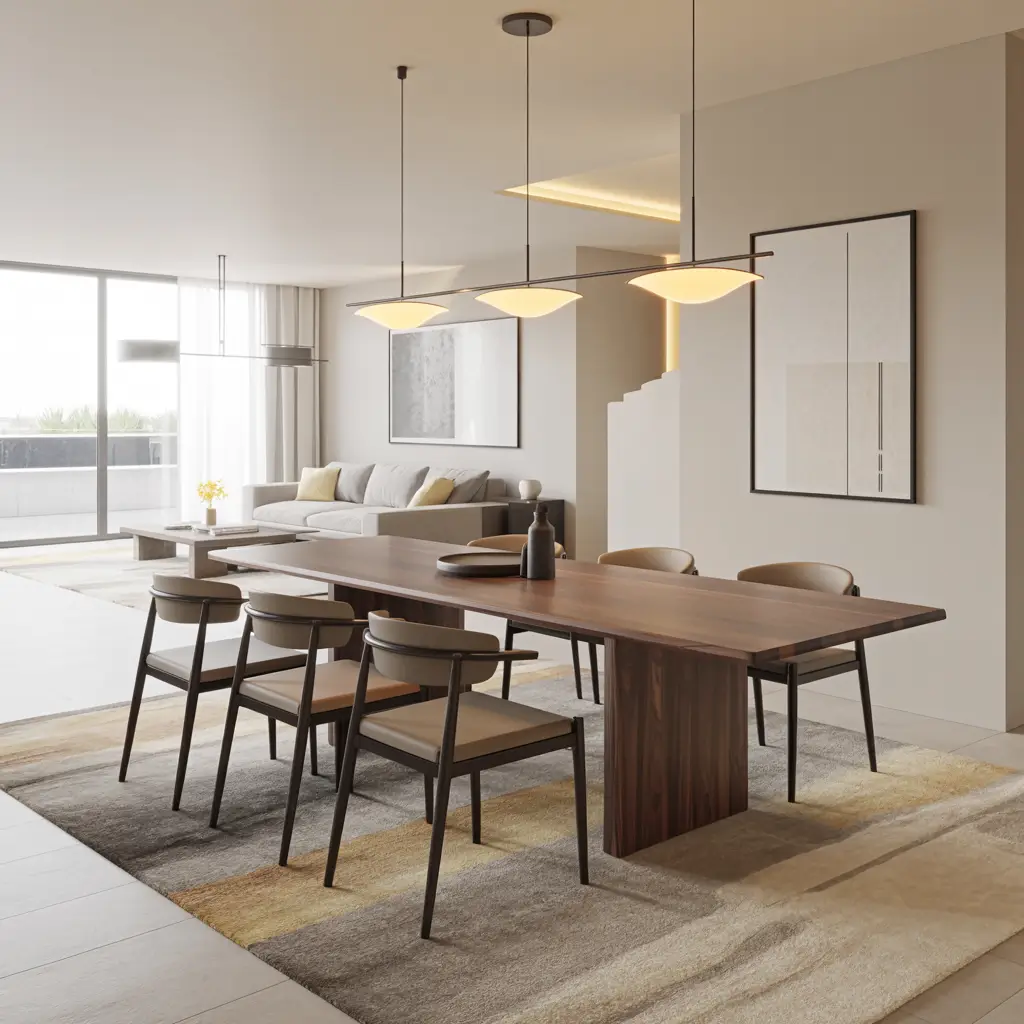
Open concept is both a blessing and a curse, right? Love the spacious feel, but how do you define the dining area without walls? I’ve got you.
The challenge of open concept dining rooms is creating distinction while maintaining flow with adjacent spaces. You want your dining area to feel like its own zone without disrupting the overall cohesion of your open floor plan.
I live in an open concept space now, and here’s what actually works:
Defining your dining zone:
- Area rugs: Anchor the dining table and visually separate the space
- Different lighting: A chandelier or pendant over the table creates a ceiling boundary
- Consistent but varied color schemes: Pull colors from the adjacent spaces
- Furniture arrangement: Use the back of a sofa or a console table as a subtle divider
- Flooring transitions: If possible, change materials between kitchen and dining
- Accent walls: Paint or wallpaper just the dining area wall
The biggest mistake I see (and made myself initially) is treating each area of an open concept completely differently. Your dining chairs shouldn’t clash wildly with your living room sofa. Maintain a consistent style throughout, but vary the specific pieces.
For example, my living room is mostly gray and cream with brass accents. My dining area in the same space features the same gray and cream palette, but I added navy dining chairs and brass lighting. Same vibe, distinct areas.
Also, be strategic about sightlines. From your dining table, what do you see? Make sure those views are pleasant. I rearranged my console table three times before I got it right—now when I sit at dinner, I see a beautiful styled surface instead of random clutter. Small change, huge impact.
14. Seasonal Dining Room Decor
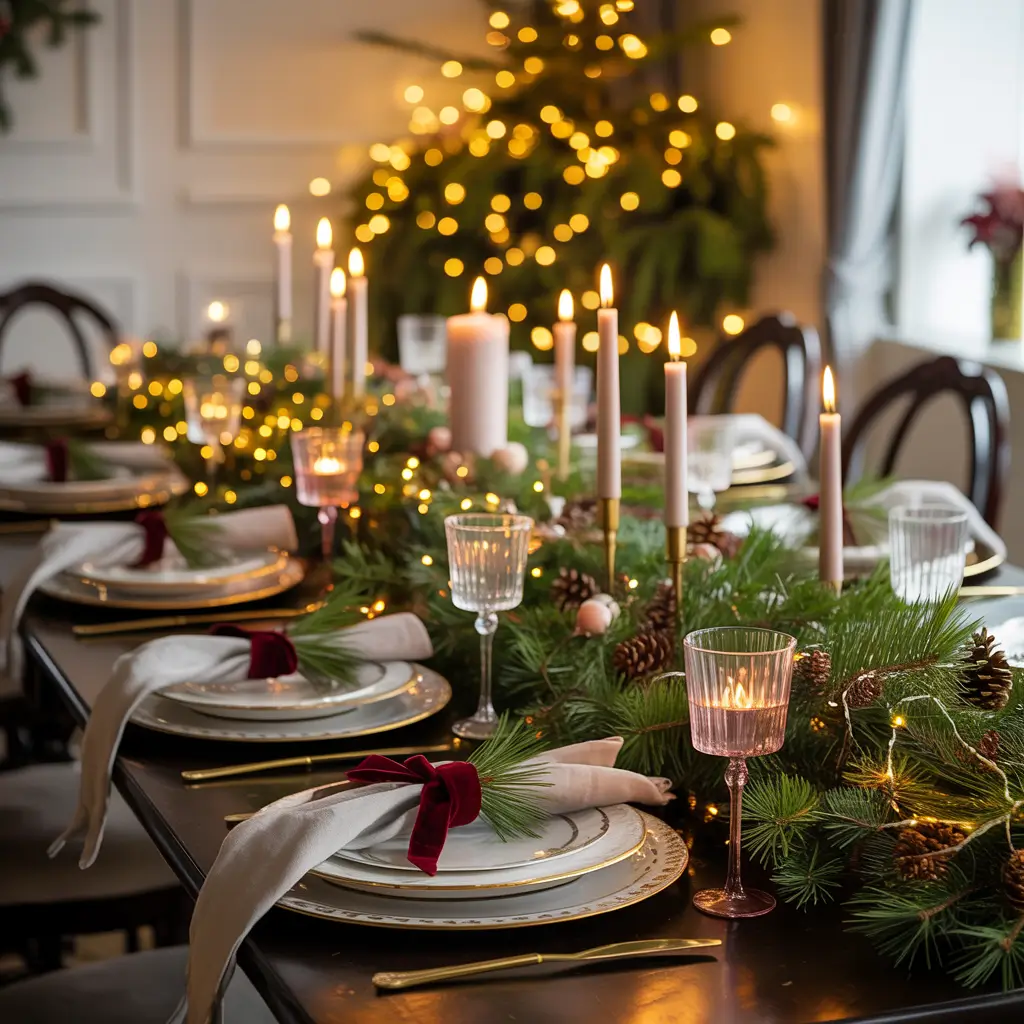
Here’s where I get to be extra, and I’m not even sorry about it. Seasonal decorating in the dining room is my absolute favorite thing because it’s so easy and makes such a big impact.
The beauty of seasonal decor is you’re not committing to a complete redesign—you’re just refreshing with small, changeable elements. I swap out my dining room accessories four times a year, and it keeps the space feeling fresh and exciting.
Spring dining refresh:
- Fresh flowers (daffodils, tulips, cherry blossoms)
- Pastel table linens in soft pink, yellow, or lavender
- Lighter, brighter colors overall
- Open windows, let in that fresh air
Summer vibes:
- Bright, bold colors and patterns
- Fresh fruit as centerpieces (lemons in a bowl = instant summer)
- Lightweight linens
- Coastal or tropical elements if that’s your thing
Fall transformation:
- Warm, rich colors: burgundy, rust, gold, deep green
- Pumpkins, gourds, fall leaves
- Heavier textiles: velvet, wool
- Candles in warm, spicy scents
Winter coziness:
- Evergreen branches and pinecones
- Metallic accents (silver, gold)
- Plaid or plush table runners
- Extra candlelight for those dark evenings
My secret weapon? Interchangeable elements. I have neutral basics (white dishes, simple placemats) and swap out the seasonal pieces (napkins, centerpieces, candles). Keeps costs down and storage manageable.
Also, you don’t need to go full Pinterest-perfect seasonal tablescape. Even just changing your centerpiece and napkins makes the space feel completely different. I’m lazy, so I appreciate low-effort, high-impact changes.
15. Statement Wall Dining Room Decor
Save the best for last, right? Statement walls are my absolute favorite way to transform a dining room because you get maximum drama with relatively minimal effort.
A statement wall creates an instant focal point and adds personality without overwhelming the entire space. Plus, if you get tired of it, you’re only changing one wall—not the whole room.
Your statement wall options:
Paint: Go bold with a dramatic color. I did deep charcoal gray in my last place, and it made the whole room feel sophisticated and moody in the best way. Other great options: navy, forest green, burgundy, or even black.
Wallpaper: This is where you can get really fun. Geometric patterns, botanical prints, textured grasscloth, or even a dramatic mural. I’m currently obsessed with large-scale floral wallpapers—they’re bold but still elegant.
Wood planking: Shiplap, board-and-batten, reclaimed wood panels—adds incredible texture and warmth.
Gallery wall: Mix artwork, mirrors, and maybe some floating shelves. This takes more planning but looks amazing when done well.
Textured materials: Think exposed brick, stone veneer, or 3D wall panels.
Wainscoting or paneling: Classic, elegant, and adds architectural interest.
Here’s my advice: Choose a statement wall that complements your existing style. Modern minimalist room? Geometric wallpaper or a bold solid color. Farmhouse style? Shiplap or board-and-batten. Boho space? Macramé wall hanging or vibrant patterned wallpaper.
The statement wall should typically be the wall your dining table sits against, or the wall you see when you enter the room. Make it count!
Wrapping It All Up
Look, your dining room doesn’t need to be perfect—it needs to be yours. Whether you go full glam with crystal chandeliers or keep it simple with Scandinavian minimalism, the best dining room is the one that makes you actually want to spend time there.
I’ve tried probably half of these styles over the years (moving a lot will do that), and honestly? Each one taught me something about what I really love in a space. Maybe you’ll go all-in on one style, or maybe you’ll mix elements from several. There are no design police coming to arrest you for pairing farmhouse with glam or mixing boho with Scandinavian.
Start with one element that excites you—a paint color, a chandelier, a gorgeous table—and build from there. Your dining room will evolve, and that’s completely okay. Mine certainly has, and it’ll probably change again next year when I inevitably get bored and need a refresh.
The point is creating a space where you’ll actually sit down, share meals, and make memories. Everything else is just pretty details that help that happen. So pick the style that speaks to you, start with one change, and see where it takes you.