15 Inspiring Farmhouse Dining Room Decor Ideas for Families
- Dining Room Decor
 Alina
Alina- 0
- 51 minutes read

Look, I get it. You walk into your dining room and it just feels… blah. Your family deserves a space that screams warmth, comfort, and “yes, we actually eat together here!” instead of a random collection of furniture that somehow ended up in the same room. Farmhouse dining rooms have this magical ability to make everyone feel welcome—whether you’re hosting Thanksgiving dinner or watching your kids spill juice for the third time today.
I’ve spent way too many weekends transforming dining spaces (mine included), and honestly? Farmhouse style hits different. It’s practical, beautiful, and doesn’t require you to take out a second mortgage. You want a space where memories happen, where your family actually wants to gather, and where you don’t panic when someone accidentally scratches the table.
So let me walk you through 15 farmhouse dining room ideas that actually work for real families—not just those picture-perfect Instagram shots that make you wonder if anyone actually lives there. These ideas blend style with functionality, and trust me, your dining room is about to become everyone’s favorite spot in the house.
Rustic Farmhouse Dining Table Centerpiece Styling
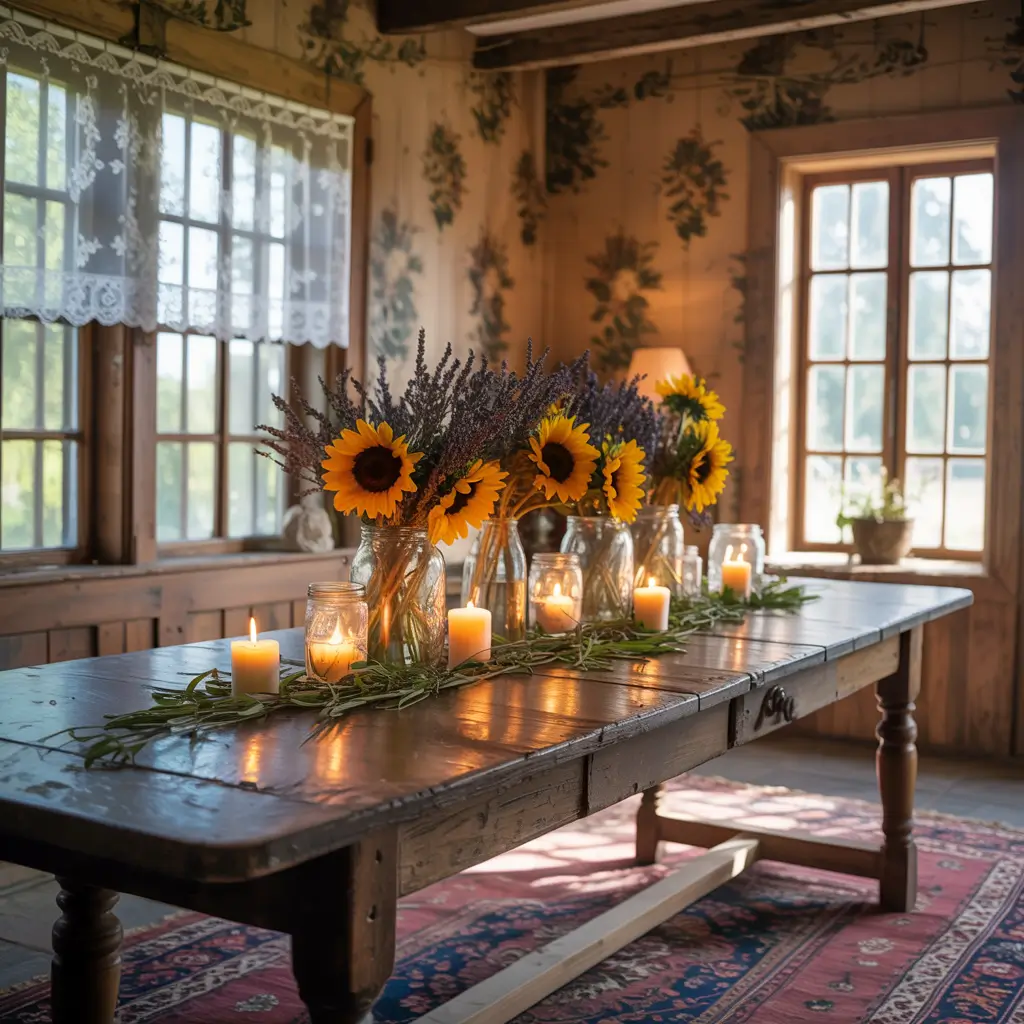
Your dining table centerpiece sets the entire mood, and rustic farmhouse styling nails this perfectly. I’m talking about that lived-in, collected-over-time look that feels intentional without trying too hard.
The beauty of rustic centerpieces? You probably already own half the stuff you need. Wooden dough bowls make incredible statement pieces—fill them with seasonal items like pinecones in winter or fresh lemons in summer. I grabbed mine at a flea market for $15, and it’s been the MVP of my table styling for three years running.
Here’s what works like magic:
- Vintage mason jars with fresh or dried flowers
- Weathered wooden trays holding candles and greenery
- Antique pottery pieces mixed with modern elements
- Natural elements like branches, cotton stems, or eucalyptus
Layer different heights to create visual interest. Throw in some chunky candles (the unscented ones, unless you want your pot roast competing with “Vanilla Dream”), and you’ve got yourself a centerpiece that looks expensive but probably cost you about $30 total.
The trick? Don’t overthink it. Rustic means imperfect, and that’s exactly why families love it. Your kids can’t ruin what’s already intentionally distressed 🙂
Modern Farmhouse Dining Room with Neutral Palette
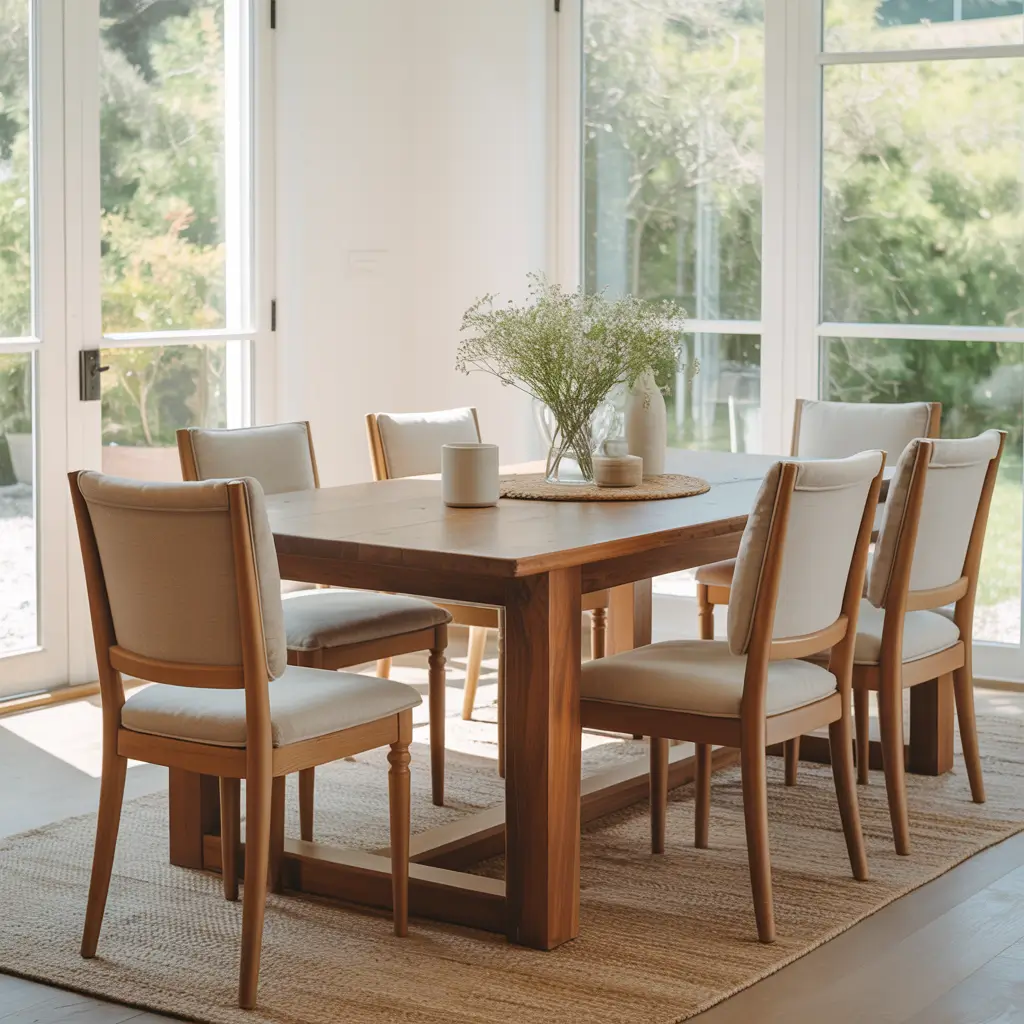
Ever wonder why neutral palettes never go out of style? Because they’re basically the Switzerland of design—they get along with everything and never cause drama.
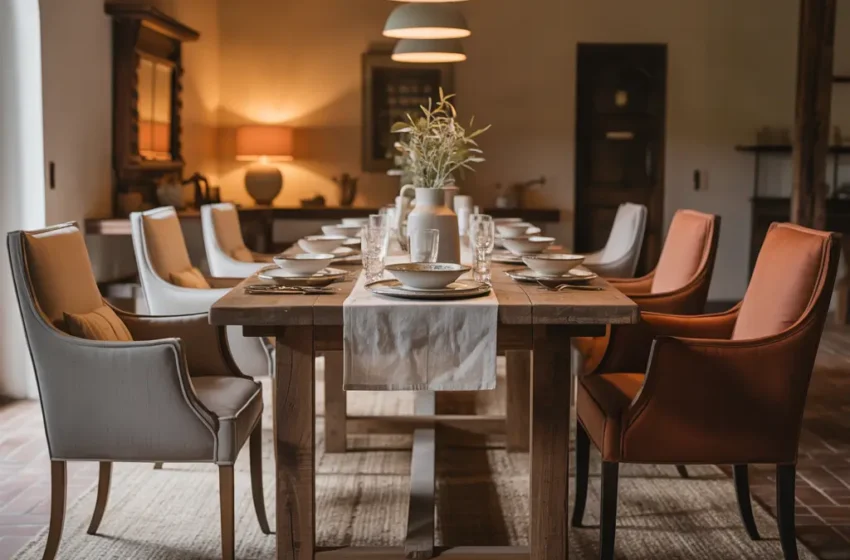
Modern farmhouse takes traditional farmhouse warmth and strips away the clutter. Think clean lines, simple silhouettes, and a color palette that would make a Scandinavian designer weep with joy. We’re talking whites, creams, grays, taupes, and maybe a whisper of black for contrast.
I transformed my sister’s dining room using this approach, and the difference was insane. We painted her walls Benjamin Moore’s “White Dove,” swapped her heavy drapes for simple linen curtains, and suddenly her space looked twice as big. The neutral palette creates this calm, collected vibe that makes even chaotic family dinners feel somehow zen.
Key elements for modern farmhouse neutrals:
- White or light gray walls as your foundation
- Natural wood tones in medium to light finishes
- Linen or cotton textiles in cream and beige
- Black metal accents for contrast (light fixtures, chair frames)
- Minimal pattern—stick to textures instead
The brilliant thing about neutrals? They grow with your family. You won’t be stuck ripping everything out in five years because you went too trendy. Plus, spills and stains matter way less when everything’s already in the same color family. Just saying.
Vintage Farmhouse Dining Room with Antique Accents
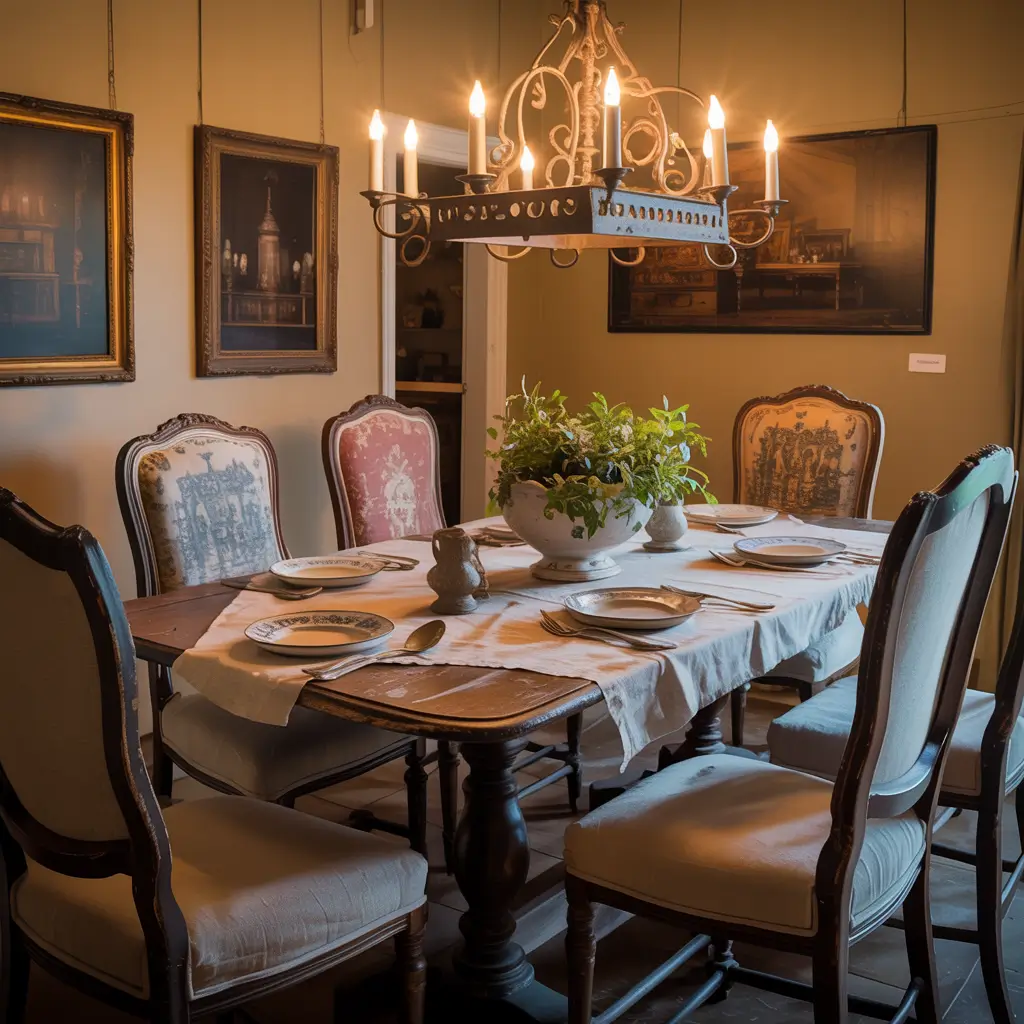
Nothing—and I mean nothing—adds character like genuine vintage pieces. This style transports you straight to your grandmother’s house, but in the best possible way.
Antique accents tell stories, and your dining room should feel like it has a history even if you just moved in last month. I’ve hunted through estate sales, antique shops, and Facebook Marketplace to find pieces that make my dining room feel like it’s been in my family for generations. Spoiler alert: most of it cost less than buying new from big box stores.
Start with one statement antique piece and build around it. Maybe it’s a refinished farmhouse table from the 1920s, or a vintage china cabinet your aunt was about to donate. These pieces become conversation starters during dinner parties—way better than talking about the weather, right?
Vintage elements that pack a punch:
- Antique dining chairs (mix-and-match for extra charm)
- Vintage milk jugs or crocks as vases
- Old wooden signs or advertising prints
- Antique silverware displayed in vintage containers
- Weathered mirrors with ornate frames
FYI, you don’t need everything to be authentically old. Mix in vintage-inspired reproductions with your genuine antiques. Nobody’s going to quiz you on provenance while they’re reaching for seconds. The overall effect is what matters, and vintage farmhouse creates that warm, “we’ve been here forever” feeling that makes families comfortable.
Cozy Farmhouse Dining Room with Layered Textures
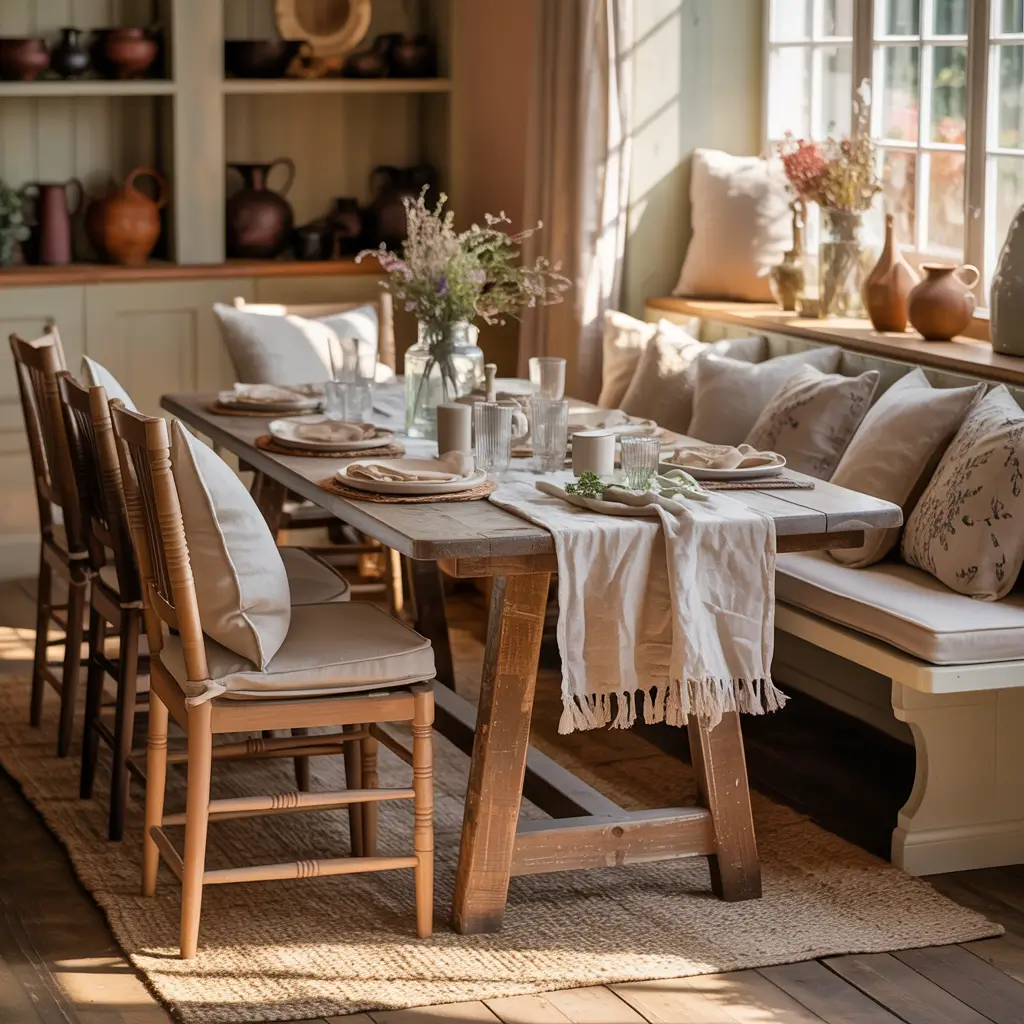
Texture is the secret weapon most people completely ignore, and honestly, it’s what separates “nice” from “wow, I never want to leave this room.”
Layering textures creates depth and visual interest without adding color or pattern. Think about how different a chunky knit throw feels compared to smooth linen napkins, or how rough-hewn wood beams contrast with a soft wool rug. Your dining room should beg people to reach out and touch things.
I learned this lesson the hard way when my first dining room felt flat and boring despite having all the “right” furniture. Everything was smooth and uniform—total snoozefest. Once I added textural variety, the whole space came alive.
Texture combinations that work:
- Rough with smooth: Weathered wood table paired with silky table runner
- Soft with hard: Upholstered chairs against exposed brick or shiplap
- Matte with shine: Distressed furniture pieces with metallic light fixtures
- Natural with woven: Jute or sisal rug layered under woven placemats
Don’t forget vertical surfaces! A chunky knit throw casually draped over a chair back, linen curtains with visible weave, or even a textured wallpaper on one accent wall—all these add dimension. Your family will feel the difference even if they can’t articulate why the room suddenly feels so much cozier.
Also Read: 15 Amazing Small Dining Room Decor Ideas for Compact Living
Farmhouse Dining Room with Statement Chandelier
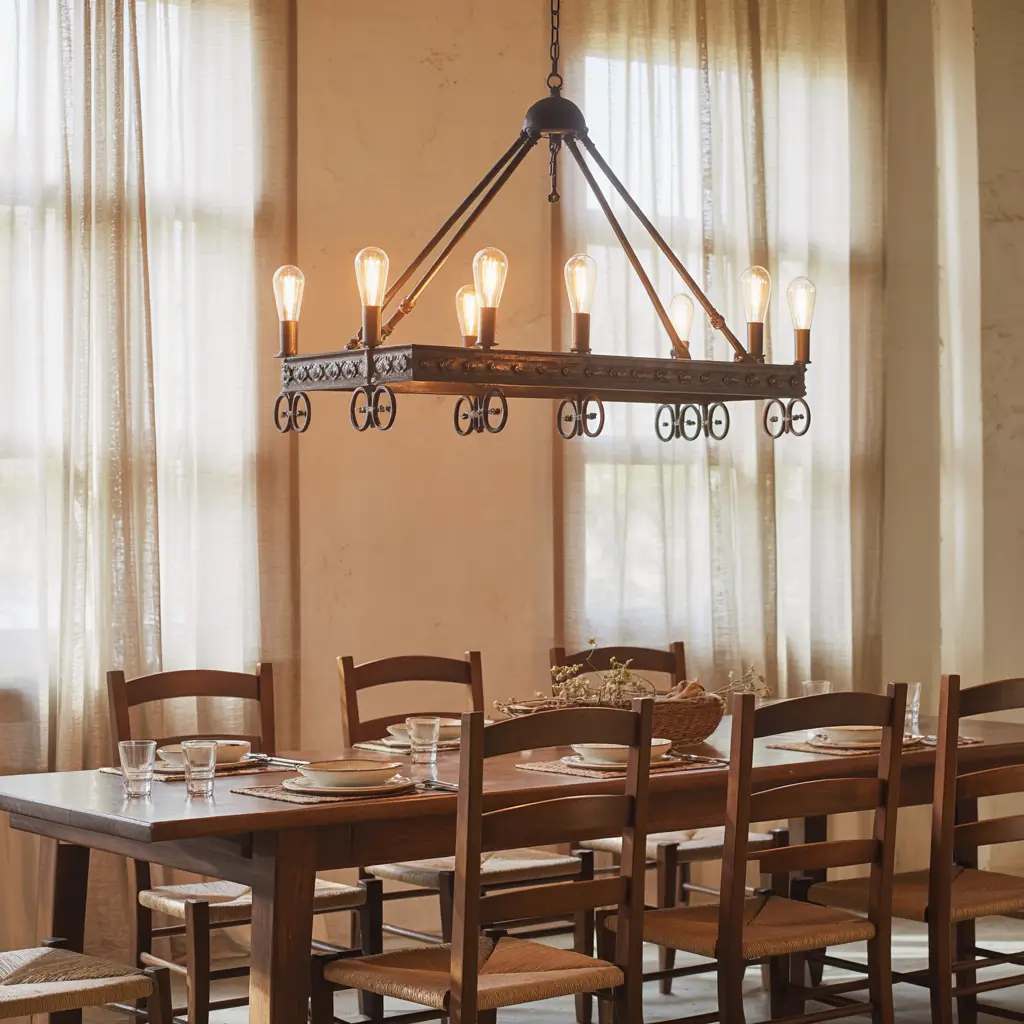
Let’s talk about the jewelry of your dining room—the chandelier. This is your chance to go bold and make people look up (literally).
A statement chandelier transforms your entire space with one single purchase. I’m not talking about those builder-grade basic fixtures that come standard. I mean the kind of chandelier that makes visitors stop mid-sentence and say, “Okay, where did you get THAT?”
My favorite farmhouse chandelier is this massive wagon wheel-inspired piece I found on sale. It’s probably too big for the space according to “proper” design rules, but rules are meant to be broken. It anchors the entire room and gives my plain white ceiling actual personality.
Statement chandelier styles that scream farmhouse:
- Wrought iron candelabra styles – dramatic and romantic
- Wood bead chandeliers – softer and more organic
- Wagon wheel or cartwheel designs – classic farmhouse
- Industrial metal cage pendants – modern farmhouse edge
- Mason jar or glass cloche fixtures – quirky and charming
Size matters here, folks. A too-small chandelier looks like it’s apologizing for existing. Your chandelier should be roughly 50-75% the width of your dining table. Go bigger rather than smaller—you can always adjust the height, but you can’t magically make a dinky fixture look substantial.
Install a dimmer switch while you’re at it. Game changer for setting the mood from homework sessions to date night dinners at home.
Minimal Farmhouse Dining Room Decor Ideas
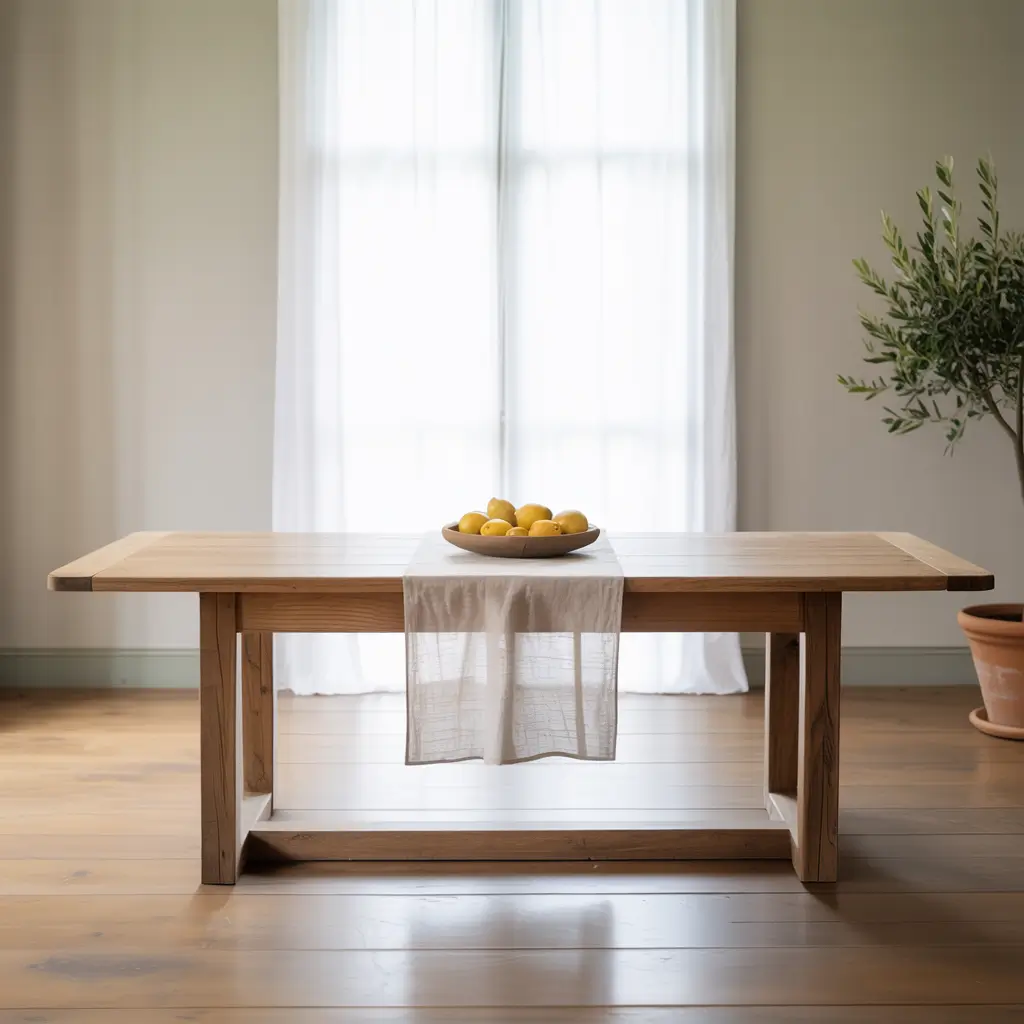
Minimalism might seem like the opposite of cozy farmhouse, but hear me out—they’re actually perfect together. Less really can be more, especially if you’ve got young kids turning your dining room into a science experiment daily.
Minimal farmhouse strips away the unnecessary stuff while keeping the warmth and character. You get the inviting farmhouse vibe without feeling like you walked into a country store that got into a fight with a flea market.
I converted to minimal farmhouse after spending one too many Saturdays dusting seventeen decorative items on my dining room shelves. Now I keep only what I genuinely love or actually use, and my Saturdays belong to me again. Revolutionary concept, right?
How to nail minimal farmhouse:
- Choose quality over quantity (one amazing piece beats five mediocre ones)
- Stick to a tight color palette—three colors maximum
- Keep surfaces mostly clear (your table isn’t a storage unit)
- Display only your absolute favorite items
- Embrace negative space—it’s not empty, it’s intentional
This approach works brilliantly for families because it’s actually functional. Your kids have space to spread out homework, you can set the table without moving forty-seven knick-knacks, and cleaning takes minutes instead of hours. Plus, minimal doesn’t mean cold. The farmhouse elements—natural wood, soft textiles, warm metals—keep the space feeling welcoming and lived-in.
IMO, this is the most practical farmhouse approach for busy families who actually use their dining room for, you know, living.
Farmhouse Dining Room with Shiplap Wall Design
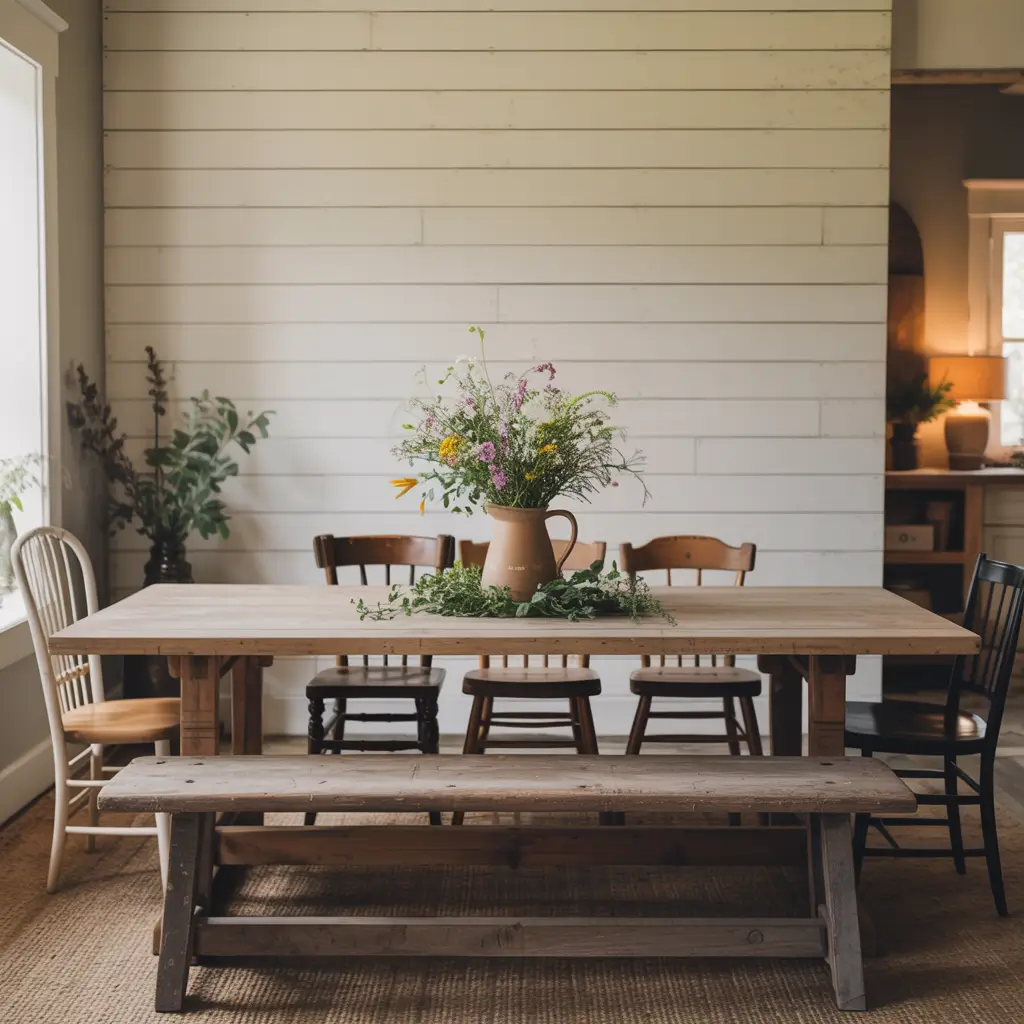
Shiplap has become almost synonymous with farmhouse style, and for good reason—it adds instant architectural interest to boring walls.
Shiplap creates texture, dimension, and that signature farmhouse look without requiring a degree in carpentry. I installed shiplap on one accent wall in my dining room over a long weekend, and suddenly my builder-grade box of a room had character for days.
You’ve got options here depending on your budget and DIY confidence level. Real wooden shiplap boards give you authentic texture and can be painted any color. Peel-and-stick shiplap wallpaper costs less and installs in an afternoon (perfect for renters or the commitment-phobic). Both work—it just depends on your situation.
Shiplap installation ideas:
- Full wall coverage for maximum impact
- Wainscoting style (bottom half of walls only) for subtle charm
- Ceiling application for unexpected visual interest
- Behind open shelving to make displays pop
Paint your shiplap white for classic farmhouse vibes, or try gray for a more modern feel. I’ve even seen gorgeous navy blue shiplap that looked incredible with brass accents. The horizontal lines make rooms feel wider, which is perfect for smaller dining spaces.
Fair warning: once you start with shiplap, you’ll want it everywhere. I may have shiplapped three additional rooms after my dining room. No regrets 🙂
Elegant Farmhouse Dining Room with Soft Green Touches
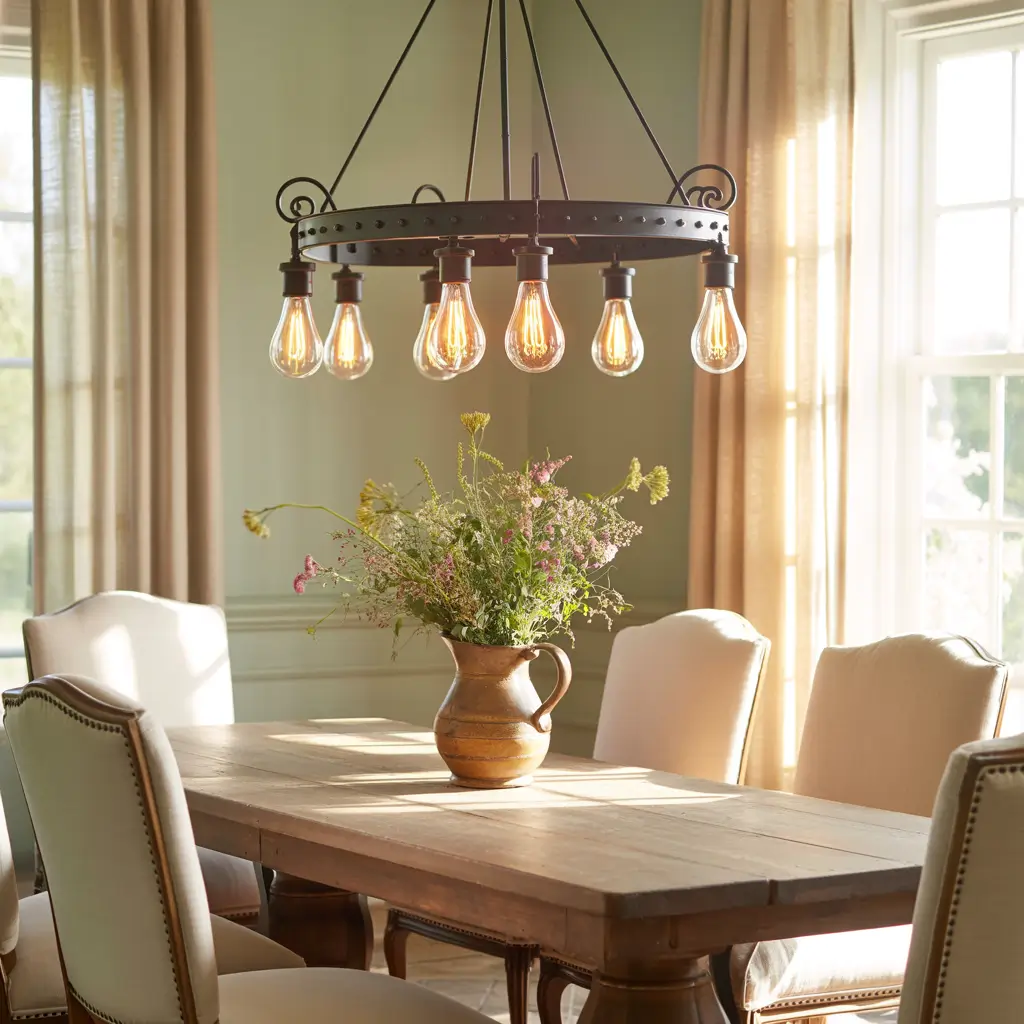
Farmhouse doesn’t have to mean all neutrals all the time. Soft, muted greens bring life and elegance without overwhelming the space.
Sage green, moss green, and dusty eucalyptus tones add sophistication while maintaining that organic, nature-inspired farmhouse feel. These colors connect your indoor space with the outdoors, creating a calming atmosphere that makes family dinners feel special.
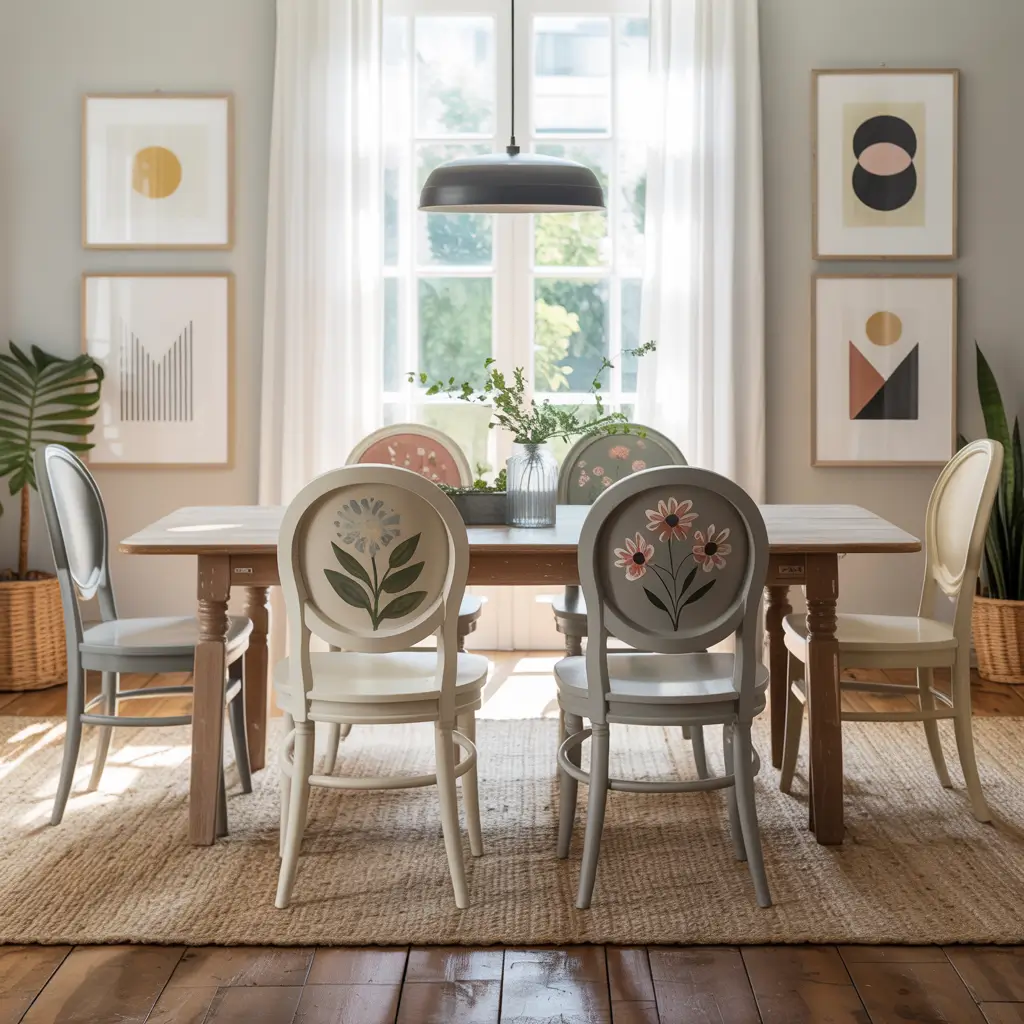
I painted my dining room chairs a gorgeous sage green last spring, and it completely changed the room’s energy. The green feels fresh and elegant without being fussy or formal. Plus, it hides the inevitable food stains better than the cream fabric they replaced—just keeping it real here.
Ways to incorporate soft greens:
- Painted furniture pieces (chairs, buffet, or china cabinet)
- Green-gray wall color as your base
- Fresh eucalyptus or olive branches in your centerpiece
- Green-tinted glassware or pottery
- Sage green table linens and napkins
The beauty of soft greens? They work year-round but feel especially perfect in spring and summer. These aren’t the bright, loud greens that’ll make you tired after a week. We’re talking about muted, sophisticated tones that read as almost neutral but add just enough color to keep things interesting.
Pair your greens with natural wood, white, and cream for an elevated farmhouse look that feels more “refined country estate” than “barn chic.”
Also Read: 15 Elegant Dining Room Table Decor Styles for Any Occasion
Small Farmhouse Dining Room Space-Saving Decor
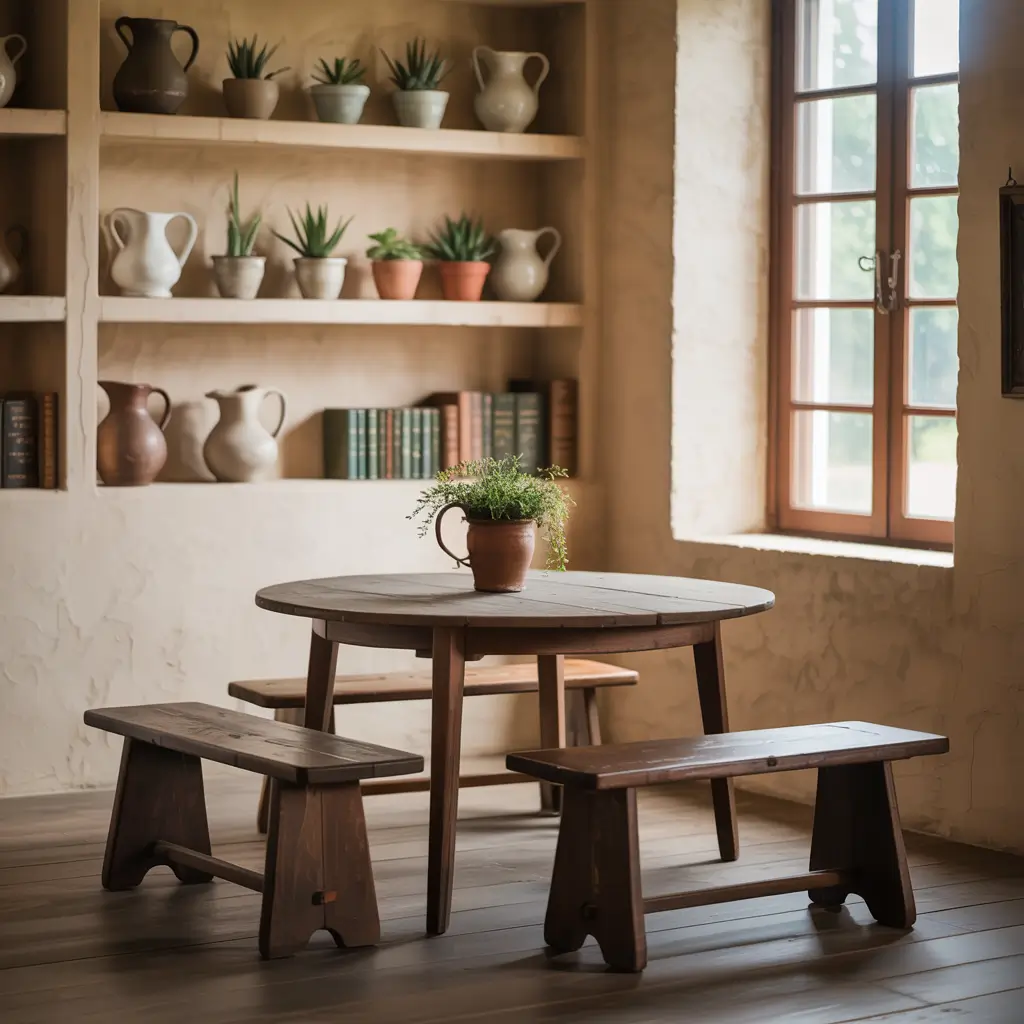
Not everyone has a massive dining room, and that’s perfectly fine. Small spaces can pack just as much farmhouse charm—you just need to be smarter about it.
Small farmhouse dining rooms require strategic choices that maximize both style and function. I’ve worked with dining spaces barely bigger than a walk-in closet, and they’ve turned out some of my favorite transformations. Limitations breed creativity, my friend.
The biggest mistake people make in small dining rooms? Trying to cram in too much furniture or too many decorative elements. Your space will feel cramped and chaotic instead of cozy. Less is definitely more when you’re working with limited square footage.
Space-saving strategies that work:
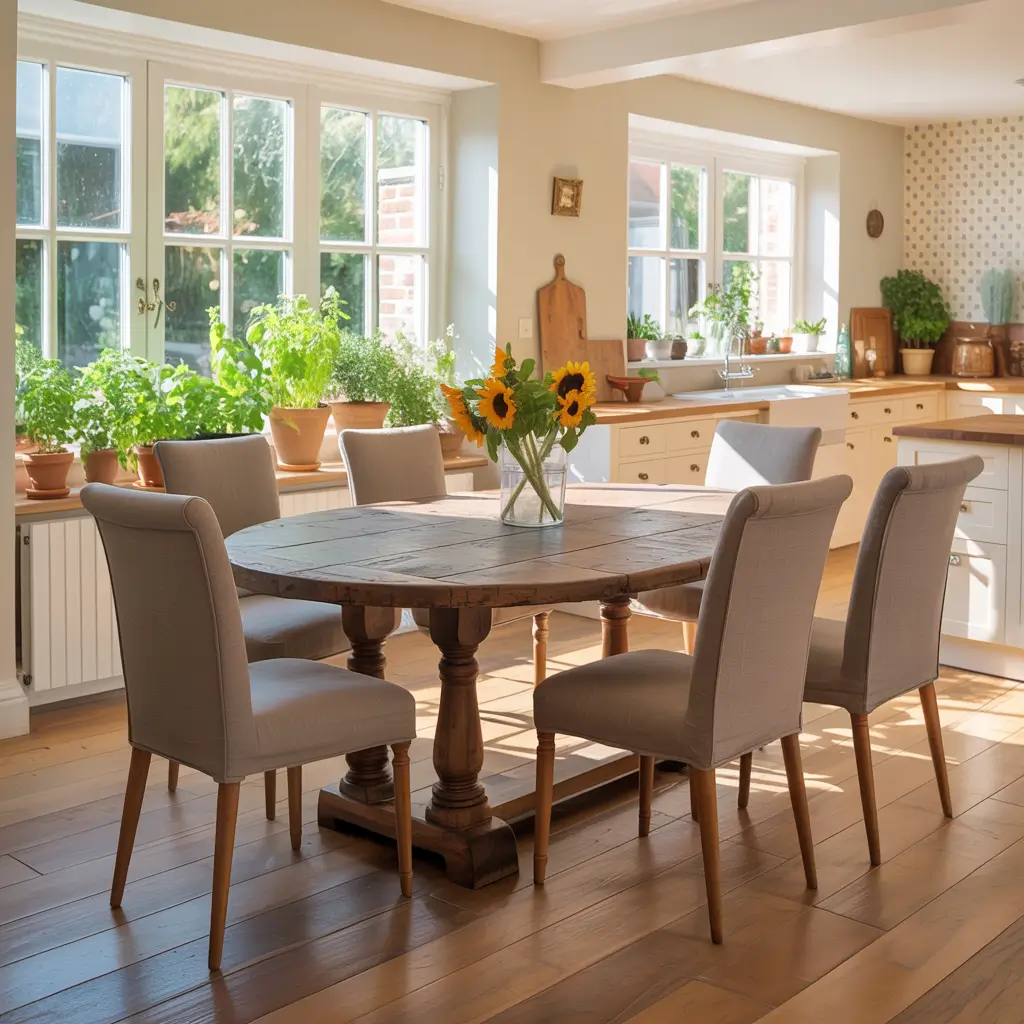
- Round or oval tables instead of rectangular (easier to move around)
- Bench seating on one side (slides completely under table when not in use)
- Wall-mounted shelving instead of bulky cabinets
- Light colors to make the space feel larger
- Mirrors to reflect light and create depth
- Folding or stackable chairs for occasional extra seating
Keep your centerpiece low and simple—a tall arrangement will overwhelm a small table and block conversation. Use vertical space for storage and display, keeping floor space as open as possible. And seriously consider furniture with dual purposes, like a storage bench or a console table that doubles as a serving station.
Small doesn’t mean you sacrifice style. It just means you get really intentional about every piece you bring in. Quality over quantity wins every time.
Farmhouse Dining Room with Open Shelving Display
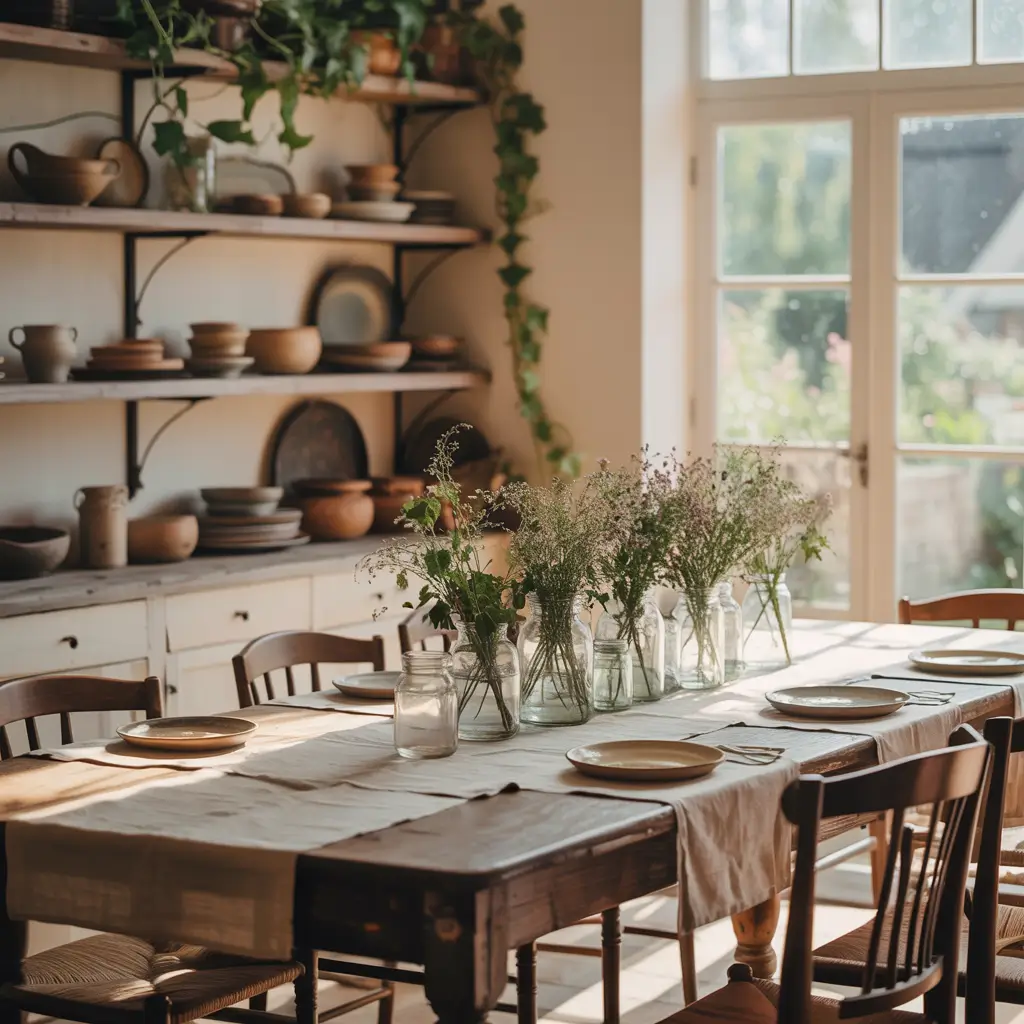
Open shelving brings personality and practicality together in the most satisfying way. Plus, it forces you to keep things organized because, well, everyone can see everything.
Open shelving displays your favorite pieces while keeping them accessible—brilliant for families who actually use their dishes instead of letting them collect dust behind cabinet doors. I converted to open shelving three years ago and haven’t looked back. Okay, maybe sometimes when I need to quickly grab something from the back and cause a minor avalanche, but mostly I love it.
The key to open shelving that doesn’t look chaotic? Curated collections and consistent styling. You’re not just throwing random stuff on shelves and hoping for the best.
How to style open shelving like a pro:
- Group similar items together (all white dishes, all glassware, all serving pieces)
- Vary heights to create visual interest
- Mix functional with decorative (pretty dishes you actually use)
- Leave some breathing room (don’t pack shelves edge-to-edge)
- Add small plants or greenery between dish stacks
- Incorporate vintage pieces for character
I organize my shelves with everyday dishes on lower, more accessible shelves, and special occasion pieces higher up. This keeps things practical while still looking styled. And honestly? Open shelving makes you think twice before buying more dishes because you’ve got nowhere to hide them. Built-in decluttering system right there.
Floating wood shelves give you rustic farmhouse vibes, while metal bracket shelves lean more industrial-modern farmhouse. Both work beautifully—pick what speaks to your style.
Warm Farmhouse Dining Room with Wooden Beam Ceiling
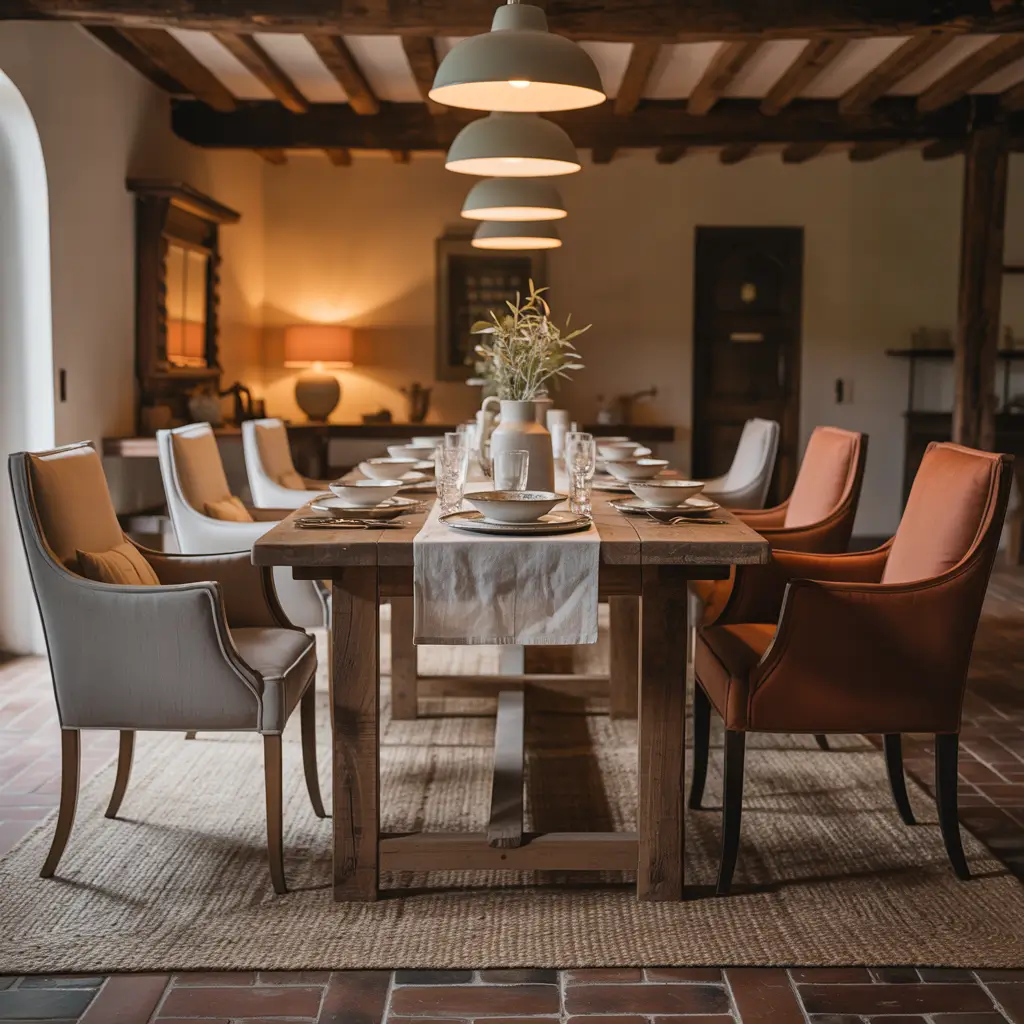
Exposed wooden beams add architectural drama and warmth that’s hard to replicate with any other design element. They draw the eye upward and make your dining room feel like a converted barn in the best way possible.
Wooden ceiling beams create instant character and coziness, especially in rooms with higher ceilings that might otherwise feel cold or cavernous. I added faux beams to my dining room ceiling (because cutting into actual structural beams seemed like a bad life choice), and the transformation was ridiculous. Suddenly my boring flat ceiling had dimension and interest.
Real beams are incredible if you’re renovating and can expose existing structural elements. But faux beams made from lightweight wood or even polyurethane look shockingly authentic and cost a fraction of real reclaimed beams.
Beam styling options:
- Natural wood finish for rustic warmth
- Stained dark for dramatic contrast
- Whitewashed or painted for softer, modern farmhouse
- Reclaimed wood for authentic aged character
- Parallel beams for traditional look
- Box beams for larger scale impact
Space your beams according to your room size—too many feel cluttered, too few feel random. Generally, 2-4 beams work for most standard dining rooms. Install them running perpendicular to your longest wall to make the room feel wider, or parallel to emphasize length.
Beams pair beautifully with statement chandeliers—the combo of horizontal beams and vertical chandelier creates balanced visual interest. Your dining room ceiling becomes an actual design feature instead of just “that thing above you.” Revolutionary concept, honestly.
Farmhouse Dining Room with Gallery Wall Styling
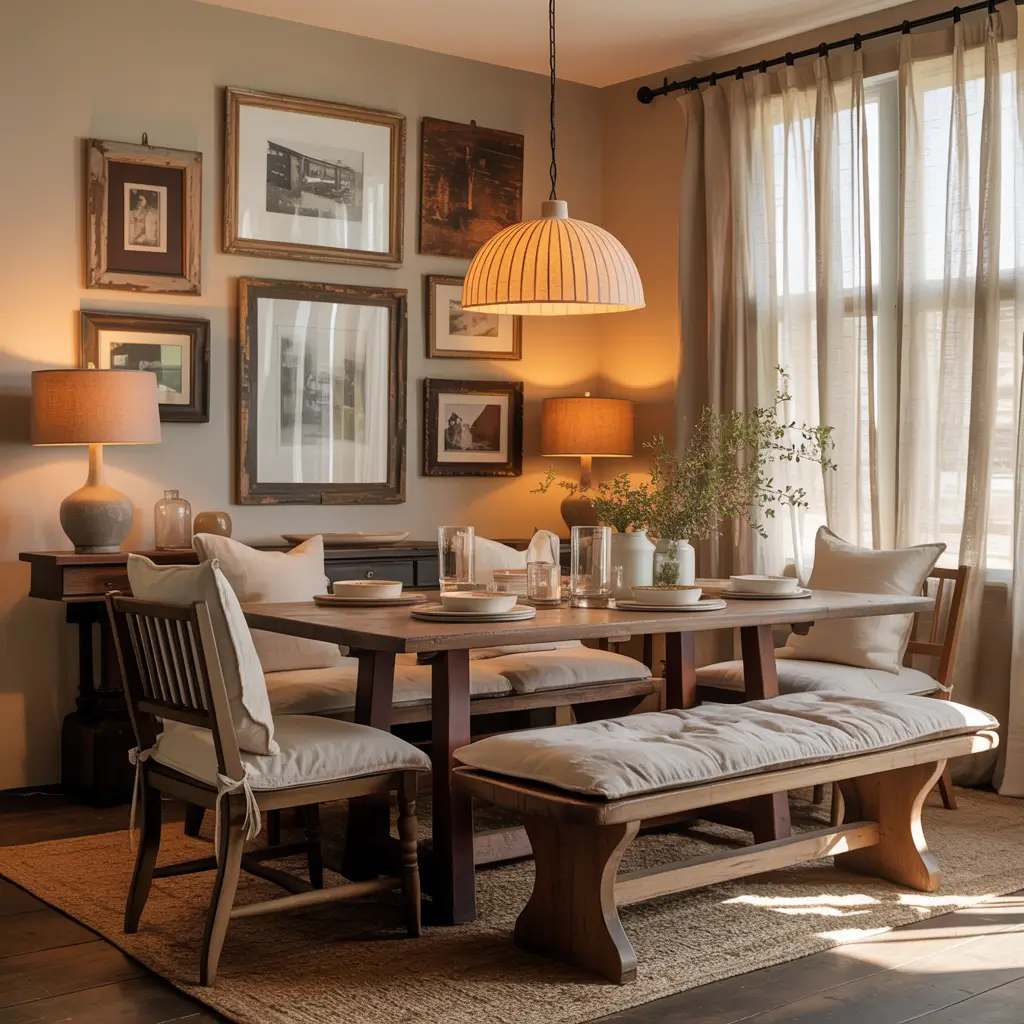
Gallery walls bring personality, color, and conversation starters to your dining room. This is where you tell your family’s story through art, photos, and found objects.
A well-styled gallery wall transforms a blank wall into a focal point that reflects your family’s personality. I’ve lost count of how many times dinner guests spend more time looking at our gallery wall than eating—okay, maybe that says something about my cooking, but still.
The beauty of gallery walls? They’re completely customizable and can evolve over time. You don’t need to get everything perfect on day one. Start with a few pieces and add to it as you find things you love.
Gallery wall elements for farmhouse style:
- Mix of frames (wood, metal, painted) in various sizes
- Black and white family photos for timeless appeal
- Vintage signs or agricultural artwork
- Pressed botanicals in simple frames
- Mirrors to add dimension and light
- Architectural salvage pieces like old windows or shutters
Layout matters here. You can go super organized with a grid pattern, or embrace the chaos with a salon-style arrangement. I recommend laying everything out on the floor first and taking a photo to see how it looks before putting holes in your wall. Learn from my mistakes, people.
Keep your gallery wall balanced—distribute visual weight evenly so one side doesn’t feel heavier than the other. And leave some breathing room between pieces. They should relate to each other without feeling cramped.
This is also the perfect spot to showcase your kids’ artwork in nice frames. It elevates their creations and makes them feel special, plus you can rotate pieces out as they create new masterpieces.
Also Read: 15 Elegant Dining Room Wall Decor Inspirations to Try Now
Budget-Friendly DIY Farmhouse Dining Room Decor
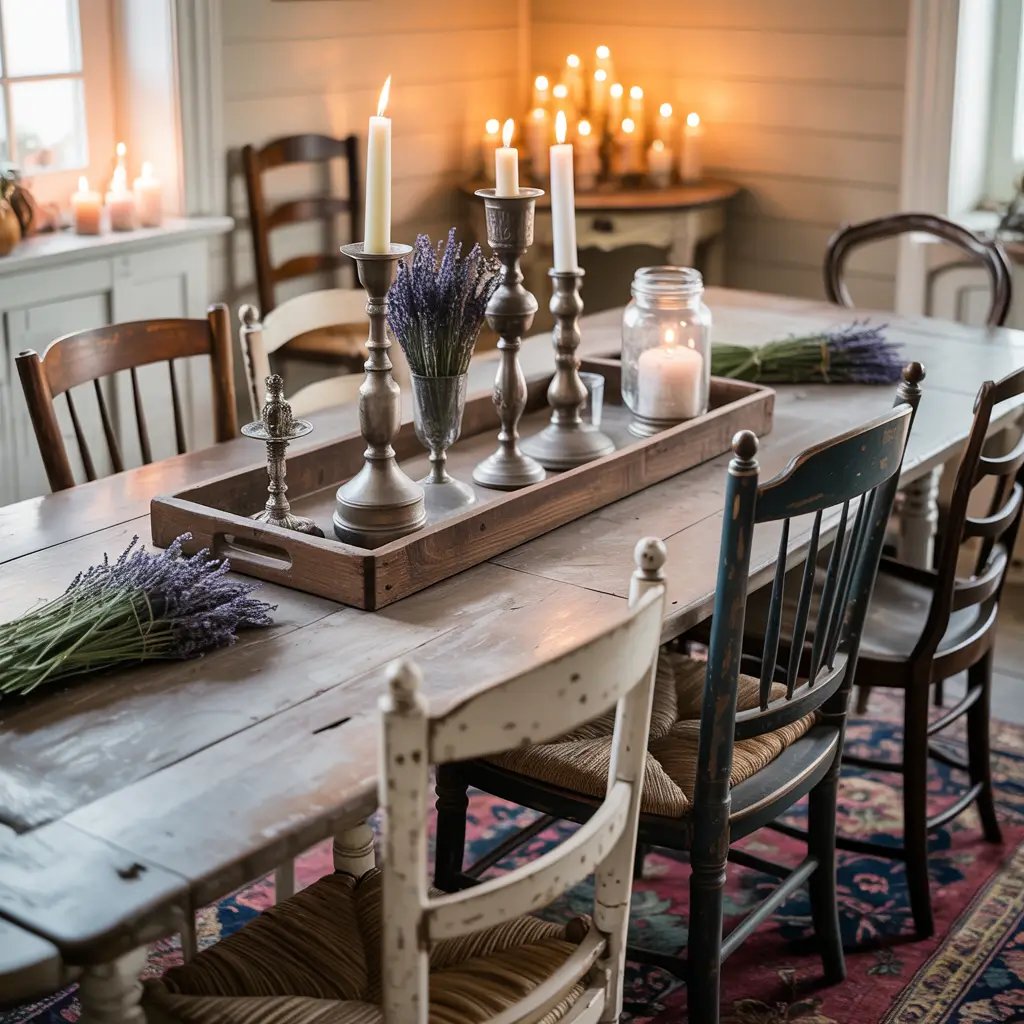
Here’s the truth: farmhouse style doesn’t require emptying your savings account. Some of the best farmhouse pieces cost almost nothing if you’re willing to get a little creative and crafty.
DIY farmhouse decor gives you custom pieces at thrift-store prices, and honestly, the imperfections from your DIY projects just add to the rustic charm. My dining room is probably 60% DIY projects, and they’re the pieces I’m most proud of.
You don’t need professional carpentry skills either. Most farmhouse DIY projects require basic tools, some patience, and the willingness to embrace imperfection. That distressed look you’re going for? Super forgiving for beginners.
Budget-friendly DIY projects that look expensive:
- Painted furniture (thrift store finds transformed with chalk paint)
- DIY wooden signs using scrap wood and stencils
- Mason jar lighting (mason jars + pendant light kits = instant farmhouse)
- Pallet wood projects (free pallets become wall art, shelves, or signs)
- Painted terracotta pots as vases or utensil holders
- Refinished tables (sand and stain existing furniture)
- Fabric-covered seat cushions for basic chairs
- DIY centerpiece boxes from scrap wood
I built a farmhouse table runner from $12 worth of pine boards, stained it, and people constantly ask where I bought it. Total cost under $20, total time about two hours. Compare that to the $80 version I almost bought online, and yeah, DIY wins.
Scour Facebook Marketplace, Craigslist, garage sales, and thrift stores for solid wood furniture pieces. Who cares if they’re ugly—that’s what paint is for. Farmhouse style celebrates the handmade and repurposed, so your DIY projects fit perfectly into the aesthetic.
Plus, there’s something deeply satisfying about telling guests “thanks, I made it” when they compliment your decor. Just saying.
Seasonal Farmhouse Dining Room Table Styling Ideas
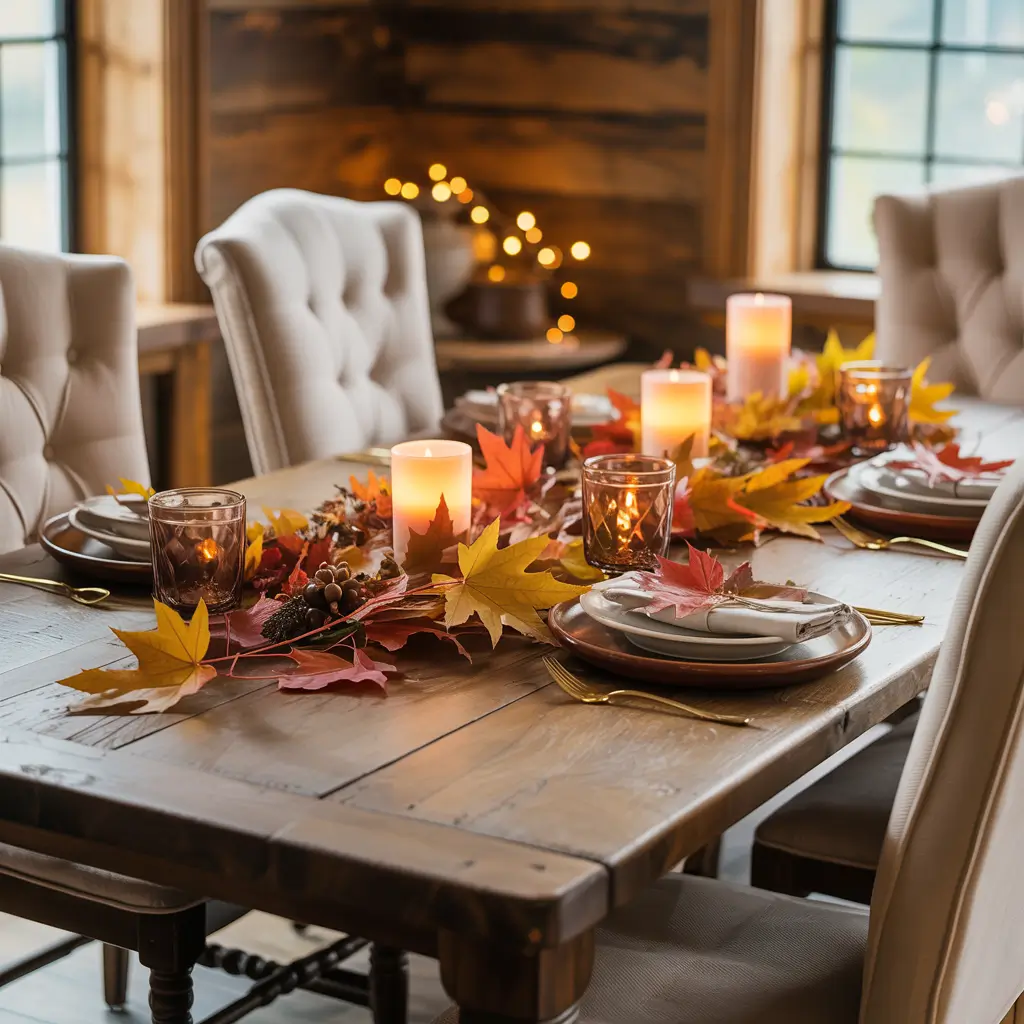
Your dining room doesn’t have to look the same all year round. Seasonal styling keeps your space feeling fresh and appropriate for whatever you’re celebrating.
I change my dining room decor with the seasons, and it’s become something my family actually looks forward to. It marks time and creates traditions around decorating together. Plus, it gives me an excuse to buy more decor, which my husband definitely doesn’t need to know about :/
The farmhouse aesthetic adapts beautifully to every season because it’s rooted in natural elements that change throughout the year. You’re just bringing the outdoors in.
Seasonal styling ideas:
Spring:
- Fresh flowers in vintage pitchers
- Pastel colors (soft yellows, mint greens, blush pinks)
- Bird’s nests and eggs
- Bunny or lamb motifs
- Light, airy fabrics
Summer:
- Lemons or limes in wooden bowls
- Bright white and blue color schemes
- Sunflowers and wildflowers
- Lighter linens and cotton textiles
- Fresh herbs in mason jars
Fall:
- Mini pumpkins and gourds
- Wheat bundles and corn stalks
- Orange, burgundy, and cream colors
- Plaid table runners
- Candles in warm scents
Winter:
- Evergreen branches and pinecones
- White and silver color palette
- Cozy wool or fur textures
- Candles and twinkle lights
- Plaid or buffalo check patterns
Keep your base elements neutral so you’re not redoing the entire room—just swap out centerpieces, table linens, and a few accent pieces. This makes seasonal decorating manageable instead of overwhelming. Your wallet and your schedule will thank you.
Farmhouse Dining Room with Bench Seating Charm
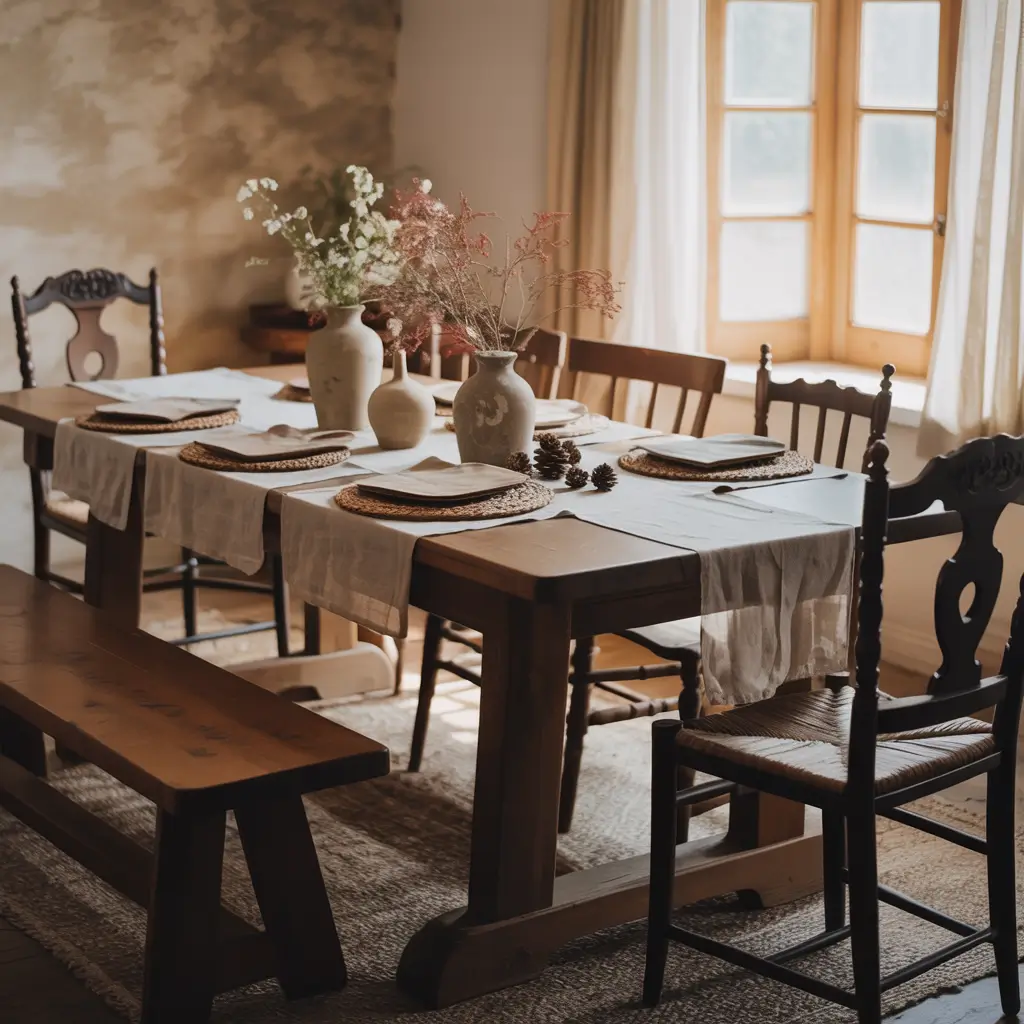
Bench seating is having a major moment, and for good reason—it’s practical, space-saving, and adorably farmhouse.
Benches add casual charm while seating more people in less space than traditional chairs. I added a bench to one side of my dining table, and suddenly we can squeeze in two extra kids when friends visit. Plus, my own kids love the bench because they can pile in together and feel like they’re at a picnic.
Benches also solve the “where do we put extra chairs” problem. One bench stores more easily than multiple chairs, and you can even tuck it completely under the table when not in use. Brilliant for smaller spaces or rooms that serve multiple purposes.
Bench seating benefits:
- Seats more people in less space
- Easier for kids to get in and out
- Creates a casual, welcoming vibe
- Provides under-seat storage (if you choose a storage bench)
- Costs less than buying multiple chairs
- Easy to DIY if you’re handy
You can mix bench seating with chairs for varied visual interest—bench on one side, chairs on the other and at the heads of the table. This gives you flexibility for different occasions while keeping that farmhouse family-style dining vibe.
Add cushions for comfort (washable covers are non-negotiable with kids), or go with an upholstered bench for built-in coziness. Just make sure your bench is the right height for your table—you want about 12 inches between the bench seat and the table top for comfortable dining.
I’ve seen benches with backs for extra support, but I prefer backless benches because they tuck away completely and work as extra seating elsewhere when needed. Plus, they’re easier to build if you’re going the DIY route.
Wrapping This Up
So there you have it—15 farmhouse dining room ideas that actually work for real families in real homes. Not Pinterest-perfect fantasy spaces where nobody eats or makes messes, but honest-to-goodness family dining rooms where life happens daily.
The beautiful thing about farmhouse style? It’s forgiving, adaptable, and built for real living. Your table gets dinged? That’s called patina. Your kids spill something on the bench cushions? Throw those covers in the wash. You can’t afford all-new furniture? DIY and thrift store finds fit right in.
Your dining room should work as hard as you do—hosting homework sessions, family dinners, holiday celebrations, game nights, and those random Tuesday evening pizza parties. Farmhouse style handles all of it with grace and charm.
Start with one idea that speaks to you. Maybe it’s adding a statement chandelier, or finally installing that shiplap wall you’ve been eyeing. You don’t need to transform everything overnight. Layer in changes gradually, and enjoy the process of creating a space your family genuinely loves.
And remember—the best dining rooms aren’t the ones that look magazine-ready 24/7. They’re the ones filled with laughter, spilled drinks, passionate conversations, terrible dad jokes, and memories being made. Farmhouse style just makes all of that look better while it’s happening.