How to Layer Rugs the Right Way (So It Looks Expensive, Not Messy)
- Home Organization Ideas Living Room
 Alina
Alina- 0
- 14 minutes read


You’ve seen it on Pinterest: a jute base, a faded vintage rug tossed on top at a careless angle, and somehow the whole room looks like it costs a fortune. So you tried it at home, and instead of effortless and collected, yours came out looking like two rugs that wandered into the same room by accident and refused to speak to each other.
The gap between “expensive” and “messy” with layered rugs is almost entirely down to a handful of specific decisions: the sizes, the textures, the patterns, and how the two rugs relate. Get those right and it looks intentional. Get them wrong and it looks like a mistake, which is what most failed attempts actually are. Here’s how to do it properly, framed around the exact mistakes that trip people up.
Mistake 1: Getting the sizes wrong
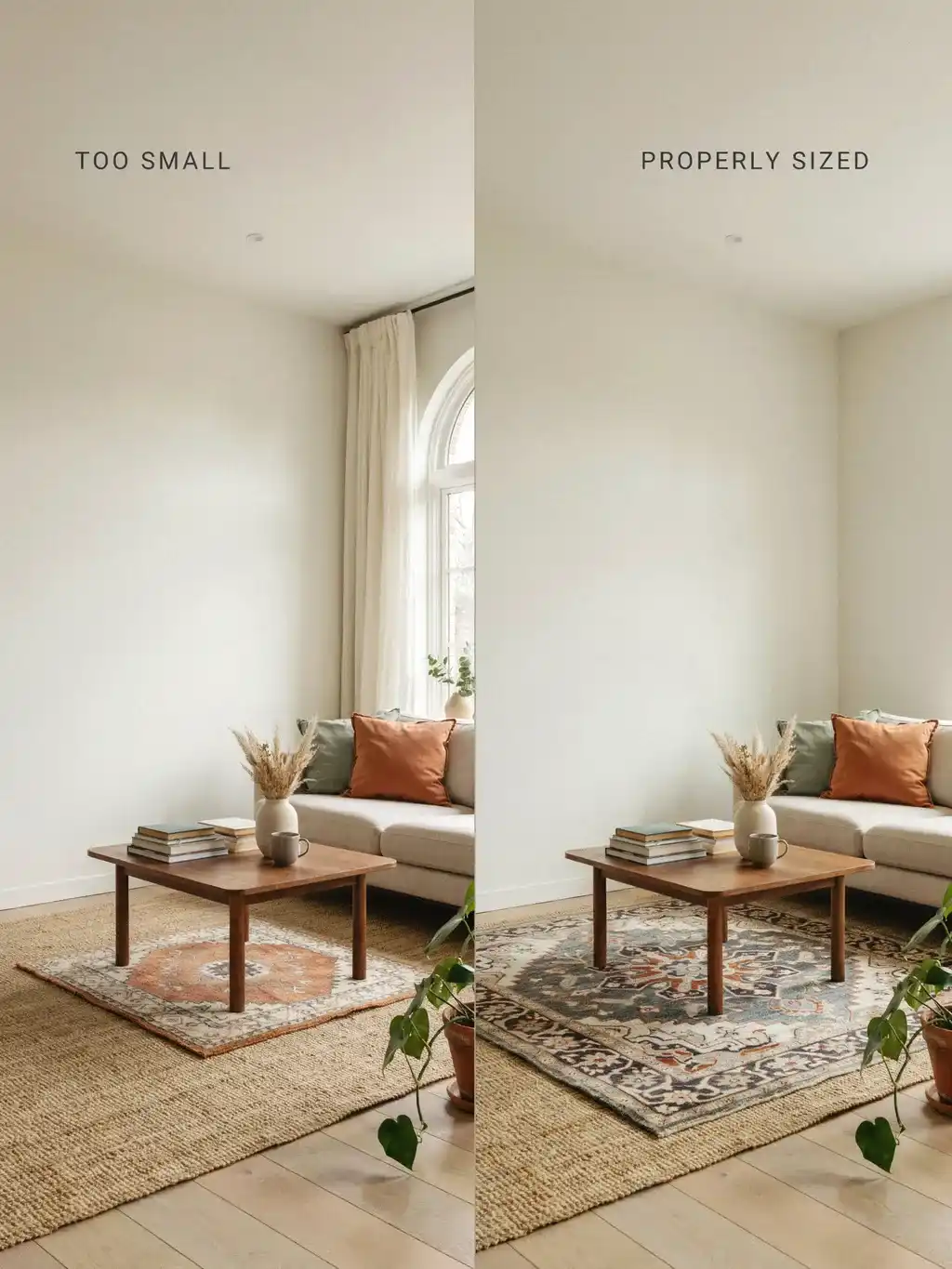
This is the number-one error designers point to, and it’s why most layering attempts look off. If you throw a tiny rug over a huge one, the top rug gets lost and the whole thing looks unbalanced and random, like you dropped a bath mat in the middle of the floor.
The fix is a proportion rule the pros use again and again: your top rug should be roughly two-thirds the size of the base rug. So a common, foolproof pairing is an 8×10 base with a 5×8 or 6×9 on top. That ratio gives you a visible, deliberate border of the base rug framing the top one, which is exactly what reads as “styled.” Big base, top rug about two-thirds of it, that single rule fixes most messy layering.
Mistake 2: Picking the wrong base rug
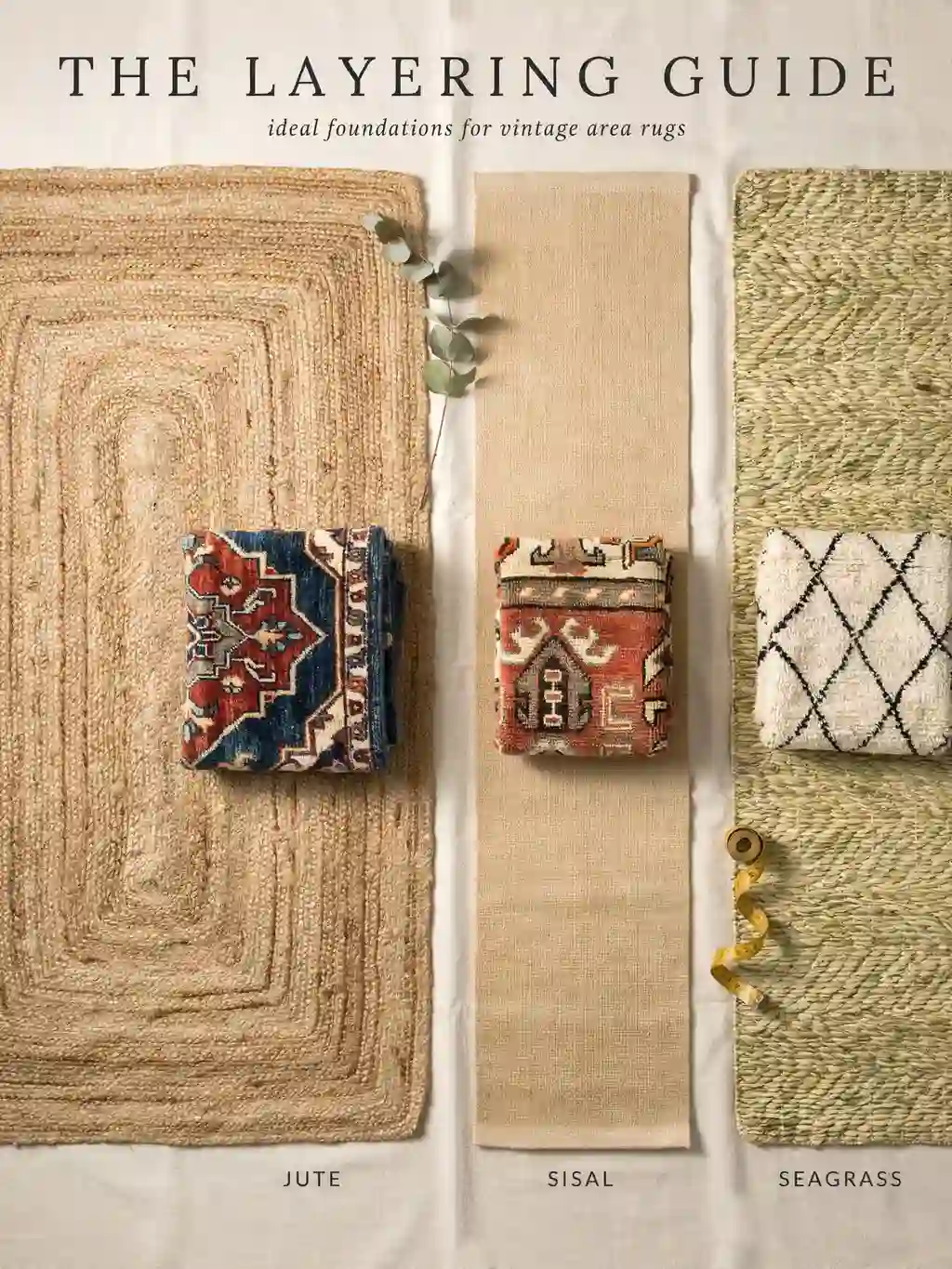
People often grab two decorative rugs and pile them up, which is a recipe for visual chaos. The base rug isn’t supposed to be a star, it’s a stage.
The no-fail base is a large, neutral, low-pile natural-fiber rug, jute, sisal, or seagrass. It’s flat so the top layer sits on it without bunching, it’s neutral so it goes with anything, and it adds subtle texture without competing. This is the single most recommended starting point there is, and a big part of why those Pinterest rooms look so good. Start with a plain jute base and you’ve already done half the job right.
Mistake 3: Combining two busy patterns
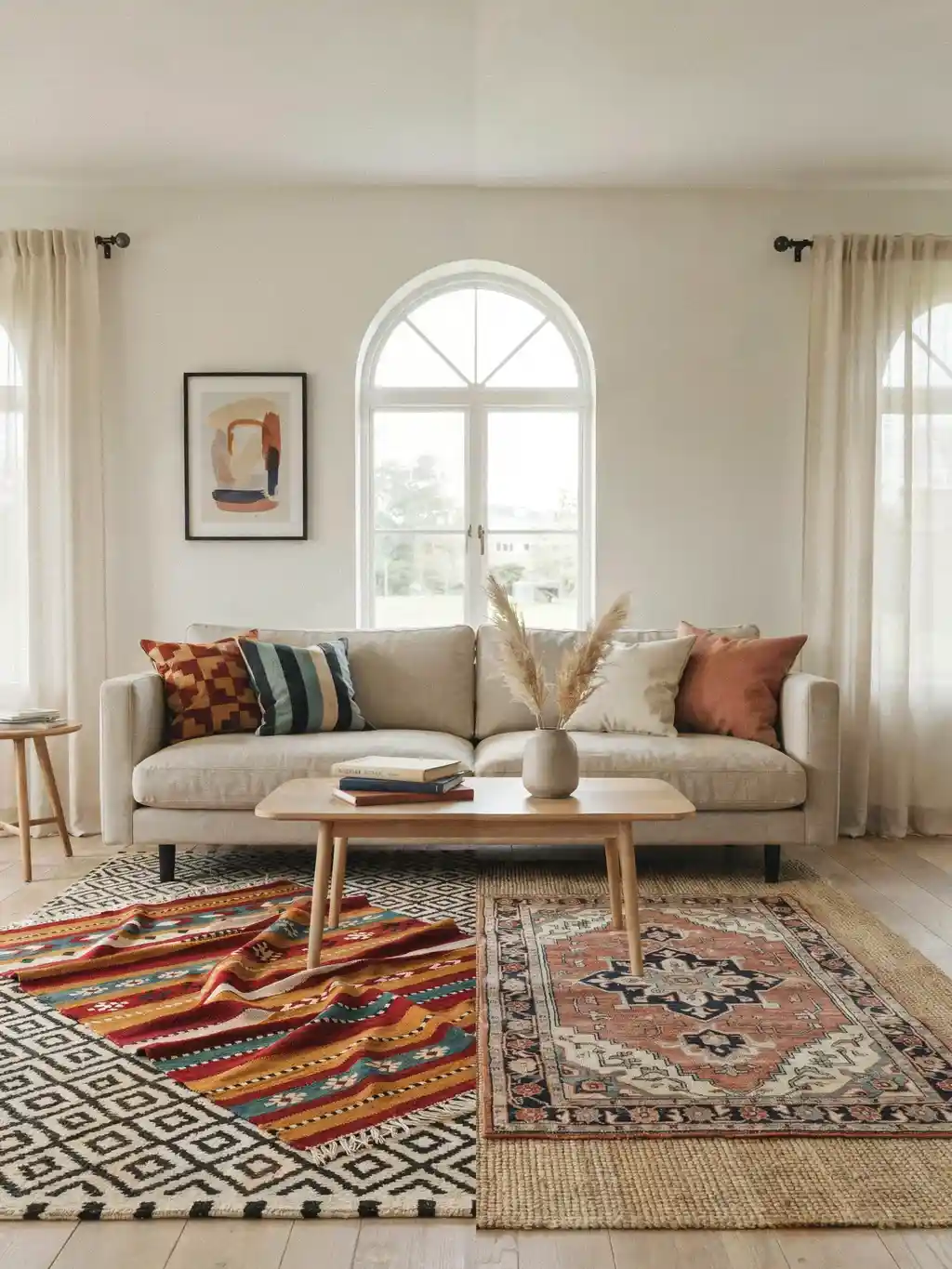
Layering a bold vintage rug over a bold striped rug feels like more personality, but it almost always clashes into a mess. Two busy patterns fight each other, and your eye doesn’t know where to land.
The rule: let one rug lead and the other follow. If your top rug is patterned, keep the base plain (a solid or a subtle jute). If your base is the patterned one, keep the top simpler. You can mix patterns successfully, florals with geometrics, stripes with tribal motifs, but the reliable way is to contrast the scale: a large-scale pattern underneath, a tighter, smaller-scale pattern on top. Busy-with-busy is the combination to avoid; busy-with-plain (or big-pattern-with-small-pattern) is the combination that works.
Mistake 4: Letting the colors drift with no connection
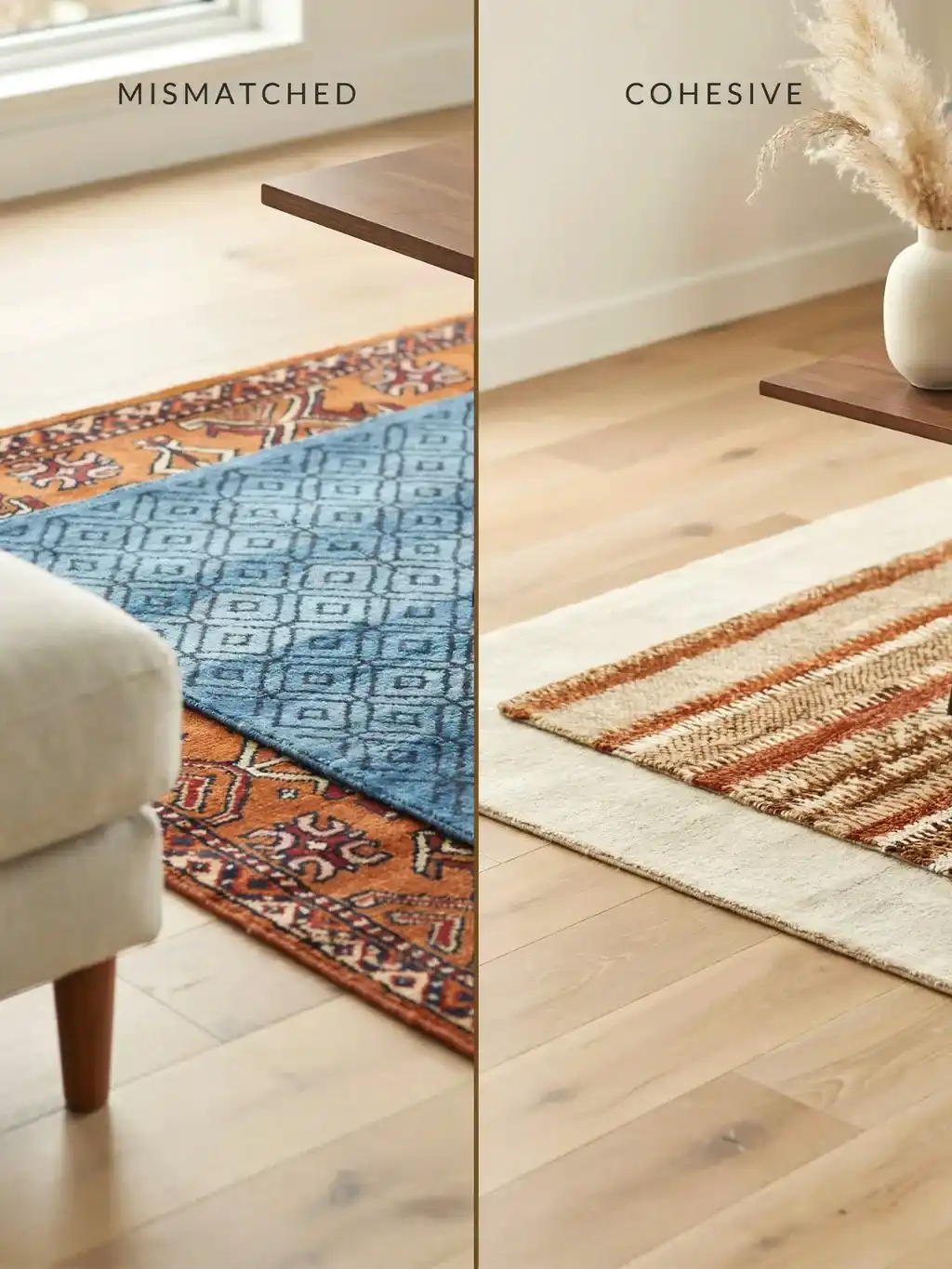
When a layered look feels random rather than designed, it’s often because the two rugs share no common thread. They’re just two separate rugs occupying the same square footage.
Color is the connector. Even if the patterns and textures are completely different, a shared color palette is what holds the look together and makes it read as intentional. The two rugs don’t have to match exactly, but they should at least live in the same temperature family, both warm or both cool, so the room feels cohesive. Pick one color in your top rug that echoes something in the base (or the room), and suddenly the pairing looks deliberate instead of accidental.
Mistake 5: Forgetting texture is doing half the work
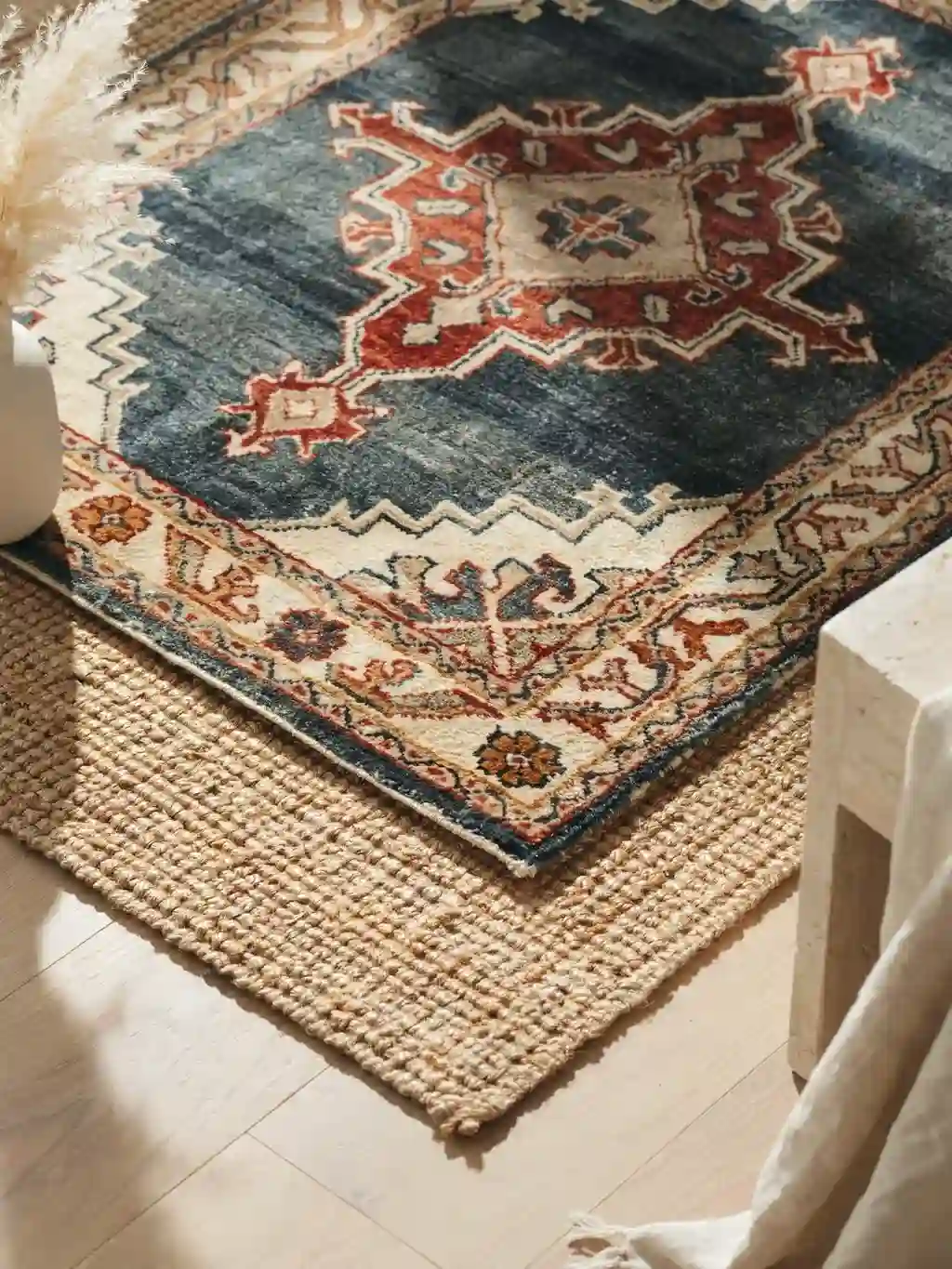
If you go tonal or neutral on both rugs, the thing that saves the look from feeling flat is texture contrast. Two flat, smooth rugs stacked together look like a sizing error; two contrasting textures look layered and rich.
Pair a smooth or coarse low-pile base with a plusher, softer top, a flatweave or jute underneath, a wool, vintage, or shag rug on top. The contrast between rough and soft instantly elevates the space and adds the cozy depth underfoot that’s half the point of layering. Bonus: when texture is doing the heavy lifting, even slightly mismatched colors tend to work, so it’s the most forgiving approach if you’re nervous.
Mistake 6: Ignoring your furniture, especially the coffee table
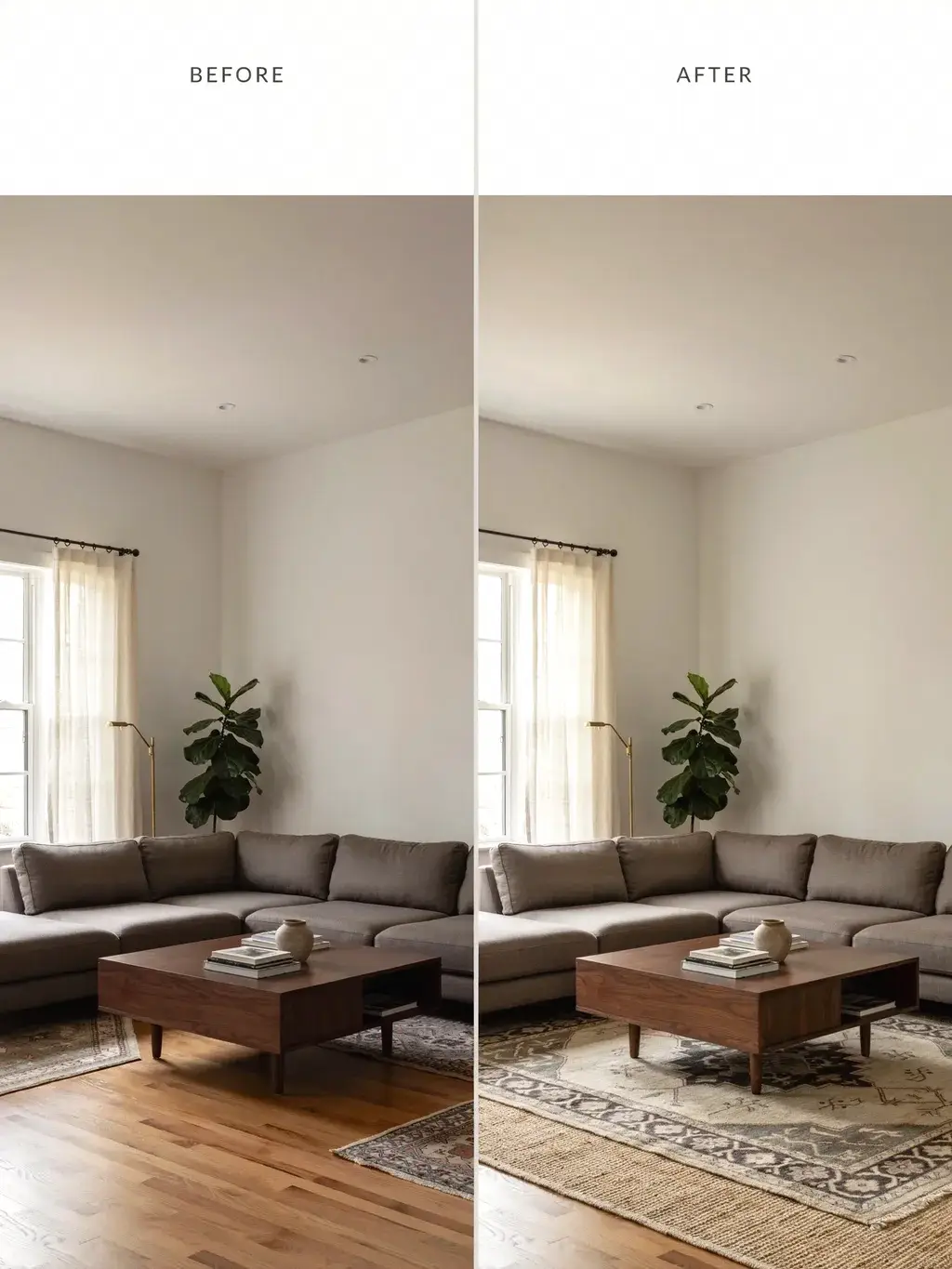
A rug pairing that looks great empty can fall apart once furniture lands on it, and the coffee table is the usual culprit. A top rug that’s too small disappears under a chunky table and looks lost.
Two things to consider. First, scale the top rug to your furniture: if you’ve got a visually heavy coffee table (thick legs, solid base), go bigger with the top rug so it doesn’t vanish; if your table is light and leggy, a smaller top rug works because more of it stays visible. Second, anchor the furniture, try to keep at least two of the four legs of your major pieces sitting on the layered rug, which both looks grounded and stops the rugs sliding around. Floating all the furniture off the rug is what makes the arrangement feel disconnected.
Mistake 7: Centering everything stiffly (or angling it badly)
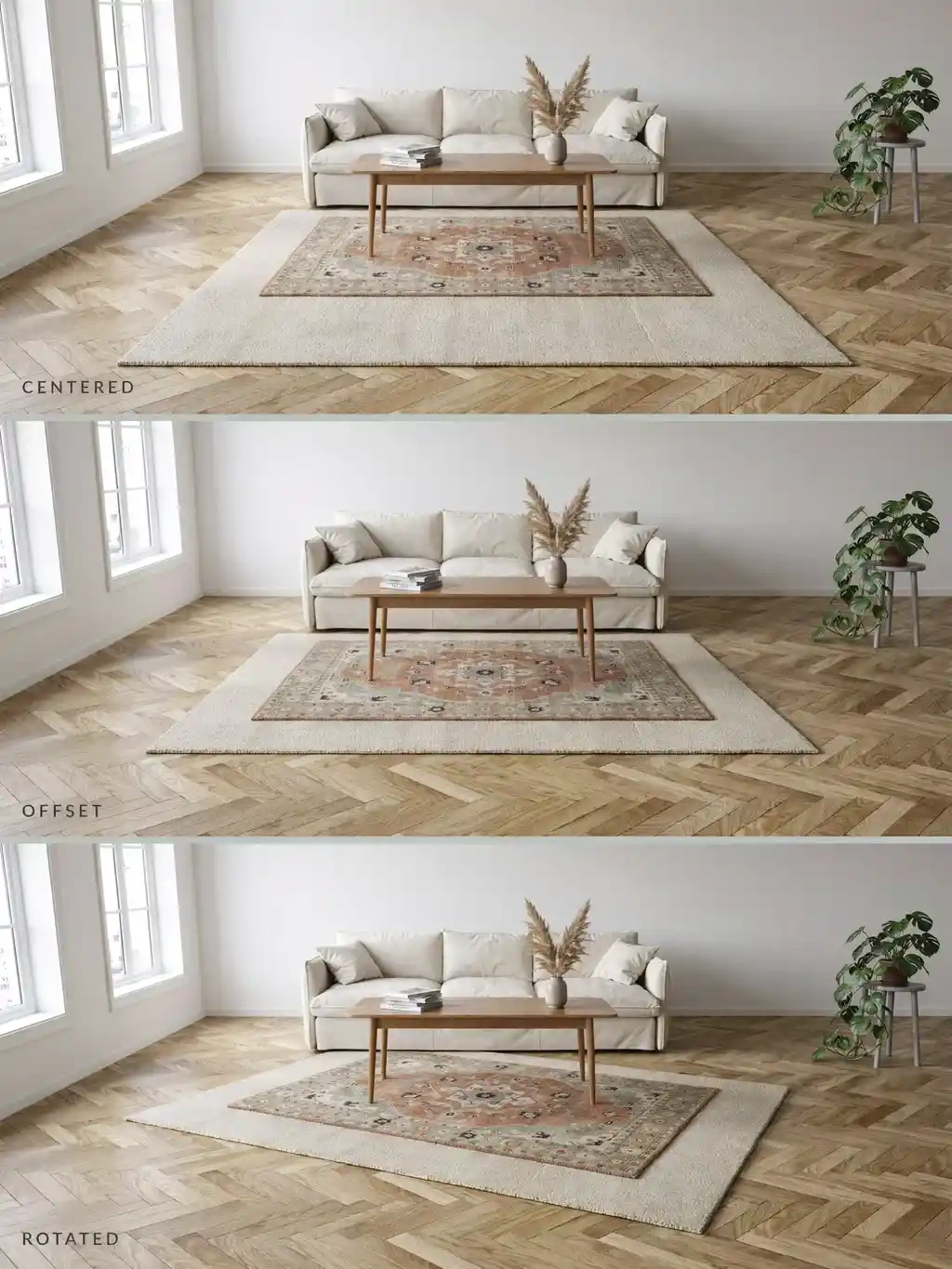
How you position the top rug sets the whole mood, and getting it wrong tips you into either “showroom stiff” or “actually messy.”
Centered and square reads classic and tidy. Slightly angled or offset reads relaxed, collected, that effortless designer look, but there’s a line between artfully off-center and looks-like-it-got-kicked. If you go angled, commit to a deliberate angle and align it loosely with your furniture rather than leaving it askew at random. When in doubt, centered is the safer bet; save the jaunty angle for once you’ve got the rest dialed in.
Mistake 8: Skipping the rug pad and creating a trip hazard
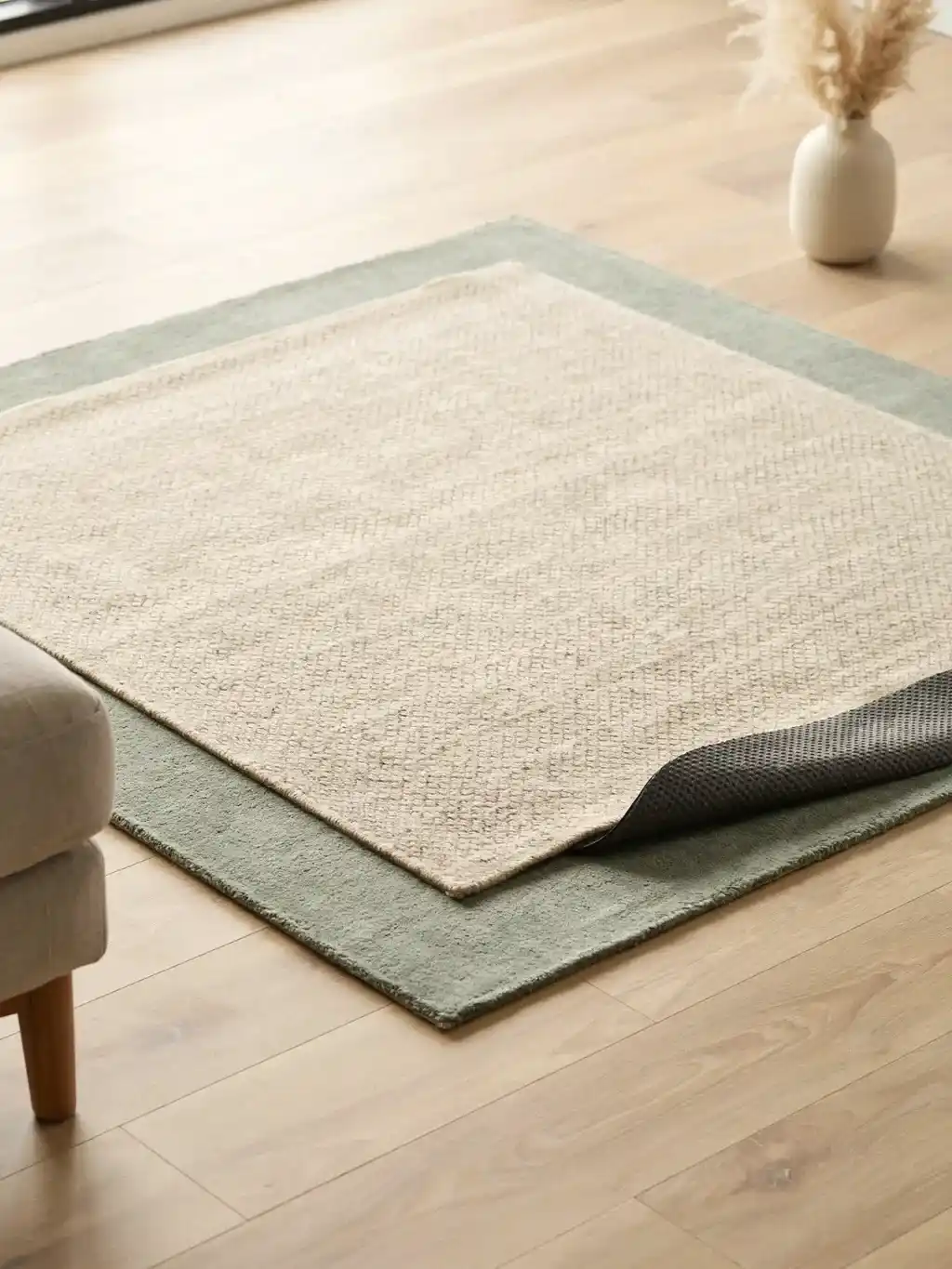
The unglamorous one that wrecks both the look and your shins. Layered rugs slide, the top one creeps across the base, corners flip up, and edges that don’t lie flat are a genuine tripping risk, especially with kids, elderly family, or the naturally clumsy among us.
Use a non-slip rug pad or double-sided rug tape between the layers to lock them together. Make sure the top rug isn’t so thick it bunches or folds at the corners on the base, and that all edges lie flat. A layered look that’s constantly shifting never looks expensive, no matter how good the rugs are; the ones in the photos are pinned down.
A few foolproof pairings to start with
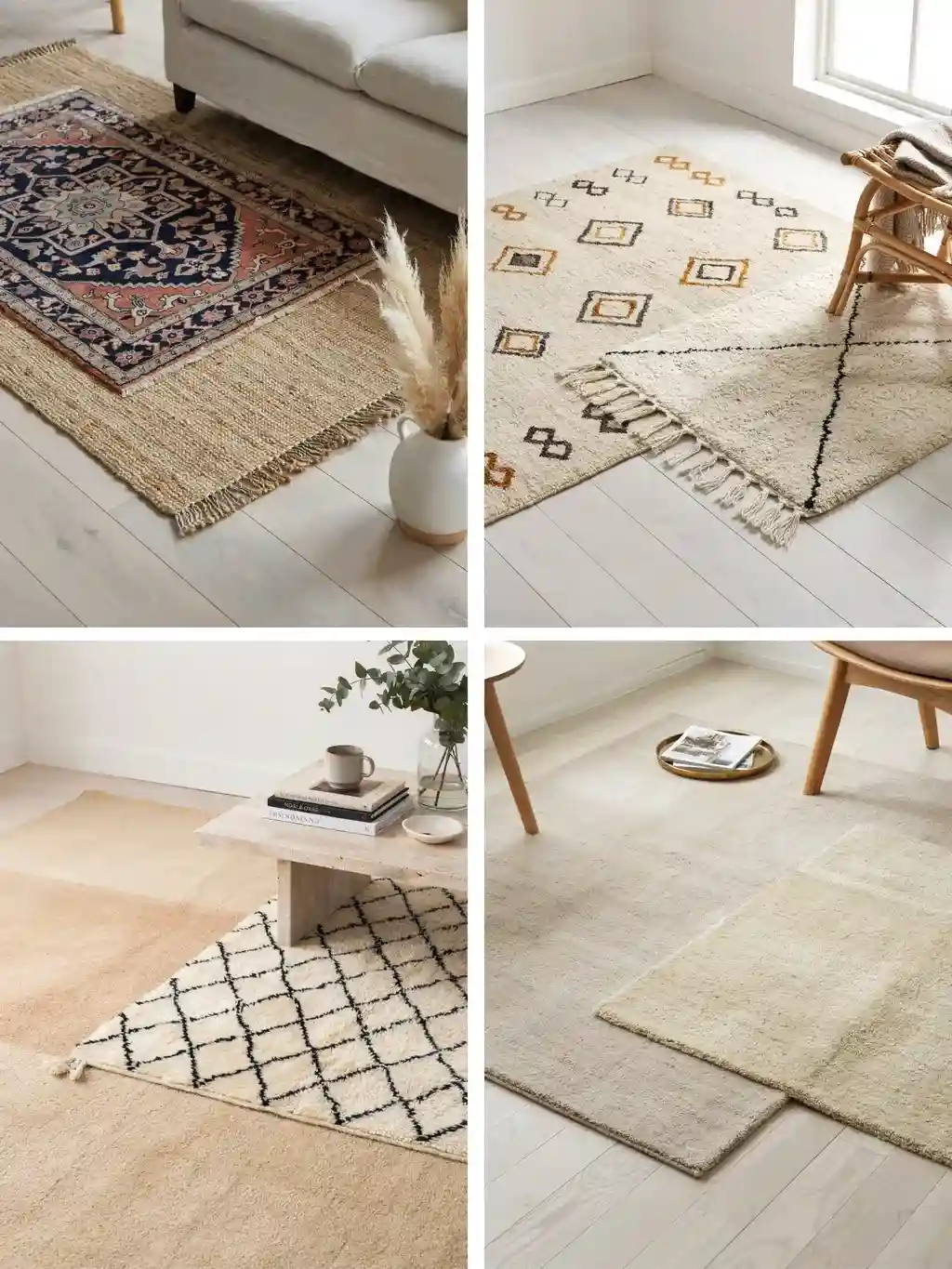
If you just want a combination that works, lean on the ones designers reach for repeatedly: a neutral jute base with a faded vintage or Persian-style rug on top; a flatweave base with a plush wool rug for pure texture contrast; a solid base with a bold geometric or Moroccan pattern on top; or, for a quiet look, two muted tones in the same color family layered together. And yes, all of this works over wall-to-wall carpet too, just keep the same rules and pick a top rug that clearly contrasts the carpet so it reads as intentional.
The bottom line
Layered rugs look expensive when the relationship between the two rugs is deliberate, and messy when it’s left to chance. Start with a big neutral jute base, add a top rug about two-thirds its size, keep one layer plain if the other is patterned, connect them through a shared color, contrast the textures, anchor your furniture on top, and pin it all down with a pad. Do that, and your floor will finally look like the Pinterest version, not the cautionary tale. The rules are simple; it’s skipping them that looks like a mistake.


