How to Make a Small Room Look Bigger Without Knocking Down Walls
- Home Organization Ideas Living Room
 Alina
Alina- 0
- 16 minutes read


Every list you’ve found on this says “use mirrors” and then sort of trails off, as if hanging one mirror is going to turn your shoebox bedroom into a loft. You’ve probably already got a mirror up. The room still feels like the walls are inching toward you.
Here’s the thing the generic advice misses: making a small room feel bigger isn’t one trick, it’s a stack of small visual decisions about light, sightlines, and how your eye moves through the space. None of them require a sledgehammer, most are renter-friendly, and together they genuinely work. Here are the specific, actionable moves, roughly in order of impact.
1. Declutter first, because nothing shrinks a room like stuff
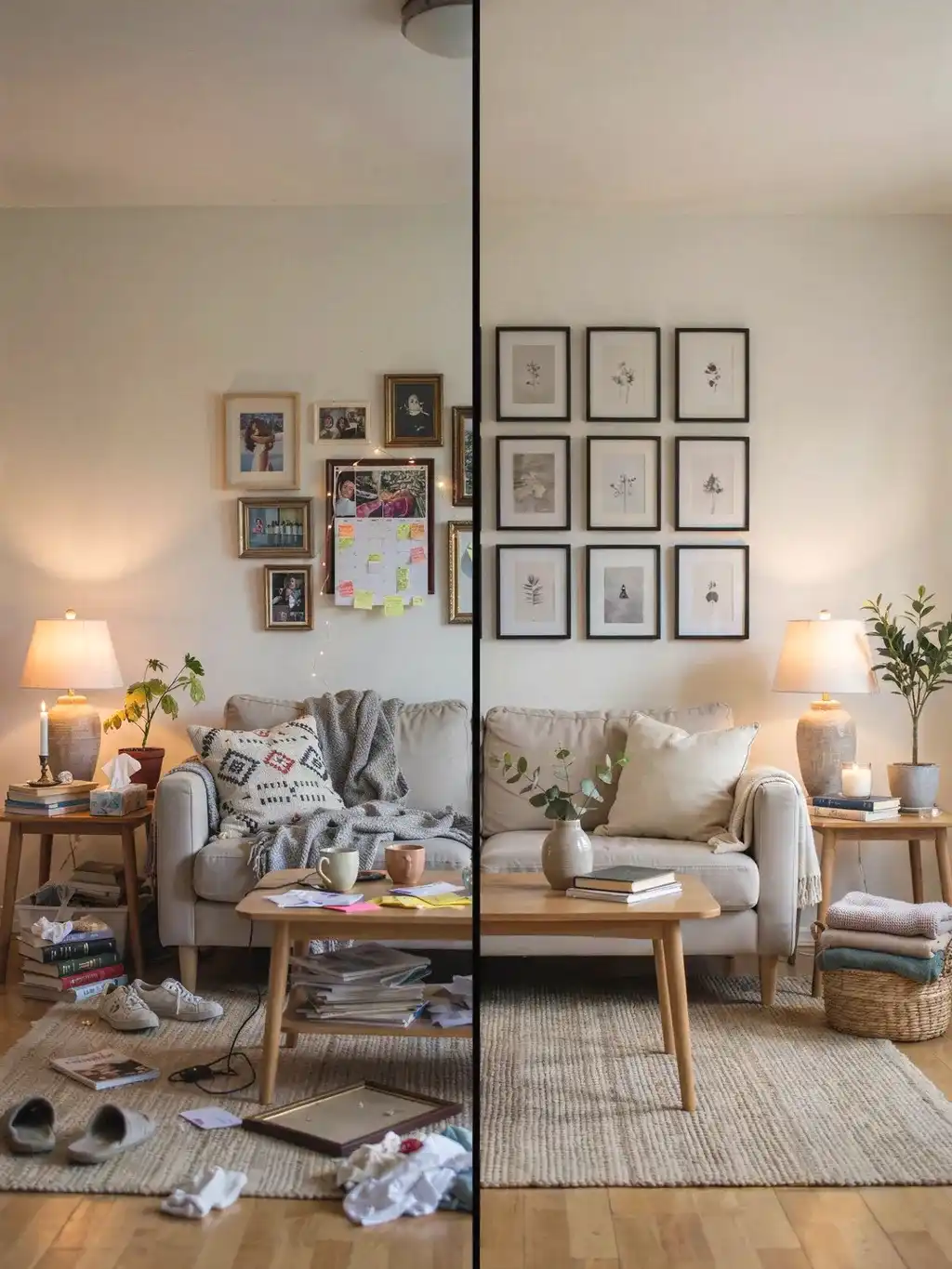
Before any clever design move, this is the unglamorous one that matters most: clutter is what makes a small room feel small. Every visible object is something your eye has to stop and process, and a surface crowded with stuff reads as cramped no matter what colour the walls are.
Clear the surfaces down to a few deliberate pieces, get things off the floor, and corral the necessary clutter into closed baskets or bins. The goal is breathing room. A tidy small room almost always feels larger than a cluttered larger one, which is why this comes first, not last.
2. Get your furniture up on legs
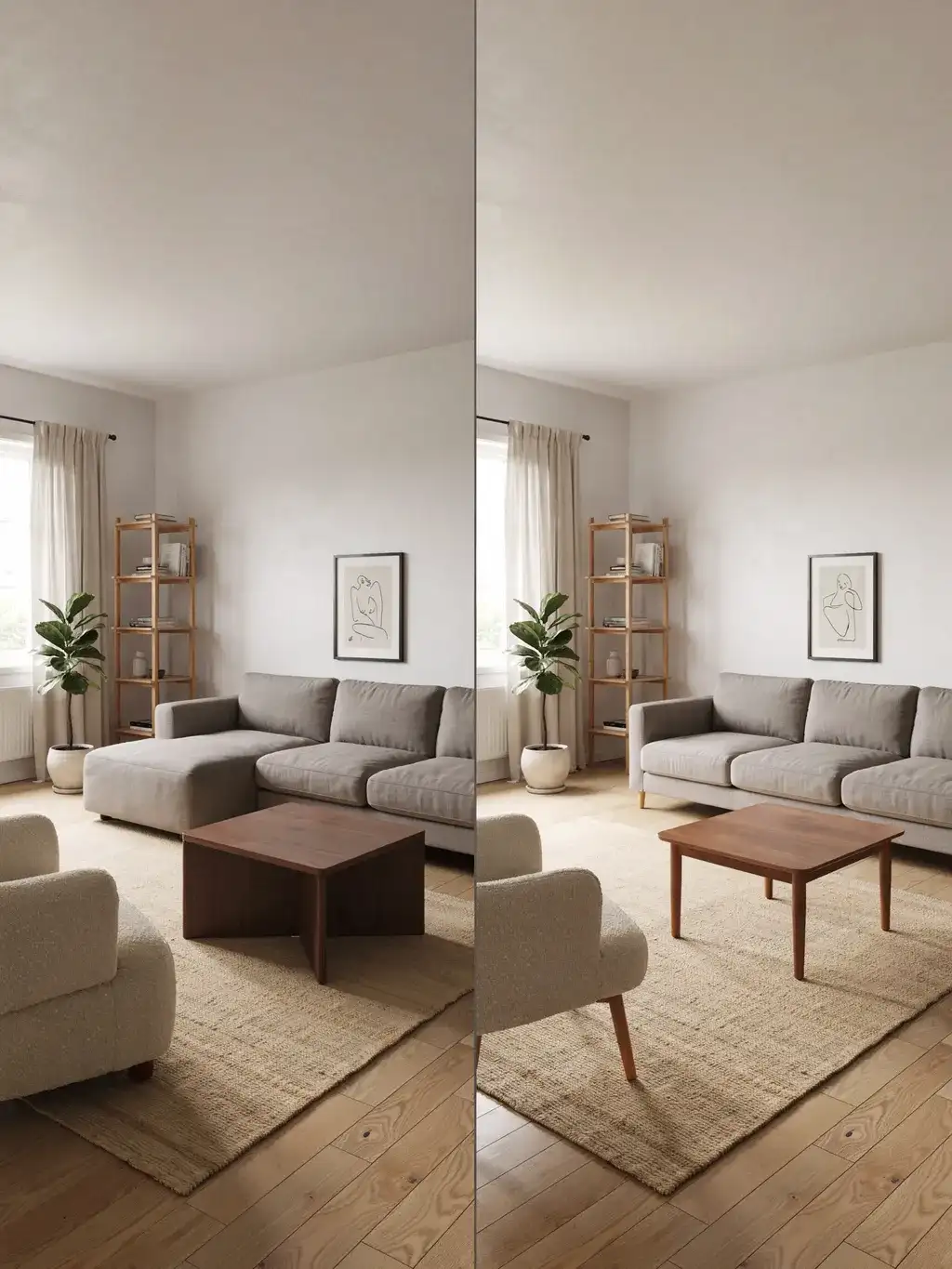
This is the single most underrated trick. Furniture with exposed legs, a sofa, chairs, a console you can see the floor beneath, makes a room feel more open, because visible floor reads as more space. Bulky pieces that sit solid on the ground, like skirted sofas or boxy storage, visually weigh the room down and block that floor from view.
You don’t need smaller furniture (more on that in a second), you need furniture that lets your eye travel underneath it. Swapping a heavy, floor-hugging piece for one raised on slim legs instantly lightens the whole room. Glass and acrylic pieces, a glass coffee table, a lucite chair, take this even further by practically disappearing.
3. Hang curtains high and wide, or skip them
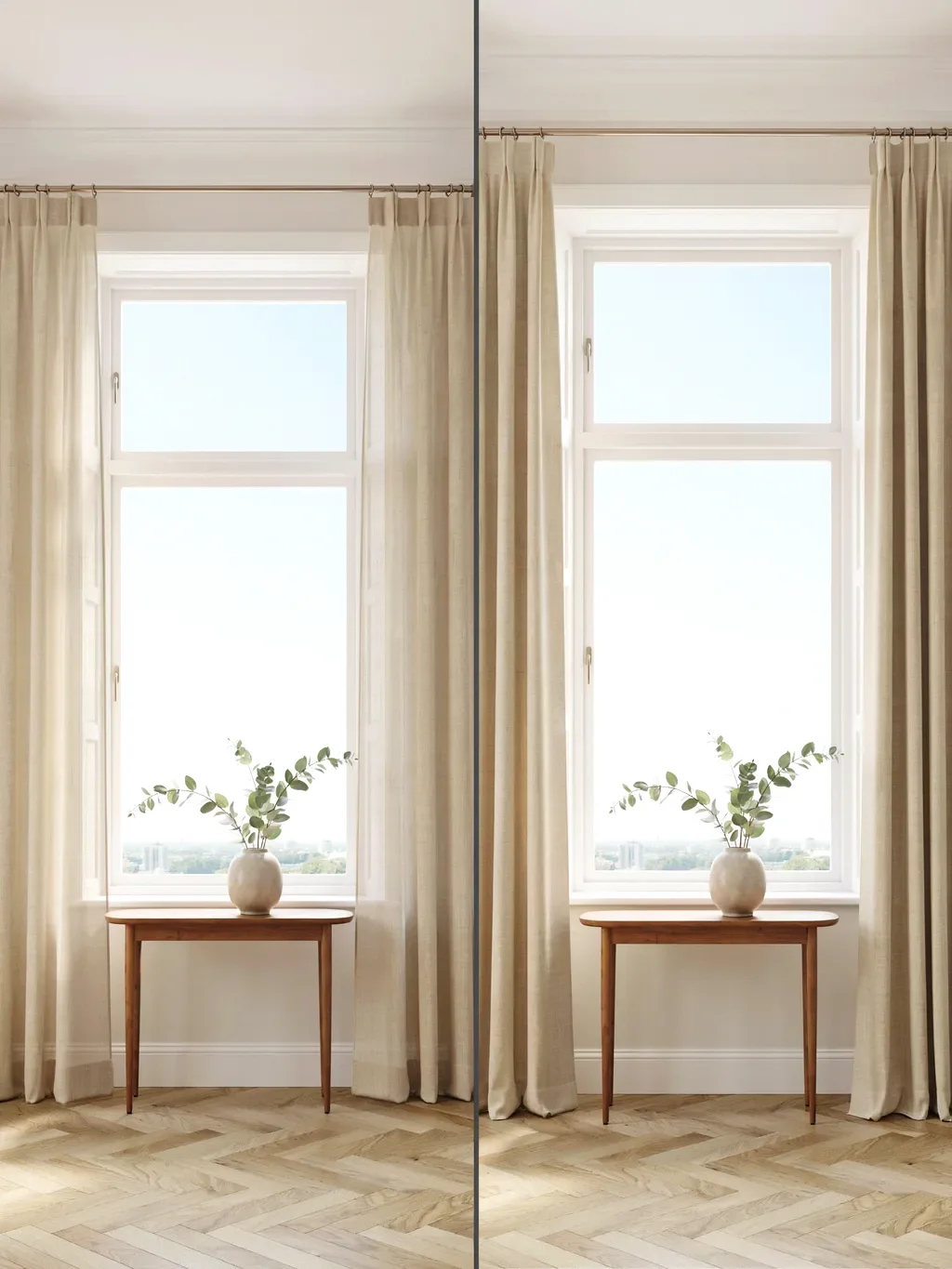
If you take one thing from this list, make it this, because it’s cheap and dramatic. Mount your curtain rod as close to the ceiling as you can, not just above the window frame, and let the panels fall all the way to the floor. This draws the eye upward and tricks it into reading the ceiling as taller and the window as bigger.
The practical version: if your ceiling is 8 feet, buy 96-inch curtains and hang them at the top. Extend the rod a little past the window on each side too, so the panels frame rather than cover the glass, letting in maximum light. In some small rooms, ditching curtains entirely is the most open look of all.
4. Rethink your layout before you touch a paint can
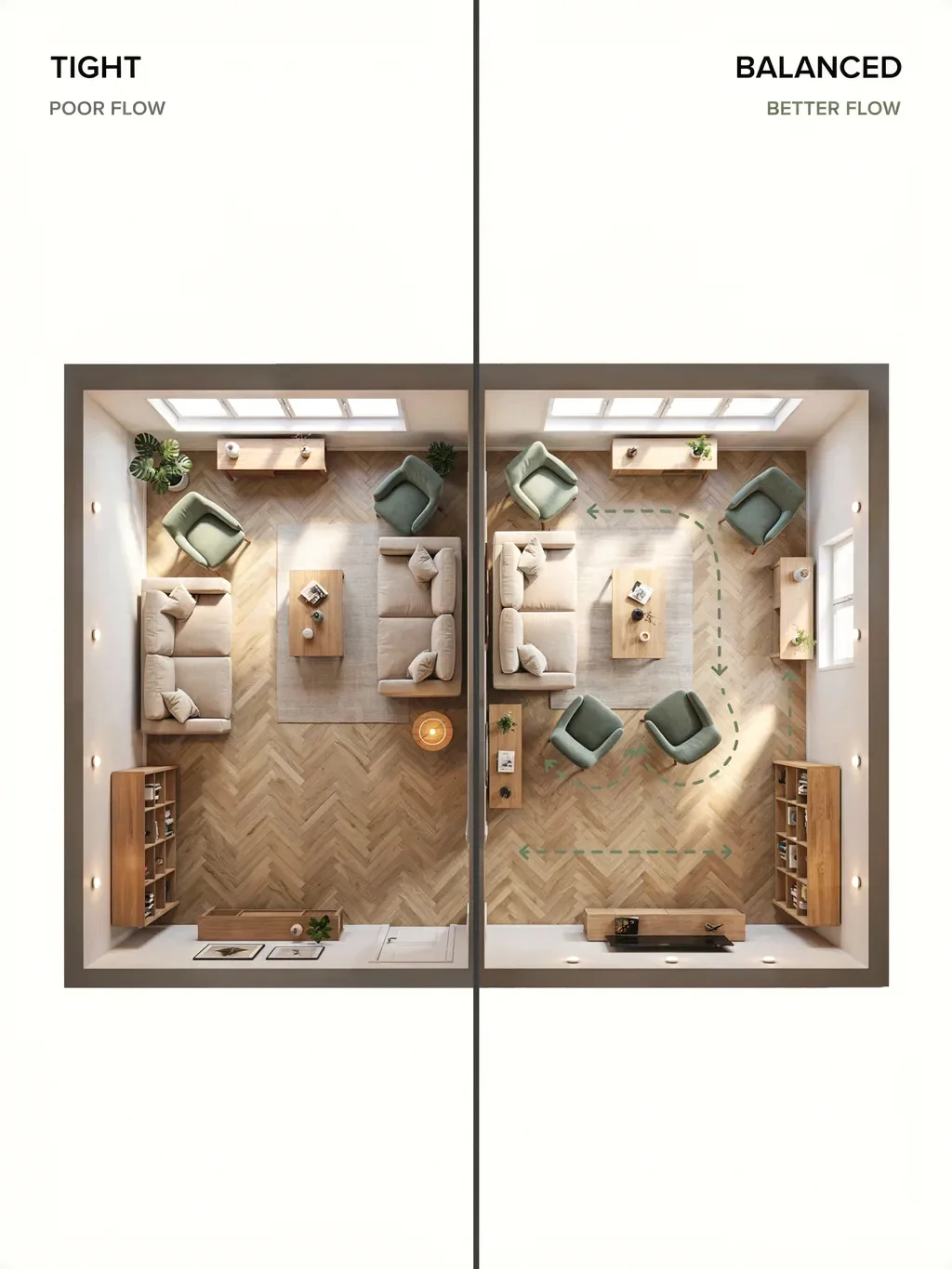
Counterintuitively, shoving every piece of furniture flat against the walls often makes a small room feel more cramped, not less, because it draws a hard outline around the limited space and fragments the middle. Layout, not colour, is the real foundation.
Try floating key pieces even a few inches off the wall, a sofa pulled slightly forward with a slim console behind it, to create flow and a more intentional structure. Keep clear walking paths (aim for roughly three feet of circulation space), arrange seating around a single focal point, and never block a window with a tall piece. How the room is arranged changes how big it feels more than almost anything else.
5. Don’t automatically default to all-white
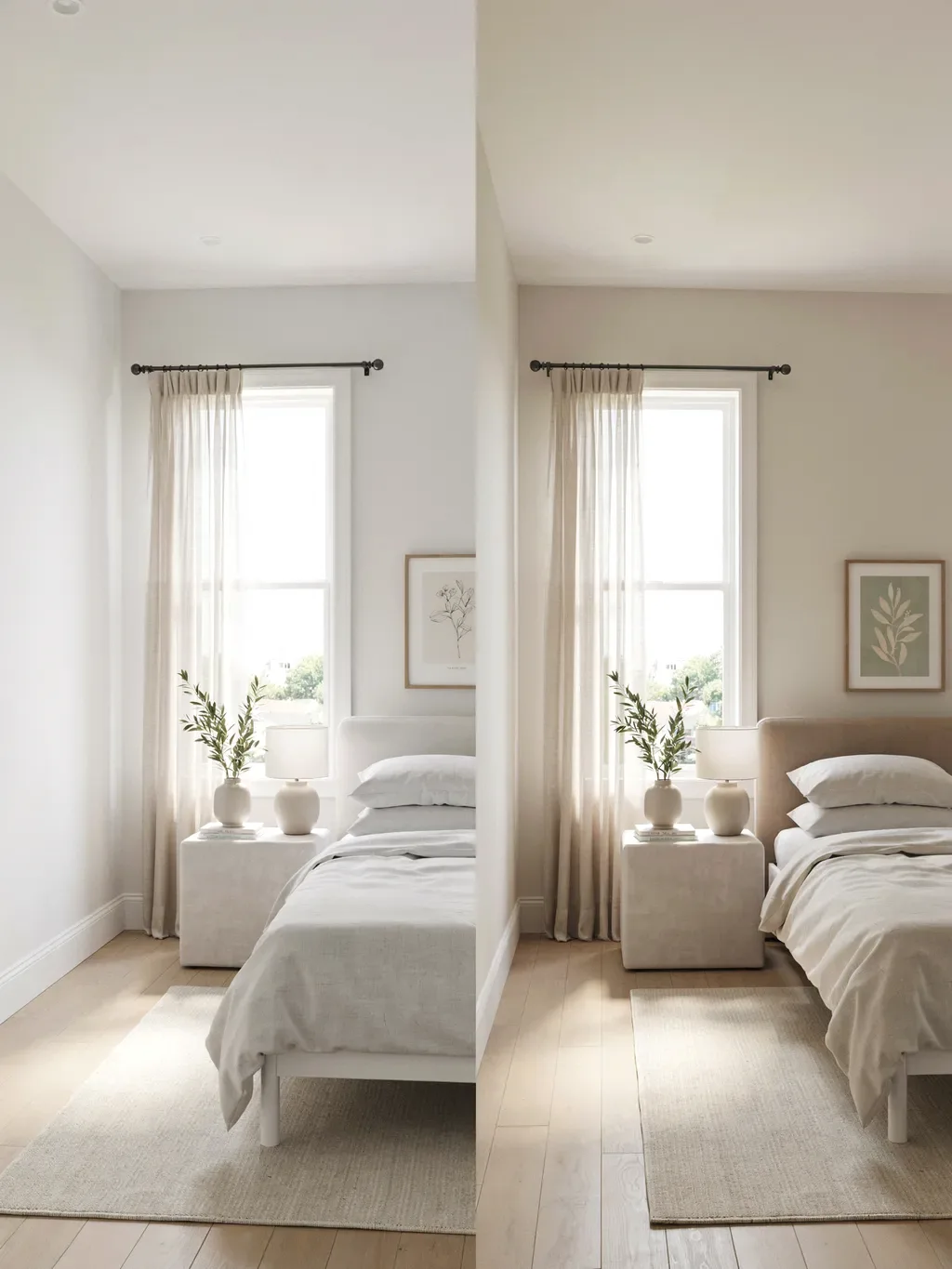
You’ve heard “paint it white,” and white can work, especially in a room with lots of sunlight, where it bounces light around beautifully. But it’s not magic, and designers are increasingly honest that an all-white small room can fall flat or even feel more confined, particularly in a room that gets little daylight, where white just goes grey and dingy.
What actually makes a room feel expansive is how color is used, not just lightness. The real enemy is high contrast, because sharp breaks between colours create visual “stopping points” that chop a small room into segments. Whether you go light or moody, keeping things low-contrast and continuous is what lets the eye glide and the room feel larger.
6. Paint the ceiling and trim to match the walls
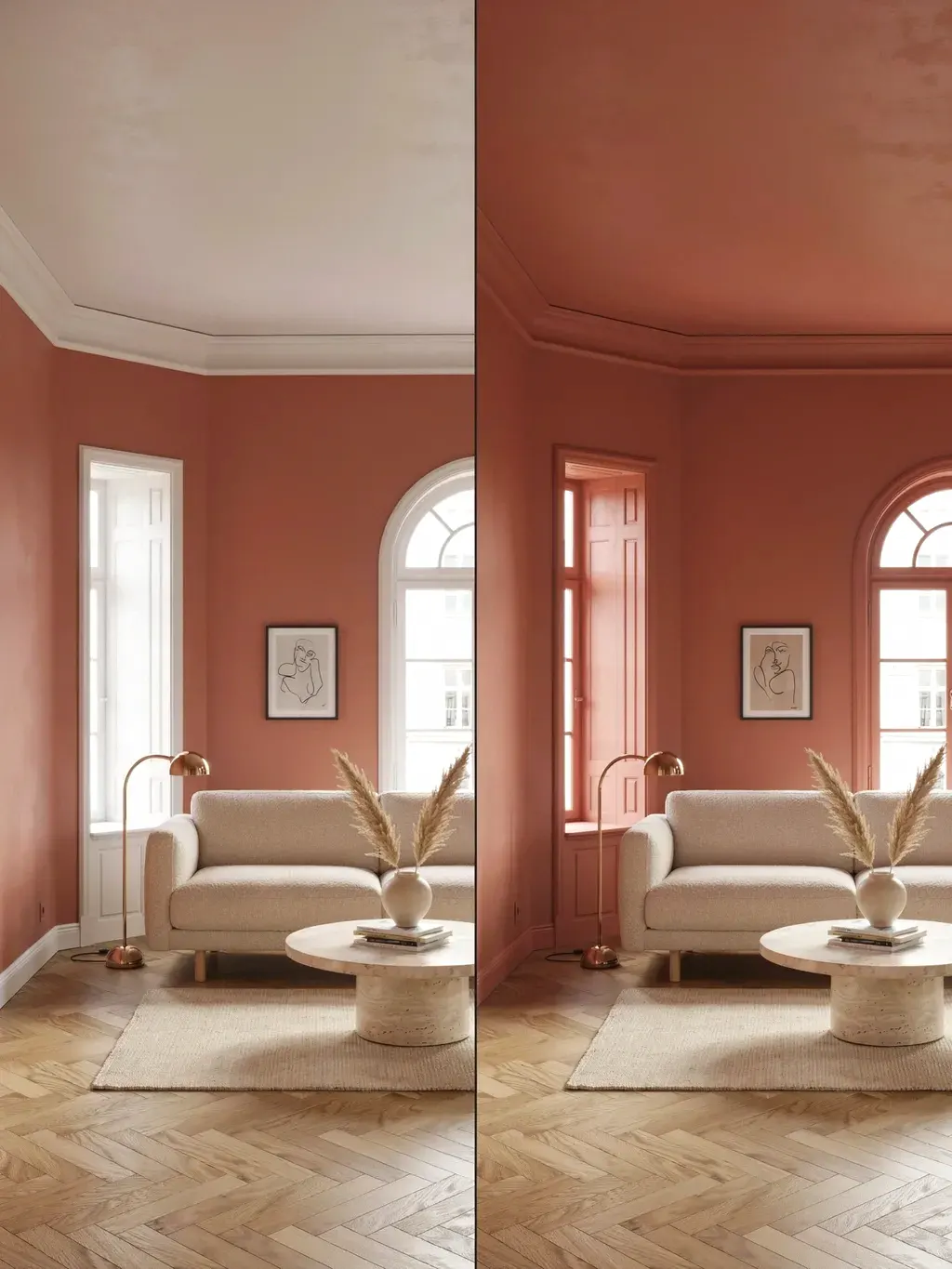
Here’s the move that makes the low-contrast idea concrete: paint your ceiling, baseboards, and window trim the same colour as your walls. When the white ceiling and white trim break sharply from a coloured wall, your eye stops at every edge, which visually shrinks the room.
Carry one continuous colour up the walls, across the trim, and onto the ceiling, and you erase those stopping points. Your gaze travels uninterrupted and the boundaries of the room blur, which reads as more space. This works with light colours and, perhaps surprisingly, makes even a dark, moody small room feel enveloping and larger rather than boxed-in.
7. Use one big piece of art, not lots of small ones
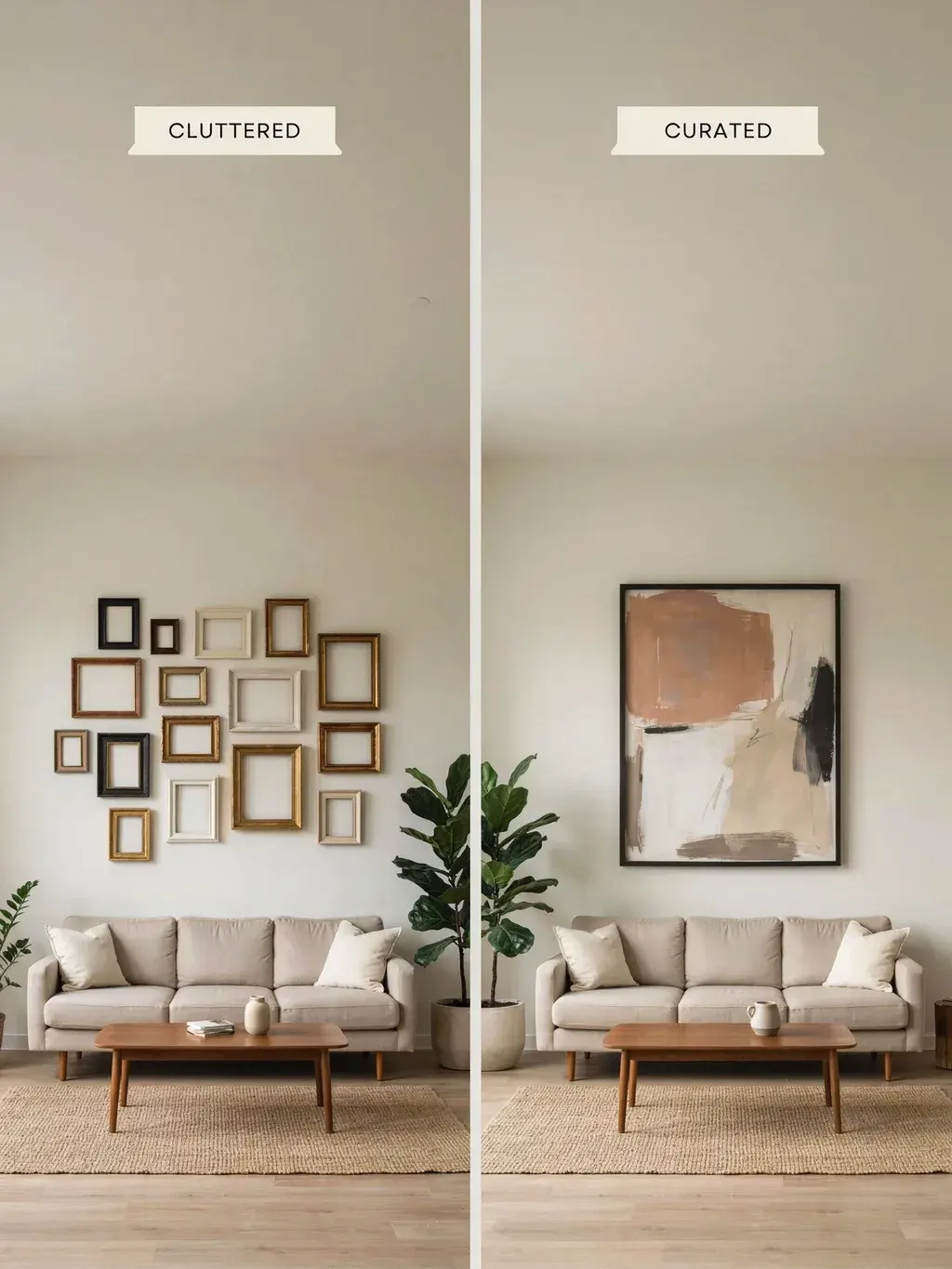
A scatter of small frames creates visual clutter, lots of little stopping points again. One large piece of art does the opposite: it lets the eye relax and focus, and creates a sense of grandness that makes the whole room feel more expansive.
If a gallery wall is your thing, you can still make it work, just go big and deliberate: anchor it with one large piece and build around it, ideally floor to ceiling, so it reads as one bold statement rather than a busy jumble. Scale is your friend here; timidity is what shrinks a room.
8. Choose furniture that actually fits the room, not miniature pieces
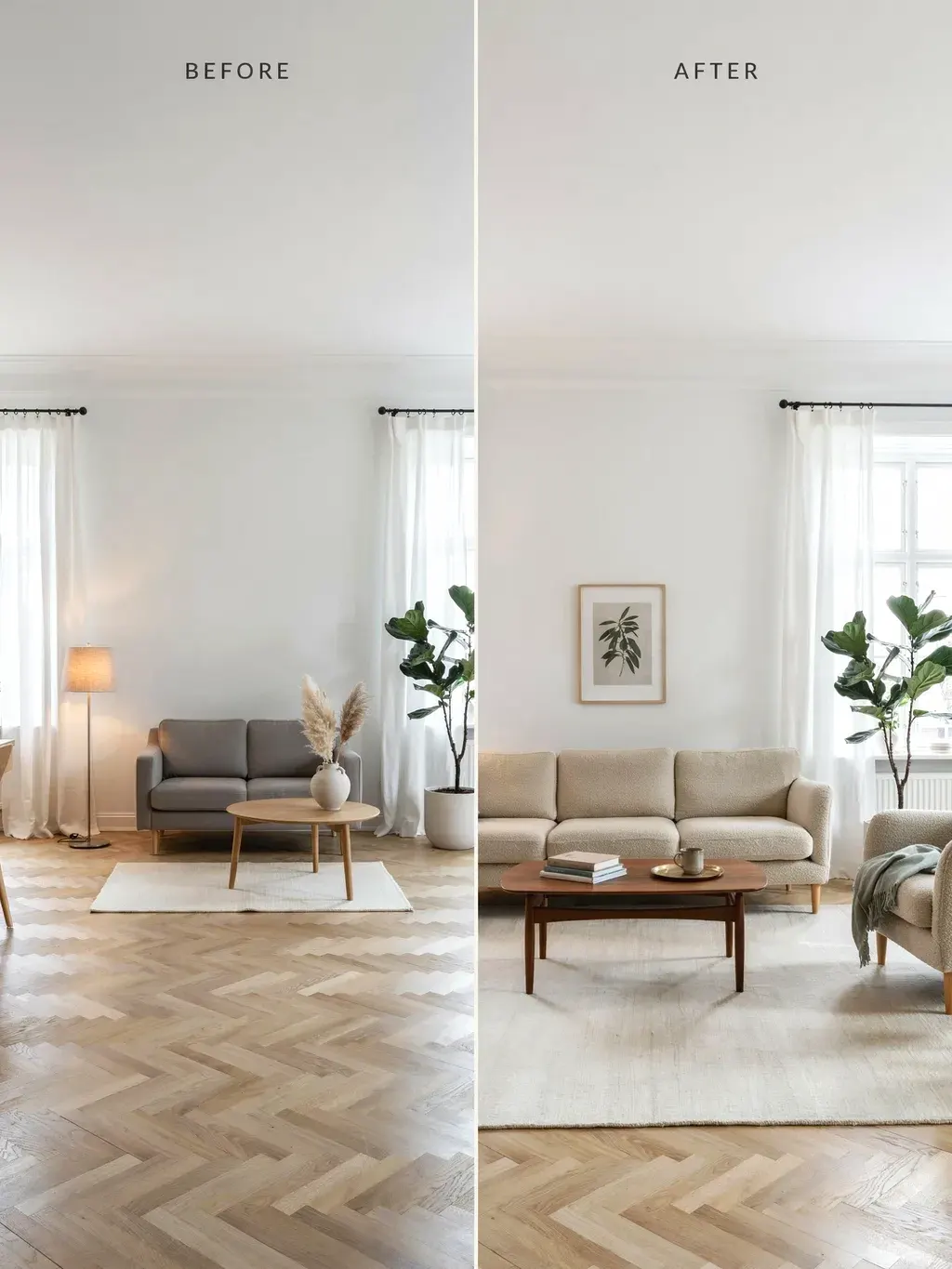
A common mistake is assuming small room means tiny furniture. It backfires. Undersized sofas, narrow coffee tables, and too-small rugs actually emphasise how limited the space is and make a room look fragmented and patchy.
The goal is furniture proportionate to the room, not doll-sized. One properly scaled sofa often works better than two cramped little chairs. And critically, get the rug right: a rug that’s too small makes everything float and shrinks the room, while a rug large enough to sit under the furniture grounds the space and makes it feel bigger. Fewer, correctly sized pieces beat lots of tiny ones.
9. Maximise light, both natural and added
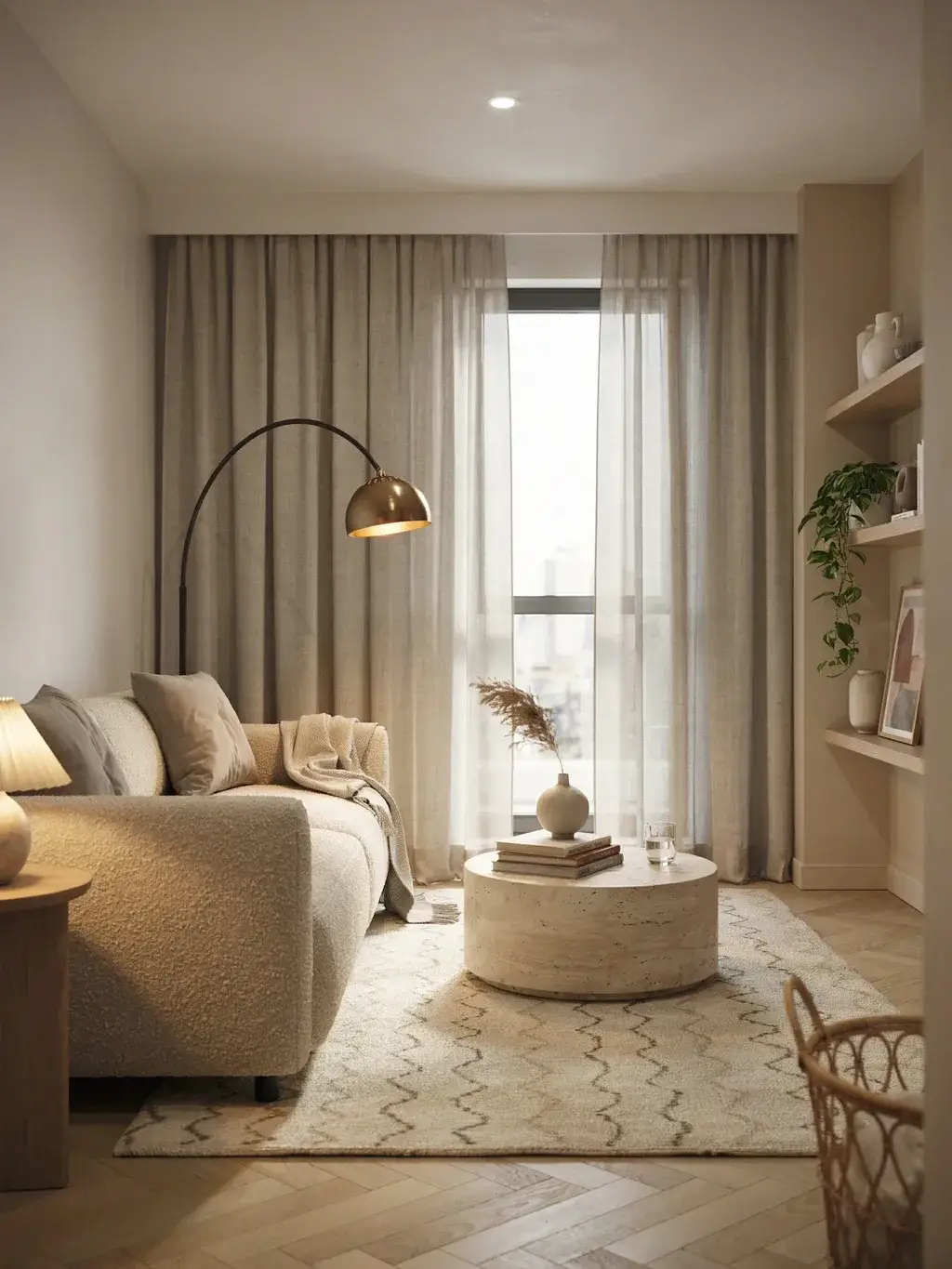
Darker spaces feel smaller; brighter spaces feel larger, so getting light into the room is doing real work. Don’t block windows with furniture, keep window treatments light and airy, and clean the glass while you’re at it.
Then layer in artificial light, because one overhead fixture leaves shadowy corners that make a room feel boxed-in. Add floor and table lamps at different heights to light the corners and edges; the more evenly lit a room is, the more open it feels. A light-coloured rug or pale flooring helps bounce that light around too.
10. Now add the mirror, but place it intentionally
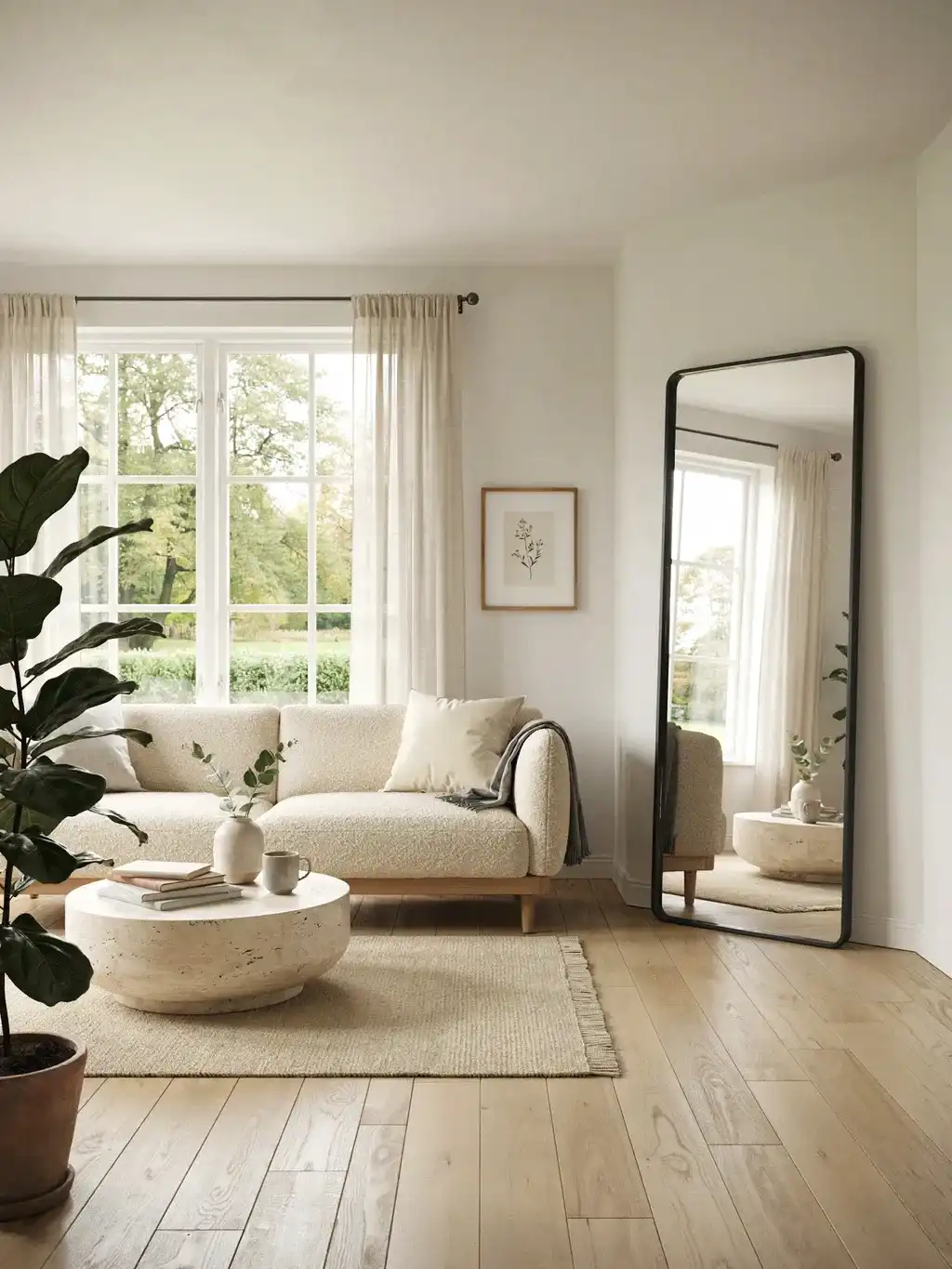
Yes, the famous one, but the placement is what most “use mirrors” advice forgets. A mirror works by reflecting light and view, effectively doubling whatever it faces, so what it reflects matters enormously. Position it to bounce a window’s light and view back into the room, and it reads almost like a second window.
A large mirror, or a leaning floor mirror, opposite or adjacent to a window does the most work. A mirror pointed at a blank wall or a cluttered corner just doubles the blank wall or the clutter. Aim it at the light and the best part of the room, and it genuinely opens the space up.
11. Keep the palette tight and take storage to the ceiling
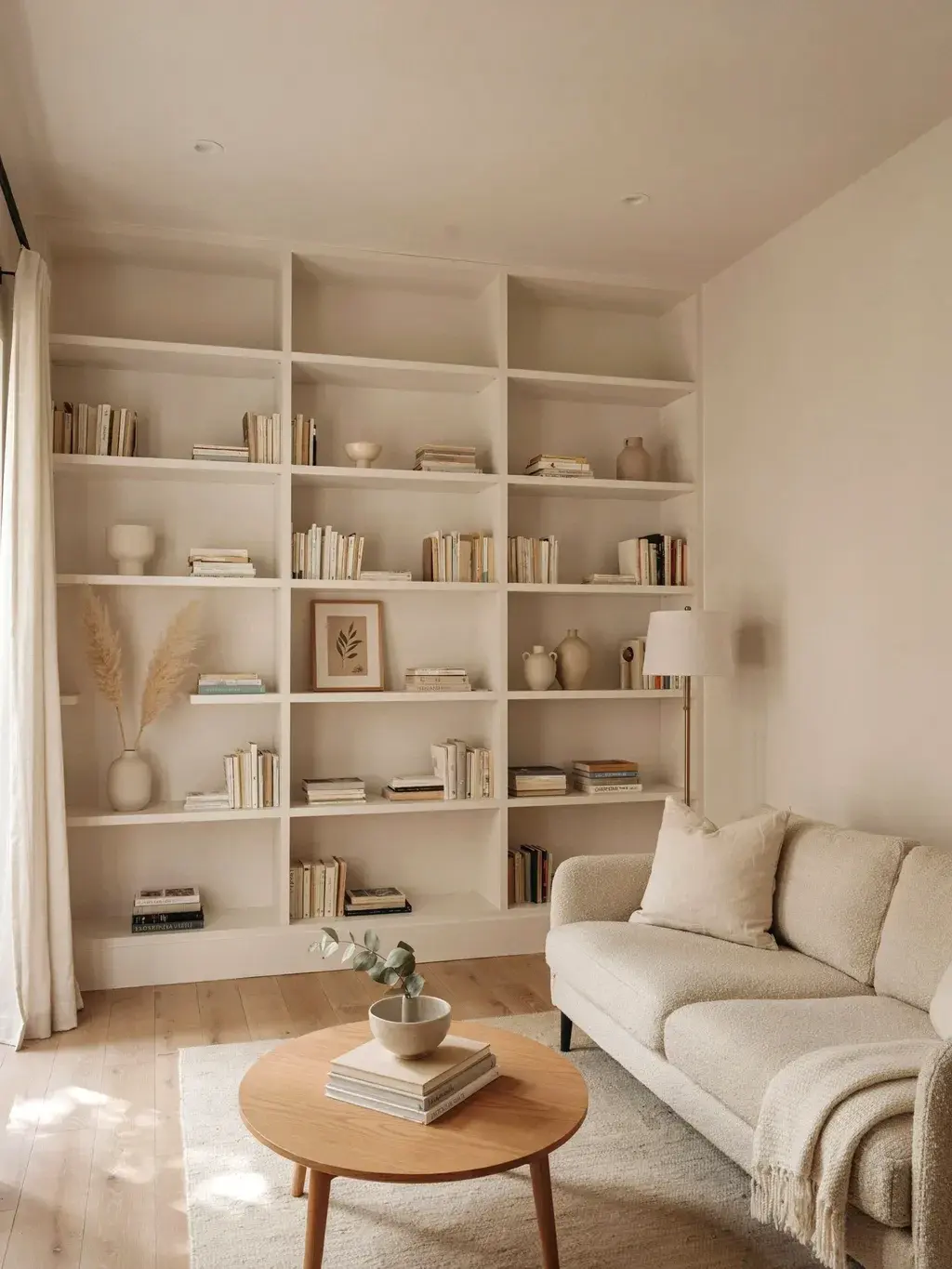
Two finishing moves that quietly help. First, limit your whole room to two or three colours; too many competing colours read as chaotic and cramped, while a cohesive palette feels calm and larger. Second, when you need storage or cabinets, run them all the way to the ceiling. Floor-to-ceiling shelving or cabinetry draws the eye up, implies a taller room, and gives you storage that clears the floor, a double win in a small space.
The bottom line
Making a small room feel bigger isn’t about one magic mirror, it’s about removing the things that stop the eye and adding the things that move it. Declutter, lift your furniture onto legs, run curtains to the ceiling, rethink the layout, blur your edges with continuous colour, scale your art and furniture properly, flood the room with light, and then aim a mirror at the brightest thing in it. Stack a few of these and the walls stay exactly where they are, but the room will feel noticeably, genuinely larger. No sledgehammer required.


