The Only Furniture Arrangement Rules You Actually Need to Know
- Home Organization Ideas Living Room
 Alina
Alina- 0
- 15 minutes read


You can fall down a deep rabbit hole reading about furniture arrangement, dozens of “rules,” half of them contradicting each other, until you’re paralysed and your sofa is still in the wrong spot. The truth is that most of what makes a room feel right comes down to a small set of measurements and principles the pros use again and again. Master those and you can arrange almost any room with confidence.
So here are the rules that actually earn their keep, the handful of numbers and ideas worth committing to memory. Everything else is a footnote.
Rule 1: Don’t push all your furniture against the walls
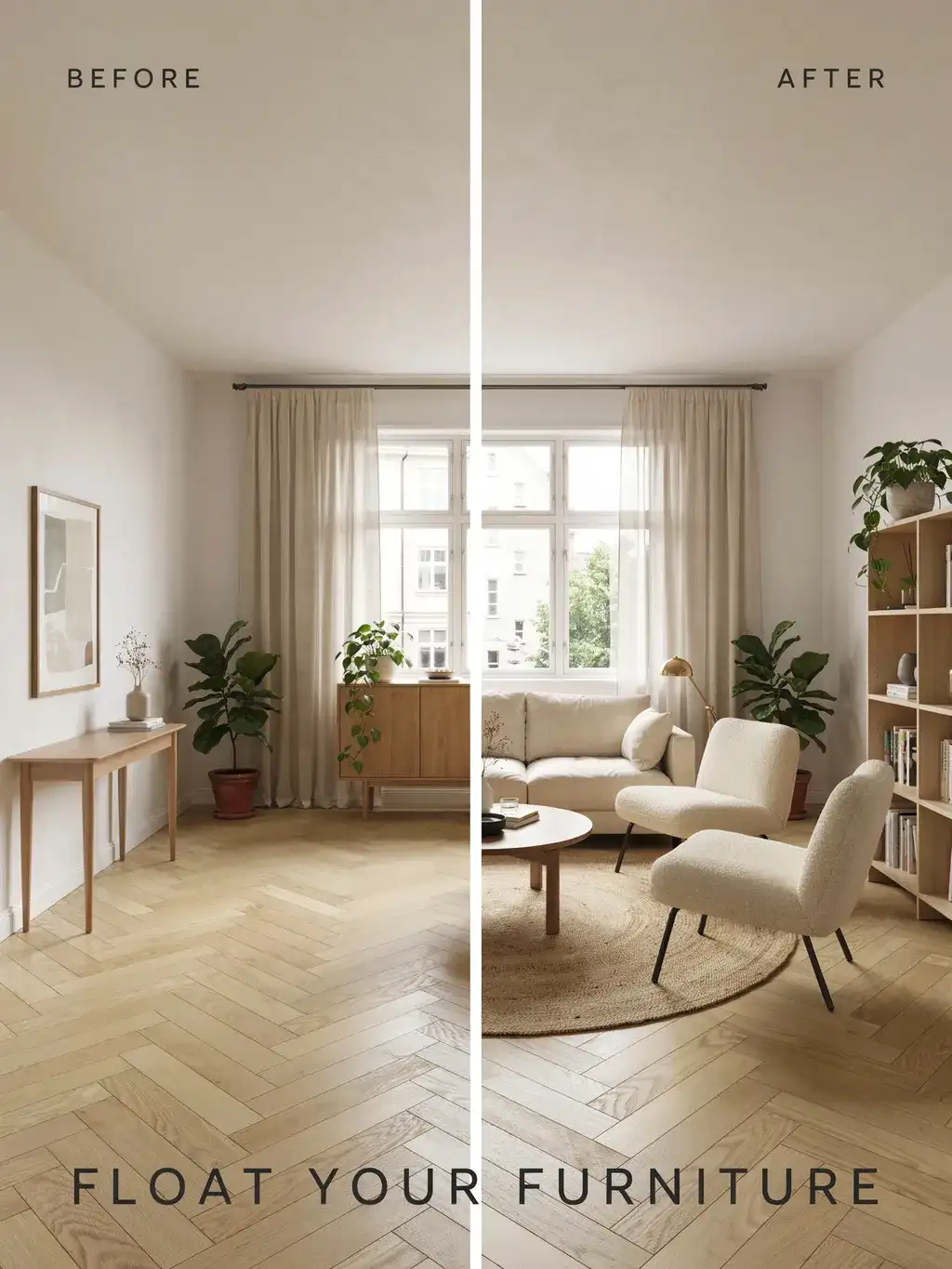
This is the single most common mistake, and breaking the habit transforms more rooms than any other move. Shoving every piece flat against the walls feels like it creates space, but it usually does the opposite: it leaves a dead void in the middle and makes conversation awkward, with everyone marooned far apart.
Instead, float your furniture inward to create a defined seating group. Even pulling a sofa a few inches off the wall, and bringing chairs in closer, makes a room feel more intentional and intimate. In a large room this is essential; in a small one you can keep pieces closer to the walls, but the principle of grouping for togetherness still holds. A room arranged around a conversation, not around its perimeter, instantly feels designed.
Rule 2: Leave 30 to 36 inches for walkways
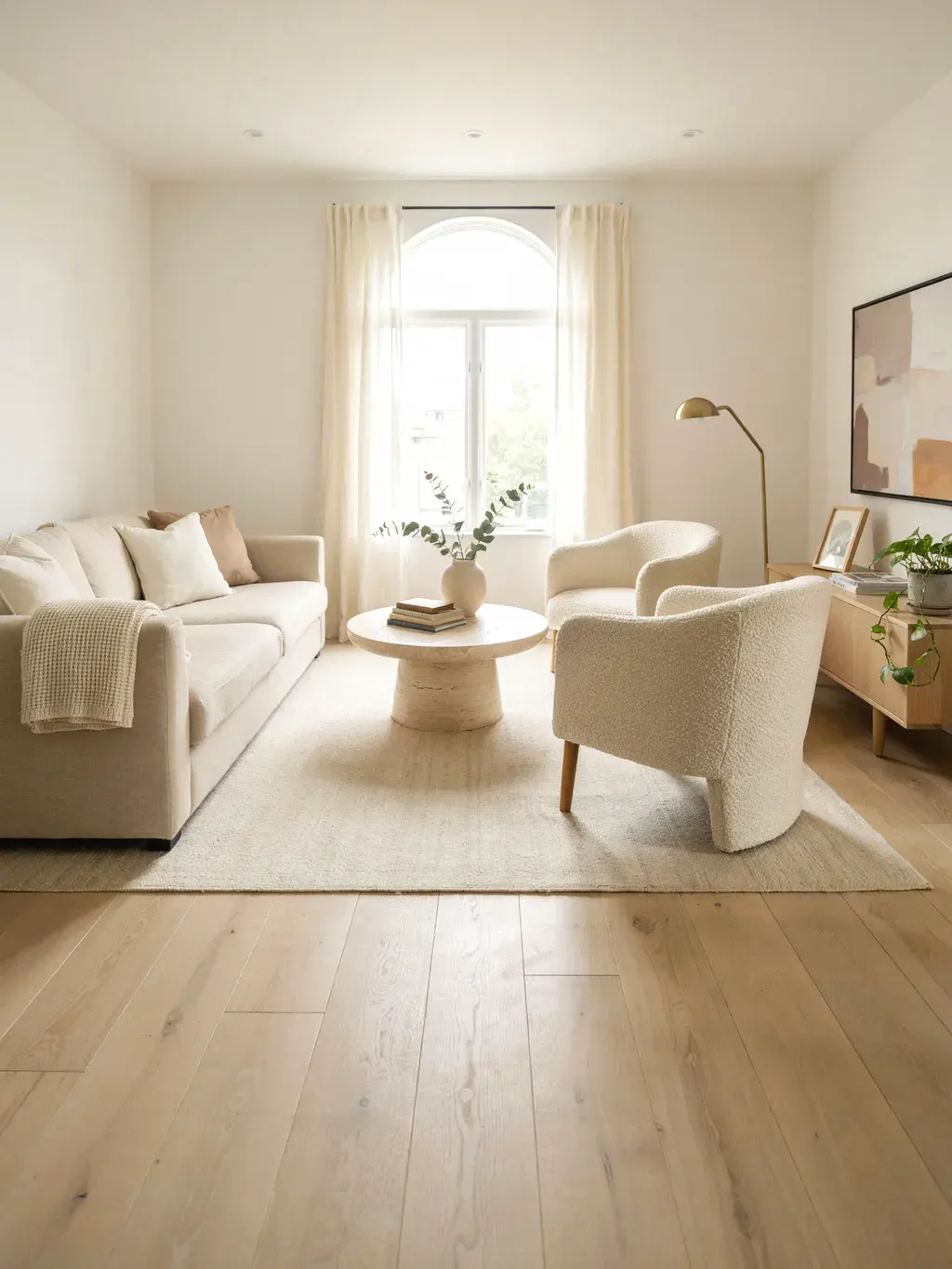
Traffic flow is what separates a room that feels effortless from one where you’re forever banging your shin. The reliable standard: keep main walkways through a room around 30 to 36 inches wide (about 75 to 90cm). For high-traffic routes, 42 to 48 inches is more comfortable.
If you’re tight on space, the absolute minimum to avoid squeezing past things is roughly 18 to 24 inches, but treat that as a floor, not a target. The goal is clear, unobstructed paths that don’t zig-zag awkwardly around furniture, and nothing blocking doorways or the natural routes people take through the room. Map how you actually walk through the space, then keep those lanes clear.
Rule 3: Keep 14 to 18 inches between sofa and coffee table
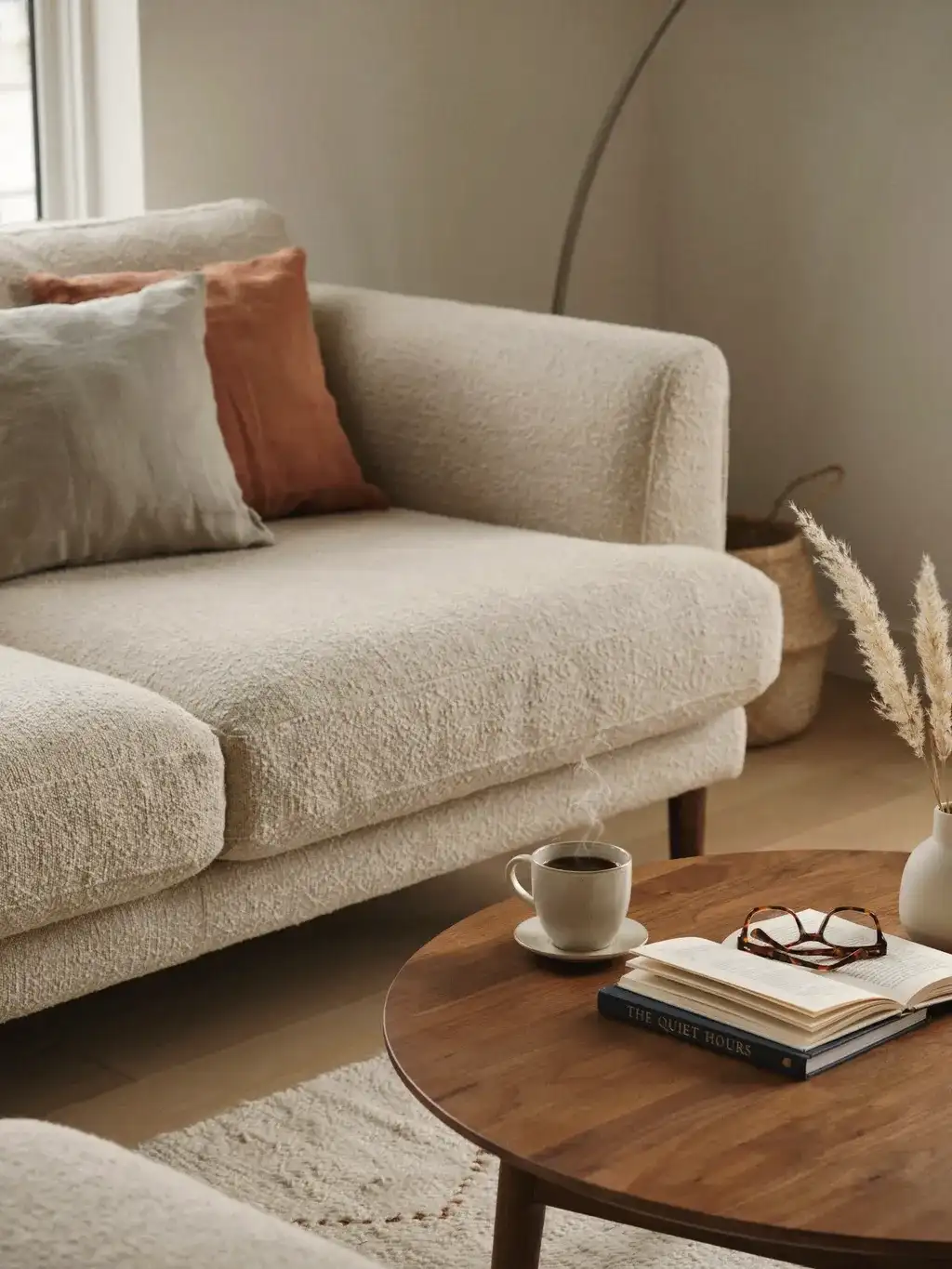
This is the Goldilocks gap everyone gets slightly wrong. Put the coffee table 14 to 18 inches from the edge of the sofa, and you’ve nailed it: close enough to set down a drink or grab the remote without lunging, far enough to give your legs room and let you walk past.
Too close and it cramps your shins and the walkway; too far and the table becomes useless for actually holding your coffee. This same gap applies to any other seating that needs to reach the table. It’s a small number, but getting it right is the difference between a coffee table that works and one that’s just in the way.
Rule 4: Keep conversation distances close, 6 to 8 feet between facing seats
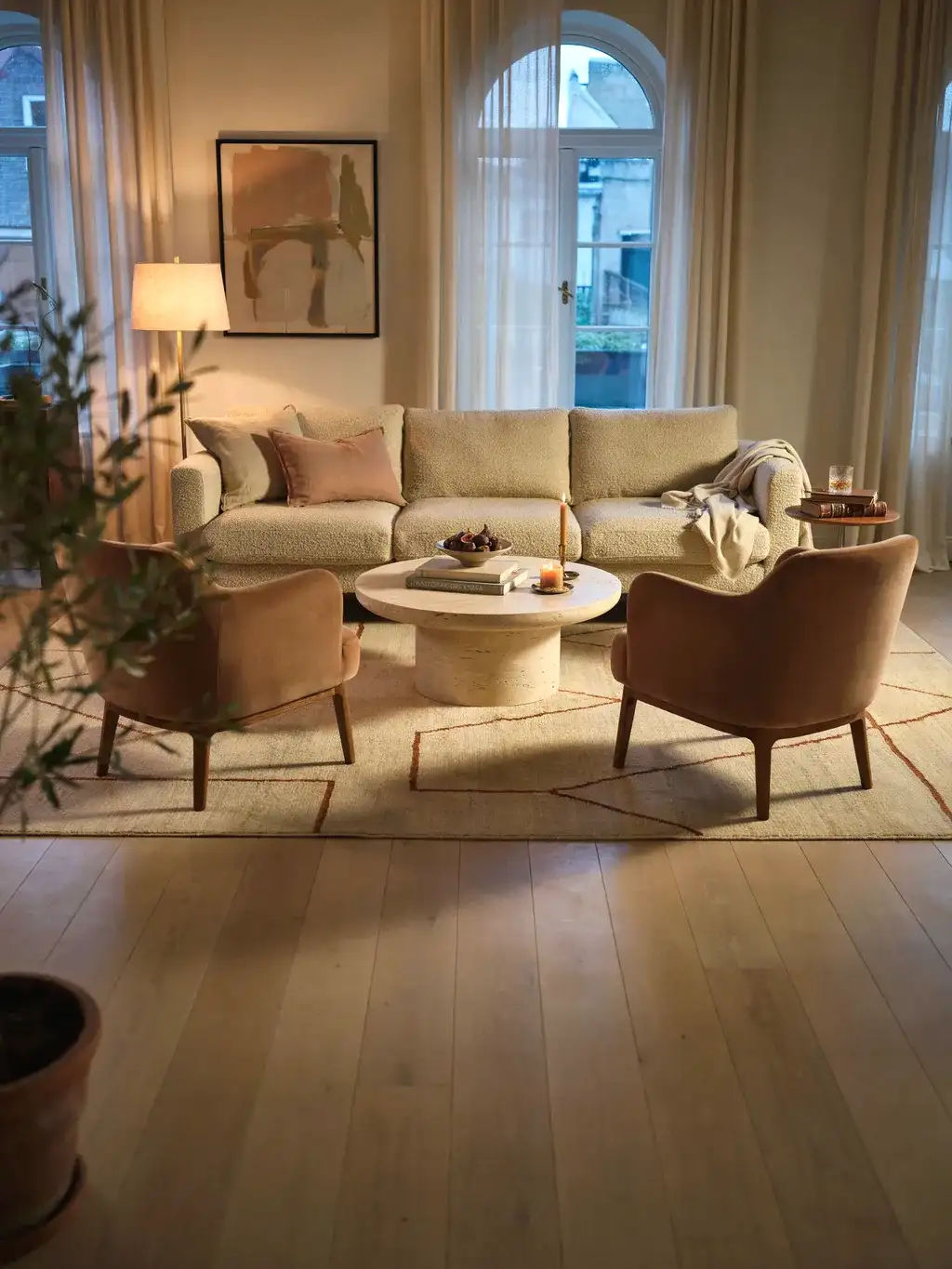
A seating group only works if people can actually talk without raising their voices. Aim for roughly 6 to 8 feet between facing seats, sofa to opposite chairs, so conversation feels natural and nobody’s shouting across a canyon.
A useful overall guide: try to keep the whole conversation area under about 10 feet across, so everyone can hear each other in a normal tone. If your room is huge and seats end up further apart than that, the fix isn’t one enormous circle, it’s to break the space into two smaller, cosier conversation zones (more on that below). Seats too far apart feel disconnected; seats too close feel cramped. This range is the sweet spot.
Rule 5: Buy a rug big enough, front legs on at minimum
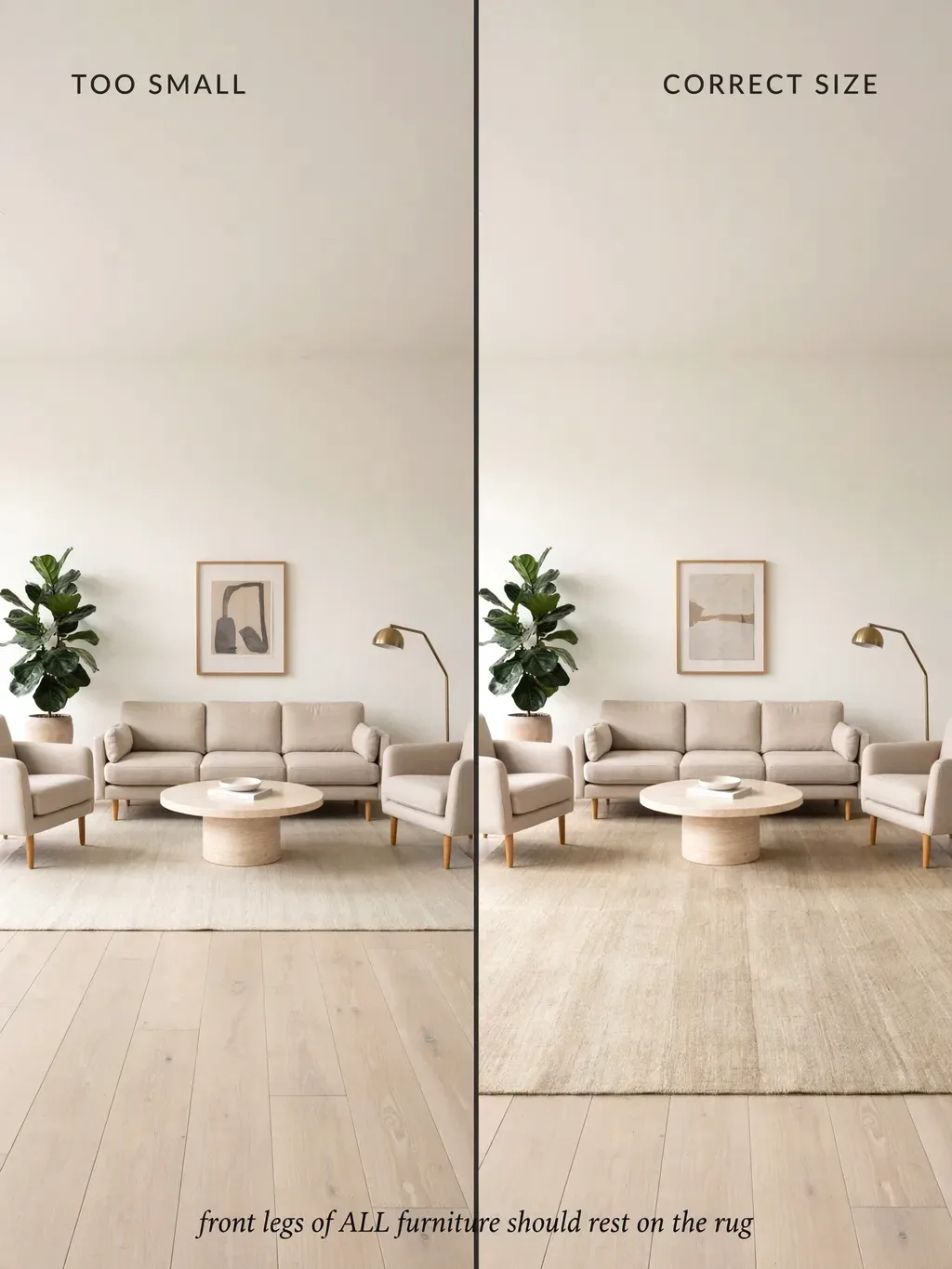
A too-small rug is one of the fastest ways to make a room look unbalanced and, frankly, cheap, the furniture floats around it like islands and nothing feels anchored. The rule: at minimum, the front two legs of every main seating piece should sit on the rug, which visually pulls the group together into one zone.
Bigger is usually better, a rug large enough to hold all the furniture legs reads as the most cohesive. And leave a border of bare floor around it rather than running it almost wall to wall: about 24 inches of bare floor in a large room, and 10 to 18 inches in a smaller one. That breathing room is what makes it read as a deliberate area rug, not failed carpet. If your rug’s too small, layering it over a larger plain one is a cheap fix.
Rule 6: Start every layout from a focal point
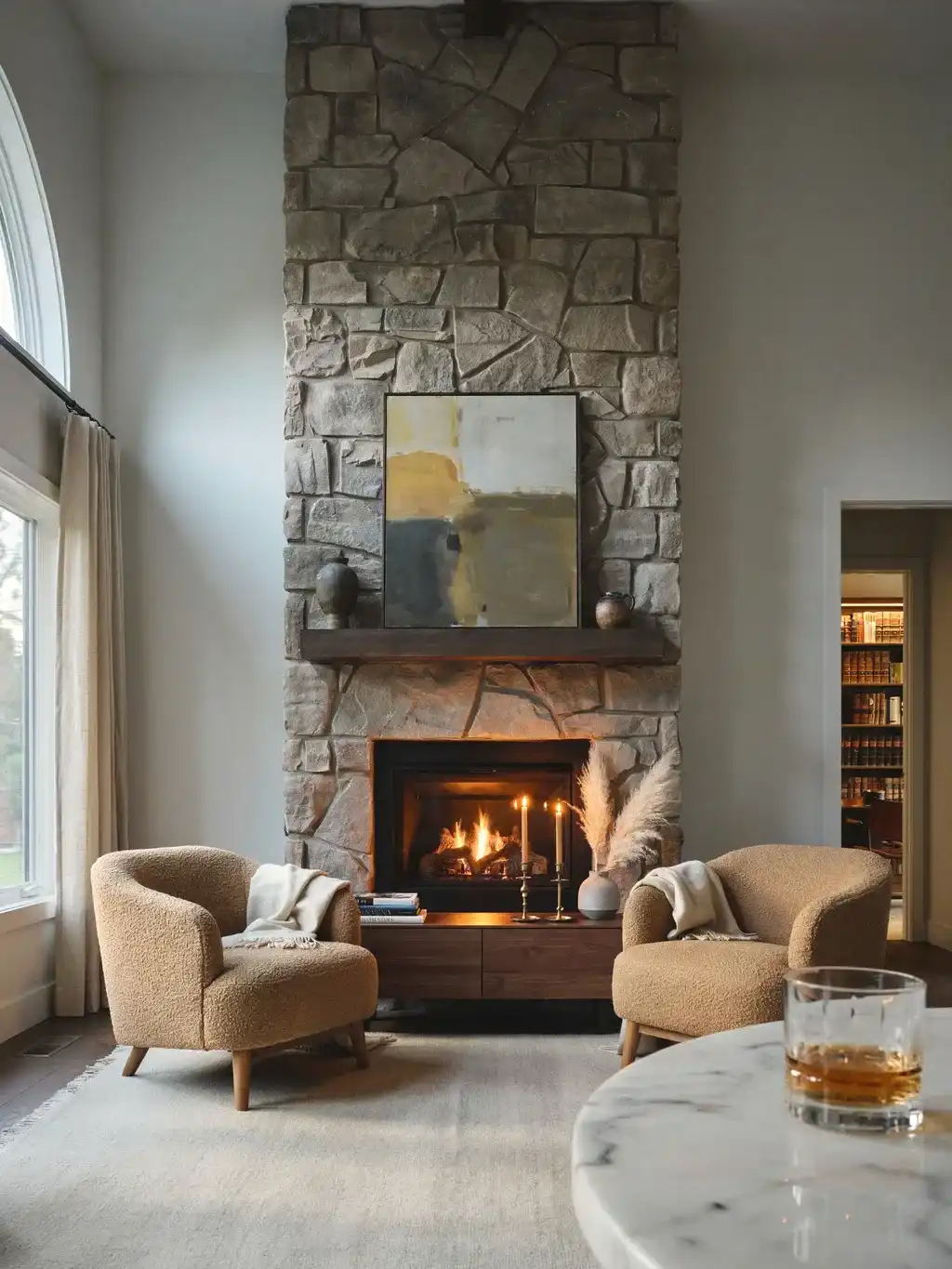
Before you place anything, decide what the room is oriented around, its focal point. Usually that’s a fireplace, a big window with a view, or the TV. Anchoring your main seating toward that focal point gives the whole arrangement a logic and a sense of purpose, instead of furniture scattered with no clear reason.
If your room has a natural architectural focal point like a fireplace, work with it. If the TV is the honest answer for how you use the room, that’s fine too, just be deliberate about it. A room arranged around a clear focal point always feels more resolved than one without.
Rule 7: Set the TV at the right distance for its size
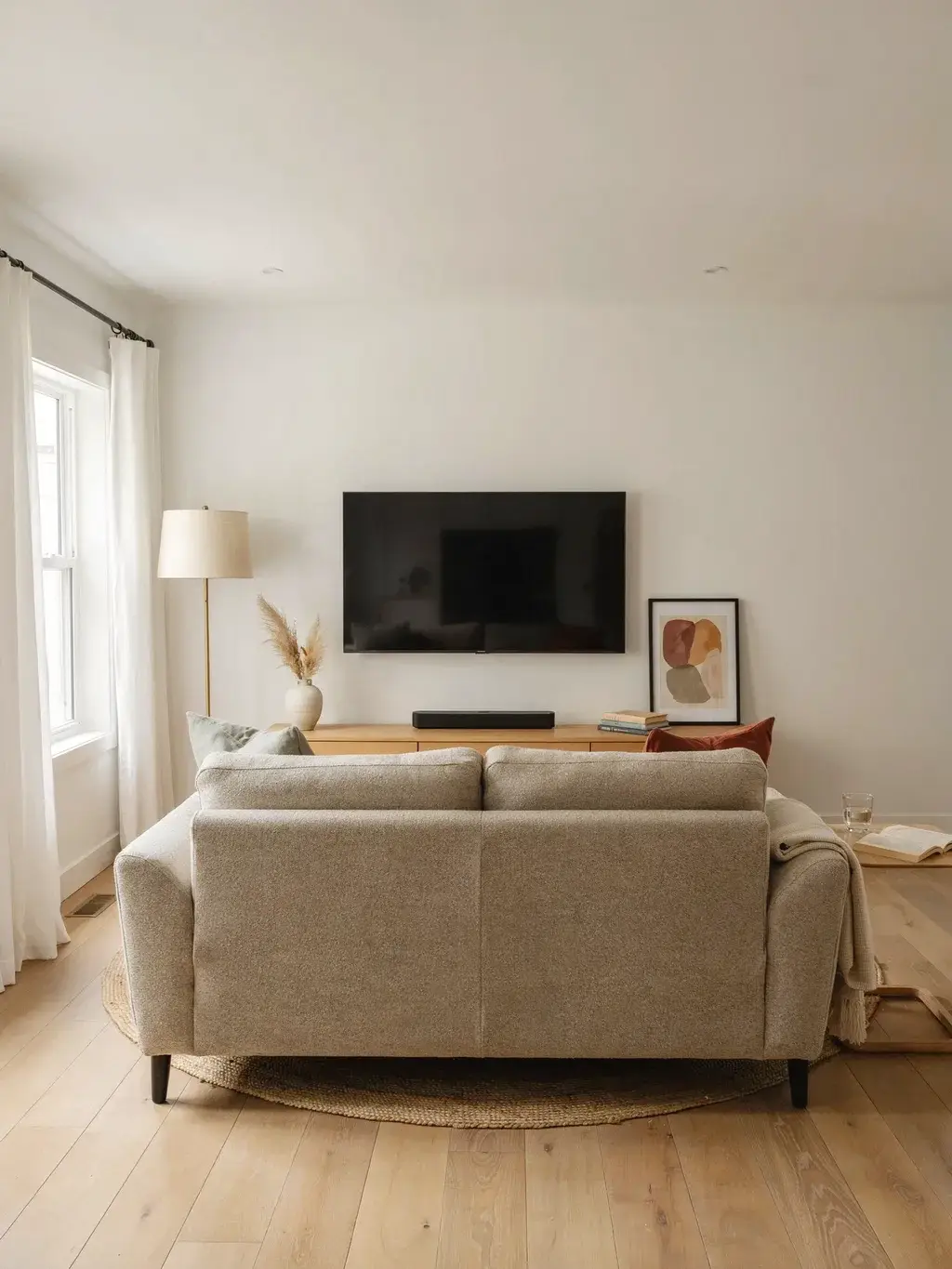
If you watch TV in the room, viewing distance matters for comfort. The common guideline: sit roughly 1.5 to 2.5 times the screen’s diagonal measurement away from it. So for a 55-inch TV, that’s somewhere around 7 to 11 feet.
Sit too close and it’s eye-strain and a wall of pixels; too far and you lose the detail. This often interacts with your conversation distances, so arrange the seating to serve both watching and talking where you can. Getting this roughly right makes the room genuinely more comfortable to actually use.
Rule 8: Scale the furniture to the room
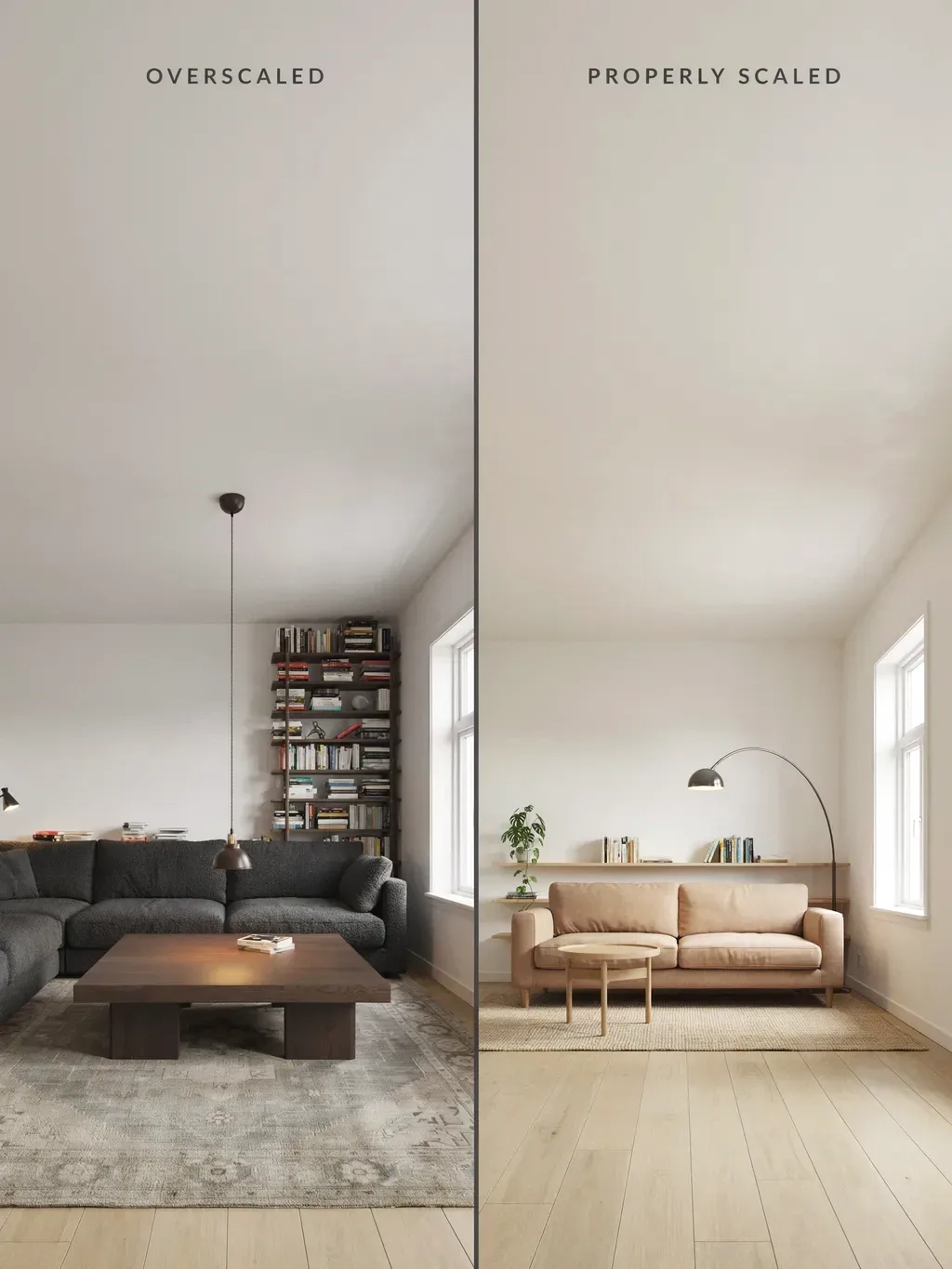
A layout fails before it starts if the pieces are the wrong size. An oversized sectional swallows a small room; dinky furniture looks lost in a large one. Match the scale of your pieces to the space, and you’ve solved half the arrangement problem before moving anything.
One handy proportion guide some designers use: the main seating piece (the sofa) should take up roughly two-thirds of its wall or zone, and the coffee table about two-thirds the length of the sofa. You don’t need to measure obsessively, but keeping things proportionate, big room/bigger pieces, small room/slimmer pieces, is what makes a room feel balanced rather than crammed or empty.
Rule 9: In a big or open room, create zones
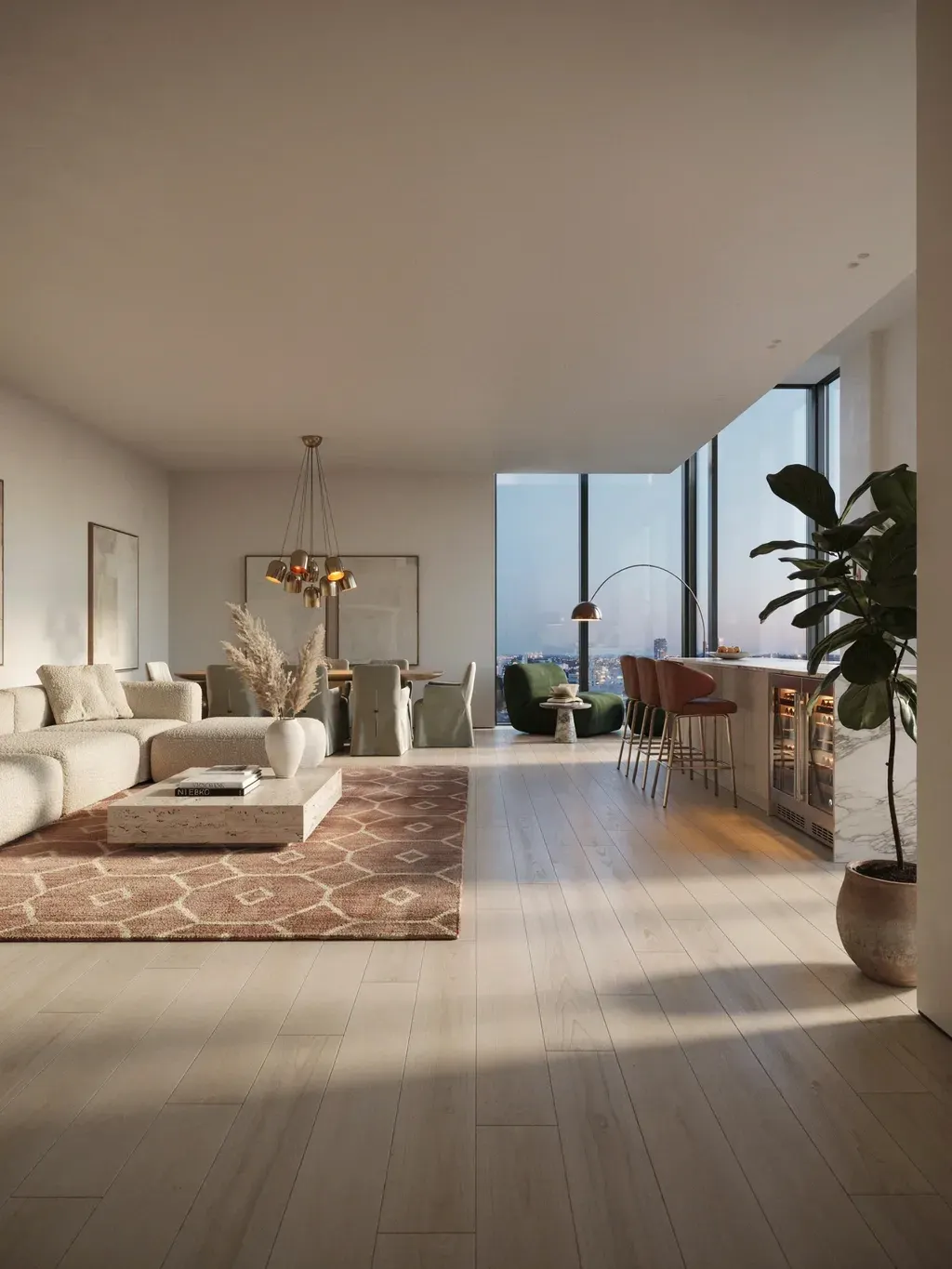
If you’ve got a large or open-plan space, don’t try to make one giant seating arrangement stretch to fill it, you’ll just end up with everything too far apart. Instead, break the room into distinct zones: a main conversation area, plus maybe a reading nook by a window or a separate spot for games.
Use rugs, lighting, and the backs of furniture (a console behind the sofa, a pair of chairs facing each other) to define each zone subtly. Leaving negative space between zones, often doubling as your walkways, lets the room breathe. Several intimate areas almost always feel cosier and more usable than one sprawling, disconnected one.
Rule 10: Leave breathing room, negative space matters
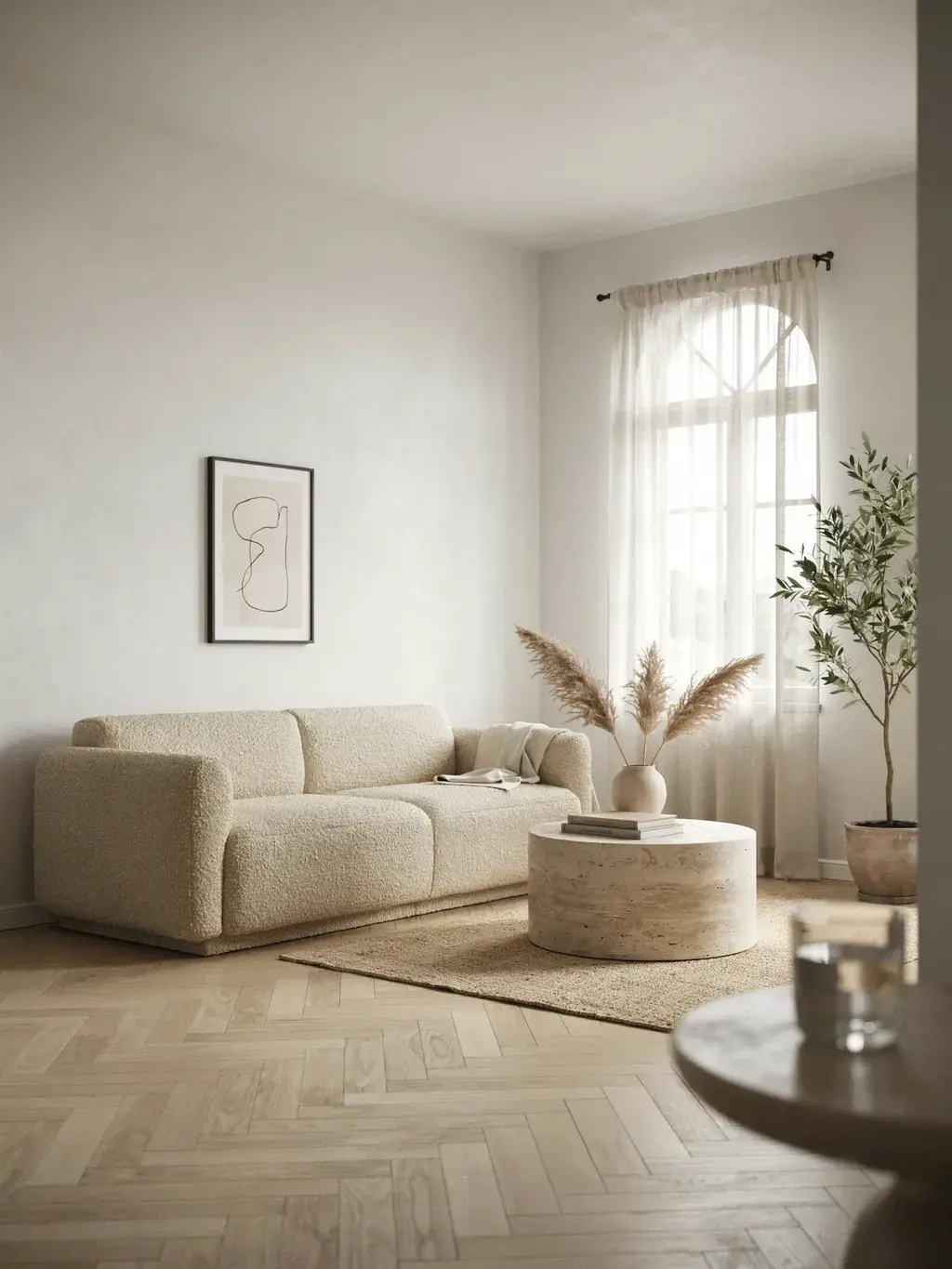
The final rule ties the rest together: don’t fill every inch. Empty space isn’t wasted space, it’s what lets a room feel calm and lets the furniture you do have look intentional. Crowding pieces together, even nice ones, reads as cluttered and cramped.
Give your furniture, and your eye, room to rest. If a room feels off and you can’t say why, the answer is often that it’s overfilled; removing a piece frequently improves it more than adding one. Restraint is a layout tool in its own right.
The bottom line
You don’t need to memorise a hundred rules. Pull the furniture off the walls, leave 30-36 inches for walkways, keep the coffee table 14-18 inches from the sofa, hold conversation seats 6-8 feet apart, get a rug big enough for at least the front legs, and build it all around a focal point with enough breathing room to feel calm. Those few principles handle the vast majority of rooms. The numbers are guidelines, not laws, so bend them when your space demands it, but knowing them is what lets you arrange a room with confidence instead of endlessly nudging the sofa “just a little to the left.”


