Shiplap Wood Ceiling Ideas That Add Warmth, Character, and Quiet Drama
- Home Organization Ideas
 Alina
Alina- 0
- 16 minutes read


There’s a particular lift you feel walking into a room with a shiplap ceiling, the eye travels up, the clean parallel lines draw the space taller, and the whole room feels both cosier and more considered at once. It’s the architectural detail that does the most with the least, and lately it’s become one of the most sought-after ways to give a plain room some soul.
So how do you use a shiplap ceiling well, in a way that adds character without overwhelming the room beneath it?
The thing designers keep coming back to is that a shiplap ceiling is mostly about direction, colour, and restraint, where the boards run, what tone they wear, and knowing when to let them be the whole story. Get those right and the ceiling reads as intentional architecture rather than a trend bolted on.
Why shiplap works overhead
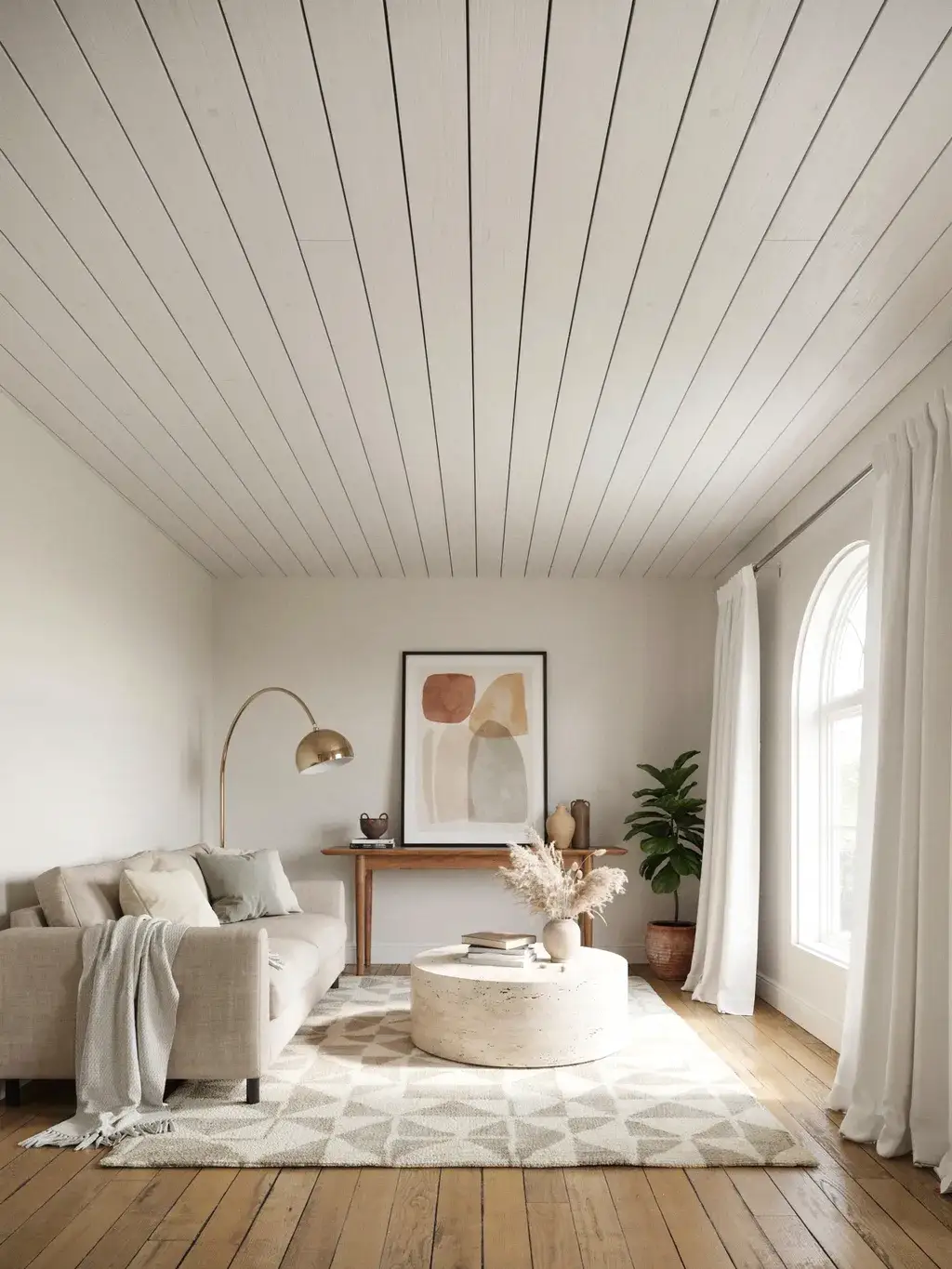
Shiplap, those clean horizontal boards with their subtle shadow lines where each plank meets the next, brings texture and rhythm to the most overlooked surface in any room. A flat white ceiling is a missed opportunity; a shiplap one turns that fifth wall into a feature.
The crisp lines add architectural interest while still feeling calm and classic rather than fussy. It’s the rare detail that suits a farmhouse, a coastal cottage, and a modern home alike, simply by changing the colour and the board width.
Crisp white for bright and airy
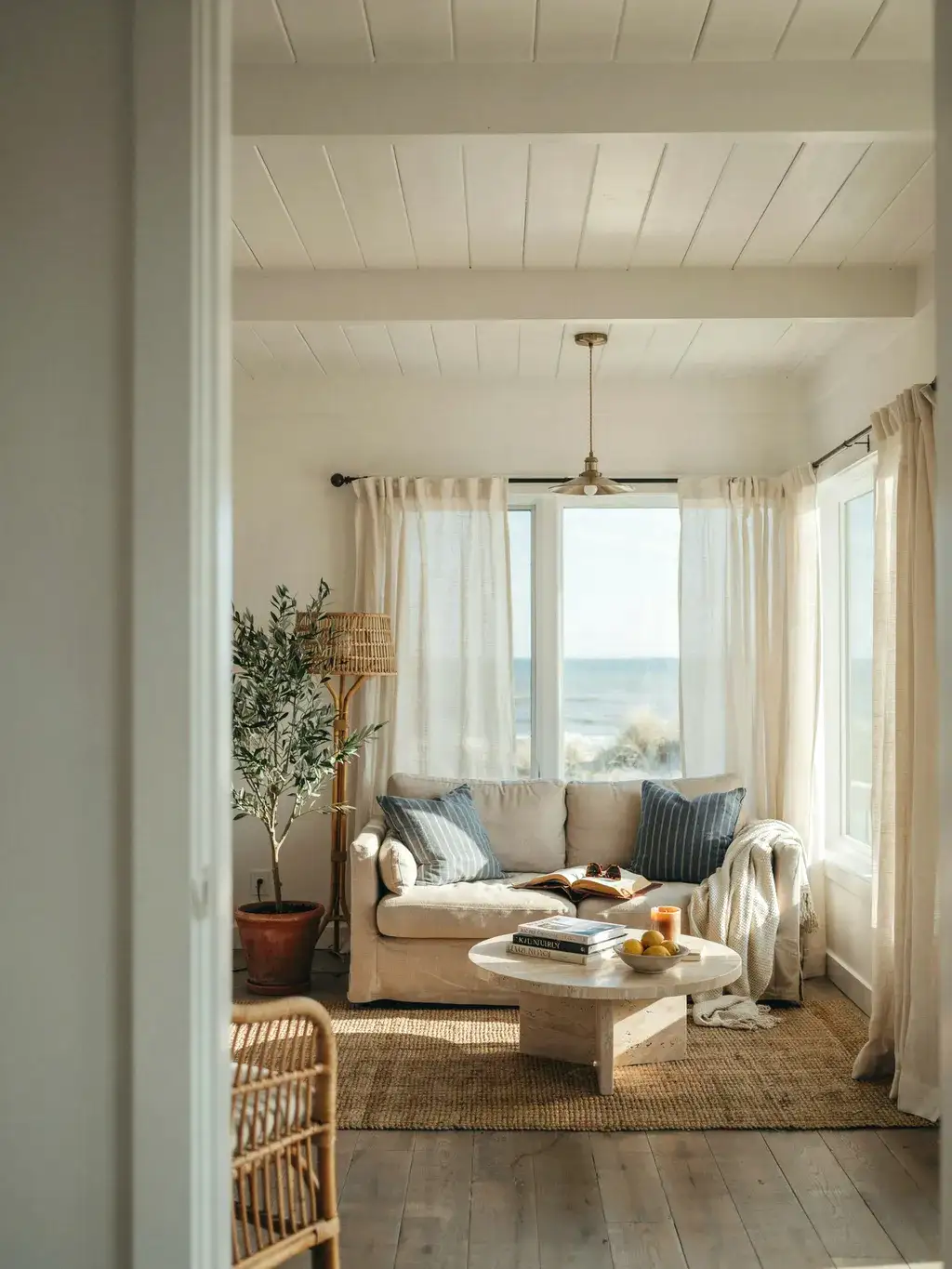
The most popular treatment, and for good reason, is shiplap painted clean white. It keeps a room feeling bright and open while the shadow lines between boards add just enough texture to stop it feeling flat. You get architectural detail without sacrificing any light.
White shiplap overhead suits coastal, farmhouse, and contemporary spaces equally, and it pairs beautifully with white or coloured walls below. It’s the safe-but-stunning choice, the version that adds character while keeping the room feeling spacious and serene.
Natural wood for warmth
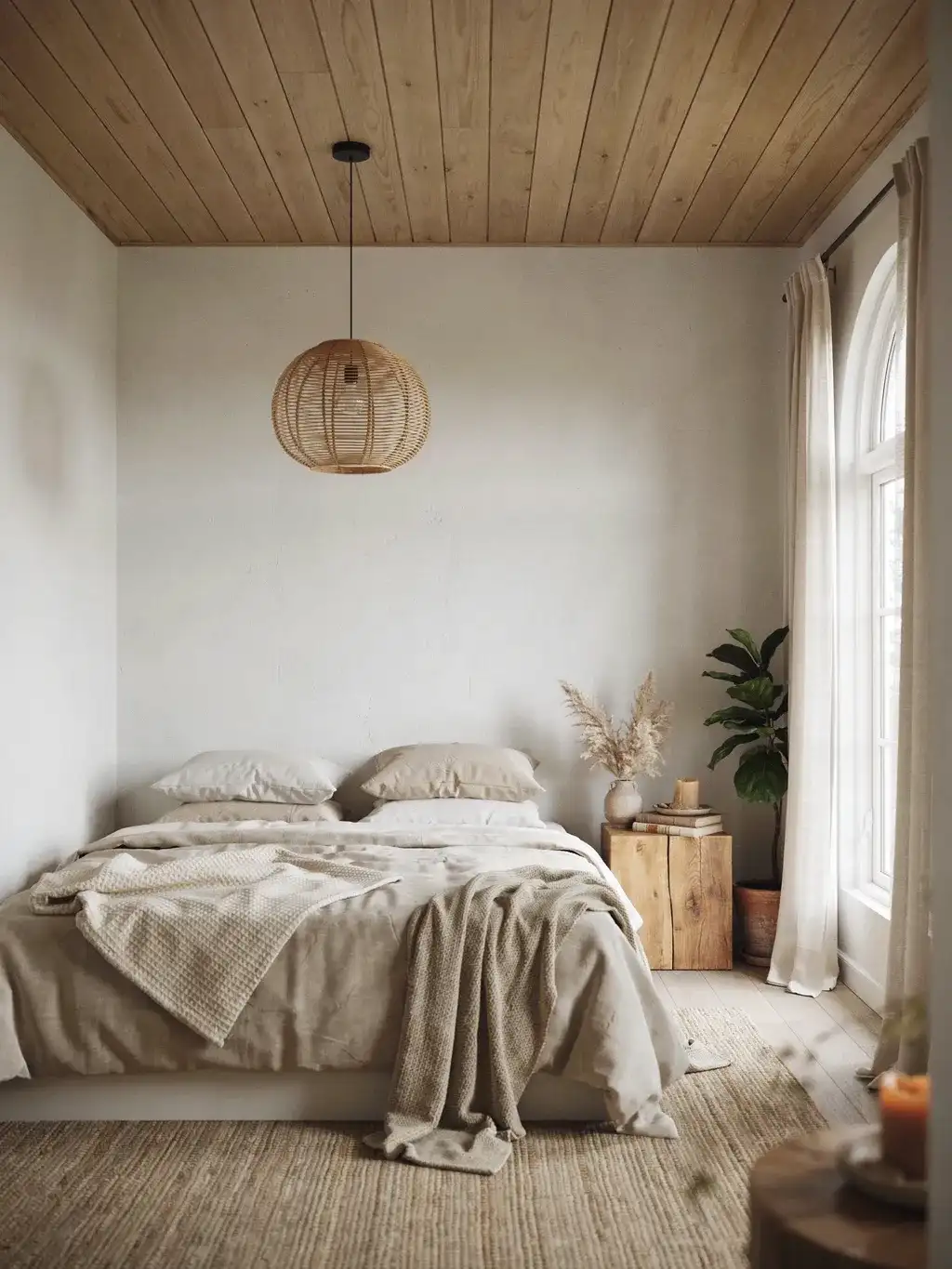
Left natural or finished with a clear oil, shiplap in real wood tones brings instant warmth that paint can’t match. The grain and the honey or amber colour make a room feel cabin-cosy and grounded, perfect for a bedroom, a den, or anywhere you want to feel wrapped up.
Natural wood overhead reads richer and more organic than painted board, and it pairs especially well with white walls, which keep the room from feeling too dark. The contrast of pale walls and a warm timber ceiling is a classic for a reason.
Stained tones for depth
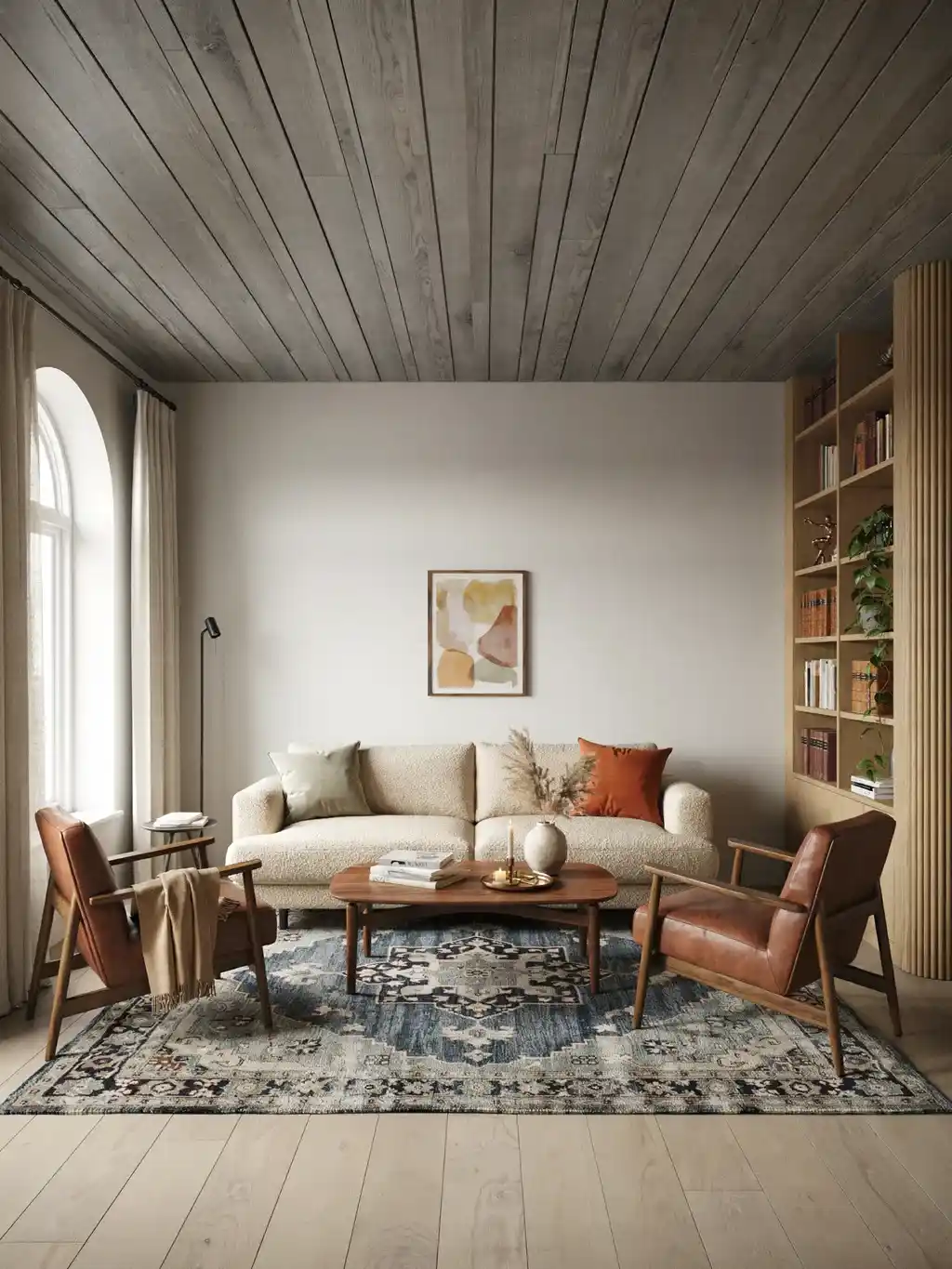
Between stark white and raw timber sits a whole spectrum of stains, soft greys, weathered driftwood, deep walnut, that let you dial the mood up or down. A pale grey-wash feels coastal and calm; a deep walnut feels moody and luxurious.
Stain lets you match the ceiling to the character of the room, leaning rustic, contemporary, or dramatic as you like. A driftwood or limed finish in particular gives that sought-after weathered, lived-in look that feels collected rather than new.
Go dark for cocooning drama
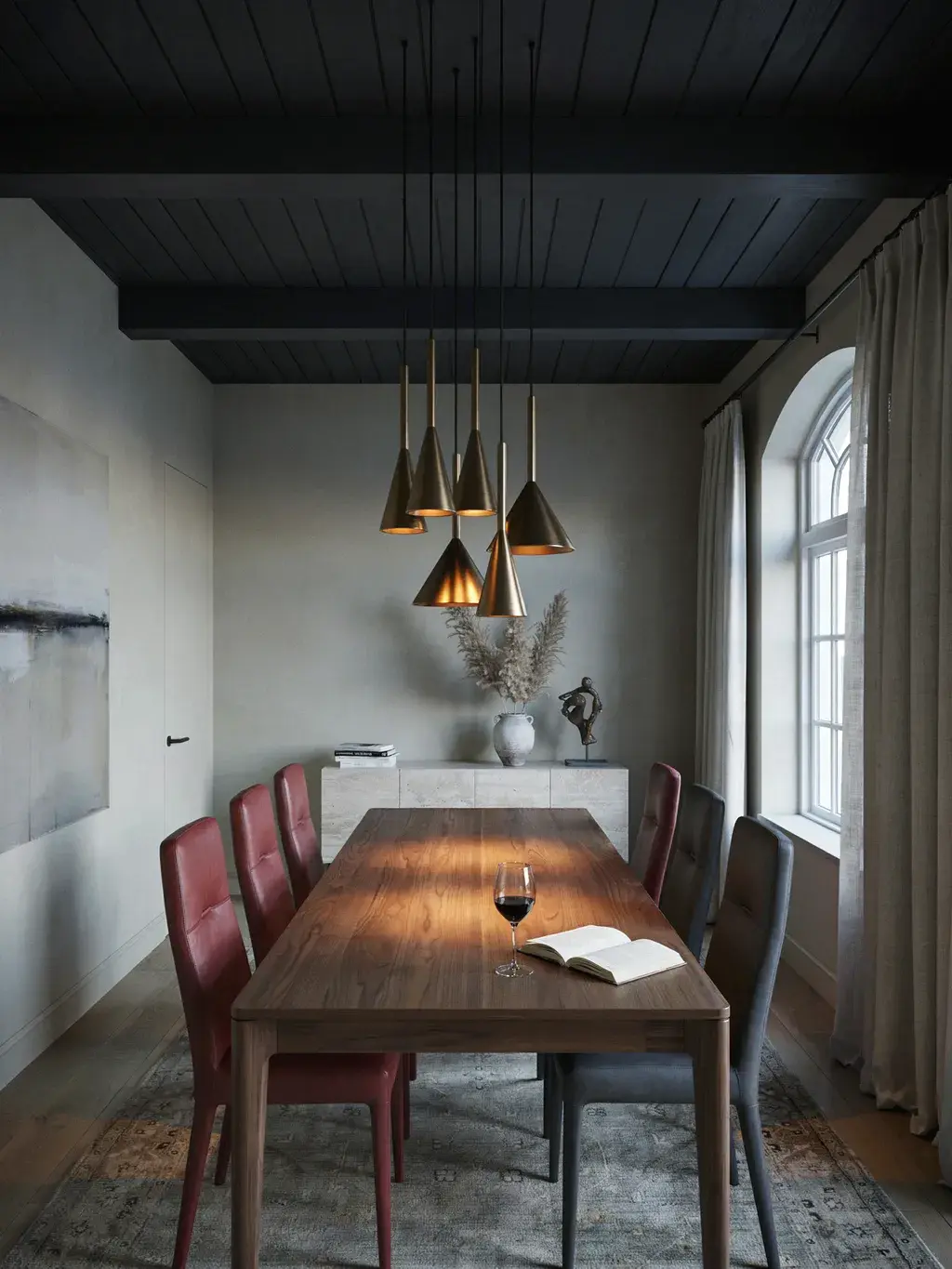
It feels counterintuitive to darken a ceiling, but a deep charcoal, black, or rich forest shiplap ceiling can be spectacular in the right room. In a space with good light or generous height, a dark ceiling cocoons the room and adds serious drama.
This works best in rooms you want to feel intimate, a dining room, a study, a bedroom, rather than a space you need to feel airy. Paired with lighter walls, a dark shiplap ceiling becomes the unmistakable focal point, sophisticated and enveloping.
Mind the direction of the boards
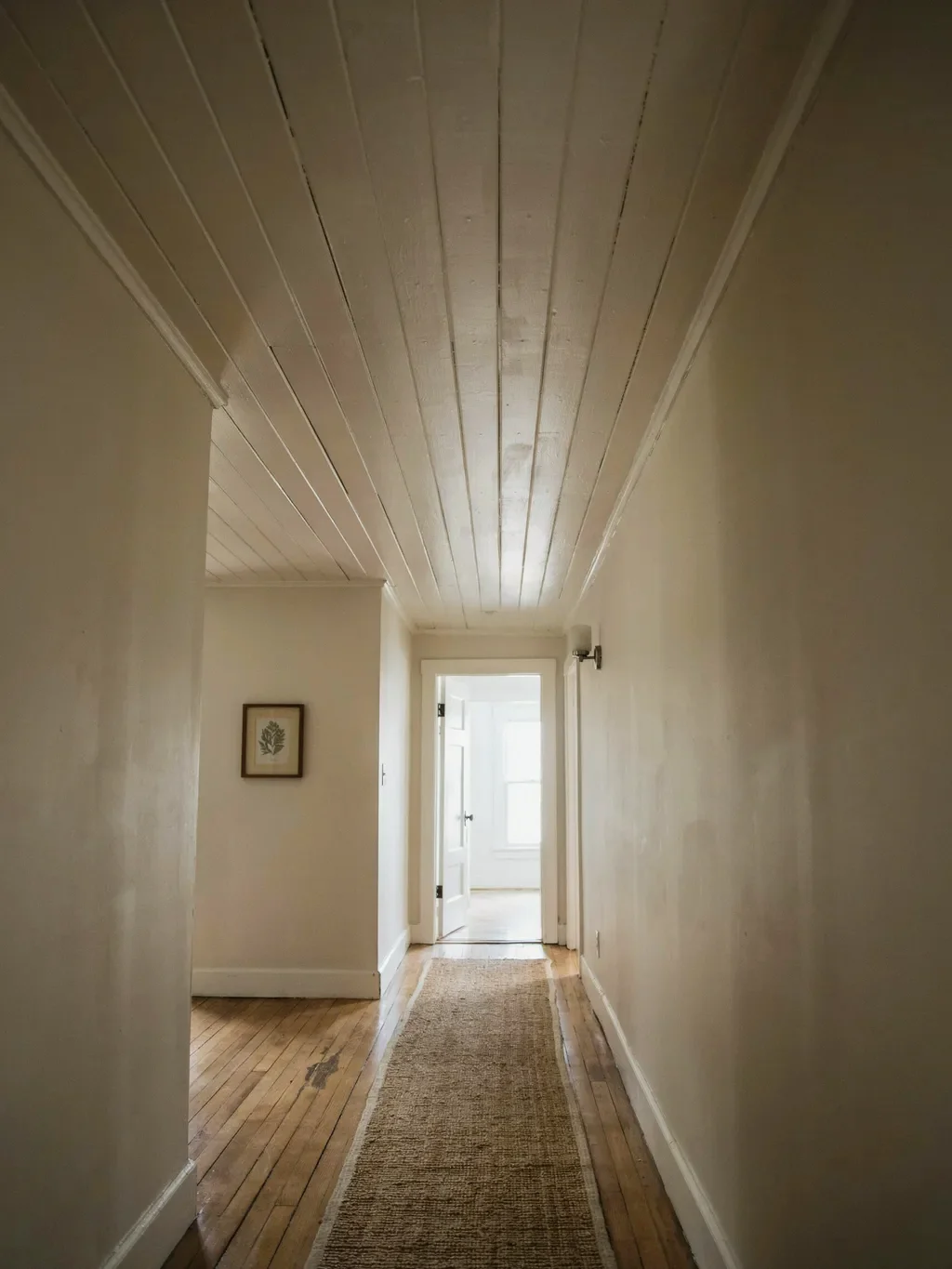
Which way the boards run quietly shapes how the whole room feels. Running the planks along the longer dimension of the room emphasises and elongates that length; running them across can make a long narrow room feel wider and more balanced.
In a narrow space, this directional trick is worth planning deliberately. The boards become subtle visual lines that either stretch or square up the room, so it’s worth deciding what you want the ceiling to do before the first plank goes up.
Pair it with exposed beams
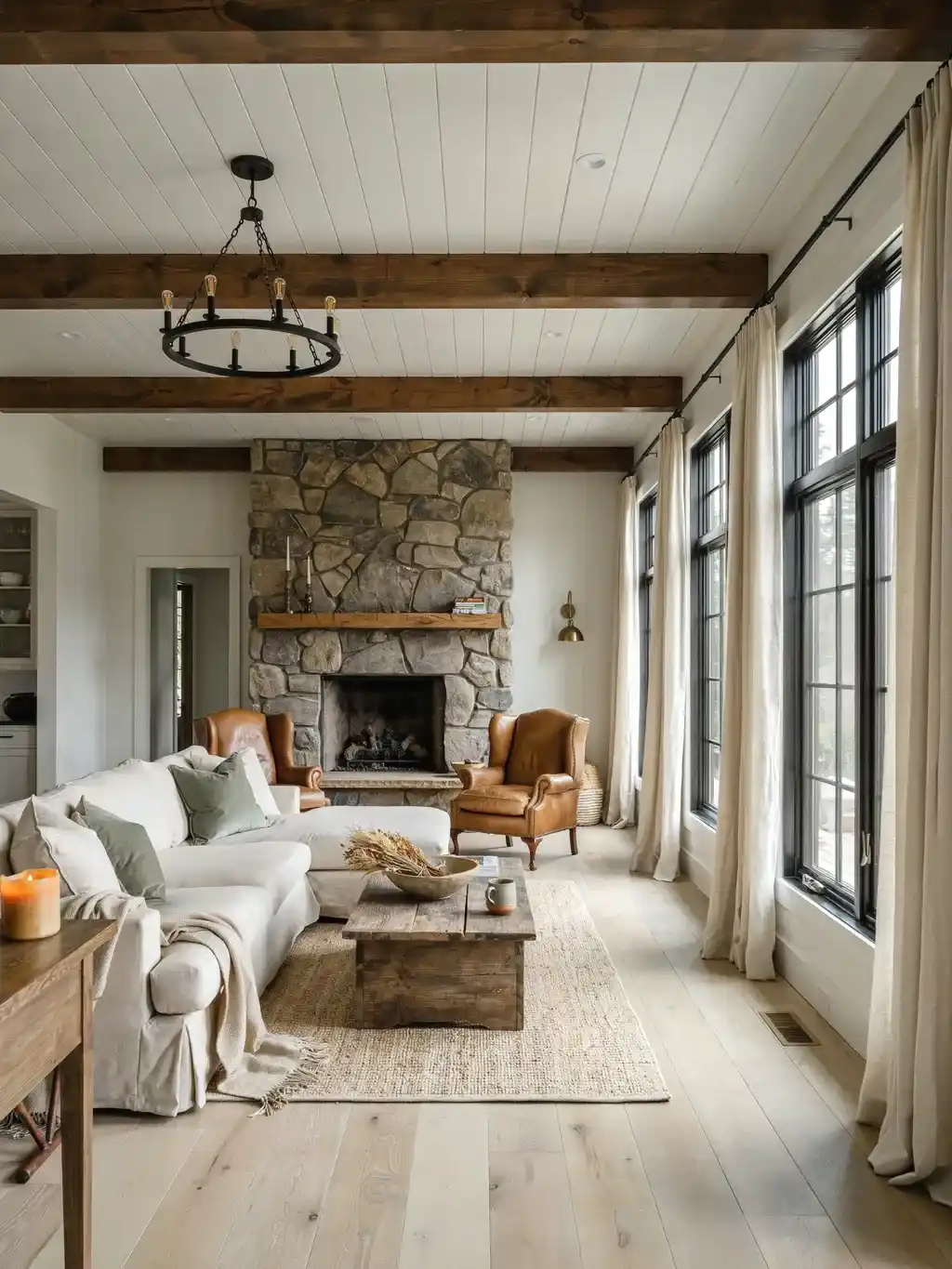
For real architectural richness, combine a shiplap ceiling with beams, whether structural timbers or faux box beams added for effect. The flat planking between dark beams is a timeless look that reads as character-filled and custom.
The contrast of the smooth shiplap infill against the chunkier beams adds depth and a sense of craftsmanship. Painted white shiplap with dark stained beams is a particularly striking pairing, classic in farmhouse and country interiors but equally at home in a modern barn conversion.
Lift a sloped or vaulted ceiling
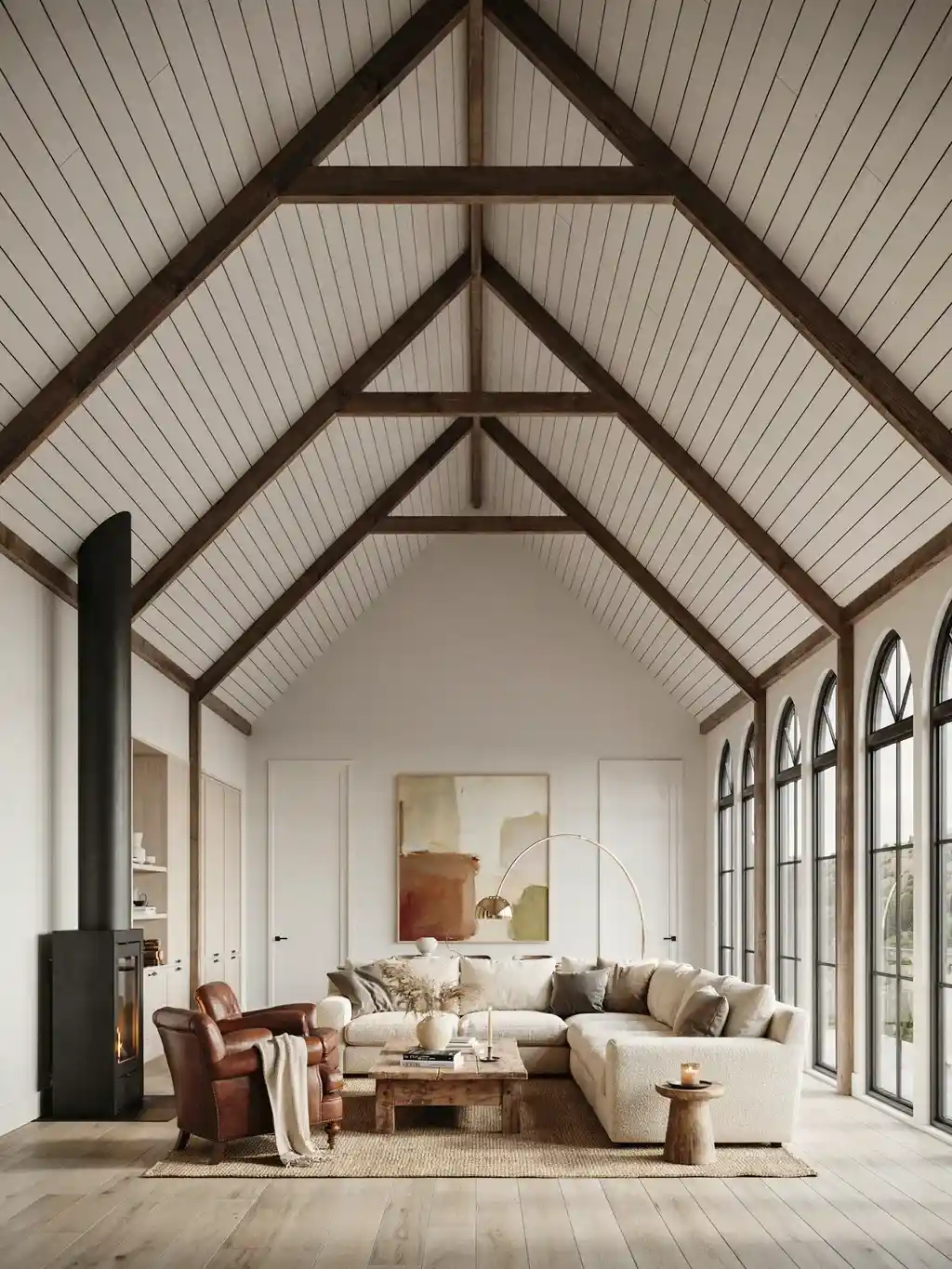
Shiplap is especially gorgeous on a sloped, vaulted, or cathedral ceiling, where the running boards follow the rise and emphasise the height and shape of the room. The lines draw the eye up the slope and make a dramatic ceiling even more of a feature.
On an angled ceiling, the planking accentuates the architecture you already have, turning a simple vaulted room into something that feels designed and expansive. It’s one of the best ways to make the most of an interesting roofline.
Carry it into a small room
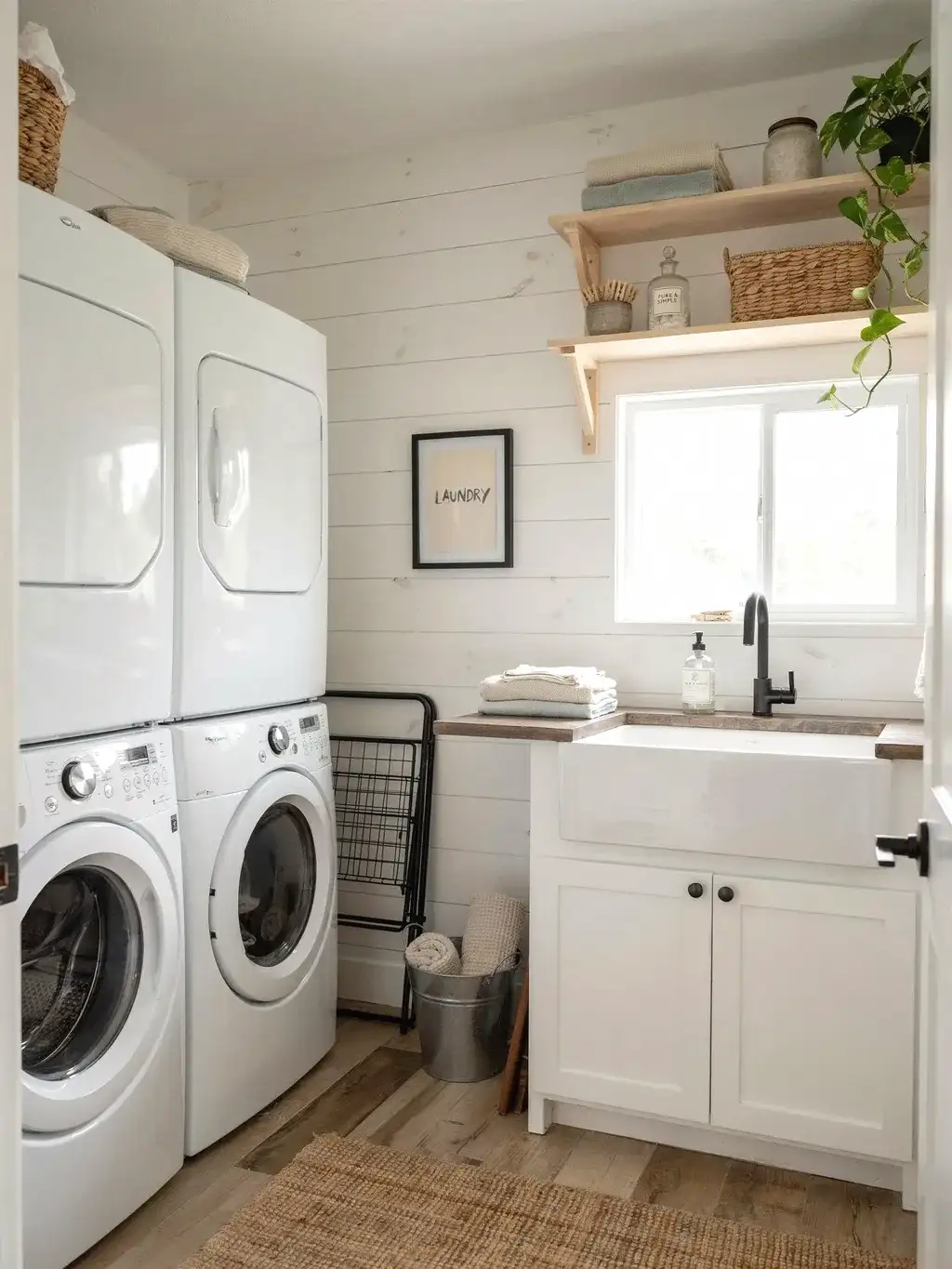
Shiplap isn’t only for grand spaces. On a small bathroom, entryway, or laundry ceiling, it adds a surprising amount of charm and makes a humble room feel thoughtfully finished. The texture overhead gives a tiny space a custom, considered feel.
In a small room, white shiplap keeps things bright while still adding interest, and the detail overhead draws the eye up, which can make a low or boxy room feel a touch taller. It’s a high-impact upgrade for a space that’s easy to overlook.
Match the board width to the mood
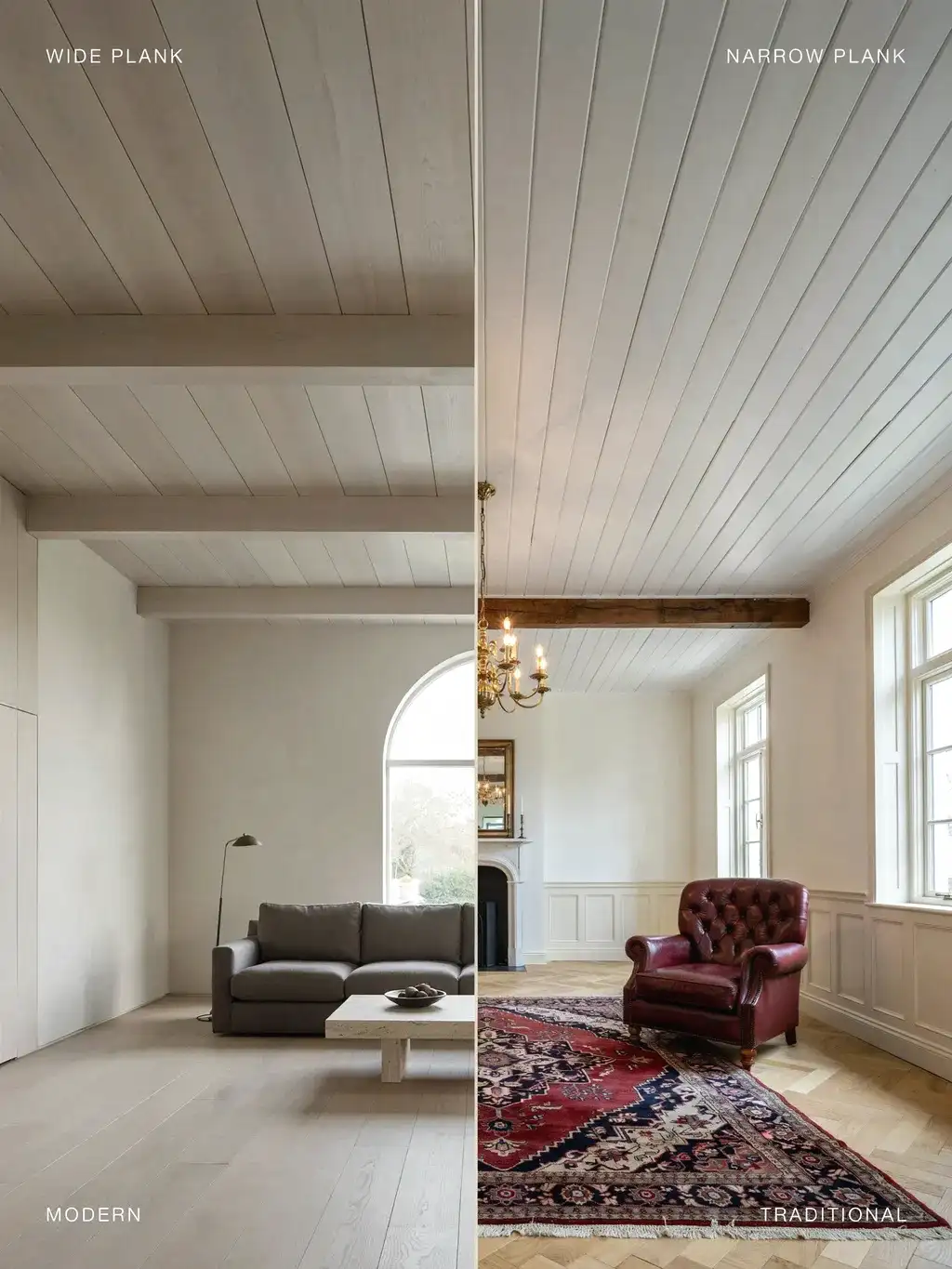
The width of the planks subtly changes the whole character. Narrow boards read more detailed, traditional, and refined; wider boards feel more modern, relaxed, and rustic. It’s a small choice that shifts the entire feel of the ceiling.
For a contemporary room, wider planks with their cleaner, simpler rhythm suit the look; for a classic cottage feel, narrower boards add that finer, more traditional texture. Deciding the mood you’re after points you to the right width.
Connect it to the walls or trim
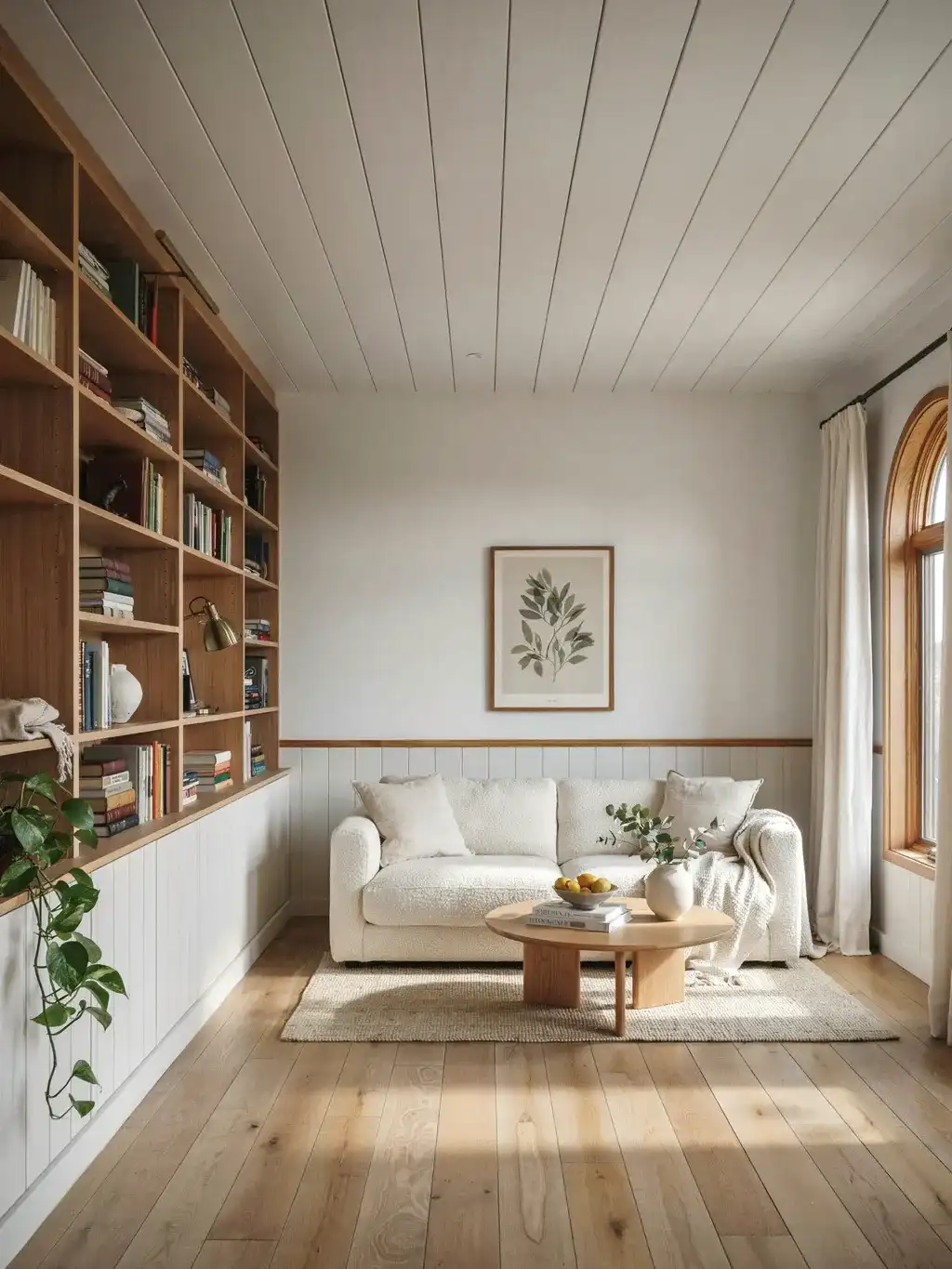
A shiplap ceiling looks most intentional when it relates to the rest of the room. Echoing the ceiling tone in the trim, the window frames, or a section of wall paneling ties the whole space together so the ceiling feels integral rather than an afterthought.
Even a simple choice, matching the ceiling white to the trim, or carrying the same wood tone into a shelf or mantel, makes the room read as one cohesive design. The ceiling should feel like part of the room’s story, not a detail floating on its own.
Let the lighting play along the boards
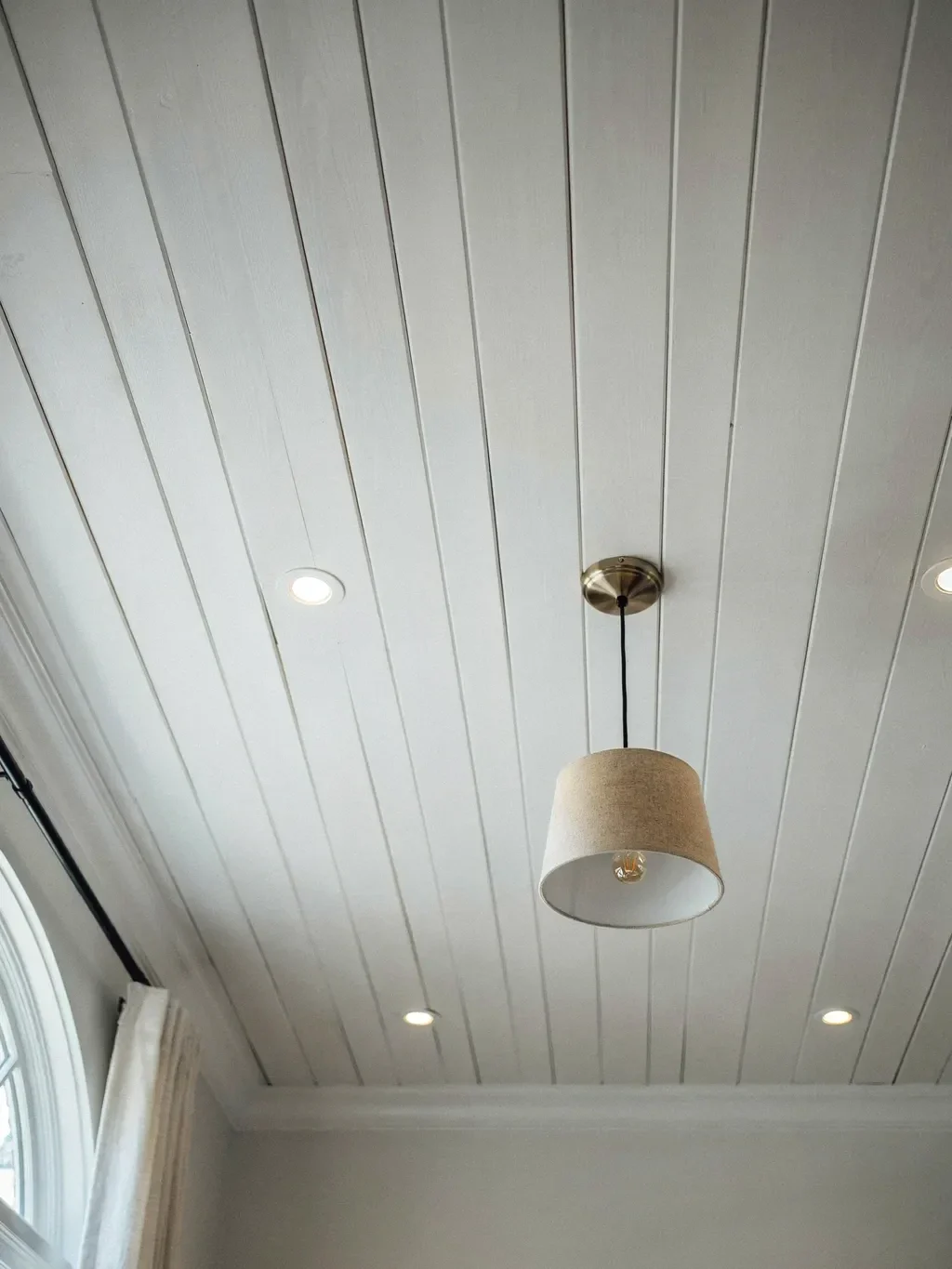
The lines of a shiplap ceiling interact beautifully with light, so it’s worth thinking about fixtures. Recessed lights keep the planking clean and uninterrupted; a statement pendant or flush-mount lets the ceiling frame a focal point. Either way, the boards catch light and shadow in a way a flat ceiling never does.
Warm light grazing across the planks brings out the texture and the shadow lines, making the most of the detail you’ve added. Positioning lighting to skim along the boards rather than flatten them is what gives the ceiling its quiet evening drama.
A Quieter Note on the Fifth Wall
What ties all of it together is the reminder that the ceiling is a surface most rooms simply ignore. A shiplap treatment is really an invitation to use that overlooked fifth wall, to add warmth and character overhead where there was only blank plaster before.
The shiplap ceiling works because it brings rhythm and texture to the one surface nobody expects it. It can go crisp white for airy, natural for warm, stained for depth, or dark for drama, run its boards to reshape the room, pair with beams, or lift a vaulted space, all while feeling timeless rather than trendy. None of it shouts. It simply gives a plain room a reason to look up.
A shiplap ceiling, in the end, isn’t just a finish. It’s the quiet architectural detail that turns an ordinary room into one with character, proof that sometimes the most memorable thing in a space is the surface you almost forgot was there.


