23 Above Kitchen Cabinet Decor Ideas That Designers Swear By
- Kitchen Design
 Alina
Alina- 0
- 21 minutes read


The space above the kitchen cabinets is one of those quietly important parts of a room. Too empty, it makes the kitchen feel unfinished. Too cluttered, it pulls the eye away from everything below. Treated well, it adds the kind of layered, considered quality that separates a kitchen that simply functions from one that feels designed. And yet, for years, that strip of wall has been one of the most ignored zones in residential design.
In short, the gap above your cabinets is doing more work than you think, whether you’ve furnished it or not.
Interior designer Lara Pemberton describes the space as “the kitchen’s mantelpiece.” She continues, “It’s a horizontal surface at eye-line height. Most rooms would call that prime real estate. Kitchens have spent decades treating it as wasted square footage.”
But where to start, when the choices range from a single trailing plant to a fully styled gallery of vintage pottery?
We pulled together twenty-three approaches that designers return to again and again, organized loosely from the simplest to the most committed. Each one works in a different kind of kitchen. The most successful versions, almost without exception, treat the space as an extension of the room’s overall design rather than a separate styling project.
1. The Single Tall Vessel
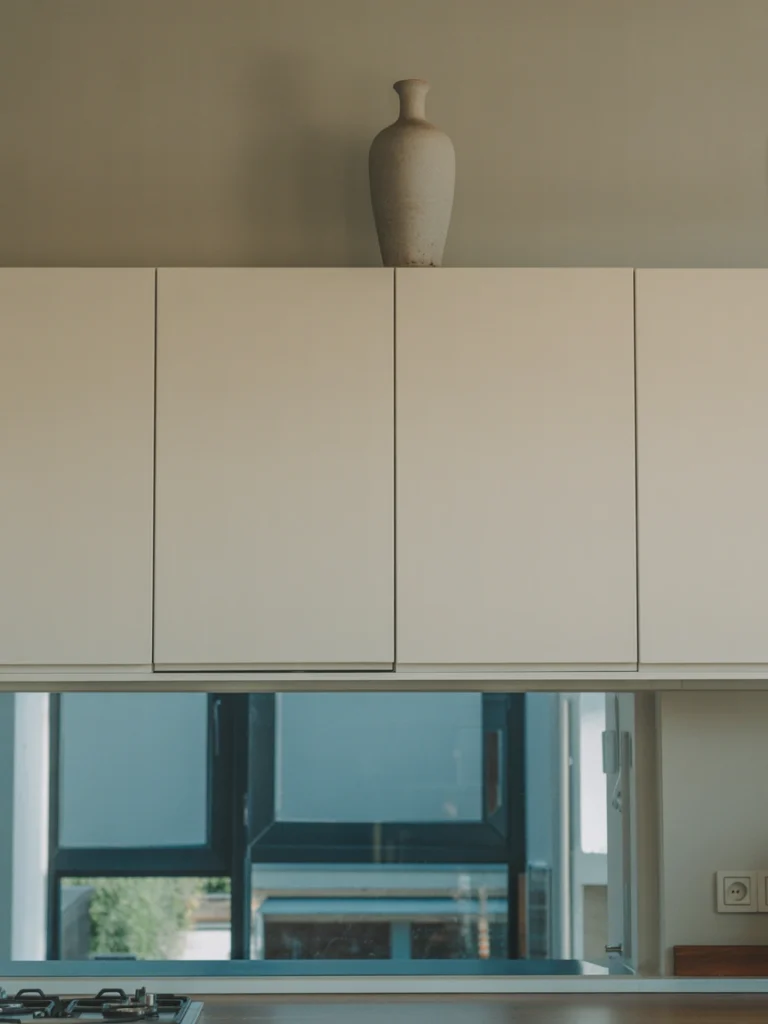
The most restrained starting point. One large vase, urn, or vessel placed slightly off-center, with nothing else competing. Design director Yusra Khalid favors this approach for kitchens with strong architectural detail elsewhere. “When the cabinetry is already doing a lot, the decor above it should whisper,” she says. The vessel should be tall enough to break the horizontal line of the cabinet top without crowding the ceiling.
2. A Trio of Mixed-Height Ceramics
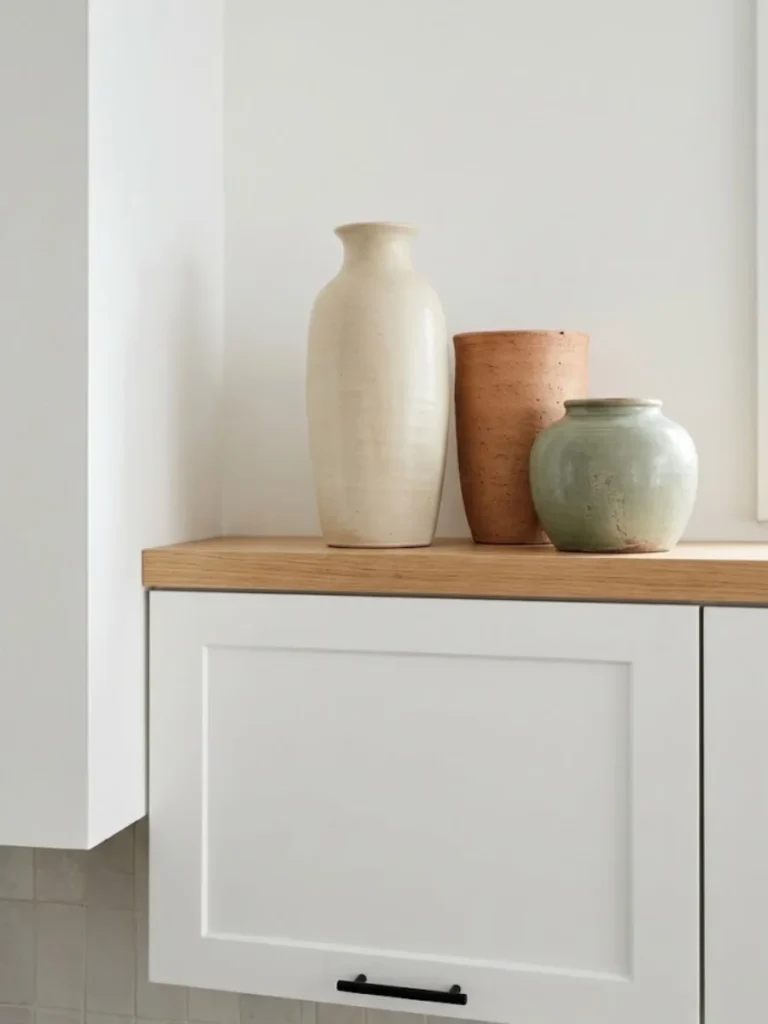
The next step up. Three vessels of varying heights and complementary tones, grouped as a still life. The rule, Khalid notes, is odd numbers and varied profiles. Two of one thing reads as a pair; three reads as composition.
3. Trailing Greenery
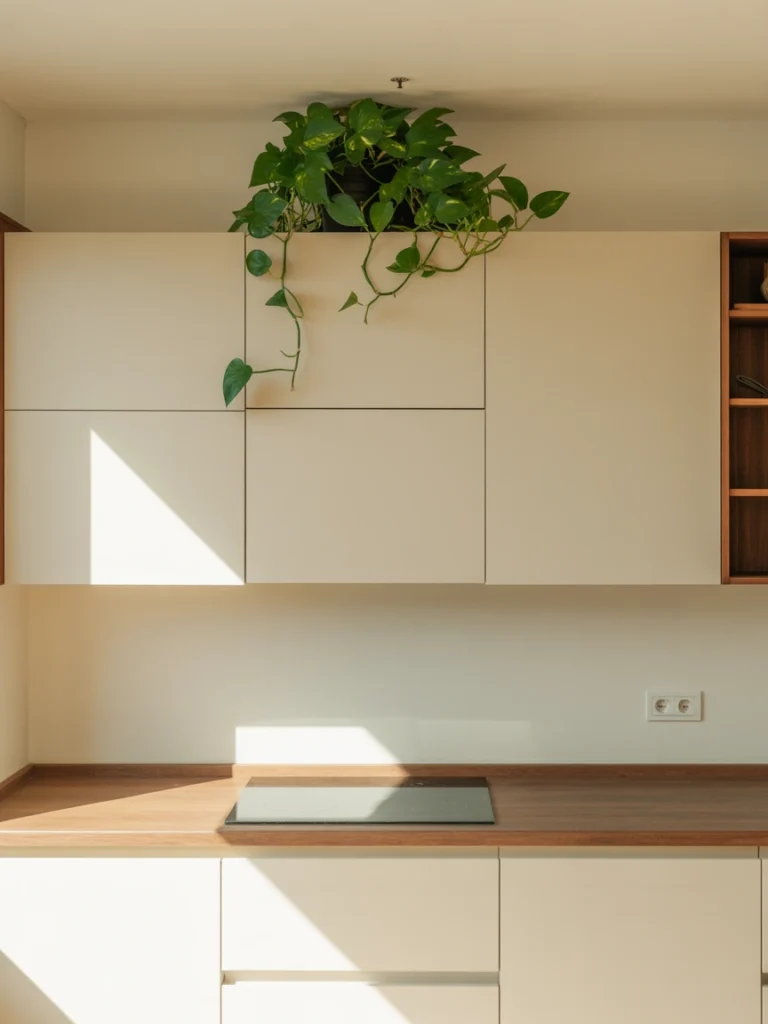
The classic, but with caveats. A pothos, ivy, or string of pearls cascading from above the cabinets adds softness and movement to an otherwise rigid line of joinery. The honest practical note from Pemberton: “Watering plants on top of cabinets is a hassle nobody admits to. Choose something genuinely low-maintenance, or accept that this becomes a step-stool monthly job.”
4. Vintage Cookbook Stacks
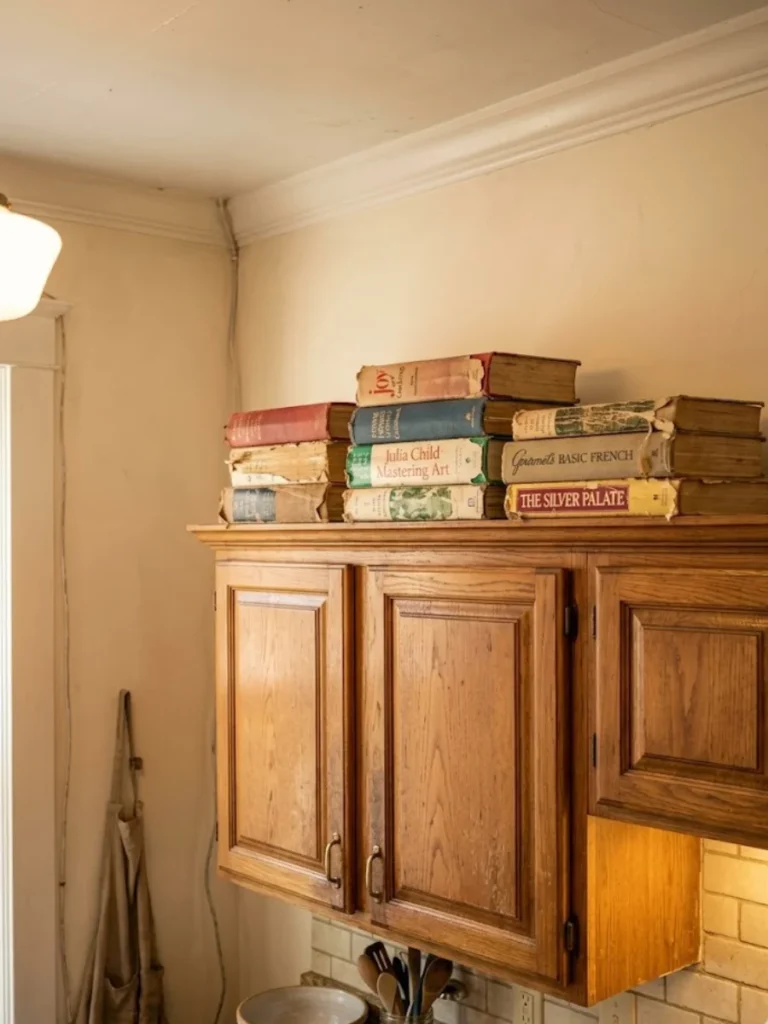
For kitchens that lean warm and lived-in, a horizontal stack of well-worn cookbooks adds character and a hint of culinary seriousness. Designer Reuben Halstead notes that “stacked books on top of cabinets read as a person who actually cooks, which is half the battle in styling a kitchen.”
5. Antique Wooden Bowls
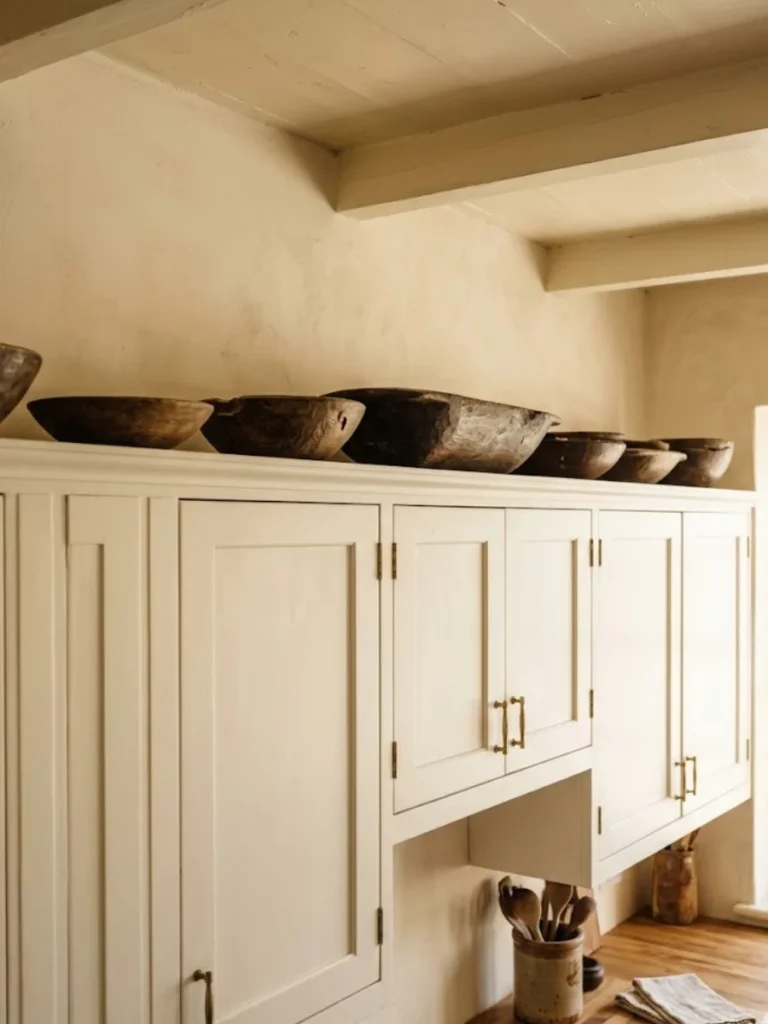
Hand-turned wooden dough bowls, vintage trenchers, or carved African bowls placed on their sides or stacked add texture and an earthy quality that complements both rustic and modern cabinetry. Halstead favors them for their patina. “New things look new. These look like they have history, even if you bought them last Saturday.”
6. A Row of Stoneware Crocks
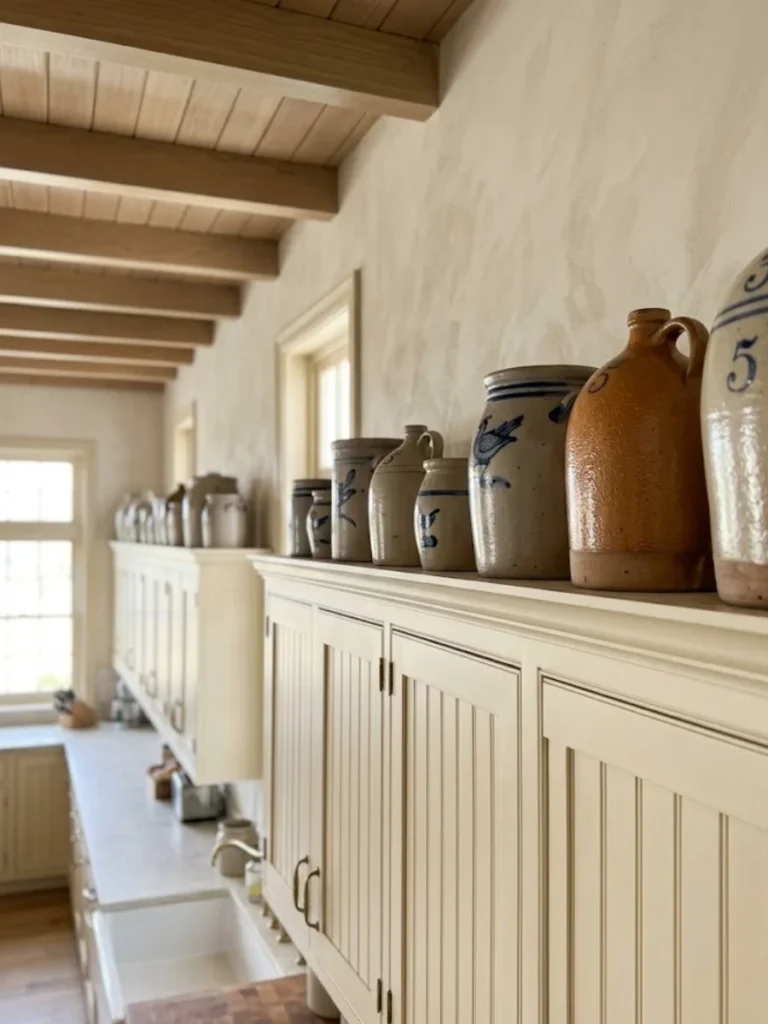
For larger kitchens with long cabinet runs, a row of three to five stoneware crocks in varying sizes brings rhythm to the space. The look references nineteenth-century pantries without tipping into costume.
7. Architectural Cornice
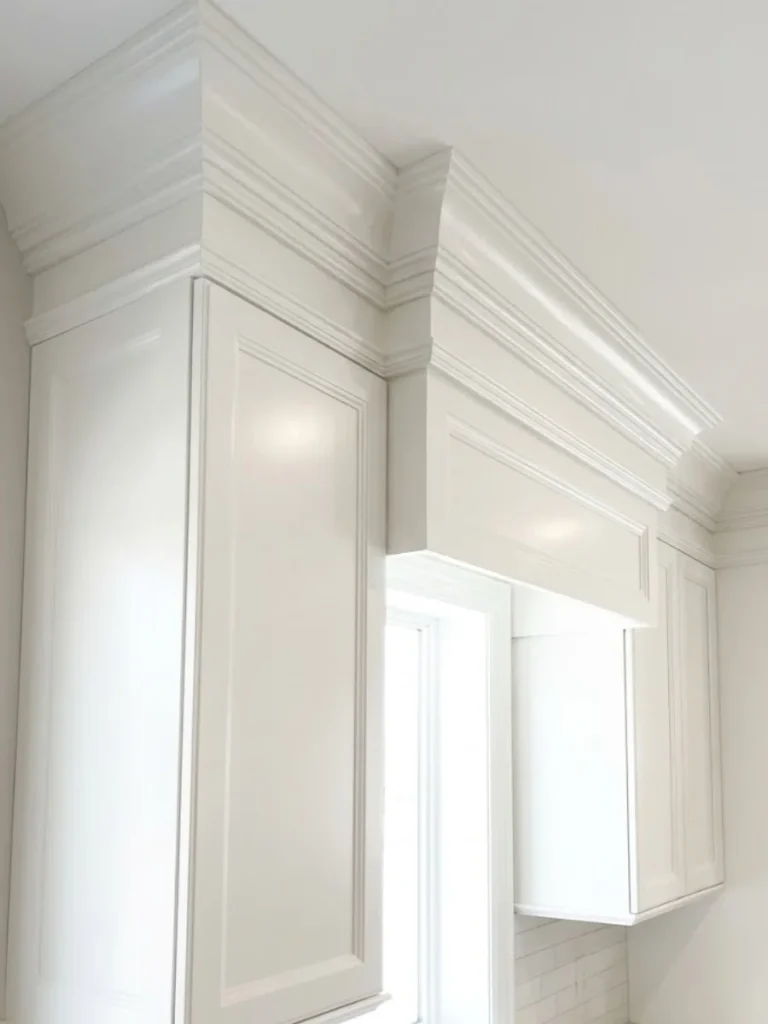
Less a decor object, more a structural decision. Adding a deep crown molding or cornice above the cabinets removes the gap entirely. Pemberton calls this “the architect’s solution. If you don’t want to style the space, build it out of existence.” A worthy option if you’re planning a renovation rather than working with what’s there.
8. Open Glass-Front Display Above
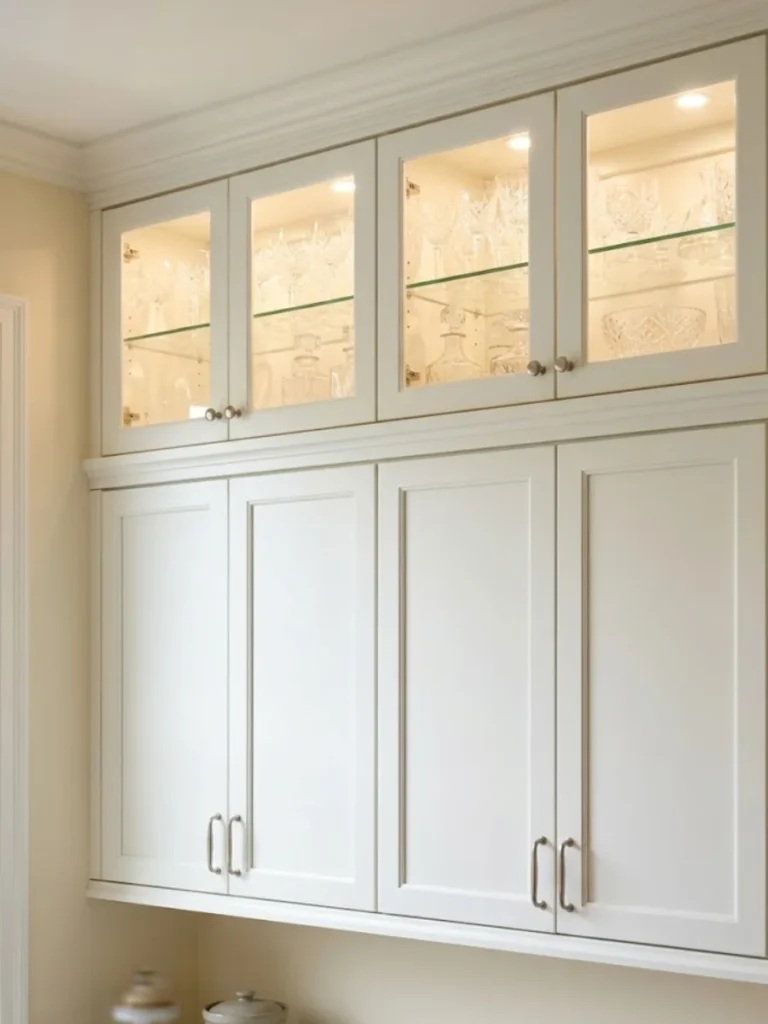
A variation on the cornice approach: build a second tier of shallow glass-front cabinets above the main cabinets, dedicated to display rather than storage. Excellent for collectors of crystal, glassware, or vintage china.
9. Sculptural Single Object
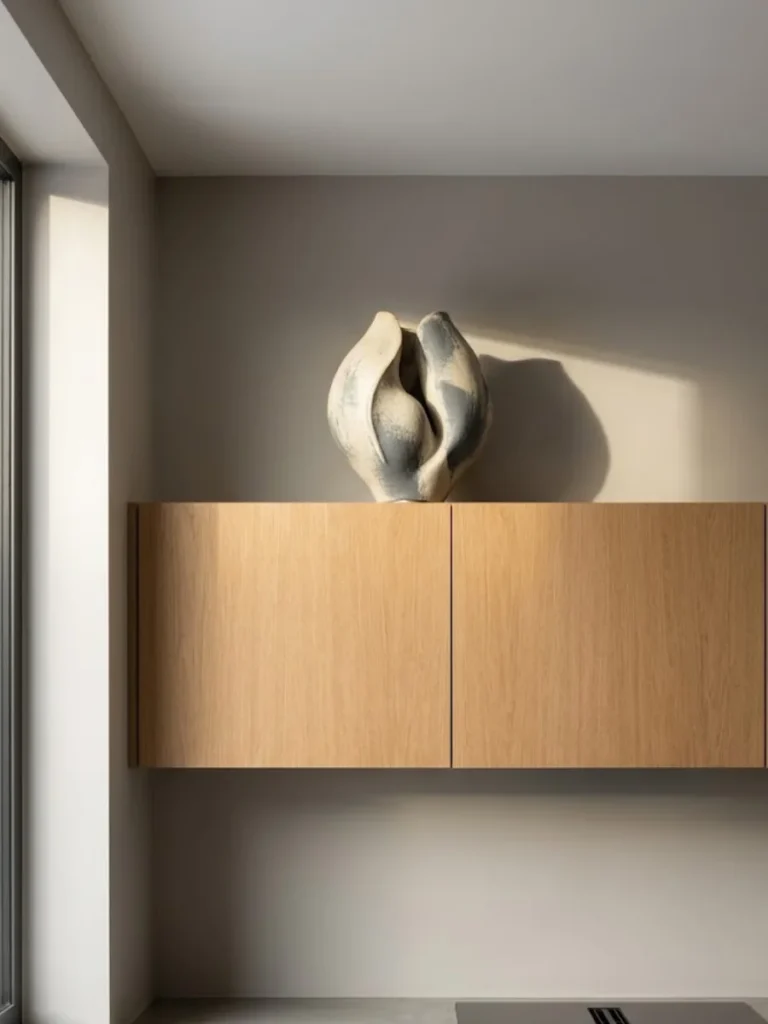
A single sculpture, large piece of pottery, or carved wooden form placed deliberately above one cabinet section. Khalid often uses this to “give the eye somewhere to land in a kitchen with otherwise uniform cabinetry.”
10. Climbing Vines, the Faux Version
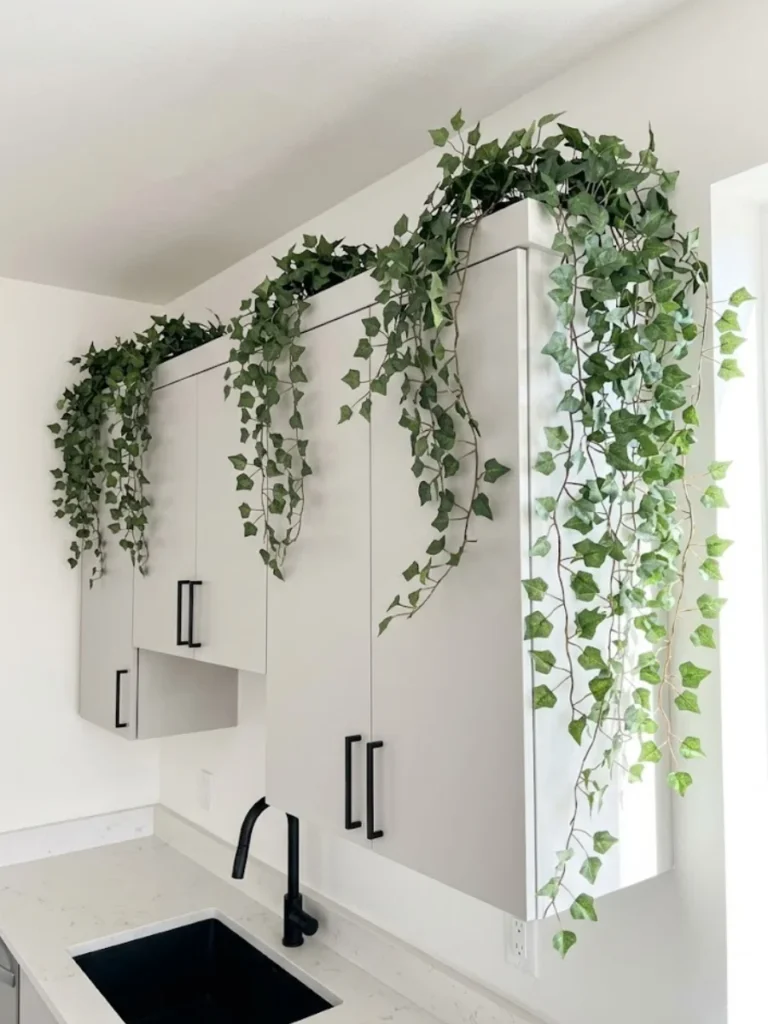
The dirty secret of many magazine kitchens. High-quality artificial trailing plants have improved enormously in recent years, and for spaces that are too dark for living trailing plants to thrive, they’re a defensible choice. Look for variants with matte finishes and visible variation between leaves. The shiny, uniformly green ones still look fake.
11. Framed Botanical Prints
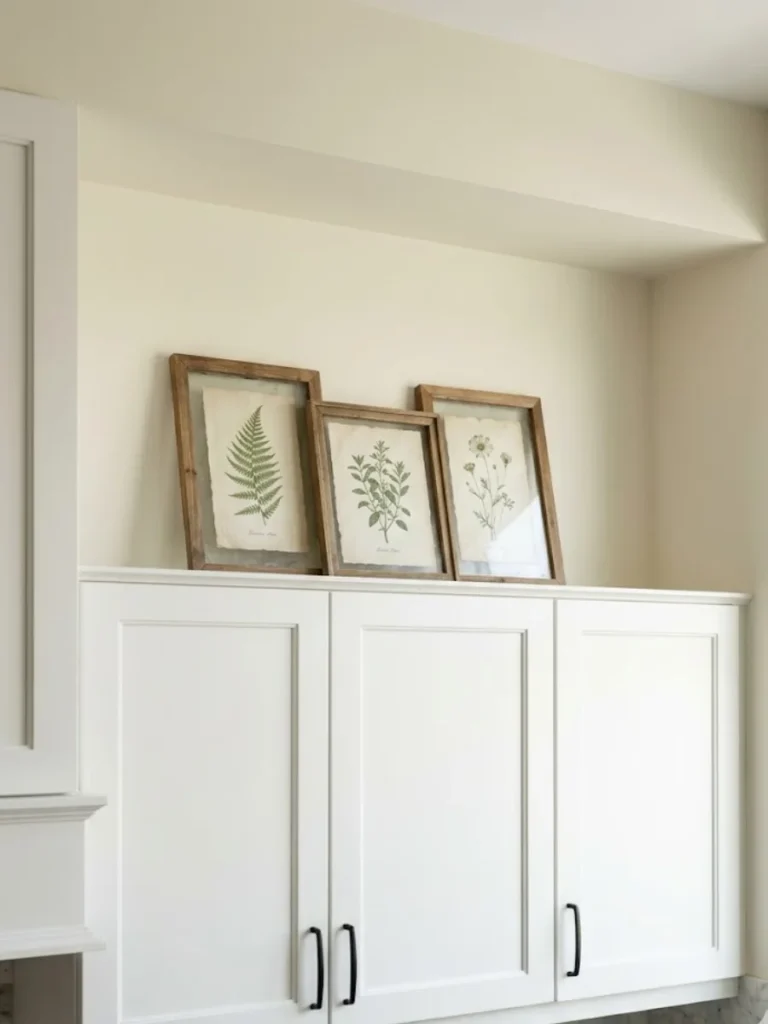
Leaning rather than hanging. A trio of small framed botanical illustrations leaned against the wall above the cabinets, slightly overlapping, adds the same considered quality as a gallery wall without the commitment of nail holes.
12. Vintage Tins
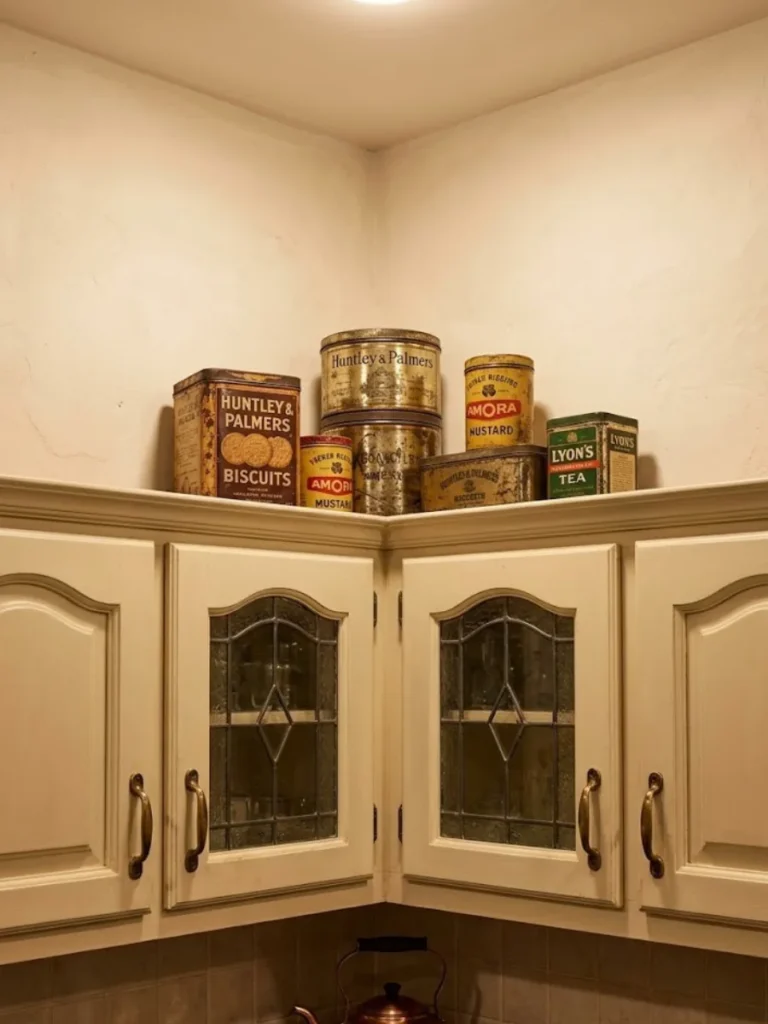
For kitchens with a slightly nostalgic palette, a collection of vintage food tins (think old French confiture tins, English biscuit tins, or Italian olive oil cans) reads as charming without straying into kitsch. Halstead’s rule: “Three to five maximum, and one of them needs to look genuinely old. The others can be modern reproductions and nobody will notice.”
13. A Long Trailing Garland
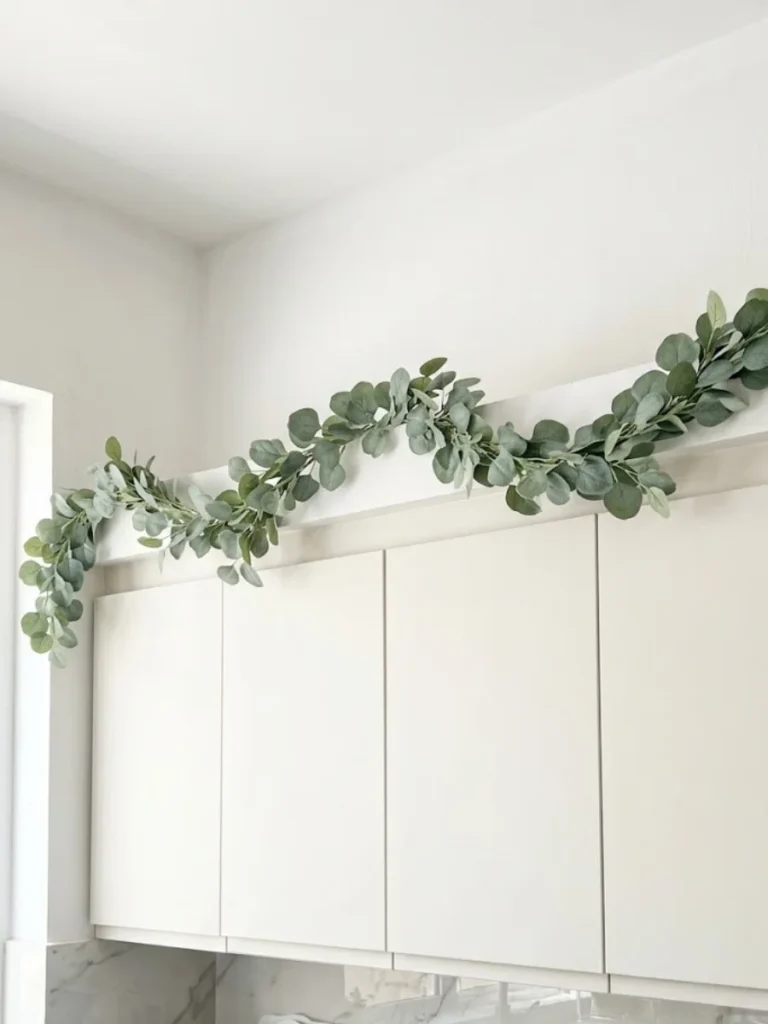
For seasonal styling, a long faux eucalyptus or olive garland draped along the top of the cabinets in a soft, irregular line adds dimension. Many designers leave a version of this up year-round in lighter green tones.
14. Decorative Trays
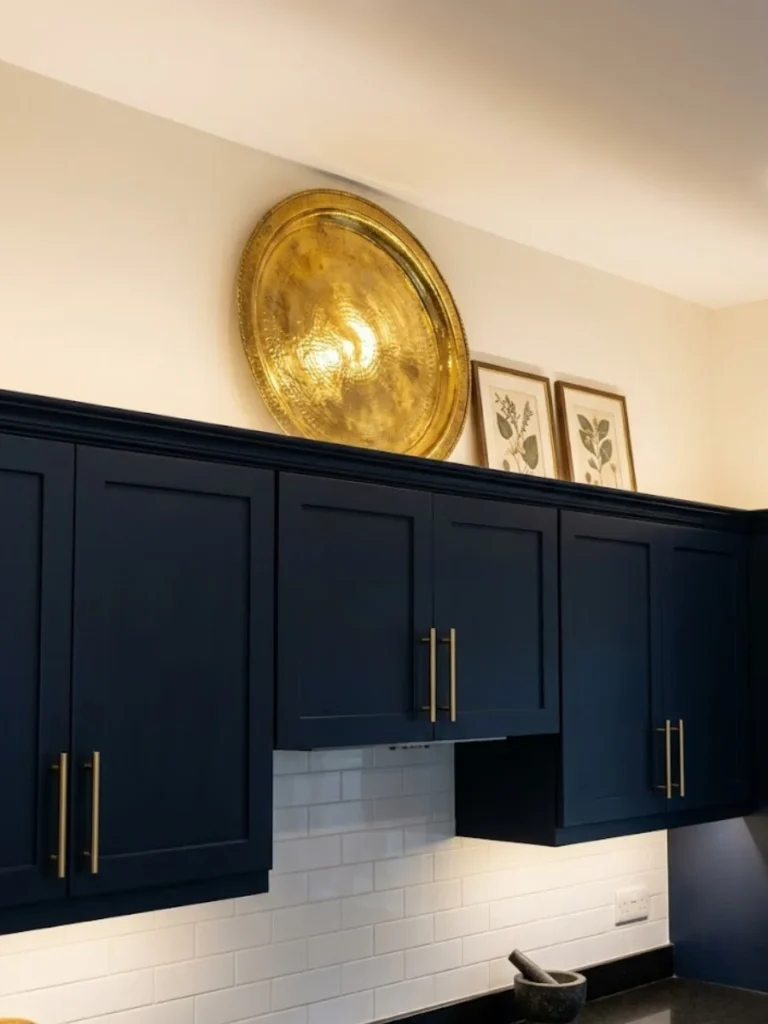
Large round or rectangular trays propped against the wall, like art. Brass trays, hand-painted Spanish trays, woven African trays. The flat surface reads as graphic from below, and the texture adds warmth to plain cabinets.
15. Wine Bottle Display
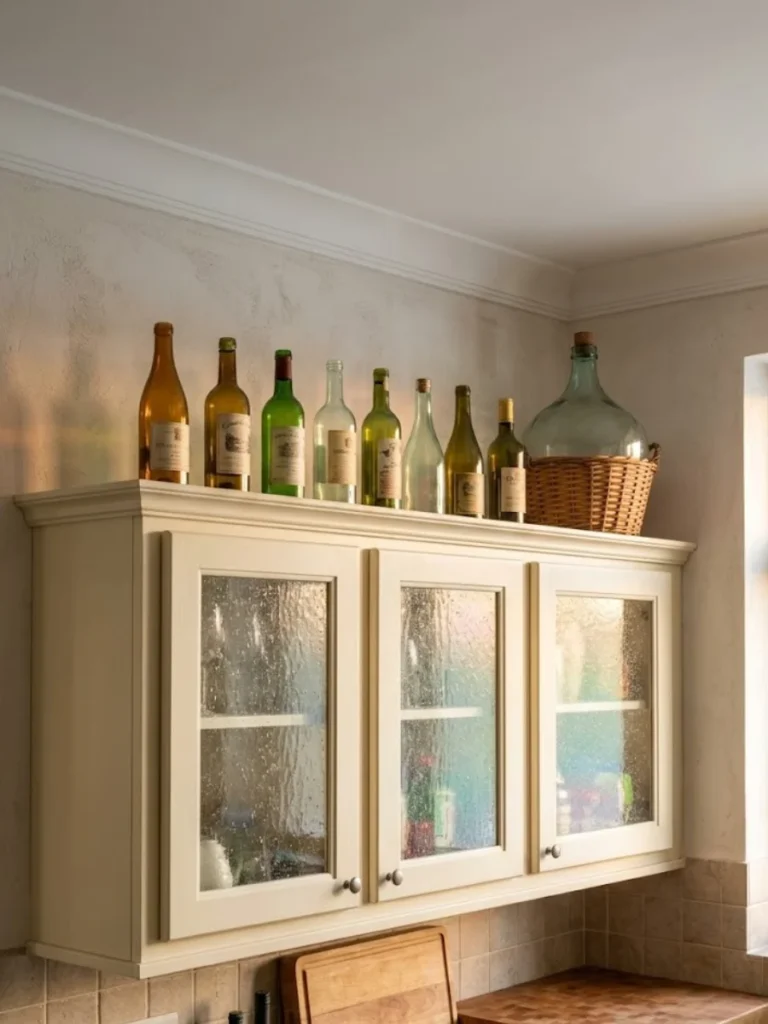
Less common, but elegant in the right kitchen. A horizontal line of decorative wine bottles, ideally with interesting labels or unusual shapes (think Italian glass wine bottles, French aperitif bottles, or vintage demijohns) makes a quiet statement for kitchens with wine-drinking households.
16. Mounted Sconces
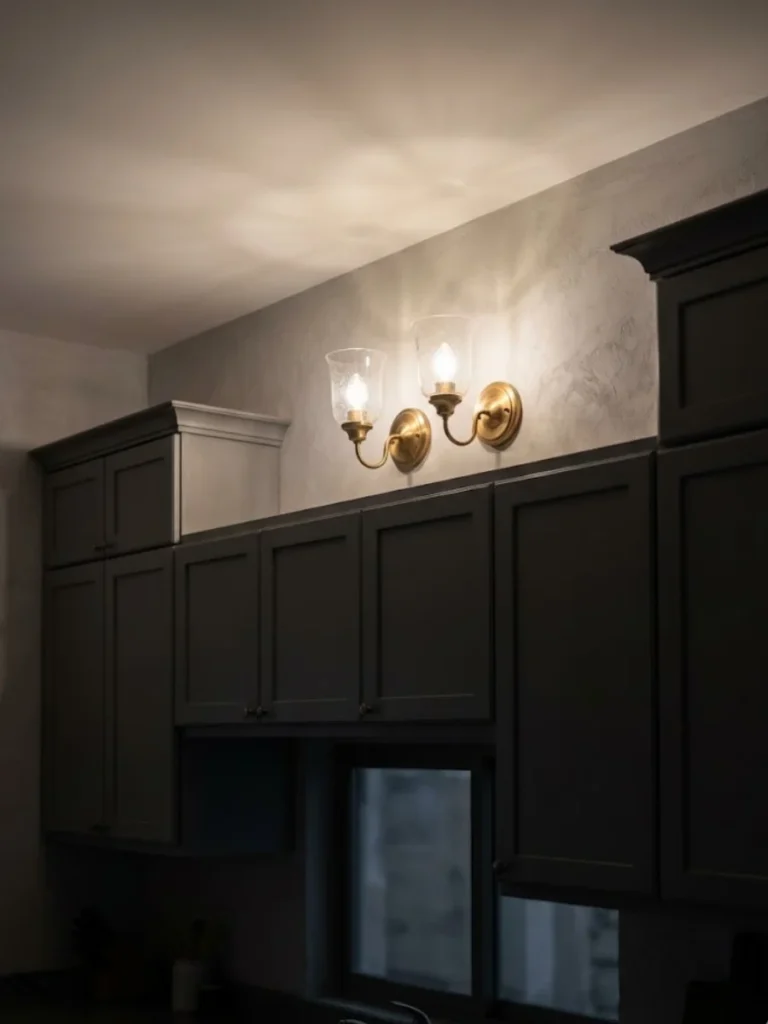
The lighting move that most designers underuse. Mounting a pair of wall sconces above the cabinets, washing light upward toward the ceiling, completely changes how the kitchen feels at night. Khalid notes that “ambient lighting at the top of a kitchen is one of the most transformational small upgrades. It softens everything.”
17. Topiaries
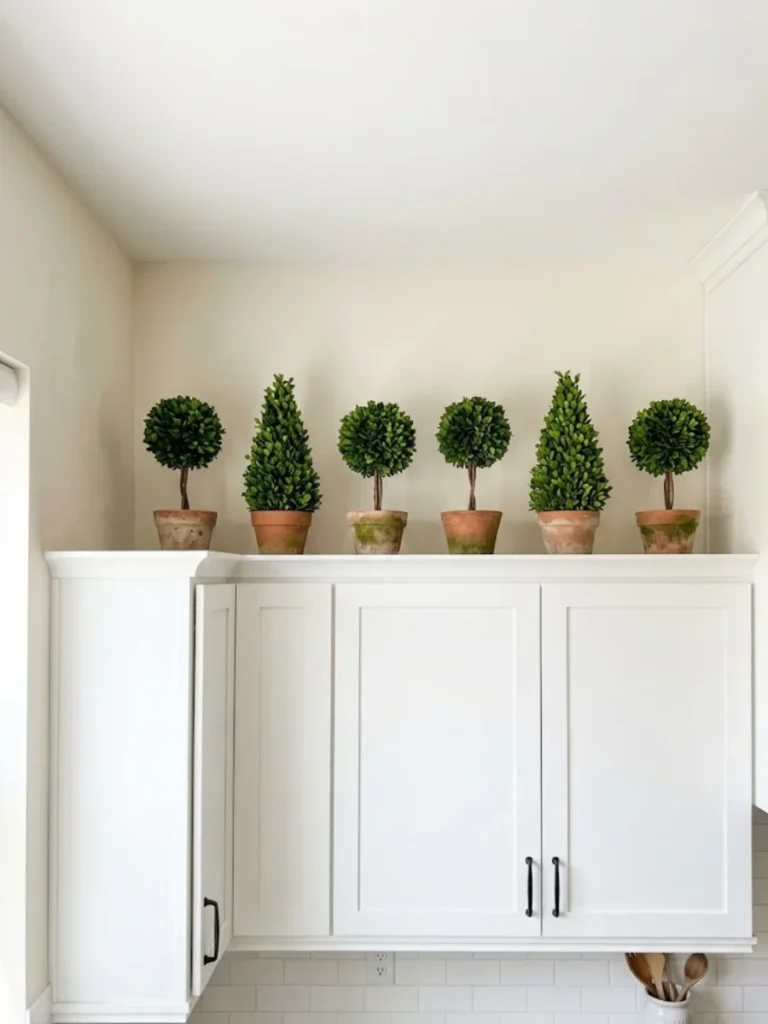
Small boxwood or olive topiaries in terracotta pots, placed in a row above white or pale cabinetry, give a fresh European garden feeling. Faux is generally acceptable here, as living topiaries above kitchens rarely get enough light.
18. Decorative Pitchers
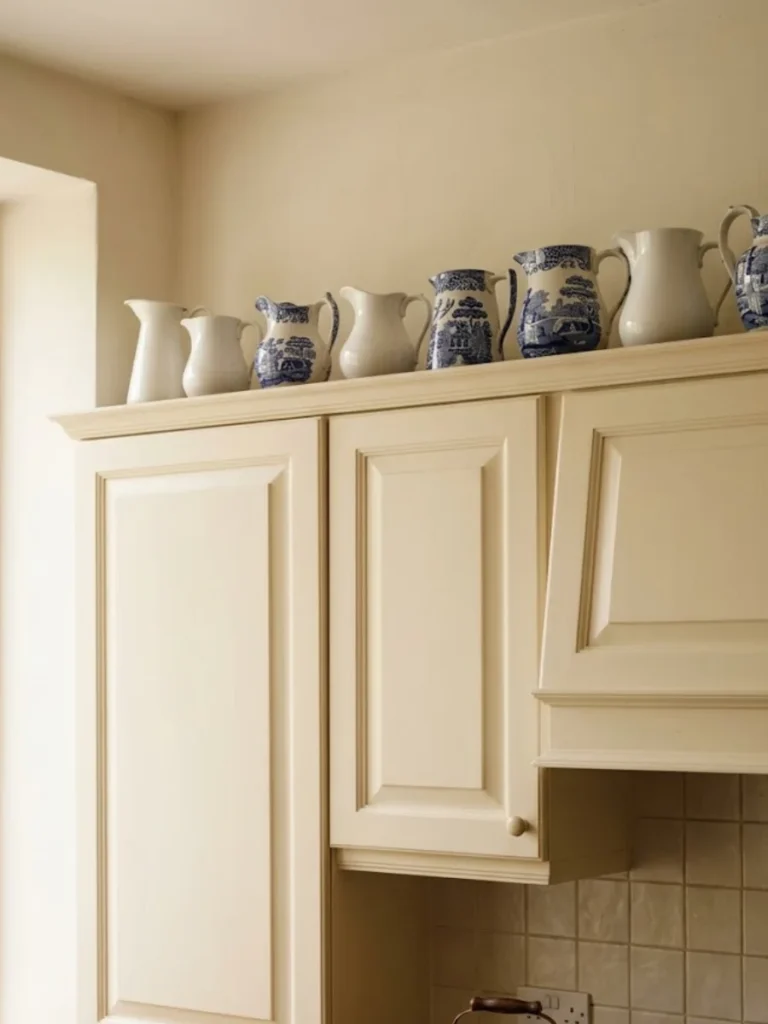
A collection of pitchers in coordinating tones, especially ironstone, transferware, or hand-thrown studio pottery, makes one of the most photographed of all above-cabinet displays. Three to five pitchers, mixed heights, in a tight color story.
19. Statement Artwork Leaned
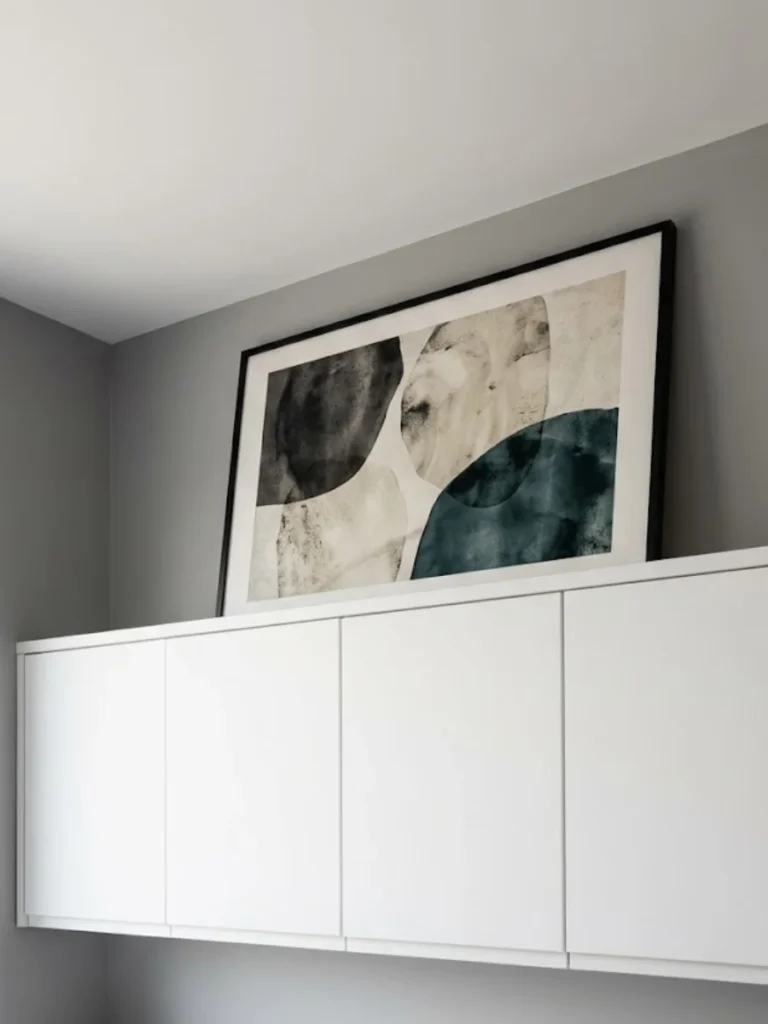
A single large piece of art, propped rather than hung, that runs across the top of multiple cabinets. The casual lean keeps the look from feeling formal. Pemberton points out that “leaning is doing a lot of work right now. It signals that the piece could move, that the space is alive.”
20. Hanging Copper Cookware
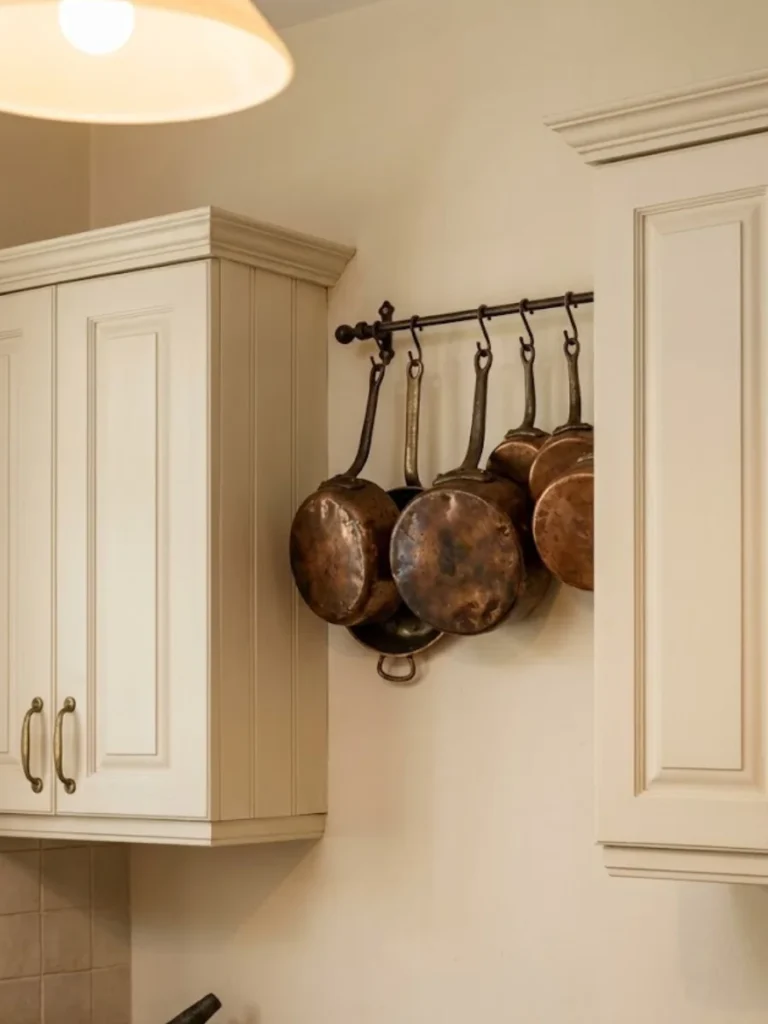
For kitchens leaning country-French or rustic-warm, hanging a row of vintage copper pots from a discreet rail above the cabinets gives the look practicality and patina. Halstead notes that “real, used copper looks completely different from the polished decorative version. Cook with it occasionally, even if you mostly use stainless.”
21. A Curated Globe Collection
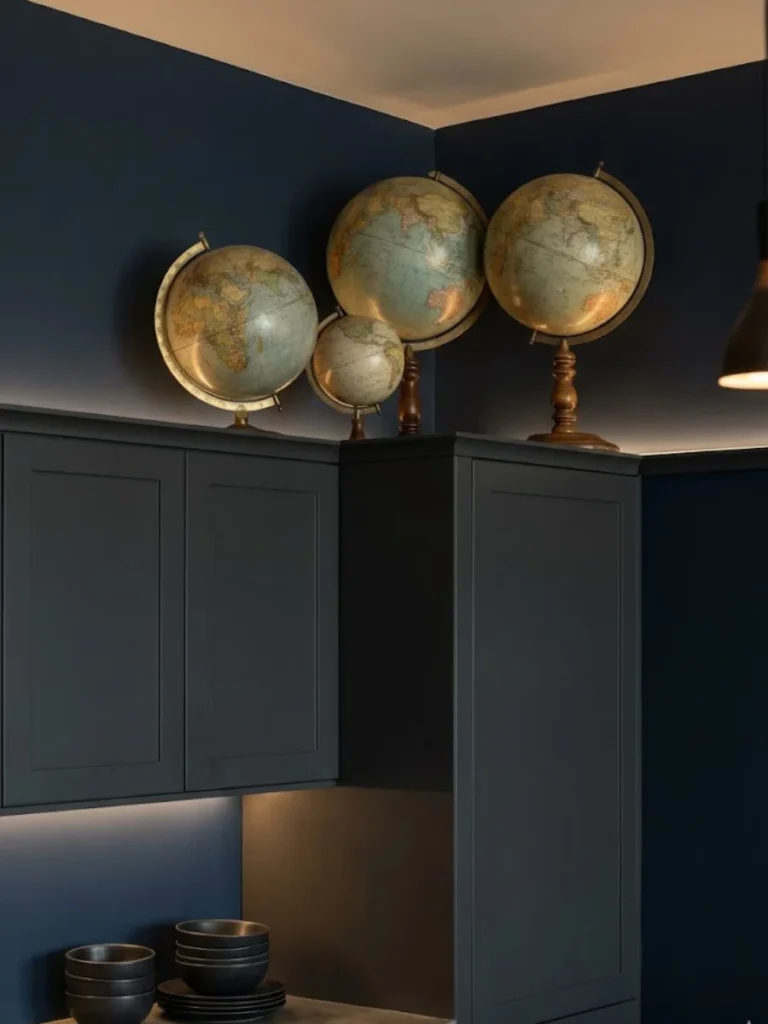
Vintage world globes, in varying sizes and ages, gathered on top of cabinets read as scholarly and slightly eccentric. Best in kitchens with deeper color palettes, dark cabinets, or warm wood. Less suited to bright modern kitchens.
22. Architectural Salvage
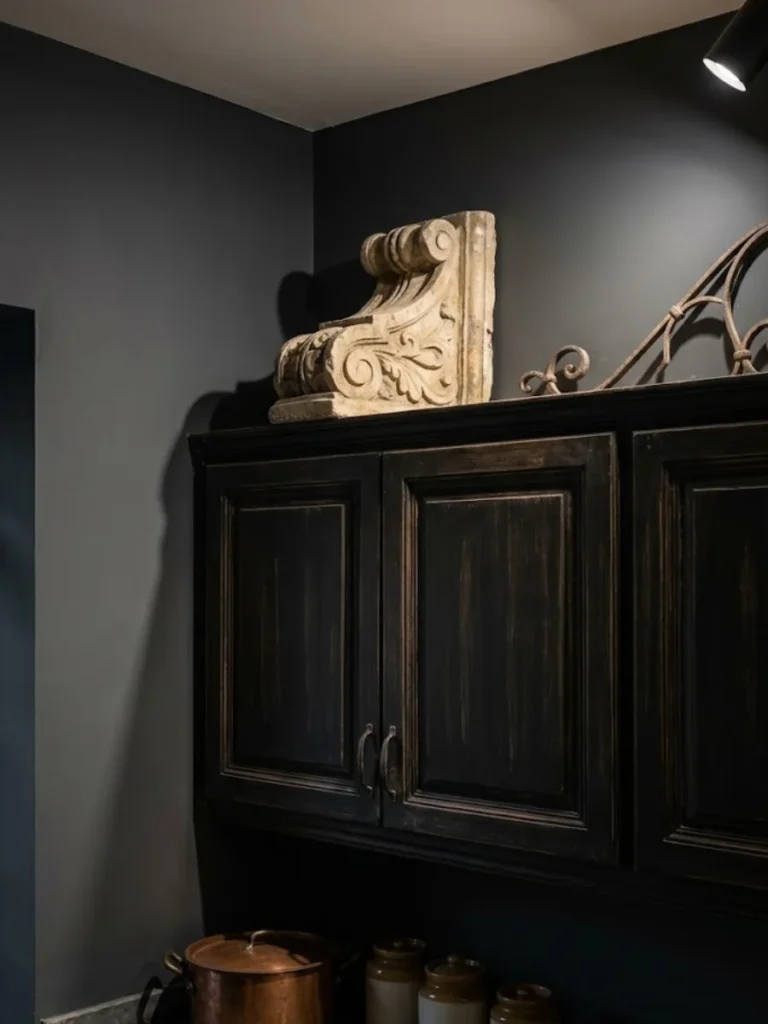
Pieces of vintage architectural fragments, an old corbel, a section of decorative iron, a fragment of carved stone, placed sculpturally above the cabinets. Halstead sees this as “the move for collectors. It’s not about decoration, it’s about display. Each piece needs to be strong enough to stand alone.”
23. Leave It Empty
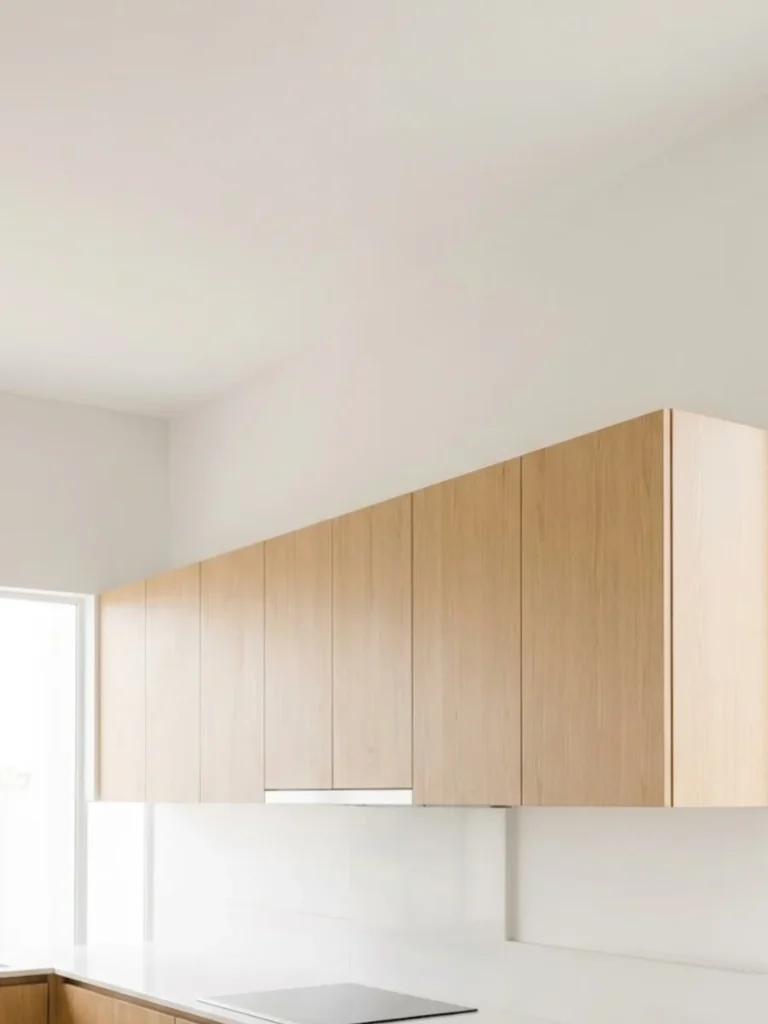
The most controversial choice on this list, and the one Khalid increasingly recommends. “Sometimes the best decor for the space above the cabinets is nothing,” she says. “If the kitchen below is beautifully designed, the empty wall above can act like negative space in a painting. It lets everything else breathe.”
She continues, “I think the impulse to fill that space comes from a discomfort with emptiness. But emptiness is a design choice, too. A confident one.”
A Quiet Note on Restraint
Across all twenty-three approaches, the designers we spoke to returned to the same idea: the strongest above-cabinet displays are the ones with the fewest objects. Pemberton sums it up plainly. “If you’re putting things up there, put fewer of them than you think. The rooms I see fail are always overstyled, never understyled.”
In fact, the gap between a kitchen that looks beautifully finished and one that looks cluttered often comes down to two or three objects too many. Edit hard. Trust the empty space. Let the few things you choose do their work.
Above-cabinet decor is, in the end, about treating that overlooked strip of wall as part of the room. Whether you fill it with trailing greenery, vintage pitchers, leaned artwork, or thoughtfully chosen nothing, the principle stays the same: the space wants to be considered. The designers we spoke to weren’t suggesting any one of these ideas is correct. They were suggesting that you actually make a choice. That, more than any specific styling move, is what separates the kitchens that feel designed from the kitchens that simply exist.


