Floral Summer Decor Ideas That Bring Nature Indoors
- Seasonal Decor
 Alina
Alina- 0
- 14 minutes read


Summer arrives with an invitation. The garden fills out. The markets stack themselves with bunches of sweet peas, cosmos, dahlias, and the kind of full-blown roses that exist only for a few weeks of the year. And the interior, however carefully curated through winter, starts asking for the same. Floral summer decor isn’t only about cut stems in a vase, though that’s the obvious starting point. It’s about a wider invitation: letting the season change the room.
In short, summer is the season the indoors and the outdoors stop pretending to be separate.
Floral designer Helena Voss describes the appeal in plain terms. “A house genuinely shifts mood when you bring living things into it,” she says. “It doesn’t require new furniture, new paint, new anything. A single arrangement on a hallway console can change how a whole room reads.”
But where to start, when “florals” is a category big enough to mean anything from a chintz armchair to one peony in a bud vase?
Why Florals, and Why Now
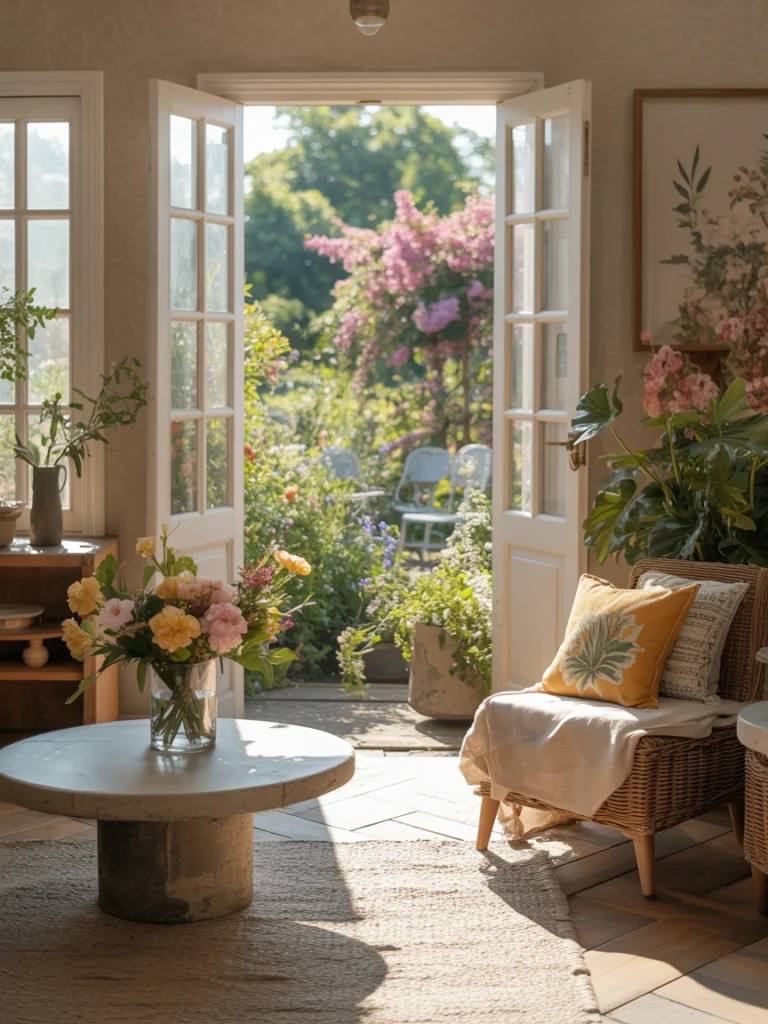
The current wave of floral interior design owes something to a wider shift away from minimalism. The all-beige room has run its course; rooms have permission to bloom again, in measured, considered ways. Botanical motifs have returned to fashion alongside English garden references in interiors from designers like Beata Heuman and Rita Konig, and the conversation in design publications has tilted firmly toward layered, lived-in spaces over pared-back ones.
In fact, interior stylist Mira Aboud sees the floral revival as something quieter than a trend. “We’re tired of homes that look like Pinterest boards,” she explains. “Florals signal that someone lives there. That someone went to the market. That a real person, in a real season, made a choice.”
That, more than any particular color or style, is the throughline. Floral summer decor brings nature indoors in a way that registers as personal rather than performative.
1. The Fresh Stems on the Console
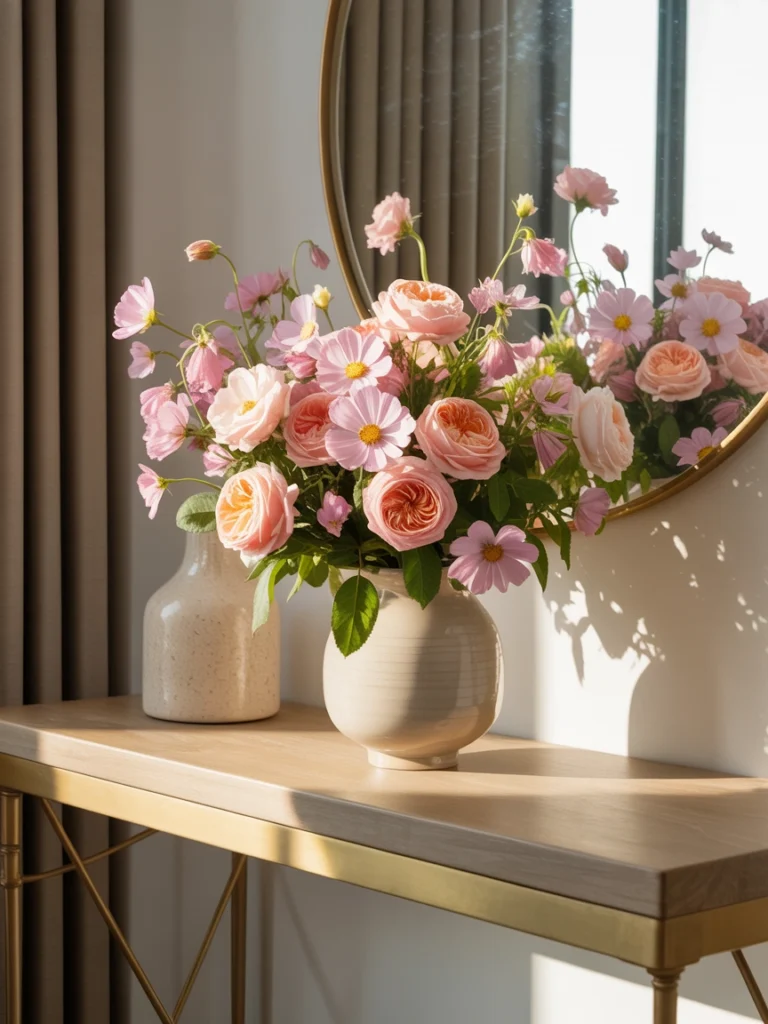
The foundational gesture. A glass or ceramic vase, ideally in a soft, low-contrast tone (white, pale green, smoky amber), filled with one or two varieties of seasonal flower, placed somewhere people pass through.
Color consultant Rohan Maitra notes that the most striking summer arrangements often use a restricted palette. “Three colors maximum, and one of them is green,” he says. “Six different flowers in six different colors gets cluttered fast. Three stems of dahlia, three of cosmos, some asparagus fern, and you have something a florist would charge fifty pounds for.”
Sweet peas, hydrangea, ranunculus, and garden roses are the cliché summer choices because they earn the cliché. They smell, they bend, they age beautifully over the week. For something less expected: snapdragon, larkspur, foxtail grass, scabiosa.
2. Floral Textiles, In Small Doses
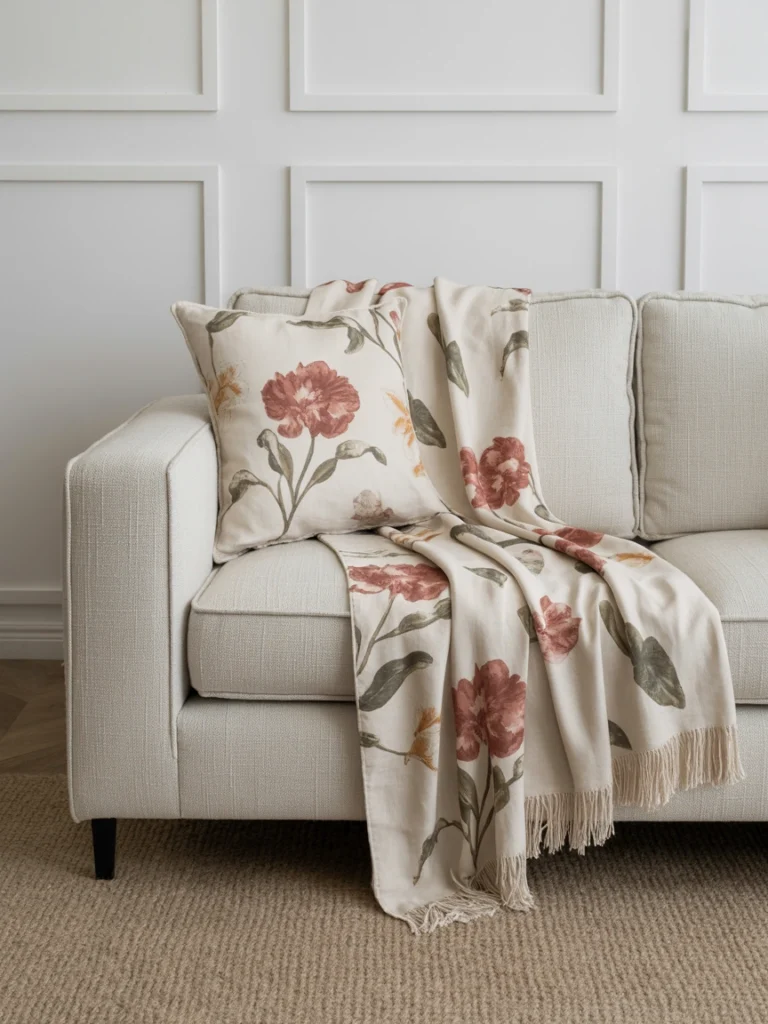
Soft furnishings are where most rooms overcommit and regret it. A whole chintz sofa is a major decision. A single floral cushion among solid linens is a much lighter touch.
Aboud’s rule: “One large floral piece, or several small ones, never both. A floral curtain plus a floral chair plus a floral cushion ends up looking like a 1980s tearoom. Pick one place to print, and let everything else hold quiet.”
The textiles that earn their place in summer: a botanical throw at the foot of the bed, two small accent cushions in a coordinating floral, a Liberty-style tablecloth for the outdoor dinners that move indoors when it rains. Easy to layer in. Easy to layer out come autumn.
3. Pressed Florals as Art
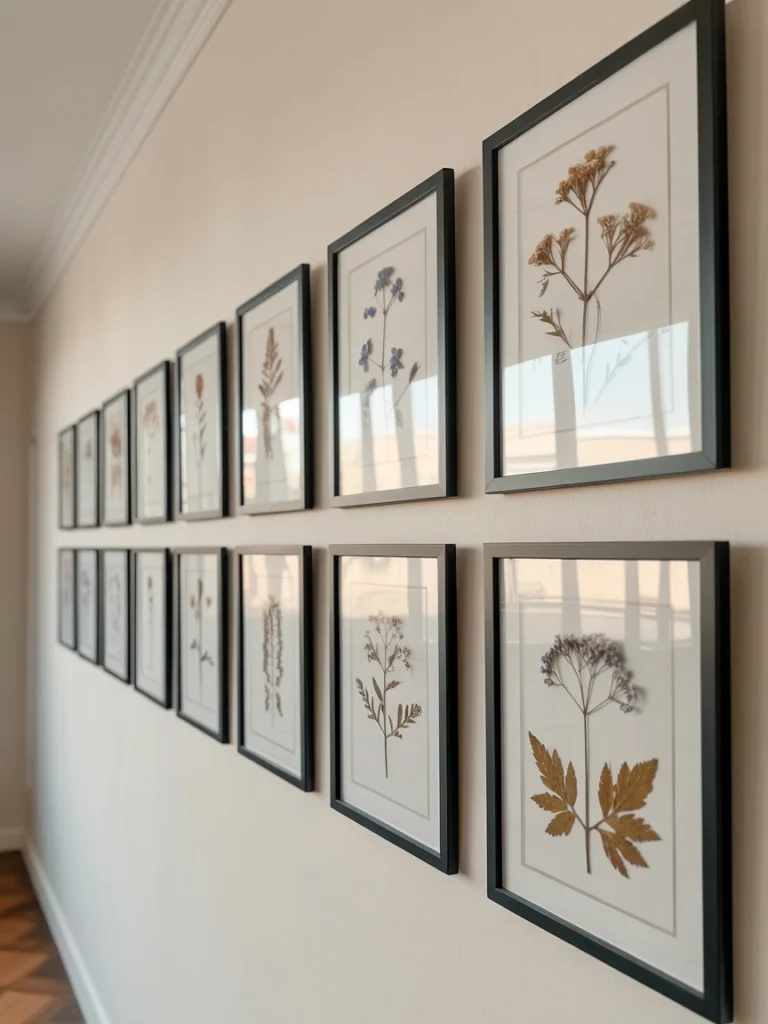
One of the loveliest, lowest-effort directions in floral home decor. Pressed flowers in simple frames, hung in a small grid or scattered along a hallway, give a room botanical character without committing to wallpaper.
The look works best when the framing is restrained. Thin black or pale-wood frames, white linen or rough paper backgrounds, plenty of space around each pressed bloom. Anything more ornate fights the delicacy of the flower itself.
Voss recommends pressing your own where possible. “There’s something different about a frame holding a flower from your garden, or one you picked on a walk,” she says. “It’s not just decor. It’s a record of the season.”
4. Botanical Prints, the Traditional Way
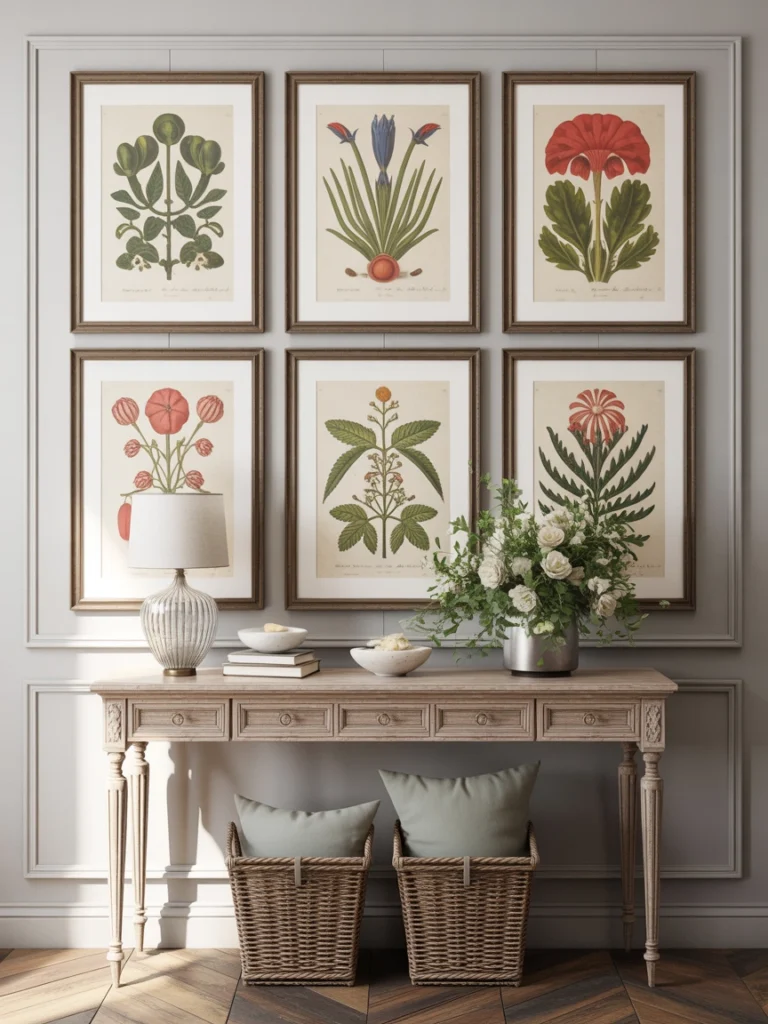
Vintage botanical illustrations have been quietly cool again for several years now. Antique markets are full of them. A small grouping of three or six framed botanical prints, in matching slim frames, makes one of the most reliable wall arrangements in interior design. The colors are soft. The subject is timeless. The symmetry of the arrangement keeps the look from feeling busy.
This is the floral move that works in almost any room: dining room, hallway, bedroom, even a small bathroom where the steam won’t damage them. Maitra observes that botanical prints “are one of the few decor choices that signal taste without trying. They’re the design equivalent of a navy blazer.”
5. Floral Ceramics and Vessels
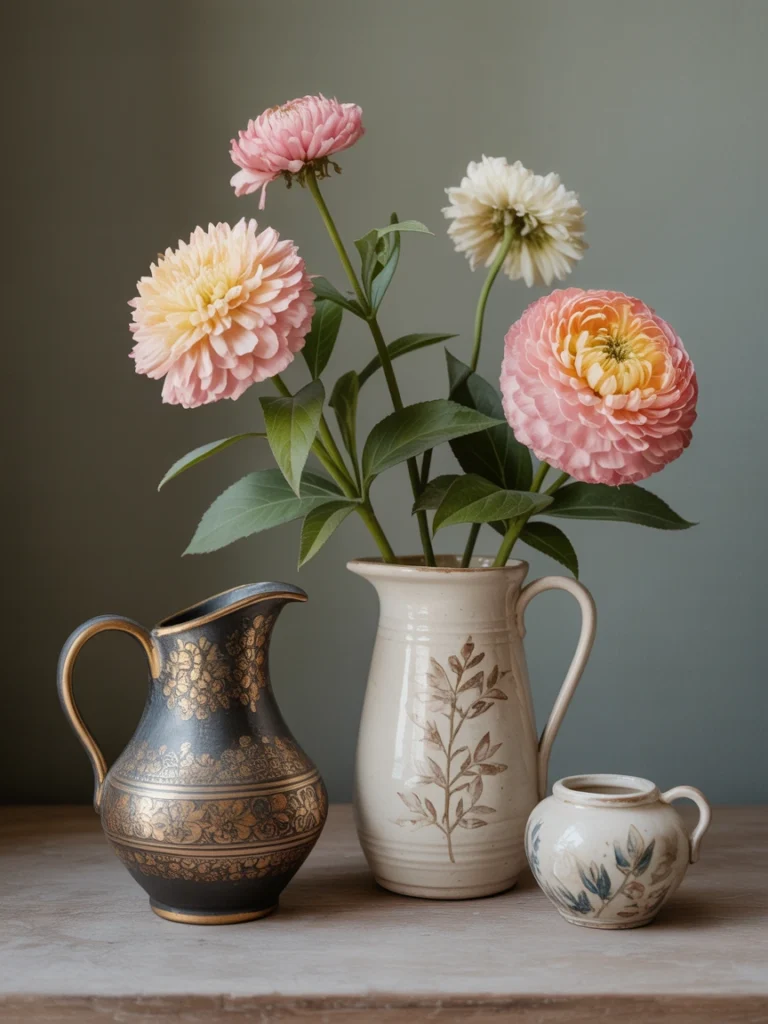
The vase itself can do as much work as the flowers in it. The most photographed summer arrangements this year often sit in hand-thrown ceramic vessels with subtle floral relief, or in vintage transferware pitchers picked up from antique markets and charity shops.
The trick, again, is restraint. A heavily floral vase holding heavily floral stems competes with itself. Either choose a quiet vessel for showy flowers, or a sculptural vase with a single architectural stem. The pairing matters as much as either piece alone.
A small note on collected ceramics: nothing dates a room faster than a shelf of matching vases. A loose collection of different forms, sizes, and finishes, in a coherent color story, looks gathered over time. Which is, of course, the point.
6. Living Plants as Floral Support
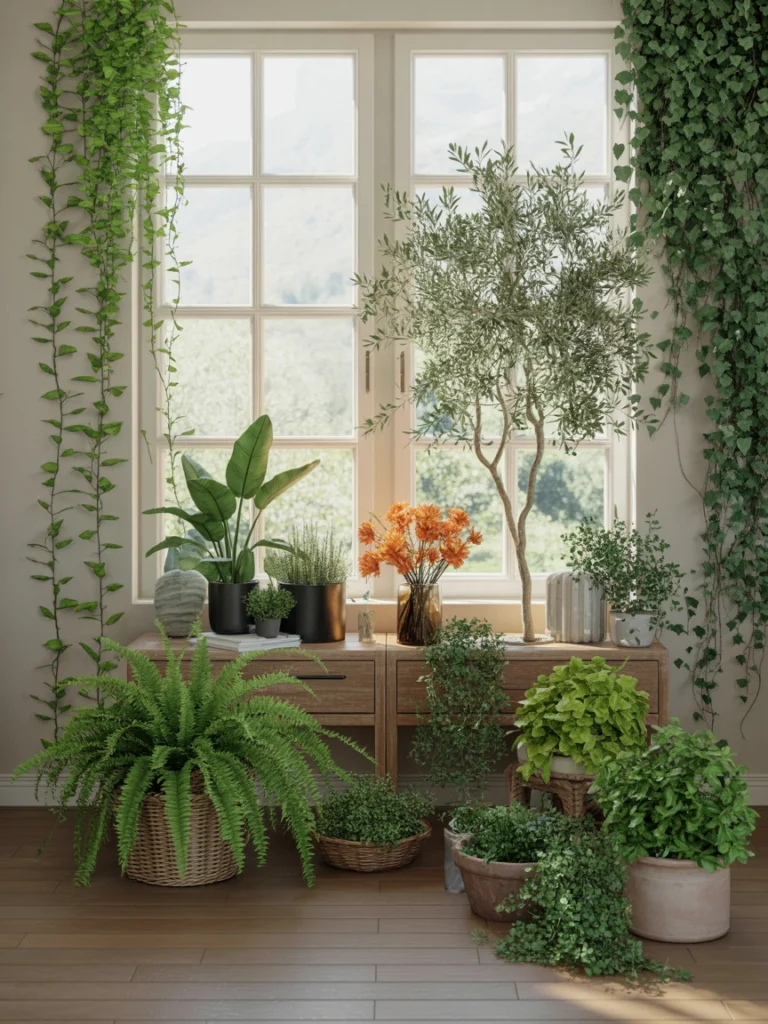
Pure floral arrangements are seasonal. Living plants are how the bring-nature-indoors energy carries through the year. A summer-styled room often pairs cut flowers with the supporting cast: a generous fern in a corner, a trailing string of pearls on a high shelf, a pair of olive trees framing a window.
Aboud points to the layering effect. “The flowers are the headline. The plants are the supporting text. Without the plants, the flowers look like a delivery. With the plants, the room looks like nature lives here.”
For summer specifically, lighter, looser, garden-style plants suit the season better than the architectural fiddle-leaf figs that defined the previous decade. Ferns, ivy, jasmine, herbs in the kitchen, a pelargonium on the windowsill.
7. Scent as a Floral Dimension
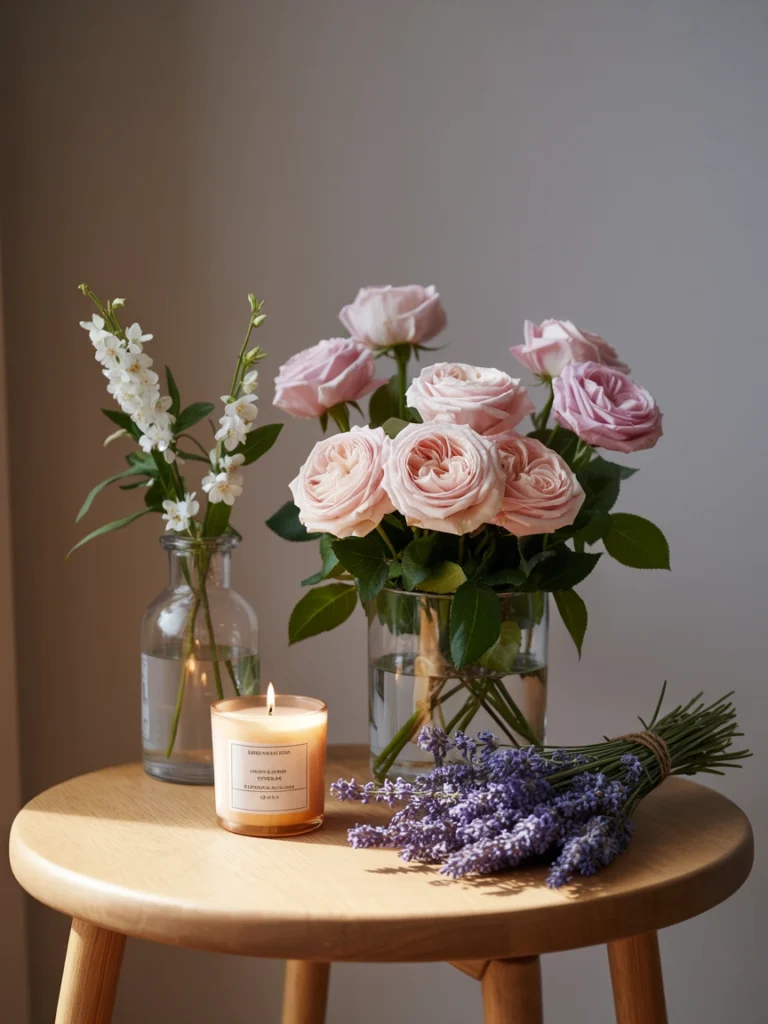
Often forgotten in interior design articles, but central to the experience of a floral room. The smell of sweet peas, of garden roses, of jasmine on a hot evening, is half the reason flowers feel like summer.
Maitra’s view: “A room that visually says summer florals but smells like nothing is a stage set. The scent is what makes the brain register the room as alive.”
Practical options: cut flowers with actual fragrance (many supermarket roses don’t smell, ask before you buy), a candle in a green-floral note like fig leaf or tomato vine, fresh herbs cut and placed in a small jar by the kitchen sink, dried lavender tucked into linen drawers.
A Quiet Note on Color
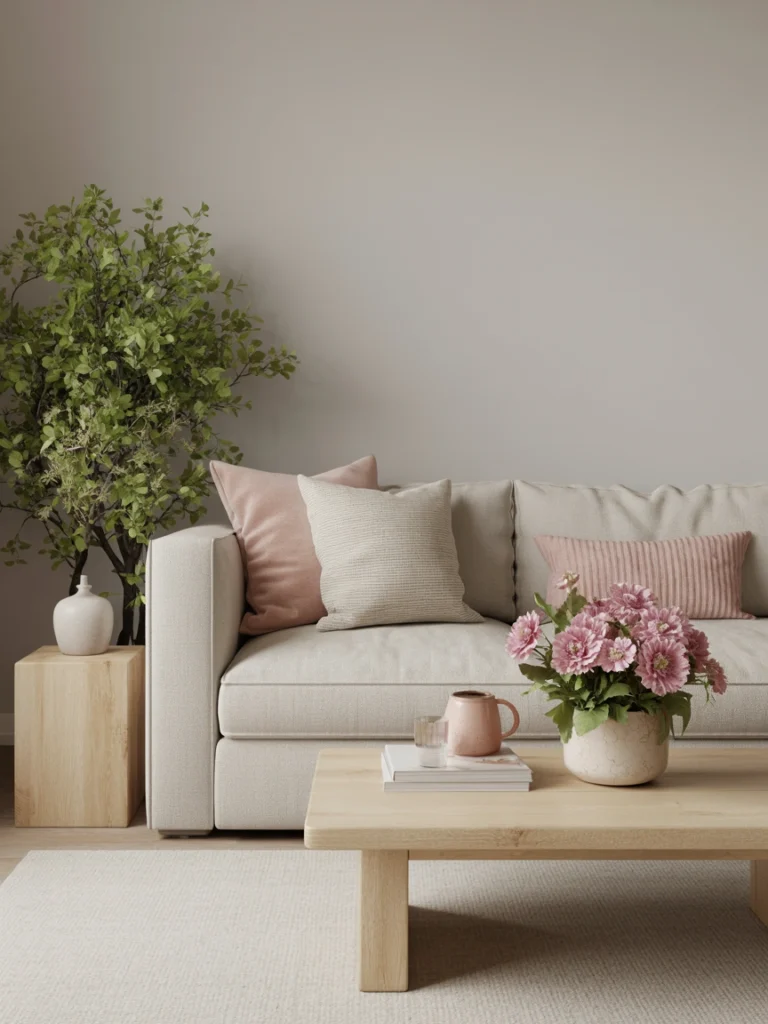
Voss, Aboud, and Maitra all return to the same point when pressed. The strongest floral summer rooms aren’t the brightest. They’re the most considered.
Pale walls, neutral upholstery, and then one or two carefully chosen color stories carried through the florals, the textiles, and the ceramics. Pinks and greens. Yellows and creams. Soft blues and white. The flowers themselves bring the saturation. Everything else stays quiet to let them sing.
In fact, the floral summer rooms that read most beautifully in photographs and in person tend to share this discipline. Generosity in one direction, restraint in every other.
The pleasure of floral summer decor isn’t really about decoration at all. It’s about marking the season inside the house the way the garden marks it outside. Bring the stems in. Let the textiles soften. Let the prints stay up through autumn. The room will tell you when it’s ready for the next season’s invitation.


