Dream Backyard Pool Ideas That Look Straight Out of Pinterest
- Pool Ideas
 Alina
Alina- 0
- 16 minutes read


There’s a moment, scrolling through a saved board of backyard pool ideas, when the same image seems to appear in four different homes. A long rectangle of still water. A dark tiled bottom. A single olive tree on one side. A low stone wall framing the far edge. The pool that has been saved, somewhere on the internet, more times than any other.
Pinterest has, for better or worse, given us a shared visual language for what a dream backyard pool looks like. The question is what’s behind it. Why these particular pools photograph so well. How to translate the inspiration into a pool that suits an actual garden rather than just a feed.
In short, the pools doing the most work on Pinterest aren’t elaborate. They’re disciplined.
Pool designer Adrián Calderón frames it neatly. “The pools that travel furthest online share a small number of qualities,” he says. “Restraint. Strong materials. A relationship with the planting around them. Almost nothing else is doing the work. The fountains, the lights, the elaborate features, those barely register in the photographs people actually save.”
But where to start, when “dream pool” can mean anything from a Roman bath to a vanishing-edge spectacle on a Caribbean cliff?
We pulled the directions that pool designers and residential designers keep returning to. Each one suits a different garden, budget, and ambition.
1. The Minimalist Rectangle
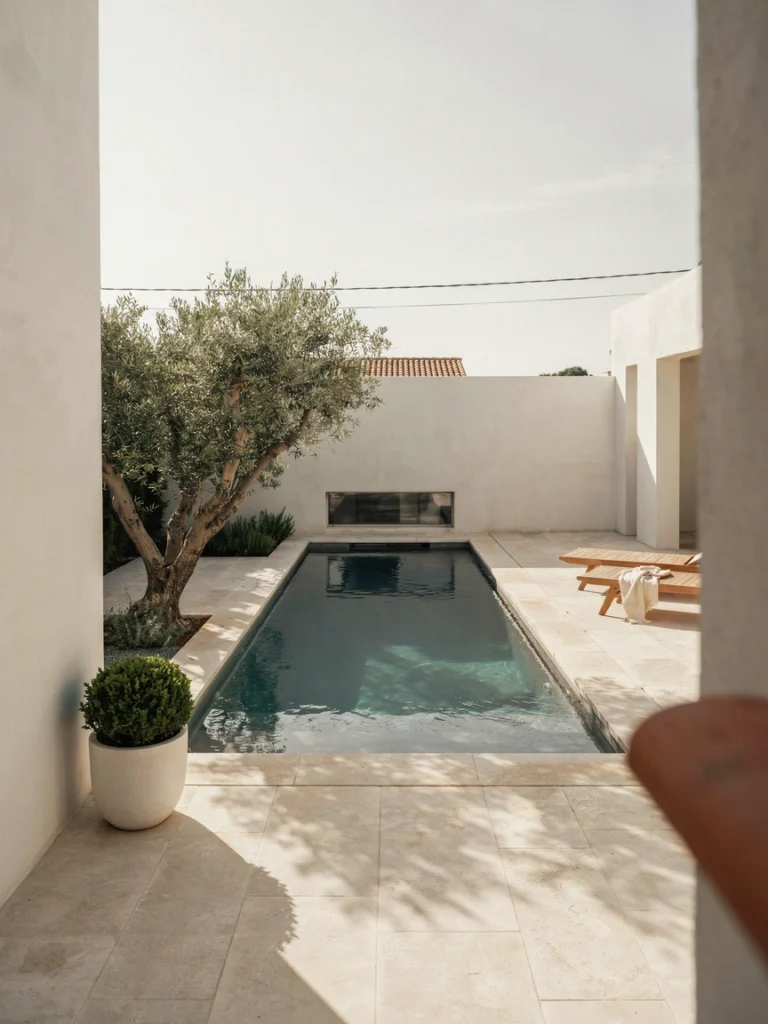
The most photographed pool style of the past decade, almost without exception, is the simple geometric rectangle. Clean edges, dark interior, no fountains, no curves, no chrome. Set in a generous deck of pale stone or hardwood. A single tree, often olive or fig, planted to one side.
Residential designer Imogen Larkin notes that the appeal is “the discipline of doing less than people expect.” She continues, “A rectangular pool with the right proportions and the right materials photographs more beautifully than any infinity-edge pool with a swim-up bar. The trick is the proportion. Twenty-five by twelve feet works. Sixteen by ten doesn’t, it looks cramped.”
The interior color matters enormously. The dark-bottomed pool, deep grey or near-black, reflects the sky like a mirror and reads as instantly more sophisticated than the standard light-blue interior. It’s the easiest single decision that lifts a backyard pool from generic to designed.
2. The Plunge Pool
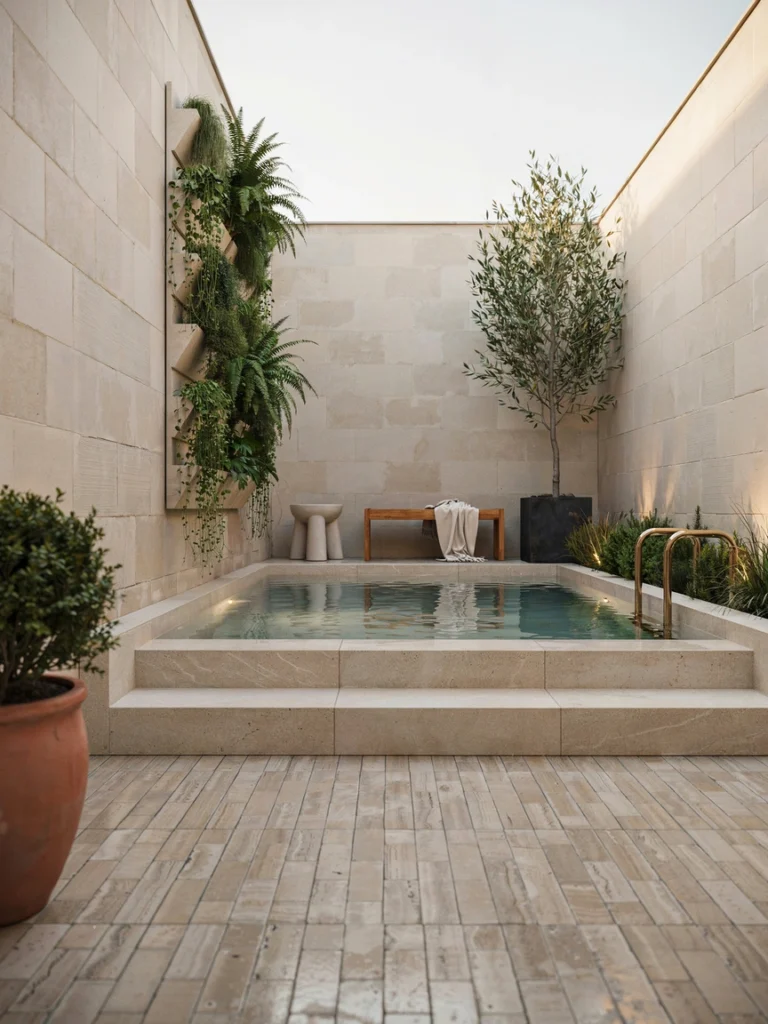
For smaller gardens, courtyards, and urban backyards, the plunge pool has become one of the most-requested luxury features of the past five years. A compact pool, often six by ten or eight by twelve feet, designed for cooling off, sitting, and lounging rather than swimming laps.
Calderón sees plunge pools as “the project I’m asked about most often. Clients want the pleasure of a pool without giving up their entire garden. A well-designed plunge pool gives almost all of that for a quarter of the space.”
In fact, the plunge pool’s small footprint allows for finishes and materials that would be prohibitive at full pool scale. Hand-cut Bisazza mosaic. Imported limestone surround. A single architectural water spout in solid brass. The smaller pool can carry the kind of detail a larger pool would price out of reach.
3. The Natural Swimming Pond
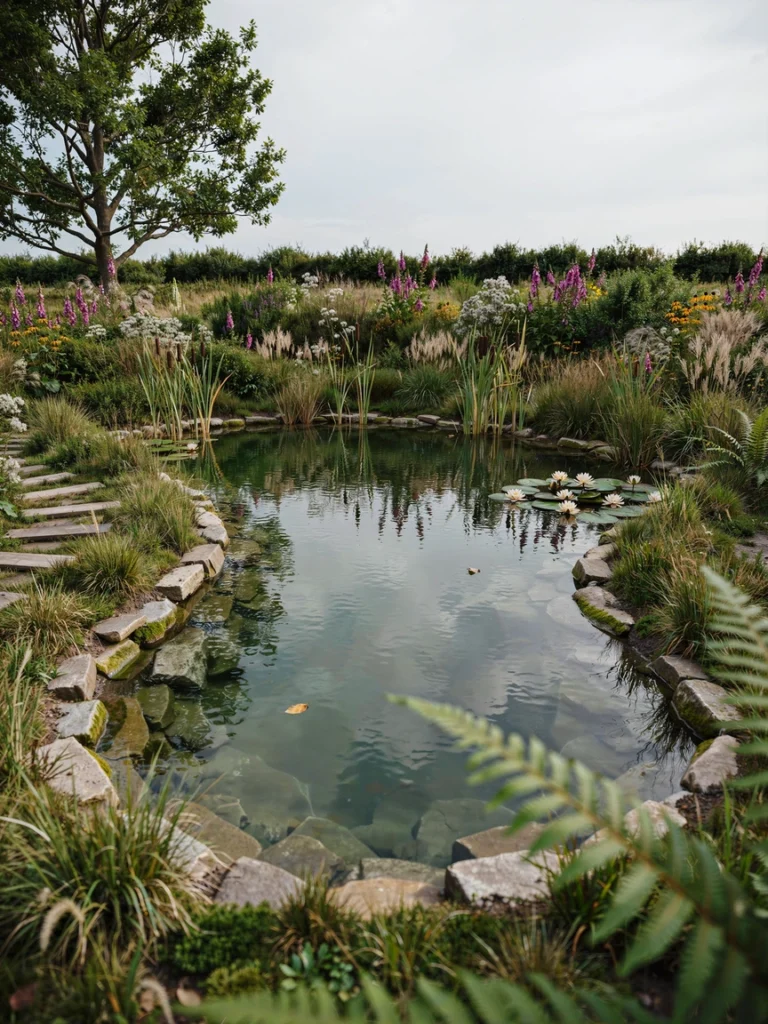
A direction that has shifted from niche to mainstream over the past few years. A natural pool, also called a swim pond or biopool, uses planted regeneration zones instead of chlorine to keep the water clear. Visually, it looks like a wild swimming pond from a country estate, complete with reeds, water lilies, and fish.
The aesthetic appeal is obvious. The pool looks as if it has always been part of the garden. Frogs arrive. Dragonflies hover. Larkin describes them as “the most romantic pools you can build, but they’re not for every household. The water is colder. The maintenance is different. And they take up more space, because the planted filtration zone has to be roughly the same size as the swimming area.”
For the right home, the right setting, and a household that wants something quietly extraordinary, this is one of the most powerful directions on this list.
4. The Pool with a Tanning Ledge
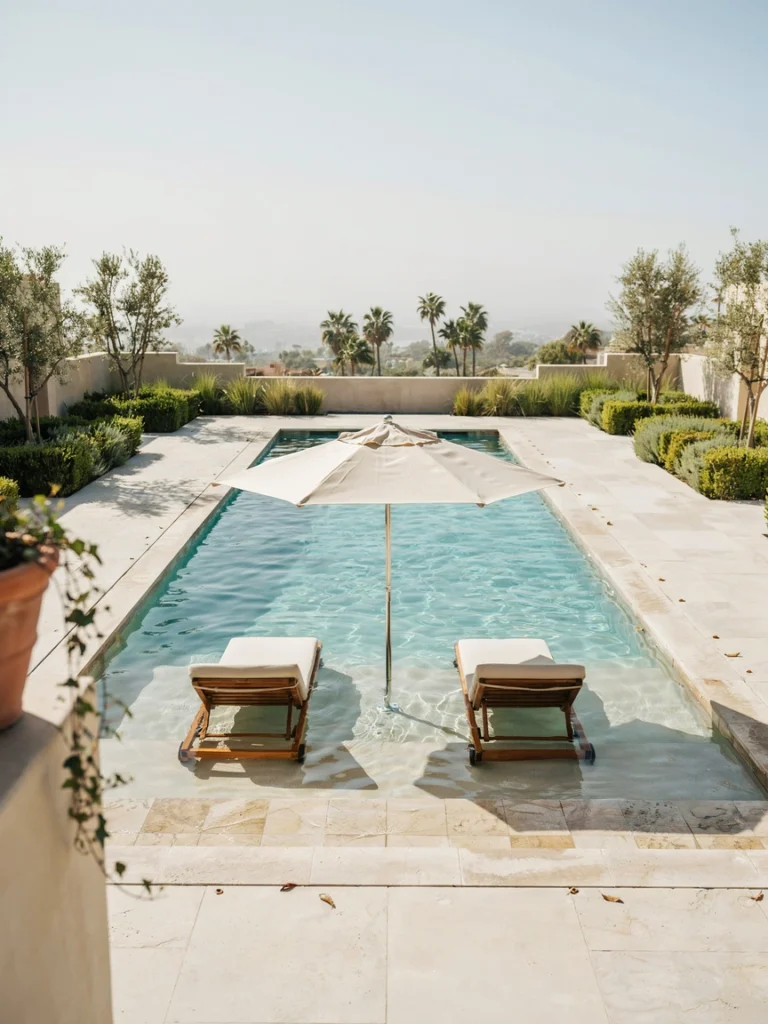
The Baja shelf, sometimes called a sun shelf or tanning ledge, is the single most-imitated feature in current pool design. A shallow section at one end of the pool, ankle to thigh deep, designed for sitting on a chaise half-submerged in the water.
The Pinterest version pairs the ledge with a pair of in-water chaise loungers, usually in pale taupe or off-white, sometimes with an umbrella anchored into a built-in sleeve. Add an outdoor side table on the deck within reach, and the photograph is essentially complete.
This is one of those design moves that has become so widely copied because it genuinely works. The tanning ledge is the part of the pool people use the most.
5. The Mediterranean Tiled Pool
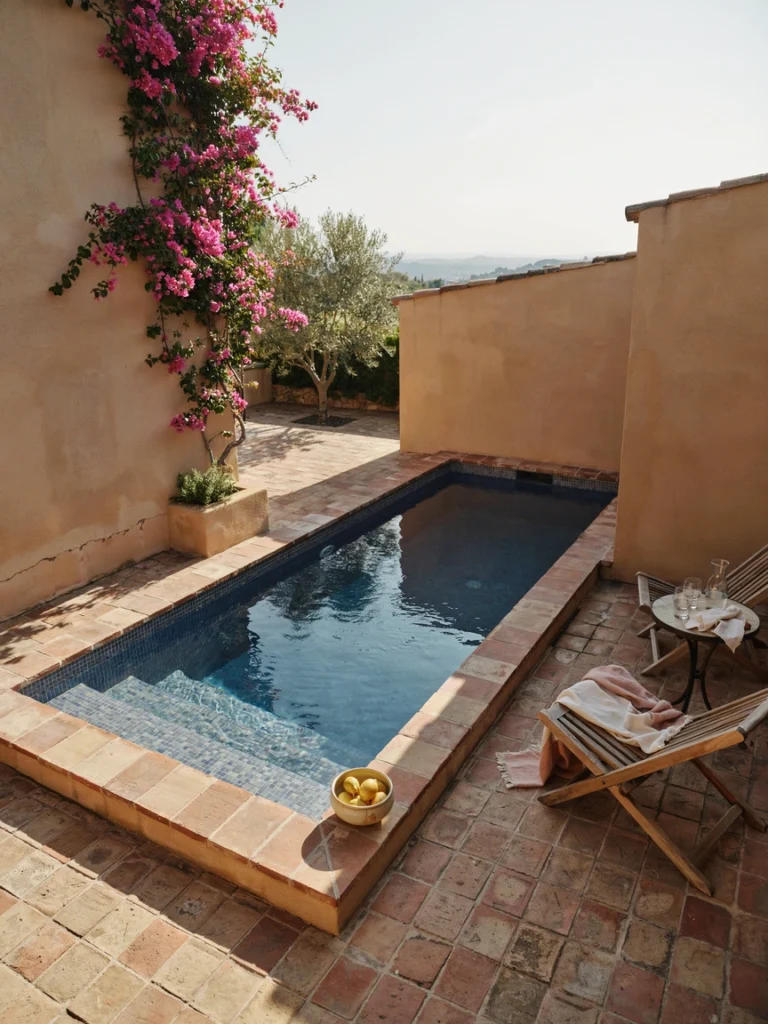
A more referential direction, drawing from the historic pools of Sicily, Andalusia, and Morocco. Hand-cut mosaic tile in deep blues, greens, or terracottas. Often a stepped entry rather than a ladder. Sometimes a small wall fountain spilling at one end.
Pool designer Hideki Aoyama, whose work spans both Mediterranean Europe and the American Southwest, describes the appeal in cultural terms. “The Mediterranean pool isn’t trying to look modern. It’s trying to look like it has always been there. The tile work and the patina are the entire point. A new pool that already looks two hundred years old.”
The challenge with this direction is restraint. The mosaic should do all the talking. Surround it with too much else (elaborate planting, ornate furniture, themed lighting) and the pool starts to feel like a hotel rather than a private garden.
6. The Black-Bottomed Pool
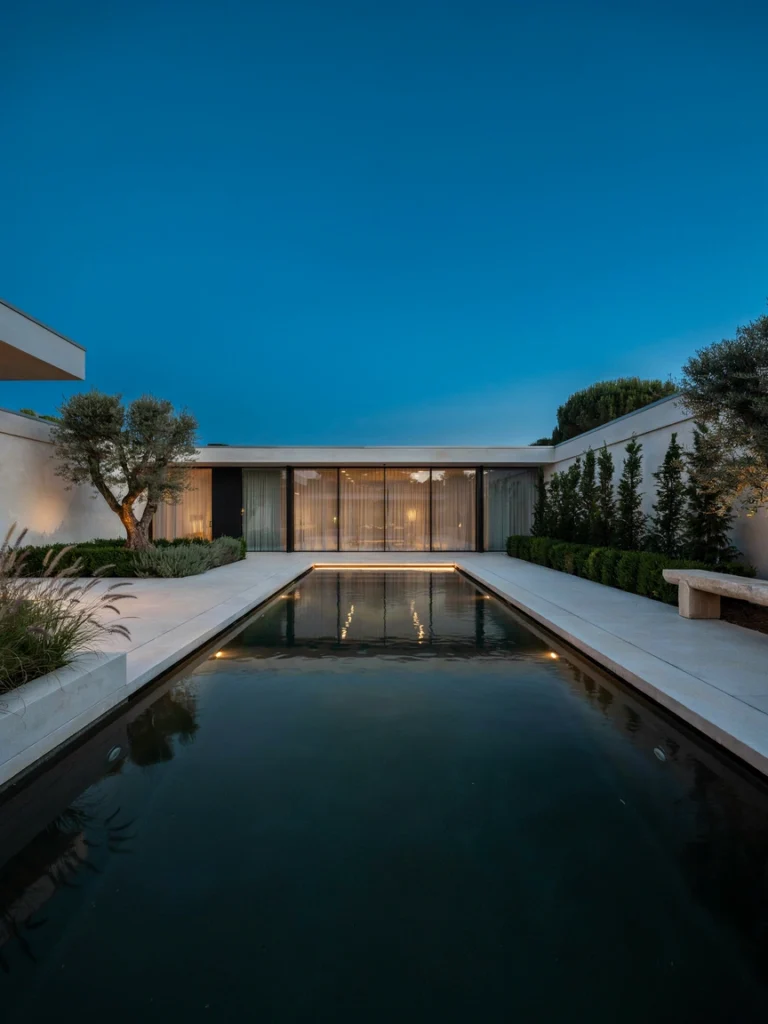
Worth its own section, even though the color question has come up earlier. The dark-bottomed pool is the single biggest aesthetic shift in residential pool design of the past decade. A black or near-black plaster interior makes the water reflect the sky, the trees, and the architecture around it. The pool reads as deeper, more sculptural, more like a pond and less like a swimming pool.
Calderón notes a small practical caveat. “Dark pools heat up faster in the sun, which is wonderful in spring and autumn and slightly aggressive in midsummer. They also show pollen and leaves more visibly than light-bottomed pools. Net them more often.”
Aesthetically, though, they remain unmatched. The black-bottomed pool is the single decision that turns a backyard pool from a recreational object into a piece of design.
7. The Cantilevered Spa
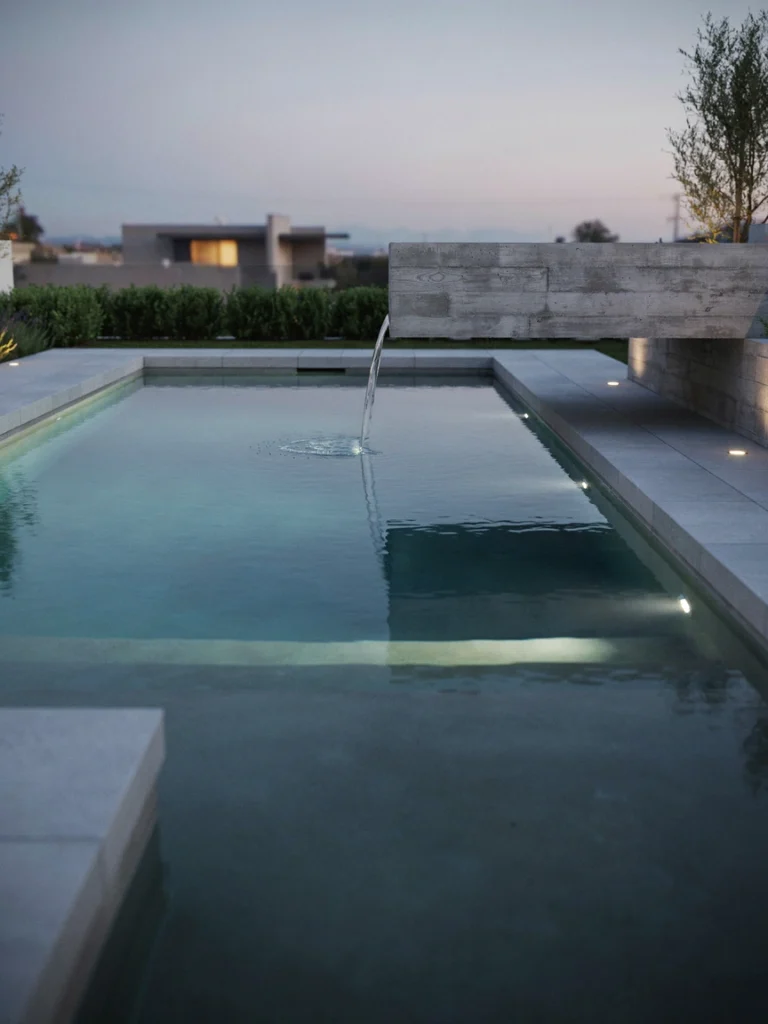
For households that want both a pool and a hot tub, the elegant move of the moment is the cantilevered spa: a raised square or rectangular spa, set partly above the pool deck, with water spilling over one edge into the pool below.
The visual effect is what matters. The spilling water turns the spa into a living water feature when it’s running, and the cantilevered height gives the spa a sculptural quality the standard sunken hot tub lacks. Aoyama describes it as “the most photographed pool detail right now, after the tanning ledge.”
8. The Treatment of the Surround
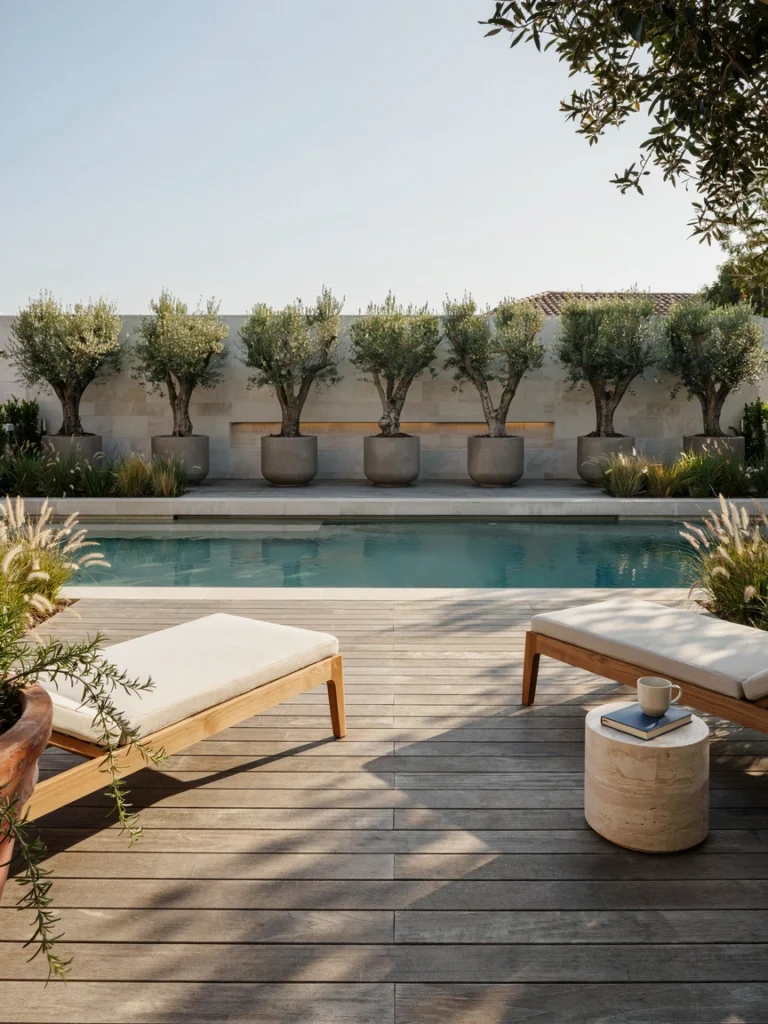
The pool itself is often the easiest part. What separates the Pinterest favorites from the ordinary backyard installations is everything around the pool: the deck, the planting, the lighting, the furniture.
Larkin’s quick checklist for the surround:
- A single, generous deck material rather than multiple competing surfaces
- One species of architectural tree planted in repetition (olive, fig, magnolia, Italian cypress)
- Soft underplanting of grasses and low-growing perennials rather than fussy borders
- Discreet outdoor lighting at ground level rather than overhead floodlights
- One or two pieces of generous outdoor furniture, not a full patio set
In fact, she points out that “the furniture is where most pools fail. A pool surrounded by ten plastic chairs reads as a backyard. A pool with two well-chosen loungers and a single outdoor sofa reads as a designed space.”
9. The Pool House
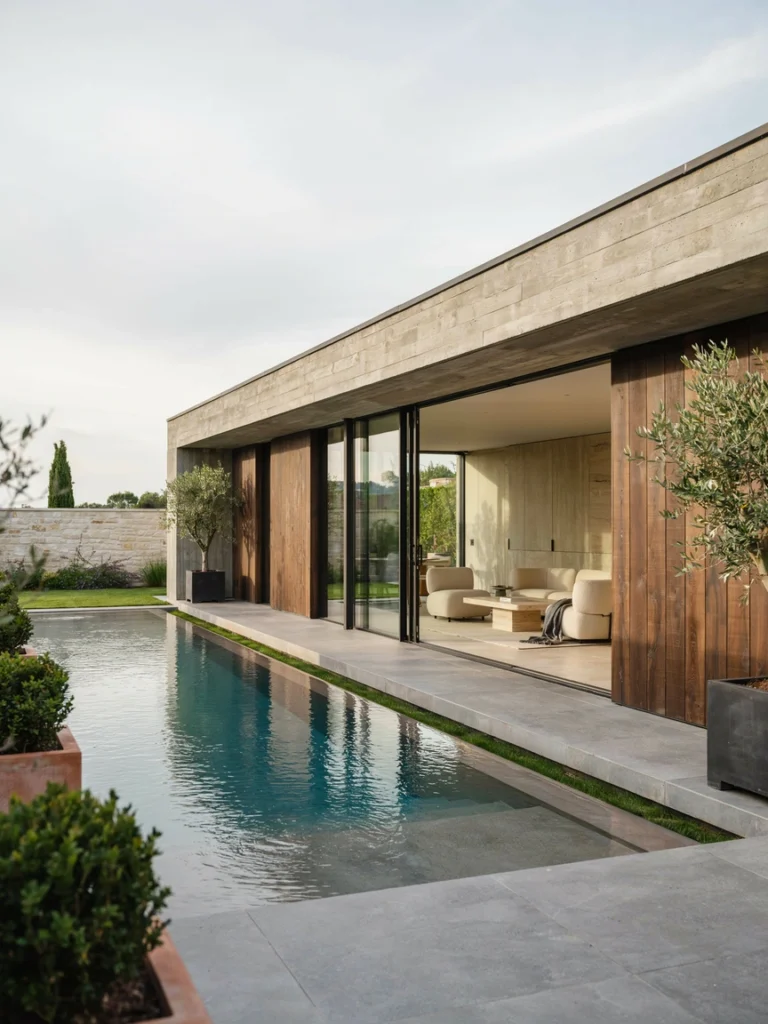
For the most committed projects, the pool gets its own building. A pool house, ranging from a simple changing pavilion to a full guest suite with kitchenette and bath, anchors the pool as a destination within the garden.
Aoyama notes that “the pool house changes the relationship with the pool entirely. Without it, the pool is a feature you visit. With it, the pool is a small estate within the garden, with its own logic and rhythm.”
A modest pool pavilion can be a single open room with a covered area for shade. A full pool house can include showers, a small lounge, and a kitchenette for entertaining. The scale depends on the property and the budget. The principle is the same: a building beside the pool makes the pool feel intentional.
A Quieter Note on What Doesn’t Photograph
Calderón, Larkin, and Aoyama all returned to a similar observation when pressed. The features that get added to pools because they sound impressive (elaborate fountains, multi-colored LED systems, faux rock waterfalls, swim-up bars in residential settings) rarely make it into the photographs people actually save. The most-loved Pinterest pools are almost always the quietest.
In fact, Larkin sums it up cleanly. “The pools that travel hardest online are the ones doing almost nothing. A rectangle. A dark interior. The right tree. The right deck. Everything else is people trying to add value and instead adding noise.”
A dream backyard pool, in the end, isn’t really about the pool itself. It’s about the discipline of the space around it, the proportion of the water to the garden, and the willingness to choose two or three strong moves and let them stand alone. The pools that look straight out of Pinterest aren’t full of features. They’re full of restraint.


