Cheap Wood Ceiling Design Ideas That Don’t Look Cheap
- Interior Finishes
 Alina
Alina- 0
- 12 minutes read


I once watched a YouTube video that made cladding a ceiling in wood look like a relaxing Sunday afternoon. Mine took an entire bank holiday weekend, two trips back to the timber merchant, and a neck that didn’t forgive me for a week. But the room it gave me was so much warmer than the flat white plasterboard before it that I’d do it again tomorrow. Just with a proper support brace this time.
The thing nobody tells you about wood ceilings is that the cheap ones and the expensive ones can look nearly identical if you make the right calls, and nearly nothing alike if you make the wrong ones. So here are the budget wood ceiling ideas that actually hold up, plus the corners that aren’t worth cutting.
Start with the cheapest option that still looks intentional
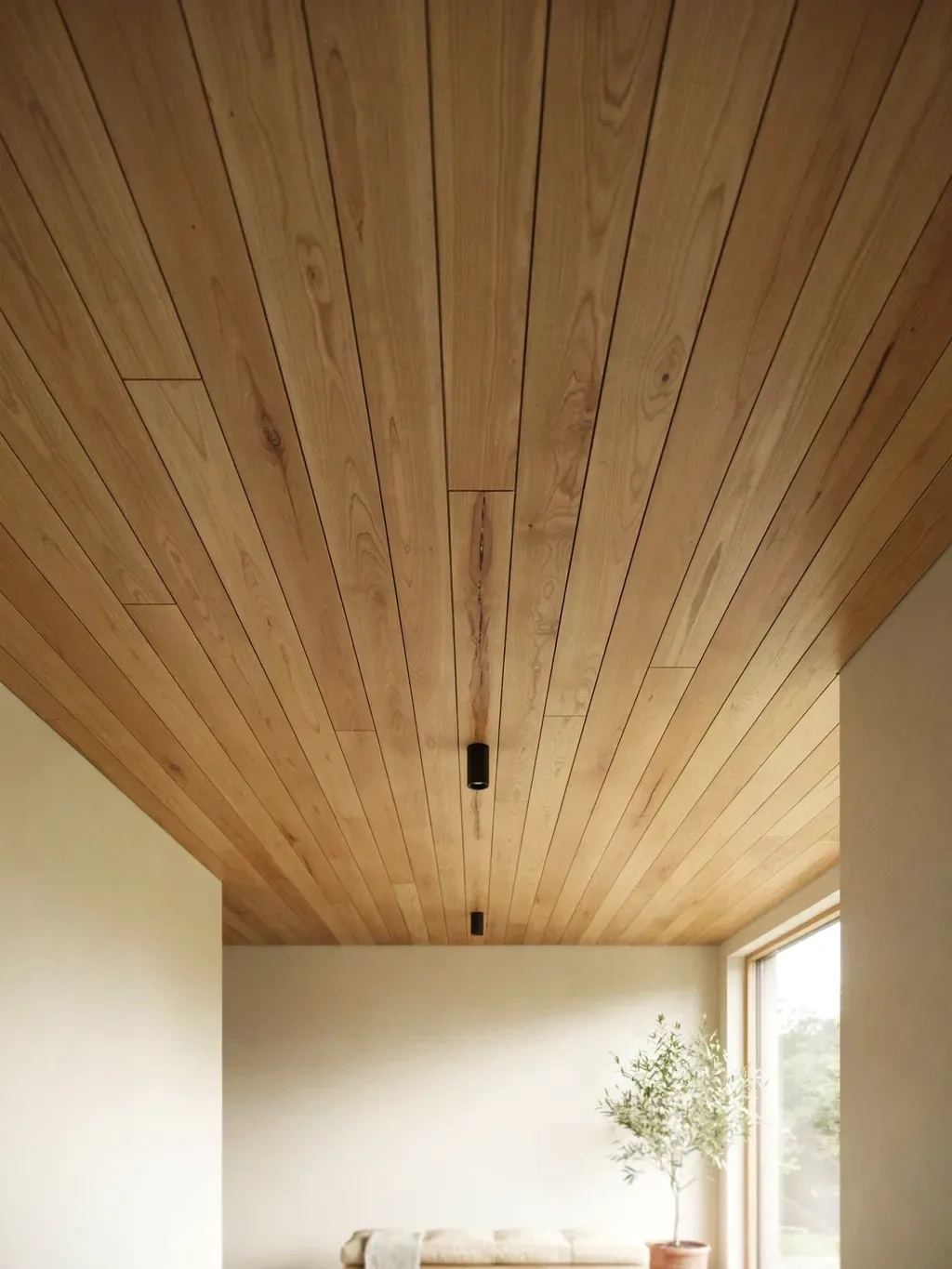
The single most budget-friendly wood ceiling is plain softwood planks, the kind sold as cheap floorboards or sheathing boards. They cost a fraction of engineered cladding and, stained or whitewashed, nobody can tell the difference once they’re up.
The trick is treating them deliberately. Run them all one direction, keep the gaps even, and finish them properly. A £30 batch of rough boards that’s been sanded and oiled looks far better than £200 of nice cladding slapped up carelessly. Cheap materials plus care beats expensive materials plus rush, every single time on a ceiling.
Plank cladding is the workhorse
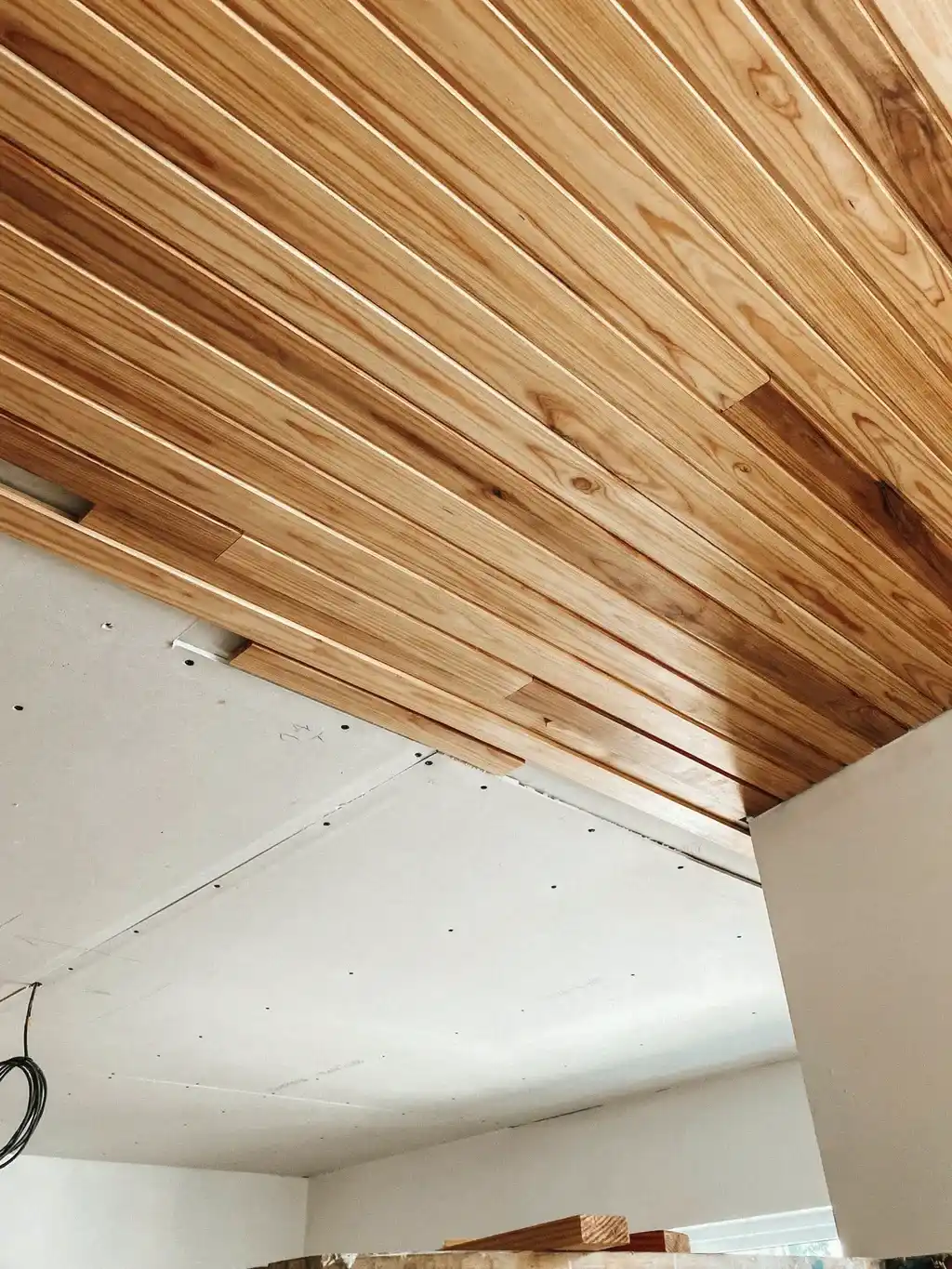
Tongue-and-groove or simple square-edge planks are the default cheap wood ceiling for a reason. They go up over existing plasterboard, hide a multitude of sins, and instantly warm a room. You don’t need to remove the old ceiling, you batten over it and clad on top.
I used basic tongue-and-groove from a DIY shed and it transformed a boxy bedroom for under £150 in materials. The boards slot together so the joints stay tight, which forgives a lot of beginner inaccuracy. If you’re nervous about your skills, this is the most forgiving wood ceiling there is. Square-edge planks look smarter but punish every wobbly gap, so start with tongue-and-groove.
Pallet wood, with one big caveat
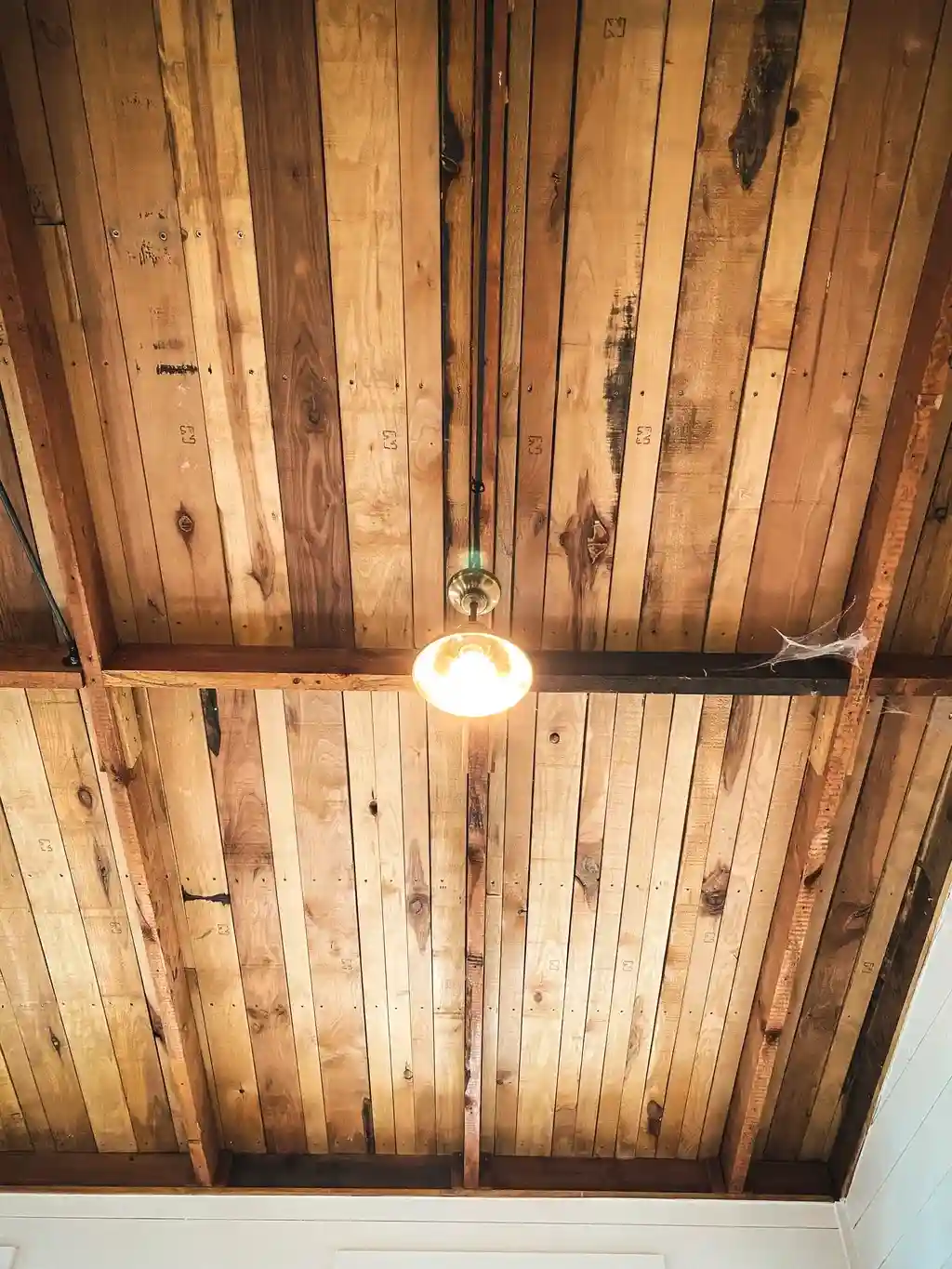
Reclaimed pallet wood is the cheapest wood ceiling going, often free, and it gives you that mixed-tone rustic look people pay a fortune to fake. Stripped, sanded, and arranged with the natural colour variation, it can look genuinely characterful.
Here’s the caveat, though: pallet wood is filthy work. It needs heat-treated pallets only (look for the HT stamp, never MB which means chemically treated), every nail pulled, every board sanded, and you’ll spend more hours prepping than fitting. The wood is free; your weekend is not. I’d only go this route if you actively enjoy the prep or genuinely can’t spend a penny on materials. For most people the cheap-but-clean plank route is better value once you count the hours.
Plywood in strips looks far pricier than it is
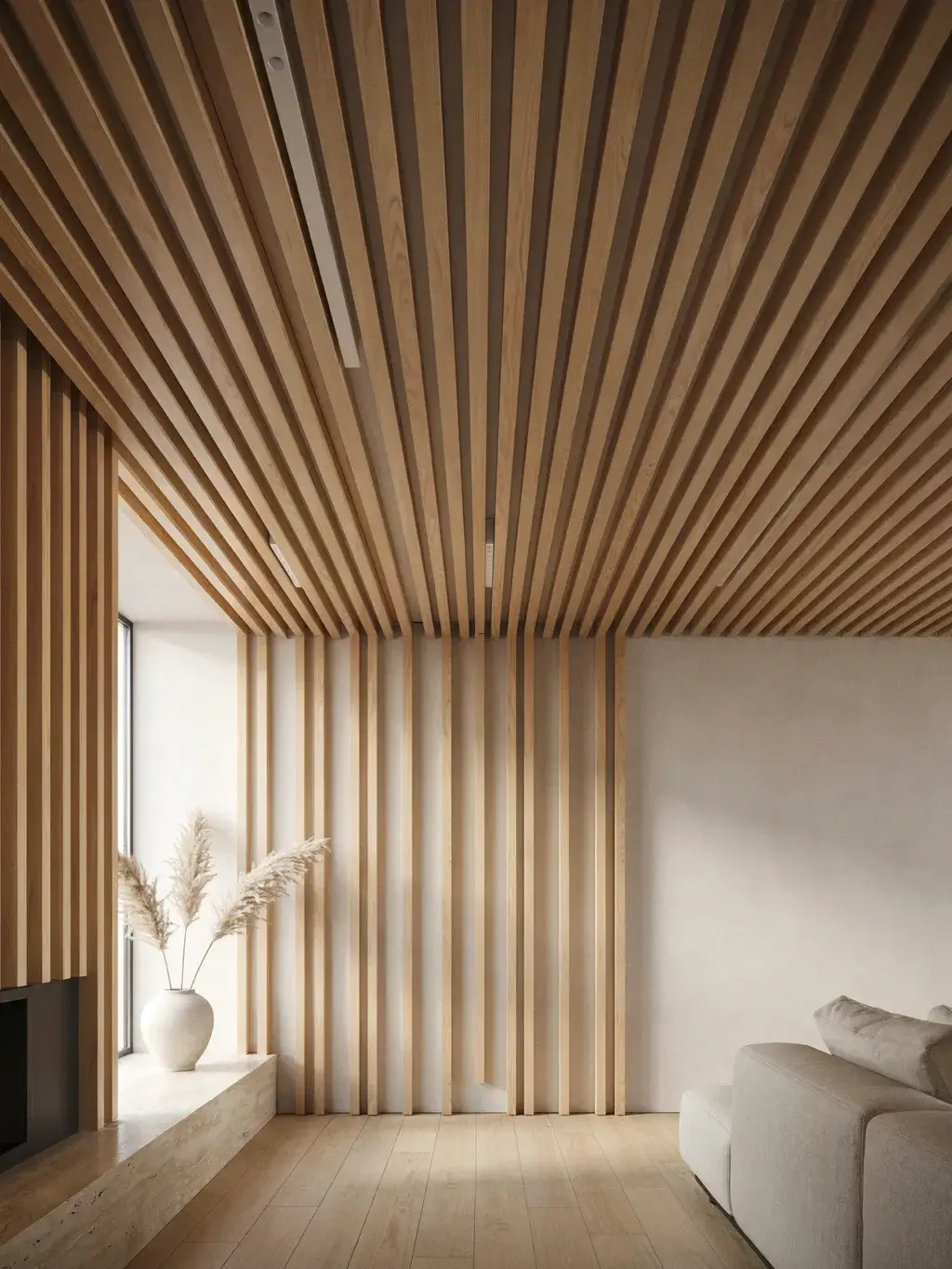
This is the budget designer’s secret. A single sheet of decent birch plywood, cut into long strips on a track saw and fixed up with even gaps, gives a clean modern slatted ceiling that looks like it cost a fortune. One sheet covers a surprising area.
The pale edge grain of birch ply reads as deliberate and contemporary, nothing like the rustic plank look. You do need a way to cut straight strips, a track saw or a careful circular saw with a guide, but the material cost is low. A couple of plywood sheets turned into a slatted feature ceiling over a kitchen island looks like a designer did it. People always assume it cost three times what it did.
Beams you can fake convincingly
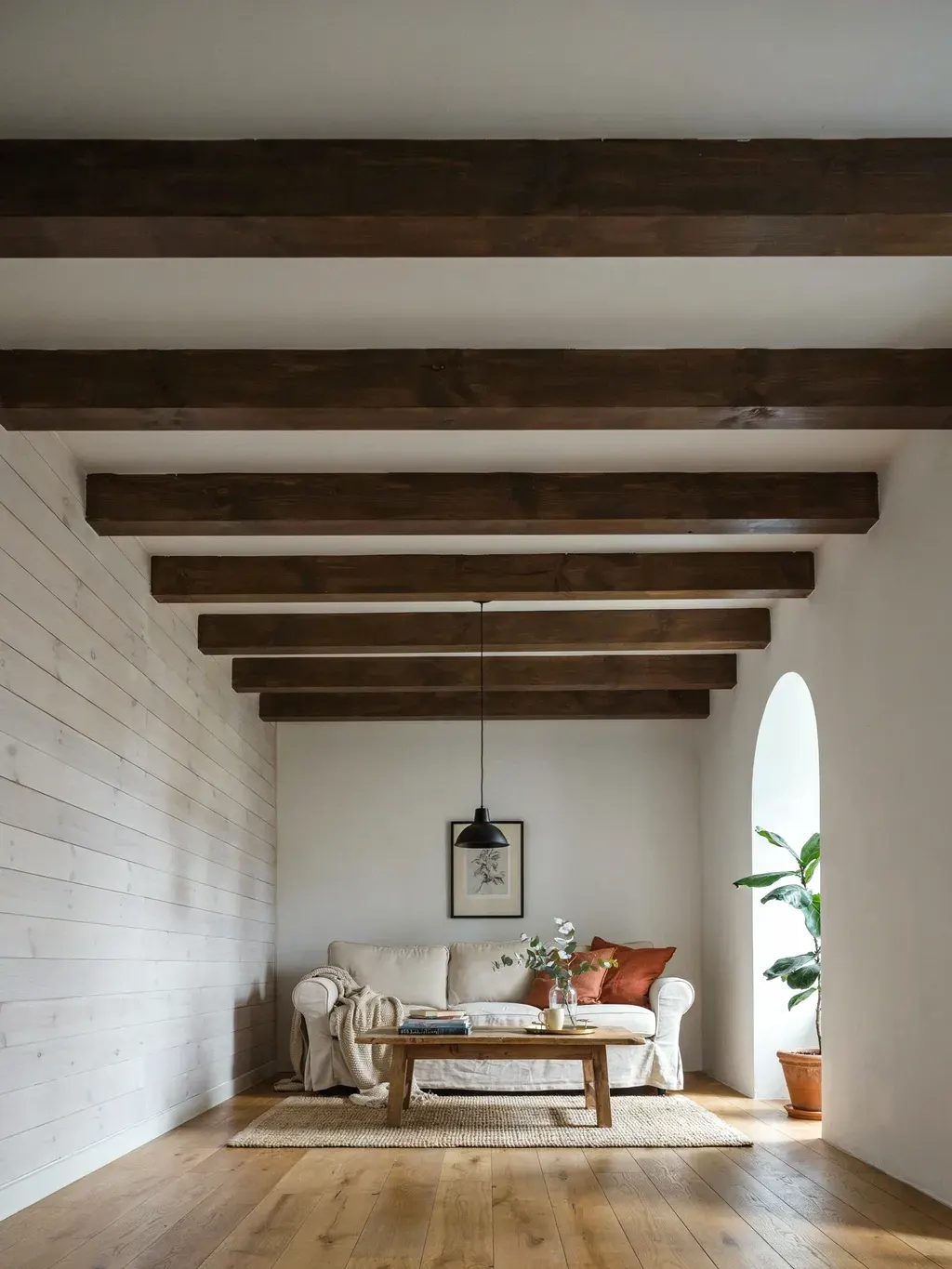
Real structural oak beams cost a fortune. Faked ones, hollow boxes made from three lengths of timber or even MDF, stained dark and fixed to the ceiling, give the same cottage character for almost nothing. From below, nobody can tell a hollow box beam from a solid one.
I made a run of faux beams from cheap planed timber, stained them with a dark oil, and screwed them up across a plain white ceiling. The contrast of dark beams against white plaster is a classic look and the materials ran to maybe £60. If your ceiling is plain and you want instant character without cladding the whole thing, faux beams are the cheapest high-impact move available.
Get the finish right or it all falls apart
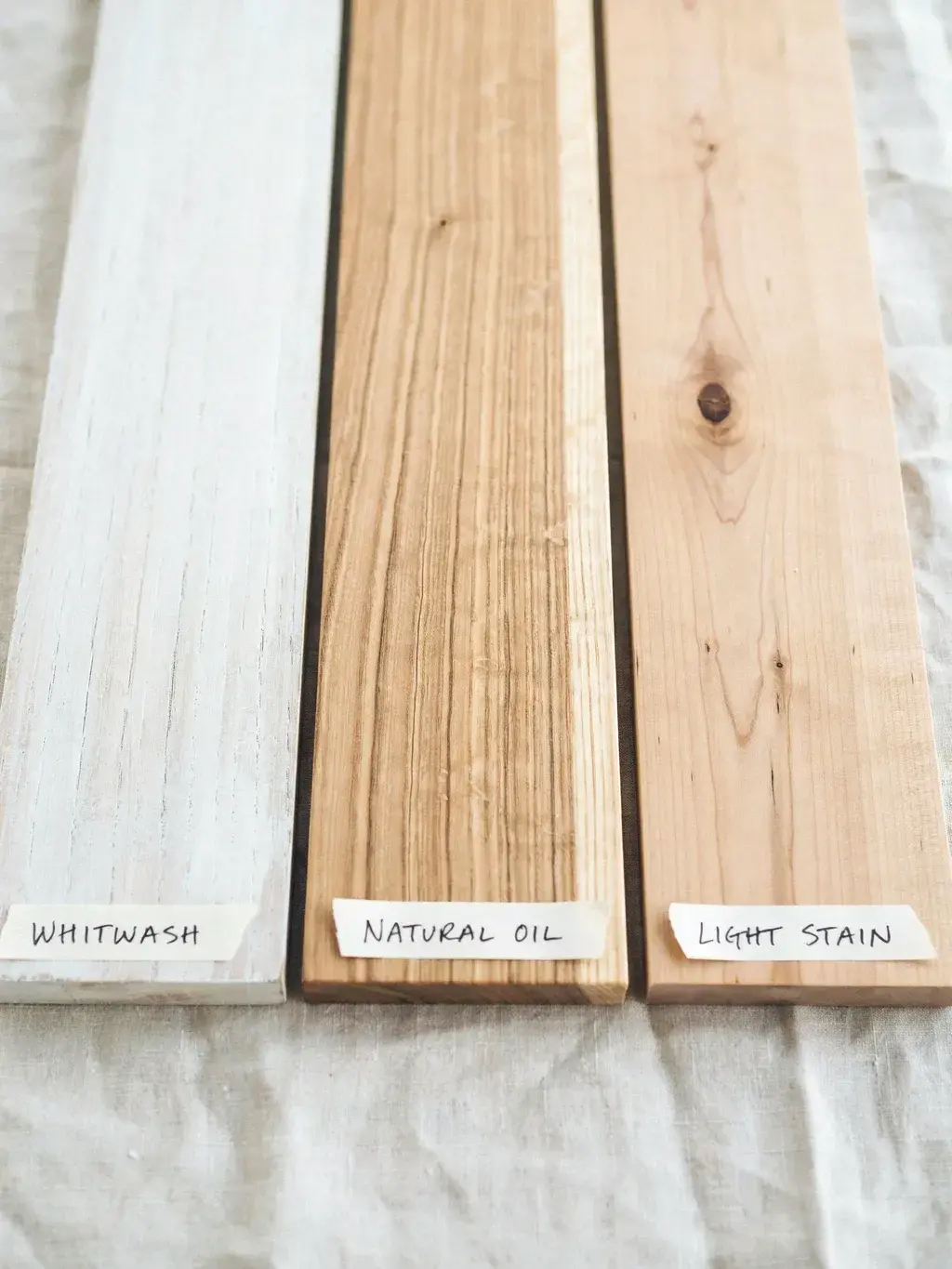
This is where cheap wood ceilings live or die. Bare cheap timber looks exactly like cheap timber. The same wood, properly finished, looks intentional. A whitewash, a wood oil, or a light stain costs little and completely changes how expensive the result reads.
Whitewashing is especially forgiving because it evens out the colour differences between cheap boards, hiding the fact that they weren’t matched. A wood oil deepens the grain and makes softwood look richer than it is. Whatever you choose, do a test board first, because the same stain looks wildly different on pine versus ply versus reclaimed wood. The finish is not the place to save your last fiver.
The real numbers
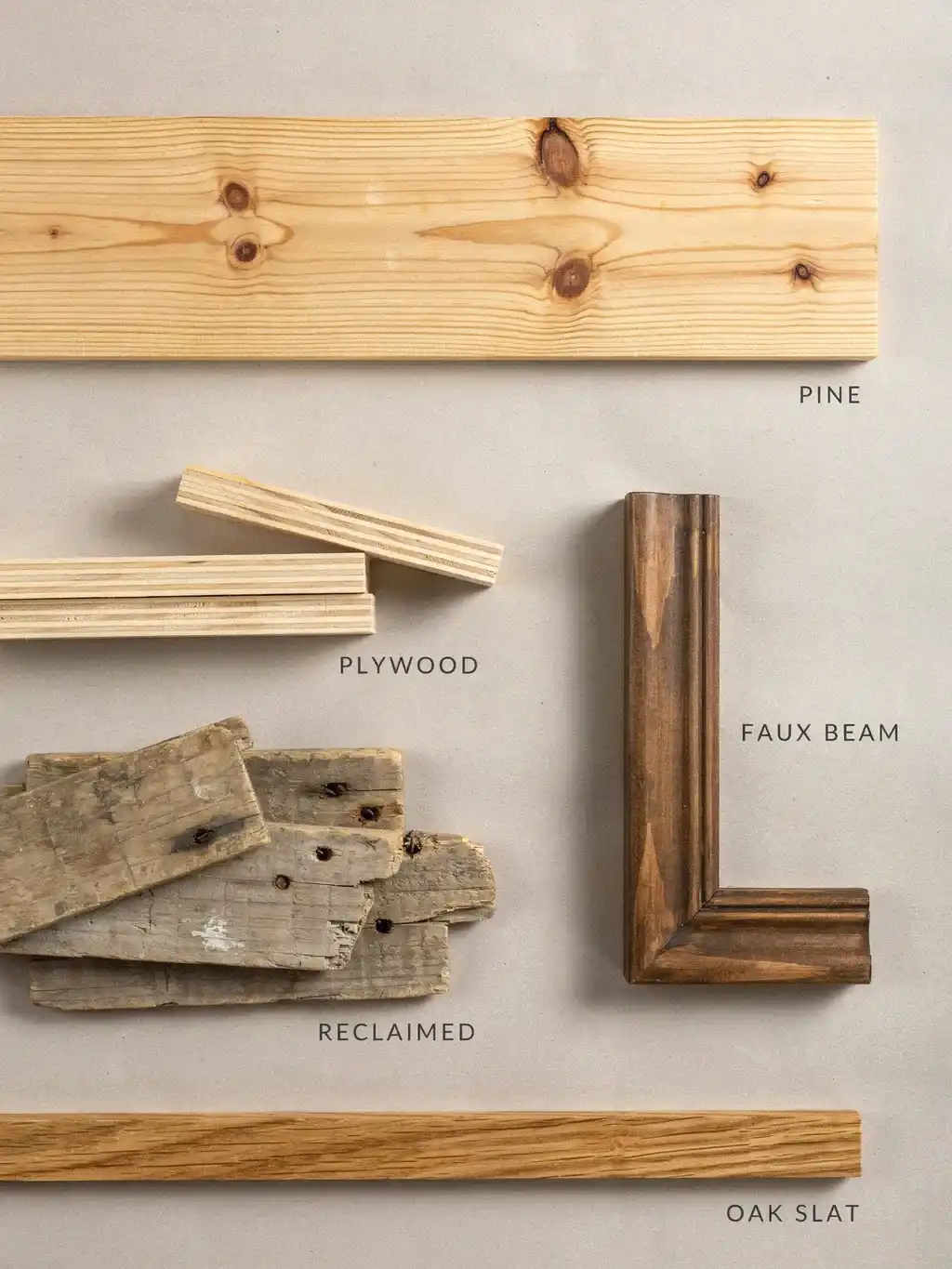
Here’s roughly what each cheap wood ceiling route costs in materials for an average room, not counting tools you might already own:
- Plain softwood boards, stained: £30 to £80
- Tongue-and-groove plank cladding: £100 to £180
- Reclaimed pallet wood: free to £20, plus many hours of prep
- Birch plywood cut into slats: £80 to £150 for a feature area
- Faux box beams over plain ceiling: £50 to £90
- Battens, screws, oil or stain, sandpaper: £40 to £70 on top
So most of these land between £100 and £250 all in, against the £800-plus a tradesperson quotes for supplied-and-fitted cladding. The saving is real, but so is the labour, because you’re trading money for a couple of awkward, neck-craning days.
A couple of things to skip
Skip the peel-and-stick “wood effect” panels, the foam or PVC ones. They photograph fine and look obviously fake in person, they shine wrong under light, and they’re the one cheap ceiling that genuinely reads as cheap. Real budget timber always beats fake premium-look plastic.
Skip dark wood in a small or low room too. It’s tempting because dark stain looks rich, but a dark wood ceiling in a low room presses down on the whole space and makes it feel like a cave. Save the dark tones for high ceilings and use pale whitewashed wood where the room is small.
And the one I learned the hard way: don’t try to clad a ceiling solo without a support brace. A simple T-shaped prop made from two offcuts holds each board up while you fix it, and it turns an impossible two-handed juggle into a one-person job. I wrestled the first few boards by hand, swore a great deal, then built the brace and finished the rest in half the time. Build the brace first. Your neck will thank you.


