Small Garage Ideas That Make a Tight Space Work Harder
- Home Organization Ideas
 Alina
Alina- 0
- 17 minutes read


I spent the first two years in my house unable to park in my own garage. It wasn’t small, exactly, but between the bikes, the bins, the half-used tins of paint, and a lawnmower nobody could reach, there was no room left for an actual car. The day I finally cleared and reorganised it, I realised the problem was never the size of the garage. It was that everything lived on the floor.
That’s the secret to a small garage: the floor is for working and parking, and almost everything else belongs on the walls or up in the air. So here’s what actually works when you’re trying to squeeze storage, a workspace, and maybe still a car into a tight garage, plus the mistakes worth avoiding.
Get everything off the floor
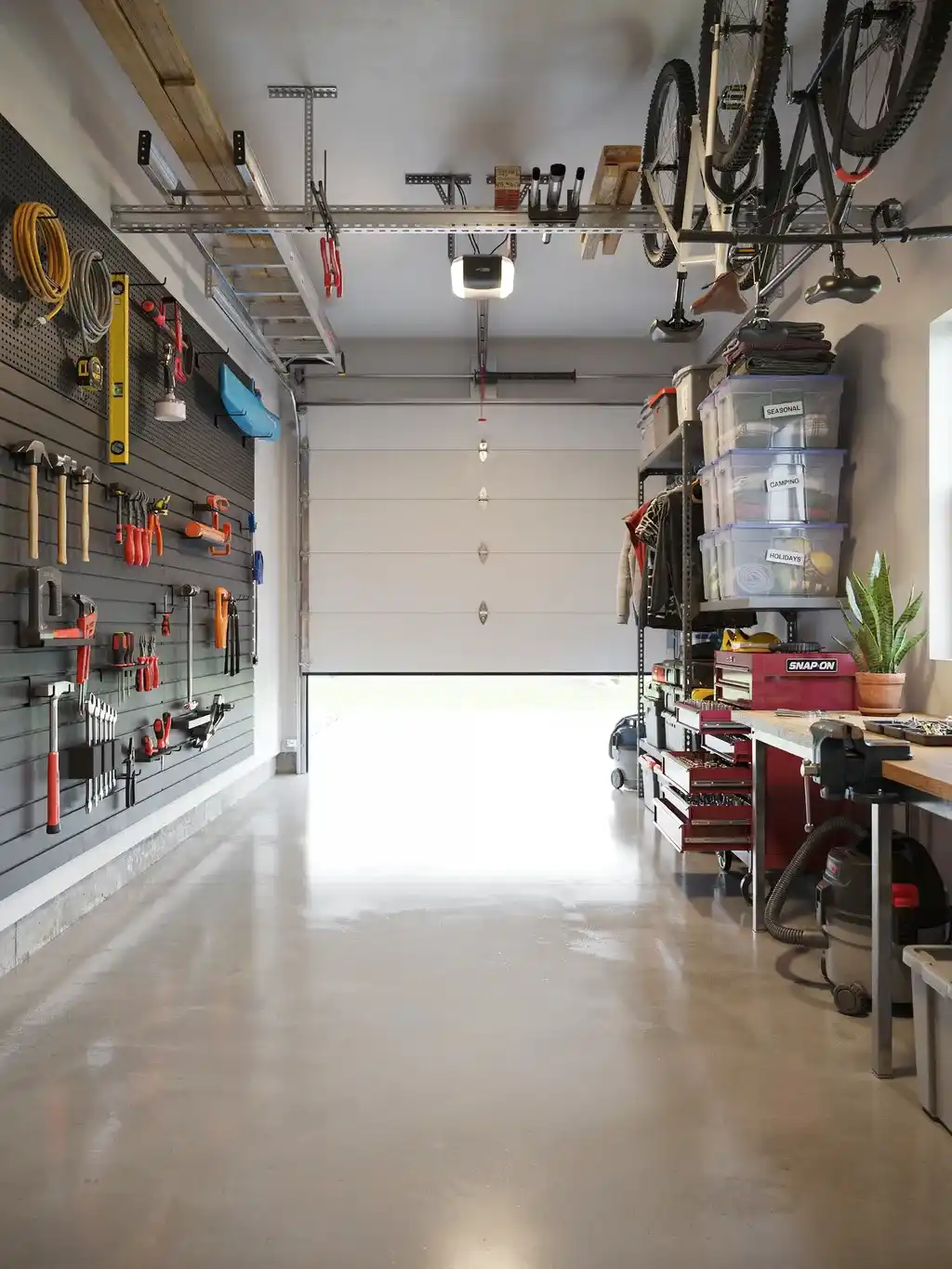
If you take one thing away, make it this. In a small garage, floor space is the thing you’re short of, and most garages waste it by stacking boxes and bins across the ground. Move that storage up onto the walls and ceiling and you reclaim the floor for the stuff that actually needs it.
Wall-mounted shelving, hooks, and overhead racks turn dead vertical space into storage and free up the ground entirely. It’s the single highest-impact change in any small garage, and most of the ideas below are really just versions of it.
Use the walls as your main storage
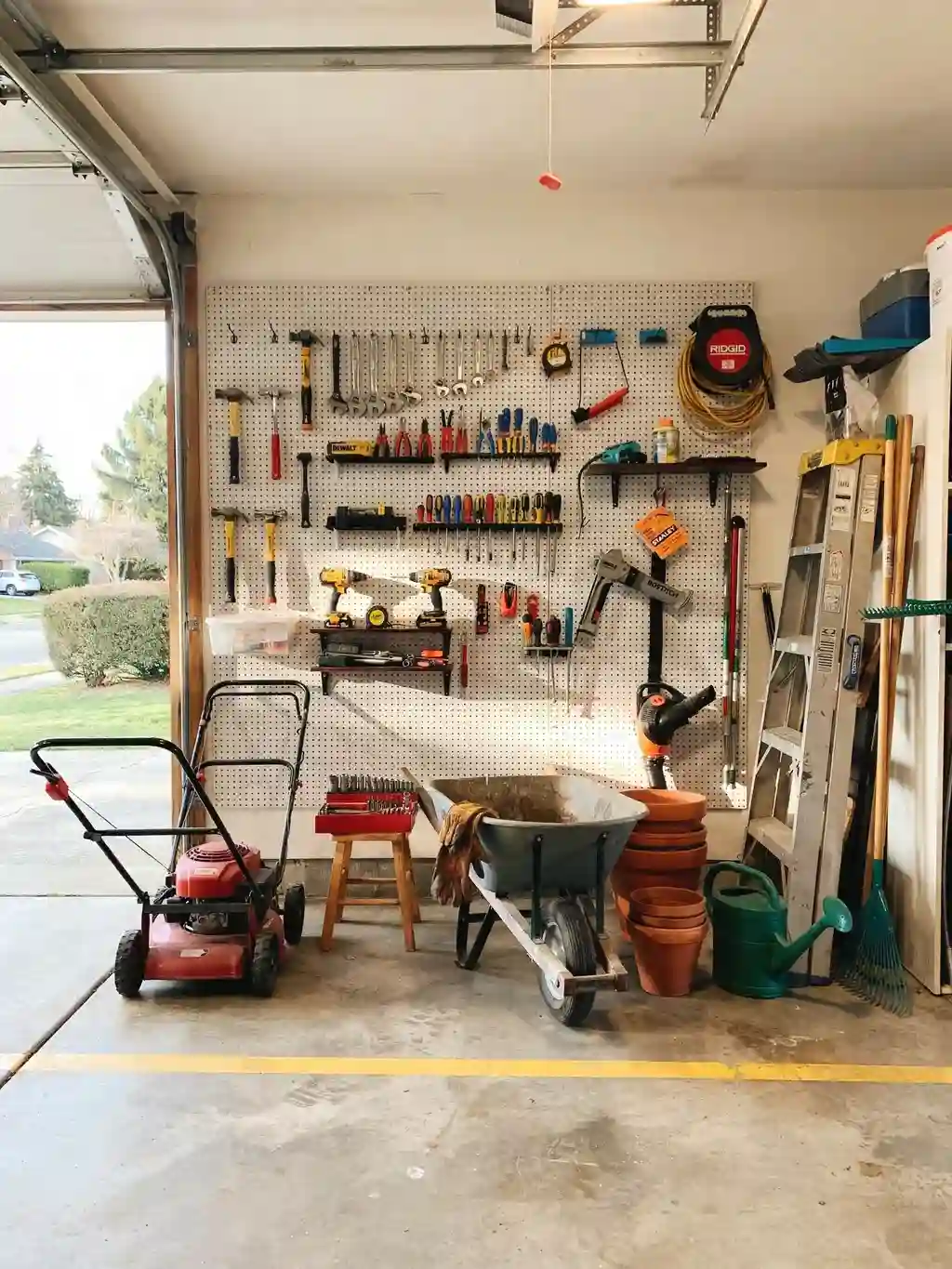
The walls are your biggest untapped resource. A wall-mounted system, slatwall, pegboard, or a track-and-hook setup, lets you hang tools, bikes, ladders, and garden gear vertically where they’re visible and out from underfoot.
Slatwall and pegboard are endlessly reconfigurable, so as your kit changes you just move the hooks. Hanging things on the wall also means you can see what you own at a glance, which stops the buying-a-second-one-because-you-can’t-find-the-first problem.
Claim the ceiling for overhead storage
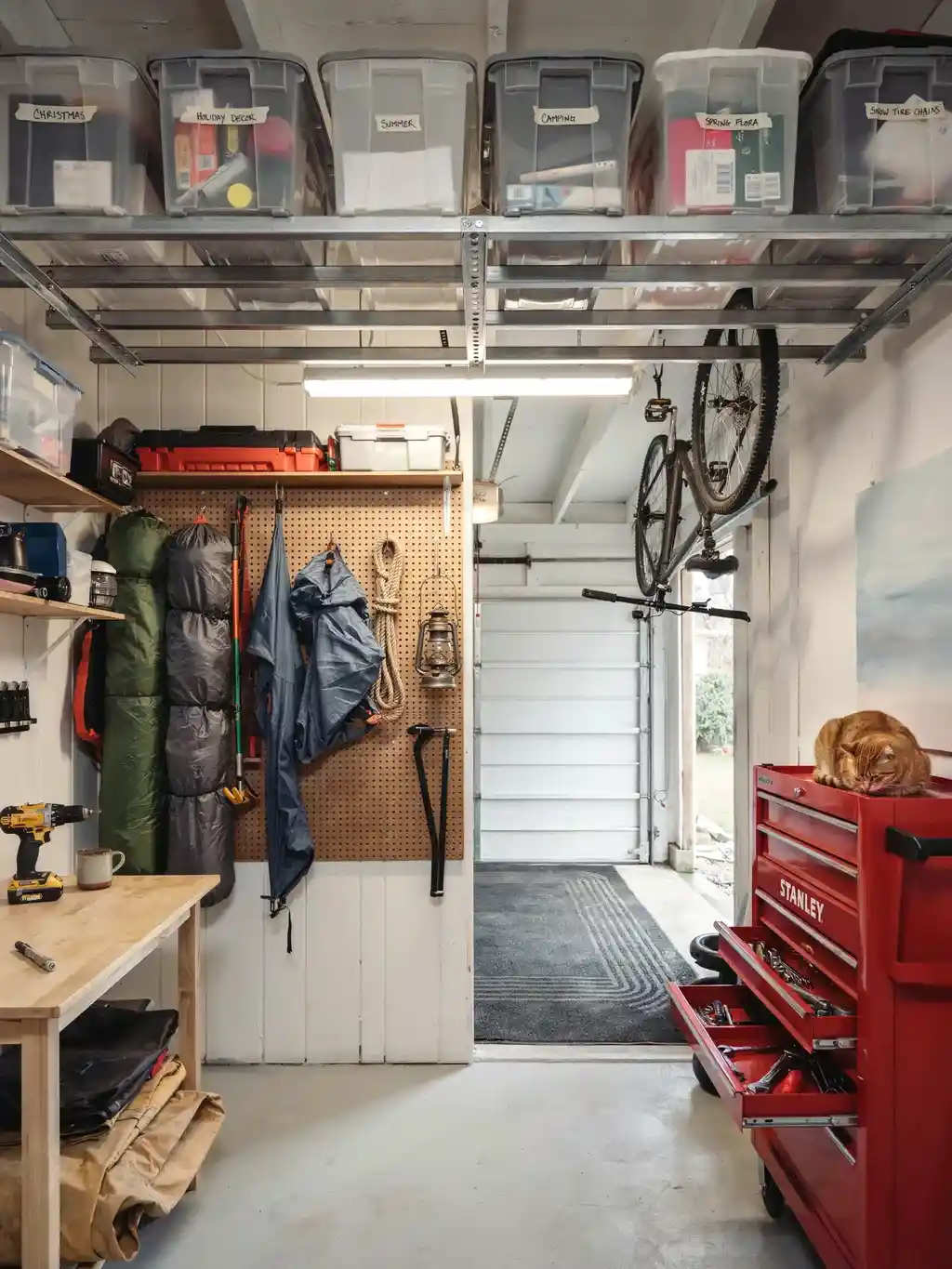
The space above your head is usually completely wasted. Overhead racks suspended from the ceiling are perfect for the bulky, seasonal stuff you only need a few times a year, holiday decorations, camping gear, spare luggage, off-season tyres.
Mount them toward the back or sides so they don’t hit the car roof or your head, and keep the heaviest items lower on the walls instead. For things you touch twice a year, the ceiling is ideal, out of the way but still accessible with a step stool.
Hang the bikes up
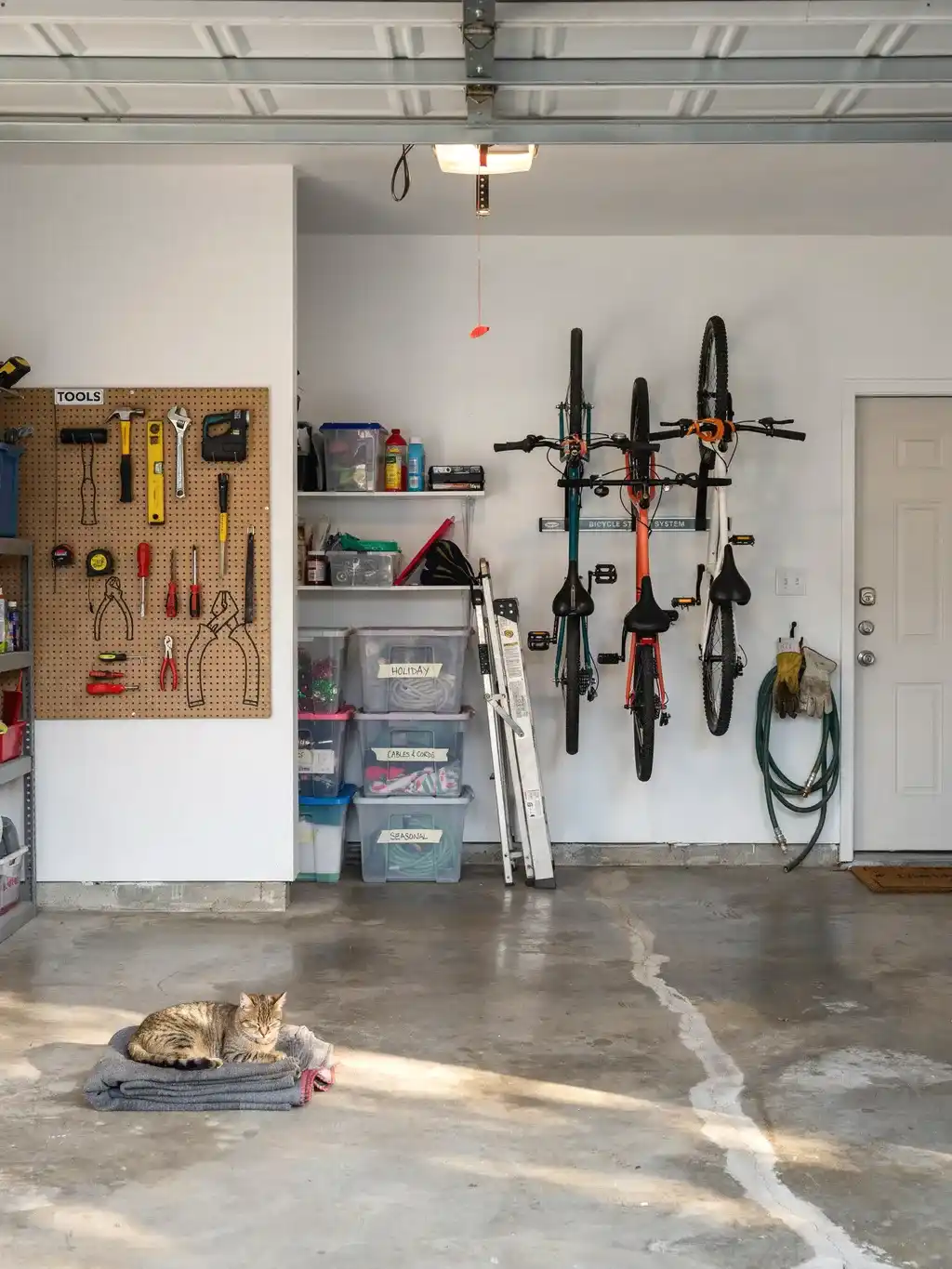
Bikes are floor-space killers, and a family’s worth of them can swallow a small garage on their own. Wall hooks, vertical bike racks, or a ceiling pulley system get them up and out of the way while keeping them easy to grab.
Vertical wall mounts that hold a bike by one wheel take up the least space, letting you line several bikes along a wall in the footprint one would take leaning. Getting the bikes off the floor often single-handedly buys back room for the car.
Choose tall, narrow cabinets over wide ones
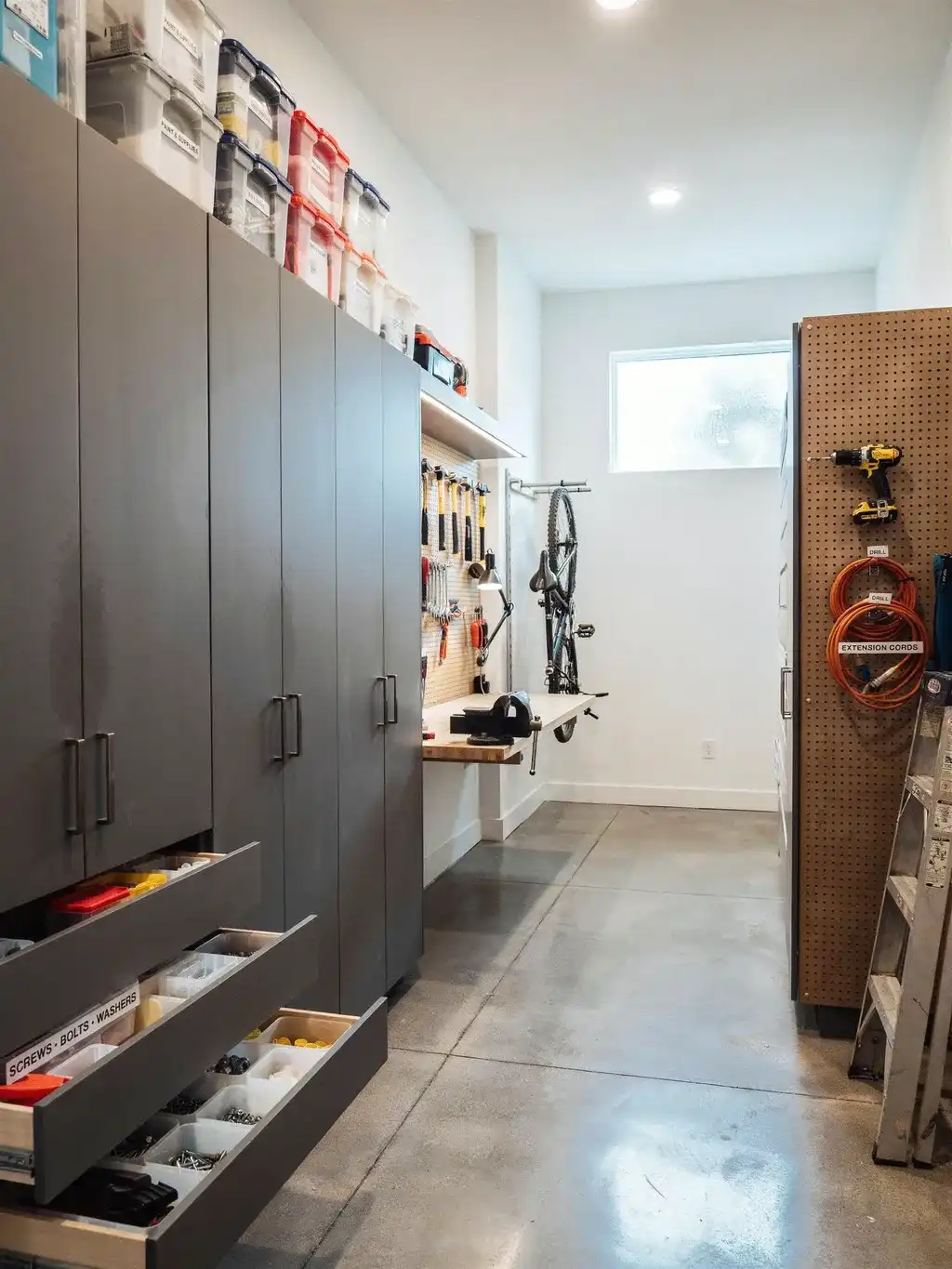
When you do want closed storage, the shape matters. Tall, narrow cabinets use vertical space and keep a small footprint, where wide low units eat the floor. Going up rather than out is the rule for every piece of furniture in a small garage.
Closed cabinets also hide the visual clutter, which makes a small garage feel calmer and less cramped. A couple of full-height cabinets along one wall can swallow an enormous amount of stuff without dominating the room.
Add a fold-down or pull-out workbench
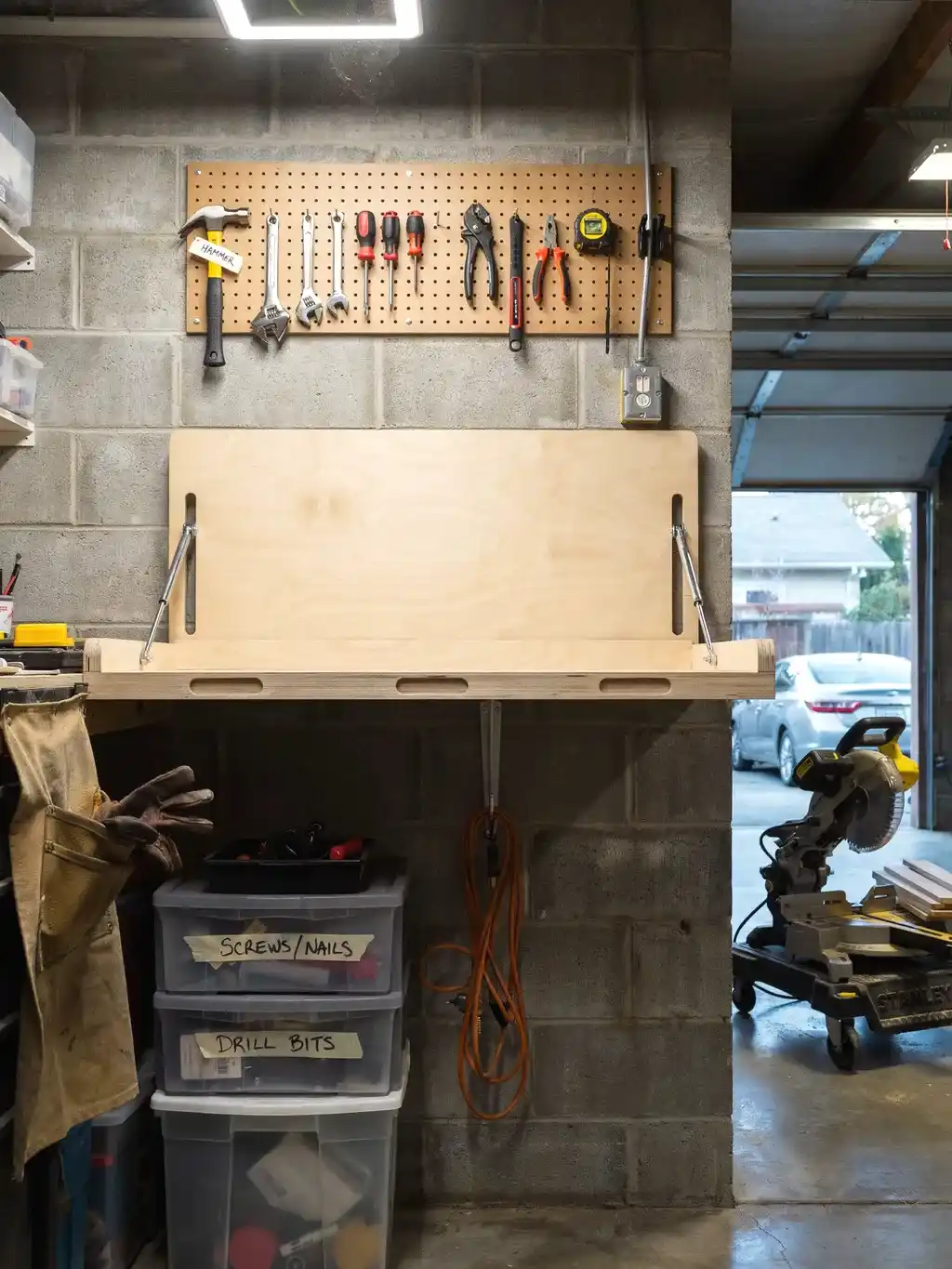
Everyone wants a workbench, but a permanent one eats space you may not have. A fold-down bench that drops from the wall, or a pull-out one on a cabinet, gives you a work surface when you need it and disappears when you don’t.
This is the small-garage compromise that actually works: full function when you’re using it, zero footprint when you’re not. A wall-mounted folding bench is one of the best space-savers going for anyone who tinkers but still needs to park.
Use mobile, rolling storage
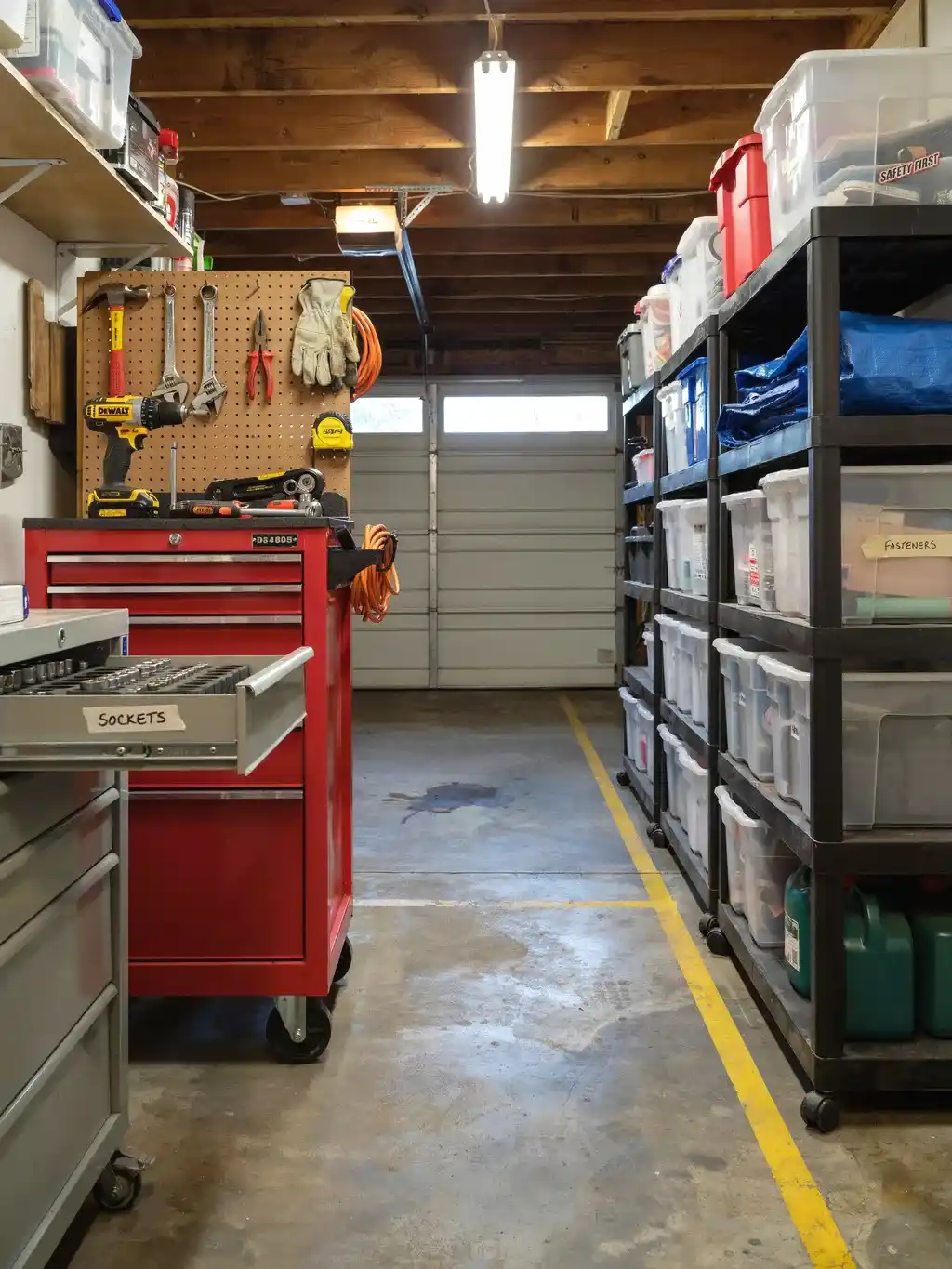
In a tight garage, anything on wheels is your friend. A rolling tool chest, a mobile workbench, or storage carts on castors can be wheeled out when you need them and tucked against the wall or even outside when you’re working.
The flexibility is the point: you can reconfigure the whole space in seconds depending on the job. Rolling units also let you pull tools right to where you’re working rather than walking back and forth to a fixed bench.
Make zones for different jobs
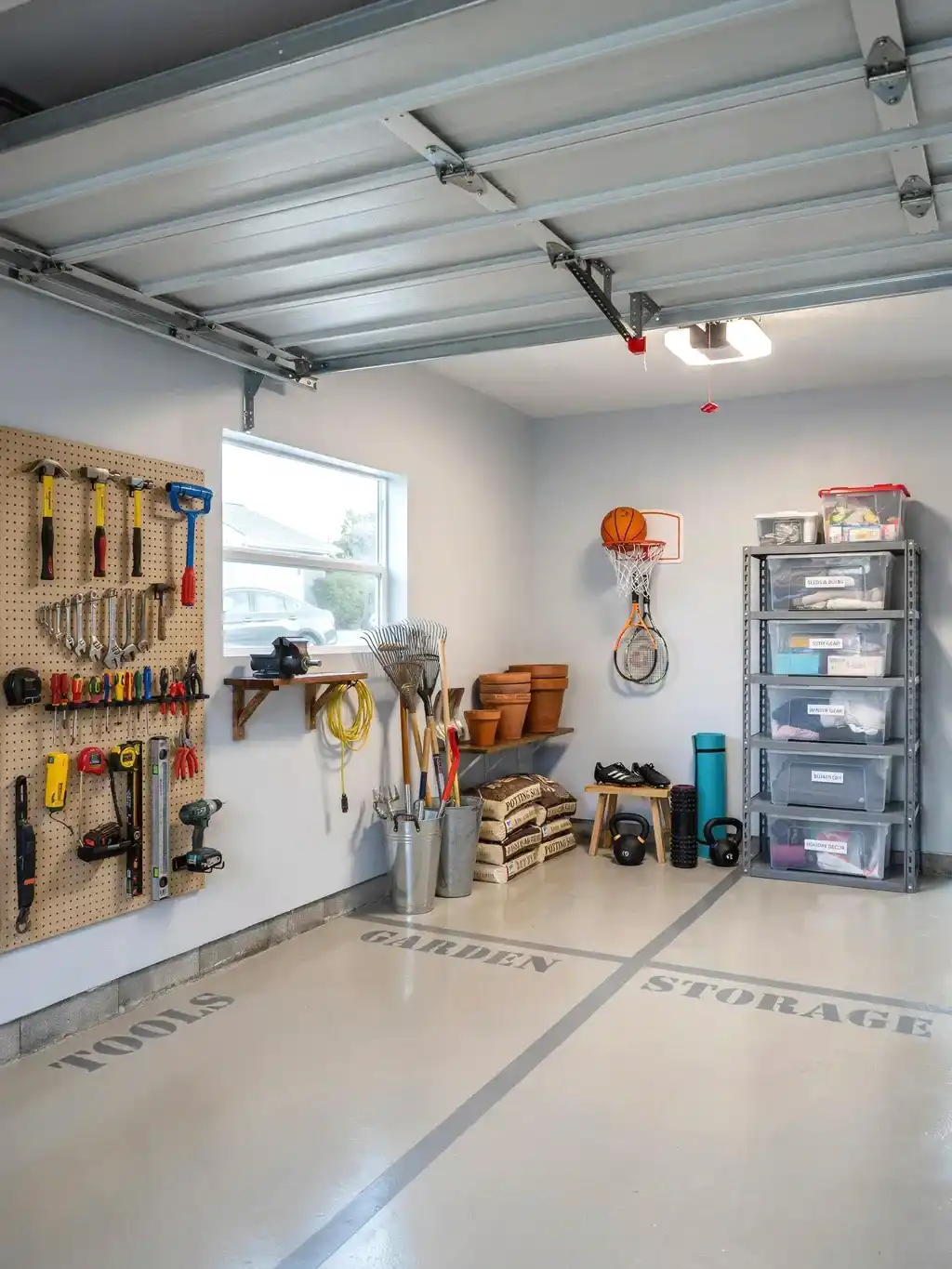
A small garage works best when every area has a clear purpose. Mentally divide it into zones, a tool and workshop zone, a garden zone, a sports and bikes zone, a household-overflow zone, and keep like things together within each.
Zoning stops the slow creep of everything ending up in one jumbled pile. It also means you instantly know where to find and put away anything, which is what keeps a small garage tidy over time rather than just for a weekend.
Store things where you use them
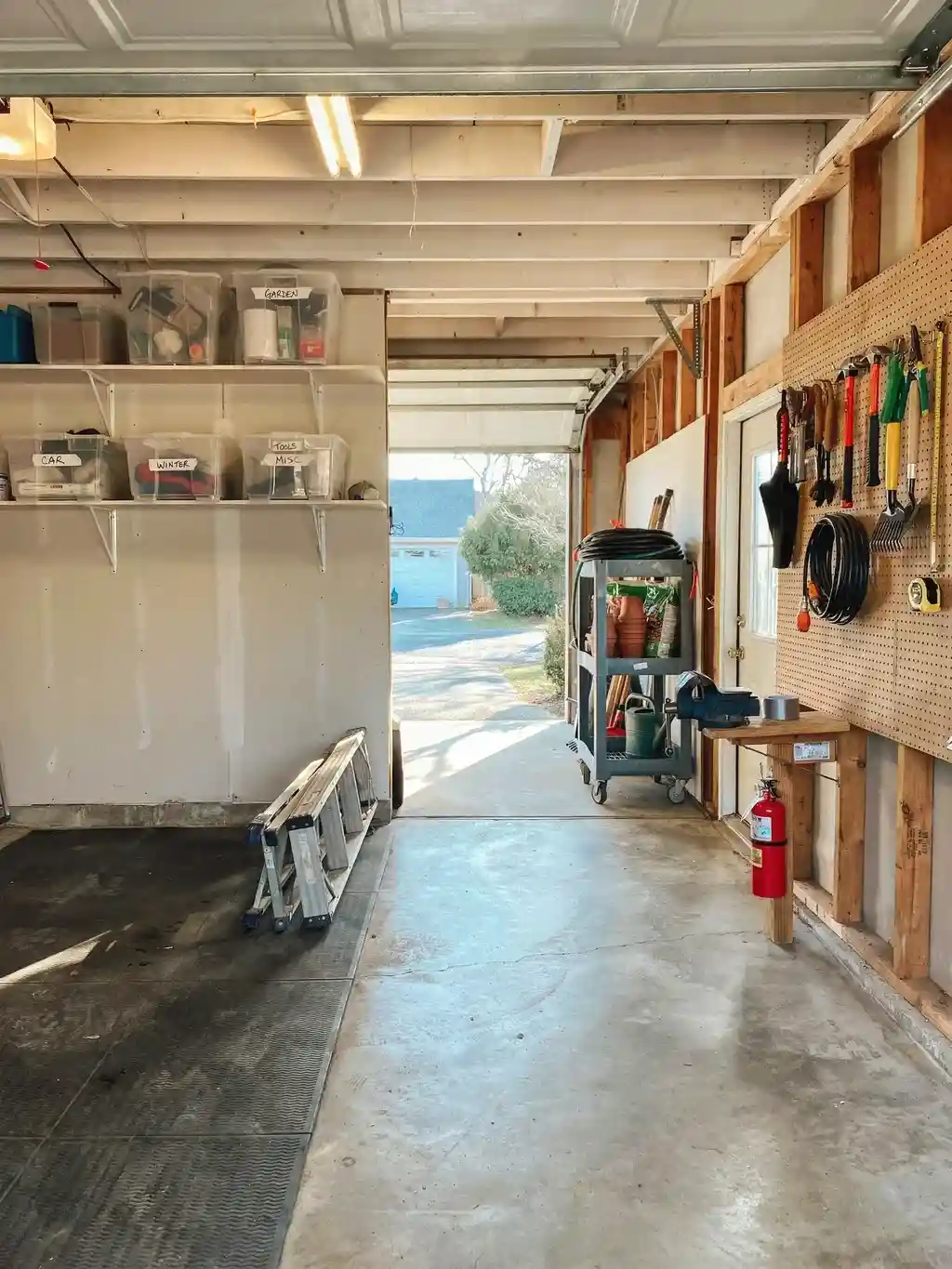
A simple organising principle saves a lot of frustration: keep things near where they’re needed. Garden tools by the door to the garden, car gear near where the car sits, frequently-used tools at arm’s reach of the bench, rarely-used stuff up high or at the back.
Arranging by frequency and point-of-use, rather than just cramming things wherever they fit, is what makes a small garage genuinely functional. The things you grab daily get the prime spots; the once-a-year items go to the hardest-to-reach corners.
Light it properly
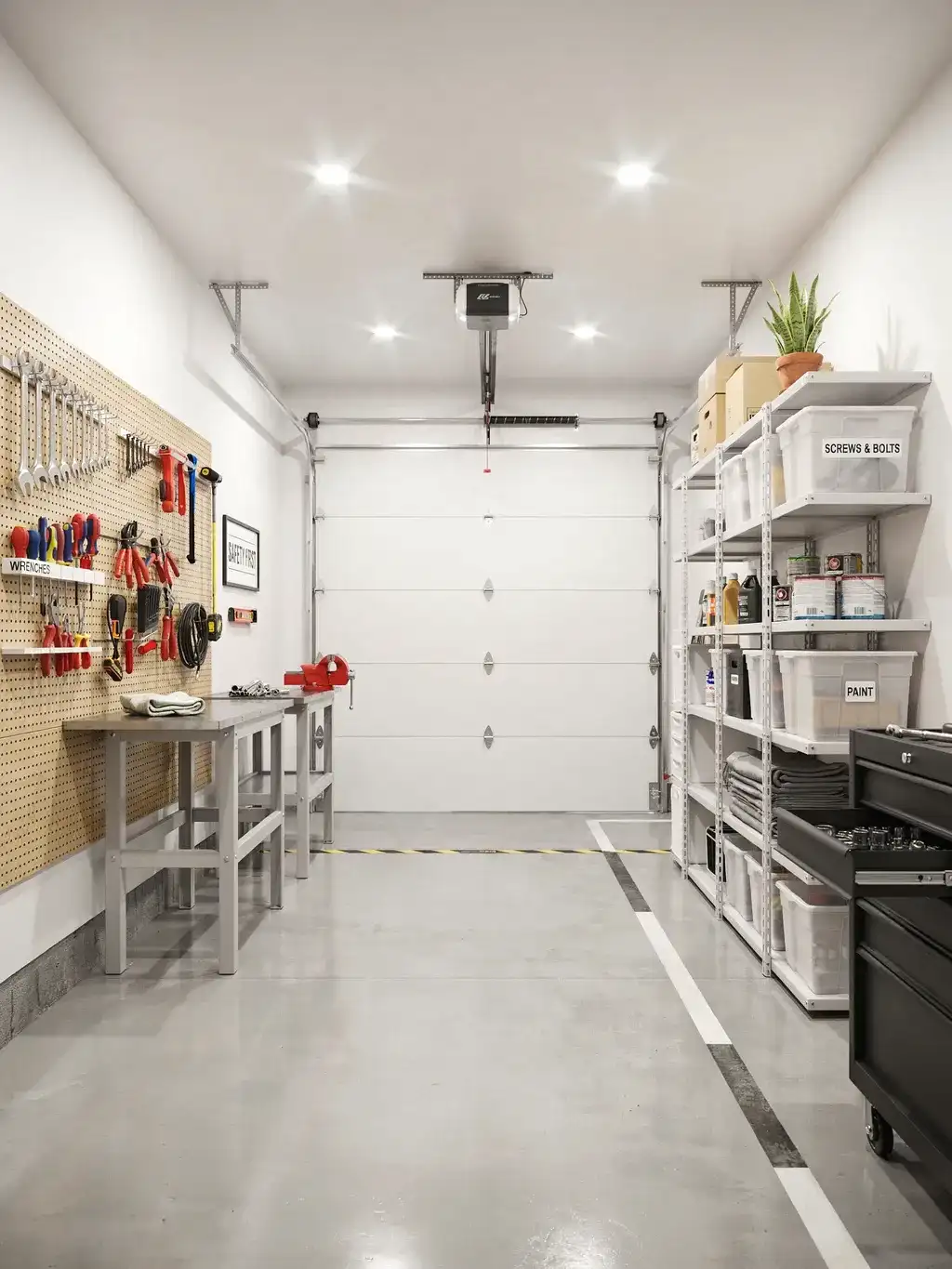
Small garages are often gloomy, and bad light makes a cramped space feel smaller and harder to use. Bright LED overhead lighting plus a task light over any work area transforms how usable the space feels, and how big.
Good light also makes the garage feel less like a cave and more like a room you actually want to spend time in. It’s a cheap upgrade that punches well above its cost in a small, windowless space.
Add clear bins and labels
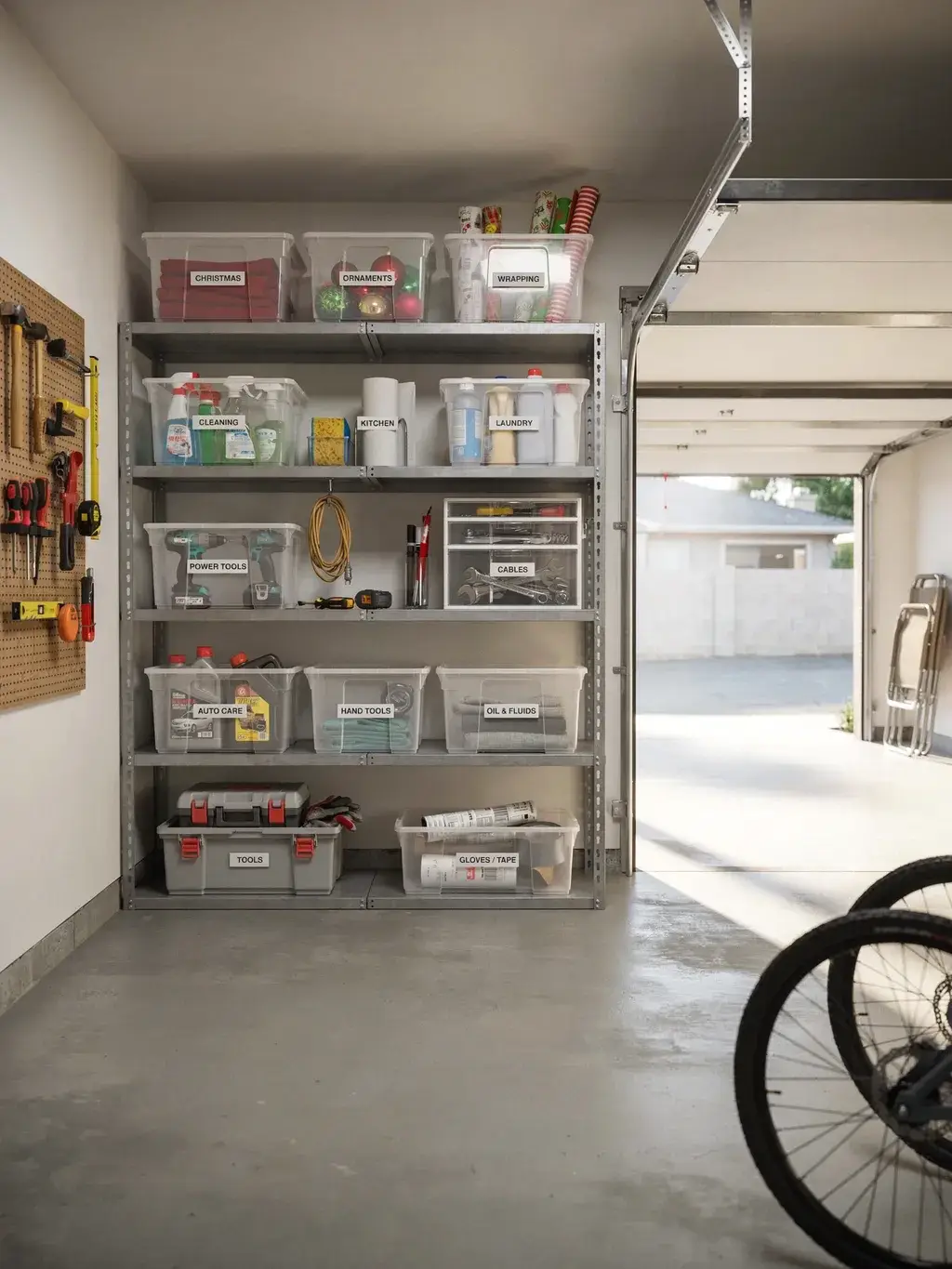
In a small garage you can’t afford to lose things in the clutter, so clear, labelled storage earns its place. Clear bins let you see contents at a glance, and labels mean everything has an obvious home, which is half the battle in staying organised.
Stackable clear bins also use vertical space neatly on shelves. The few minutes spent labelling pays off every time you’re not turning out three boxes to find one thing.
Keep a slim parking buffer
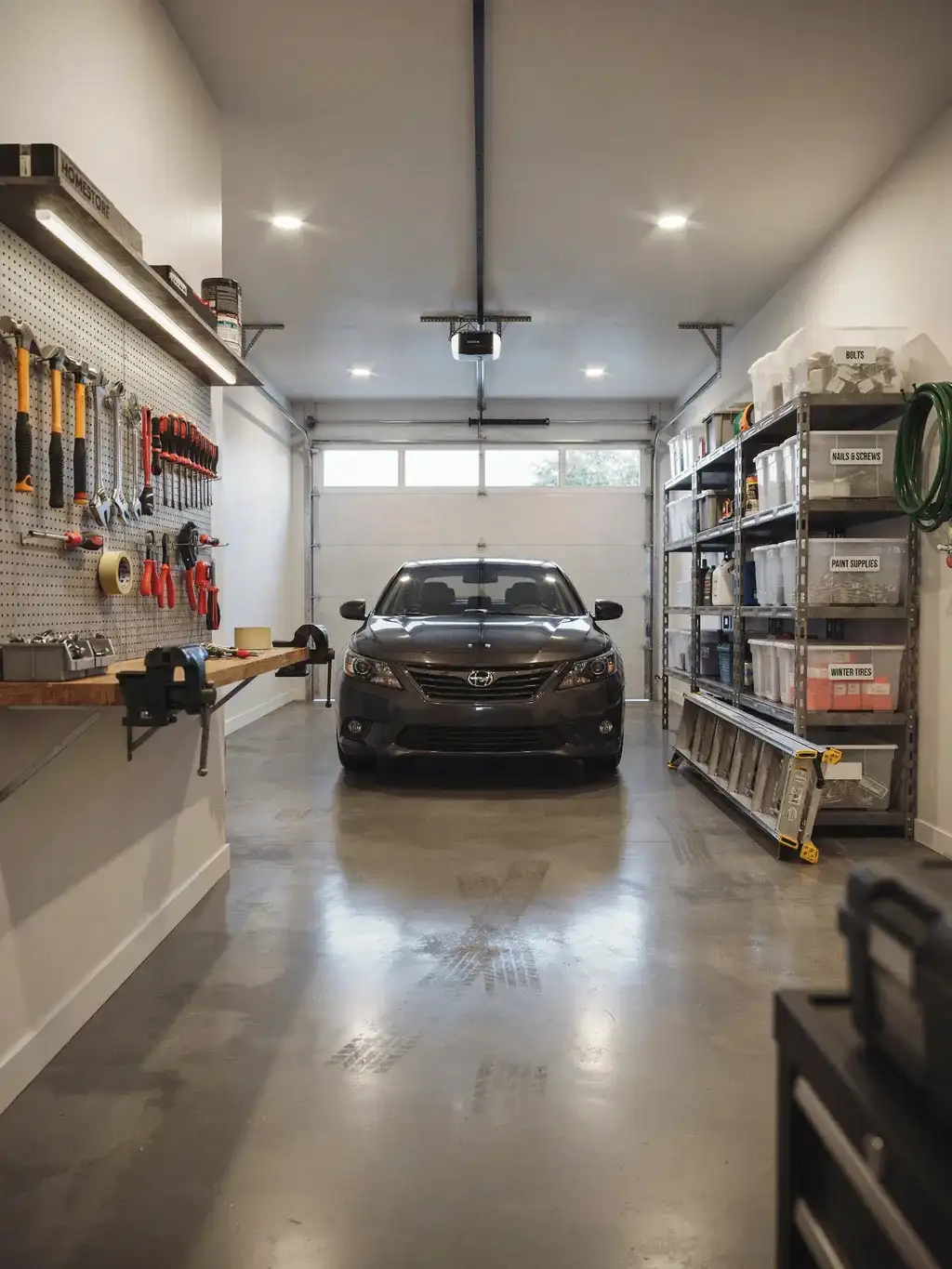
If parking a car is the goal, plan around it from the start. Leave a clear path the width of the car plus room to open the doors, and keep wall storage shallow enough on the parking side that it doesn’t clip the mirrors.
A length of pool noodle on the wall at door height, or a hanging tennis ball to mark where to stop, are old tricks that protect both the car and your storage. Designing around the car first, then fitting storage into what’s left, is what keeps a small garage usable as an actual garage.
A couple of things to skip
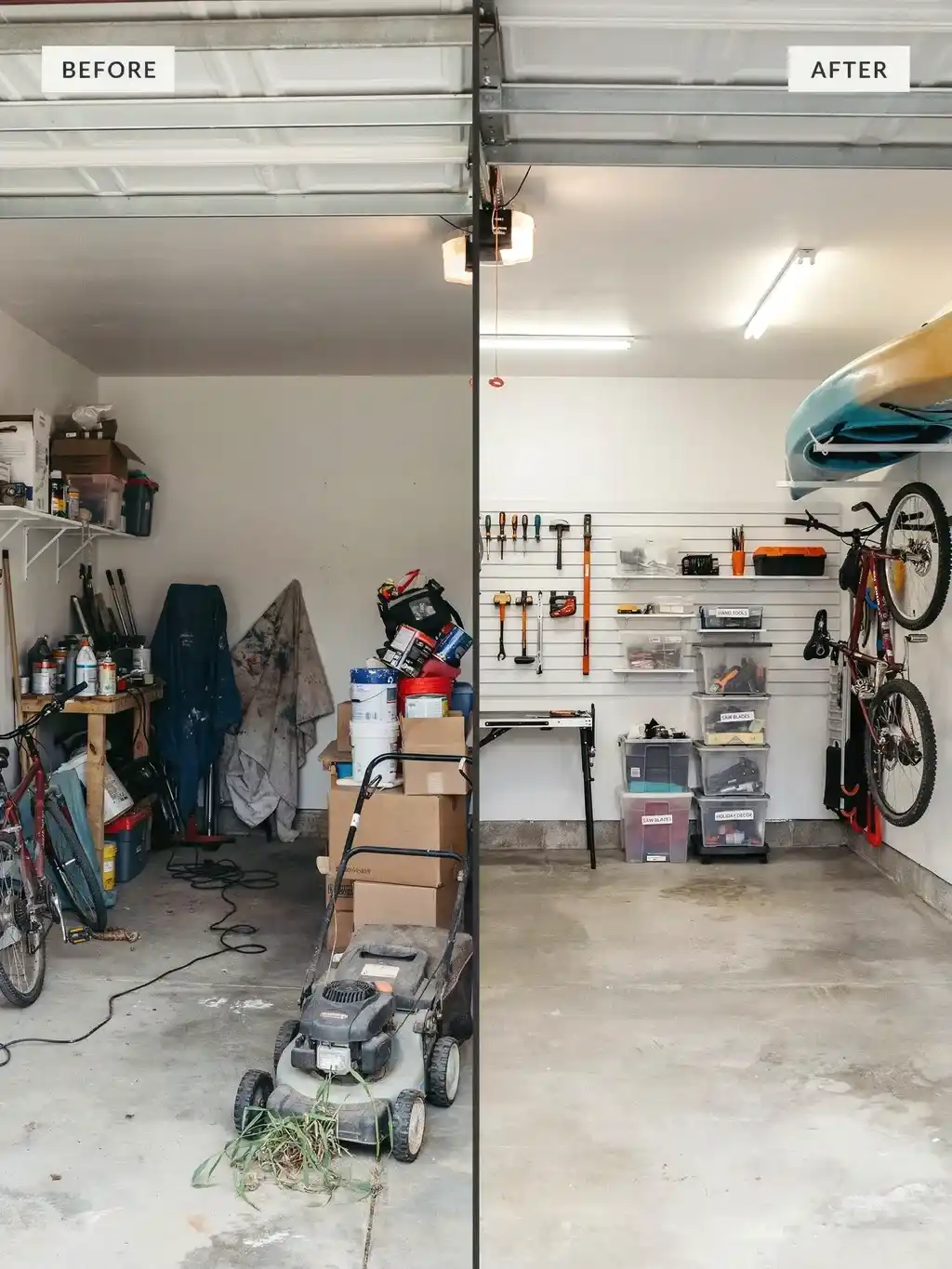
Skip big bulky shelving units that stick far out from the wall, they steal the floor space you’re trying to save. Shallow wall-mounted shelves and cabinets give you most of the storage for a fraction of the footprint.
Skip storing things in flimsy cardboard boxes on the floor too. They sag, attract damp, and become an unsortable pile within months. Clear plastic bins up on shelves last longer, stack better, and keep the floor clear, which is the whole goal in a small garage.
The bottom line
Get three things right and a small garage stops feeling small: get everything off the floor, use the walls and ceiling as your main storage, and plan around whatever the floor genuinely needs to do, park a car, hold a bench, or both. Everything else follows from there.
My garage isn’t any bigger than it was, but I can park in it now, find my tools, and still get to the bikes without an archaeology dig. The space didn’t change. What was on the floor did, and that turned out to be the whole problem.


