Airbnb Small Room Ideas That Feel Minimal, Cozy, and Stylish


Step into nearly any well-reviewed small Airbnb of the past few years, and the same quiet confidence keeps showing up: a compact space that somehow breathes. No clutter fighting for attention, no sense that the room is apologizing for its size. Just a few considered pieces, soft light, and the feeling that someone thought carefully about every corner. Small rentals have gone from a limitation to host around to a look people actively seek out.
In short, the small Airbnb room has become its own design language, where restraint reads as luxury and warmth does the work that square footage can’t.
But how do you make a tight space feel intentional rather than cramped?
Interior stylist Mara Lindqvist, who has staged dozens of short-term rentals across coastal towns, describes the appeal in plain terms. “A small room forces honesty,” she says. “Every object has to justify being there, and that discipline is exactly what makes the space feel calm to a guest walking in for the first time. People mistake empty for cold, but a well-edited small room is the warmest thing you can offer.”
But where to start? The hosts who get this right tend to return to the same handful of moves, each one doing more than its size suggests.
Let one warm neutral run the whole room
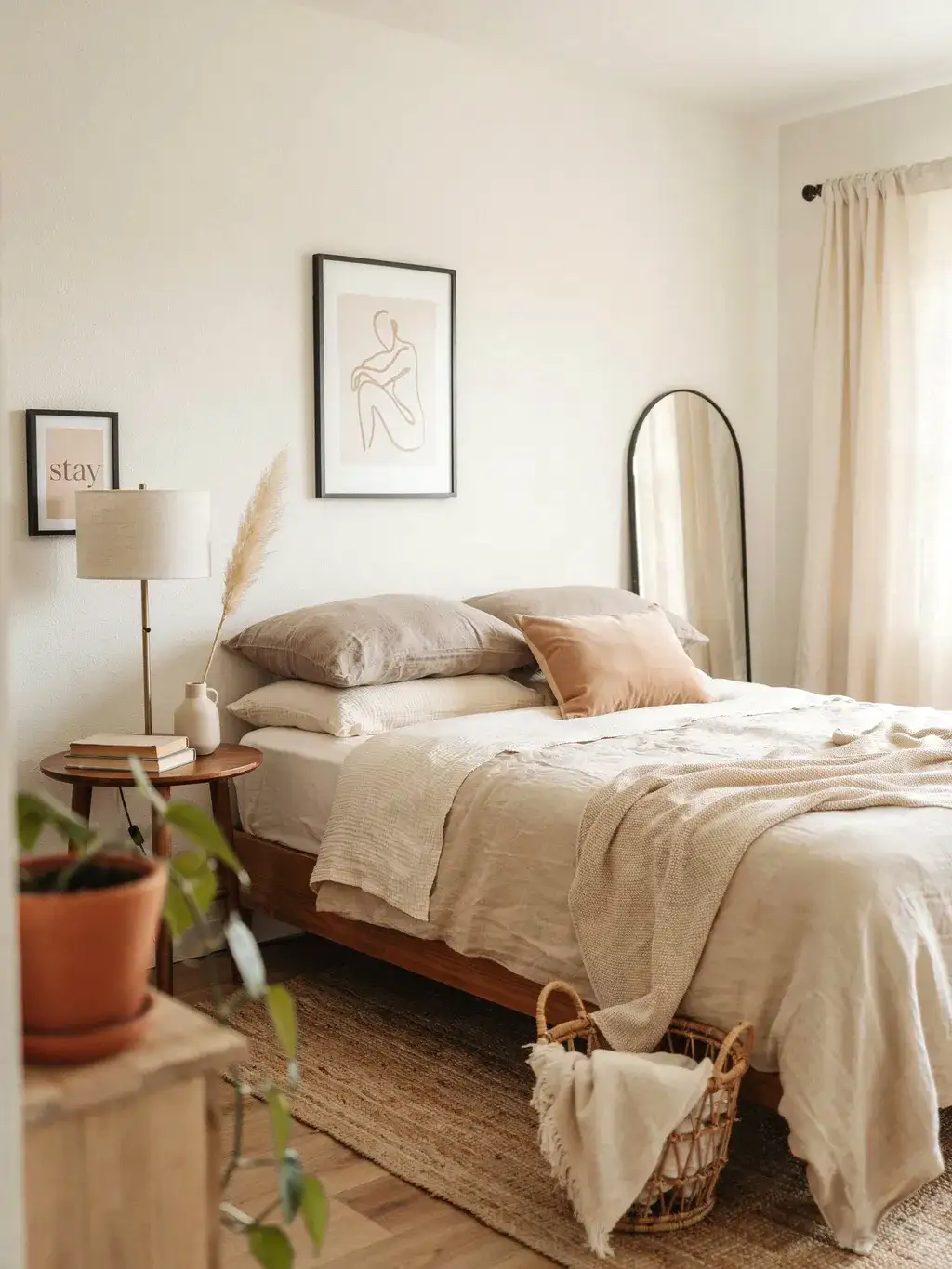
The fastest way to make a small space feel larger and softer at once is to stop fighting it with contrast. A single warm neutral on the walls, carried through to the bedding and curtains, removes the visual edges that make a room feel boxy.
Lindqvist favors oatmeal, warm putty, and the palest clay tones over stark white. “White bounces light but it can feel clinical in a small bedroom,” she notes. “A warm neutral does the same brightening work and adds a hug to it.” The trick is tonal layering: three or four shades of the same family, so the eye glides instead of stopping.
Choose furniture with visible legs
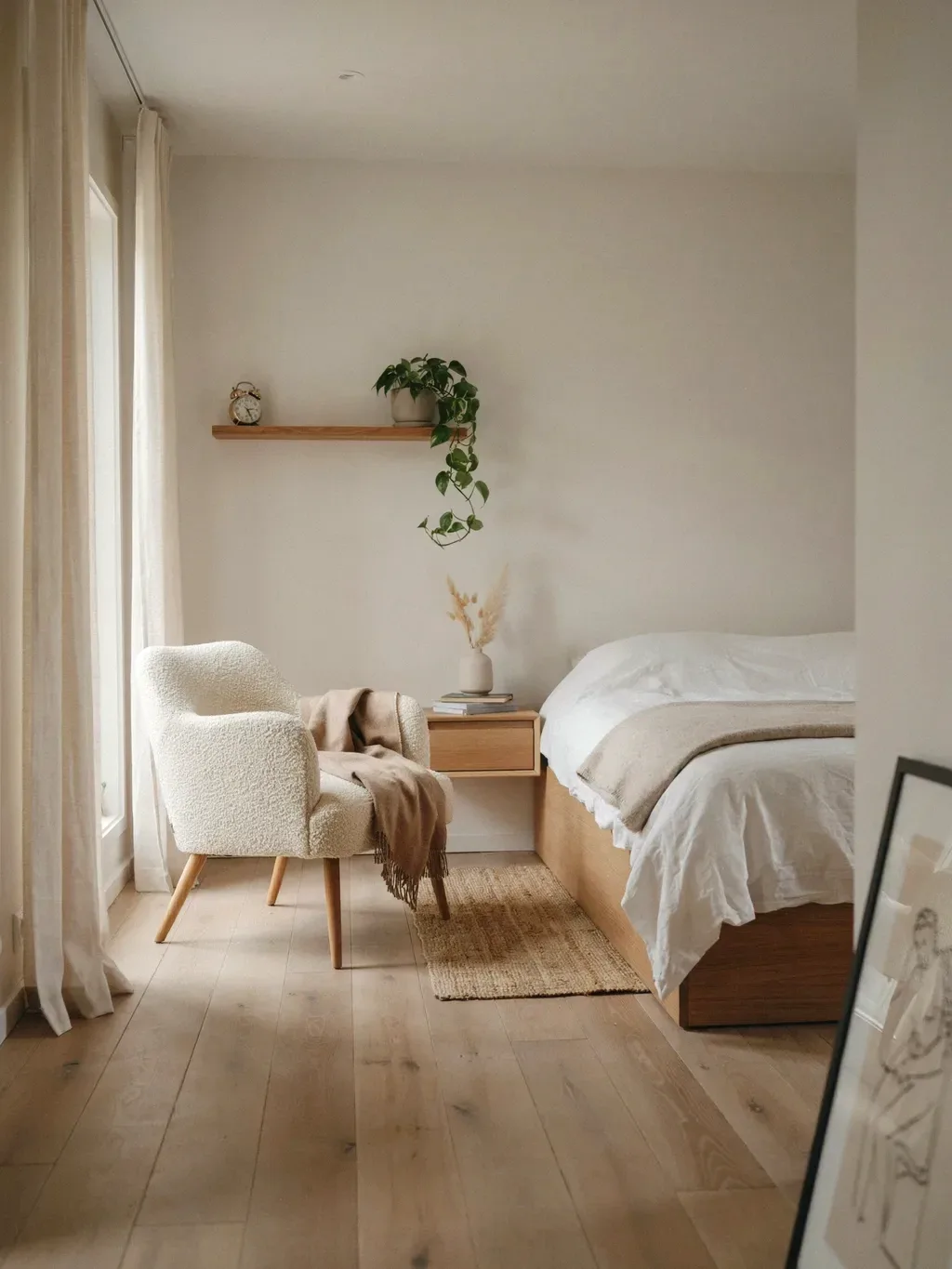
Architect and rental consultant Theo Adeyemi spends his days helping owners squeeze livability out of awkward floor plans, and he comes back to one rule constantly. “Furniture that sits on legs lets the floor continue underneath it,” he explains. “You see more floor, the room reads as bigger, and the whole thing feels lighter on its feet.”
A bed frame raised on slim legs, a side table that doesn’t touch the ground, a chair you can see beneath. The floor becomes a continuous plane rather than a series of blocked-off zones. In a small room, that visual continuity is worth more than any clever storage hack.
Hang the curtains high and wide
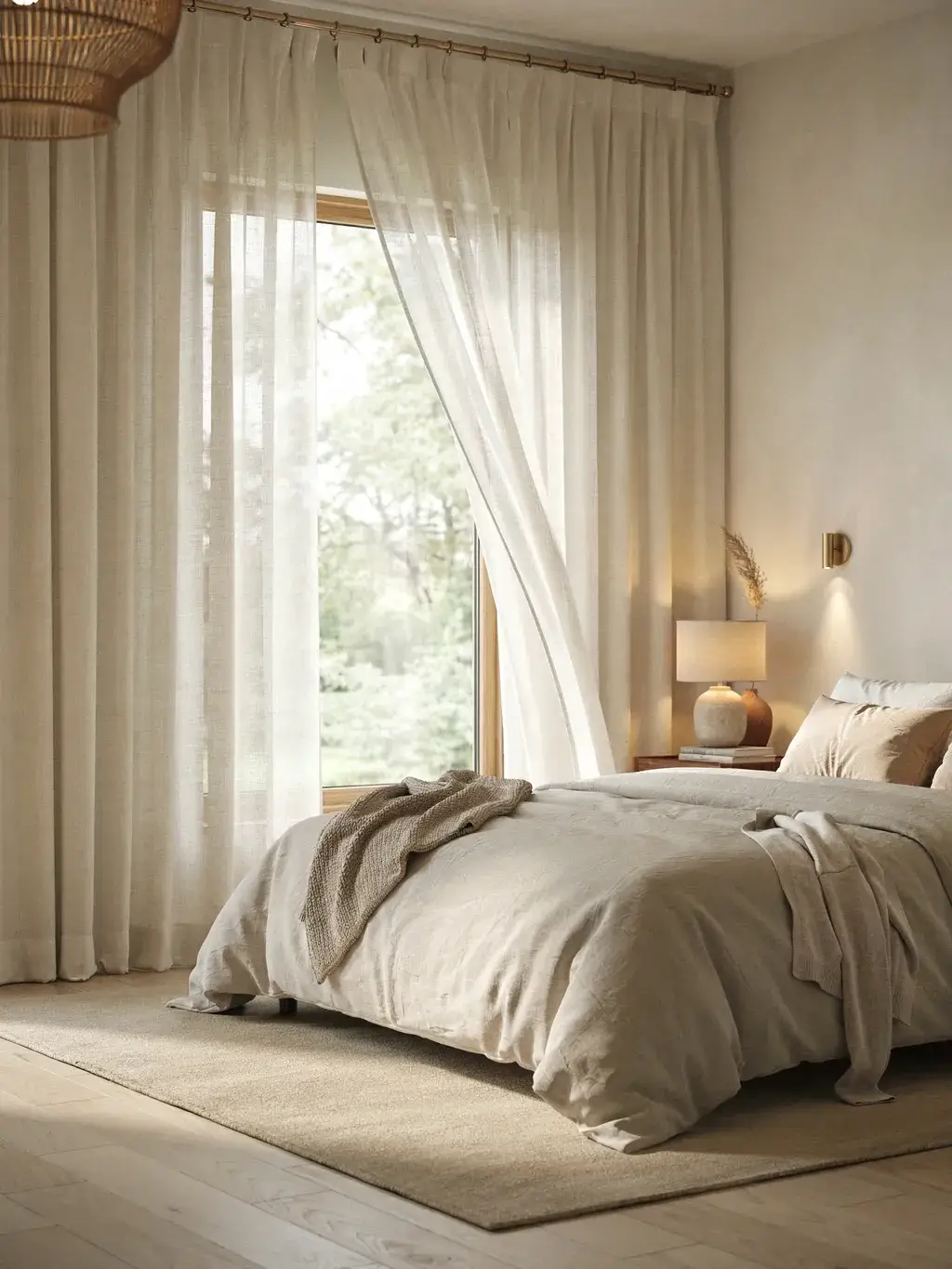
This is the cheapest trick with the biggest payoff. Mounting a curtain rod close to the ceiling and extending it well past the window frame draws the eye upward and makes the window, and the wall, feel grander than it is.
In fact, the curtains needn’t even be expensive. Floor-length panels in a soft linen, hung high, will make a modest window feel like an architectural feature. Let them just kiss the floor. Curtains that pool look heavy; curtains that float feel tailored.
Build warmth through texture, not objects
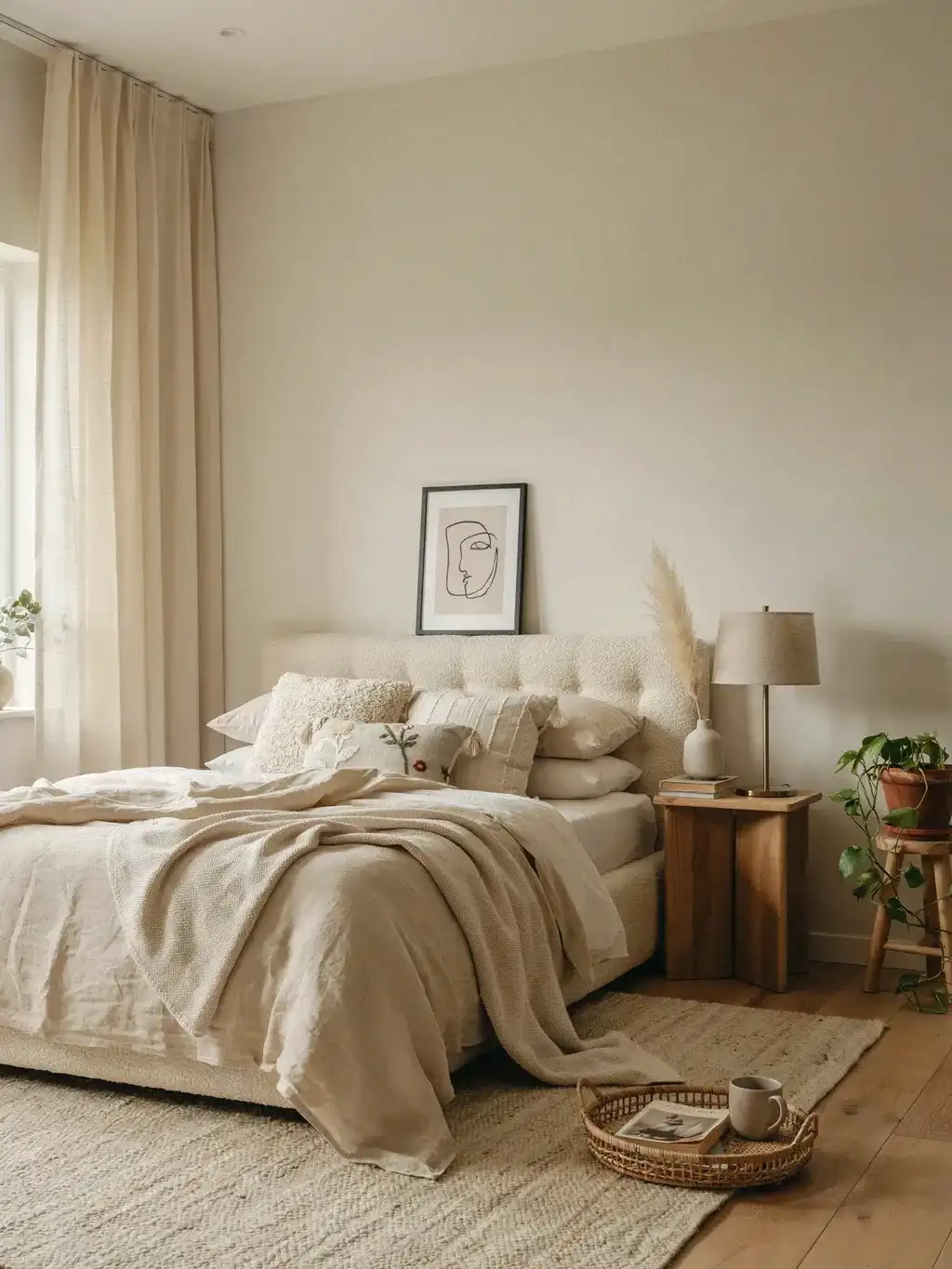
Here is where cozy and minimal stop being opposites. A pared-back room risks feeling like a showroom, and the answer isn’t more stuff, it’s more texture across fewer things.
Textile designer Priya Nair, who consults on hospitality interiors, puts it simply. “You layer a bouclé throw over linen sheets, add a chunky wool rug underfoot, lean a nubby cushion against a smooth headboard, and the room suddenly feels held,” she says. “None of it adds clutter. It adds depth.” A small room can hold three textures beautifully where it would choke on three decorative trays.
Mirror the light, don’t add more lamps
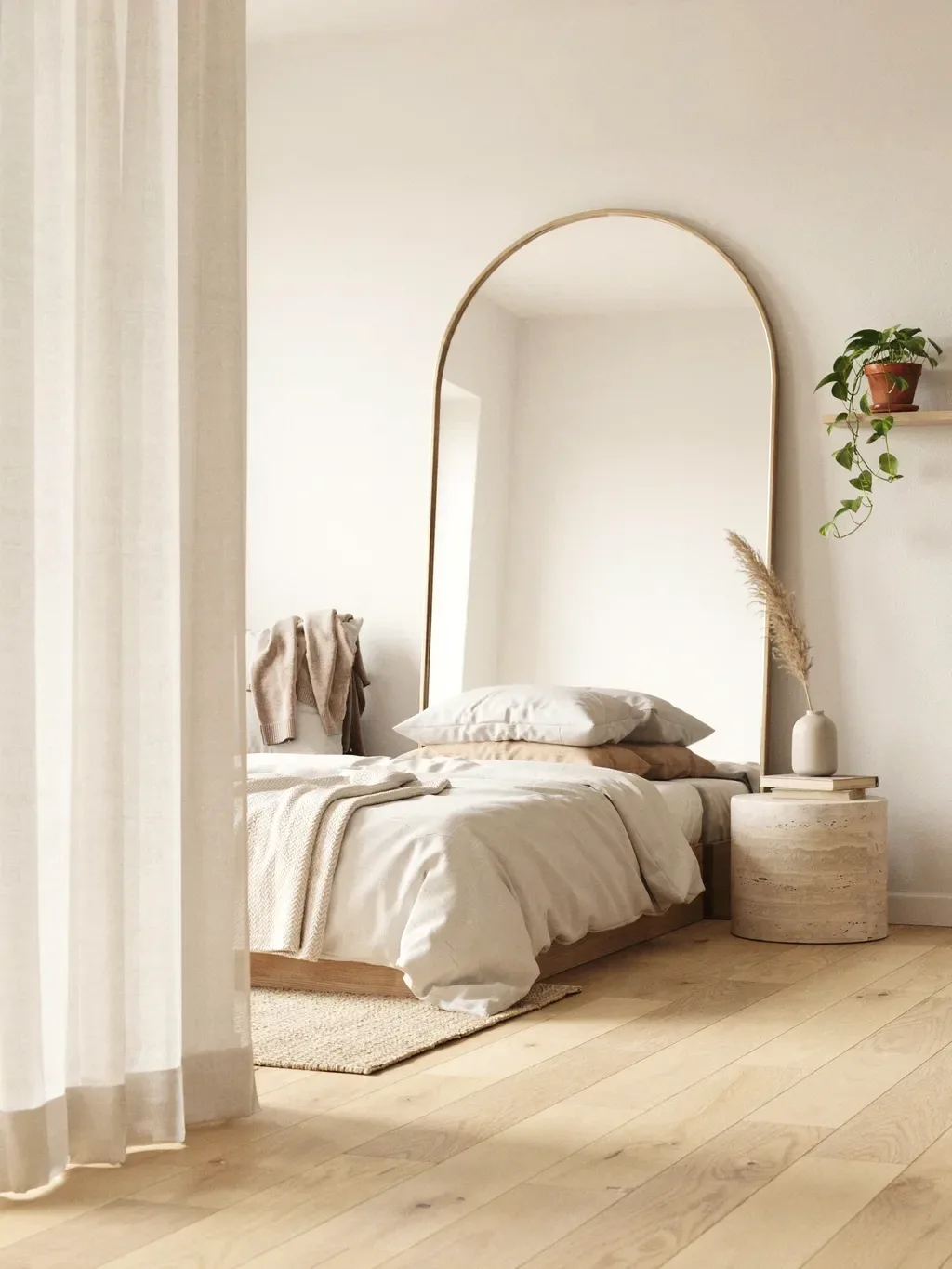
A single well-placed mirror does more for a small room than a row of accent lights. Positioned opposite or adjacent to the window, it doubles the daylight and gives the illusion of a second opening in the wall.
Nair likes an oversized arched or round mirror leaned against the wall rather than a cluster of small ones. “One generous mirror feels like a design decision,” she says. “Five little ones feel like indecision.” For evening, she layers warm, low lighting at different heights instead, a bedside glow, a floor lamp in the corner, never a single harsh overhead.
Float a small desk or shelf instead of a bulky piece
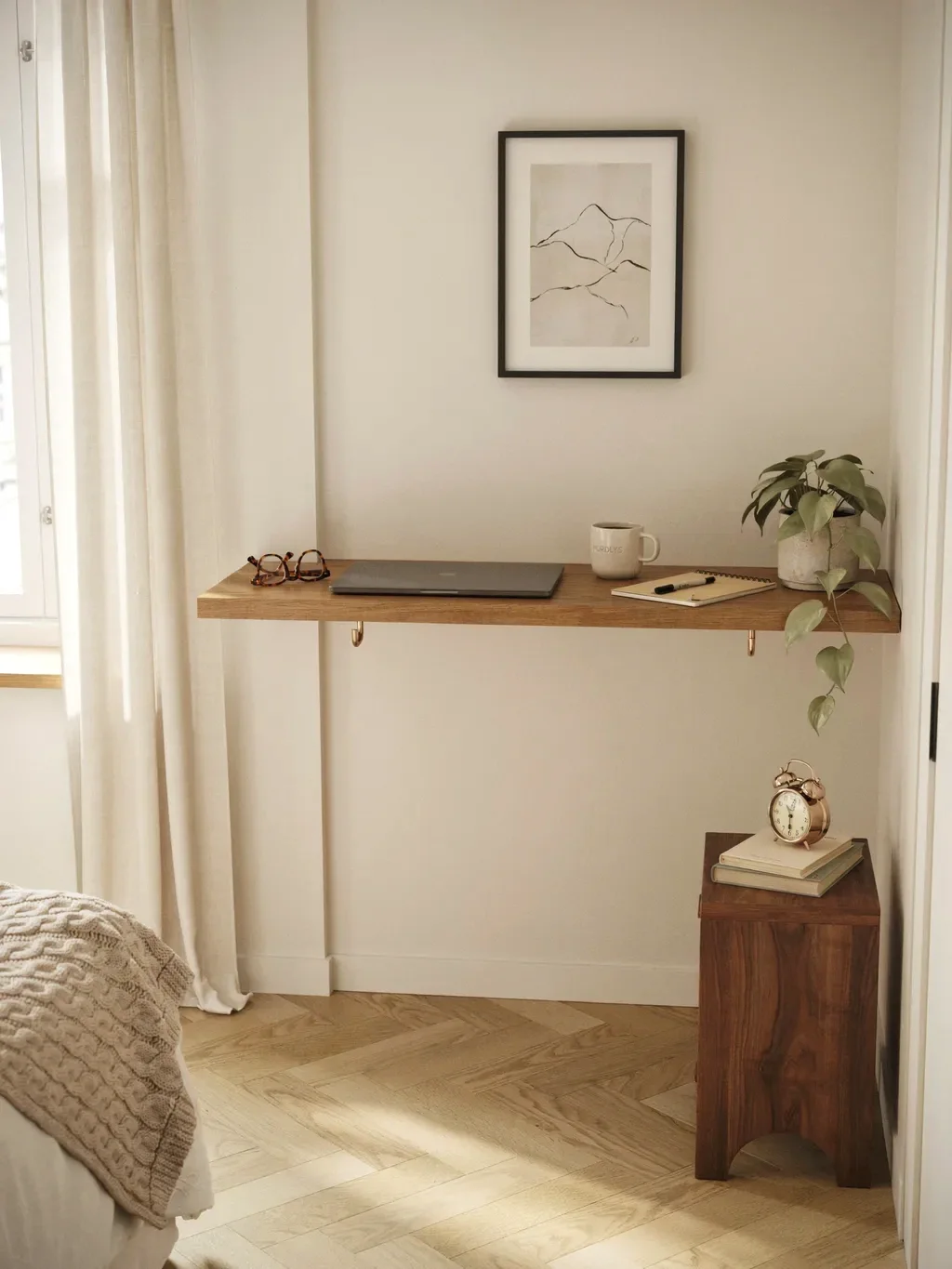
Guests increasingly want a corner to work or set down a coffee, but a full desk eats a small room alive. A slim wall-mounted shelf or a floating ledge gives the function without the footprint.
Adeyemi recommends a depth of around 30 centimeters: enough for a laptop and a cup, not so much that it dominates. “Anything that hangs on the wall keeps the floor clear,” he says, returning to his favorite principle. “And clear floor is the single most luxurious thing a small room can have.”
Keep the palette of materials short
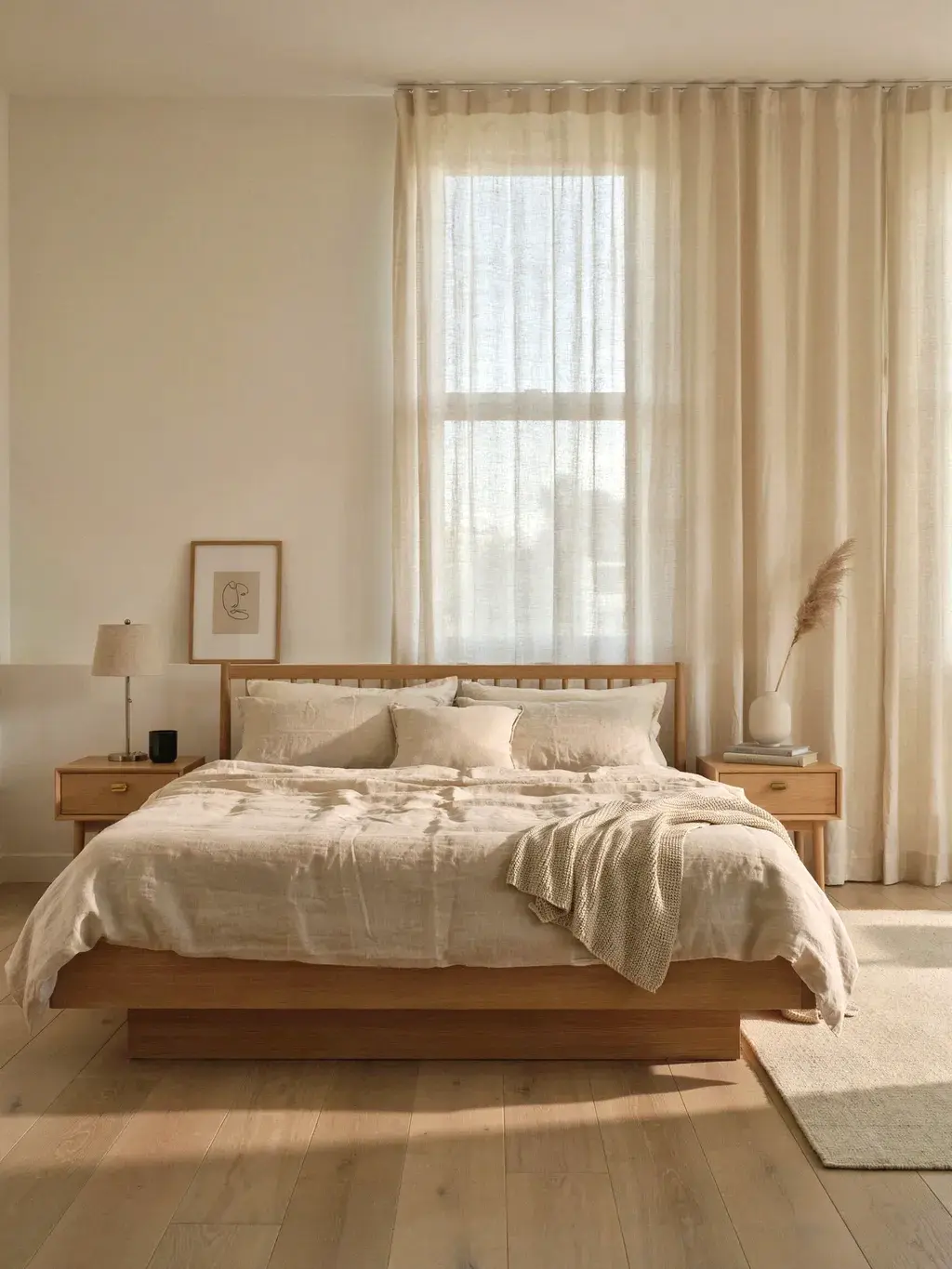
Minimal doesn’t mean bare, it means coherent. Pick two or three materials, pale wood, warm metal, soft linen, and let them repeat throughout the room. Repetition is what separates a curated space from a random one.
Lindqvist describes walking into rooms where every surface is a different finish. “It exhausts the eye,” she says. “Choose a small material vocabulary and speak it fluently. The room will feel designed even if you spent very little.”
Give every guest a soft place to land
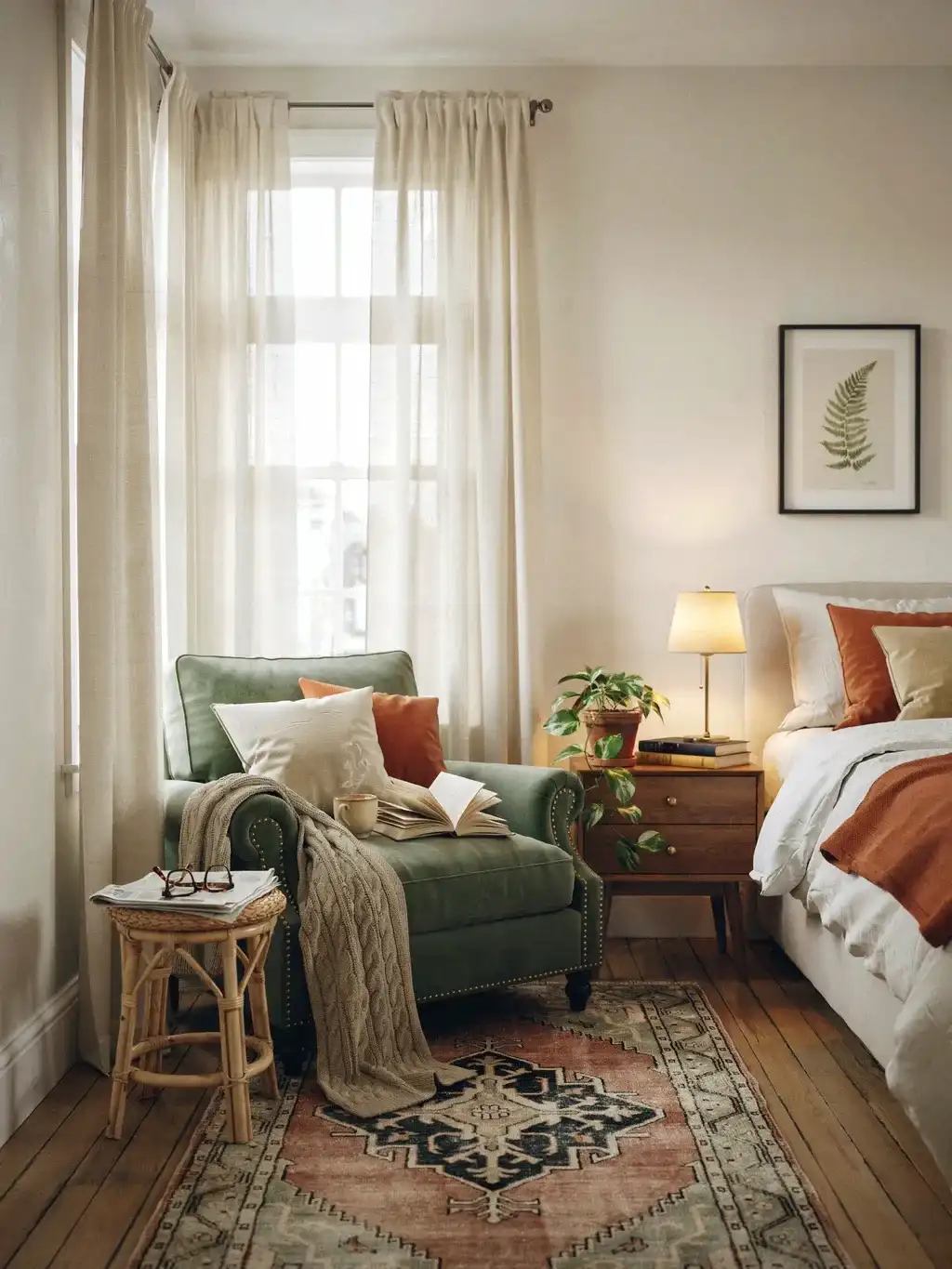
The detail that lifts a small Airbnb from functional to memorable is often the smallest one: a reading nook cushion, a folded throw at the foot of the bed, a single good bedside lamp with a warm bulb. These are the touches guests photograph and mention in reviews.
Nair calls them the room’s punctuation. “The big choices make the room work,” she says. “The little soft moments make a guest feel like someone was thinking of them. In a small space, that intimacy is your greatest advantage over a sprawling hotel room.”
A Quieter Note on Smallness
What unites every host who does this well is a refusal to treat the size as a flaw to be hidden. Lindqvist, Adeyemi, and Nair each circle back to the same observation: the smallness is the charm, not the obstacle. A compact room can wrap around a guest in a way a large one never quite manages.
The minimal small Airbnb room works because it trusts the guest to enjoy calm. It offers a warm neutral envelope, a few honest pieces on visible legs, light multiplied through a single mirror, and texture standing in for clutter. None of it requires a renovation or a generous budget. It requires editing, and the confidence to leave space empty on purpose.
A stylish small room, in the end, isn’t a smaller version of a big one. It’s a different proposition altogether, one where every choice is felt because there’s nothing extra to dilute it. Get the few things right, and the size stops being something you manage and becomes the very thing guests remember.


