Unique Hanging Plant Ideas You Haven’t Seen Before
- Plant Ideas
 Alina
Alina- 0
- 11 minutes read


Walk into almost any well-styled home from the past five years and you’ll likely spot the same hanging plant: a pothos or string of pearls in a single macrame holder, suspended in the corner near a window. The image has become invisible.
In short, hanging plants need to evolve past the corner-pothos era.
Botanical stylist Lena Holm puts it plainly. “The hanging plant became a habit,” she says. “And once something becomes a habit, it stops doing the work.”
But where to start? Here are eight directions designers, plant stylists, and biophilic interior specialists are working with right now. None of them the macrame-in-the-corner default.
1. The Ceiling-Mounted Vine Canopy
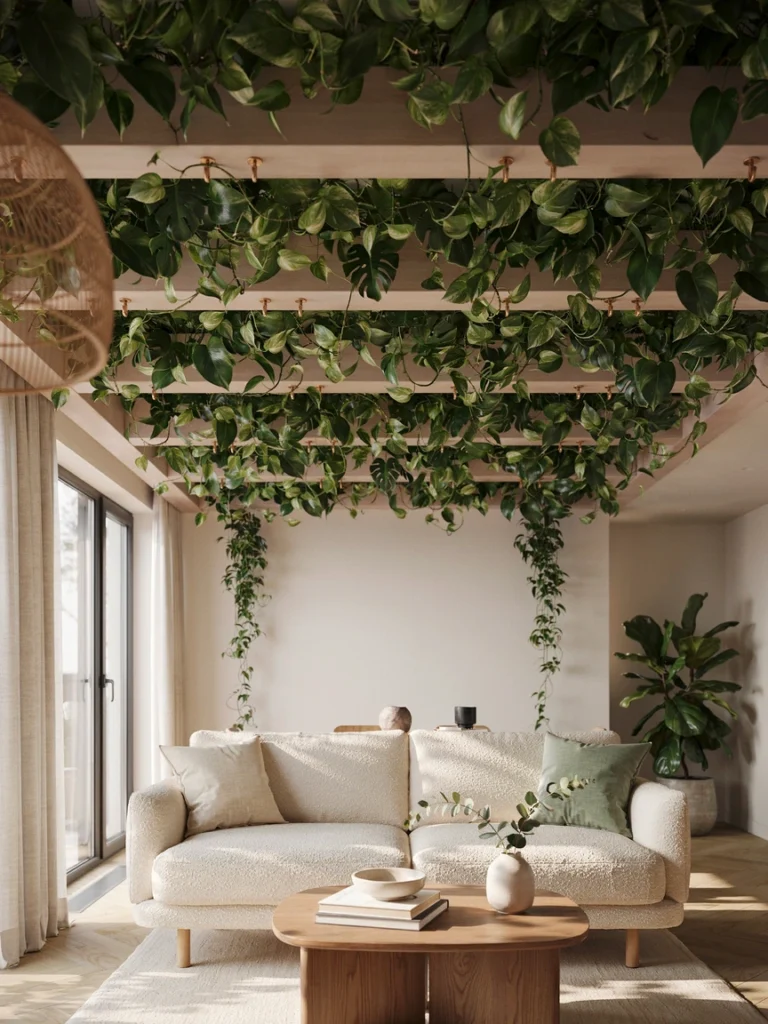
Instead of suspending one plant from one hook, run a series of small hooks across the ceiling in a line or curve, and train a fast-growing trailing vine (pothos, philodendron, English ivy) along the route. Over a few months the vine grows from a single rooted plant into a green canopy that drapes above a seating area, a dining table, or a doorway.
The effect is closer to architecture than decoration. Interior designer Aisha Sayed, who specializes in biophilic design, notes that “a vine canopy turns a ceiling from a flat surface into something alive. Few decor moves do that much work for so little money.”
2. Kokedama
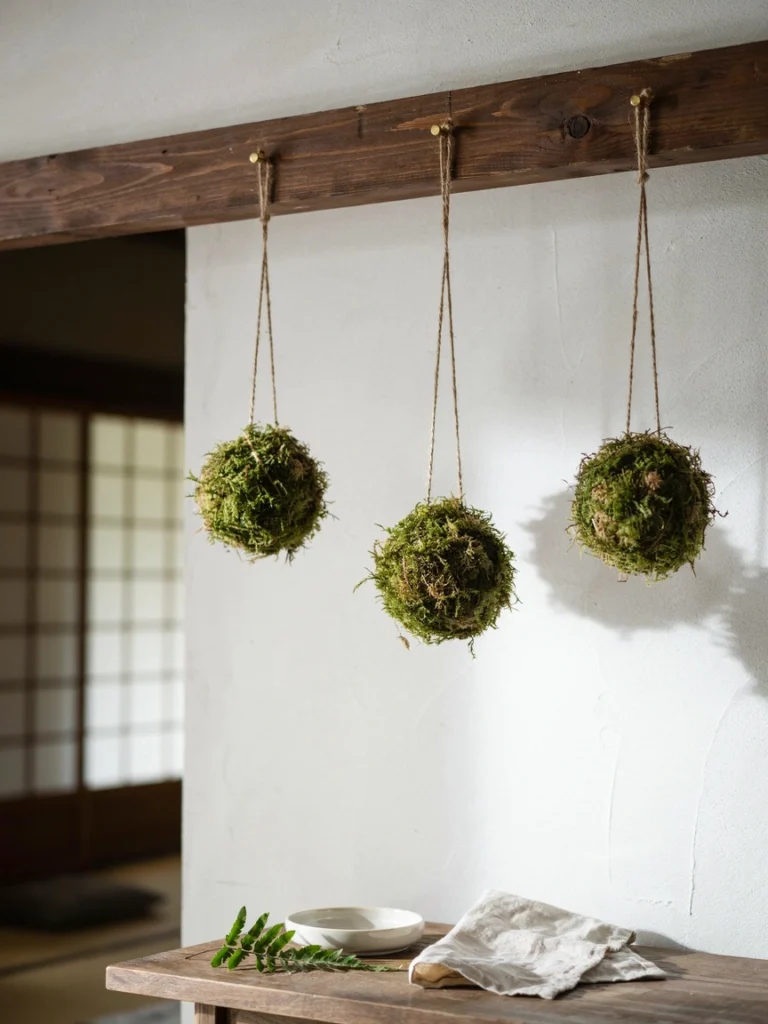
The Japanese practice of binding a plant’s roots into a moss-covered ball, with no pot at all, suspended by a single thread. Kokedama displays look like floating islands of greenery, and they’re as elegant as anything in the indoor plant world.
Holm favors them for “their refusal to look like decor. They look like horticulture, which is a different thing entirely.” Best for ferns, small fittonia, and even small orchids. A ready-made kokedama runs around £15 to £40, less if you make your own from sphagnum moss and akadama soil.
3. The Living Chandelier
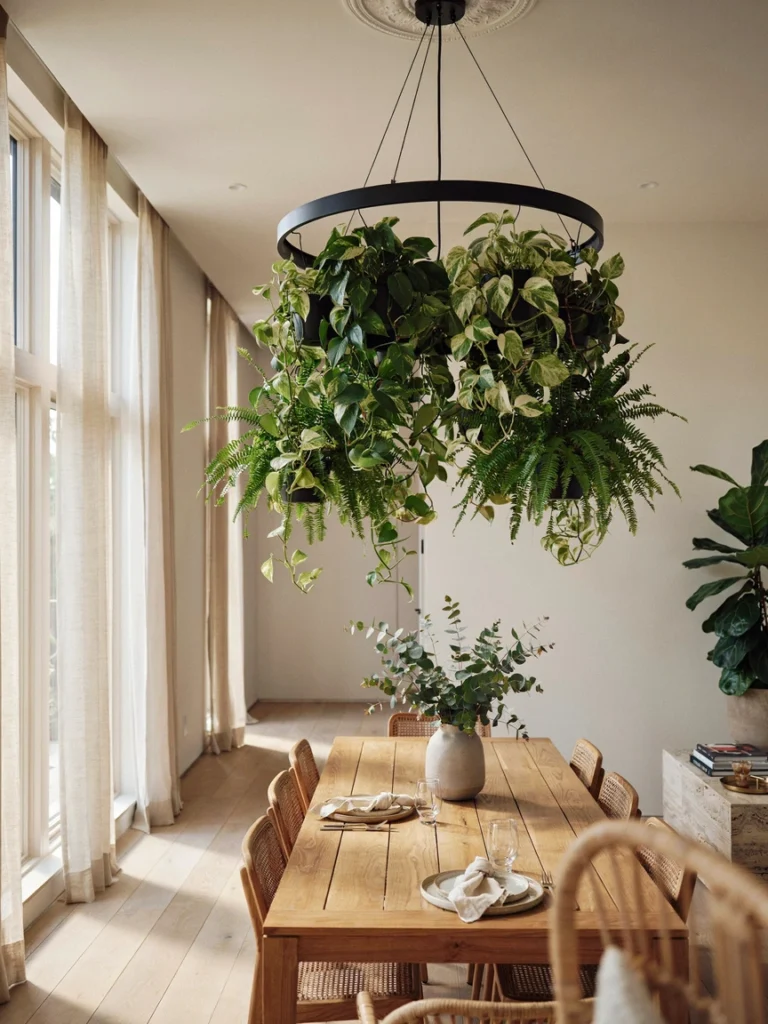
A horizontal structure (an iron ring, an old cartwheel, a custom-welded grid) suspended from the ceiling at eye-line, with multiple small hanging plants arranged around it like a pendant light fixture. In rooms with high ceilings and good natural light, a living chandelier becomes the anchor of the room.
Plant designer Devin Park describes it as “the move for rooms that need something at the center but don’t need another lamp. The plants are doing the work a chandelier would, but they’re alive.”
4. Inverted Sky Planters
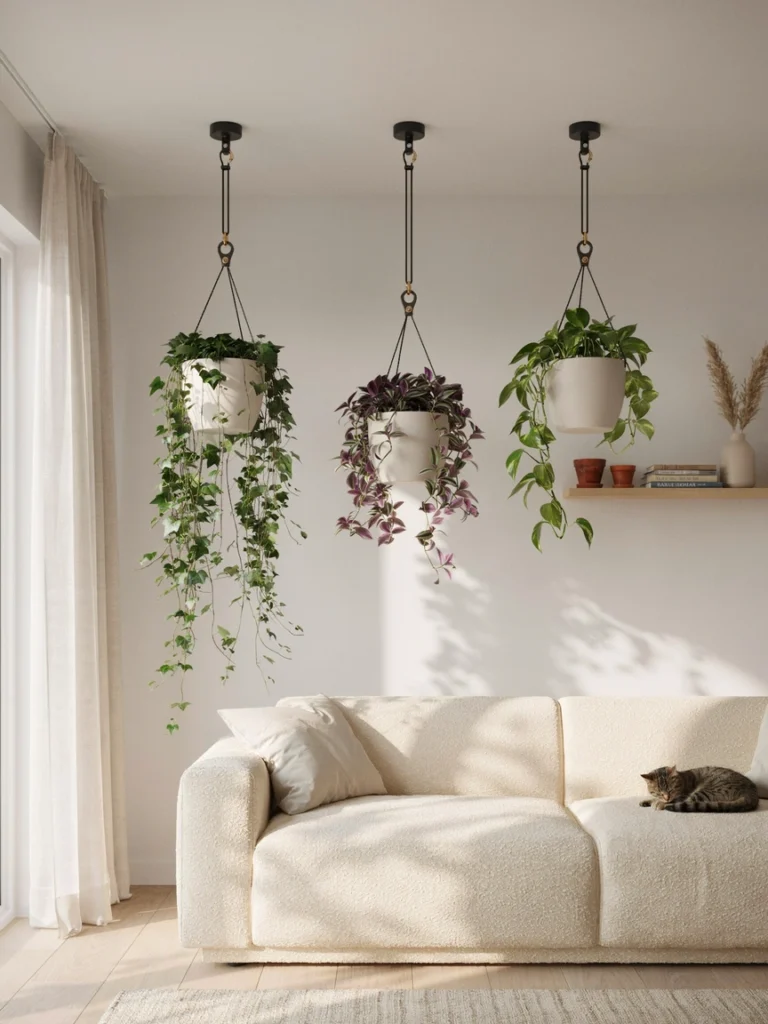
Plants growing downward. Specialist planters like the Boskke Sky Planter hold a plant in an inverted position, with the root system in a sealed top reservoir and the foliage growing toward the floor. The effect is genuinely strange: a leafy plant defying gravity from above.
Best for tradescantia, ivy, and other trailing species that look as good upside down as right-side up. About £30 to £60 per planter.
5. The Suspended Branch
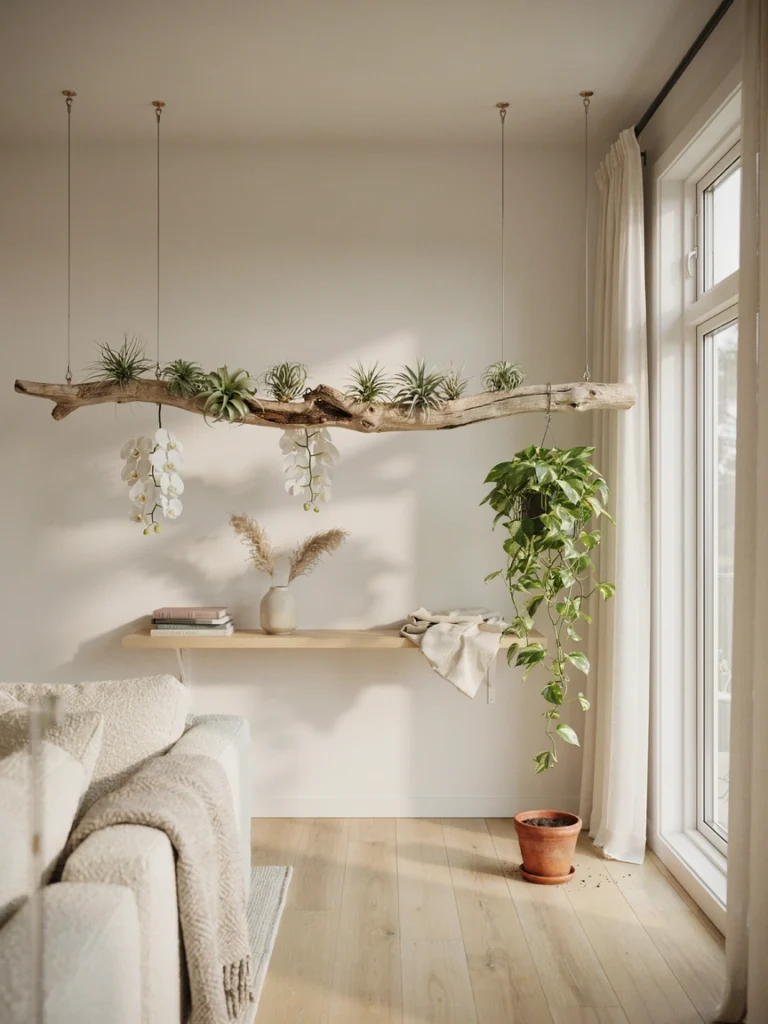
A horizontal piece of driftwood or a real tree branch, sanded and finished, suspended from the ceiling by two clear cables or thin chains. Air plants, small orchids, and trailing pothos can be wired or hooked along the length.
Sayed describes it as “a found-object centerpiece that feels intentional once installed. It avoids the look of standard plant hardware entirely. There’s no pot, no macrame, just a tree branch with plants on it.”
The branch is best collected on a walk and prepared properly (cleaned, sanded, sealed) rather than bought. The making is part of the point.
6. Glass Globe Terrariums
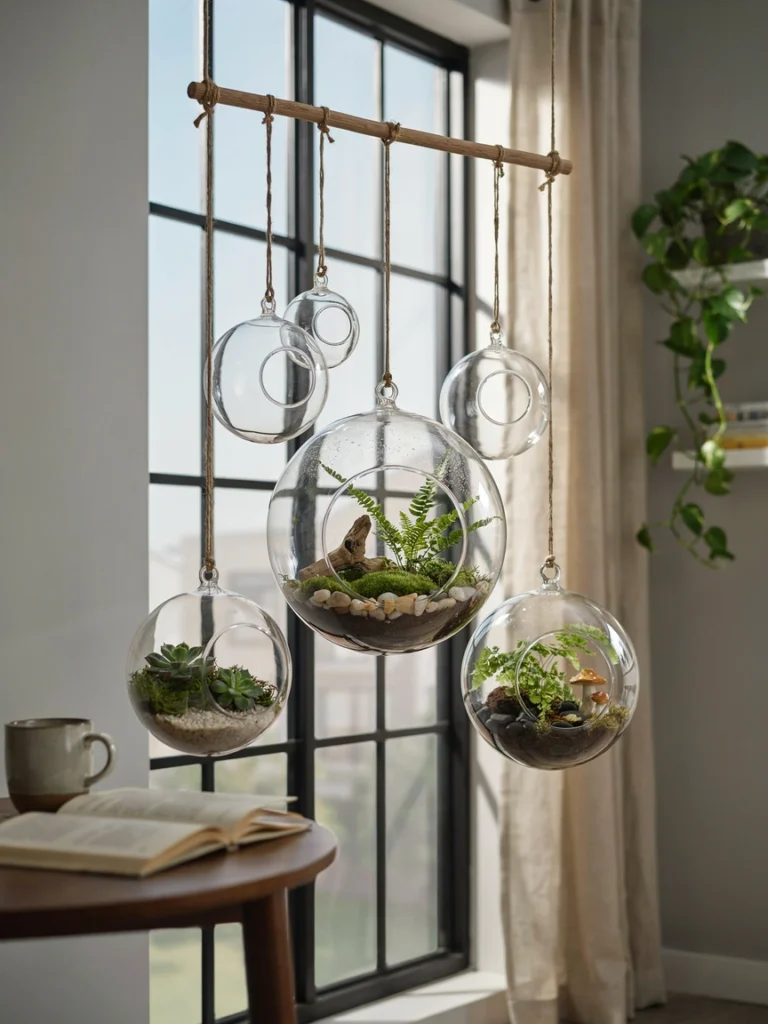
Hanging glass globes filled with mosses, small ferns, and pebbles, suspended at varying heights in front of a window. Each globe is its own miniature ecosystem, and a cluster of three to five at staggered heights creates a small sculptural arrangement.
The globes themselves are around £8 to £20 each. Filling them takes roughly twenty minutes per globe. The result reads as a custom installation, but the cost stays low.
Holm warns that direct sun cooks the contents of a glass terrarium fast. “Bright, indirect light is the brief. A south-facing window in summer will turn the inside of the globe into a sauna and kill everything in a week.”
7. Plants on the Curtain Rod
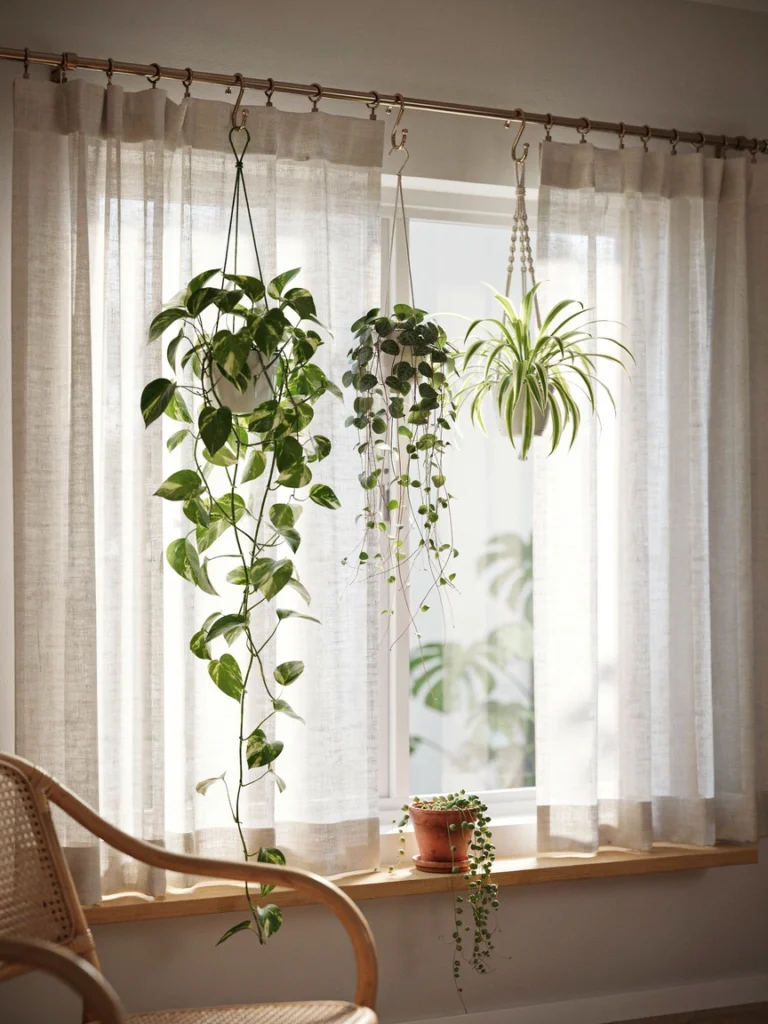
The hardware you already own. Trailing plants in lightweight pots or small kokedama, hung directly from an existing curtain rod, especially in a window with sheer or pale curtains. The plants sit in front of the curtain rather than against the wall, and they catch backlight from the window all day.
This is the no-hardware idea, and Park sees it as one of the most underused approaches. “Everyone hangs plants from the ceiling, but the curtain rod is right there, at the right height, in the right light. You don’t need a stud finder. You just need a hook over a rod.”
8. Vintage Vessel Pendants
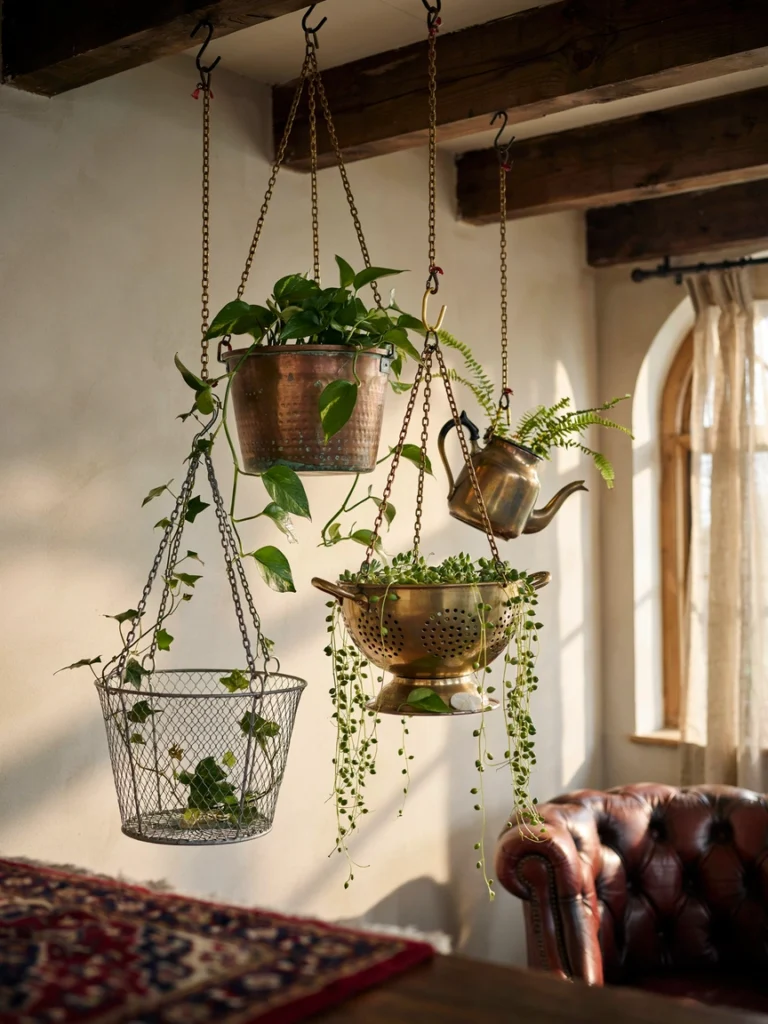
The vessel matters. Instead of buying a plant pot designed to hang, look for vintage objects that can be repurposed: old colanders, copper pots, fishing baskets, brass teapots, tea tins from antique markets, even small wire bicycle baskets.
Each one needs drainage and a way to suspend, but the result reads as collected rather than purchased. Sayed notes that “the moment a plant goes into a vintage vessel, the whole room reads slightly more interesting. The plant is incidental. The vessel is the story.”
A Quieter Note on What Works
Across all eight directions, the designers returned to a familiar point. The hanging plants that work over time are the ones placed for the room’s specific light, the specific eye-line, and the specific feeling the room wants.
In fact, Holm sums it up cleanly. “The cliche of the corner pothos exists because someone bought a plant and a hanger together and put them in the most obvious place. The interesting hanging plants are the ones you wouldn’t have thought of unless you had really looked at the room first.”
A unique hanging plant idea isn’t really about the plant or the hanger. It’s about the willingness to think past the default. Whether you choose a vine canopy, a kokedama, or a vintage colander on a string, the principle stays the same: pick the spot, the vessel, and the species for the space you actually have. The rest takes care of itself.


