Very Small Kitchen Ideas That Feel Open, Bright, and Considered
- Kitchen Design
 Alina
Alina- 0
- 12 minutes read


Walk into nearly any thoughtfully designed flat of the past few years, and the kitchen tells you everything. Not because it’s large, often it’s the opposite, but because someone has taken a genuinely tiny footprint and made it feel deliberate. A galley you could touch both walls of, a corner of an open-plan room, a single run of cabinets under a window. The very small kitchen has gone from a compromise people endure to a design problem people enjoy solving.
In short, a small kitchen done well doesn’t read as small. It reads as edited.
But where do you even begin when there’s barely room to turn around?
Kitchen designer Annika Sorensen, who has spent years fitting cooking spaces into period conversions and micro-flats, says the answer is rarely about adding. “People come to me wanting to cram more in,” she says. “The work is almost always taking away, choosing fewer, better things and giving them room to breathe. A small kitchen punishes clutter more than any other room in the home, and rewards restraint more generously.”
But where to start? The designers who do this well keep returning to the same set of moves, each one earning its place in a space where nothing can afford to be decorative only.
Run the cabinets to the ceiling
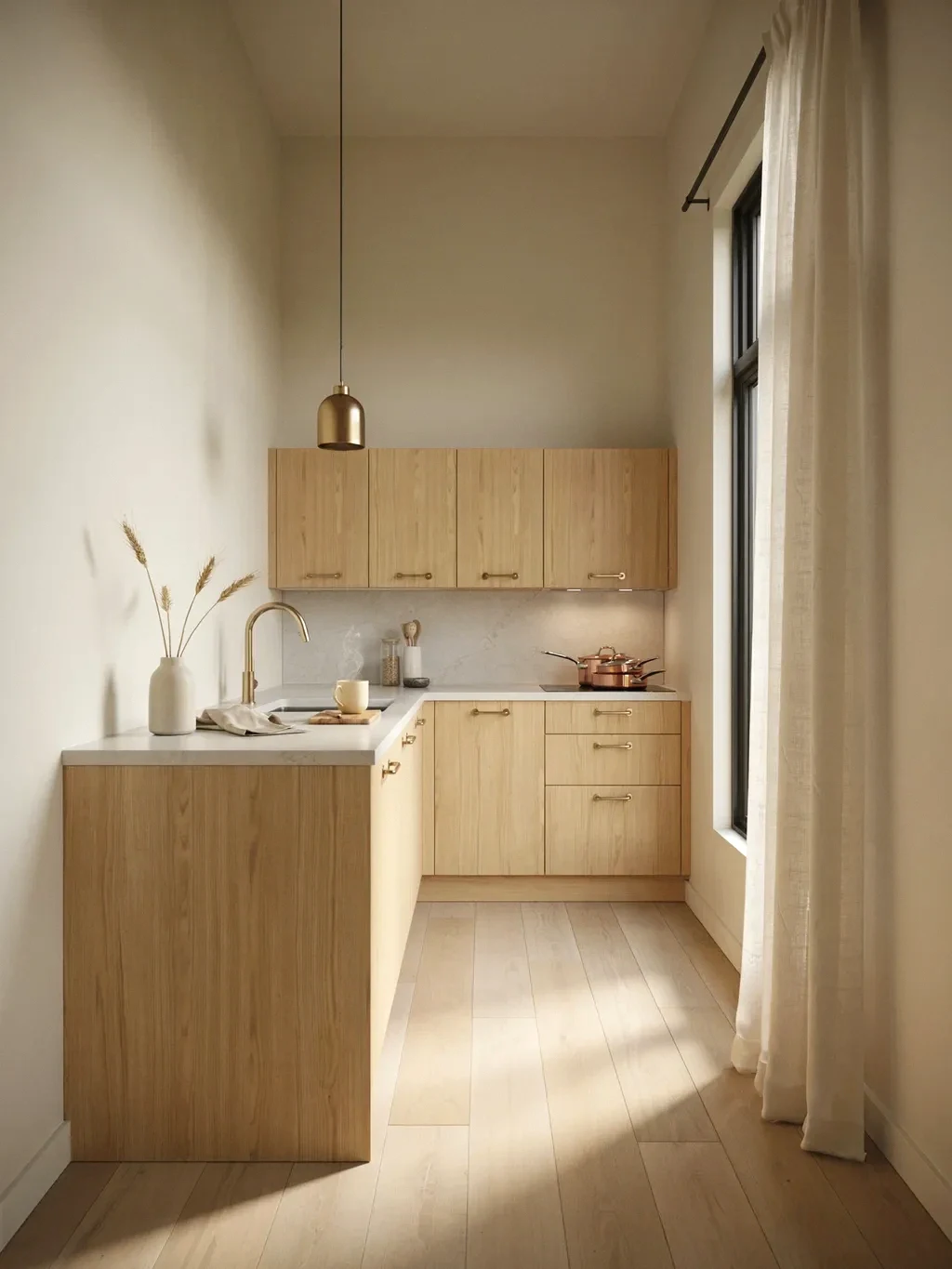
The instinct in a small kitchen is to keep things low and modest, but that wastes the one dimension you usually have to spare: height. Taking cabinetry all the way to the ceiling does two things at once. It draws the eye up, making the room feel taller, and it gives you storage for the things you rarely reach for.
Sorensen treats that top tier as a deliberate zone. “The high shelves hold the once-a-year pieces,” she explains. “The serving platters, the spare glasses. You free up the prime real estate at eye and hand height for what you use daily.” The visual payoff is a kitchen that looks intentional from floor to ceiling rather than one that stops halfway and leaves an awkward dusty gap.
Choose one light, continuous surface
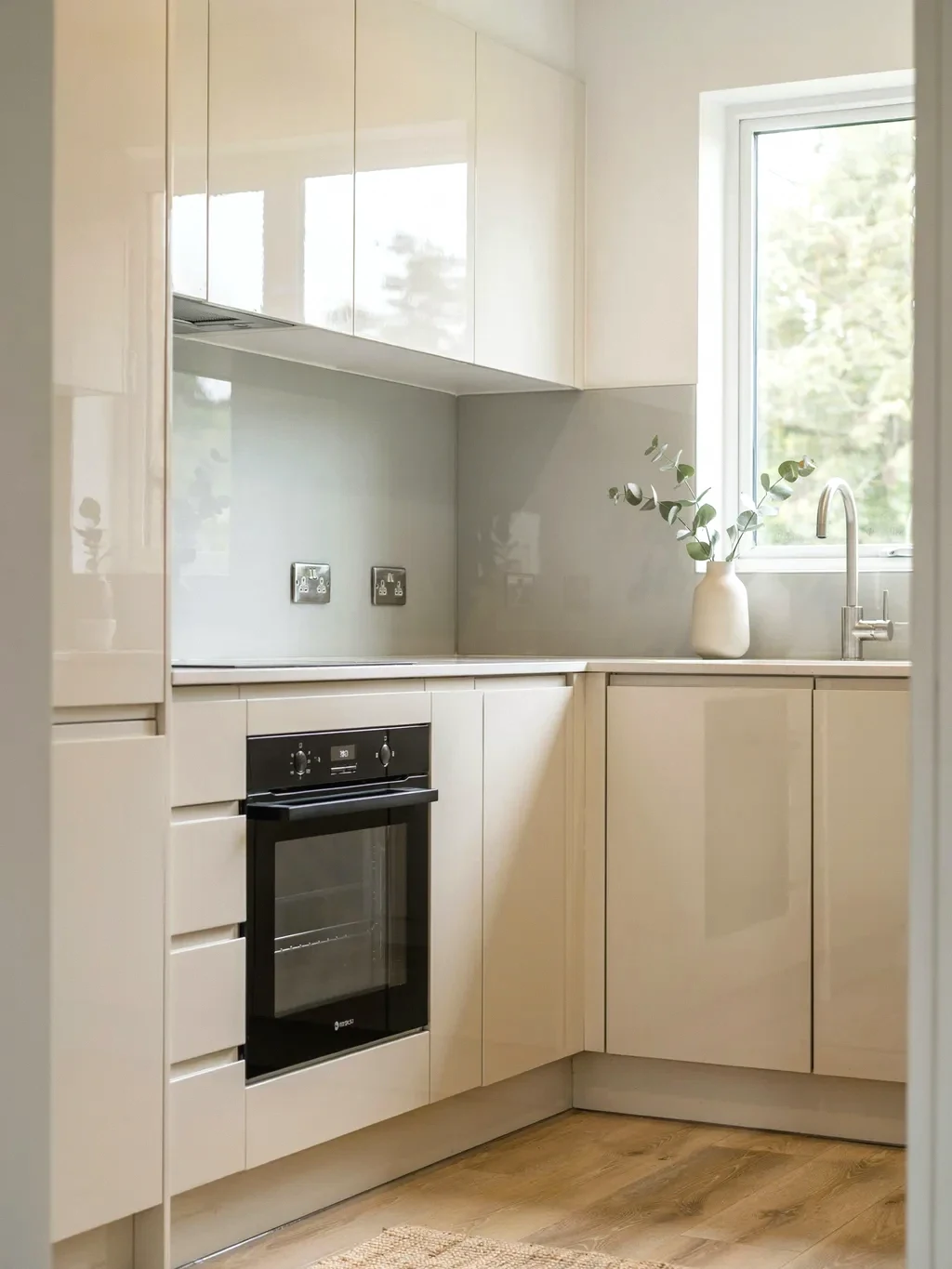
Contrast fragments a small space. Every change of colour or material is a line the eye has to stop at, and in a tight kitchen those stops pile up fast. A single pale, continuous worktop carried along the run, ideally wrapping up as a matching splashback, makes the whole space read as one calm plane.
Materials specialist Daniel Okonkwo, who advises on surfaces for compact homes, is firm on this point. “In a small kitchen, the seam is the enemy,” he says. “A continuous quartz or microcement surface that runs from counter to wall removes a visual break and makes a two-metre run feel like a considered whole rather than a series of patched-together parts.” Pale tones bounce what light there is, and the unbroken surface is far easier to keep clean, which matters when the kitchen sits in full view of the living space.
Let the light reach the back of the room
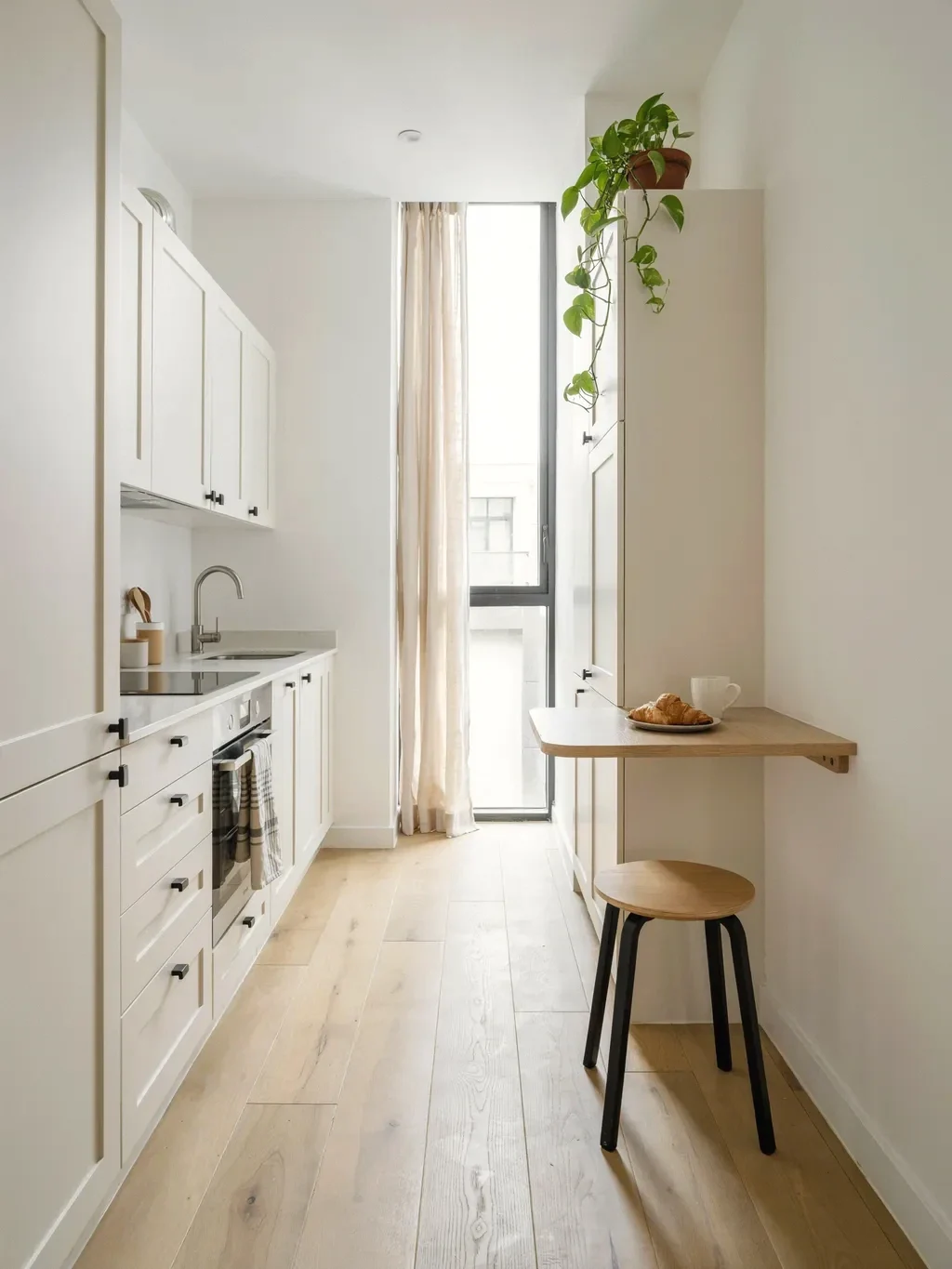
A very small kitchen often sits at the darkest end of a flat, away from the windows, and nothing makes a tight space feel more oppressive than gloom. The fix is layered, and most of it is cheap.
Okonkwo recommends under-cabinet lighting as the single highest-impact change. “A warm LED strip tucked beneath the wall units lights the worktop directly,” he says. “Suddenly the back of the kitchen, the part that was always in shadow, becomes the brightest, most usable surface you have.” Add a glossy or satin splashback to throw that light back into the room, and a dim galley becomes genuinely pleasant to cook in.
Hang the everyday things on the wall
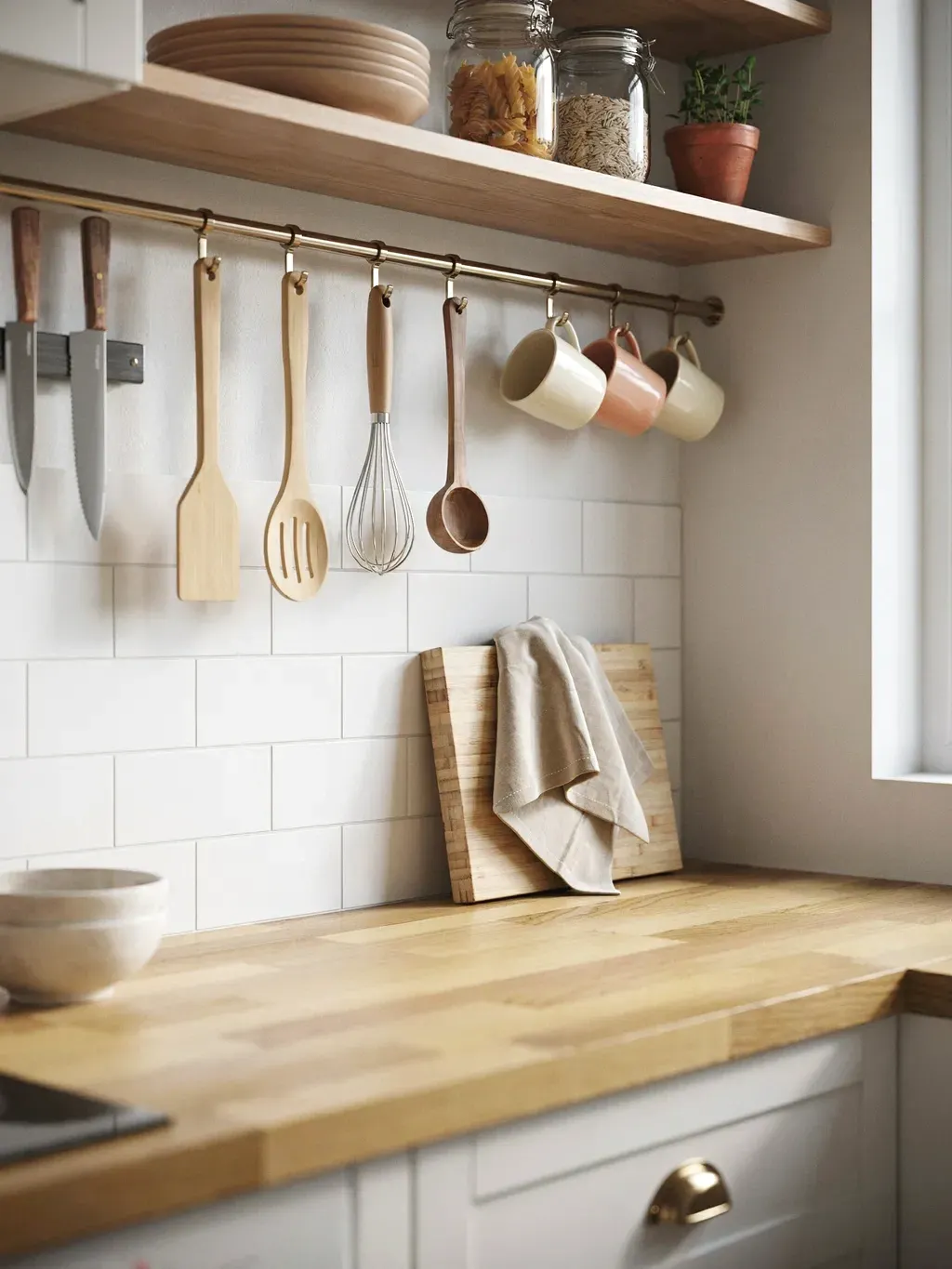
Drawer and cupboard space is precious, so the things you reach for constantly needn’t hide inside it. A slim rail along the splashback for utensils, a magnetic strip for knives, a couple of hooks for mugs. The wall becomes working storage, and the items earn their keep as a kind of quiet decoration.
In fact, this is where a small kitchen can show a little personality. A row of well-made wooden spoons or a few good copper pans on a rail reads as character, not clutter, precisely because everything is in use. The rule is honesty: hang what you actually reach for, not a display you’ll only dust.
Pull the dining into the kitchen, gently
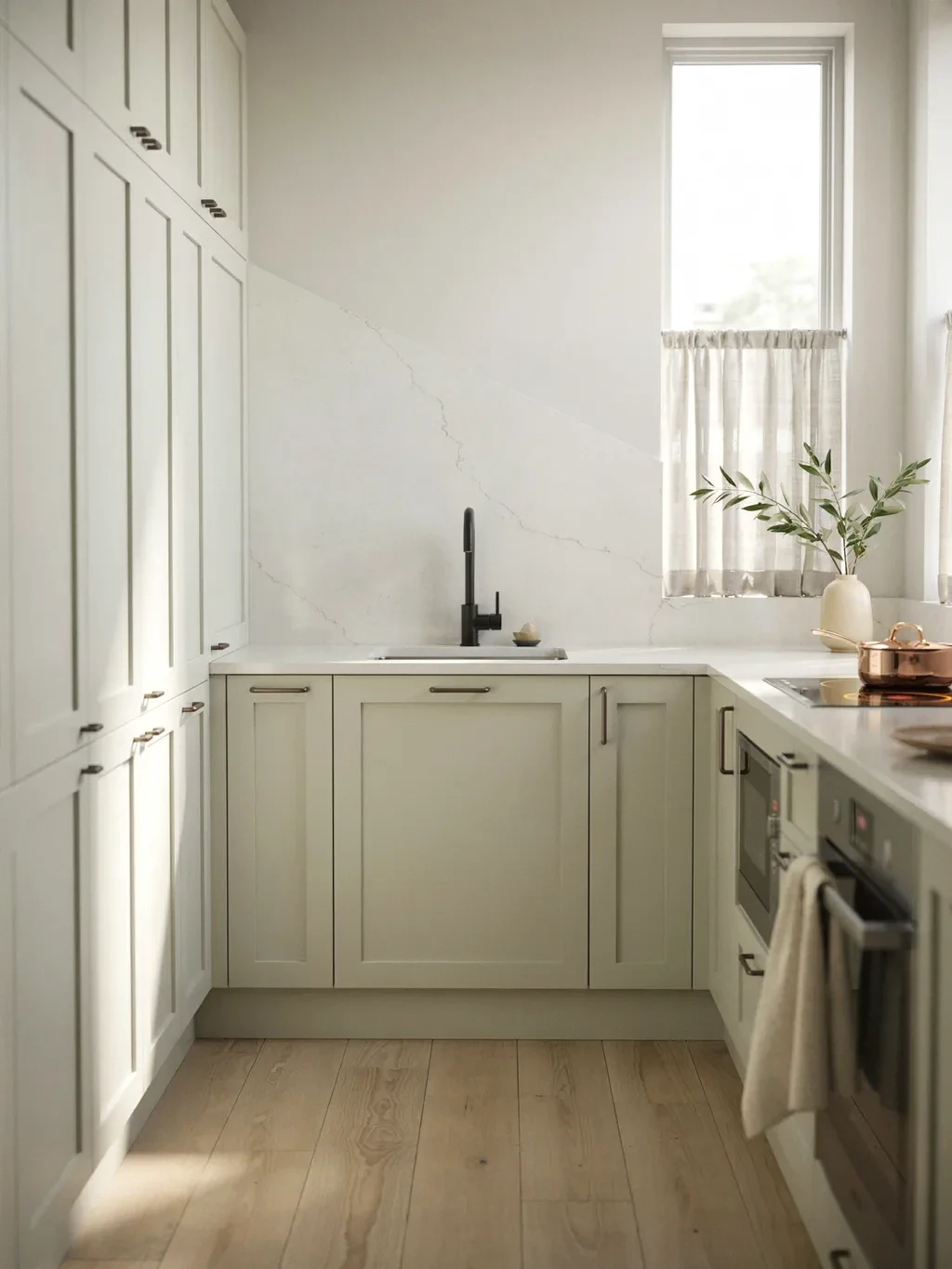
When there’s no room for a table, the temptation is to give up on eating in the kitchen entirely. But a slim breakfast bar, a fold-down ledge, or even a deep windowsill with a single stool turns a working galley into somewhere you can pause with a coffee.
Sorensen favours the fold-down option in the very tightest spaces. “A ledge that drops from the wall and disappears when you’re done gives you a perch without permanently stealing floor,” she says. “It’s the difference between a kitchen you only stand in and one you actually linger in.” Even a few inches of surface at the right height changes how a small kitchen feels to live in.
Reflect the room back at itself
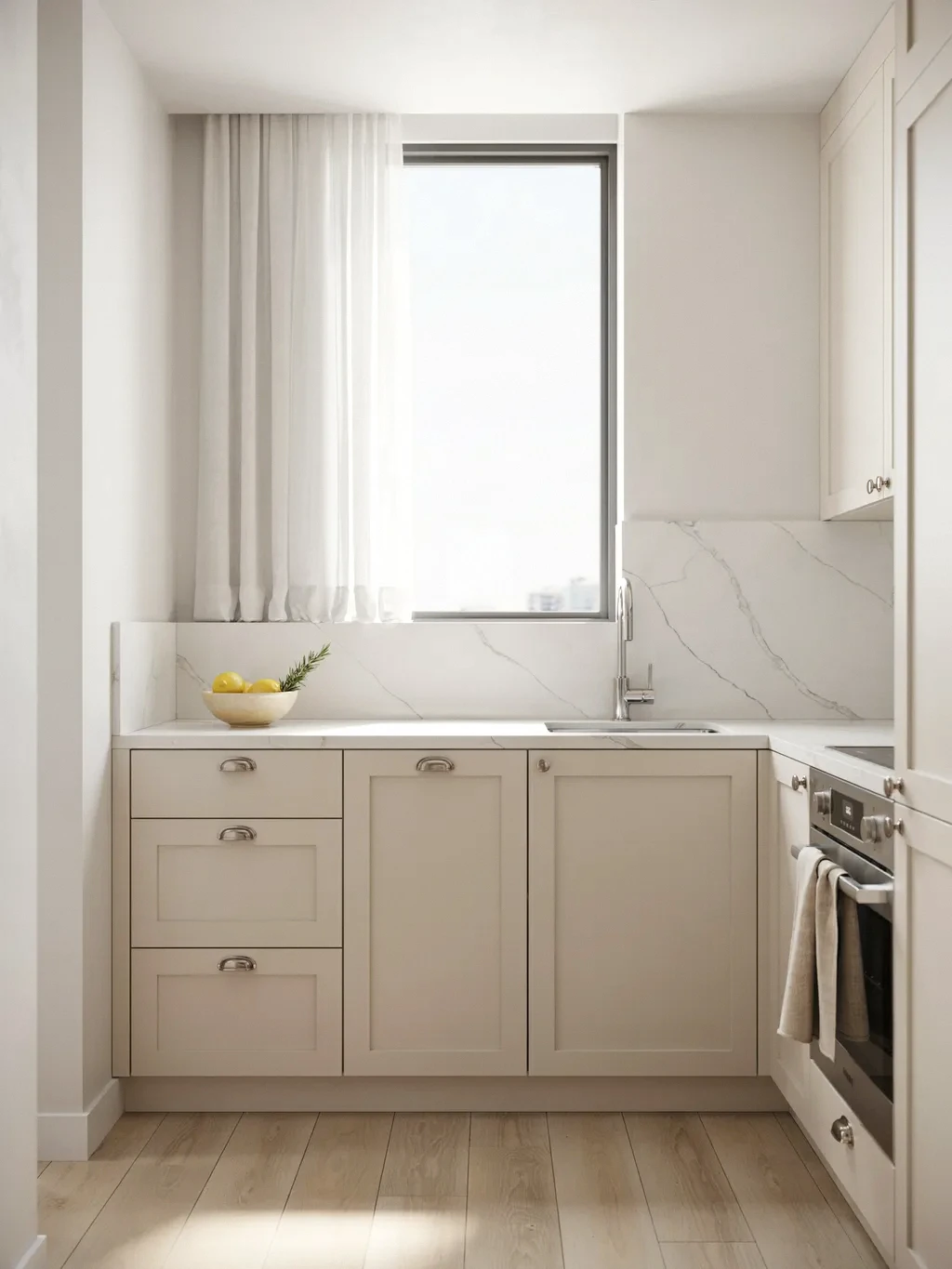
A mirror or a run of glossy cabinet fronts does in a kitchen what it does anywhere small: it suggests more space than exists. A reflective splashback behind the hob, a mirrored panel at the end of a galley, or simply high-gloss handleless units all gently double the sense of depth.
Okonkwo cautions against overdoing it. “One reflective gesture reads as elegant,” he says. “Mirror everything and it feels like a funhouse.” A single well-placed reflective surface, catching daylight or the glow from the window, is enough to lift the whole room.
Keep the palette of materials short
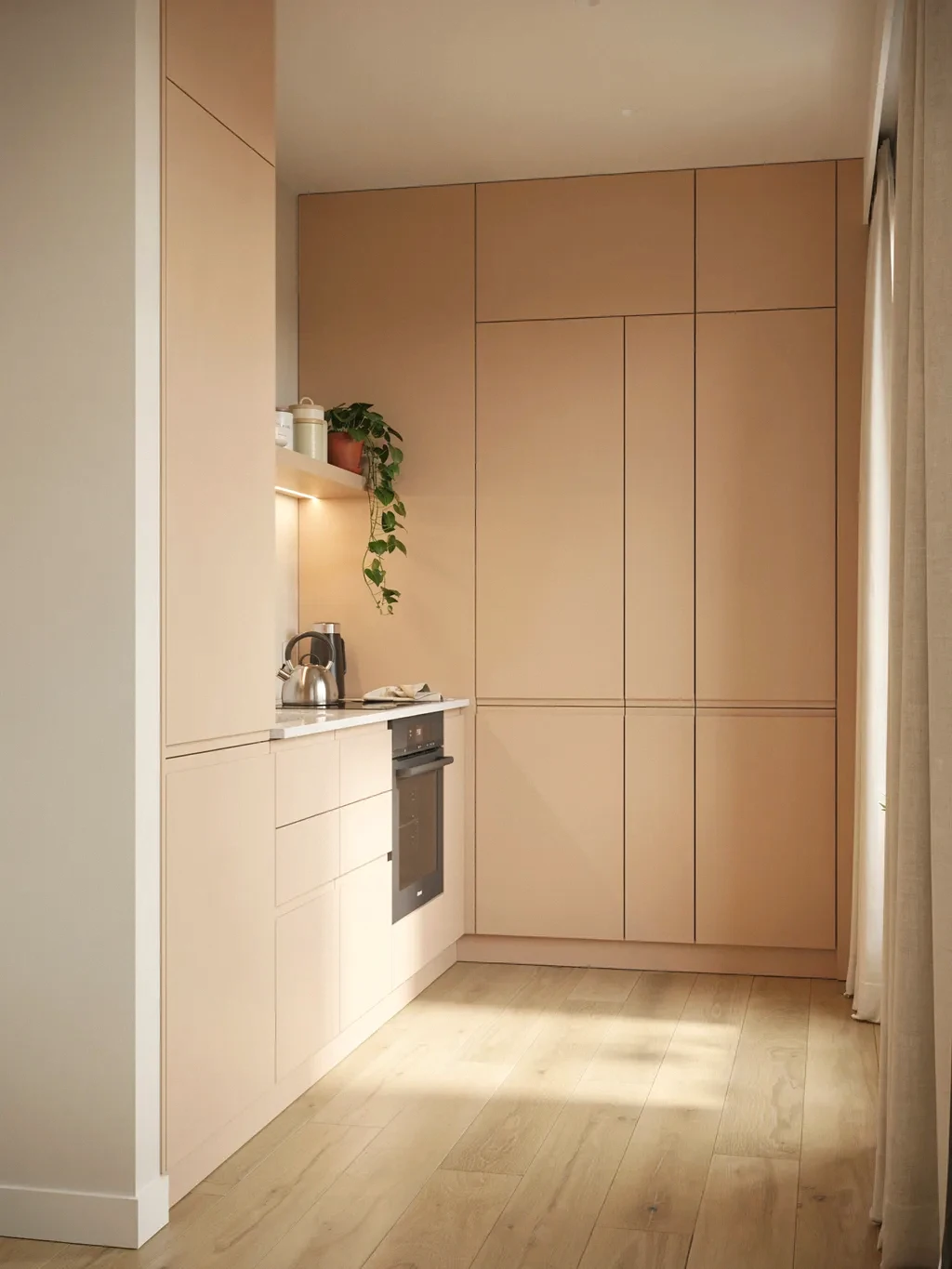
The throughline of every small kitchen that works is coherence. Pick two or three materials, pale timber, a soft stone-look surface, a warm metal for the fittings, and repeat them. Repetition is what separates a curated kitchen from a cramped one.
Sorensen describes the rooms that get this wrong as exhausting. “Every cabinet a different finish, three kinds of handle, a feature tile fighting the worktop,” she says. “In a large kitchen you might get away with it. In a small one it reads as chaos.” A short, repeated material vocabulary makes even the tiniest kitchen feel like a single considered design.
A Quieter Note on Smallness
What unites Sorensen and Okonkwo is a shared refusal to treat the size as a defect. Both return, in different words, to the same idea: a very small kitchen is a constraint that produces better design, not worse. The limits force decisions a larger room would let you dodge, and those decisions are precisely what make the space feel resolved.
The very small kitchen works because it has nowhere to hide. Every choice is visible, so every choice has to count: cabinets that reach the ceiling, one continuous pale surface, light pushed into the dark corners, the everyday things hung honestly on the wall. None of it asks for more square footage. It asks for editing, and a willingness to let a few good things have the room to themselves.
A small kitchen, in the end, isn’t a large one that fell short. It’s a different discipline entirely, one where restraint is the whole point, and where getting the few essentials right leaves you with a space that feels not cramped but quietly, completely intentional.


