Rooftop Garden Ideas That Turn Any Roof Into a Green Paradise
- Gardening Tips
 Alina
Alina- 0
- 14 minutes read


For most of the past century, the urban rooftop was wasted square footage. Tarred surfaces, exposed pipes, the occasional storage crate. The rooftop garden has gone from a curiosity to one of the most-requested residential projects in dense cities.
In short, the rooftop has become a garden, not just a substitute for one.
Urban garden designer Theo Marchand puts it plainly. “A rooftop garden isn’t outdoor space you didn’t have,” he says. “It’s a fundamentally different kind of outdoor space, with different light, different wind, different privacy. It rewards designs that take those conditions seriously rather than treating it like a small back garden lifted upward.”
But where to start, when the rooftop has constraints (weight, wind, drainage, access) that a ground-level garden never has? Nine directions, with one non-negotiable first.
1. The Structural Reality
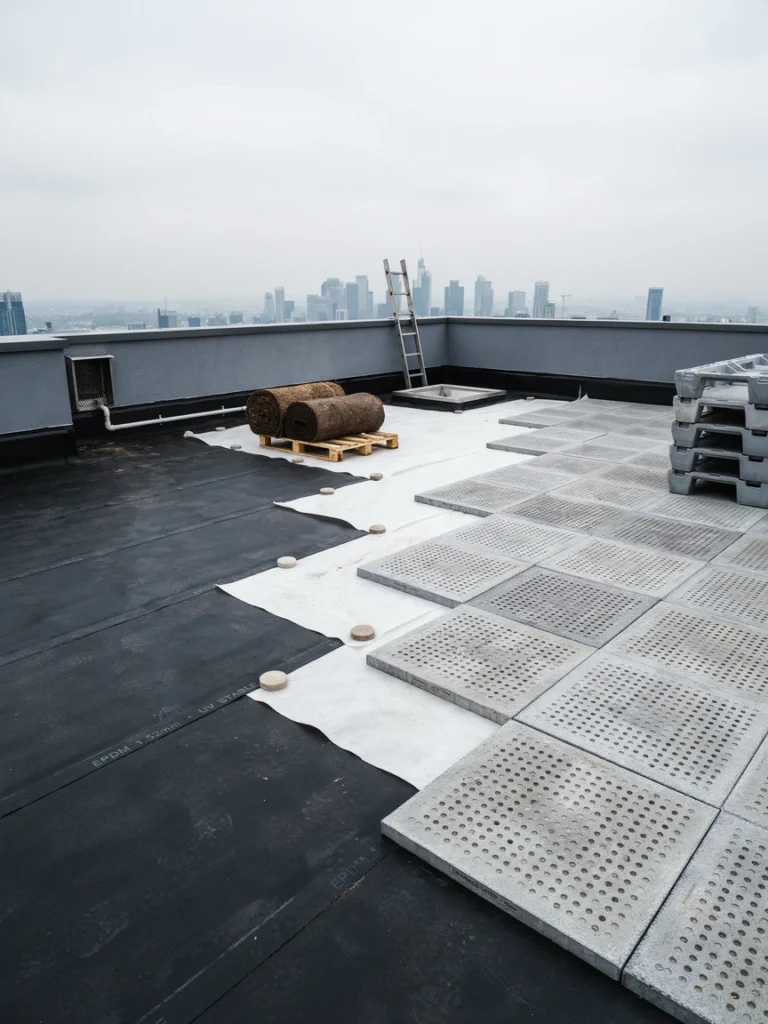
Before any plant goes on a roof, the structural question matters more than anything else. A modern urban roof can typically hold an additional 30 to 60 pounds per square foot of distributed load, but older buildings vary enormously. The wet weight of soil-filled planters, water reservoirs, hardscape, furniture, and people adds up quickly.
Rooftop garden architect Priya Iyengar puts it bluntly. “Every conversation about a rooftop garden starts with the structural engineer. The most beautiful planting scheme on the planet means nothing if the floor below is buckling in two years. We assume nothing about load capacity until the building has been properly assessed.”
A waterproof membrane in good condition is equally non-negotiable. Repairing a leak below a fully planted rooftop is one of the worst experiences a homeowner can have. Get both of these things right before you order a single pot.
2. The Container Garden as Starting Point
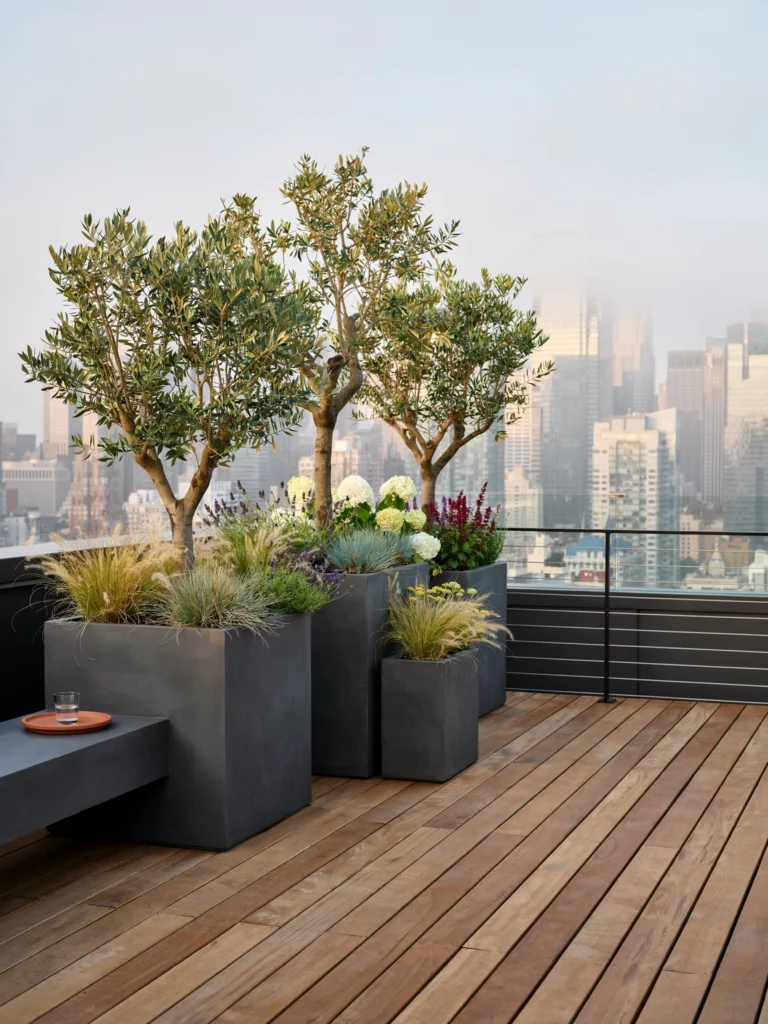
For most rooftops, the entry-level project is a container-based garden. Large planters, sized to the structural limits, filled with a mix of trees, perennials, and seasonal annuals. The advantage is flexibility (containers can be moved, replaced, or removed) and weight predictability.
Iyengar recommends starting with fewer, larger containers rather than many small ones. “A single generous planter with an olive tree and underplanting reads as designed. Twelve small pots with random herbs read as a collection of unfinished thoughts.”
Materials matter. Glass-fibre and resin planters approximate the look of terracotta or stone at a fraction of the weight. Real terracotta cracks in winter freeze cycles unless protected, and stone is rarely a viable option on older roofs.
3. The Raised Bed Rooftop
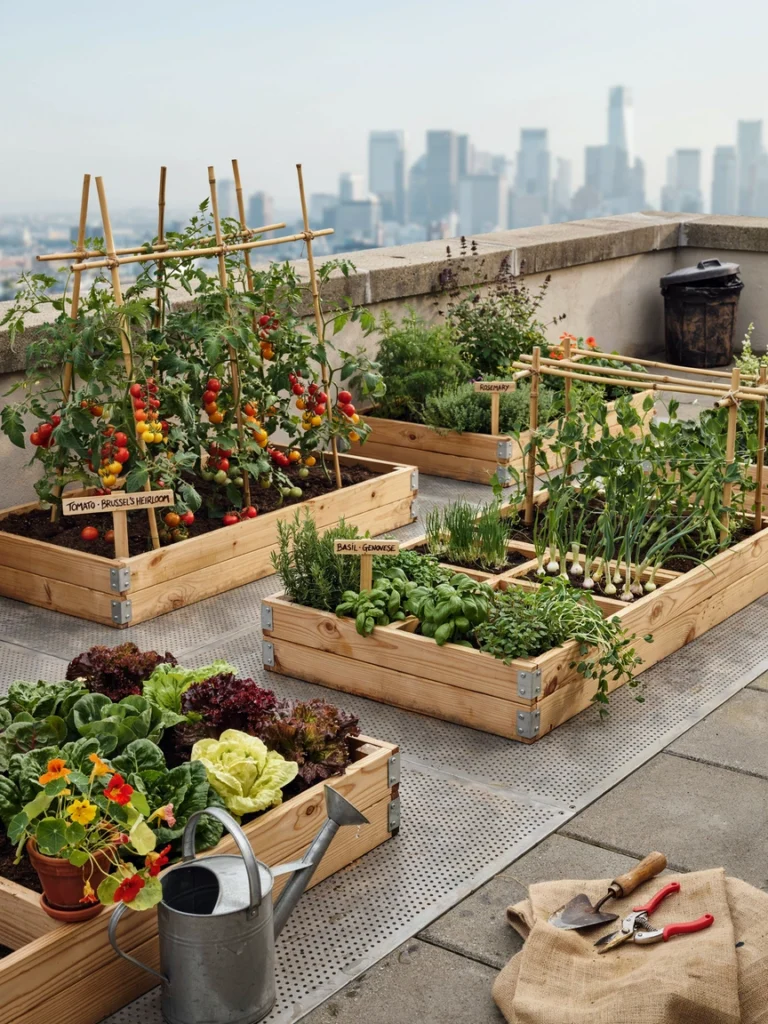
For households serious about growing food, a raised bed installation gives more depth than containers and more durability than fabric grow bags. Sized correctly to the structural limits, raised beds let you grow vegetables, herbs, and even small fruit trees in conditions much closer to a ground-level garden.
The trick is the soil mix. Standard topsoil is heavy. A blended growing medium of peat-free compost, coir, perlite, and a small amount of soil keeps the weight manageable while holding moisture and nutrients well. Horticulturalist Bram Wendt recommends “no more than 30% real soil by volume on a rooftop. The rest should be lighter components that give plants what they need without overloading the structure.”
4. The Mediterranean Rooftop
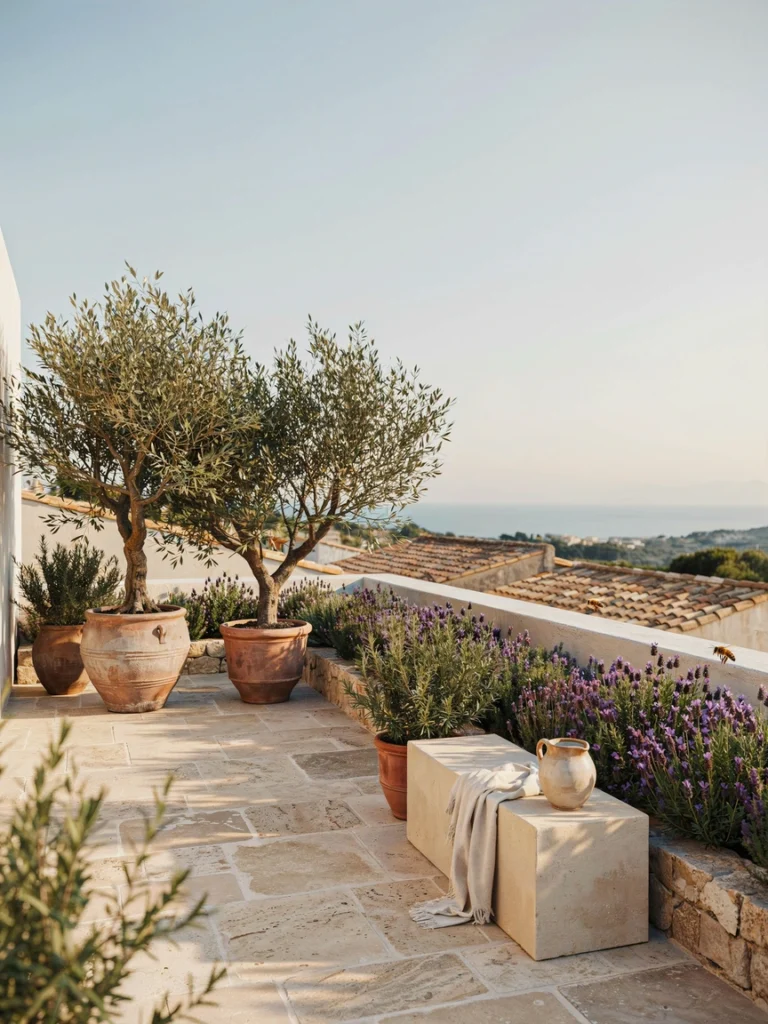
For drought-tolerant gardens in hot urban climates, the Mediterranean approach is one of the most rewarding directions. Olive trees in large planters, lavender beds, rosemary hedges, drifts of grasses, terracotta in tones that warm with age. The look references the rooftop gardens of southern Italy and Andalusia without trying to replicate them exactly.
The practical appeal is real. Drought-tolerant Mediterranean plants need less water (a serious consideration on a roof where every drop has to be carried up or piped in), tolerate wind, and look beautiful even in late summer when other gardens have given up.
Marchand notes that the Mediterranean approach also suits rooftops aesthetically. “The hot, exposed conditions of most urban roofs are actually close to a Mediterranean hillside. The plants want to be there. The roof wants the plants. It’s one of the rare cases where the easy design choice is also the correct one.”
5. The Wildflower and Pollinator Rooftop

A direction that has gained ground in the past five years, driven equally by ecological interest and the visual appeal of a meadow above a city. Native wildflower mixes, designed for pollinators and biodiversity, can be sown directly into a shallow soil layer (around 100mm deep, where structural conditions allow) to create a small urban meadow.
The visual effect is unexpected and lovely. Most urban dwellers have never seen a wildflower meadow at eye level above the city, and the contrast with the surrounding architecture is striking. Bees and butterflies appear within the first season. The maintenance is genuinely low: one cut a year in late autumn, no irrigation if the species are chosen for the climate.
Iyengar describes it as “the most ecologically generous version of a rooftop garden. The roof becomes infrastructure for pollinators in a city that otherwise has very little for them.”
6. The Sedum Green Roof
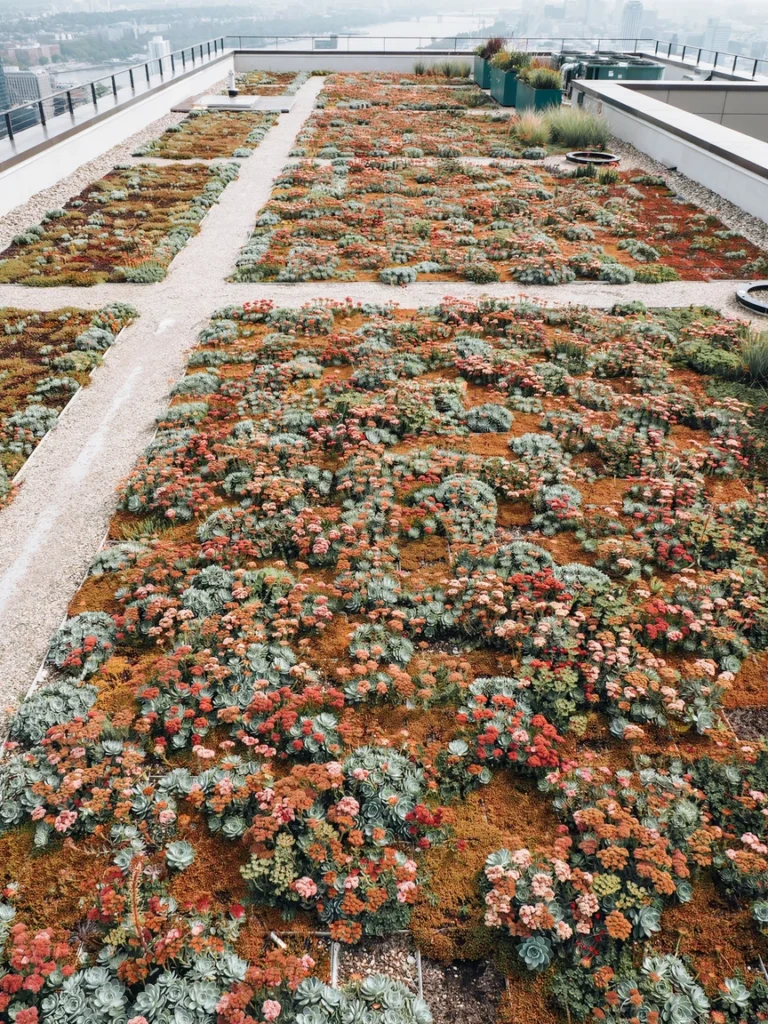
Distinct from the wildflower approach. A sedum green roof uses very shallow soil (often as little as 50mm) planted with mat-forming sedum species that thrive in extreme conditions. The result is a textured, drought-resistant, year-round green surface that adds minimal weight to the building.
Sedum roofs aren’t really gardens in the traditional sense. They’re more like a planted skin. But they’re the lowest-maintenance rooftop greening option available, they insulate the building below, and they hold water during rainstorms. For older buildings where structural capacity is limited, the sedum approach is often the only viable one.
7. Vertical Green Wall Integration
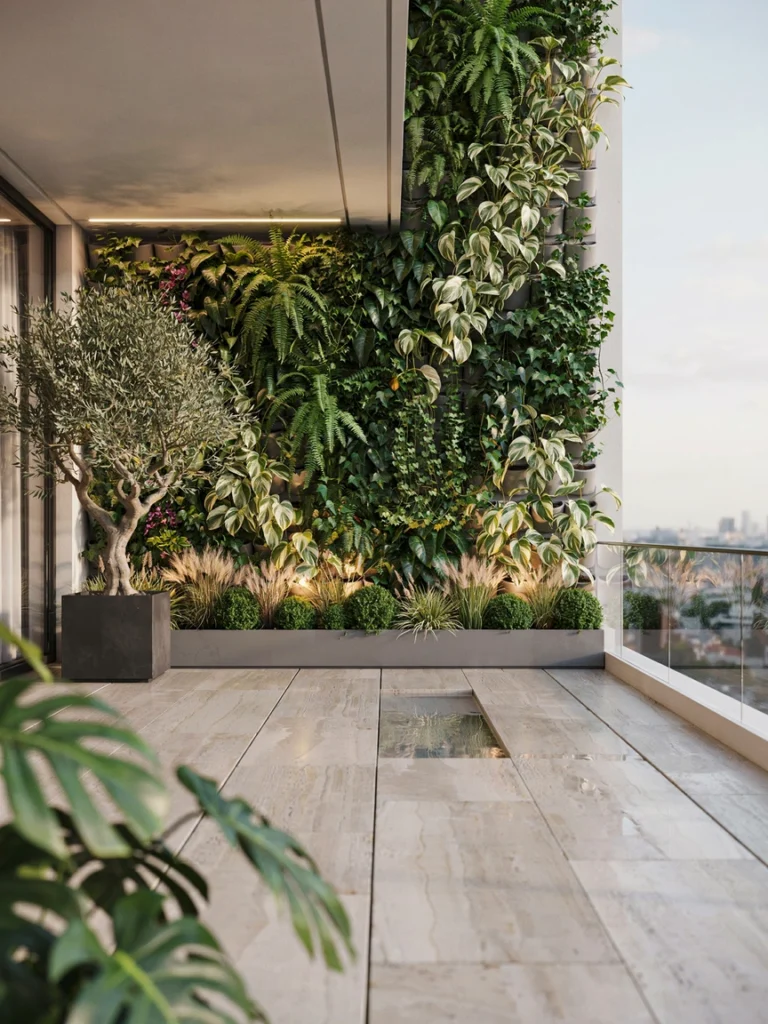
Where horizontal space on the rooftop is limited, vertical green walls (mounted on parapet walls, the side of an access stair, or freestanding screens) add considerable greenery without using floor area. Modular systems exist now for outdoor use, with pre-grown plant panels that snap into a hidden irrigation framework.
Wendt notes that vertical green walls have specific maintenance requirements. “They’re not low-effort installations. The irrigation has to work, the plants have to be matched to the orientation and sun exposure, and the framework has to be drained correctly. Done well, they look extraordinary. Done badly, they brown within a season and look much worse than no plants at all.”
8. The Shade Structure and Pergola
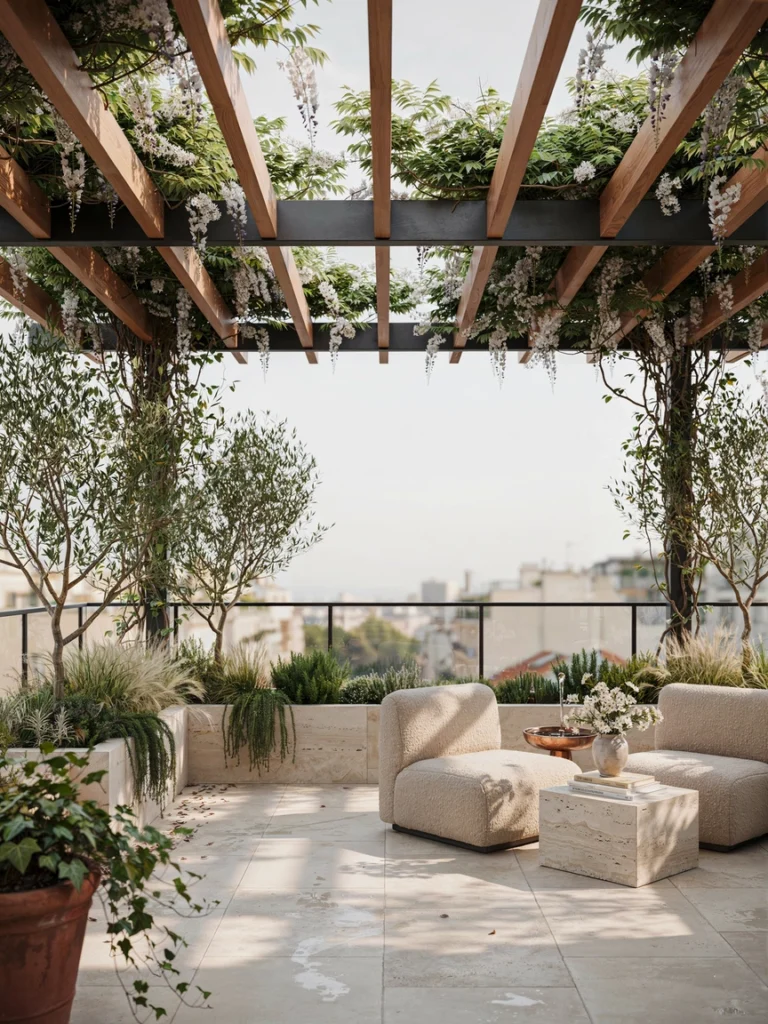
A rooftop in full sun is uninhabitable for much of summer. The shade structure (a pergola, a sail shade, a series of canvas panels, or a permanent roof element) is what makes the garden usable as a living space rather than just a viewing platform.
The structure is also a planting opportunity. Climbing plants (wisteria, jasmine, ornamental vines, grape vines in warmer climates) growing over a pergola produce dappled shade that’s significantly more pleasant than fabric shade. The trade is the wait: it can take three to five years for a climber to fully fill a substantial pergola.
Marchand often advises clients to install both. “A canvas sail for immediate shade, climbing plants taking over slowly underneath. By year five you remove the sail because the climbers have done the job.”
9. Privacy Planting
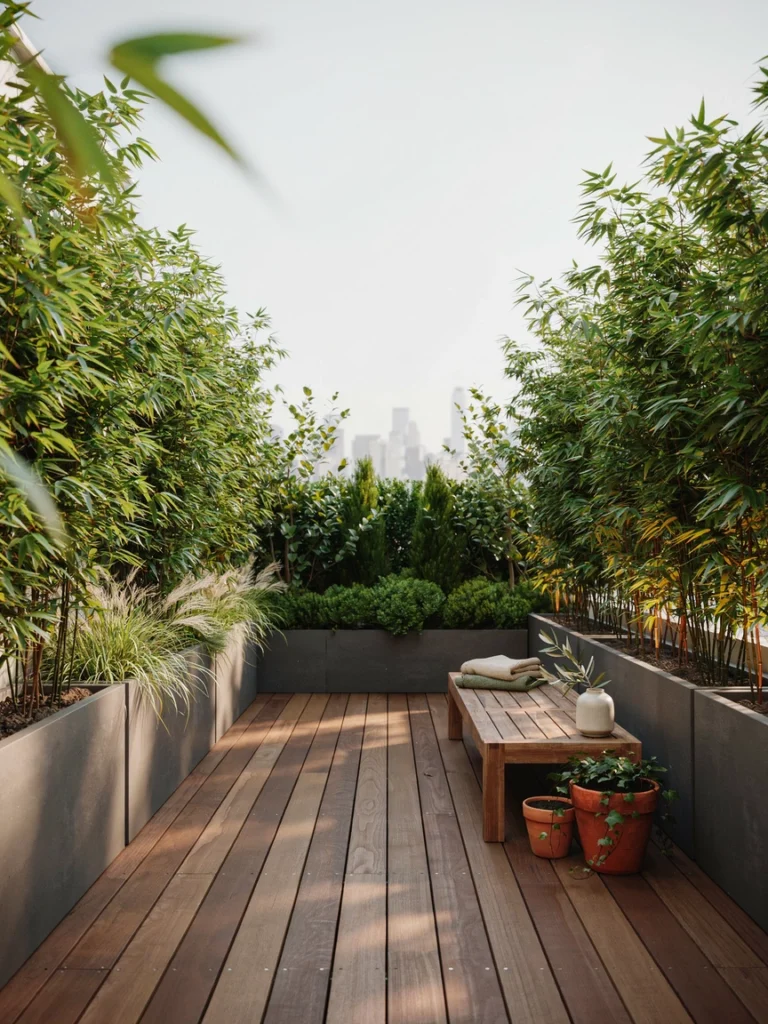
The unsung element on most urban rooftops. Without ground-level fences and hedges, rooftop gardens often feel overlooked by neighbouring buildings, balconies, and offices. Tall planters with screening plants (bamboo, certain grasses, columnar conifers, evergreen viburnums) along the relevant sightlines turn an exposed roof into an enclosed garden.
The screening should be considered before the seating is positioned, not after. The best rooftop gardens use plants as walls and ceilings, not just as decoration.
A Quieter Note on Restraint
Across all nine directions, the specialists returned to a similar observation. The most successful rooftop gardens are not the most planted ones.
In fact, Iyengar puts it directly. “A rooftop garden with too many species, too many containers, too many design elements reads as cluttered very quickly because the roof itself is small and the contrast with the surrounding buildings is high. The best rooftops do a few things at scale: one tree, a swath of grasses, a single shade structure, a long bench. Restraint reads as luxury at this height.”
A rooftop garden, in the end, isn’t really about filling the roof. It’s about making a small, exposed, structurally constrained space feel like the most private garden in the building, and the highest. Whether that’s done with a Mediterranean palette, a wildflower meadow, or a single olive tree in a generous planter, the principle stays the same. Choose what the roof can hold. Plant what the climate wants. And let the height of the space do the rest of the work.


