Vintage Sewing Room Ideas That Feel Warm, Storied, and Beautifully Lived-In
- Home Organization Ideas
 Alina
Alina- 0
- 13 minutes read


There’s a particular hush to a really good vintage sewing room. You step in and it feels less like a workspace than a place that has been quietly accumulating life: an old treadle machine by the window, jars of mismatched buttons catching the light, a worn wooden table with the patina of a hundred projects. Nothing matches exactly, and that’s precisely the charm. It feels like it was gathered, not bought, and lately it’s the look makers reach for when they want a room with soul rather than a showroom.
In short, a vintage sewing room done well isn’t decorated so much as collected. The warmth comes from the sense that every piece has a past.
But how do you build that storied feeling without it tipping into clutter or costume?
Interior stylist Edith Caldwell, who designs rooms around antique and salvaged pieces, says the trick is letting a few honest old things lead. “People try to buy the vintage look in one go, and it always reads as a film set,” she says. “A real vintage sewing room is built around two or three pieces with genuine age and character, and everything else is kept simple so those pieces can breathe. The age does the work. You just have to get out of its way.” The hunt for the right anchor pieces, she insists, is where it begins.
But where to start? The stylists who do this well keep returning to the same handful of moves, each one tuned to a room that should feel inherited rather than installed.
Anchor the room with one characterful old machine
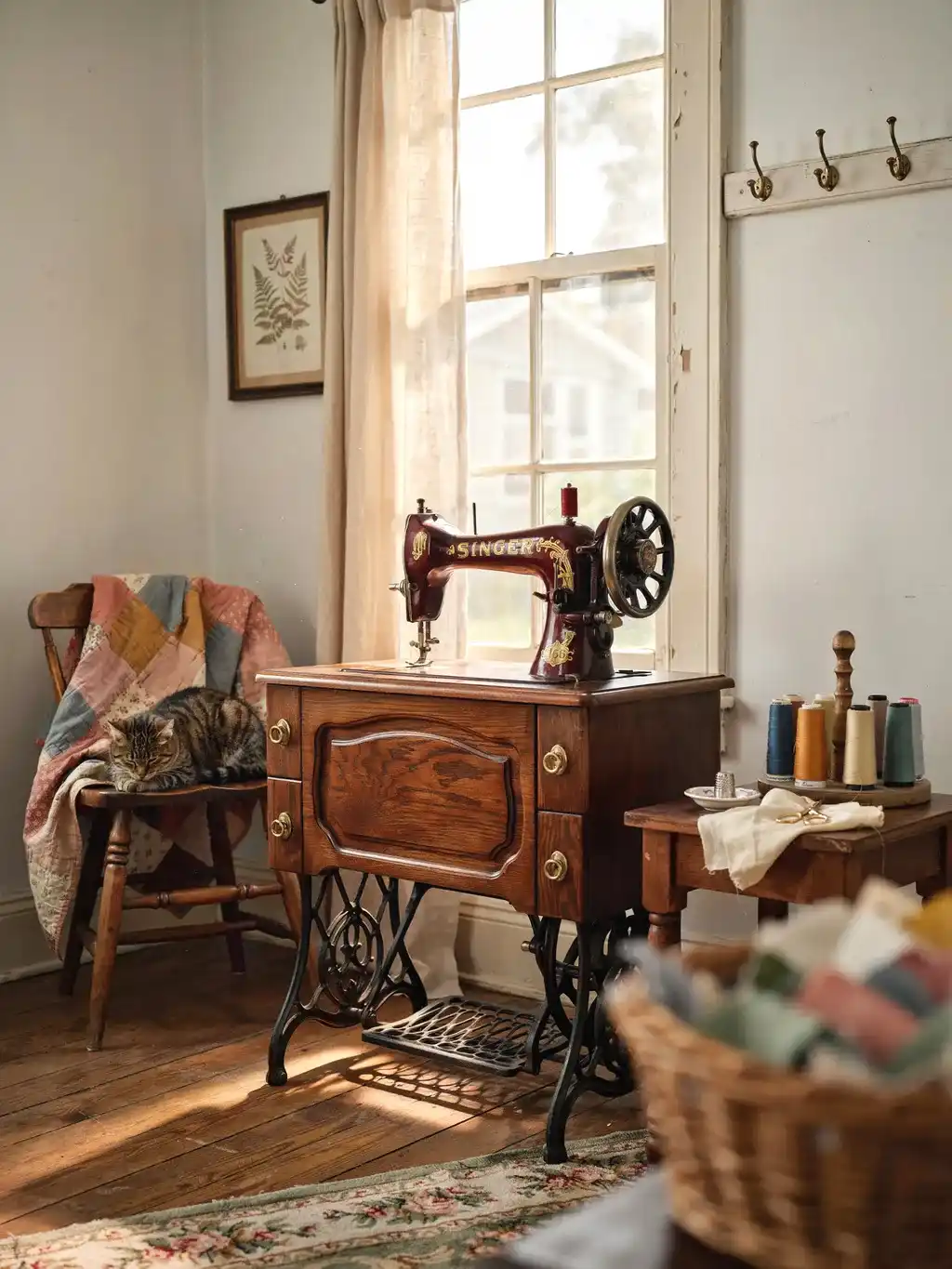
The heart of a vintage sewing room is almost always the machine itself. A cast-iron treadle Singer, an old hand-crank model, or a mid-century machine in its wooden case carries more atmosphere than any amount of décor, and it earns its place whether or not you sew on it.
Caldwell treats the vintage machine as the room’s centrepiece. “Even if you do your real sewing on a modern machine tucked nearby, an old treadle by the window sets the whole tone,” she says. “The black enamel, the gold lettering, the iron base, it’s sculpture as much as tool.” Positioned in good light, she notes, it becomes the thing every eye goes to first and the piece the whole room arranges itself around.
Choose worn wood over anything new
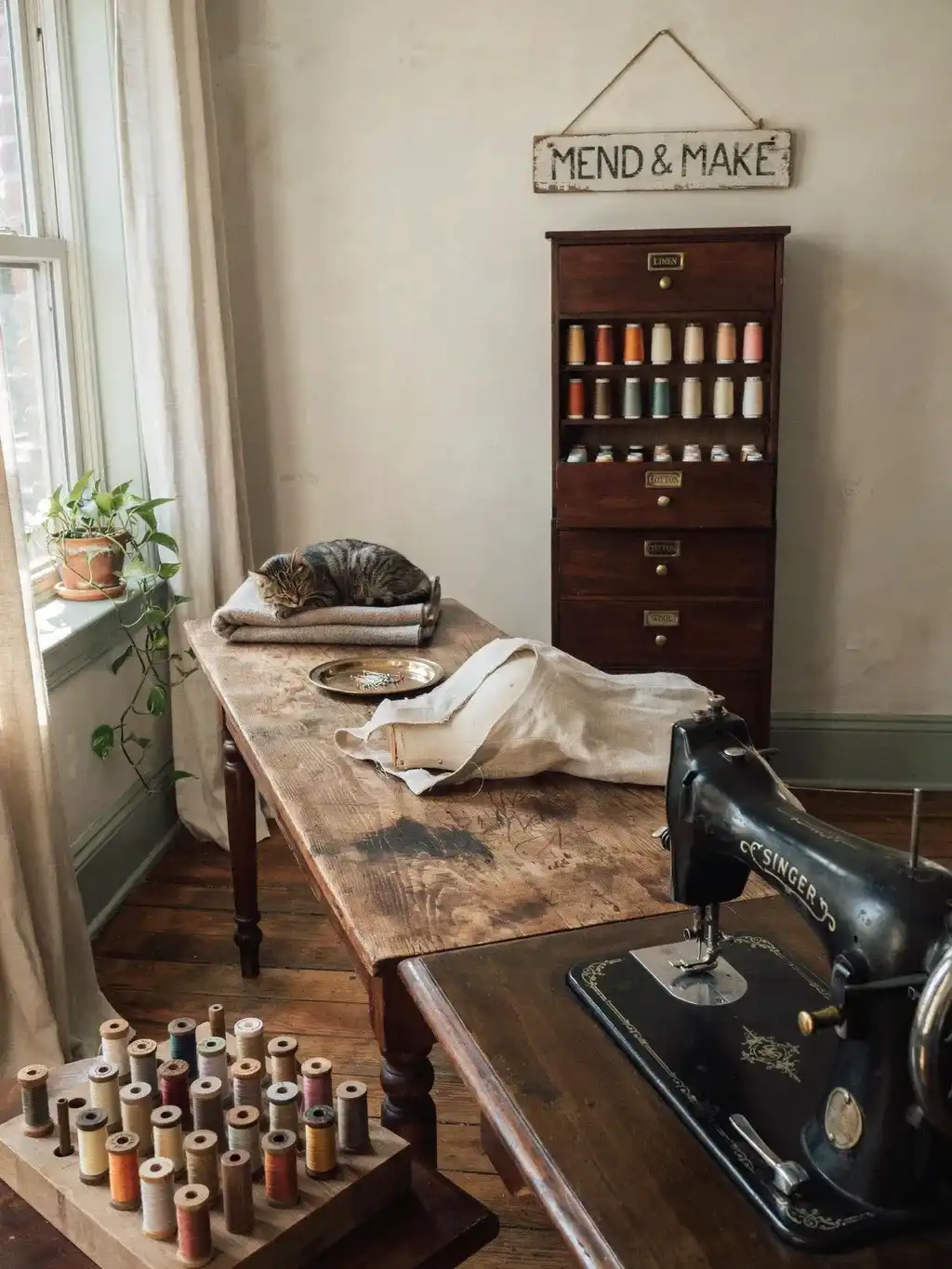
Nothing signals vintage faster than timber with genuine wear. An old farmhouse table for cutting, a battered chest of drawers for storage, a wooden haberdashery cabinet with its little glass-fronted drawers, these grounded, aged pieces give the room its lived-in warmth.
Antiques specialist Hugh Pemberton, who sources furniture for period interiors, urges patience in the hunt. “A scarred old work table beats a new one pretending to be old every single time,” he says. “The marks, the soft edges, the slightly uneven colour, that’s a history you cannot fake. Buy the real worn thing, even if it takes months to find.” A haberdashery or apothecary cabinet, he adds, is the dream find, made for exactly this kind of storage and beautiful with age.
Let the supplies become the decoration
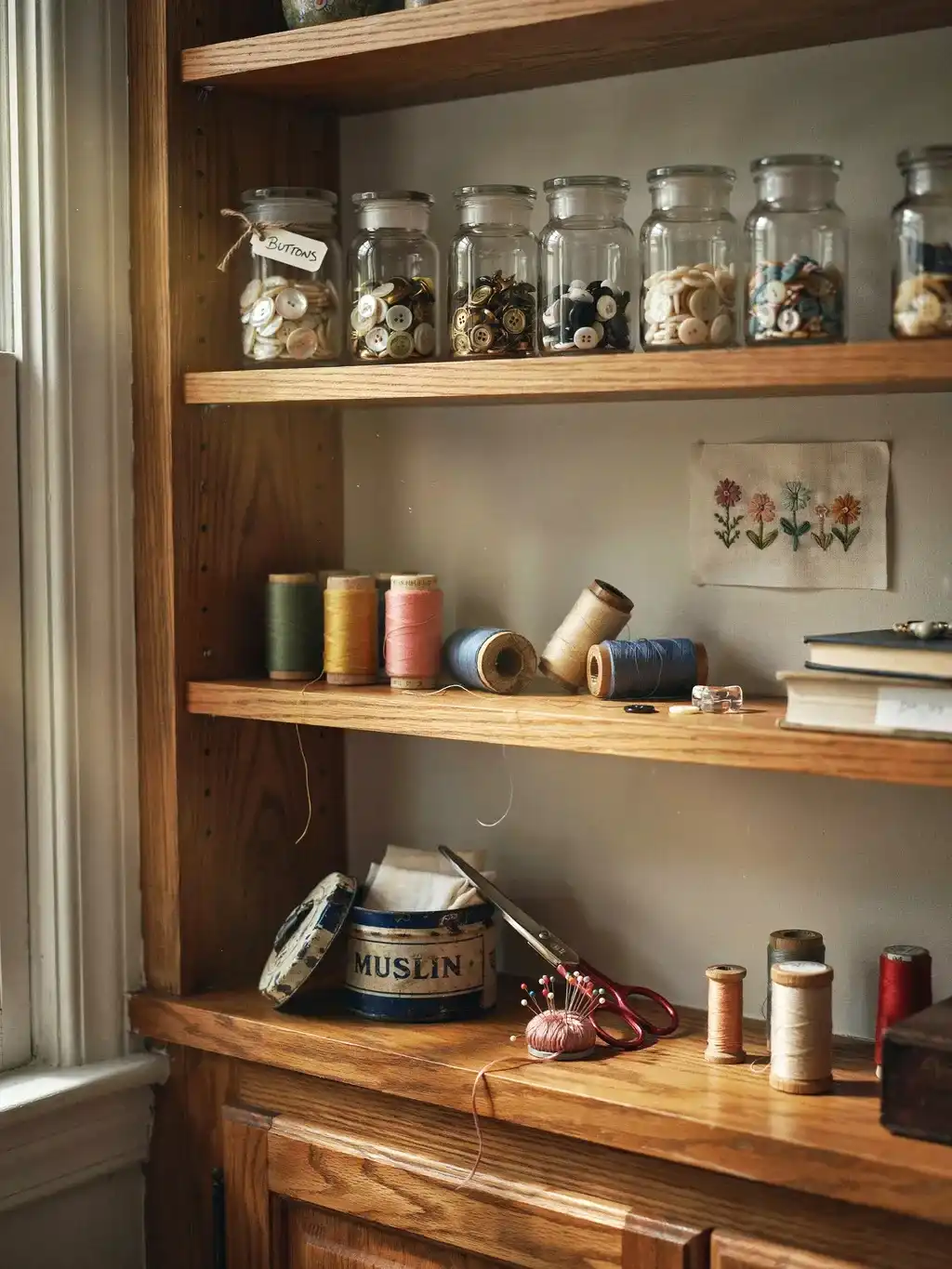
A vintage sewing room is one of the few spaces where the tools of the craft are also its prettiest ornaments. Glass jars of old buttons, wooden spools of thread, vintage tins, pinking shears and tailor’s chalk, all of it arranged in the open turns function into display.
Caldwell encourages leaning into the colour and texture the materials bring. “Old wooden thread spools lined up on a rack, buttons sorted into glass jars by colour, ribbon wound onto vintage cards, these things are lovely in their own right,” she says. “You don’t need to add decoration when your supplies look like this. You just need open shelves and good jars.” The honesty of materials in use, she notes, is what keeps the room feeling like a real workshop rather than a staged set.
Soften everything with vintage textiles
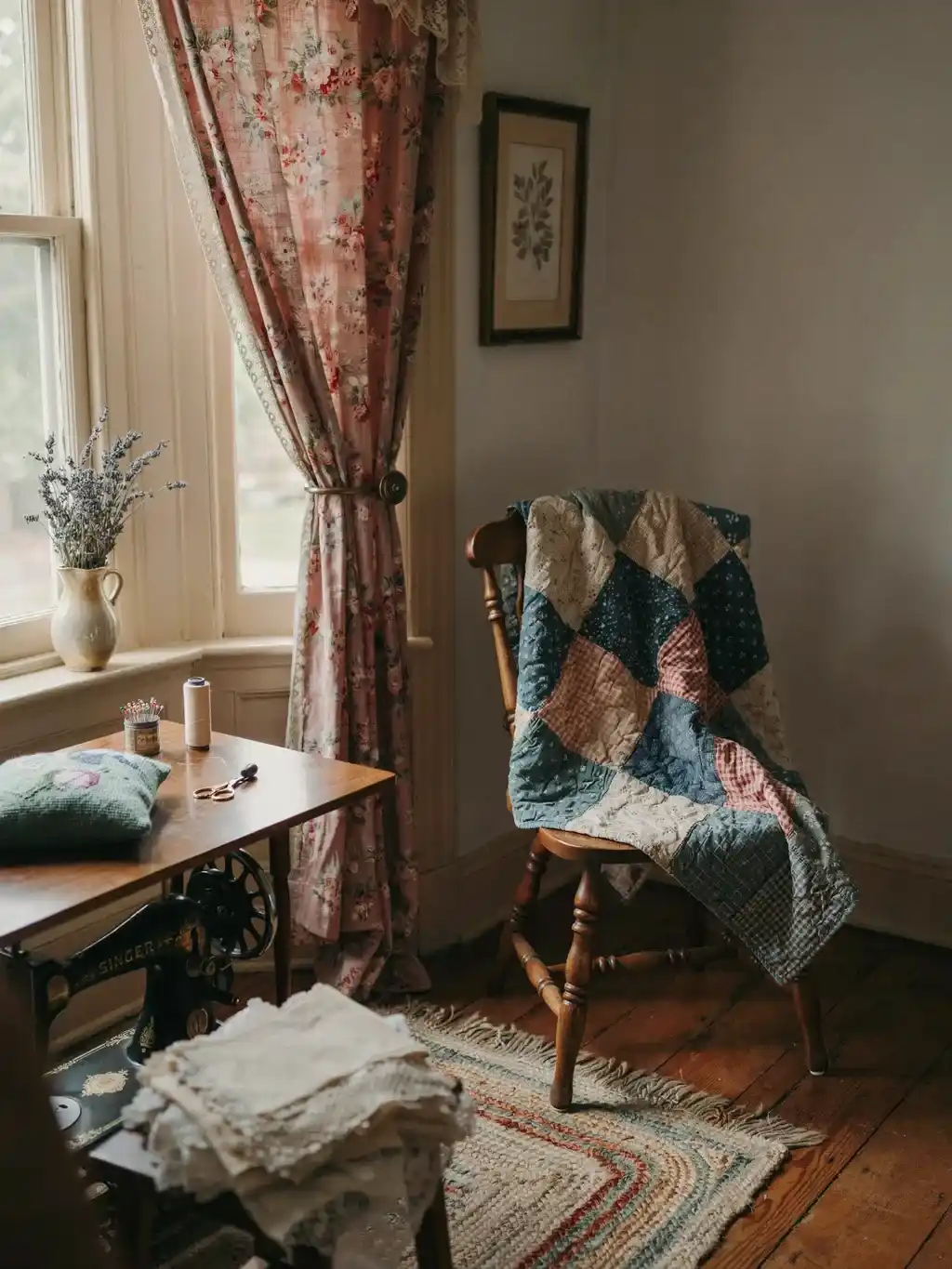
Fabric is where a vintage sewing room comes truly alive. A faded floral curtain, an old quilt folded over a chair, a length of antique lace, a needlepoint cushion, these soft, storied textiles wrap the room in warmth and tie its mismatched pieces together.
Textile historian Marguerite Lowe, who works with antique cloth, sees fabric as the room’s connective tissue. “A vintage room can feel hard, all wood and iron and glass,” she says. “Old textiles soften it and add the human touch, the sense of hands that made and mended. A worn quilt or a faded floral blind brings a warmth nothing else quite matches.” The gentle fading of old fabric, she adds, gives a harmony that new cloth, however pretty, can’t replicate.
Keep the palette soft, warm, and a little faded
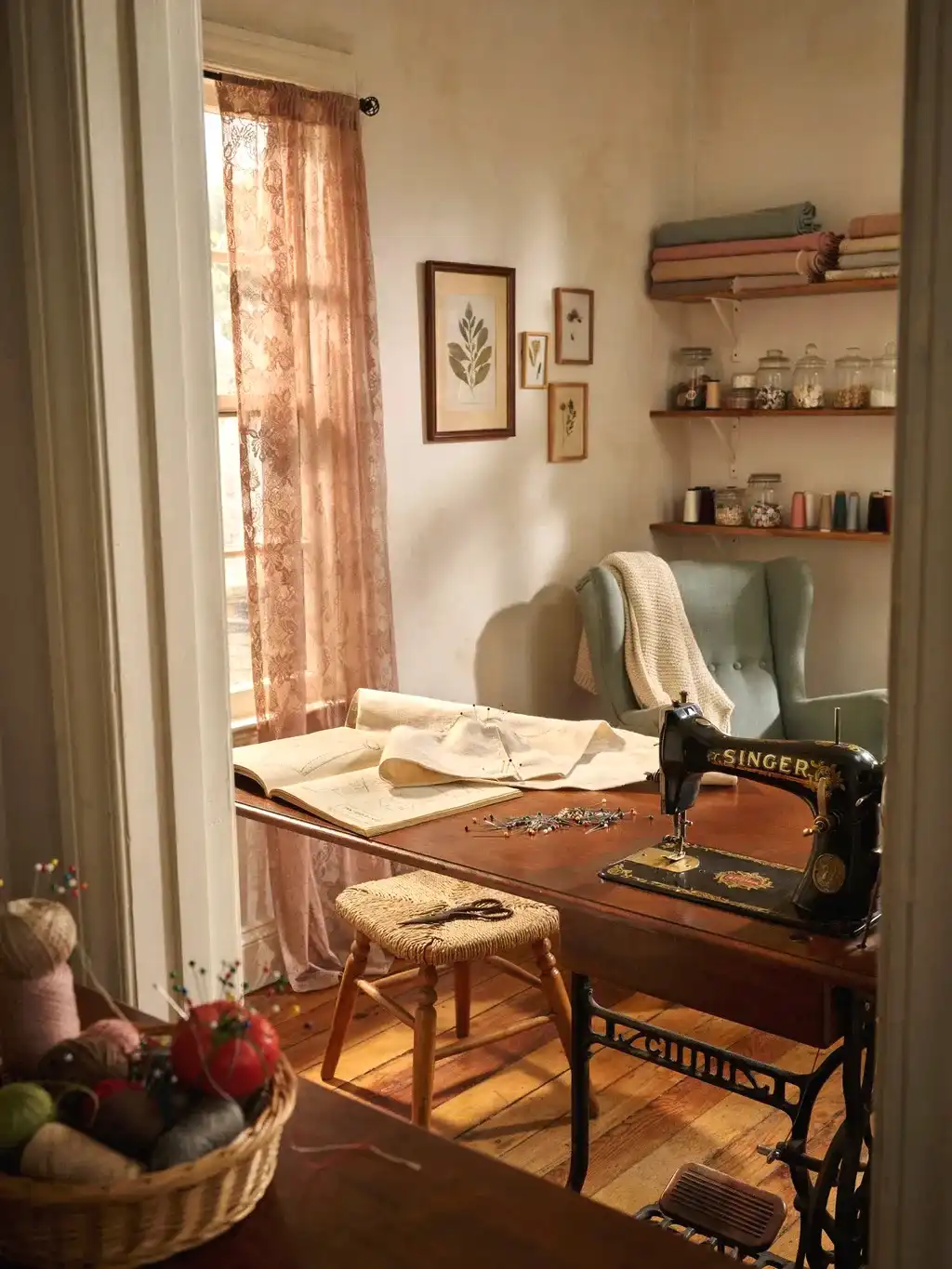
Vintage rooms rarely shout in colour. The palette tends toward soft, slightly faded tones, cream, sage, dusty rose, warm browns, the colours of old paint and sun-aged fabric. This gentle, muted backdrop lets the aged pieces and the colourful supplies stand out without the room feeling busy.
Lowe favours colours that look like they’ve already lived a little. “A soft, chalky paint, something that looks as though it faded years ago, is the perfect backdrop for old things,” she says. “Bright modern colour fights vintage furniture. A gentle, slightly dusty tone agrees with it.” That quiet envelope, she notes, is what allows a roomful of disparate old pieces to feel like a single harmonious whole.
Display the ephemera, not just the tools
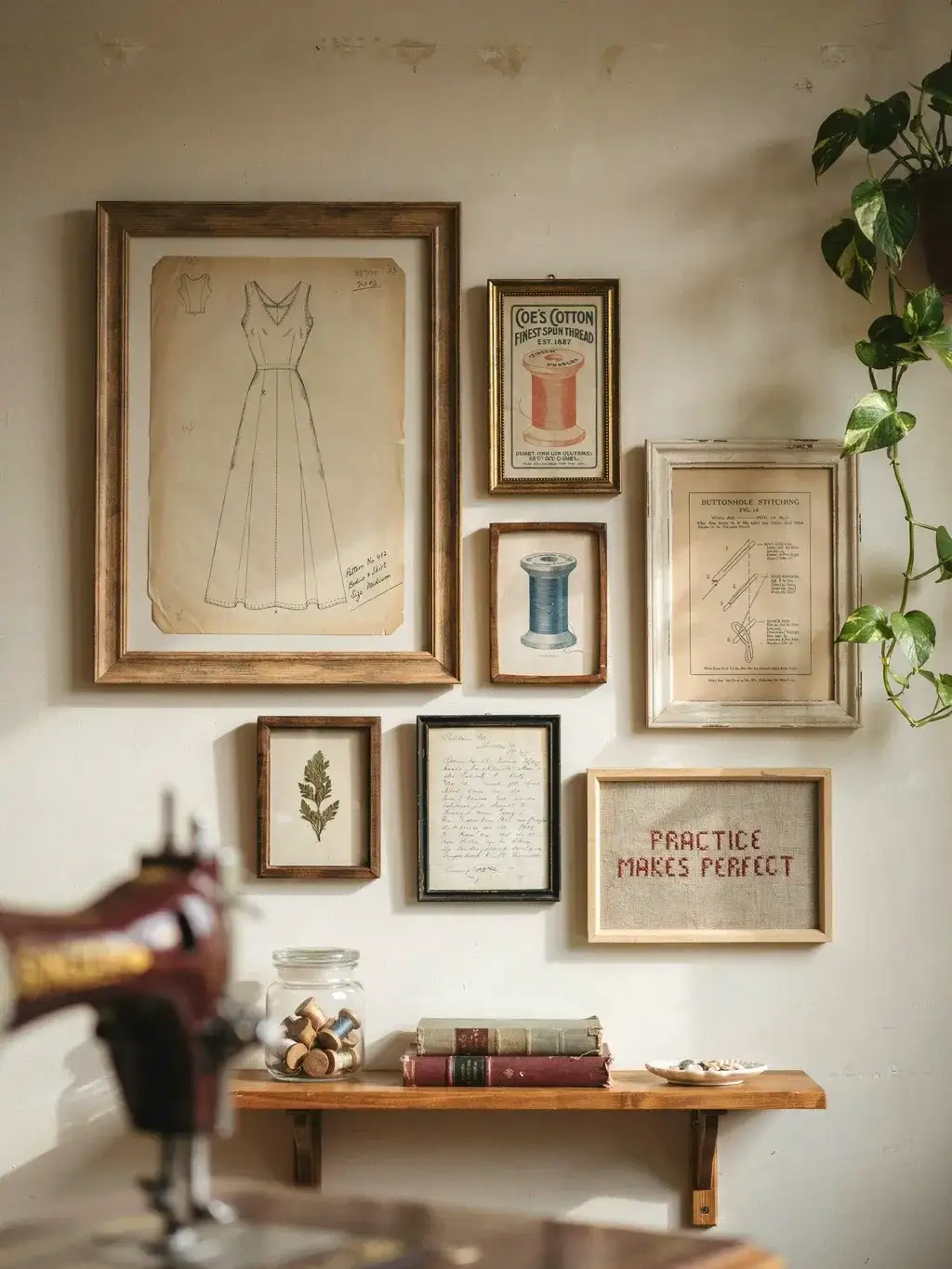
Beyond the supplies, a vintage sewing room is enriched by the small printed and paper ephemera of the craft’s past: old dressmaking patterns in their illustrated envelopes, vintage sewing-machine manuals, framed embroidery, a faded advertisement for thread or needles. These touches add story and personality in a way furniture alone can’t.
Pemberton suggests choosing a few and framing or propping them with care. “A single framed vintage pattern illustration, or an old needle packet under glass, adds a wink of history,” he says. “Don’t paper the walls with them, pick a handful you love and let them be little moments around the room.” The restraint, he notes, is what keeps charm from sliding into chaos.
Edit, so the charm doesn’t become clutter
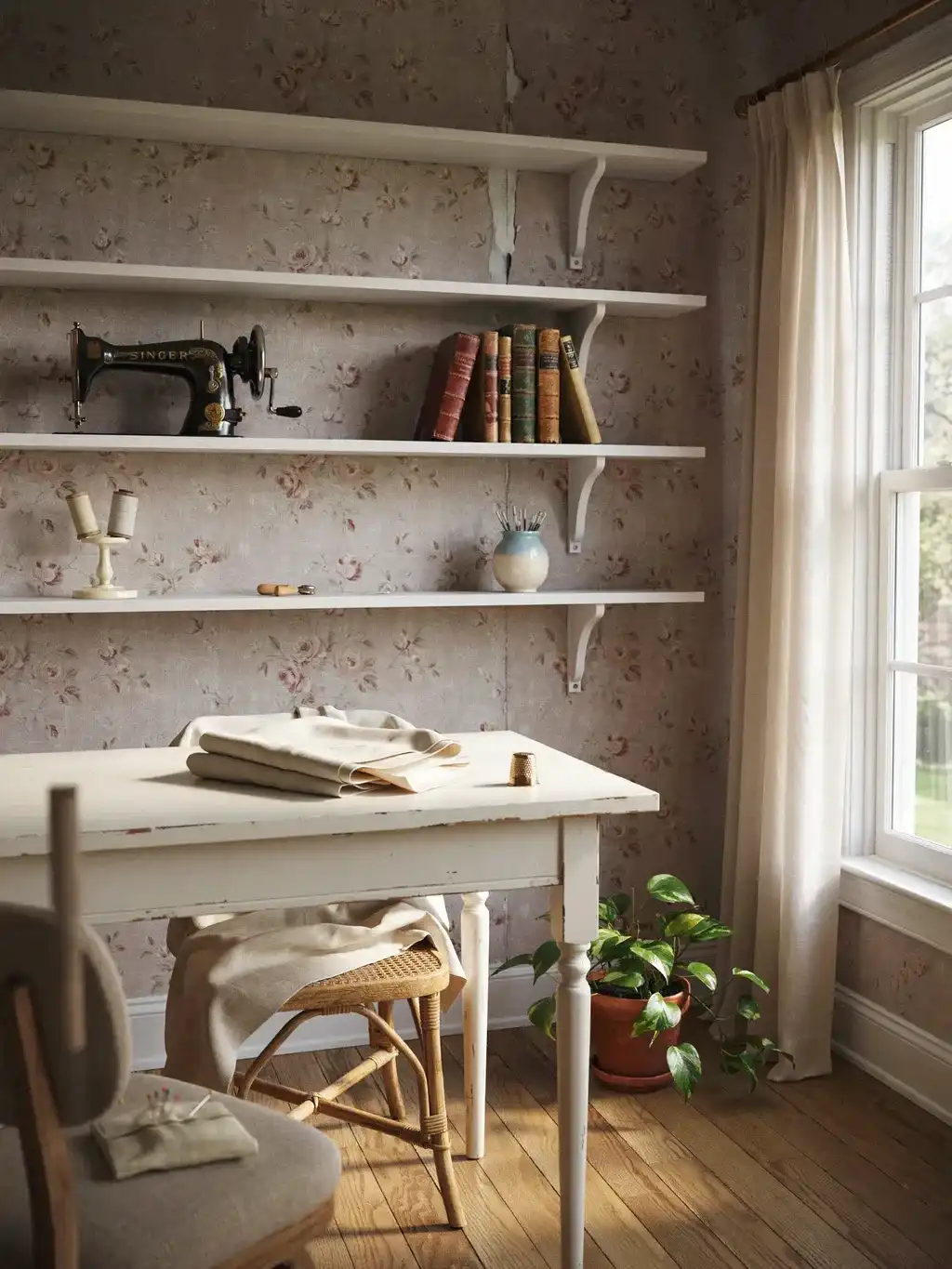
The throughline of every vintage sewing room that works is restraint. The danger of the vintage look is accumulation, too many old things competing until the room feels crowded rather than curated. The fix is editing: choosing the pieces you truly love and giving them room to be seen.
Caldwell describes the failure mode plainly. “There’s a line between a beautifully collected room and a junk shop,” she says. “It’s all about space. Leave a clear stretch of table, an empty bit of wall, a shelf that isn’t crammed. The empty space is what tells the eye that everything else was chosen on purpose.” A vintage room, she insists, needs breathing room as much as a minimalist one.
A Quieter Note on the Past
What unites Caldwell, Pemberton, and Lowe is a shared affection for objects that carry time in them. Each returns, in their own words, to the same idea: a vintage sewing room is really a way of keeping the craft’s history alive and close, surrounding yourself as you sew with the tools and textiles of the makers who came before.
The vintage sewing room works because it values story over polish. It anchors itself in one characterful old machine, builds out with worn wood, lets the supplies and textiles do the decorating, and keeps the palette soft so the past can shine. None of it requires everything to match. It requires an eye for the pieces with genuine soul, and the patience to gather them slowly.
A vintage sewing room, in the end, isn’t a museum and it isn’t a costume. It’s a working room with a memory, a place where every spool and scarred tabletop adds to the feeling that here, making things by hand is part of a long and lovely tradition, carried gently on.


